Joel Andreas is a Professor of Sociology at Johns Hopkins University since 2003, serving as Program Director of the East Asian Studies Program. His research focuses on political contention, social inequality, and social change in contemporary China. He holds a PhD in Sociology from UCLA and teaches social theory, political sociology, and courses on Chinese society. He has held visiting positions at universities including the University of Sydney, Hong Kong University, and Ningxia University. His work examines labor movements, rural land policies, and class dynamics in China. Recent research includes analyses of staff-worker congresses, rural land dispossession, and the persistence of militarism in U.S. policy. He critiques market reforms and explores the legacy of the Cultural Revolution. Andreas has contributed to debates on China’s transition to capitalism and the decline of socialist systems. His publications span topics from urbanization to state coercion in rural development. He maintains an active role in academic exchanges and policy-relevant research on China’s socio-political landscape.
Jacob Eyferth is an Associate Professor at the University of Chicago, jointly appointed in the Department of East Asian Languages and Civilizations, the Department of History, and the College. His research focuses on the social and cultural history of twentieth-century China, particularly rural communities, gender dynamics, and the intersection of technology and everyday life. Key research themes include the impact of industrialization, collectivization, and revolution on non-elite populations, with an emphasis on rural women's labor and cultural resistance. His current project explores cotton production, clothing, and gender during China's socialist era. Eating Rice from Bamboo Roots (2009) How China Works (2006) Rural Development in Transitional China (2004) He received the 2011 Joseph Levenson Prize for his first book. Eyferth has taught courses on topics such as class inequality, everyday life under socialism, and revolutionary China, and has held postdoctoral fellowships at Oxford, Harvard, and Rutgers.
University of California, Los AngelesUnited States
Ching Kwan Lee is a Professor of Sociology at the University of California, Los Angeles (UCLA). Her work focuses on global and comparative issues, including labor politics, political sociology, decolonization, and the dynamics of Chinese capitalism. She is renowned for her trilogy on Chinese labor and global expansion, including Gender and the South China Miracle , Against the Law , and The Specter of Global China . Lee has also authored groundbreaking studies on Hong Kong’s decolonization struggles and African-China relations. Education: PhD in Sociology from the University of California, Berkeley. Research Interests : Globalization and its social impacts Comparative labor movements and protest dynamics Decolonization and postcolonial state formations Sino-African economic and labor relations Hong Kong’s political trajectory and transnational activism Her recent work explores resistance to 'global China,' including mass mobilizations in Hong Kong documented in Forever Hong Kong: A Global City’s Decolonization Struggle (2025). She co-edits the Cambridge Elements in Global China and leads the Global Hong Kong Studies @UC initiative. Awards & Recognition : 2024 Distinguished Career in Political Sociology Award Multiple book prizes for The Specter of Global China Fellowships at Stanford’s Center for Advanced Study and Princeton’s Institute for Advanced Study Grants & Initiatives : Lead researcher on NSF grants studying platform capitalism and labor in China Initiated comparative projects on Brazil, India, China, and South Africa ( Southern Interregnum ) Co-editor of volumes on Hong Kong’s Umbrella Movement and global labor studies
James A. Robinson is a University Professor at the University of Chicago with joint appointments in the Harris School of Public Policy and Department of Political Science. An economist and political scientist, he conducts influential research on political and economic development, examining how political power, institutions, and prosperity interact through both quantitative economic modeling and qualitative fieldwork methodologies. Robinson's research focuses on institutional analysis and political economy, with deep regional expertise in sub-Saharan Africa and Latin America. He has conducted extensive fieldwork across Bolivia, Colombia, Haiti, Democratic Republic of Congo, Nigeria, Sierra Leone, South Africa, and Zimbabwe, investigating how historical institutions shape contemporary economic outcomes. His interdisciplinary approach integrates economic theory with anthropological and historical case studies to explain patterns of economic divergence and political stability. Recent publications (2023-2025) reveal persistent themes in institutional persistence, state-society dynamics, and the cultural foundations of development. His work increasingly examines the interaction of economic and political inequality, the role of non-institutional factors in leadership strategies, and the historical roots of peripheral development trajectories across diverse global contexts. Scientific recognition includes: 2024 Sveriges Riksbank Prize in Economic Sciences in Memory of Alfred Nobel Fellow, Institute of African Studies at the University of Nigeria, Nsukka Robinson co-authored three seminal books with Daron Acemoglu: Economic Origins of Dictatorship and Democracy (theoretical foundations of regime stability), Why Nations Fail (translated into 41 languages, arguing inclusive institutions drive prosperity), and The Narrow Corridor (analyzing state-society struggles for liberty). He maintained a 28-year summer school at Colombia's University of the Andes (1994-2022) and continues active research collaborations across Africa and Latin America.
Eric Van Young is a distinguished Professor of History at the University of California, San Diego (UCSD), specializing in colonial and 19th-century Latin American history, particularly Mexico. He has held significant roles, including Chair of the Department of History (2000-2004) and Interim Dean of the Division of Arts and Humanities (2007-2008). His research focuses on rural history, peasant movements, cultural history, and biographical studies of key figures like Lucas Alaman. He earned his B.A. from the University of Chicago (1967), M.A. and Ph.D. from UC Berkeley (1968, 1978). Education: B.A. (University of Chicago), M.A. & Ph.D. (UC Berkeley) Roles: Professor of History, Department Chair, Interim Dean His research explores Mexico’s colonial and early national periods, emphasizing rural economic structures, popular rebellions, and the intersections of culture and politics. Current projects include a biography of Lucas Alaman and a synthetic history of Mexico (1750-1850). He has authored numerous books, including Writing Mexican History (2012) and The Other Rebellion (2001), alongside over 100 articles. His work bridges economic and cultural historiography, offering critical insights into regional dynamics and the construction of national identity. Van Young’s scholarly contributions include editorial roles for journals and book series, as well as extensive peer review for academic publishers. His interdisciplinary approach addresses themes like messianic movements, state formation, and the legacy of colonial institutions in modern Mexico.
Matthew Potolsky is Professor of English at the University of Utah, specializing in nineteenth-century literature and literary theory. His career spans from 1998 Lecturer at Harvard University to current University Professorship. He earned a BA in Comparative Literature and Philosophy (1990), followed by MA and PhD in Comparative Literature (1992, 1997) from UC Irvine. Chair of English Department (2013-2016) University Professor (2014-2016) Research focuses on Decadence , Mimesis , Finance-Aesthetics intersections , and Government Secrecy . His work traces connections between financialization and decadent aesthetics, revealing how economic cycles influence artistic production. Key themes include: Decadent anti-realist literary movements Finance capital's cultural impact Decadent counterpublic formations Victorian aesthetic education debates Sublime aesthetics in national security Cosmopolitanism in literary communities Recent publications analyze: Decadent style as financialization rhetoric Reintroduction of verisimilitude theory Decadent responses to financial crises Mimetic labor in artistic production Decadent cosmopolitan counterpublics Historical parallels between financialization and literary decadence
Massachusetts Institute of TechnologyUnited States
Joshua D. Angrist is the Ford Professor of Economics at the Massachusetts Institute of Technology, where he has been a faculty member since 1996. He is also a co-founder and director of MIT's Blueprint Labs and a Research Associate at the National Bureau of Economic Research. Angrist shares the 2021 Nobel Prize in Economic Sciences with David Card and Guido Imbens for their methodological contributions to the analysis of causal relationships. Angrist received his B.A. from Oberlin College in 1982 and completed his Ph.D. in Economics at Princeton University in 1989. Prior to joining MIT, he taught at Harvard University and the Hebrew University of Jerusalem. His academic journey began somewhat unconventionally, as he left high school early after 11th grade, worked for over a year, and only later discovered his passion for economics through an inspiring teacher at Oberlin. Angrist's research focuses on developing and applying innovative econometric methods to answer important economic questions using natural experiments. His work spans labor economics, education economics, and causal inference methodology. He is particularly known for his contributions to instrumental variables methods and the Local Average Treatment Effect (LATE) framework developed with Guido Imbens. His research explores the economics of education and school reform, the impact of social programs on labor markets, and the effects of immigration and regulation. His recent publications reveal a continued focus on causal inference methods applied to education policy questions, labor market issues, and health economics. The trend shows increasing sophistication in research design, with particular attention to addressing selection bias and developing methods for external validity. His work spans theoretical econometric contributions alongside empirical applications in education, labor markets, and health. Sveriges Riksbank Prize in Economic Sciences in Memory of Alfred Nobel (2021) Fama Prize for Graduate Education (2018) Fellow of the American Academy of Arts and Sciences Fellow of the Econometric Society Angrist is deeply committed to teaching and mentoring. He has developed influential econometrics textbooks including 'Mostly Harmless Econometrics' and 'Mastering Metrics' with Jörn-Steffen Pischke. At MIT, he teaches courses including Labor Economics I (14.661), Econometric Data Science (14.32), and Labor Economics and Public Policy (14.64). He emphasizes selecting UROP students who have mastered foundational economics through courses like 14.64 and 14.32. Beyond MIT, Angrist co-founded Avela, a software startup using cutting-edge research to help schools improve enrollment and operations. Angrist co-founded and directs MIT's Blueprint Labs, which brings together researchers from economics, computer science, and education to develop innovative solutions for educational challenges. Through Blueprint Labs and Avela, his work bridges academic research with practical applications in education policy and technology.
Massachusetts Institute of TechnologyUnited States
Lily L. Tsai is the Ford Professor of Political Science at the Massachusetts Institute of Technology (MIT) and founder/director of the MIT Governance Lab (MIT GOV/LAB). She previously chaired the MIT Faculty and focuses her research on governance, accountability, and political participation in developing contexts, particularly Asia and Africa. Her research explores how decentralization, democratic reforms, informal institutions, and economic development influence public goods provision. She also investigates the dual impacts of social capital and civil society on political outcomes, and analyzes political behavior in authoritarian and transitional systems through surveys, interviews, and field experiments. Recent publications span topics including collective governance, vaccine compliance in Uganda, anticorruption strategies in China, and the role of informal institutions in rural China. Tsai’s work appears in journals like American Political Science Review and World Development . Dogan Award for best book in comparative research (2007-08) She leads interdisciplinary projects such as the Compass Initiative (SHASS Education Innovation Fund) and The Science of Respect with MIT’s Brain and Cognitive Sciences department. MIT GOV/LAB, which she founded in 2014, emphasizes real-time empirical collaboration between researchers and practitioners to address governance challenges.
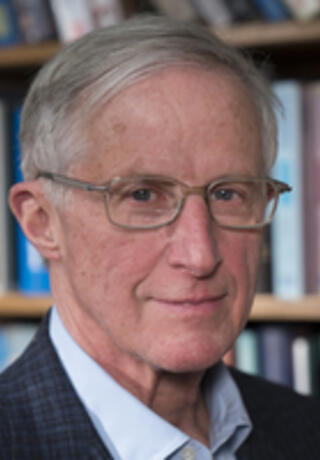
William Nordhaus is Professor of Economics at Yale University and Professor at the Yale School of the Environment . His work bridges economic theory, environmental policy, and macroeconomic analysis, with a focus on climate change, productivity measurement, and non-market accounting systems. 1963 BA, Yale University 1967 PhD, Massachusetts Institute of Technology 1962 Certificat, Institut D'Etudes Politiques (Paris) Nordhaus has pioneered economic modeling of climate change through his DICE/RICE frameworks, developed the G-Econ project mapping geophysical economic activity, and advocated for integrating environmental costs into national accounts. His recent DICE-2023 model emphasizes risk mitigation, carbon pricing, and updated climate projections. Notable awards include the American Economic Association Distinguished Fellow Prize (2004), membership in the National Academy of Sciences , and fellowship in the American Academy of Arts and Sciences . He has held leadership roles at the National Bureau of Economic Research, Congressional Budget Office, and Brookings Panel on Economic Activity. Nordhaus directs the Yale Project on Non-Market Accounting and has contributed to U.S. federal regulation reform, energy efficiency studies, and nuclear energy policy analysis. His affiliations include the G-Econ project and advisory roles on climate committees.
Emily Hannum is a Professor of Sociology and Education at the University of Pennsylvania's College of Arts & Sciences, where she also serves as Associate Dean for Social Sciences. She is affiliated with the Population Studies Center, Center for the Study of Contemporary China, Graduate School of Education, and Penn Development Research Initiative. Education: PhD in Sociology from University of Michigan (1998) Research Focus: Poverty and child welfare, gender and ethnic stratification, sociology of education Projects: Gansu Survey of Children and Families, climate-environment-childhood inequalities in LMICs Workshops: Co-organizer of Penn Education and Inequality Workshop Her research explores childhood poverty in China, demographic impacts on education systems, and climate risks affecting children's welfare. She investigates environmental hazards, educational disparities, and family separation effects across China, India, and low/middle-income countries. Recent publications analyze educational expansion in East Asia, climate crisis impacts on child health, and gender disparities in Latin America. She directs longitudinal studies on rural poverty and collaborates on cross-national projects related to environmental and educational equity. Scientific awards include the Stanley I. Sheerr Term Professorship in Social Sciences.
Patricia A. Banks is a Professor in the Department of Sociology and Anthropology at Mount Holyoke College, with affiliations in Africana Studies and the Program in Entrepreneurship, Organizations, and Society. She holds a Ph.D. and A.M. from Harvard University and a B.A. (summa cum laude, valedictorian) from Spelman College. Her research explores intersections of culture, consumption, and race, focusing on African Diaspora dynamics. Key areas include cultural philanthropy, art collecting as identity practice, and corporate diversity capital. She authored Black Culture, Inc. (Stanford 2022), winning the Oliver Cromwell Cox Book Award, and Race, Ethnicity, and Consumption (Routledge 2020). Recent honors include ASA awards and fellowships from the CASBS (Stanford), Sheila Biddle Ford Foundation, and Harvard’s Hutchins Center. She co-edits Poetics and serves on ASA committees. Teaching awards include recognition from Harvard’s Derek Bok Center and Mount Holyoke’s Baccalaureate address. Her work spans books, peer-reviewed articles, and media engagements (NYT, Artnet). The African American Museums Database, her digital archive, catalogs over 300 institutions. Current projects address corporate diversity signaling, African art markets, and dress code discrimination.
Susan Fino is a Professor at the College of Liberal Arts and Sciences, Wayne State University. Her research focuses on public law, American constitutional law, administrative law, and the role of state supreme courts. She holds a B.A. from Johns Hopkins University, an M.A. and Ph.D. from Rutgers University. She has received the President's Award for Excellence in Teaching. Her courses include American Government (PS1010) and Constitutional Law (PS5110/PS5120), taught across multiple terms from 2023 to 2025. Dr. Fino's research explores judicial federalism, state constitutional frameworks, and legal interpretations of rights. Her work analyzes topics like church-state relations, taxation provisions in state constitutions, and assisted suicide debates. She has written extensively on state supreme court dynamics, including landmark cases and institutional performance metrics. Her scholarship bridges legal theory with practical governance challenges at both state and federal levels. Her publications span over three decades, addressing evolving legal landscapes such as the Rehnquist Court’s federalism approach and technological impacts on criminal sentencing. She consistently engages with issues at the intersection of law, politics, and societal values.
Andrew Radin is a Senior Political Scientist at the RAND Corporation and Associate Director of the Master of National Security Policy Program at the RAND School of Public Policy. His work focuses on European security, military activities in space, and state-building, with expertise in NATO, Russia, Ukraine, and Afghanistan. Ph.D. in Political Science, MIT B.A. in Political Science and Mathematics, University of Chicago Postdoctoral Fellow, Harvard Kennedy School Postdoctoral Fellow, University of Southern California His research centers on European and Eurasian security , military strategy , and state-building in weak states . He emphasizes the role of local politics in institution-building and has conducted case studies in Bosnia, Kosovo, Iraq, Timor-Leste, and Ukraine. His work explores hybrid warfare, deterrence, security sector reform, and U.S. policy toward Russia and China. His recent publications reveal a strong trend in analyzing space as a domain of military competition , NATO deterrence strategies , and Russian gray-zone aggression . Topics frequently include escalation dynamics, allied cooperation, and the future of the liberal international order. His research combines policy relevance with academic rigor. Scientific Contributions and Recognition: Author of Institution Building in Weak States: The Primacy of Local Politics (Georgetown University Press) Published in Security Studies , Journal of Conflict Resolution , Washington Quarterly , and War on the Rocks Contributor to high-impact RAND reports on Ukraine, NATO, Russia, and international order Andrew Radin has advised on national security policy, including serving as Country Director for Afghanistan in the Office of the Under Secretary of Defense for Policy. He previously taught as an adjunct professor at Georgetown University. He has not received mention of specific grants or student advisees, but his leadership in the Master of National Security Policy program suggests mentorship and program development responsibilities. He is active in shaping U.S. defense and foreign policy through research and commentary. Laboratories, Teams, and Research Groups: He is affiliated with the RAND Corporation’s international security research division and contributes to projects on global competition, military strategy, and political warfare. His work is often collaborative, involving multidisciplinary teams focused on defense policy and strategic stability.
California Institute of Technology (Caltech)United States
Jonathan N. Katz is the Kay Sugahara Professor of Social Sciences and Statistics at the California Institute of Technology (Caltech). He holds a S.B. from MIT (1990), M.A. from UC San Diego (1992), and Ph.D. from UC San Diego (1995). His career includes roles as Assistant Professor (1995-98), Associate Professor (1998-2003), and Professor (2003-11) at Caltech, with subsequent appointments as Sugahara Professor (2012–present), Executive Officer for Social Sciences (2007), and Division Chair (2007–14). His research focuses on statistical methods in social sciences, electoral systems, and public policy. Key affiliations include the Caltech/MIT Voting Technology Project and the Linde Institute of Economic and Management Sciences. Katz is Deputy Editor for Social Sciences at Science Advances and a Fellow of the American Academy of Arts and Sciences (2011) and the Society for Political Methodology (2008). Research interests span political methodology, formal theory, and American politics. Recent work addresses partisan fairness in electoral systems, statistical rigor in political modeling, and institutional dynamics in legislative and judicial contexts. Notable contributions include critiques of electoral college bias and audits of political behavior research methodologies. Awards: Career Achievement Award in Political Methodology (2024), Inaugural Fellow, Society for Political Methodology (2008). Grants/Labs: Caltech/MIT Voting Technology Project, Linde Institute Directorship (2013–14).
Avery Goldstein is the David M. Knott Professor Emeritus of Global Politics and International Relations at the University of Pennsylvania’s Political Science Department. He serves as the Inaugural Director of the Center for the Study of Contemporary China and Associate Director of the Christopher H. Browne Center for International Politics. His research focuses on international relations theory, strategic/security studies, and Chinese politics, with a particular emphasis on China’s grand strategy, US-China relations, and security dynamics in East Asia. Goldstein’s academic career includes seminal works such as Rising to the Challenge: China’s Grand Strategy and International Security (2005) and Deterrence and Security in the 21st Century (2000). He has authored over 30 journal articles in top-tier publications like International Security and International Organization , exploring themes ranging from nuclear deterrence to China’s geopolitical ambitions. Additionally, he is a Senior Fellow at the Foreign Policy Research Institute (FPRI), amplifying his influence in policy-relevant scholarship. His research consistently bridges theoretical frameworks with empirical analysis, addressing critical issues such as power transitions, crisis instability, and the implications of China’s rise for global order. Goldstein’s advisory roles and institutional leadership reflect his dual commitment to academic rigor and real-world policy engagement.