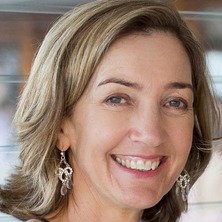
Leslie Oxley is an Adjunct Professor at Curtin University's School of Accounting, Economics and Finance, part of the Faculty of Business and Law. She also serves in the Office of the Provost. Her research focuses on econometrics, financial markets, energy economics, and cliometrics. Key areas include monetary policy, Fintech, climate change impacts, and geopolitical risks. Over 150+ publications span journals like Journal of Financial Stability , Energy Economics , and European Financial Management . Notable work examines cryptocurrency dynamics, ESG reputational risks, and China’s energy policies. Her research bridges theoretical econometric methods and applied analyses of global economic systems. Recent articles emphasize spillover effects in financial crises, Bitcoin’s role amid sanctions, and climate risk pricing. Collaborations with institutions like the University of Waikato and ANU highlight interdisciplinary approaches to macroeconomic challenges. Active in policy-relevant studies, her work addresses regulatory frameworks for digital currencies and sustainable investment trends.
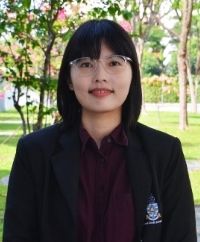
Dr. Sook Rei Tan is a Senior Lecturer in Economics at the School of Business, James Cook University Singapore. She holds a PhD in Economics from Nanyang Technological University (2019) and specializes in applied economics and international finance, with a focus on international financial integration and its impact on economic stability. Her research has been published in journals such as the Journal of International Money and Finance and the International Review of Economics and Finance . Her current research interests include the effects of financial openness, economic policy uncertainty, and tourism economics. Dr. Tan teaches courses in applied econometrics, macroeconomics, and international political economy. She has led projects funded by the World Wildlife Fund (WWF) and contributed to reports for AustCham Singapore. Notable contributions include analyzing US monetary spillovers, oil price shocks, and tourism-driven growth in Singapore. She is actively mentoring PhD candidates in international finance and development economics. Dr. Tan is affiliated with the Economic Society of Singapore and serves on committees such as SEIGOP 2025 and the CITBA Management Committee. Her work bridges theoretical insights with practical applications, fostering academic and professional excellence among students.
Dr. Michael Lydeamore is a Senior Lecturer in the Department of Econometrics & Business Statistics at Monash University. He holds an Honorary Research Fellow position at The Alfred Hospital and is part of Safer Care Victoria. His research focuses on infectious disease modelling, biostatistics, and applying mathematical and statistical tools to public health challenges. Notably, he collaborates on projects addressing antimicrobial resistance in hospitals and pandemic dynamics, such as those related to SARS-CoV-2 and healthcare-associated infections. Dr. Lydeamore holds a Doctor of Philosophy (Applied Mathematics) from the University of Melbourne (2015–2019), a Master of Philosophy (Applied Mathematics) from the University of Adelaide (2013–2015), and a Bachelor of Mathematical Sciences from the same institution (2010–2012). His research interests span epidemiological modelling, Bayesian statistics, and computational biology, with applications to policy, social sciences, and machine learning. He has been awarded the FEIT Excellence Award in Interdisciplinary Research (2022) and recognized for a Top Rated Poster at the ECCMID 2021 Conference. His work contributes to UN Sustainable Development Goals related to good health and well-being, quality education, and sustainable cities. Dr. Lydeamore is actively involved in projects funded by organizations like WHO and the Western Public Health Unit, focusing on pandemic preparedness, antimicrobial resistance, and healthcare system resilience. He is also open to consulting opportunities in data-driven decision-making across public health, policy, and business sectors.
David Wu is a Research Fellow at Monash University's Department of Econometrics & Business Statistics, specializing in infectious diseases modeling. His current research focuses on controlling antimicrobial resistance in Victorian hospitals. He holds a PhD from the University of Auckland (2022), where his work centered on methods for estimating and inferring models of emerging infectious disease outbreaks. Education: PhD in Infectious Disease Modeling, University of Auckland (2022). Research expertise aligns with UN Sustainable Development Goals related to good health and well-being (SDG 3) and sustainable cities and communities (SDG 11). Research Interests: Mathematical modeling of disease transmission Antimicrobial resistance dynamics in healthcare settings Public health intervention analysis Key Findings: Recent studies show mild reductions in hospital bed requirements from CPE isolation guideline changes and no increased admissions linked to carbapenemase-producing enterobacterales colonization. Labs/Teams: Collaborates with multidisciplinary teams including epidemiologists, statisticians, and clinical researchers across Australia and New Zealand. Active in projects funded by health departments and medical research councils.
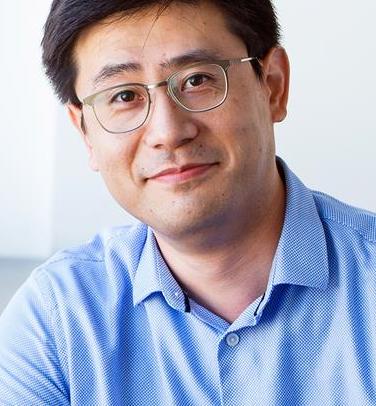
Dr. Jason Tian is a Senior Lecturer in Finance at Swinburne University of Technology's School of Business, Law and Entrepreneurship. He holds a PhD in Finance from La Trobe University and dual honours degrees in Finance and Econometrics from Monash University. His research focuses on retail investor behavior, financial market microstructure, fixed income securities, and applied economics. Prior to academia, he worked as a Senior Economist in the Victorian Government, specializing in macroeconomic forecasting and infrastructure policy, and as a Quantitative Analyst at Macquarie Group. His research has been published in top-tier journals such as the Journal of Economic Behavior and Organization and Pacific-Basin Finance Journal . Key topics include the impact of natural disasters on retail investor decisions, lockdown effects on equity trading, and the role of short selling in bond market volatility. He currently supervises PhD and Master's students exploring topics like central counterparty systems and climate transition risks in emerging markets. Education: PhD in Finance, La Trobe University Dual Honours: Bachelor of Economics & Commerce, Monash University Bachelor of Business, Monash University Non-Academic Experience: Senior Economist, Victorian Government (2016–2023) Quantitative Analyst, Macquarie Group Dr. Tian is actively involved in HDR supervision and contributes to sustainable development goals related to climate action and equitable urban policies. His work bridges academic research with practical policy applications in finance and macroeconomics.
Prof Abbas Valadkhani is a Professor of Economics at Swinburne University of Technology’s School of Business, Law and Entrepreneurship. With over two decades of experience across multiple institutions including the University of Newcastle, Queensland University of Technology, and the University of Wollongong, he specializes in energy economics, monetary policy, investment strategies, and financial markets. His research has driven significant policy impact, notably influencing Australia’s banking sector transparency through parliamentary inquiries and media engagement. Education: PhD in Economics from the University of Queensland (1997). Research Interests: Energy Economics, Monetary Policy, ETF Performance Analysis, Inflation Dynamics, and Financial Market Efficiency. His work bridges theoretical economic models with practical policy applications, particularly in banking regulations and climate-related investment. Awards: Multiple accolades including Swinburne’s Research Excellence and Impact Awards (2015–2024), Elsevier’s Outstanding Reviewer Award, and teaching excellence awards across UOW, QUT, and UNE. Grants: Secured ARC grants (e.g., DP120102753) and industry partnerships focusing on fuel price asymmetry and retail competition. Current supervision includes PhD projects on ESG banking, renewable energy policies, and economic growth dynamics. Teaching: Over 24 years, taught econometrics, macroeconomics, and financial modeling at both undergraduate and postgraduate levels. Currently teaches Economics for Business Decision Making at Swinburne. Labs/Teams: Active in interdisciplinary research collaborations, particularly on energy economics and financial market volatility.
Dr. Ivan Indriawan is a Senior Lecturer in Finance at the Adelaide Business School, University of Adelaide. He holds a Ph.D. in Finance from Auckland University of Technology (AUT), New Zealand. Prior to his current role, he was a Senior Lecturer at AUT, a Research Fellow at the Auckland Centre for Financial Research, and a Credit Risk Scoring Analyst at Citibank. His research focuses on financial markets, market quality, news announcements, and applied econometrics, with publications in top-tier journals like the Journal of Financial Economics and Journal of Banking and Finance . Dr. Indriawan has received notable awards, including the Emerging Researcher Award (2021), Emerald Literati Award (2019), and NZESG RBNZ Research Award (2014). He has secured grants from AUT, AARES, and AFAANZ, and held visiting positions at institutions like the University of Missouri-St. Louis and University of Luxembourg. His work on Music Sentiment and Stock Market Returns explores Spotify streaming trends as investor sentiment proxies, linking music sentiment to equity market performance fluctuations, featured in media outlets like Harvard Business Review and Business Insider . His research spans commodity markets, social media impacts, and macroeconomic news effects, emphasizing behavioral finance and market microstructure. Supervision of Masters/PhD students is available upon inquiry, and he maintains an active international collaboration network.
Dr. Ayse Kizilersu is a Grant-Funded Researcher (B) in the Department of Physics at the University of Adelaide. Her work focuses on theoretical and computational physics, with particular emphasis on lattice Quantum Chromodynamics (QCD), particle physics, and statistical distribution analysis. She is affiliated with the Physics division at the North Terrace campus, office 108A. Her research interests span non-perturbative QCD studies, quark-gluon vertex dynamics, and applications of statistical methods to finance and physics. Dr. Kizilersu's recent contributions include investigations into the Weibull distribution's properties and its applications in censored data analysis, alongside lattice QCD simulations exploring quark-gluon interactions. Her articles reflect interdisciplinary strengths in both high-energy physics and econophysics, addressing topics from particle dynamics to market order analysis. Awards and achievements sections remain unspecified in her profile, though her active grant-funded status indicates ongoing research support. No formal advising roles or student supervision details are documented here. Professional activities include contributions to lattice field theory and statistical modeling communities.
Dr. Omar Bashar is a Senior Lecturer in Economics at Deakin Business School, Faculty of Business and Law, Deakin University, Australia. He is based at the Geelong Waterfront Campus and actively contributes to research, teaching, and academic leadership. He has served as Economics Discipline Coordinator, Director of Teaching in Economics, and Deputy Course Director for the Bachelor of Business program. PhD in Economics – University of Melbourne Master of Economics – Thammasat University, Thailand Bachelor of Social Science (Economics) – University of Chittagong, Bangladesh His research centers on Applied Macroeconomics , with a focus on housing markets , energy and environmental economics , monetary and fiscal policy , and time series econometrics . He employs advanced empirical techniques to analyze macroeconomic shocks, policy impacts, and sectoral dynamics in both developed and developing economies, particularly Australia and Bangladesh. The trend in his recent publications shows a strong emphasis on housing market dynamics, asymmetric policy effects, and the macroeconomic implications of energy and resource shocks. His work combines rigorous econometric modeling with real-world policy relevance, frequently appearing in journals such as Economic Modelling , Journal of Macroeconomics , and Accounting and Finance . His scientific recognition includes: Departmental award: Outstanding Unit Chair (MAE203) in T2, 2019 Member, Economic Society of Australia Member, Econometric Society Dr. Bashar has secured competitive research funding, including a current grant from the Transport Accident Commission (TAC) on evaluating best practices in TAC protocols. He actively supervises postgraduate research students, with two completed PhD supervisions. His teaching portfolio includes core economics units such as Macroeconomics, The Global Economy, and Analytical Methods in Economics and Finance. He is also engaged in major conferences, including the Australian Conference of Economists and the Econometric Society Australasian Meeting. He leads or participates in several research projects, including studies on transformative services, asymmetric spillovers in financial markets, carbon emissions and business cycles, and sectoral energy-economy interactions.
Max Glonek is a Lecturer in Statistics at the School of Computer and Mathematical Sciences, University of Adelaide. His research focuses on developing probabilistic methods for analyzing complex networks, with applied work in political voting behavior and network polarization. Glonek's research interests center on probabilistic modeling, network simulation, and computational statistics. Key applications include measuring political partisanship through voting network analysis and developing algorithms for graph-based machine learning. His publications demonstrate consistent focus on network analysis techniques (2018-2019) and foundational work in directional time series modeling (2015-2016). Research integrates computer science, statistics, and domain-specific applications in political science and geophysics.
Dr Chelle Wang serves as a Lecturer in the School of Risk and Actuarial Studies at the University of New South Wales Business School, where she contributes to both teaching and research in actuarial science and financial risk management. Dr Wang earned her PhD in Actuarial Studies from Monash University, with research focused on economic forecasting and optimization of retirement decisions. Her educational background also includes a Bachelor's degree in Actuarial Studies and Econometrics along with an Honour's degree in Mathematics, all obtained from Monash University. Her research expertise centers on retirement planning systems with particular emphasis on superannuation, pension frameworks, and life cycle modeling. Dr Wang employs stochastic control methodologies and mathematical optimization techniques to analyze financial decision-making throughout individuals' working lives and into retirement. Her work bridges theoretical actuarial science with practical applications for improving retirement outcomes. Dr Wang has published research in high-impact journals including the European Journal of Operational Research and Annals of Actuarial Science, demonstrating her contributions to both theoretical and applied aspects of actuarial science. As an academic in the School of Risk and Actuarial Studies, Dr Wang actively contributes to developing the next generation of actuarial professionals while advancing knowledge in retirement income systems and financial risk management.
Keiichi Kawai is Professor of Economics at Keio University and concurrently a Senior Visiting Fellow at the University of New South Wales (UNSW) . His research spans microeconomic theory, industrial organisation and information economics, with a focus on strategic information disclosure, pricing, reputation and market design. Education Ph.D. in Economics, Northwestern University (2012) M.A. in Economics, Northwestern University (2007) M.A. in Economics, Kyoto University (2005) B.A. in Economics, Kyoto University (2003) Research Interests Dr Kawai’s work lies at the intersection of microeconomic theory , game theory and industrial organisation . He investigates how economic agents strategically disclose information, how markets cope with adverse selection and reputation, and how optimal pricing and contract mechanisms can be designed under uncertainty. His recent studies illuminate competitive persuasion games, refund policy design and the political economy of institutional kludges. Scientific Awards & Grants Discovery Early Career Researcher Award, Australian Research Council (2017-2019) Project Grant, Kyoto Institute of Economic Research (2019) Multiple UNSW Business School Research & Special Grants (2015-2021) Collegio Carlo Alberto Visiting Fellowship (2013) New Staff Research Start-up Grant, University of Queensland (2012) Numerous scholarships and fellowships including Japan-IMF, Ishizaka Foundation and JSPS grants Advising & Grants While no individual student names are listed in the provided material, Dr Kawai has supervised graduate research at UNSW and continues to mentor doctoral students at Keio University. He has been principal investigator on competitive grants exceeding AUD 500,000 and is regularly invited to present at premier theory conferences and seminars worldwide. Labs & Teams At Keio University he leads the Microeconomic Theory research group within the Faculty of Economics. While at UNSW he was affiliated with the School of Economics and participated in the UNSW Business School research community.
Valentyna Melnyk is a Professor of Marketing and Deputy Head for Research at UNSW's School of Marketing. She holds a Ph.D. from Tilburg University and has expertise in consumer behavior, cross-cultural marketing, and experimental methods. Her research bridges societal and managerial relevance, addressing topics like behavioral labeling, temperature effects on emotional responses, and loyalty program dynamics. Education: Ph.D. in Marketing, Tilburg University (2005) Masters in Environmental Management, VU University Amsterdam (2001) Masters in Business Economics (Cum Laude), Sumy State University (2000) Research Interests: Consumer behavior, cross-cultural marketing strategies, advertising efficacy, branding, and the psychological impacts of loyalty programs. Her work employs experimental, field, and econometric approaches to produce actionable insights for businesses. Articles Trends: Recent publications emphasize behavioral labeling, altruistic consumer choices, and the meta-analytic evaluation of loyalty programs. Themes like sensory marketing (e.g., temperature effects) and cross-cultural branding persist as core focuses. Awards & Grants: Emerald Literati Award for Excellence (2021) Two German Research Foundation (DFG) grants totaling €4 million (2014, 2017) Research Excellence Award (UNSW, 2022) Grants & Collaborations: Leads DFG-funded research on hedonic media products in digital social media. Collaborates with institutions in Germany, Australia, and Switzerland. Mentor to junior researchers and a sought-after keynote speaker globally. Labs/Teams: Active in UNSW's marketing research community, contributing to initiatives like the Marketing of Hedonic Media Products project and cross-country brand benefit studies.
Kaliappa Kalirajan is an applied economist and policy analyst affiliated with the Australian National University (ANU) as a Researcher at the Institute for Climate, Energy & Disaster Solutions (ICEDS). He holds visiting professorships at the Madras School of Economics and the Institute for Development Studies in India. His academic career includes professorial roles at institutions like FASID and GRIPS in Japan. He holds a PhD in Economics from ANU (1979) and advanced degrees in Mathematical Economics and Econometrics. Research Interests: His work focuses on macroeconomic policies, trade reform, low-carbon energy systems in Asia, and growth efficiency analysis. He is renowned for contributions to stochastic frontier production function methodology and has contributed to over 19 authored/co-authored books. Recent Articles Trends: His 2023-2025 publications emphasize low-carbon energy trade, regional economic integration, and efficiency analysis. Notable themes include China’s trade potential in the Trans-Pacific Partnership, carbon pricing in ASEAN, and cross-border energy market frameworks in Australia. Awards: Received a Special Commendation Award from the Indian Econometric Society (1994) for frontier production function research. Advising & Grants: Supervised PhD students across multiple universities and advised the FASID-GRIPS Joint Graduate Program. His editorial roles include journals like The Developing Economies and Asia and the Pacific Policy Studies . Labs/Teams: Engaged with ICEDS research initiatives such as the Zero Carbon Energy for the Asia-Pacific Initiative (ZCEAP) and The Resilience Initiative for Food and Agriculture (RIFA).
Dr Sue McAvoy is a Senior Research Fellow at the University of Queensland’s Centre for the Business and Economics of Health, with dual roles as a Non-Executive Director at Sunshine Coast Hospital and Health Service. She holds a PhD (2015), MBA, and Honours in Econometrics from UQ, complemented by executive education from Oxford Said and London Business School. Her expertise lies at the intersection of systems thinking and healthcare innovation, with 15 years of board leadership experience across healthcare and corporate sectors. Education: PhD in System Dynamics (UQ, 2015) MBA (UQ) Bachelor of Economics (Honours in Econometrics, UQ, 1983) Research interests focus on applying systems thinking to healthcare challenges, including emergency department efficiency, Indigenous health equity, and disruptive innovation in agriculture. She co-leads projects funded by MLA and Metro North HHS, developing decision support tools for outpatient access. Her work with Indigenous communities emphasizes participatory modelling to address pandemic responses and misinformation. Her funded projects include: Strategic Referral Allocation Tool for Metro North HHS (2021-2023) COVID-19 pandemic preparedness in urban Indigenous communities (2021) Comparative analysis of traditional vs artificial meat production (MLA grant) Labs/Teams: Core member of UQ Business School’s Future of Health Hub, collaborating with Mater Hospital’s Data & Analytics team to implement predictive ED models. Engages with industry through group model-building workshops for healthcare leaders.