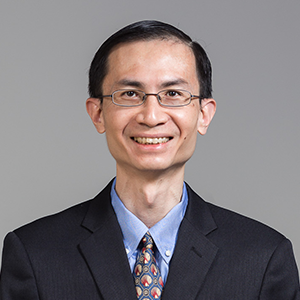
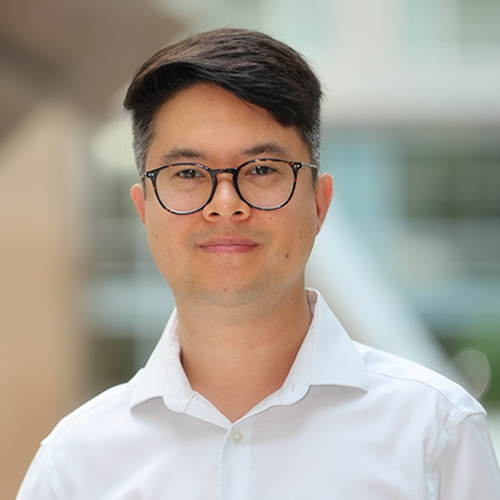
Denzil Fiebig is Professor in the School of Economics at UNSW Business School since 2001, with prior appointments including chair positions in econometrics at the University of Sydney. His international engagements include visiting roles at the University of Florida, University of Southern California, Tilburg University, Victoria University of Wellington, University of York, and Erasmus University. His research focuses on econometric methodology and applied health economics, particularly healthcare utilization and policy analysis. Recent publications demonstrate methodological innovation in analyzing healthcare systems, insurance markets, and economic behavior during health shocks. His work employs advanced econometric techniques including panel data models and discrete choice experiments to study physician behavior, health financing, and socioeconomic disparities in healthcare access.
Steven J. Dundas is Associate Professor at Oregon State University in the Department of Applied Economics and Coastal Oregon Marine Experiment Station . He serves on the Science Panel for the Puget Sound Partnership and as Associate Editor for Marine Resource Economics . Key research areas include Environmental Economics , Natural Resource Economics , Non-Market Valuation , and Coastal Ecosystem Services . Education : Ph.D. in Economics from North Carolina State University (2015), M.S. in Agricultural & Resource Economics from University of Delaware (2011), B.S. in Natural Resource Management from University of Delaware (2003) His research focuses on climate change adaptation, coastal hazard mitigation, and environmental policy evaluation. Recent work explores social media impacts on public land visitation, economic modeling of coastal armoring, and non-market valuation of natural infrastructure. He has contributed to Land Economics and Marine Resource Economics , with media coverage in Jefferson Public Radio and American Shoreline Podcast . Scientific Awards include the Outstanding Article Award . Current projects funded by a $500,000 federal grant to assess Oregon dune resilience against sea level rise. He teaches courses like Environmental Economics and Climate Change Economics , with a professional focus on integrating empirical methods and policy usefulness in climate research.
Dr. GOH Khim Yong is an Associate Professor and Head of the Department of Information Systems and Analytics at the National University of Singapore (NUS School of Computing). He holds a Ph.D. in Business Administration (University of Chicago), M.Sc. and B.Sc. in Computer & Information Sciences (NUS). His research focuses on digital media marketing, social/mobile platforms, AI pricing strategies, and econometric methods. He advises major firms like Alibaba, Lazada, and Johnson & Johnson across industries such as e-commerce, healthcare, and retailing. Educations: Ph.D., Business Administration, University of Chicago (2005) M.Sc., Computer & Information Sciences, NUS (1998) B.Sc., Computer & Information Sciences, NUS (1997, First-Class Honours) His research explores digital transformation, AI-driven pricing, live-streaming commerce, and consumer behavior in platform ecosystems. Notable projects include studying AI pricing agents' impact on e-commerce sales and analyzing live-streaming dynamics' socio-economic effects. He has published in top journals like Management Science and Information Systems Research , and his work frequently addresses practical industry challenges. Recipient of prestigious awards including the International Conference on Information Systems Best Paper Award (2022) and AIS Distinguished Member (2021). He teaches courses in econometrics and data analytics across NUS and the University of Chicago. His former Ph.D. students hold faculty positions at institutions like Tsinghua University and the Chinese University of Hong Kong (Shenzhen).
J.N.K. Rao is a Distinguished Research Professor in the Department of Mathematics & Statistics at Carleton University. A leading expert in survey sampling and statistical inference, he has made groundbreaking contributions to small area estimation (SAE) and data integration methodologies. Research Focus: Specializes in survey methodology, poverty mapping, Bayesian inference, and empirical likelihood techniques. Honors: Gold Medal of the Statistical Society of Canada (1993), Fellow of the Royal Society of Canada (1991), Waksberg Award (2005), SAE Outstanding Achievement Medal (2017). His recent work explores model-based SAE, combining probability and non-probability samples, and improving inference validity through robust calibration. Awards highlight his decades-long impact on statistical theory and practice. Email: jrao@math.carleton.ca
Mehdi Toloo is a Reader in Business Analytics at the University of Surrey's Surrey Business School. He holds a BSc, MSc, and PhD, and is a docent. Previously, he was a Professor at Technical University of Ostrava (Czech Republic) and Sultan Qaboos University (Oman). His research focuses on Business Analytics, Operations Research, Data Envelopment Analysis (DEA), and Decision Analysis. He has supervised over 40 postgraduate students and contributed to top-tier journals like European Journal of Operational Research and Omega. He is an editor for journals including Computers & Industrial Engineering and Decision Analytics. Recognized globally, he ranks in the top 2% of scientists worldwide in Business Analytics & Operations Research (2020-2024). His research projects include performance evaluation with unclassified factors, economies of scope in network DEA, and selective measures in DEA. He collaborates internationally on projects like robust optimization and supply chain sustainability. His teaching spans undergraduate courses in Operations Research, Mathematics for Business, and Programming, alongside postgraduate modules on Quantitative Methods and Advanced DEA. His work bridges theoretical and applied research, with applications in healthcare, renewable energy, and public policy.
Alejandro Gutierrez-Li is an Assistant Professor in the Department of Agricultural and Resource Economics at North Carolina State University (NC State), located in the College of Agriculture and Life Sciences. He is affiliated with the Nelson Hall 433 office and can be reached at alejandro-gli@ncsu.edu. His expertise spans labor economics, applied microeconomics, immigration economics, entrepreneurship, and agricultural labor dynamics. Research Interests: Gutierrez-Li focuses on the intersection of labor markets and immigration policy, particularly their impacts on self-employment and agricultural sectors. He also examines entrepreneurial behavior in migrant communities and the role of technology in modern farming practices. His work integrates empirical methods from econometrics to analyze structural economic issues, such as banking systems in Costa Rica and fiscal morality in Latin America. Publications Trends: Recent articles (2020s) emphasize the economic contributions of immigrants to U.S. agriculture and the labor-market effects of immigration policies. Earlier works (2010s) explored banking sector efficiency and market dynamics in Costa Rica. His research bridges microeconomic analysis with real-world policy implications, reflecting a shift from historical institutional studies toward contemporary labor and immigration challenges in agriculture. Awards: None listed. Advising & Grants: Gutierrez-Li has no listed advisees, and grant details are not provided in the text. He contributes to the Economics Graduate Program at NC State, fostering academic collaboration through initiatives like the Supply Chain Resource Cooperative (SCRC) and Technology Commercialization and Entrepreneurship (TEC) programs. Labs/Teams: He is part of the Economics Graduate Program and engaged with departmental initiatives focusing on business sustainability, risk management, and supply chain innovation.
Lawrence Jin is an Assistant Professor of Economics at the Lee Kuan Yew School of Public Policy, National University of Singapore (NUS). He holds a PhD in Economics and a BA in Mathematics & Economics from Cornell University. His research focuses on behavioral economics, health economics, environmental economics, and cost-benefit analysis, with an emphasis on applying econometric and experimental methods to inform public policy. His academic work spans topics such as physician decision-making, consumer behavior under misinformation, and the economic impacts of health policies. He has published in leading journals like Nature Human Behaviour , Review of Economic Studies , and American Economic Review . Courses taught include PP5203 - Behavioral Economics and Public Policy . Lawrence’s research explores how behavioral insights can address societal challenges, such as vaccine hesitancy, smoking cessation, and infrastructure resilience. His recent studies investigate replicability in social science experiments and the role of decision markets in selecting research priorities. He maintains an active research profile with collaborations in interdisciplinary fields, including health economics and environmental policy. His work bridges theoretical frameworks with real-world policy applications, aiming to enhance decision-making in public health and economic development.
Zhengwu Zhang is an Associate Professor in the Department of Statistics and Operations Research at the University of North Carolina at Chapel Hill. His research focuses on developing statistical and machine learning methods for analyzing high-dimensional neuroimaging data, particularly structural and functional brain connectomics. He leads the UNC Education Program of Intelligence and Connectomics (EPIC), an interdisciplinary initiative training students in brain network analysis. His work addresses challenges in large-scale neuroimaging datasets, including computational efficiency and reproducibility. Zhang completed his Ph.D. in Statistics at Florida State University under Anuj Srivastava. His funding includes NIH grants for CRCNS, structural connectome analysis, and personalized cognitive training. He serves as an Associate Editor for the Journal of the American Statistical Association (Reproducibility). Key contributions include tools like the Surface-Based Connectivity Integration (SBCI) GitHub repository for brain network analysis pipelines. His awards include the 2022 UNC Junior Faculty Development Award and the Oak Ridge Powe Award. Teaching roles include courses on data science, machine learning, and statistical consulting. His research spans brain network dynamics, genetic contributions to connectome structure, and applications of deep learning in neuroscience.
Manuel Morales is an Associate Professor in the Department of Mathematics and Statistics at the University of Montreal since 2005. He holds a Ph.D. in Mathematics (2003) from Concordia University, an M.Sc. in Statistics (2000) from Concordia, and a B.Sc. in Mathematics (1996) from the National Autonomous University of Mexico. His research focuses on Financial and Actuarial Mathematics, particularly in Ruin Theory, Lévy processes, and High-Frequency Finance. He leads applied projects integrating Machine Learning in Banking and ESG Investment, and has pioneered AI governance frameworks at the National Bank of Canada as their Chief AI Scientist. Education: Ph.D. Mathematics, Concordia University, 2003 M.Sc. Statistics, Concordia University, 2000 B.Sc. Mathematics, National Autonomous University of Mexico, 1996 Research Interests: His work spans theoretical and applied directions, including non-Gaussian option pricing, regime-switching models, Limit Order Book dynamics simulation, and AI applications in finance. He emphasizes responsible investment and ESG factors through alternative data analysis. Advising & Partnerships: Supervises Master’s/Ph.D. students in Insurance and Financial Mathematics. Leads the FinML Network (since 2018) and collaborates with industry partners like the National Bank of Canada on AI-driven financial projects. His grants and contracts enable applied research in high-frequency market surveillance and model governance. Labs & Teams: Directs the FinML Network and oversees the National Bank’s AI initiatives, focusing on AI governance and algorithmic trading strategies.
Angelo Mazza is a Full Professor of Demography at the Department of Economics and Business, University of Catania, Italy. His research focuses on spatial demography, migrations, mortality, and the application of computational statistical methods, including GIS and spatial analysis. Mazza earned his Ph.D. from the University of Catania in 2000 and a cum laude degree in Economics and Business in 1997. His work spans several key areas: analyzing residential segregation patterns of immigrants using spatial statistics, developing R packages for statistical modeling (e.g., flexCWM, DBKGrad), and investigating migration dynamics in urban contexts such as Catania and Naples. Recent studies include exploring vaccination sentiment on social media and fine-scale spatial data modeling of migrant settlements in Europe. Mazza's contributions to statistical methodologies, including bias correction in demographic indices and cluster-weighted models, have been published in top journals like Journal of Statistical Software and Spatial Demography . His interdisciplinary research bridges demography, economics, and computer science, with applications in public health and urban policy. Education : Ph.D., University of Catania, 2000 Laurea cum laude in Economics and Business, 1997 Key Research Themes : Spatial demography and GIS applications Migrant settlement patterns and segregation Statistical modeling of demographic data Public health and vaccination trends Notable Contributions : Developed R packages: KernSmoothIRT, DBKGrad, SDD, flexCWM, ContaminatedMixt Leading studies on segregation bias correction and cluster-weighted modeling
Paul Huebner is an Assistant Professor at the Department of Finance, Stockholm School of Economics, and a resident researcher at the Swedish House of Finance. His research focuses on asset pricing, macro-finance, and the interplay between institutional asset demand and market dynamics. He holds a Ph.D. in Finance from the University of California, Los Angeles (UCLA). Research interests include portfolio decisions and asset prices, with emphasis on deriving economic insights from quantitative data and developing methods to analyze their joint behavior. His work addresses questions such as the competitiveness of stock markets, implications of passive investing, and the role of institutional investors. Recent publications include studies on causal inference in asset pricing and the competitive dynamics of stock markets, with implications for passive investment strategies. His research has been presented at the Swedish House of Finance and related academic platforms. Affiliations include the Swedish House of Finance where he contributes to national and international research initiatives. His work bridges theoretical models with empirical evidence, emphasizing policy-relevant insights for financial markets and institutions.
Jonathan W. Lewellen is the Carl E. and Catherine M. Heidt Professor of Finance at the Tuck School of Business at Dartmouth College, where he also serves as Area Chair in Finance. He previously taught at MIT's Sloan School of Management before joining Tuck in 2005. His academic roles include teaching Capital Markets in the MBA program and Corporate Finance in the Business Bridge program. Lewellen holds a PhD (2000), MS (1997), and BS (1994) in Finance from the University of Rochester and Indiana University, respectively. His research focuses on stock price behavior, investor decision-making, and corporate finance, with a particular emphasis on factor models of returns, ownership structures, and autocorrelation in asset returns. He is a Research Associate at the National Bureau of Economic Research (NBER) and has published extensively in top-tier journals like the Journal of Finance , Journal of Financial Economics , and Review of Financial Studies . Lewellen’s recent work explores institutional investor governance, the predictive power of accruals, and the dynamics of corporate investment. His articles consistently address core questions in asset pricing and market efficiency, often challenging conventional models through empirical rigor. He has no listed scientific awards but maintains an active speaking schedule at finance conferences and institutions, including the NBER Summer Institute and the American Finance Association Annual Meeting. No formal advisees or grants are explicitly listed, though his involvement in PhD-level teaching (e.g., Advanced Financial Economics III at MIT) implies potential mentorship roles. He is affiliated with the Tuck School’s finance department and NBER’s Asset Pricing Group.
Maik Schmeling is a Visiting Professor of Finance at Bayes Business School, City, University of London , and a full-time Professor of Finance at Goethe University Frankfurt . He is also a Research Fellow at the Centre for Economic Policy Research (CEPR) and the Bank for International Settlements (BIS) . His academic work spans empirical finance, international markets, and monetary economics. His research focuses on empirical asset pricing, international finance, macro-finance, and investments , with a strong emphasis on how central bank communication—particularly tone and textual content—affects financial markets. He explores topics such as currency risk premia, monetary policy transmission, and information flows in foreign exchange markets. His recent publications reveal a consistent trend in analyzing high-frequency market reactions to policy communication, using textual analysis to extract sentiment and tone from central bank statements. These works span top journals such as the Journal of Finance , Journal of Financial Economics , and Review of Financial Studies , demonstrating interdisciplinary rigor at the intersection of finance, macroeconomics, and data science. Research Fellow, Centre for Economic Policy Research (CEPR), Nov 2016 – present Research Fellow, Bank for International Settlements, Dec 2016 He advises PhD research students and has received research grants from the German Science Foundation (DFG) . His professional activities include consultancy roles with the IMF, Deutsche Bundesbank, and BIS, and he regularly presents at major finance conferences including the American Finance Association (AFA) , Western Finance Association (WFA) , and European Finance Association (EFA) . His academic and professional engagements reflect a deep integration with central banking institutions and global financial policy debates, particularly in the area of communication and market expectations.
Vicky Fasen-Hartmann is a Professor at the Karlsruhe Institute of Technology (KIT) within the Department of Mathematics, specifically affiliated with the Institute of Stochastics. She has held her W3 Professor position since October 2012, with two periods of parental leave (August 2016-August 2017 and October 2018-October 2019). Prior to her current position, she held postdoctoral research positions at ETH Zurich (RiskLab), TU Munich, Université Pierre et Marie Curie, and Cornell University. Her educational background includes: Habilitation (2010) in Heavy Tails in Finance, Insurance and Telecommunication from TU Munich Ph.D. (2004) in Extremes of Lévy Driven Moving Average Processes with Applications in Finance from TU Munich Diploma in Mathematics (2002) from Karlsruhe Institute of Technology Professor Fasen-Hartmann's research spans multiple areas of theoretical and applied statistics with a focus on extreme value theory, heavy-tailed distributions, and their applications in finance and risk management. Her work bridges theoretical probability with practical financial applications, particularly in modeling rare events and systemic risks. She has made significant contributions to the understanding of Lévy processes, continuous-time ARMA models, and multivariate extremes. Her research combines rigorous mathematical theory with practical applications in financial mathematics, insurance, and telecommunications networks. The trends in her recent publications (2020-2025) show a clear evolution toward high-dimensional extreme value theory, financial network risk contagion, and advanced modeling of continuous-time processes. Her work increasingly addresses the challenges of modern financial systems, including systemic risk measurement, high-dimensional dependency structures, and the statistical properties of extreme events in complex systems. She has developed innovative methodologies for analyzing multivariate extremes, risk contagion, and continuous-time state space models. Professor Fasen-Hartmann has served in significant editorial roles including Associate Editor for the Scandinavian Journal of Statistics since 2014, Managing Editor of Lévy Matters (2008-2014), and Editor of Bernoulli News (2009-2011). She has also been active in academic service through committee work, including the Steering Committee of the Probability and Statistics Group in Germany (2014-2016) and the Examination Board of the Department of Mathematics at KIT (since 2017). She has supervised numerous doctoral and master's students, with current PhD candidates including Lucas Butsch (since 2021) and previously Lea Schenk, Celeste Mayer, Markus Scholz, and Sebastian Kimmig. Her teaching portfolio includes advanced courses in Time Series Analysis, Continuous Time Finance, Extreme Value Theory, and Asymptotic Stochastics. She regularly organizes workshops and conferences on specialized topics in probability and statistics, demonstrating her leadership in the academic community.
Professor Otto Toivanen is a Professor in the Department of Economics at Aalto University's School of Business, specializing in industrial organization with expertise in competition, innovation, and regulation. His research focuses on: Pharmaceutical market regulation R&D and innovation policy Patent systems Cartel behavior and competition policy He employs rigorous empirical methods to analyze real-world market dynamics and policy impacts. Recent publications reveal a consistent emphasis on welfare implications of regulatory interventions, particularly in pharmaceutical markets and innovation ecosystems. His work leverages micro-level data to examine R&D team dynamics, price regulation effects, and patent system reforms, bridging theoretical economics with practical policy design. Professor Toivanen teaches Introduction to econometrics and PhD-level Industrial Organization courses, training the next generation of economists in empirical methodology and industrial organization theory.