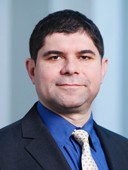
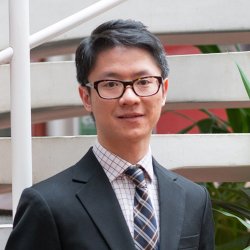
Peter Egger is a Full Professor at the Department of Management, Technology, and Economics at ETH Zürich . His research spans applied and theoretical econometrics, international economics, and industrial organization.
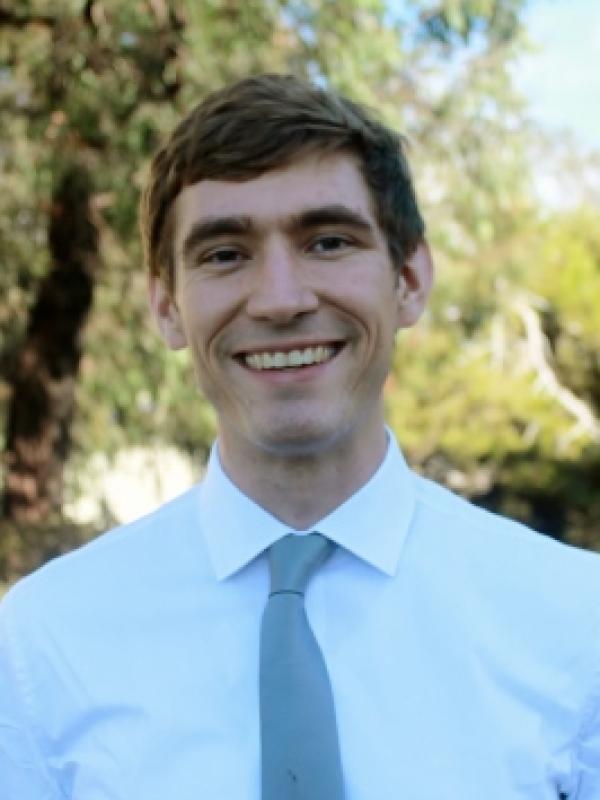
John Rehbeck serves as Associate Professor of Economics at The Ohio State University, joining the Department of Economics in fall 2017. His research bridges microeconomic theory with empirical applications, focusing on revealed preference frameworks and experimental methodology. Educational background: Ph.D. in Economics, University of California, San Diego Rehbeck's work centers on revealed preference theory , investigating how observed choices reveal underlying preferences through rigorous theoretical modeling and experimental validation. He develops advanced econometric techniques for testing rationality axioms and measuring choice consistency, while exploring behavioral phenomena like nontransitive preferences and stochastic choice patterns. His methodological innovations address real-world complexities including menu-dependent decision rules and latent utility structures. Analysis of his 15 most recent publications (2022-2025) reveals three dominant trajectories: (1) Theoretical extensions of revealed preference frameworks incorporating permutation invariance and Bayesian updating; (2) Computational advances using integer programming for goodness-of-fit measurement; (3) Experimental investigations into value integration and risk preferences. Published in top journals including Econometrica , his work demonstrates consistent progression from foundational theory to market applications like cement industry analysis.
Maria A. Shtefan is an Associate Professor and Department Head of the Department of Accounting, Analysis and Audit at the Faculty of Economics, Higher School of Economics (HSE University) campus in Nizhny Novgorod. She has been with HSE University since 2002 and serves as a Programme Scientific Supervisor for Finance and is a Member of the HSE Academic Council. Her administrative team includes deputies E. O. Suchkova, M. Gubochkina, and N. Chaprak, with A. Blyakhman serving as her supervisor. Dr. Shtefan holds a Candidate of Sciences (PhD equivalent) in Accounting and Statistics from the Russian State Agricultural Distance-Learning University (2008) and completed her undergraduate degree at Lobachevsky State University of Nizhny Novgorod (2002). She was awarded the title of Associate Professor in 2016. Her research focuses on critical areas of modern accounting and financial reporting, including Russian and international standards of accounting and financial reporting, Russian and international auditing standards, and the implementation of IFRS. She has published extensively on topics related to audit methodology, financial statement fraud detection, non-financial reporting, ESG factors, and the application of international accounting standards in Russian contexts. Her scholarly contributions demonstrate a consistent focus on bridging theoretical accounting frameworks with practical applications in the Russian business environment, particularly examining how international standards can be effectively implemented within domestic contexts. Her work often addresses specific challenges faced by Russian companies in areas such as railway transport accounting, financial statement preparation, and audit practices. Best Teacher Award (2021-2022, 2017-2019) Young Faculty Support Programme - Category 'Future Professoriate' (2010-2011) Member of the Editorial Council of 'International Accounting' journal (2014) Participant at International Journal of Arts & Sciences (IJAS) conference in London (2013) Dr. Shtefan actively supervises doctoral candidates, including Y. Zotova (researching ESG factors' impact on economic efficiency) and M. Goryacheva (studying materiality of financial and non-financial reporting information). She teaches multiple courses including Economic-management thinking, Fundamentals of External and Internal Audit, and International Financial Reporting Standards across Bachelor's and Master's programs. Her teaching spans various academic years, demonstrating her commitment to developing accounting and finance professionals with strong theoretical knowledge and practical skills.
Dr. Rohit Jindal serves as Associate Professor and Chair of the Department of Decision Sciences within MacEwan University's School of Business in Edmonton, Alberta. His academic leadership spans quantitative methods, decision sciences, and sustainability-focused research with significant policy implications for businesses and communities globally. He holds a PhD from Michigan State University and an M.Sc. from the University of Edinburgh, with prior research appointments at the University of Calgary's Haskayne School of Business and the University of Alberta's Department of Resource Economics. Dr. Jindal's research integrates environmental economics, behavioral decision-making, and econometric analysis to address sustainability challenges. His work examines carbon markets, payments for ecosystem services, and risk analysis through field experiments across Africa, Asia, and Latin America. He employs choice experiments and behavioral economics to investigate how incentives shape environmental compliance and land-use decisions, particularly in developing economies. His publication trajectory reveals deepening engagement with climate policy mechanisms, evolving from foundational work on carbon forestry impacts in Africa to recent analyses of agricultural carbon offsets and forest landscape restoration. The research consistently bridges theoretical econometrics with practical policy applications in environmental management. Sustainability Reimagined Fellowship (2018) Best Paper in Social Sciences, Asia Pacific Conference (2016) Banting Fellowship, SSHRC Canada (2012) Multiple MacEwan University research grants (2018, 2016, 2014) World Bank and USAID-funded field projects Dr. Jindal mentors senior students in independent studies while leading the Behavioral Economics and Environment (BEE) Lab. This interdisciplinary research collective unites faculty from decision sciences, marketing, international business, and psychology to investigate environmental decision-making through lab and field experiments, with active collaborations across North America and globally.
Sotirios Thanos is a Senior Lecturer (Associate Professor) in Real Estate and Urban Economics at the University of Manchester within the School of Environment, Education and Development's Department of Planning, Property and Environmental Management. He actively teaches Urban and Environmental Economics and Real Estate Modelling courses while accepting PhD students for supervision. His academic credentials include: PhD in Economics, University of Leeds (awarded 2008) MA in Transport Economics, University of Leeds (awarded 2001) Thanos specializes in real estate, urban, transport, and environmental economics with methodological expertise in spatial econometrics, panel data analysis, choice experiments, and non-market valuation. His current research focuses on spatio-temporal house price modeling and transportation noise impacts, contributing directly to UN Sustainable Development Goal 11 (Sustainable Cities and Communities). Analysis of his recent publications reveals consistent application of advanced spatial econometric techniques to housing market dynamics, environmental externalities, and transportation economics. His work demonstrates increasing policy relevance through studies on housing supply constraints, flood risk valuation, and pandemic-induced housing market shifts, often bridging theoretical econometric innovation with practical urban planning applications. Thanos actively supervises postgraduate researchers and leads significant research initiatives including: Manchester Real Estate and Urban Economics (MREUE) group (ongoing) Community Infrastructure Levy housing market impacts study (2021) Societal cost of flooding research (2017-2018) Food and drink retail location patterns feasibility study (2021) He directs the MREUE research group, which investigates real estate markets across the UK and India through interdisciplinary collaboration between faculty and postgraduate students, focusing on housing policy, spatial economics, and environmental valuation.
Darius Plikynas is a Senior Researcher at the Smart Technologies Research Group within the Institute of Data Science and Digital Technologies at Vilnius University . His research integrates computational intelligence methods with agent-based simulation to model cognitive and social processes. Position: Senior Researcher, Chief Researcher in the Project Address: Akademijos St. 4, room 224, Vilnius Contact: +370 5 210 9333, +370 620 95101 Email: darius.plikynas@mif.vu.lt Personal page: http://www.dariusplikynas.eu Dr. Plikynas' research spans interdisciplinary domains including neuroscience, physics methods, complexity theory, and distributed cognitive systems. He led the 2017–2019 project "Development of a metric, conceptual and simulation model of the social impact of cultural processes" under the LMT Research Group Funding Program. His recent publications (2016–2025) reflect trends in combining machine learning with social science questions (fake news analysis, propaganda detection) and agent-based modeling of cultural/social capital dynamics. Key collaborations include Leonidas Sakalauskas, Rimvydas Laužikas, and Arunas Miliauskas. Scientific supervision includes doctoral students: Andrius Budrionis (University of Tromsø, Norway) Ieva Rizgelienė (PhD topic: "Propaganda detection and classification in social media using hybrid deep learning") He also serves as an expert at Vilnius University and has contributed to projects involving: 2D financial market visualization Neural oscillation-based cognitive modeling Indoor navigation for blind individuals Cultural participation impact on social capital
Evangelos Ioannidis is an Associate Professor at the Department of Statistics, School of Informatics and Statistics, Athens University of Economics and Business. Born in 1962, he holds a Mathematics PhD from the University of Heidelberg (1993) and has served in his current department since 1999, progressing from Lecturer (1999) to Assistant Professor (2007) and Associate Professor (2023). His expertise spans spectral analysis of time series , cointegration methods , and bootstrap applications in economic data analysis, with additional focus on Official Statistics and sampling techniques . University of Heidelberg: MMath (1987), PhD (1993) Researcher, University of Heidelberg (1987-1991) Visiting Researcher, University of Orsay, Paris Sud (1992-1993) OECD, Paris (1994-1998) National Institute of Labour (1999) His scientific contributions focus on time series econometrics, VAR model spectra, and R&D expenditure analysis. Recent work includes non-parametric spectral estimation and risk-based sampling methodology. He has collaborated with Eurostat on statistical projects (2012-2014). Current affiliations include the Athens University of Economics and Business , where he teaches and conducts research on economic time series analysis and statistical methods.
Hyungsik Roger Moon is Professor of Economics in the Department of Economics at the University of Southern California's Dornsife College of Letters, Arts and Sciences, where he has served since 2000 after beginning his career at UC Santa Barbara. His academic trajectory progressed from Assistant Professor (2000) to Associate Professor (2004) and full Professor (2008), reflecting sustained contributions to econometric methodology. His educational foundation includes: Ph.D. in Economics, Yale University, 1998 M.A. in Economics, Yale University, 1995 B.A. in Economics, Seoul National University, 1989 Moon's research centers on econometric theory development and applied methodology, with particular expertise in panel data analysis, dynamic modeling, and high-dimensional estimation. His theoretical innovations address complex challenges in interactive fixed effects, unit root testing, and heterogeneity modeling, while applied work spans labor economics (income dynamics), health economics (pancreatic cancer trials), and macroeconomics (Covid-19 forecasting). This dual focus bridges rigorous mathematical frameworks with real-world policy applications across multiple economic subfields. Analysis of recent publications reveals an intensifying focus on robust estimation techniques for dyadic data, Bayesian approaches to sparse heterogeneity, and methodological innovations in forecasting with censored panel data. His work increasingly integrates machine learning concepts with traditional econometrics, particularly in high-dimensional seemingly unrelated regression systems and network-based peer effect modeling. His distinguished scientific contributions have been recognized through: Fellow of the Econometric Society (2023) Fellow of the Journal of Econometrics (2019) RK Cho Economics Award (2018) Maekyung/KAEA Economist Award (2012) Econometric Theory Multa Scripsit Award (2006-2007) Korea-America Economic Association Young Scholar Award (2005) Moon has secured significant research funding including an NSF grant of $180,675 for 'Forecasting with Dynamic Panel Data Models' (2016-2020) and $68,000 for 'Asymptotic Analysis of Panel Regression Models' (2009-2010). His academic leadership extends to editorial roles at the Journal of Business and Economic Statistics, Econometric Theory, and Journal of Econometrics, plus administrative service as Director of Graduate Studies for USC's Economics Ph.D. program (2018-2021) and Associate Director of USC Dornsife INET (2015-2017). Through his position at USC Dornsife INET and graduate program leadership, Moon actively shapes research directions in new economic thinking while mentoring future econometricians through advanced courses like Big Data Econometrics.
Dr. Mahelet G. Fikru is an associate professor in the Department of Economics at Missouri University of Science and Technology, where she has been a faculty member since 2011. She is affiliated with the Center for Intelligent Infrastructure and serves as an associate editor for Energy Reports. Her professional memberships include the Association of Environmental and Resource Economists (AERE) and the US Association for Energy Economics (USAEE). Dr. Fikru's educational background includes: Ph.D. in Economics from Southern Illinois University Carbondale B.A. in Economics from Addis Ababa University, Ethiopia Her research centers on energy transition, energy efficiency, technology adoption, mineral resources, ESG, mining, environmental policies, and merger incentives. She employs experimental surveys, econometric methods, and economic modeling to analyze policy impacts and consumer behavior, with particular focus on critical minerals for clean energy technologies, carbon capture economics, and energy market structures. Her work bridges environmental economics with practical policy design for sustainable development. Analysis of Dr. Fikru's recent publications reveals dominant themes in energy transition mineral sourcing, carbon management economics, and consumer behavior in low-emission electricity markets. Her research demonstrates methodological diversity through choice experiments, spatial econometrics, and optimization frameworks, consistently addressing policy-relevant questions about mineral supply chains, merger regulations under environmental constraints, and decarbonization pathways. The work shows increasing emphasis on empirical validation of theoretical economic models in real-world energy transitions. Dr. Fikru contributes to academic discourse through her editorial role at Energy Reports and active participation in professional societies. Her affiliation with the Center for Intelligent Infrastructure facilitates interdisciplinary collaboration on infrastructure-related research, while her office at Harris Hall serves as a hub for economics-focused energy and environmental policy analysis.
Skrobotov Anton Andreevich is a Professor at the Faculty of Economic Sciences and Director of the Center for Big Data in Economics and Finance at the National Research University Higher School of Economics (HSE). With 15 years of scientific and teaching experience, he joined HSE in 2024 and focuses on econometrics, financial econometrics, and non-stationary time series analysis. His research emphasizes robust statistical methods. Education: Doctor of Economics (2024) Candidate of Economic Sciences (2018), Saint Petersburg University Master's degree in Economics (2013), Russian Presidential Academy of National Economy and Public Administration (RANEPA) Skrobotov specializes in econometrics, time series analysis, and robust testing. His recent publications address financial bubbles, volatility clustering, and structural shifts in economic data. Scientific incentives: High Professional Potential Group (HSE Personnel Reserve) Category 'New Teachers' (2025) He has led courses in Econometrics at RANEPA and HSE, and secured multiple grants from the Russian Science Foundation and Russian Foundation for Basic Research. His work involves collaborations with institutions like the Gaidar Institute and Saint Petersburg State University.
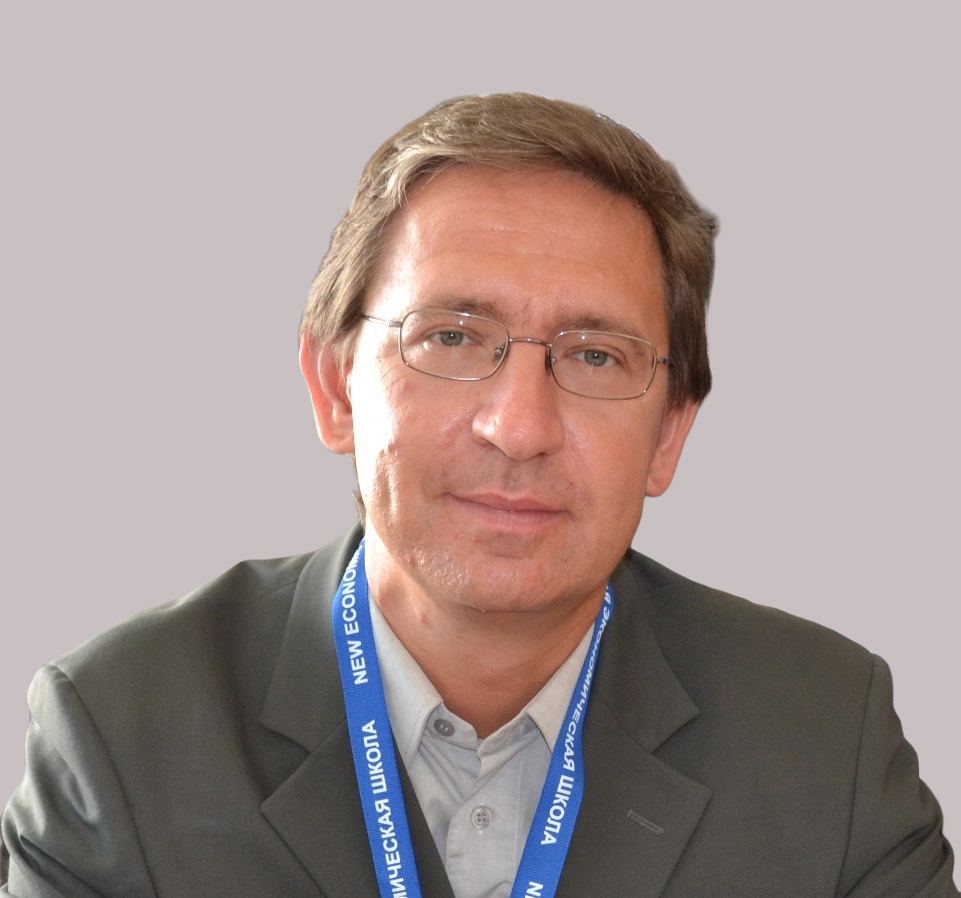
Stanislav Anatolyev serves as Full Professor of Economics at the New Economic School (NES) since 2009 and holds an Associate Professor position at CERGE-EI in Prague. Affiliated with NES since 2000, he teaches advanced econometrics courses including Econometrics 3, Applied Time Series Econometrics, and Selected Chapters in Econometrics. Education PhD in Economics, University of Wisconsin-Madison (2000) MSc in Economics, New Economic School (1995) Specialist Diploma in Applied Mathematics, Moscow Institute of Physics and Technology (1992) Research Focus : Professor Anatolyev's work centers on econometric theory with expertise in method of moments, time series modeling, and high-dimensional data analysis. His contributions span theoretical developments in factor models, volatility estimation, and instrumental variables methods, alongside practical applications in financial econometrics and portfolio optimization. He maintains active research collaborations across international institutions. Publication Trends : Recent work demonstrates increasing emphasis on ultra-high-dimensional econometrics, with significant contributions to copula-based portfolio allocation, many-instrument regressions, and financial market belief updating mechanisms. His publications bridge theoretical rigor with empirical applications, frequently appearing in top econometrics journals including Journal of Econometrics and Econometric Theory. Awards Econometric Theory Multa Scripsit Award (2022) for exceptional scholarly output Academic Leadership : As founding Editor-in-Chief of the Russian-language journal Quantile since 2006, he has fostered econometric research dissemination in Eastern Europe. His co-authored textbook Methods for Estimation and Inference in Modern Econometrics serves as a key reference in graduate econometrics education. Professional Activities : Regularly presents at international conferences and serves as referee for leading econometrics journals, maintaining active engagement with the global econometrics community through seminar presentations and collaborative research projects.
Dr. Robert G. Chambers is a Professor in the Department of Agricultural and Resource Economics at the University of Maryland's College of Agriculture and Natural Resources. He serves as Editor-in-Chief of the Journal of Productivity Analysis and maintains an active research program spanning production theory, agricultural economics, and decision-making under uncertainty. Education: B.S.F.S. in International Relations, Georgetown University (1972) M.S. in Agricultural and Resource Economics, University of Maryland (1975) Ph.D. in Agricultural and Resource Economics, UC Berkeley (1979) His research integrates neoclassical production economics with agricultural applications, focusing on uncertainty, risk analysis, and productivity measurement. Recent work examines agricultural total factor productivity, environmental accounting in productivity frameworks, and weather risk management through index-based approaches. He bridges theoretical economics with practical policy applications in agricultural and resource management. Analysis of his 2020-2022 publications reveals a cohesive research trajectory centered on methodological advancements in production economics applied to agricultural contexts. Key contributions include foundational work on distance functions, production under uncertainty, and environmental integration in productivity accounting, often through OECD collaborations. His scholarship demonstrates rigorous theoretical grounding coupled with real-world relevance for agricultural policy. No specific scientific awards are documented in the provided materials, though his editorial leadership of the Journal of Productivity Analysis and invitations to contribute to major handbooks like the Handbook of Production Economics indicate significant professional recognition within the field. Professor Chambers advises graduate students in agricultural and resource economics and has secured research funding enabling collaborations with international organizations including the OECD. His work on agricultural productivity measurement and environmental accounting reflects sustained grant-supported research activity, though specific grant details are not enumerated in the source texts. He maintains academic affiliations through the Department of Agricultural and Resource Economics and contributes to scholarly discourse via editorial work and handbook authorship. While no dedicated research laboratory is described, his collaborative projects with institutions like the OECD demonstrate active participation in international research networks focused on agricultural productivity and environmental economics.
Jason Chen is an Associate Professor in Tourism and Events Management at the University of Surrey, serving as Director of Postgraduate Research in the School of Hospitality and Tourism Management. He holds a PhD in Tourism Management from The Hong Kong Polytechnic University, alongside earlier degrees in Economics (BA, 2004) and Economics and Statistics (MSc, 2007). His research focuses on tourism economics, tourist behavior, demand forecasting, and quantitative methods. Notable projects include 'Understanding the Landscape of Inbound Tourism Measurement' and collaborations with organizations on tourism impact assessments. He has secured grants, including an ESRC grant for the School, and advises on postgraduate research programs. Teaching responsibilities include modules in International Tourism Management, Consumer Behavior, and Researcher Development. His recent publications emphasize spatiotemporal models, crisis management in tourism, and pro-environmental behavior interventions. He has contributed to policy-relevant studies on tourism's economic role and sustainability challenges. Key research themes include destination resilience, electric vehicle adoption, and behavioral nudging for sustainability. His work bridges academic theory with practical applications, supporting industry and policy stakeholders.
Christian Bayer is a Professor of Economics at the University of Bonn, affiliated with the Department of Economics and the Institute for Macroeconomics and Econometrics. His research spans macroeconomic dynamics, labor economics, and heterogeneous agent modeling, with a focus on inequality, fiscal policy, and business cycles. Research Interests: Macroeconomics, labor economics, income risk, computational economics, fiscal and monetary policy, business cycles. Collaborations: Benjamin Born, Ralph Luetticke, Moritz Kuhn, and others. Recent work explores HANK models , pandemic consumption , and energy shock responses , with applications to policy design. Key trends include integrating heterogeneous agent frameworks and numerical methods to analyze shock propagation and market frictions. Press Contributions: Regular op-eds in Frankfurter Allgemeine Zeitung on wealth distribution, CO₂ pricing, and gas dependency. Projects: Active revisions include "Which Ladder to Climb?" (2019) and "Monopsony Makes Firms..." (2022). He is associated with the Institute for Macroeconomics and Econometrics at the University of Bonn, contributing to policy-focused research and methodological advancements in economic modeling.
Benny Moldovanu serves as Professor of Economics at the University of Bonn, where he concurrently holds leadership positions as Director of the Graduate School and founding Co-Director of the Hausdorff Center for Mathematics. His academic influence extends internationally through visiting professorships at the University of Michigan, Northwestern University, Yale University, and University College London. His research program centers on mechanism design, with pioneering applications to auction theory, dynamic pricing systems, competitive contests, and voting institutions. This work bridges theoretical economics with real-world policy challenges, particularly in industrial organization and political economy contexts where strategic decision-making is critical. His methodological approach combines rigorous game-theoretic modeling with practical institutional design. Recent publications demonstrate consistent application of mechanism design principles to contemporary political-economic challenges including Brexit negotiations, two-sided market dynamics, and historical legislative analysis, while maintaining foundational contributions to auction theory and social choice mechanisms. Moldovanu's scientific contributions have earned significant recognition: Fellow of the Econometric Society Max Planck Prize Gossen Prize His professional impact extends beyond academia through advisory roles for major corporations and government entities on auction design and strategy implementation. Editorial leadership includes associate editorships at premier journals such as Econometrica, Journal of Economic Theory, Games and Economic Behavior, and Journal of the European Economic Association. As founding Co-Director of the Hausdorff Center for Mathematics, Moldovanu cultivates interdisciplinary research at the intersection of mathematical theory and economic applications, fostering collaborative projects that address complex institutional design problems through advanced quantitative methods.