Yuchen Wang is an Assistant Professor in the Department of Management Science & Information Systems at UMass Boston . Their research bridges artificial intelligence, behavioral modeling, and data science, focusing on applications in healthcare, sustainability, and social systems. Key research themes: AI ethics in healthcare, behavioral drivers for eco-friendly technology adoption, and predictive modeling in public health/social issues Email: Not explicitly listed on public profile Recent work spans: Healthcare AI : Examining trust dynamics in medical applications Sustainability : Consumer behavior analysis for electric vehicle adoption Public Health : Methodologies for analyzing incomplete medical datasets Social Systems : Blockchain applications for online safety
Ryszard Tadeusiewicz is a Professor at the Department of Biocybernetics and Biomedical Engineering , Faculty of Electrical Engineering, Automatics, Computer Science and Biomedical Engineering , AGH University of Science and Technology in Kraków, Poland. His research spans biomedical engineering, artificial intelligence, and automation, with a focus on medical imaging, neural networks, and healthcare sustainability. Primary research areas: AI-driven diagnostics, biocybernetics, and automated systems Contributions to conferences like ICAISC and journals in medical informatics Leadership in interdisciplinary projects at the intersection of engineering and medicine His recent publications highlight the integration of deep learning with biomedical applications, including tumor segmentation, pneumonia detection, mental health classification, and forest-planting robotics. While no explicit awards are listed, his extensive publication record underscores his role as a thought leader in AI and biomedical innovation.
Dr. Guido van Capelleveen is an Assistant Professor at the University of Amsterdam's Amsterdam Business School and Faculty of Economics and Business. His academic and business expertise spans information systems, business analytics, and data mining, with a focus on real-world applications in circularity and sustainability. Education: PhD in Environmental Informatics (2020), University of Twente MSc in Business Information Technology (2013), University of Twente BSc in Information Science (2011), University of Utrecht Guido's research integrates data science, machine learning, and recommender systems to advance circular economy initiatives, including industrial symbiosis, eco-industrial parks, and sustainable resource management. His recent publications emphasize circular passports, greenwashing analysis, and energy symbiosis frameworks. His work experience includes postdoctoral research at the University of Twente and industry roles as an information analyst at Topicus (Dutch software organization) and data scientist at San Diego Supercomputer Center.
Claudia Tania Picinin is a Researcher affiliated with the Competitiveness, Innovation and Sustainability (CIS) research group. Her work spans multiple domains including economic development, sustainability transitions, and innovation systems, with particular focus on BRICS nations and industrial economies. She maintains active research collaborations across Brazil and internationally. Her primary research interests include: Sustainability in industrial and organizational contexts Innovation ecosystems and knowledge management frameworks Economic complexity in emerging markets Labor economics and future workforce development Research policy and academic performance metrics Picinin's scholarly output demonstrates consistent focus on sustainability transitions, industrial development, and research evaluation. Recent works (2022-2024) examine Industry 4.0 workforce impacts and economic bloc comparisons, while earlier publications (2018-2021) analyze knowledge management systems, environmental practices in BRICS industries, and bibliometric assessments of regional economies.
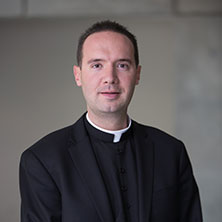
Rev. Joseph R. Laracy, S.T.D. , is an Associate Professor and Chair of Systematic Theology at the Immaculate Conception Seminary School of Theology at Seton Hall University. He is also affiliated with the Department of Mathematics and Computer Science, the Department of Catholic Studies, the University Core Curriculum, and the University Honors Program. His research bridges the Catholic Intellectual Tradition with disciplines like cybernetics, machine learning, software engineering, and theology of creation . His theological work focuses on the intersection of faith and reason , particularly in dialogue with mathematical logic, cosmology, cybernetics, and medicine . He teaches courses such as Creation and Science (cross-listed with Catholic Studies and the Core Curriculum) and Dynamical Systems Theory . His technical expertise includes applied dynamical systems, software architecture, and security modeling . Education: S.T.D. in Fundamental Theology, Pontifical Gregorian University (2019) S.T.L. in Fundamental Theology, Pontifical Gregorian University (2014) S.T.B. in Theology, Pontifical Gregorian University (2012) M.S. in Engineering Systems, Massachusetts Institute of Technology (2007) B.S. in Computer Engineering with minor in Mathematics, University of Illinois at Urbana-Champaign (2005) Research Trends: Recent publications explore ethics of AI, theology-science dialogue, historical mediating disciplines, and interdisciplinary education , with a focus on cybernetics, dynamical systems, and Catholic social teaching. Professional Affiliations: Institute of Electrical and Electronics Engineers (IEEE) Center for Theology and the Natural Sciences (CTNS) Society of Catholic Scientists (SCS) Stanley Jaki Foundation International Institute of Informatics and Systemics (Fellow, inaugural class) Scientific Awards: Inaugural class of fellows at the International Institute of Informatics and Systemics Founding co-PI of the Academy for Nature and Nurture
Alexander Chen serves as Professor of Management at the University of Central Arkansas College of Business, maintaining active research and teaching responsibilities with office location COB 312N and contact information achen@uca.edu. His academic profile spans over three decades of publication activity, demonstrating sustained scholarly engagement in business information systems and cross-cultural consumer behavior. Chen's research centers on electronic payment systems adoption across 15+ countries, with particular emphasis on generational differences (Baby Boomers, Millennials, Gen Z) in e-payment behavior across Egypt, China, Germany, Japan, and Saudi Arabia. Additional core interests include international business ethics comparisons among students, minority entrepreneurship success factors in Arkansas and Egypt, and health informatics applications for aging populations in Taiwan. His methodological approach frequently employs survey research examining demographic variables, cultural factors, and behavioral intentions within technology adoption frameworks. Analysis of Chen's 15 most recent publications reveals three dominant research trajectories: (1) E-payment system adoption drivers across diverse cultural contexts with 8 publications (2021-2023) examining post-pandemic acceleration and demographic influences; (2) Longitudinal and cross-national ethics studies with 3 publications analyzing gender differences and educational impacts; (3) Niche explorations of agricultural product consumption (pecans) and eco-industrial management. His work consistently demonstrates methodological rigor through large-scale international surveys and demographic analysis.
Kosta Mitreski is a professor at the Faculty of Computer Science and Engineering at Ss. Cyril and Methodius University in Skopje, North Macedonia. Since joining the university in 1987, he has held a long-standing academic role and currently teaches at both undergraduate and postgraduate levels. His research is deeply interdisciplinary, focusing on environmental modeling , spatio-temporal data analysis , 3D object modeling , multimedia systems , and intelligent information systems . These areas are especially relevant to his leadership of the Eco-informatics master's program, which he both founded and coordinates. Dr. Mitreski has participated in numerous international research projects under the European Commission’s TEMPUS , Framework Programme (FP) , and Horizon 2020 (H2020) initiatives. He has also held visiting scientist roles at various European universities, contributing to collaborative research and knowledge exchange. He has authored over 100 journal and conference papers , reflecting his active engagement in both theoretical and applied research.
Ulrik Ekman serves as Associate Professor of design and architecture at the Department of Arts and Cultural Studies, Faculty of Humanities, University of Copenhagen. His work integrates environmental humanities with urban design and digital culture to address planetary challenges in the Anthropocene through innovative sustainability and resilience frameworks. Education Background: Ph.D. in Literature, Duke University, USA (2000) Research Focus: Ekman pioneers research in Green and Blue Humanities , examining water relations, coastal resilience, and adaptive transition theories for sustainable urban infrastructures. His scholarship explores intersections of eco-art and new media through critical design aesthetics, posthumanism, and materiality studies, challenging nature-culture binaries while addressing consumer societies' ecological impacts. Publication Trajectory: Recent works (2024-2025) center on the Environmental Humanities Glossary project, developing key terms for sustainability discourse. Earlier publications (2012-2018) established foundational work in smart cities and ubiquitous computing, reflecting an evolution from digital culture studies to urgent environmental concerns across 71 research outputs. Academic Leadership: As co-leader of the Art & Earth research cluster (2021-2023), Ekman fosters interdisciplinary environmental humanities collaboration. He mentors students through courses on resilience, eco-art, and smart cities while serving on EU Horizon 2020 and Nordic research council review panels, translating theoretical work into practical urban planning applications.
Bwalya Chibwe is a researcher at Linköping University affiliated with Theme Environmental Change (TEMAM) and the Center for Climate Policy Research (CSPR) . Their work bridges environmental science with decolonial praxis, focusing on biodiversity, African futures, and human-nature relationships. Key affiliations: TEMAM (Theme Environmental Change), CSPR (Center for Climate Policy Research) Research themes: Biodiversity conservation, climate policy, Africanfuturism, and interdisciplinary approaches to sustainability Publications explore digitalization of biodiversity management, Indigenous knowledge in climate scenarios, and speculative fiction as a tool for environmental futures. Their 2025 article on digital biodiversity risks and 2024 works on African scenarios and decolonial frameworks highlight their focus on equity and innovation. Collaborations include global institutions and interdisciplinary teams, with contributions to journals like Ecology and Society and Environmental Science and Policy . No specific grants or awards mentioned.
István Ervin Háber is an Assistant Professor at the Department of Information Technology within the Faculty of Engineering at the University of Pécs . His academic journey includes a BSc in Information Technology and Technique (2004), an MSc in Information Technology (2006), a BSc in Environment Engineering (2007), and a PhD in Energetics (2016) from Szent István University (Gödöllő). He also holds a specialization in Energy Specialist Engineering (2013). Languages: Native Hungarian, Fluent English (Cambridge FCE 2002), Fluent German (Österreichisches Sprachdiplom 2006) Extracurricular training: Hospitality Manager (2003), Cisco NetAcademy (2004-2005), OpenFoam CFD Base Course (2010), HPC Course (2010) Research Interests: Háber's work bridges renewable energy systems , computational fluid dynamics (CFD) , and 3D printing technologies . His PhD focused on photovoltaic device energetics, and he has led engineering projects in hydrogen fuel cell vehicle development, automotive aerodynamics, and energy-efficient architectural design. His expertise includes heat transfer analysis, rapid prototyping, and sustainable engineering solutions. Scientific Awards: 2011: PTE Innovation Award (1st place) for ORCA prototype car 2012: PTE Innovation Award (1st place) for ORCA 2 fuel cell car 2012: Special award from Regional Innovation Agency 2013: Golden Pollack Coin for Pollack Eco Team's achievements Professional Experience: He has served as a CFD engineer in Germany (2006-2007), informatics teacher at Zipernowsky Károly Technical High School (2007-2008), and since 2008 at the University of Pécs. As CEO of Renergy Consulting Kft. (since 2012), he provides engineering services, energy consultancy, and PV system design. He also led the 3D Center project at the Faculty of Engineering (2016) and secured funding under the Hungarian Excellence Program (2016).
Jean-Marc Robert is an Associate Professor in the Department of Mathematics and Industrial Engineering at Polytechnique Montréal. He is an active researcher affiliated with the Poly-Industries 4.0 Laboratory, focusing on human-centered design and future technologies. His work bridges academic rigor and industrial applications, with strong collaborations in aviation and ergonomics. Robert's research interests center on: Human-Computer Interaction : UX evaluation, task analysis, and interface design Prospective Ergonomics : Anticipating human interactions with emerging technologies Aviation Systems : Passenger comfort, cockpit interfaces, and flight safety Engineering Education : Creativity development and cognitive skill enhancement His publication trends show a focus on empirical validation of UX methodologies (2020s), aviation ergonomics (2014-2016), and educational innovation (2018). Recent articles emphasize quantitative scale development and systematic reviews of HCI practices. Robert has advised 52 graduate students (17 PhD, 35 Master's), with theses covering UX design, virtual reality, mobile interaction, and aviation human factors. Student projects frequently involve industry partnerships and prototype development. He contributes to the Poly-Industries 4.0 Laboratory, which explores Industry 4.0 applications through human factors research. The lab addresses challenges in manufacturing, automation, and human-machine collaboration.
Tibor Zsigmond is an Assistant Professor at the Department of Economics and Management within the Faculty of Economics and Informatics at J. Selye University. He has been employed in this position since 2020 and maintains an active research profile focusing on business economics, management, and SME development in Central Europe. Dr. Zsigmond completed his higher education at J. Selye University, earning a degree in Economics and Management of Enterprise (2013-2016), followed by Business Economics and Management (2016-2018), and completed his PhD in Business Economics and Management (2018-2021). His primary research interests include business economics, management, small and medium enterprises, consumer behavior, organizational behavior, economic development, emotional intelligence, and ethics in business. His work frequently examines Central European business contexts, particularly in Slovakia and the Visegrád Group countries. Analysis of his recent publications reveals consistent focus on SME management challenges, organizational behavior, consumer decision-making, and the impact of external factors like economic uncertainty and pandemics on business operations. His research often employs empirical methods and comparative analyses across Central European countries. Dr. Zsigmond has secured multiple research grants including projects on managerial skills development through gamification, territorial capital in Central and Eastern Europe, Industry 4.0 challenges for SMEs, and innovative educational methods for critical thinking development. His scholarly work appears in reputable journals including Sustainability, Economics & Sociology, Employee Relations, and Acta Polytechnica Hungarica, demonstrating his interdisciplinary approach that bridges economics, management, and organizational psychology.
Professor Michael Okorie serves as Professor of Clinical Pharmacology and Therapeutics and Head of the Department of Medical Education at Brighton and Sussex Medical School (BSMS), with concurrent roles as Honorary Consultant Physician and Associate Medical Director for Medicines Safety at University Hospitals Sussex. His academic leadership spans medical education innovation, hypertension research, and global antimicrobial stewardship initiatives. His research expertise centers on three interconnected domains: Hypertension Pathophysiology – Investigating white-coat hypertension mechanisms through arterial stiffness biomarkers and clinical trials (e.g., HYVET 2 feasibility study) Antimicrobial Stewardship – Developing hub-and-spoke implementation models for resource-limited settings, particularly in Zambia Medical Education Innovation – Designing inclusive prescribing curricula for neurodiverse learners and integrating climate sustainability into clinical training His scholarly impact is evidenced by 64+ publications (2022-2025) in high-impact journals including British Journal of Clinical Pharmacology and Journal of Hypertension , with notable works on race-conscious pharmacotherapy education and sustainable medicines development. Awards include Fellowship of the Royal College of Physicians (2016). As an educator, he leads BSMS's medical education strategy while supervising doctoral projects focused on real-world healthcare challenges. His grants portfolio includes Tropical Health and Education Trust funding for Zambian antimicrobial programs and Dunhill Medical Trust support for elderly hypertension research. Current initiatives emphasize translating research into NHS policy through his medicines safety leadership role.
Gerhard Wanner serves as Professor of Computer Science at Stuttgart University of Applied Sciences (HFT Stuttgart) within the Faculty of Surveying, Computer Science, and Mathematics since 2002. He leads the Distributed Information Systems Laboratory (LVIS) and previously directed the university's Information Center (2012-2023) and Computer Center (2004-2012), while maintaining freelance management consultancy work. His research focuses on sustainable software engineering, examining how architectural decisions impact CO2 emissions through green IT practices, enterprise architecture management, and software modeling. Wanner investigates resource-efficient development methodologies and digital transformation in educational contexts, emphasizing software architects' critical role in climate crisis mitigation through architectural design choices and quality models. Recent publications demonstrate a clear trajectory toward sustainability, with 2023-2024 works establishing frameworks for measuring CO2 efficiency in software systems, developing sustainability-focused architecture curricula, and creating resource-optimized development pathways. His scholarship bridges theoretical architecture principles with practical environmental impact reduction strategies. Wanner actively contributes to professional communities as a member of the German Informatics Society (GI), Association for Computing Machinery (ACM), Java User Group Stuttgart (JUGS), and International Software Architecture Qualification Board (iSAQB), where he serves as deputy head of the Audit working group. The Distributed Information Systems Laboratory (LVIS) under his direction explores green IT solutions, distributed systems architectures, and cross-platform service integration, notably demonstrated through the HFT-App project providing unified university service access.
Jenny Eriksson Lundström serves as an Associate Professor at Uppsala University's Department of Informatics and Media within the Faculty of Social Sciences. Her academic profile combines teaching excellence across bachelor's, master's, and doctoral programs with significant administrative leadership experience, having served as Head of Department, Vice President of the Academic Senate, and Director of the Head of Department Council. She currently represents teachers on the Board of the Disciplinary Domain of Humanities and Social Sciences and serves as co-PI for the WASP-HS funded BioMe project. Her research program centers on the intersection of digitalization, artificial intelligence, and societal impact, with particular emphasis on ethical frameworks, knowledge representation, and innovation management. She takes special interest in public sector digitalization and automation, critically examining issues of social inclusion and exclusion in technological implementations. Her work demonstrates consistent engagement with both theoretical foundations and practical applications of information systems in complex organizational contexts. Analysis of her recent publications reveals a strong trajectory toward critical AI ethics, with increasing focus on biometrics, embodied interaction with technology, and the social implications of AI systems. Her work bridges technical AI research with philosophical, sociological, and ethical perspectives, particularly evident in her 2024-2025 publications addressing existential care frameworks, crip theory applications to biometrics, and collaborative approaches to technology development with vulnerable populations. Her scientific recognition includes the prestigious AI4Research Fellowship for 2024, which acknowledges her contributions to interdisciplinary AI research. Her publications appear in leading journals such as European Journal of Information Systems, Journal of Business Research, and AI & Society. As an academic leader, she supervises three PhD candidates and contributes to institutional governance through multiple leadership roles. Her current research projects, including the WASP-HS BioMe project, demonstrate her commitment to addressing societal challenges through responsible innovation. Her work on the Human Observatory for Digital Existence represents an innovative approach to studying digital phenomena through collaborative, interdisciplinary frameworks.