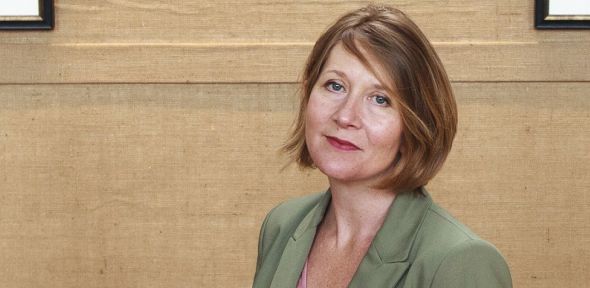
Professor Emma Widdis is a leading scholar at the Faculty of Modern and Medieval Languages and Linguistics at the University of Cambridge, specializing in the intersection of Soviet cinema, ideology, and cultural geography. Her work explores the reeducation of sensory perception through film, early Soviet urban spaces, and the construction of subjectivity via cinematic techniques. Teaches 20th-century Russian/Soviet literature, cinema, and film theory Focuses on sensory engagement, political avant-garde, and urban spatial representation Supervisor for MPhil and PhD students in Slavonic Studies Her recent book Socialist Senses (2017) examines how cinema shaped Soviet perceptions of reality. Her publications span topics like silence in sound film, set design materiality, and costume symbolism in early Soviet cinema. While no formal scientific awards are listed, her research has been supported through institutional grants and collaborations with centers like CRASSH and Cambridge Language Sciences.
Elizabeth Frood is an Associate Professor of Egyptology at the University of Oxford, affiliated with the Faculty of Asian and Middle Eastern Studies. She holds dual college fellowships as a Fellow of St Cross College and Honorary Fellow of The Queen's College, with research centered on ancient Egyptian self-presentation, sacred landscapes, and social experience including gender and disability studies. Her academic journey began with first degrees completed in Aotearoa New Zealand, establishing her foundation in Egyptology before her current Oxford appointment. Professor Frood's scholarship uniquely reconstructs non-royal Egyptian lives through biographical texts, graffiti, and visual culture, specializing in the late New Kingdom and Third Intermediate Period (mid-second to early first millennium BCE). Her work bridges textual analysis with material culture studies, examining how individuals expressed identity through sacred spaces, ritual practices, and social interactions. This approach has generated significant insights into elite self-representation and non-elite participation in religious contexts. Analysis of her 14 most recent publications (2007-2023) reveals consistent thematic threads: sustained focus on Karnak temple graffiti projects, evolving methodologies in biographical text interpretation, and increasing interdisciplinary engagement with gender/disability studies. Her collaborative work with the Centre Franco-Égyptien d’Étude des Temples de Karnak demonstrates fieldwork integration with epigraphic analysis. Her academic distinctions include: Fellow of St Cross College Honorary Fellow of The Queen's College Professor Frood actively mentors doctoral researchers across diverse topics including Deir el-Medina statuary, Hatshepsut's iconoclasm, ancient graffiti contexts, gendered domestic spaces, and kinship practices. Her Karnak Graffiti Project (2011-present), co-directed with Chiara Salvador and supported by CFEETK, represents a major sustained research initiative involving fieldwork at the temple of Ptah and eighth pylon, yielding publications, media features, and international scholarly collaborations. She co-directs the Karnak Graffiti Project, a decade-long international collaboration with the Centre Franco-Égyptien d’Étude des Temples de Karnak and Montpellier-based scholars, combining archaeological documentation, epigraphic recording, and digital analysis of temple graffiti across multiple Karnak sectors.
Dr. Catherine Wynne is a Reader in Victorian and Early Twentieth-Century Literature and Visual Cultures at the University of Hull, where she also serves as Associate Dean for Research and Enterprise in the Faculty of Arts, Cultures and Education. She teaches undergraduates and supervises PhD students, with a focus on literature and creative writing. B.A., English and French, University of Galway M.A., Modern English and American Literature, University College Dublin D.Phil., University of Oxford (on Bram Stoker, Arthur Conan Doyle, and the Colonial Gothic) Her research spans Victorian and early 20th-century literature and visual cultures, with a focus on the Gothic, war art and memoir, Victorian theatre, travel writing, colonialism, and contemporary adaptations. She has published monographs on Bram Stoker, Conan Doyle, and Lady Butler, a biography of the Victorian war artist. Her work intersects with cultural studies, material culture, and pandemic narratives, particularly through the University of Hull's Living with Death – Learning from COVID research cluster. Recent projects include editing new editions of The Adventures of Sherlock Holmes (Oxford University Press, 2025) and co-editing works on The Hound of the Baskervilles and The Valley of Fear for Edinburgh University Press. She contributes to public discourse as co-host of the Pandemic Pages podcast and through media engagements with the BBC, Channel 4, CBC, and Deutsche Welle. Scientific Awards Fellowship from the English Association (2023) Her research has been funded by the British Academy, the Marc Fitch Fund, the Society for Theatre Research, and the Royal Society of Edinburgh. She organized the Bram Stoker Centenary Conference (2012), contributes to the Barbara Canham Turner Lecture series, and collaborates with local charities on cultural heritage access for children with SEND.
Dr. Heather Inwood serves as University Associate Professor in Modern Chinese Literature and Culture within the Faculty of Asian and Middle Eastern Studies at the University of Cambridge. She is also a Fellow and Director of Studies at Trinity Hall, maintaining dual institutional affiliations that support her teaching and research activities across undergraduate and postgraduate programs. Her educational background includes a BA in Chinese Studies from the University of Cambridge (Trinity Hall), followed by advanced studies at Tsinghua University and Peking University, culminating in a PhD in modern Chinese literature from SOAS, University of London in 2008. Prior academic appointments include Assistant Professor at The Ohio State University (2008-2013) and Lecturer in Chinese Cultural Studies at the University of Manchester before returning to Cambridge in 2016. Professor Inwood's research program investigates the dynamic interactions between digital media and literary production in contemporary China, with particular focus on poetry communities, genre fiction, and transmedia storytelling. Her work bridges traditional literary analysis with digital humanities approaches, examining how online platforms transform authorship, reception, and cultural value. She has pioneered scholarship on internet poetry scenes, demonstrating their vitality despite public perceptions of poetry's decline in modern China. Her publication trajectory reveals a clear evolution from early work on poetry communities ( Verse Going Viral: China's New Media Scenes , 2014) toward broader investigations of digital narrative forms, game studies, and Sinophone cyberspace. Recent publications increasingly engage with science fiction, transmedia storytelling, and the algorithmic structures shaping literary production, reflecting both the changing digital landscape and her expanding methodological toolkit. Professor Inwood actively supervises five PhD students working on diverse projects spanning Misty poetry, queer narratives, gender studies, and poetic animality, demonstrating her commitment to nurturing next-generation scholarship in Chinese literary studies. Her research has been supported by British Academy Small Grants and similar funding mechanisms that enable sustained fieldwork and publication. Her teaching responsibilities include undergraduate courses on East Asian media and popular culture, Modern Chinese texts, and Modern Chinese literature, connecting classroom instruction directly to her research expertise. She also maintains public engagement through Chinese-language columns for BBC China and other media outlets, bridging academic and public discourse on contemporary Chinese culture.
Professor Matthew Treherne is a leading scholar in Italian literature at the University of Leeds, where he holds the position of Professor of Italian Literature in the School of Languages, Cultures and Societies within the Faculty of Arts, Humanities and Cultures. He currently serves as Pro-Dean for Research and Innovation, and co-directs the Leeds Centre for Dante Studies. His research bridges medieval and Renaissance literature with contemporary issues such as finance, ecology, and technology. PhD in Italian Literature, University of Cambridge (2007) Diploma in Management Studies, Judge Business School, University of Cambridge (2000) M.Phil in European Literature (Distinction), University of Cambridge (1999) BA in Modern and Medieval Languages (First-class), University of Cambridge (1997) Matthew Treherne's research focuses on Dante and late-medieval religious culture, with a strong emphasis on the liturgical imagination and theological discourse in poetry. He explores how Dante’s work can inform modern debates on the ecological crisis, financialisation, and time. His interdisciplinary approach integrates theology, philosophy, and cultural studies. He leads the project The Cultural Life of Money and Finance , which investigates how the humanities can shape financial futures. His recent publications include Dante’s ‘Commedia’ and the Liturgical Imagination and co-edited volumes on Dante’s theology. His recent scholarly articles and chapters show a consistent engagement with Dante’s theological and poetic structures, Tasso’s religious poetry, and the role of art and liturgy in early modern culture. Themes such as sacramentality, time, vision, and interdisciplinarity recur across his work, reflecting a deep commitment to understanding literature as a living, ethically engaged practice. University Teaching Fellowship Developmental University Teaching Fellowship Faculty of Arts Development Teaching Prize Treherne has supervised numerous PhD students and fosters research-led teaching, notably through projects like Discover Dante and the Leeds Dante Podcast . He has led major research initiatives, including the AHRC-funded Dante and Late Medieval Florence , and collaborates widely across disciplines and institutions. He is also active in public engagement, contributing to BBC Radio 4’s In Our Time and curating podcast series such as Conversations on Dante and Arts and Humanities Futures . He co-leads the Cultural Life of Money and Finance project with Invisible Flock, blending humanities research with creative practice.
Dr. Sara Caputo is a British Academy Postdoctoral Fellow at the Department of History and Philosophy of Science and an Affiliated Lecturer at the Faculty of History, University of Cambridge. She serves as Director of Studies in History, History and Politics, and History and Modern Languages at Magdalene College. Her research spans transnational maritime history, the history of medicine, cartography, and imperial history. Education: PhD in History from the University of Cambridge (Robinson College), MSc in History from the University of Edinburgh, BA (Hons) in History from Cardiff University. Career Highlights: Lumley Junior Research Fellow (2019–2022), Senior Research Fellow (2022–present) at Magdalene College, Scouloudi Fellow (2018–2019), Lewis-AHRC Scholarship (2015–2018), Honorary Vice-Chancellor’s Scholar (2015–2018). Research Focus: Dr. Caputo explores maritime mobilities, knowledge exchange, and the instability of national boundaries in the British and European navies. Her work integrates transnational perspectives into the study of a quintessentially national institution, challenging notions of Britishness and foreignness. She combines qualitative and quantitative methodologies to analyze legal, social, and cultural contexts of naval service and cartographic practices. Notable Articles: Recent publications include studies on British naval medicine, the evolution of ship tracks into surveillance tools, and the transnational dimensions of naval exploration. Her articles span journals like Past & Present , English Historical Review , and Social History of Medicine , with chapters in edited volumes on transport history and postwar naval recruitment. Scientific Awards: Royal Historical Society Whitfield Prize (2024) British Commission for Maritime History Boydell & Brewer Prize (2020) Fachverband Medizingeschichte wissenschaftlichen Förderpreis (2022) International Committee for History of Technology Maurice Daumas Prize (2021) Scottish History Society Rosebery Prize (2020) Teaching and Outreach: Dr. Caputo teaches courses on the Global Eighteenth Century, Union and Disunion in Britain, and Mediterranean history. She actively participates in outreach programs with the Cambridge University Admissions Office and The Brilliant Club, focusing on widening participation in history education.
Clare Harris serves as Professor of Visual Anthropology and Head of the School of Anthropology and Museum Ethnography at the University of Oxford, concurrently holding curatorship of Asian Collections at the Pitt Rivers Museum and a Fellowship at Magdalen College. Her academic leadership spans institutional administration, museum curation, and doctoral supervision within Oxford's anthropological ecosystem. Her educational foundation includes a BA from the University of Cambridge and MA/doctorate from SOAS, University of London. Early career roles comprised Lecturer in Anthropology of Art at the University of East Anglia (1994-1998) before her Oxford appointment. Harris pioneers research at the intersection of visual anthropology, Tibetan studies, and museum decolonization. Her work critically examines Himalayan visual culture, colonial/post-colonial photography, and museum representation politics, evolving toward digital repatriation and community-centered curation. She integrates anthropological fieldwork (conducted in Tibetan diaspora communities since the 1990s) with art historical analysis and archival research. Her 13 recent publications (2004-2022) reveal a progressive trajectory from Tibetan art history toward urgent museum decolonization debates, with consistent focus on photographic practices and cross-cultural representation. Key thematic developments include the shift from historical analysis to active digital repatriation projects and increased engagement with contemporary artists. Harris's accolades include: Fellowship of the British Academy (2019) E. Gene Smith Prize for The Museum on the Roof of the World (2014) Visual Anthropology Prize for In the Image of Tibet (2000) She currently supervises five DPhil students while examining over 25 completed doctorates globally. Research funding spans British Academy personal grants, Leverhulme Trust support, and major collaborative projects including AHRC, Wenner-Gren Foundation, and EU grants—most notably the current AHRC-funded Decolonising the Museum: Digital Repatriation of the Gaidinliu Collection . At the Pitt Rivers Museum, Harris leads high-impact curatorial initiatives including the Abramović collaboration ( Gates and Portals ), Nyema Droma's Performing Tibetan Identities , and community projects like My Tibet Museum , establishing innovative frameworks for museum-public engagement.
Dr Maurizio Cinquegrani is a Senior Lecturer in Film and Equity, Diversity and Inclusion Lead at the University of Kent's School of Arts. He holds a PhD from King's College London and has held roles including Head of Film and Media, School Director of Graduate Studies, and Deputy Dean (Student Experience). His research focuses on film's relationship with space, memory, and historical events, particularly the Holocaust and Cold War. He is a Fellow of the Royal Geographical Society (2018-2023). Education: PhD in Film Studies (King's College London, 2010), MA in Contemporary Cinema Cultures (King's College London), BA in Film Studies (University of Bologna). Research interests include cinematic geographies, urban space representation, and documentary film. His notable works include Of Empire and the City: Remapping Early British Cinema (2014), Journey to Poland: Documentary Landscapes of the Holocaust (2018), and Film, Hot War Traces and Cold War Spaces (2022). He has also produced essay films such as Aran Diary (2023) and Formosa 228 (2024). Professional activities include editorial roles for Immagine. Note di Storia del Cinema and AHRC-funded research projects. He supervises doctoral students in film history, documentary cinema, and spatial memory studies. Key awards include the Royal Geographical Society Fellowship. His teaching emphasizes research-led learning and has been influenced by his extensive international collaborations, including visiting roles at Taipei National University of the Arts and Poznań University of Technology.
Rachel Leow is an Associate Professor in Modern East Asian History and Fellow of Murray Edwards College at the University of Cambridge. She holds a PhD and MPhil from St Catharine’s College, Cambridge, and a BA from Warwick University. Her research critiques rigid nationalisms in East Asia, focusing on transregional cultural and intellectual histories. Her book Taming Babel: Language in the Making of Malaysia (2016) won the 2018 Harry J. Benda Prize for Southeast Asian studies. Current projects include an anti-diasporic history of Chinese migration and early 20th-century Asian thought-worlds. Leow emphasizes public engagement, contributing to blogs, literary reviews, and collaborative manifestos. She teaches World History courses, including Part IA’s Outline 11 and specialized modules on East/Southeast Asia. She supervises postgraduate students exploring transnational East Asian history from 1850 to the present. Professional affiliations include the Royal Historical Society, Center for History and Economics, and editorial roles at The Historical Journal and Global Intellectual History . Awards include the Harry J. Benda Prize and RHS Fellowship. Her digital work includes a visualization of Afro-Asian Cold War networks and a short film on diasporic identity.
Andrew Gordon is Professor of Renaissance Literature and Culture in the School of Language, Literature, Music and Visual Culture at the University of Aberdeen. He is Co-Director of the Centre for Early Modern Studies and serves as REF co-lead for English, demonstrating active leadership in research and academic governance. BA from University of Nebraska-Lincoln (UNL) MA from University of Sussex PhD from Queen Mary's, University of London His research centers on early modern literature and culture, with a focus on textual transmission , letter-writing , cultural memory , and material texts . He explores how literature interacts with cultural practices, especially in early modern London. His current project, Renaissance Cultures of the Foot , innovatively examines the cultural and literary significance of the foot, drawing on anthropological perspectives to analyze embodied experience in print and manuscript culture. The recent scholarly articles and books reflect a strong trend in interdisciplinary humanities, combining literary analysis with historical, material, and gender studies. His work frequently engages with manuscript culture, epistolary networks, and the social functions of memory, particularly in post-Reformation England. His scientific recognition includes the Hunter-Caldwell award for directing The Correspondence of Robert Beale . Hunter-Caldwell award He actively supervises graduate research and welcomes PhD students in areas related to early modern texts, cultural mobility, memory, and community. While specific grants are not listed, his funded project indicates successful grant acquisition. He has also engaged in creative collaborations with theatre professionals, bridging academic research with performance. Andrew Gordon is a central figure in Aberdeen’s Centre for Early Modern Studies, contributing to an interdisciplinary research environment that fosters collaboration across historical periods and methodological approaches.
Dr Theodor Dunkelgrün is a Senior Postdoctoral Researcher at Trinity College, University of Cambridge , and Academic Co-Ordinator of the Andrew W. Mellon Foundation-funded project Religious Diversity and the Secular University (2017–2022) at CRASSH. He was previously a postdoctoral fellow at St John’s College (2013–2018) and has taught across History, Divinity, and Classics at Cambridge, Bryn Mawr, UPenn, and the University of Antwerp. Education : Christelijk Gymnasium Sorghvliet (The Hague), Leiden University, University of Chicago (PhD, 2012). Visiting graduate work at Princeton (2005–06) and Oxford (2008). Research Focus : Intersections of biblical scholarship, history of the book, and interfaith intellectual exchange (1450–1900), particularly in the Low Countries and Mediterranean World. Examines how Jewish, Christian, and Muslim scholars engaged with the Hebrew Bible through technological shifts (print to photography) and institutional contexts. Publications include edited volumes like The Jewish Bookshop of the World (2020) and Bastards and Believers (2020), alongside articles on topics ranging from the Antwerp Polyglot Bible to Jewish converts in early modern Europe. Collaborations span institutions in Taiwan, Oxford, and Leiden, with ongoing work on global philological practices and the Hebrew Bible’s material history. Professional Engagement : Co-founded the Cambridge Seminar in Early Modern Scholarship and Religion (2017), and actively promotes academic freedom through refugee scholar initiatives. Affiliated with the Cambridge Forum for Jewish Studies, Centre for Material Texts, and international networks like EMoDiR and Ideas in Motion.
Lucia Dolce serves as the Numata Professor of Japanese Buddhism within the Department of Religions and Philosophies at SOAS University of London, part of the School of History, Religions and Philosophies. Her academic base is room 342 in the Russell Square: College Buildings campus. Her educational background includes: Laurea MA (University of Venice) PhD (Leiden University) Professor Dolce's research centers on two interconnected projects: first, the discourse on the body in medieval Japanese Buddhist rituals and its connections to continental Tantric practices, emphasizing ritual fluidity and performative theory applications; second, contemporary Buddhism-Shinto syncretism with focus on revival of premodern practices in Kyoto shrines. She also examines Tokyo's urban pilgrimage routes like the Seven Gods of Fortune, analyzing institutional negotiations and religious marketing dynamics. Her journal articles (1992-2023) consistently explore ritual knowledge transfer in Japanese Buddhism, with recent works on scriptural repurposing and tantric exegesis highlighting material culture and practice-centered approaches. Earlier publications establish foundational studies on Nichiren Buddhism's esoteric dimensions, astrological cults, and celestial body worship, revealing enduring thematic threads across three decades of scholarship. Scientific awards: No awards listed in provided text Advising and grants: She currently supervises four PhD candidates: Rachel Williams (Japanese Secularity), Haruka Saito (Repentance Rituals), Sooyeun Yang (Korean Astrological Buddhism), and Yeonju Lee (Korean Nationalism). Previous supervisees include twelve PhD graduates such as Emanuela Sala (2022, Sannō Shintō), Ronit Wang (2022, Thai Hell Parks), and multiple 2011 completions. Dolce led the Newton Fellowship-associated project 'The Lucky Gods of Tokyo' (2014-2016), investigating spatial politics in Buddhist-Shinto pilgrimage networks.
Emily Butterworth is a Professor in the Department of Languages, Literatures and Cultures at King’s College London, within the Faculty of Arts & Humanities. She holds a prestigious position in Early Modern French literature studies, focusing on speech practices, women’s writing, and cultural analysis. Her career includes roles at the University of Sheffield (2002–2006) before joining King’s, where she has been a core faculty member since 2006. Education: Emily studied French at University College London (UCL) and the University of Cambridge, establishing her foundation in French literary and cultural studies. Research Interests : Her work centers on early modern literature and thought, particularly deviant speech, gossip, and the role of scandal in French Renaissance texts. Key focuses include: Analysis of Marguerite de Navarre’s Heptameron and its cultural context Montaigne’s exploration of ethics and skepticism Gendered discourse in early modern women’s writing The intersection of print culture, censorship, and obscenity Projects & Engagement : Co-Investigator on the AHRC-funded Gossip and Nonsense in the French Renaissance (2012–2015), she collaborated on artistic projects such as Spinning Stories and Chinese Whispers . She has contributed to BBC programs like Radio 4’s Something Understood and Radio 3’s Free Thinking , discussing gossip’s cultural significance and early modern news. Publications : Her scholarship includes monographs like The Unbridled Tongue (2016) and Marguerite de Navarre: A Critical Companion (2022). Her articles span topics from Renaissance book history to the ethics of speech in Montaigne’s essays. Affiliations : She is part of King’s Centre for Early Modern Studies and contributes to research groups on textual representation and visual culture.
The Courtauld Institute of Art, University of LondonUnited Kingdom
Sarah Wilson is Professor of Modern and Contemporary Art at The Courtauld Institute of Art, University of London. She has been a faculty member since 1982 and has held leadership roles including Head of the Modern and Contemporary Section (2005-2008) and Head of Diploma programmes (2014-2015). She is internationally recognized as the English-language expert on Post-War European art and has held visiting positions at Paris-IV Sorbonne and the University of Versailles-Saint Quentin. Wilson was educated at the University of Oxford (BA English Literature) and at the Courtauld Institute of Art (MA and PhD). She was awarded the title Chevalier des Arts et des Lettres in 1997 for services to French art and culture, and received the International Association of Art Critics' Award for Distinguished Contribution to Art Criticism in 2015. She has held visiting professorships at Paris-IV Sorbonne (2002-2004), École Nationale Supérieure des Beaux-Arts (2006-2007), and University of Versailles-Saint Quentin (2012-2013). Sarah Wilson's research spans post-war and Cold War European art, contemporary global art practices, and the intersections between conceptual art, political theory, and visual culture. Her work extends from European avant-gardes to contemporary art across the former Soviet Union and Asia. She is particularly known for her expertise in French Stalinism, neo-Marxism and the arts, and conceptual art practices beyond the 'first world.' Wilson has initiated important academic programs such as the 'Global Conceptualism' MA course with Boris Groys, which connects Anglo-American conceptual art with practices from Moscow and beyond. She has also expanded her research to include modern and contemporary Asian art since 2013. Her extensive publication record shows a consistent focus on European art history with increasing engagement with global perspectives, particularly Asian contemporary art since 2013. Wilson's scholarship bridges art historical analysis with philosophical inquiry, especially regarding French theory and its visual manifestations. Her major publications include 'Paris, Capital of the Arts, 1900-1968' (2002) and 'The Visual World of French Theory: Figurations' (2010), with a second volume 'The Visual World of French Theory II: Interventions' in preparation. Chevalier des Arts et des Lettres (1997) International Association of Art Critics' Award for Distinguished Contribution to Art Criticism (2015) Marie Curie Actions – RBUCE-UP, Chaire d'excellence, Université de Versailles-Saint Quentin (2012-2013) Professor Wilson has supervised 36 PhD students to completion and over 230 MA dissertations, creating what she describes as 'a unique English-language archive in the field of post-1945 European and global art history.' Her former students now hold prominent positions in major institutions worldwide including Tate, the British Museum, Design Museum, Scottish National Gallery of Modern Art, British Council, Centre Georges Pompidou, Kunsthalle Bremen, and universities across Europe and North America. She has received significant research funding including a Marie Curie Actions grant for her project 'Globalisation before globalisation: avant-gardes, academies, revolutions.' Wilson is actively involved with the Courtauld alumni's former East Wing Collection (now VS1, Vernon Square) and has contributed to the Research Forum's programmes. She has curated numerous exhibitions including the 'Global Conceptualism'-related projects and served on the curatorial team of the 1st Asian Biennale (China-Guangzhou) in 2014. Her commitment to women artists has led to early exhibitions of artists like Zofia Kulik and Alina Szapocznikow before their international prominence. She is involved with CCRAC (Cambridge-Courtauld Russian Art Centre), Calvert 22, and Pushkin House in London, reaching out to Russia and Eastern Europe.
Panpan Yang is a Lecturer in Arts and Visual Cultures of Modern China at the School of Arts, SOAS University of London. She joined SOAS in 2021 after completing her joint PhD at the University of Chicago under the direction of Wu Hung, Tom Gunning, W. J. T. Mitchell, Judith Zeitlin, and Dana Polan. Her interdisciplinary work bridges art history, screen studies, East Asian studies, and digital humanities, with a focus on innovative methodologies in art historical writing. Dr. Yang earned a dual BA from Peking University, double majoring in art and philosophy, followed by an MA from Tisch School of the Arts at NYU, and a PhD from the University of Chicago. During her undergraduate studies, she served as president of the Society of Dream of the Red Chamber Studies, which informed her secondary academic interest in Redology and the visual material world of the novel Hong lou meng. Panpan Yang's research explores how minor discourses can deterritorialize the terrains of both art history and screen studies. Her work demonstrates a multimethodological approach attentive to archival research, material practices, close visual analysis, computer-aided vision, and cross-cultural theorization. She is particularly interested in Chinese animation history, calligraphic imagination in contemporary art, and the intersections between traditional Chinese art forms and new media. Her publications reveal a consistent focus on Chinese visual culture across multiple media forms, with particular attention to animation, film, and calligraphy. Yang's work demonstrates how traditional Chinese art forms engage with contemporary digital media, creating new hybrid forms that challenge disciplinary boundaries. Her research shows a trajectory from historical analysis of Chinese animation to contemporary explorations of calligraphy in digital contexts, revealing the ongoing relevance of traditional Chinese aesthetics in modern media. Dr. Yang has received several prestigious awards for her scholarly and creative work: China's National Young Screenwriter Award Domitor Essay Award Dean's Distinguished Dissertation Award Nomination Honourable Mention from the Association for Chinese Animation Studies As a Principal Investigator, Dr. Yang leads the AHRC-funded research project "Stroke by Stroke: Calligraphic imagination in contemporary Chinese art and emergent media" (2023-25) with Shane McCausland. She was also a collaborating partner on the NEH-funded "Media Ecology Project." Her research has received additional support from the Getty Foundation and the Sino-British Fellowship Trust. At SOAS, she works closely with faculty and graduate students interested in Chinese arts and cultures, art theory, cinematic arts, and digital art history. Dr. Yang is currently developing innovative research at the intersection of traditional Chinese calligraphy and contemporary digital media through her AHRC-funded project. This work explores how calligraphic imagination manifests in contemporary art and emergent media contexts, creating new pathways for understanding Chinese cultural heritage in the digital age.