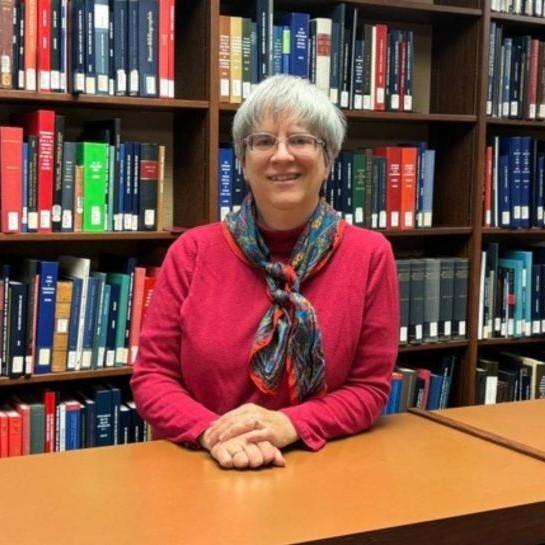
Julia VerkholantsevView profile
Associate Professor
Julia Verkholantsev is an Associate Professor of Russian and East European Studies at the University of Pennsylvania's School of Arts & Sciences, Department of History. She serves as Founder and Director of the Program in Global Medieval and Renaissance Studies and will hold leadership positions at the Wolf Humanities Center as Undergraduate Humanities Forum Director (2024-2025) and Topic Director (2025-2026). Her educational background includes a Ph.D. in Slavic Languages and Literatures from UCLA, an M.A. in (Indo-European) Linguistics from Hebrew University of Jerusalem, and a B.A. in Russian and Slavic Studies, Linguistics, and Greek Language and Literature from the same institution. Verkholantsev specializes in the medieval and early modern cultural history of Central and Eastern Europe, with research focusing on literature, linguistic culture, religion, and intellectual history across Lithuania, Bohemia, Moravia, Poland, Croatia, Hungary, and Rus. Her work examines the history of literature, language, writing, and literacy; literary and linguistic theory; Cyrillic, Glagolitic, Latin and Greek paleography and cryptography; and theories of universal language. She has made significant contributions to understanding the cultural space of the Grand Duchy of Lithuania and the legend of St. Jerome as a Slav. Her publications reveal a consistent focus on medieval etymology as a historiographic device, Slavic textual traditions, and the interplay between religious and cultural identities in Eastern Europe. Verkholantsev's work bridges linguistic analysis with historical context, particularly examining how writing systems and textual transmission shaped cultural identities across political boundaries. As an academic leader, Verkholantsev founded and directs the Program in Global Medieval and Renaissance Studies, serving as an undergraduate minor and graduate certificate program. She is affiliated with multiple academic units including the Graduate Group in Comparative Literature and Literary Theory, the History Department Graduate Group, and the Wolf Humanities Center, demonstrating her interdisciplinary approach to scholarship. Her current book project, Medieval Etymology and the Writing of History , challenges traditional views of medieval etymologies by examining them as legitimate historiographic devices within contemporaneous rhetorical theories and linguistic epistemology.