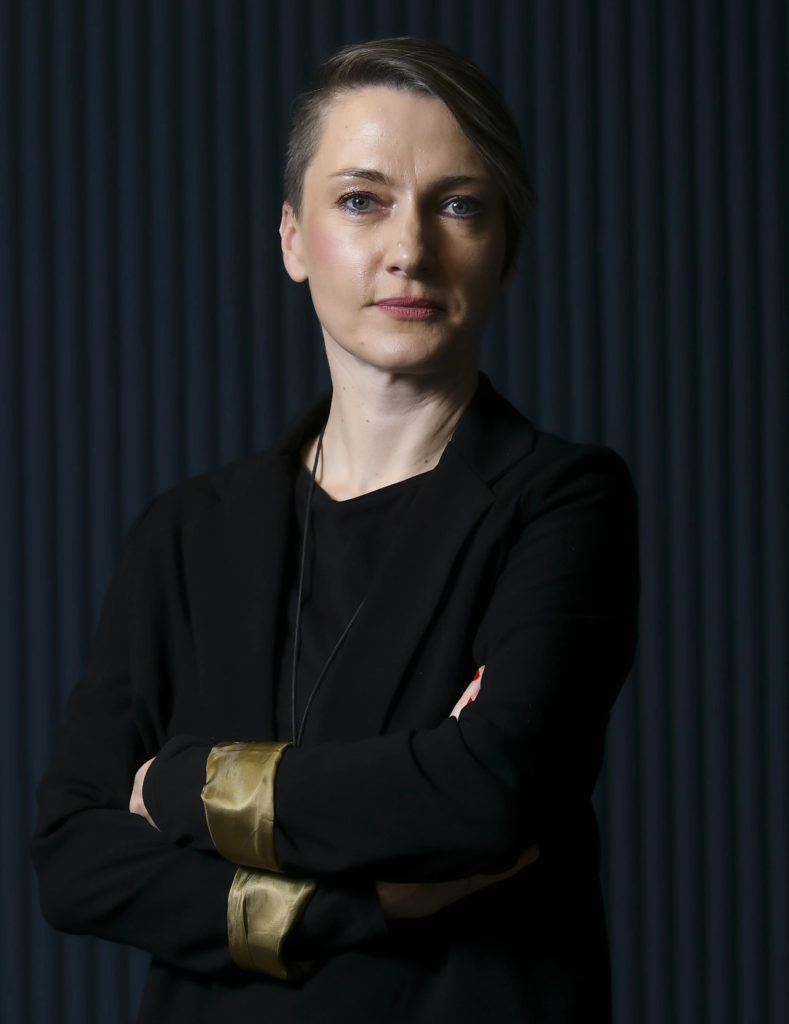
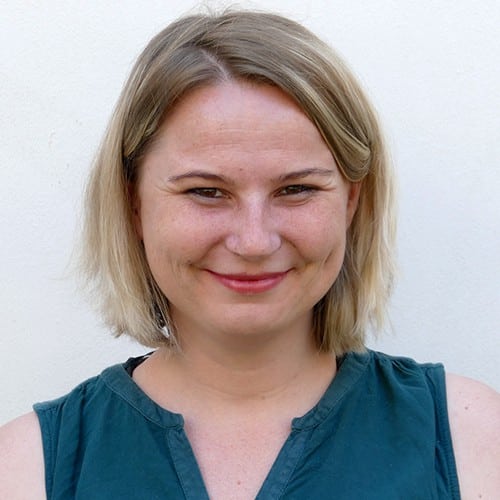
Synnøve Ugelvik is Professor at the Department of Public Law, Faculty of Law, University of Oslo, where she began as an associate professor in 2016 and was promoted to professor in 2023. She served as deputy head of the department from 2018-2021. Currently (2024-2025), she is on research stay at Vrije Universiteit in Amsterdam, conducting a project on Norwegian police in Europol. Ugelvik's research centers on the state as a research object, with particular focus on police control of citizens and its effects. Her work examines Norway's position within international contexts, especially regarding EU relations, immigration law, and international influences on Norwegian governance. Her scholarship integrates legal theoretical perspectives with human rights frameworks. Analysis of her publication record reveals a consistent focus on police cooperation, sovereignty, and the evolving relationship between national states and supranational entities. Her work demonstrates increasing sophistication in examining how non-EU countries like Norway participate in EU police cooperation mechanisms while maintaining formal independence. Recent publications show growing attention to digital aspects of criminal law and the practical implementation of legal frameworks. Ugelvik teaches Police and Prosecution Law (JUS5506), Criminal Procedure, and lectures in Social Control and Criminology of Globalization. She supervises master's theses in these and related subjects. She is affiliated with multiple research groups including International Law and International Governance, the Research Group for the Study of Punishment (2016-2022), and Criminal Law and Criminal Procedure. Her doctoral work, completed in 2014 with an updated book in 2018, focused on Norway's relationship with EU police cooperation.
Aleksandra Krstić is a full professor at the Faculty of Political Science, University of Belgrade, where she teaches courses including Political Journalism , Visual Representation of Politics , and Media and Journalism in a Global Context . She serves as Vice-Dean for Research Activities and leads the Center for Media and Media Research. PhD in Culture and Media (2015) from University of Belgrade Master's and BA in Journalism from Faculty of Political Science Her research examines media representation of EU institutions , authoritarian communication , digital journalism ethics , and migrant portrayal in Serbian media . Recent work analyzes visual security narratives , presidential communication strategies , and opinion dynamics in social media . Scientific awards include the Đoko Vlajković Foundation Award (2018) and multiple European integration media awards. She leads international projects like DepolarisingEU (COST Action 22165) and Strengthening Local Media in Serbia (US Alumni Grant). Krstić collaborates with institutions including International Organization for Migration (IOM) and European Commission, and serves on editorial boards for Journal of Regional Security and Political Perspectives .
Dana Schmalz is a Senior Research Fellow at the Max Planck Institute for Comparative Public Law and International Law in Heidelberg, Germany, and currently serves as a visiting scholar at Columbia Law School and a fellow at the Columbia Center for Contemporary Critical Thought in New York. Funded by an Alexander von Humboldt Foundation fellowship, she pursues a two-year research project examining critical dimensions of international refugee law and migration governance. Her academic profile combines rigorous legal scholarship with theoretical engagement across international law, political philosophy, and migration studies. Dr. Schmalz earned her doctorate from the University of Frankfurt in 2017 with a dissertation on democratic theoretical issues in refugee law, followed by an LL.M. in Comparative Legal Thought from Cardozo Law School, New York, in the same year. She serves as an editor for the journal Kritische Justiz (KJ), contributing to critical legal scholarship in German-speaking academic circles. Her research centers on the intersection of refugee law and democratic theory, examining how political rights are secured for those without voice in democratic processes. She critically investigates population discourse and its relationship to migration governance, exploring how demographic projections shape perceptions of 'too many' migrants. Her scholarship analyzes the language and power structures of international law, examining how legal frameworks construct hierarchies and influence global governance. She has published extensively on European border policies, refugee protection mechanisms, and the theoretical foundations of international legal order. Dr. Schmalz's recent publications reveal a sophisticated analysis of migration governance that connects historical developments with contemporary challenges. She examines how legal concepts like responsibility-sharing function in practice, investigating the role of geopolitical proximity in determining state obligations toward refugees. Her work consistently combines rigorous legal analysis with critical theoretical perspectives, often challenging conventional understandings of migration governance. She explores the internalization of borders in demographic thinking and the ways legal frameworks contribute to perceptions of migration as 'excess.' Alexander von Humboldt Foundation fellowship supporting current research As an active contributor to Völkerrechtsblog, Dr. Schmalz helps shape digital infrastructure for global legal scholarship. Her work connects with broader academic communities through collaborations with scholars across international law and refugee studies. While specific grant details beyond the Humboldt fellowship aren't provided in the source material, her extensive publication record indicates sustained research activity across multiple funding cycles. She engages with practical policy challenges through her analysis of European migration governance and refugee protection mechanisms. Dr. Schmalz's research connects with multiple academic networks through her work at the Max Planck Institute, Columbia University, and her editorial role at Kritische Justiz. Her scholarship bridges German and Anglo-American academic traditions, contributing to transnational legal discourse on migration and refugee protection. She participates in interdisciplinary conversations that connect legal scholarship with political theory, philosophy, and migration studies.
Beate Conrady is an Associate Professor in Infectious Disease Epidemiology and Animal Health Economics at the Department of Veterinary and Animal Sciences, Faculty of Health and Medical Sciences, University of Copenhagen, where she joined in April 2021. She has been affiliated with the Centre for Sustainable Health (CSH) since May 2020. Previously, she led the working group on Epidemiology and Animal Health Economics at the University of Veterinary Medicine in Vienna for eight years. Her research focuses on the development and application of mathematical and economic models to assess prevention and intervention strategies for infectious diseases in veterinary and public health contexts. Key areas include zoonoses, cattle disease control, biosecurity, and One Health. She has extensive experience in international consultancy, including with EFSA, the Austrian Government, and European scientific networks. Beate's recent publications (2020–2024) demonstrate a strong emphasis on disease transmission modeling, surveillance systems, and economic evaluation of health interventions. Her work spans Salmonella, foot-and-mouth disease, Cryptosporidium, and vector-borne diseases, often employing advanced modeling techniques and large-scale data analysis. She has received more than 11 scientific awards for her contributions to infectious disease epidemiology and animal health economics. Consultant for European Food Safety Authority (EFSA) Member of international scientific committees (Med-Vet-Net, DISCONTOOLS) Principal investigator and consortium leader with over 7.5 million EUR in research funding, including more than 1 million EUR in third-party funds She is actively involved in editorial and peer-review activities for leading journals and contributes to policy development in animal health and zoonotic disease control.
Anja Simonsen is an Associate Professor at the Department of Anthropology, University of Copenhagen, specializing in Somali migrant and refugee experiences across East Africa and Europe. Her research intersects with migration, social invisibility, biometric technologies, and Mediterranean migrant deaths. University of Copenhagen Department of Anthropology Active in The Young Academy and UCPH Migration & Refugee Research Platform Research Interests: Focused on migrant journeys, biometric governance, European border regimes, and the social life of deceased migrants. Key themes include temporality, clan relations, and humanitarian aid from diasporas. Grant Leadership: Principal Investigator of the ERC Starting Grant SOLID (2024) and co-participant in the Danish Free Research Fund network (2024-2027). Academic Awards: ERC Starting Grant (2024) Danish Free Research Fund (2024-2027) Carlsberg Fund Stipend (2020) VELUX Foundation Grant (2016-2019) FKK Grant (2013-2017) Teaching & Supervision: Course coordinator for advanced migration courses, supervisor for 1 PhD student (2024–), former co-supervisor for another (2022–2023), and mentor for 10+ MA/BA students since 2017. Fieldwork: Extensive ethnographic work in Italy, Greece, Somaliland, Turkey, and Ethiopia, with methodological innovations in collaborative forensic-migration studies.
Maria Ioannidou is a Reader in Competition Law (equivalent to Associate Professor) at Queen Mary University of London's School of Law, where she serves as Deputy Director of the Institute for Competition and Consumers. Previously, she held significant public enforcement roles as Commissioner Rapporteur and Board Member of the Hellenic Competition Commission (2019-2022), complementing her private practice experience at leading law firms in Athens and Brussels. Education: BA and LLM in Law, University of Athens MJur, MPhil, and DPhil in Law, University of Oxford (Corpus Christi College) Her research centers on EU/UK competition law with specialized focus on digital markets, examining how AI, big data, and digital platforms reshape consumer choice and competition enforcement. She investigates the competition-regulation dichotomy, consumer-law intersections, and effective remedy design in digital contexts, addressing both theoretical frameworks and practical enforcement challenges. Her recent publications (2018-2023) reveal a concentrated evolution toward digital competition law, with increasing emphasis on AI-driven market dynamics, multi-level governance, and consumer vulnerability in platform economies. Key thematic clusters include digital market remedies, energy sector regulation, and private enforcement mechanisms, reflecting her dual expertise in theoretical scholarship and policy engagement. Dr Ioannidou actively supervises PhD candidates while leading the Institute for Competition and Consumers. She serves as managing editor of the Journal of Antitrust Enforcement and provides expert testimony to UK parliamentary committees on AI regulation, demonstrating significant policy influence beyond academic contributions. She coordinates the Journal of Antitrust Enforcement Agency Effectiveness Study and maintains active affiliations with Oxford University's Centre for Competition Law and Policy, driving collaborative research on global competition governance and digital market challenges.
Helga Gardarsdottir is a Professor in Pharmacoepidemiology at Utrecht University (Netherlands), serving as Scientific Director of the Center for Pharmacoepidemiology. She also holds an adjunct professorship at the University of Iceland and serves as a Seconded National Expert at the European Medicines Agency (EMA). Her work focuses on real-world data for regulatory decision-making, drug safety, and clinical guideline implementation. She leads international projects like IMI Trials@Home and EMA IMPACT, addressing decentralized clinical trials, risk minimization, and pharmacovigilance impact. Her roles include co-chairing the ENCePP steering group and editing Pharmacoepidemiology & Drug Safety . Beyond research, she chairs the Faculty of Science’s EDI committee, promoting inclusive academic practices. Education: Pharmacist training in Sweden; Pharmacoepidemiology specialization in the Netherlands. Research Interests: Innovations in real-world evidence generation, regulatory science, drug safety surveillance, and clinical trial modernization. Key areas include RWE’s role in HTA/regulatory decisions, unintended impacts of drug policies, and digital health integration. Publications: Recent work emphasizes methodological advancements in decentralized trials, pharmacovigilance outcomes (e.g., fluoroquinolone prescribing shifts), and harmonized approaches to external control trials. Her studies bridge regulatory practices with clinical practice guideline adherence. Achievements: Overseeing multi-country initiatives like the IMI Trials@Home consortium (decentralized trials framework) and EMA IMPACT (guideline-RMM integration). Recognized for leadership in ENCePP’s methodological standards and ISPE’s Real-World Evidence Task Force. Grants & Teams: Principal investigator on EMA-funded projects and IMI grants. Leads Utrecht’s Applied Data Science initiative and collaborates with the EU PEV Research Network. Active in training next-generation researchers through teaching and mentoring. Labs/Teams: Utrecht Center for Pharmaceutical Policy & Regulation; Trials@Home consortium; ENCePP working groups.
Andrea Wechsler is a Professor of Private Business Law at Pforzheim University and currently serves as a Member of the European Parliament (2024–2029) on extended leave from the university. She holds an M.A. from Oxford, LL.M. degrees from Columbia University and Ludwig-Maximilians-Universität München, and is a certified business mediator. Her research focuses on European and international business law, with specialties in commercial law, competition law, intellectual property, data protection, and start-up law. She leads research initiatives at the Design Factory Pforzheim, GründerWERK Center for Start-Ups, and the Competence Center for Consumer Research (vunk). Notable projects include studies on Asian legal systems (especially Chinese law), EU-China legal cooperation, and legal methodologies integrating economic analysis. She has received the 2013 Faculty Prize from LMU for her dissertation. Prof. Wechsler has authored/co-authored over 30 publications, including textbooks on business law and intellectual property. She serves on advisory boards for the Bundesverband Direktvertrieb Deutschland and the Baden-Württemberg Consumer Commission. Her work bridges academia and practice, with consulting roles at McKinsey & Company and contributions to EU legal reforms. Education: M.A. (Oxford University) LL.M. (Columbia University School of Law) LL.M. (Ludwig-Maximilians-Universität München) Research Themes: European and international commercial law harmonization IP rights enforcement in digital markets Competition law in tech industries Mediation mechanisms in cross-border disputes Asian legal systems analysis Sustainability in consumer law Awards: 2013 Fakultätspreis für die Dissertation Grants & Projects: Editorial leadership of the Schriftenreihe des Instituts für Europäisches Wirtschafts- und Verbraucherrecht Consultant for the "Junge Innovatoren" innovation fund PRME (Principles for Responsible Management Education) coordinator at Pforzheim University Labs/Teams: Design Factory Pforzheim (innovation ecosystem) GründerWERK Start-Up Center vunk Competence Center for Sustainable Consumption
Catherine Briddick is the Andrew W Mellon Associate Professor of International Human Rights and Refugee Law at the University of Oxford, affiliated with St Antony's College and the Refugee Studies Centre. She serves as Course Director for the MSc in Refugee and Forced Migration Studies. Her research focuses on feminist approaches to international law, intersectionality, and the interplay between protection, discrimination, and refugee rights. Briddick holds an LLM from the London School of Economics (LSE) and a DPhil from the University of Oxford. She previously practiced as a barrister and worked in non-profit legal services before academia. Her research interests span Refugee Law, International Human Rights Law, Public International Law, and European Law, with a particular emphasis on gender and forced migration. Recent work critiques discriminatory migration policies, explores CEDAW implementation gaps, and examines non-refoulement principles in cases like the UK-Rwanda agreement. Briddick is also a Research Associate at the Refugee Law Initiative and an Associate Fellow of the Higher Education Academy. Her publications analyze topics such as domestic violence and migration law, human trafficking, and gender-based discrimination in border policies. She actively supervises doctoral candidates in gender and forced migration, international refugee law, and EU migration frameworks. Briddick’s interdisciplinary approach bridges legal theory, feminist critique, and practical policy analysis.
Marek Ilnicki is a Lecturer at the University of Gdańsk , affiliated with the Faculty of Social Sciences and specifically the Department of Strategic and Security Studies . His academic focus lies at the intersection of political science, security studies, and maritime law. Fields of Interest : Political Science, Security Studies, Maritime Law, Counterterrorism, International Relations, and Crisis Management. Research Trends in his publications emphasize legal frameworks for state security, maritime governance, terrorism prevention, and international cooperation. His work often addresses Poland's strategic challenges in maritime environments and border security. Contact Information : Email: marca.ilnicki@ug.edu.pl Phone: +48 58 523 41 81
Dr. Paul Trauttmansdorff is a Research Fellow at the Chair of Philosophy and History of Science and Technology at the Technical University of Munich, and a Fellow of the Ethical Data Initiative. His research focuses on digital governance, migration, and the ethical implications of data infrastructure. He holds a PhD from the University of Vienna, where his thesis explored future visions of borders and digital migration governance in Europe. He previously worked at the University of Bologna and the European New School of Digital Studies. Education: BA Philosophy, University of Vienna BSc Socioeconomics, Vienna University of Economics and Business MSc Political Sociology, London School of Economics PhD Science and Technology Studies, University of Vienna (supervised by Ulrike Felt) Research interests include datafication practices, governance of digital infrastructures, biometric technologies, and their social/political impacts. He has contributed to projects such as the ERC StG 'Processing Citizenship' and the ENS Chair of Sociology of Technology. Key awards include the 2023 Early Career Award and 2022 sowi:doc Award. He is a member of networks like STS-MIGTEC and COST Action CA22135. His recent work emphasizes ethical data practices, resilient data systems, and controversies in digital border governance. Publications span books, journal articles, and policy manifestos analyzing EU border digitalization, data interoperability challenges, and migration governance frameworks.
Sara Casella-Colombeau is a Lecturer in Political Science at Université Grenoble-Alpes (UFR Sociétés, Cultures et Langues étrangères) and affiliated with the ILCEA4 laboratory. Her career spans multiple postdoctoral research positions at institutions including the Institut Convergences Migrations (CNRS), University of Edinburgh, and Université de Montréal. She was a PhD candidate at Sciences Po Paris from 2007-2013, focusing on border policing in the Schengen Area. Current pedagogical leadership: Responsible for the International Cooperation and Multilingual Communication Master's track (2020-…) Scientific coordination: Co-leader of the 'Migrations, Borders, and International Relations' axis at ILCEA4 (2022-…) Her research explores: Migration governance : Analyzing immigration control, regularization policies, and the intersection of migration with welfare systems European border dynamics : Investigating Schengen Area policing, Frontex, and Franco-Italian border practices Administrative sociology : Studying public policy implementation and state actors' practices Since 2023, her work appears in comparative migration studies (Cambridge University Press) and critical border atlases. Earlier publications (2017-2022) focus on: Schengen internal border policing French/UK clandestine migrant construction Migrant regularization mechanisms Frontex risk analysis frameworks Her academic engagement includes: Coordinating the 'Migrations, frontières et relations internationales' research axis at ILCEA4 Contributing to critical migration atlases and policy dictionaries Teaching geopolitics, fieldwork methods, and EU values
Cecilia Bruzelius is a Professor of Comparative Social Policy and Migration at the Eberhard Karls University of Tübingen, holding a chair since October 2024. Previously, she served as a tenure-track Assistant Professor at the University of Copenhagen (2023–2024) and at the University of Tübingen’s Institute of Political Science from 2017 to 2023. She earned her DPhil from the University of Oxford (2018), MSc from the London School of Economics (2012), and BA from Uppsala University (2011). Her research focuses on comparative social policy, migration studies, political sociology, and socio-legal frameworks, with a particular emphasis on EU citizenship, social rights of migrants, and the governance of free movement. Key areas include the relationship between migration and welfare systems, EU integration challenges, and institutionalized exploitation of migrant workers. Bruzelius teaches courses such as International Migration and National Welfare States , Political Demography , and Global Labor Migration Politics . She has published extensively on EU social rights, emigration policies, and welfare chauvinism, with articles in prestigious journals like Journal of European Public Policy and Journal of Ethnic and Migration Studies . Her work bridges academic and policy realms, analyzing how states balance migration control with social protection. She leads the Research Unit on Comparative Social Policy and Migration at Tübingen, contributing to debates on EU citizenship’s socio-economic dimensions.
Tugba Basaran is the Director of the Centre for the Study of Global Human Movement at the University of Cambridge. She holds a PhD in International Studies from Cambridge and has held visiting positions at Harvard Law, Princeton, Sciences-Po, and the Institute for Advanced Studies. Her academic career includes tenure as an Assistant Professor at the University of Kent. Research Focus: Intersects politics, law, and society, examining global governance practices, legal borders, geographies of exclusion, and the production of indifference in security discourses. Geographic Expertise: Worked in the Americas, Africa, Asia, and Europe over a 25-year career, addressing issues in developing and post-conflict countries. Language Skills: Fluent in English, French, German, Spanish, and Turkish, with working knowledge in other languages. Publications: Author of the monograph Security, Law and Borders: At the Limits of Liberties and numerous articles on migration, security, and legal geographies, widely cited in international political sociology and migration law. Contact: Email tb317@cam.ac.uk for correspondence.
Prof. Dr. Robert Risse is an esteemed academic and practitioner in tax law, currently serving at the Institute for Austrian and International Tax Law at Vienna University of Economics and Business since 2020. Previously, he held the position of Corporate Vice President Tax & Trade at Henkel AG & Co KGaA from 2000 to 2020, where he was globally responsible for taxation and customs. He also holds the title of Honorary Professor for Tax Compliance and Applied Tax Planning at the Institute for Business Taxation, University of Leipzig. His extensive career bridges academic excellence with practical corporate tax leadership. Education 2017: Chairman of the Board of Directors for the Transfer Pricing Center of the Institute for International and Austrian Tax Law, Vienna University of Economics and Business 2014: Doctoral Thesis "Tax Compliance und Tax Risk Management: Eine rechtsvergleichende Analyse und Umsetzung in einem internationalen Konzern" at University of Freiburg 1986-1989: Second State Examination in Law, University of Bonn 1983-1986: First State Examination in Law, University of Bonn 1979-1982: Diplom Finanzwirt FH in Financial Sciences, University of Applied Sciences for Finances North Rhine-Westphalia Research Interests Prof. Risse's research focuses on the intersection of tax compliance, digitalization, and international tax systems. His work explores how digital technologies can transform tax compliance processes, particularly in multinational corporations. He has pioneered research on Tax Compliance Systems, Transfer Pricing in the digital age, and the integration of tax risk management with corporate governance frameworks. His expertise spans international tax law, corporate taxation, and the practical implementation of tax strategies in global business environments. His recent work emphasizes the practical implementation of digital tax systems, with particular attention to blockchain applications, AI in tax compliance, and the integration of tax processes with broader business systems. He has developed frameworks for assessing tax risk in multinational corporations and has contributed significantly to the understanding of transfer pricing in the context of digital business models. Publication Trends Prof. Risse's recent publications reveal a strong focus on digital transformation in tax systems, with increasing attention to practical implementation challenges. His work consistently bridges theoretical tax principles with real-world corporate applications, particularly in multinational contexts. The emergence of topics like AI in tax administration, blockchain applications, and digital compliance systems reflects his forward-looking approach. His research shows a clear trajectory from traditional tax compliance toward integrated digital tax ecosystems that address both regulatory requirements and business efficiency needs. Professional Engagement President of Gesprächskreis Rhein-Ruhr, Internationales Steuerecht e.V./International Fiscal Association (IFA) West Member of DIHK Finanz- und Steuerausschuss, Berlin Member of Düsseldorfer Vereinigung für Steuerrecht e.V Member of Fachinstitut der Steuerberater e.V., Düsseldorf Member of Institut Finanzen und Steuern, Berlin Teaching and Advisory Roles Prof. Risse has extensive teaching experience across multiple institutions including University of Leipzig, Vienna University of Economics and Business, University of Freiburg, University of Cologne, and WHU – Otto Beisheim School of Management. He has supervised doctoral students through the "Doktorandenseminar zur Betriebswirtschaftlichen Steuerlehre" at University of Leipzig. His teaching focuses on international taxation, corporate tax law, and the practical application of tax planning in multinational corporations.