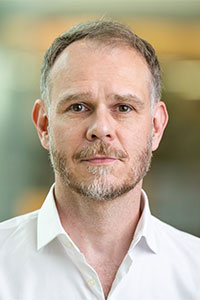
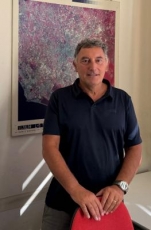
Norbert M. Schmitz is a Professor of Aesthetics at the Muthesius Academy of Fine Arts in Kiel, Germany. He has held academic roles at institutions including the University of Wuppertal (1992-1996), University of Siegen (2000), Ruhr University Bochum (1991-2000), and the University of Art and Design in Zurich (1999/2000). His international lecture activities span Austria, Switzerland, France, USA, and Pakistan. Institute of Art, Design and Media Studies: Aesthetics Muthesius Academy of Fine Arts (Faculty) Research and Publications: Schmitz’s work focuses on intersections of modernist art , film studies , media theory , and visual culture , with particular emphasis on topics like interactive media art , cinematic artist portraits , and synthetic realities . His edited volumes include works on embodiment , temporal media , and design anthropology . Academic Collaborations: Frequent co-editor with Lars C. Grabbe and Patrick Rupert-Kruse , contributing to the Yearbook of Moving Image Studies (YoMIS) and other key publications. His editorial work spans institutions in Darmstadt, Marburg, and Vienna. Key Themes: Explores media as aesthetic strategy , evolutionary perception , intermediality , and technological materiality across film, art, and design. Analyzes modernist paradigms in works by Eisenstein, Tarkovsky, and Bauhaus theorists.
Marian Sauter is a researcher at Ulm University's Institute for Psychology in Germany, specializing in the intersection of psychology, human-computer interaction, and educational technology. Her work primarily focuses on eye-tracking methodologies and gaze analysis to improve online teaching and learning environments. She frequently collaborates with colleagues from the Institute of Media Informatics at Ulm University, indicating strong interdisciplinary connections between psychology and computer science departments. Her research interests center on understanding visual attention patterns in educational contexts, particularly how gaze behavior correlates with learning outcomes in digital environments. Dr. Sauter investigates how eye movement data can be visualized and utilized to optimize instructional design, with specific attention to gaze-laser pointer relationships, gaze synchronicity among students, and attention monitoring in virtual classrooms. Her work bridges cognitive psychology theories with practical applications for e-learning platforms and remote education systems. Analysis of her recent publications reveals a strong trajectory in applying eye-tracking technology to solve real-world educational challenges, particularly those emerging during and after the pandemic-driven shift to online learning. Her research spans both theoretical investigations of visual attention mechanisms and practical implementations for educational technology. The consistent focus on webcam-based eye-tracking demonstrates her commitment to developing accessible methods that don't require specialized hardware, making her research particularly relevant for widespread educational applications. Best Paper Award at ETRA '22 Symposium on Eye Tracking Research and Applications Berlin Health Award (2023) Dr. Sauter's collaborative approach is evident in her frequent co-authorship with Tobias Wagner from Ulm University's Institute of Media Informatics and Anke Huckauf from General Psychology. Her research appears to be supported by institutional resources at Ulm University, though specific external grants are not mentioned in the available information. She appears to be actively mentoring students given her involvement in educational psychology research and student-focused studies. Her work suggests involvement with research groups focused on human-computer interaction, educational technology, and cognitive psychology at Ulm University, though specific lab names are not provided in the available information. The interdisciplinary nature of her publications indicates collaboration across psychology and media informatics departments.
Justin Owen Rawlins is an Associate Professor in Media Studies and Film Studies at The University of Tulsa's Kendall College of Arts & Sciences . His research explores the ideological work of screen texts through reception studies, media history, and Arctic media analysis. Education: Ph.D. in Media Studies, Indiana University Bloomington M.A. in Media Studies, Indiana University Rawlins investigates how media shapes identity through Method acting discourse , Alaskan reality TV , and celebrity paratexts . His work reveals tensions between neoliberal self-sufficiency and media production networks . Recent publications include the monograph Imagining the Method (2024), which maps Method acting's cultural politics, and articles on Joaquin Phoenix's Joker (2019), Tom Cruise's stunt performances (2021), and Arctic media representation (2022). His scholarship appears in Celebrity Studies , FLOW , and The Terror 's critical companion materials. At TU, Rawlins serves as Faculty Advisor and Executive Producer for the TUTV Media Lab , mentoring students in television production, podcasting, and cross-platform media. He has expanded the lab into a collaborative space with 500% membership growth since 2016.
Arne Harms is a Senior Research Fellow at the Max Planck Institute for Social Anthropology, specializing in the Department of Anthropology of Politics and Governance. His work bridges environmental anthropology, ethics, and science and technology studies through fieldwork in East India, the Indian Himalayas, and Europe. Focus on environmental displacement and climate change Expertise in disaster studies and infrastructure analysis Current project examines regeneration practices in European climate activism Editorial role at Social Anthropology/Anthropologie Sociale Liaison officer for Hans-Böckler-Stiftung Research spans coastal erosion, market-based conservation, and the socio-political dimensions of environmental challenges. Publications analyze carbon forestry economies, climate anxiety mitigation strategies, and the paradoxes of green neoliberalism. Active in environmental anthropology since 2010, his work explores the intersection between ecological crises and human adaptation. Key themes include temporality, displacement ethics, and the material politics of climate responses.
Francisco J. Tapiador is a Professor at the Universidad de Castilla-La Mancha , affiliated with the Department of Environmental Sciences. His research spans Earth Physics, Climate Science, and Remote Sensing, with a focus on precipitation modeling, climate classification systems, and data fusion techniques. He leads the Earth Physics research group at UCLM and collaborates extensively with international institutions. Key Research Areas : Earth Physics Climate Modeling Satellite Meteorology Data Fusion Algorithms Environmental Uncertainty Quantification Publication Trends : Dr. Tapiador's recent work emphasizes high-resolution precipitation merging via radar corrections, machine learning for storm detection, and uncertainty quantification in climate models. His articles integrate Remote Sensing , Machine Learning , and Climate Informatics to address extreme weather and hydrometeorological hazards. Peer Review Leadership : Atmospheric Research Chaos, Solitons and Fractals Chemosphere Heliyon Journal of Computational Science Meteorology and Atmospheric Physics Water Resources Research Collaborative Networks : Andrés Navarro Eduardo García-Ortega Gyuwon Lee Kyo-Sun Sunny Lim Ziad S. Haddad Technological Impact : His work bridges fluid dynamics , entropy-based algorithms , and neural networks to advance satellite precipitation estimation and climate model validation. Current projects include multi-satellite data correction and climate-human system couplings.
Corey Brady is an Associate Professor at the Department of Teaching & Learning and Associate Dean for Research and Outreach at Southern Methodist University's Simmons School of Education and Human Development. He holds a Ph.D. in Mathematics Education from the University of Massachusetts, Dartmouth, alongside degrees in English Literature (MA) and Pure Mathematics (MS). Dr. Brady's research focuses on mathematical and computational modeling from a constructionist perspective, emphasizing collective learning and STEAM activity . His work includes design-based research on block-based programming environments and embodied participatory simulations. Recent publications (2023-2021) span journals like Frontiers in Education , Science Education , and Educational Studies in Mathematics , with sub-fields ranging from geometric transformations to disaster preparedness systems. He has received recognition including the Outstanding Paper Award at ICLS 2023 and Best Paper at ICLS 2020 . Previously, he held faculty roles at Vanderbilt and Northwestern Universities, led educational technology development at Texas Instruments, and taught at middle school to community college levels. His interdisciplinary approach bridges mathematics, computer science, and affective learning.
Pengcheng An is an Assistant Professor at the School of Innovation and Creative Design at Southern University of Science and Technology (SUSTech) in Shenzhen, China. His research sits at the intersection of Design and Human-Computer Interaction (HCI), focusing on the design and implications of intelligent interactive systems in everyday contexts such as smart classrooms, offices, and other learning environments. Education: Ph.D. in Industrial Design, Eindhoven University of Technology, Netherlands Postdoctoral Research, Eindhoven University of Technology Postdoctoral Research Fellow and Sessional Lecturer, School of Computer Science, University of Waterloo, Canada An's research interests center on creating interactive systems that enhance learning, education, and support for children, families, and underprivileged groups. His work explores how emerging technologies like IoT, intelligent systems, and multimodal interfaces can be seamlessly integrated into real-world settings to improve user experiences without disrupting natural workflows. He particularly focuses on peripheral and unobtrusive interaction techniques that support busy practitioners like teachers and healthcare workers. His publication record demonstrates consistent contributions to top-tier HCI venues, with a focus on educational technology applications, assistive systems, and novel interaction techniques. The research trajectory shows increasing sophistication in understanding real-world deployment challenges and developing solutions that respect existing workflows while providing meaningful augmentation. Scientific Awards: Best Paper Honorable Mention Award (ACM CHI) Reviewers' Choice Award (INTERACT) Red Dot Design Award: Best of the Best (twice) iF Design Talent Award An serves as an active member of the HCI community, having been Associate Chair for the "Learning, Education, and Family" track at ACM CHI since 2021. He has secured research funding including a National Social Science Fund Youth Project exploring AI technology in art therapy for special children. His service extends to reviewing for major conferences (CHI, DIS, TEI, IDC) and journals (Behavior & Information Technology, Experimental Results). His laboratory work focuses on real-world deployments of interactive systems, particularly in educational settings, where he collaborates with teachers and students to develop and evaluate technologies that support learning without disrupting classroom dynamics.
Prof. Dr. Annette Upmeier zu Belzen is a Professor at the Institute of Biology at Humboldt University of Berlin, where she has been serving since October 2005. She leads the working group on Biology Didactics and Teaching/Learning Research within the Department of Biology Didactics. Her academic work is situated in the Faculty of Mathematics and Natural Sciences at one of Germany's most prestigious research universities. Her educational background includes: Promotion Dr. paed. from the Institute for Biology Education at Westfälische Wilhelms-University Münster (1997) Master of Arts in School Management from Technical University of Kaiserslautern (2005) Studies in biology, education and psychology at the University of Münster, culminating in the First State Examination (1992) Prof. Upmeier zu Belzen's research primarily focuses on biology education, with special emphasis on models and modeling in science education. Her work explores how students develop scientific reasoning skills through model-based learning approaches. She investigates the cognitive processes involved in understanding biological phenomena through modeling activities and examines how these processes can be effectively supported in classroom settings. Her research has significant implications for science teacher education, as she develops frameworks for assessing and fostering model competence among pre-service teachers. Through her work, she bridges theoretical perspectives on scientific modeling with practical classroom applications, contributing to both educational theory and practice in science education. Her recent publications reveal a strong focus on model-based learning, scientific reasoning, and teacher education. She has been increasingly investigating the role of abductive reasoning in modeling biological phenomena as complex systems. Her work spans formal classroom settings, museum education environments, and teacher professional development contexts. A notable trend in her recent work is the integration of cognitive science perspectives with educational research to better understand how students and teachers engage with scientific models and practices. Prof. Upmeier zu Belzen holds several significant professional roles: Deputy spokesperson of the Interdisciplinary Center ProMINT-Kolleg Scientific Director of Humboldt Explorers Editor of Science Education Review Letters (SERL) Member of the Council of the Humboldt University of Berlin She is actively involved in educational policy and standards development, serving as a consultant for various national and international organizations including the Organisation for Economic Co-operation and Development (OECD) for the PISA Science Framework 2025. Her expertise is sought after for developing educational standards and frameworks across multiple German educational institutions. Prof. Upmeier zu Belzen leads and participates in several research teams and laboratories focused on science education. Her work with the Humboldt Explorers program creates innovative learning environments, while her involvement with the Interdisciplinary Center ProMINT-Kolleg supports STEM education initiatives across Berlin and Brandenburg.
Dr. Susanne C. Knittel is Associate Professor of Comparative Literature at Utrecht University's Department of Languages, Literature and Communication. Holding a PhD from Columbia University (2011), she specializes in cultural memory, perpetrator studies, and environmental humanities through interdisciplinary lenses. Director of ERC-funded Ecologies of Violence project Co-founder of Journal of Perpetrator Research (2017) Co-director of Utrecht Network for Environmental Humanities Her research combines Holocaust memory with broader questions of guilt, responsibility, and cultural representation. She teaches courses on perpetrator studies, 20th/21st century European/North American literature, and posthumanist theory while organizing international academic initiatives like the Utrecht Forum for Memory Studies . Recent publications focus on environmental violence intersections with colonialism and genocide. Awards include ERC Consolidator Grant (2024), NWO-VENI award (2013), and European Studies Book Award recognition (2016).
Aleksandra Sarcevic is a Professor of Information Science at Drexel University's College of Computing & Informatics (CCI), where she directs the Interactive Systems for Healthcare (IS4H) Research Lab. She earned her PhD (2009) and MLIS (2005) from Rutgers University's School of Communication and Information, and holds a BA in Film and TV Production from the University of Arts, Belgrade. PhD, Communication, Information and Library Studies MLIS, Library and Information Science BA, Film and TV Production Her research focuses on computer-supported cooperative work (CSCW) , human-computer interaction (HCI) , and healthcare informatics , with specializations in: Collaboration in high-risk environments Medical team coordination Context-aware systems for critical care Crisis informatics Socio-technical system design Recent publications examine AI-enabled decision support , PPE compliance monitoring , and real-time clinical alert systems , with funding from NIH , NSF , and AHRQ . She received the NSF CAREER award in 2013 and mentors both current and graduated PhD students in interdisciplinary research. The IS4H lab develops interactive healthcare systems for trauma resuscitation and infection control, employing ethnographic methods and sensor-based activity recognition to improve medical team performance.
Elisabeth Navarro is a Professor at University of Paris Cité, affiliated with the CLILLAC-ARP laboratory. She specializes in interpreted communication, public service interpretation, and intercultural strategies. Created France's first diploma in Public Service Mediation and Interpretation Coordinates the Master's program in Languages, Interpretation and Intercultural Strategies (LISI) Research Focus Her research explores the intersection of: Interpreted communication frameworks Cultural and linguistic mediation dynamics Migration and otherness studies Language policy implementation Discourse analysis in institutional contexts Doctoral Supervision Has directed over 30 Master's theses since 2015 on topics ranging from: Corporate language policies in multinational companies Technological impact on interpretation Medical and legal language mediation Social media intercultural communication Academic Publications Authored a foundational book on interpreted communication (2023) and maintains active research output through the LISI program, with recent work examining: Intercultural marketing strategies Professional identity in multilingual environments Language mediation in social services Digital communication challenges
Dietram Scheufele is the John E. Ross Professor in Science Communication at the University of Wisconsin–Madison and co-director of the Science Communication Incubator Lab (SCI Lab) at the Morgridge Institute for Research. He holds the Taylor-Bascom Chair and directs Academic Programs for the Department of Life Sciences Communication within the College of Agricultural and Life Sciences. Scheufele is internationally recognized as a leading scholar examining public opinion dynamics surrounding controversial science, with expertise in the interplay among media, policy actors, and lay audiences. His educational background includes a PhD in Mass Communications (major) with a minor in Political Science, and an MA in Journalism and Mass Communication, both from the University of Wisconsin–Madison. Scheufele has established himself as a prominent voice in science communication theory and practice, bridging academic research with real-world applications through collaborations with organizations like the World Health Organization, the World Bank, and Porter Novelli. Scheufele's research focuses on understanding how public opinion forms around emerging scientific issues, particularly examining the role of media, values, and misinformation in shaping attitudes toward controversial science and technology. His work spans multiple domains including AI, genetic engineering, climate change, and vaccine communication, with particular attention to how digital platforms transform science communication dynamics and public understanding. He has pioneered research on the psychological mechanisms underlying science attitudes and the effectiveness of different communication strategies in polarized environments. His recent publications reveal a strong focus on contemporary challenges in science communication, including AI perceptions, vaccine misinformation, science credibility across demographic groups, and innovative communication formats like science comics. The work demonstrates increasing attention to intersectional issues of race, gender, and political ideology in science communication, as well as methodological innovations in measuring science literacy in digital environments. Member, German National Academy of Science and Engineering Fellow, American Association for the Advancement of Science Fellow, International Communication Association Fellow, Wisconsin Academy of Sciences, Arts & Letters 2024 American Academy of Political and Social Science Fellowship (Harold Lasswell Fellow) University of Wisconsin–Madison Hilldale Award Scheufele has mentored numerous PhD students who have gone on to academic positions, including Becca Beets at the University of Maryland and Shiyu Yang at the University of Tennessee. His SCI Lab serves as a unique test bed for science communication practitioners and researchers to collaborate, experiment with new ideas in public science engagement, and assess impact through rigorous social scientific approaches. The lab leverages Wisconsin's position as a political 'purple' state to develop scalable models for communicating science that incorporate diverse viewpoints. Scheufele emphasizes the importance of 'paying it forward' in academic mentorship and fostering the next generation of science communication leaders.
Luca Romagnoli is a University Researcher at Sapienza University of Rome, currently serving in the Department of Modern Literature and Culture within the Faculty of Letters and Philosophy. He has been in full-time academic service since May 27, 1994, with a distinguished career spanning geography research and teaching. His current teaching responsibilities include GIS Applications - GEOSTATICS for the Three-year degree course in Geographical sciences for the environment and health, and Methods for GEO-OCEANOGRAPHY research for the Master's Degree Course in Land Management and Enhancement. Romagnoli earned his PhD in Geography from Sapienza University of Rome in 1993 with a dissertation titled 'Geografia dell'area metropolitana di Roma: aspetti naturali e mobilità pendolare' (Geography of the Rome metropolitan area: natural aspects and commuter mobility). His academic journey includes significant international experience, including research at the University of Maputo (Mozambique) in 1991 and an Erasmus scholarship at Trinity College Dublin studying Irish-Italian migration patterns. Romagnoli's research spans multiple interconnected domains within geography. His primary focus areas include environmental geography (particularly oceanography and geostatistics), medical geography (with publications on health accessibility in Rome and malaria epidemiology), and geopolitical studies (especially water resources in the Mediterranean region). He has also made notable contributions to urban geography (focusing on the Rome metropolitan area), tourism geography, and renewable energy studies. His scholarly approach uniquely bridges physical and human geography, creating interdisciplinary connections between environmental systems and human activities. His recent publications demonstrate a growing emphasis on environmental and geopolitical issues related to oceans and water resources. The 2024 work on oceanographic research in Italian universities reflects his commitment to advancing ocean literacy within higher education. His 2022 publications on 'Blue Power' showcase expertise in Mediterranean water geopolitics, addressing conflicts from Israel-Palestine to the Nile Valley. Romagnoli maintains diverse scholarly interests, with publications ranging from tourism geography to recreational aviation studies, demonstrating remarkable versatility across geography's sub-disciplines. Romagnoli has significant experience in research collaboration, having worked with various public entities including the Ministry of Labor, Censis research institute, and the European Commission's TMR Summer School program. His international perspective was further developed during his tenure as a Member of the European Parliament (2004-2009), where he participated in 428 plenary interventions and submitted 853 parliamentary questions. His teaching methodology incorporates quantitative approaches to geographical analysis, with specializations in geostatistics and geo-oceanographic research methods.
Fabian-Xosé Fernandez serves as Associate Professor in the Department of Psychology within the College of Science at the University of Arizona, where he directs the Circadian Trends Laboratory. His research program bridges neuroscience, clinical psychology, and public health through investigations of circadian biology and sleep-wake patterns. His primary research interests focus on circadian fluctuations in real-world data , psychology of nighttime wakefulness , and suicide risk mechanisms . Key investigations explore how nocturnal wakefulness correlates with suicidal ideation, homicide risk, and metabolic dysregulation. His work employs National Violent Death Reporting System analyses Controlled circadian phase-shifting experiments Population-level sleep surveys Translational rodent models Recent publications reveal strong temporal patterns in behavioral health outcomes, with suicide risk peaking during circadian night across diverse populations. His lab develops chronotherapeutic interventions including spectral filtering devices and lighting protocols to optimize circadian alignment. Current work examines how blue-light modifiers affect phase-shifting responses and how sleep disruption mediates psychiatric outcomes in bipolar disorder. Fernandez teaches graduate and undergraduate courses including PSY 350 (Sleep/Wake, Time Cycles, & Life) and PSY 578 (Sleep & Sleep Disorders), with recent instruction through 2025. His academic service includes editorial review for journals like Clocks & Sleep and Neuropsychopharmacology.
Clay Spinuzzi is a Professor in the Department of Rhetoric and Writing at the University of Texas at Austin, affiliated with the College of Liberal Arts. He earned his Ph.D. from Iowa State University in 1999. Education: Ph.D., Iowa State University (1999) His research spans activity theory, genre theory, actor-network theory, workplace studies, qualitative research, and entrepreneurship. He focuses on how individuals coordinate and collaborate in work environments, often analyzing communication practices in startups, coworking spaces, and rural communities. Recent work includes studying the Business Model Canvas in entrepreneurship, 5D Frameworks for community barriers, and Material Engagement Theory in historical contexts. His publications emphasize methodological innovations like fractional objects and project assemblages. He teaches graduate courses such as Designing Text Ecologies and Writing for Entrepreneurs in both the Department of Rhetoric and Writing and the Human Dimensions of Organizations MA program. His blog ( spinuzzi.blogspot.com ) frequently reviews interdisciplinary literature in sociology, cognitive archaeology, and workplace communication.