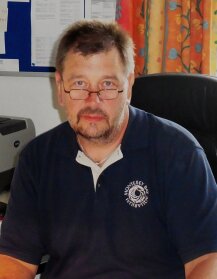
Stefan Halle is a Professor at the Faculty of Biological Sciences of Friedrich Schiller University Jena, where he holds the Professorship for Ecology since 1996. His research focuses on behavioural ecology of small mammals , including spatio-temporal activity patterns , dispersal mechanisms , predator-prey dynamics , and landscape ecology . Executive Director (2017–2020), Institute of Ecology and Evolution Coordinating Docent, Master’s Program Evolution, Ecology and Systematics (MEES, 2011–2021) Dean for Study Affairs (2007–2010), Faculty of Biological Sciences His work integrates theoretical ecology with experimental field studies , particularly on vole population cycles and habitat fragmentation. Recent publications highlight his contributions to biodiversity-ecosystem functioning research and multitrophic interactions in grasslands. Stefan Halle has supervised numerous international research collaborations, including the International Max Planck Research School (IMPRS), and has been a key figure in analyzing degraded ecosystems through molecular and chemical techniques. His career spans roles at the University of Oslo, Philipps University Marburg, and Ludwig Maximilians University Munich.
Dr. Adeline Guéret is a Research Associate and doctoral candidate at the DIW Graduate Center (affiliated with Technical University of Berlin ), specializing in the intersection of energy systems and transportation. Her work focuses on: Sector coupling between electricity and transport Power sector modeling with open-source tools Energy transition policy analysis Prior to her current roles, she has held research positions at: Observatoire Français des Conjonctures Économiques (OFCE) in Paris Potsdam Institute for Climate Impact Research (PIK) Her academic credentials include: MSc in Economics from Paris School of Economics (PSE) MSc in Economics and Statistics from ENSAE ParisTech Her research spans energy economics and environmental policy, with particular emphasis on: Impacts of shared electric mobility on power systems Integration of variable renewables Comparative energy transitions in Germany and France Her publications and presentations demonstrate a strong focus on: Energy transition metrics Grid flexibility solutions Policy evaluation frameworks Interdisciplinary energy research She actively contributes to energy discourse through media appearances, including a featured interview in DIW Weekly Report and podcast discussions on energy transitions.
Marvin Zedler is a Lecturer at the University Hospital Cologne and affiliated with the Institute of Biomechanics and Orthopaedics at the German Sport University Cologne . His research focuses on biomechanics, sports performance, and occupational health in high-demand professions such as police operations. Education: M.Sc. in Biomechanics, B.Sc. in Sport and Performance, B.Sc. in International Management Active in third-party funded projects including bobsleigh diagnostics, police spine loading, and Hoffenheim collaborations Marvin's research spans biomechanics of running economy , musculoskeletal stress in athletes , and ergonomic challenges for police personnel . He has contributed to studies on cervical spine loading in helicopter pilots and the effects of body armor on physical performance. Recent publications highlight trends in recreational runner recovery , police officer efficiency , and winter sports biomechanics . His work often integrates anthropometric and kinetic data to improve athletic and occupational outcomes. Marvin supervises Master's and Bachelor's theses in biomechanics and sports science. He has participated in conferences such as the Internationaler Kongress Nachwuchsleistungssport NRW and contributed to media discussions on athlete performance.
Uri Borges is a Researcher at the Institute of Psychology , German Sport University Cologne . Previously a PhD student in the Section Performance Psychology at the same institution, Borges focuses on interdisciplinary research at the intersection of neuroscience, sports science, and psychophysiology. Current Role: Researcher in Health & Social Psychology Research Affiliation: Institute of Psychology, German Sport University Cologne ORCID: 0000-0002-1032-0580 Research Interests center on: Neural mechanisms of emotion regulation in sports Vagus nerve stimulation and cognitive functions Heart rate variability (HRV) applications Aggression dynamics and recovery processes Psychophysiological responses to stress Performance optimization through biofeedback Recent Publications demonstrate expertise in: Vagus nerve stimulation physiology Exercise psychology interactions Systematic review methodologies Respiratory-biofeedback interventions Elite athlete performance optimization Stress-coping mechanisms Scientific Awards : Second Prize at Promotoren Think Tank Pitch-Event (2023) Best Poster Award at 55th German Sport Psychology Association Annual Conference (2023) Academic Contributions : Peer-reviewer for journals: European Journal of Sport Science, Physiological Measurement Session Chair at European Congress of Sport & Exercise Psychology (2024) Guest Lecturer on taVNS cognitive applications (2024)
Larisa B. Nazarova is an active researcher in Quaternary science and paleoclimatology, collaborating internationally on studies related to environmental reconstructions during the Late Weichselian and Holocene periods. Her work focuses on lake ecosystems, climate variability, and sediment analysis across Eastern Europe, Siberia, and the Russian Far East. Key collaborations with institutions in Germany (Frontiers in Earth Science), Russia, and Poland Published extensively in journals like Journal of Quaternary Science and Journal of Asian Earth Sciences Her research spans interdisciplinary topics including climate modeling, paleoecology, and limnology, contributing to understanding long-term environmental changes. While no formal academic rank, department, or university affiliation is explicitly stated in the provided texts, her recurring role in high-impact publications suggests institutional ties. Scientific awards and editorial roles are not explicitly detailed, though she serves as an Associate Editor for Quaternary Science, Geomorphology, and Paleoenvironment at Frontiers in Earth Science.
George Tanski is an active researcher at the Alfred Wegener Institute Helmholtz Centre for Polar and Marine Research, specializing in Arctic permafrost degradation and carbon cycling dynamics. His work focuses on quantifying organic carbon release from eroding coastlines in the Canadian Beaufort Sea (Herschel Island) and Siberia, examining how thermokarst processes and seawater interaction transform terrestrial carbon before oceanic integration. Collaborating with international teams across Germany, Canada, and Sweden, he employs field measurements, computed tomography, and drone photogrammetry to address climate change impacts on vulnerable Arctic systems. Education: PhD in Earth Sciences (2018) from Freie Universität Berlin with thesis: 'Fate of organic matter mobilized from eroding permafrost coasts' Master's degree (2013) from Freie Universität Berlin with thesis: 'Release of dissolved organic carbon from coastal erosion into the southern Canadian Beaufort Sea' His research interests center on permafrost carbon mobilization under climate warming, with emphasis on biogeochemical pathways in coastal systems. Key areas include dissolved organic matter dynamics, greenhouse gas production from thawing permafrost, microbial community responses to erosion, and landscape-scale carbon stock mapping. He bridges field observations with laboratory analysis to understand how sediment sorting, hydrodynamics, and microbial activity determine carbon fate in the Arctic nearshore zone, contributing to climate feedback models. Analysis of his 15 most recent articles reveals dominant themes in permafrost carbon fluxes (2016-2024), showing progression from DOC quantification to microbial and spatial heterogeneity studies. His work spans the Canadian Arctic and Siberia, increasingly incorporating remote sensing and standardized methodologies like the SPLASH Action Group. A distinctive thread is polar outreach, exemplified by 'Frozen-Ground Cartoons', while recent publications highlight urgent CO2 release mechanisms and ecosystem shifts from reduced sea ice. Scientific Awards: No specific awards or fellowships were documented in the source material Advising and Grants: George Tanski has not been identified as a thesis advisor in the provided publications. While he participates in large collaborative projects (e.g., PYRN, SPLASH), no grant leadership or funding details are specified. His research appears embedded within institutional programs at the Alfred Wegener Institute rather than standalone grants. Labs and Teams: He operates within the Alfred Wegener Institute's Arctic research infrastructure, contributing to the Permafrost Young Researchers Network (PYRN) as Executive Committee member (2014-2016) and co-organizer of ICOP workshops. His work connects with the SPLASH Action Group for method standardization and leverages AWI's field stations on Herschel Island for coastal erosion studies. International collaborations include GFZ Potsdam, Freie Universität Berlin, and Canadian Arctic research consortia.
Melanie Weirich is a Professor and Senior Researcher at the Leibniz-Zentrum Allgemeine Sprachwissenschaft (ZAS) , Berlin. She contributes to the DFG project C02 'Variation in situated interaction' within the CRC 1412 Register: Language-Users' Knowledge of Situational-Functional Variation. Her work intersects phonetics, sociolinguistics, and multimodal speech research. Research Focus: Register variation, f0 modulation, acoustic-phonetic modeling, social meaning of speech. Methodology: Virtual reality experiments, mobile app elicitation, corpus-based analysis (e.g., German Plapper Corpus). Recent publications analyze gender-based f0 variation, vowel dispersion, pause patterns, and multimodal cues in speech. Her work has been presented at major phonetics conferences like Interspeech, ICLAVE, and DGfS. She received the prestigious Heisenberg-Professorship (2021) for her research on phonetic-sociolinguistic interfaces. Scientific Awards: Heisenberg-Professorship (2021) She collaborates with Stefanie Jannedy, Daniel Duran, and other researchers in the CRC 1412 network, contributing to laboratory phonology and speech technology innovation.
Heather Weston is a doctoral researcher at Humboldt-Universität zu Berlin , affiliated with the DFG/ANR project SALAMMBO (Spoken Language in Motions: Learning and Adaptation of Speech Communication in the Context of Body Motions) under the Laboratory Phonology research area. Her work focuses on the interaction between physical movement and speech production, analyzing phenomena such as motion rate, speech tempo, glottal parameters, and intra-speaker variability during physical activity. Research Interests Effects of physical load on phonatory processes and voice stability Biomechanical modeling of speech-movement coordination Acoustic analysis of fundamental frequency (f0) and harmonics-to-noise ratio Physiological responses during light/moderate physical exertion Scientific Awards 2019: Fellowship in the Freies Wissen (Free Knowledge) program. Teaching 2022: Phonetics courses (SS 2022, WS 2021/22) at the University of Cambridge 2019: Embodiment in Speech course at Humboldt-Universität zu Berlin (WS 2019/20) Conference Participation Heather presented her research at workshops such as the Speech Motor Control 2022 (virtual), European Workshop on Speech Production (2022), and the 58th IDS Workshop (2022). She collaborated with researchers like Dr. Susanne Fuchs, Dr. Wim Pouw, and Dr. Amelie Rochet-Capellan.
Dr. Quanfu He is a Postdoctoral Researcher at Forschungszentrum Jülich GmbH, affiliated with the Institute of Climate and Energy Systems (ICE) and its Troposphere (ICE-3) department. His work focuses on atmospheric chemistry, particularly secondary organic aerosol (SOA) formation, photochemical aging, and PM2.5 composition. Research Interests include: Chemical and physical transformations of aerosols in urban and regional environments Role of nocturnal chemistry in SOA formation Impact of VOC-NOx-SO2 interactions on secondary pollution Toxicity and optical properties of biomass burning aerosols Source apportionment and pollution mitigation strategies Recent Publications highlight trends in SOA formation from biogenic and anthropogenic precursors, observational studies in China, and chamber experiments on aerosol aging. Key facilities include the SAPHIR chamber for simulating atmospheric processes.
André Hardtmann is a Research Associate and Senior Engineer at the Institute of Forming Technology within Dresden University of Technology . His work focuses on advanced forming process modeling, machine-process interactions, and hybrid composite development.
Prof. Dr. Eva Böhm holds the Chair of Marketing and Value Creation at the University of Paderborn , specifically within the Faculty of Economics, Department 1: Management Marketing and Value Creation . Her work focuses on value-based marketing strategies that balance economic, ecological, and social stakeholder needs, with strong practical and international collaboration. Key research areas: Servitization, Solution Selling, Online Reviews, Product Returns, Suboptimal Food Waste Funded by Deutsche Forschungsgemeinschaft (DFG) and Institute for the Study of Business Markets (ISBM) Her quantitative-empirical research employs methods like structural equation modeling, experiments, and fsQCA to derive actionable insights for companies like BOMAG, Diebold Nixdorf . Recent work examines: 2023 Research: Suboptimal food retail promotions, dual impacts of online reviews 2022-2021: Monetary sales incentives in service innovation, solution selling dynamics, product return management Scientific recognition includes multiple Best Paper Awards at conferences like AMA, EMAC, and VHB-Jourqual rankings. She supervises corporate collaborations and integrates research into practice-oriented teaching modules , such as the BOMAG practical project.
Dr. Abdullah Makkeh is a Senior Scientist at the University of Göttingen's Department of Data-driven Analysis of Biological Networks, headed by Michael Wibral, and a Guest Scientist at the Max Planck Institute for Dynamics and Self-Organization in Göttingen under Viola Priesemann's Complex Systems Theory group. Previously, he served as a Postdoc at the University of Tartu in both Theoretical Computer Science (Dirk Oliver Theis) and Computational Neuroscience (Raul Vicente) groups. Education: PhD in Informatics (2018, University of Tartu, Supervisor: Dirk Oliver Theis) MSc in Mathematics (2013, Lebanese University, Supervisor: Bassam Mourad) BSc in Mathematics (2011, Lebanese University) His research focuses on extending information theory to study computation in intelligent systems like the brain and artificial neural networks (ANNs). He has developed interpretable information-theoretic learning rules for ANNs (Makkeh et al., 2025) and analyzed reinforcement learning agents to reveal emergent computation mechanisms (Engel et al., 2022; Ehrlich et al., 2023). Current work applies these methods to enhance large language model (LLM) interpretability. His publications span information-theoretic frameworks, predictive coding, and neural oscillation analysis, with a 2024 Royal Netherlands Academy of Arts and Sciences (KNAW) recognition. He co-teaches courses in Bayesian Inference, Information Theory, and Discrete Mathematics, and organizes annual workshops on information theory in computational neuroscience. Scientific Awards: Royal Netherlands Academy of Arts and Sciences (KNAW) (2024) Dr. Makkeh contributes to open-source research tools via GitHub and collaborates with interdisciplinary teams across neuroscience, computer science, and mathematics. His work bridges theoretical foundations with applied machine learning through rigorous mathematical frameworks.
Dr. Muhammad Tayyab is a Postdoctoral Research Associate at Forschungszentrum Jülich's Institute of Energy Technologies (IET), working in the Fundamental Electrochemistry (IET-1) department. He holds a PhD in Electrical Networks and Renewable Energy from Otto-von-Guericke University Magdeburg (2022), with academic degrees also from the same university (MSc in Electrical Engineering and Information Technology) and BUITEMS Pakistan (BSc in Telecommunication Engineering). PhD in Electrical Networks and Renewable Energy (2022) Master's in Electrical Engineering and Information Technology Bachelor's in Telecommunication Engineering His research focuses on energy storage systems , electrochemical technologies , and grid optimization , particularly examining vehicle-to-grid (V2G) systems , sector coupling , and infrastructure planning for electric mobility . His work combines technical modeling with economic and systemic aspects of energy transitions. Key article trends include CO2 electrolyser technologies , microgrid planning , charging infrastructure analysis , and storage optimization across multiple energy sectors. Publications demonstrate methodological expertise in Monte Carlo simulation , uncertainty modeling , and stochastic grid analysis . As part of Forschungszentrum Jülich, he contributes to Germany's energy research landscape through technical assessments of CO2 electrolyser systems and grid-scale battery applications . His academic background in electrical engineering and renewable energy systems provides a strong foundation for cross-disciplinary energy solutions.
Lars Hoffmann is a leading researcher at the Jülich Supercomputing Centre (JSC) , where he heads the HPC in Applied Sciences and Engineering division and co-leads over 40 researchers across five specialized teams. His work focuses on advancing Earth system science through innovative model development, numerical weather prediction, and atmospheric remote sensing analysis. He develops critical tools like the JURASSIC and MPTRAC models, which support research in climate science, astrophysics, and energy systems engineering. Research Pillars: Earth system modeling, high-performance computing, atmospheric science, remote sensing Key Projects: Joint Lab ExaESM, ICON model integration, stratospheric gravity wave analysis Collaborative Networks: Helmholtz Information Program, European research consortia His research explores atmospheric transport processes, gravity wave dynamics, and their impacts on climate and weather systems. Recent work includes: Analyzing gravity wave interactions with hurricanes and volcanic eruptions Developing GPU-accelerated models for computational efficiency Investigating polar stratospheric cloud formation mechanisms Linking satellite observations with numerical simulations Studying troposphere-to-ionosphere wave propagation Evaluating meteorological reanalysis datasets for climate studies
Dr. Helmut Podhaisky is a researcher at the Institute of Mathematics , Martin Luther University Halle-Wittenberg , within the Faculty of Natural Sciences II. His work focuses on numerical methods for differential equations, particularly stiff ODEs, DAEs, and Volterra equations. Email: podhaisky@mathematik.uni-halle.de Research Interests: Numerical methods for stiff and oscillatory differential equations Runge-Kutta and peer methods Parallel computing algorithms Mathematical modeling of calcium waves in biological systems Recent Publications highlight his work on barycentric rational methods, adaptive integrators, and bifurcation analysis in oscillating systems. His research spans both theoretical developments and practical applications in computational mathematics.