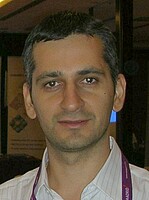
Konstantinos Drakos is a Professor at the Department of Accounting and Finance, Athens University of Economics and Business (AUEB). Previously, he served as Assistant Professor at AUEB (2009–2012), Assistant Professor at the University of Patras (2003–2008), and Lecturer at the University of Essex (2001–2002). He holds a PhD in Economics from the University of Essex, preceded by an MSc and undergraduate studies in Economics at the University of Athens. His research focuses on Applied Financial Economics and the Economics of Security, with recent work analyzing hedge fund leverage, geopolitical risk impacts, cryptocurrency markets, and green banking. Teaching responsibilities include Macroeconomic Theory, Finance for Banking, and Risk Management at both undergraduate and postgraduate levels. Drakos' publications span over two decades, addressing topics such as terrorism's economic effects, bank lending behavior, and investment under uncertainty. His recent articles (2022–2025) emphasize cryptocurrency dynamics, geopolitical risk interactions, and financial stability in green banking. Notable themes include market volatility, capital allocation under uncertainty, and policy responses to systemic risks. No scientific awards are listed in the provided materials. His research has explored structural shifts in financial risk, macroeconomic sentiment, and cross-market linkages following major global events like 9/11 and the 2008 crisis. Drakos has advised on policy-related topics related to financial markets and regulatory frameworks, though specific grants or lab affiliations are not detailed here.
Professor Markos Zachariadis is the Chair in Financial Technology (FinTech) and Information Systems at Alliance Manchester Business School (AMBS), University of Manchester. He holds roles in the World Economic Forum’s Global Future Council on Resilient Financial Systems and is a FinTech Research Fellow at the Cambridge Centre for Digital Innovation. His research focuses on the economics of digital innovation, payment systems (e.g., SWIFT), and Open Banking. Zachariadis has authored/co-authored influential works such as The Society for Worldwide Interbank Financial Telecommunication (SWIFT) and contributes to policy discussions globally. Education: PhD in Management (Economics of Payment Systems), London School of Economics (2011) MSc in Analysis, Design and Management of Information Systems, London School of Economics (2004) Bachelor of Economics, University of Patras (2003) Research Interests: Financial Technology, Payment Networks, Digital Innovation, Data Standards, Blockchain, and Regulatory Impact. His work bridges academia and industry, addressing challenges in financial infrastructure and digital transformation. Awards: Recipient of prestigious awards including the NET Institute Award and SWIFT Institute Award for contributions to payment systems and Open Banking research. Grants & Advisory Roles: Leads projects on FinTech regulation and financial crime, collaborating with institutions like the Hellenic Competition Commission. His advisory roles span global organizations including the Bank of England and European Commission. Labs/Teams: Founding Director of the Centre for Financial Technology Studies (CFTS) at Manchester Business School, fostering interdisciplinary research in FinTech.
Jordan Siegel is a Professor of Strategy at the Ross School of Business, University of Michigan, and a Michael R. and Mary Kay Hallman Faculty Fellow. He also serves as a Visiting Faculty member at The American College of Greece (ACG). His academic background includes a Ph.D. from MIT, and B.A. and M.A. degrees from Yale University. Professor Siegel’s research focuses on global strategy, particularly how companies leverage institutional differences across borders to gain competitive advantages through governance and human resource management strategies. His work examines institutional arbitrage—how firms exploit formal and informal rules (e.g., laws, cultural norms) to enhance performance, even in single-country operations. Notably, he investigates how foreign multinationals in Japan and South Korea exploit social biases by promoting female managers, leading to long-term performance improvements. His findings highlight the strategic use of labor market discrimination as a competitive tool. Professor Siegel’s research has been published in top-tier journals such as Management Science , Administrative Science Quarterly , and Strategic Management Journal . He is affiliated with the William Davidson Institute and Harvard Korea Institute, contributing to interdisciplinary studies on global business strategy and institutional dynamics.
Amalia Foka is an Assistant Professor in Computer Science Applications for the Arts at the Department of Fine Arts & Art Sciences , School of Fine Arts , University of Ioannina , Greece. She has held academic positions at the University of Patras (2005-2013), University of Ioannina (2005-2008), and Computer Technology Institute & Press "Diophantus" (2014-2015). Her research bridges Artificial Intelligence with Digital Art , focusing on Generative AI , Social Media Mining , and Human-Computer Interaction within artistic contexts. Education: BEng in Computer Systems Engineering (1998) from the University of Manchester Institute of Science & Technology (UMIST) , UK MSc in Advanced Control (1999) from UMIST PhD in Robotics (2005) from the Department of Computer Science , University of Crete Her artistic research includes projects like Bushwalking (StyleGAN2 landscape generation), Breaking the Silence (NLP analysis of taboo topics), and The Invisible Structures of the Artworld (social media-driven network visualization). She leads the Multimedia Lab at the University of Ioannina, focusing on AI in Creative Processes and Digital Interaction methodologies.
Polemis Dionysios serves as an Associate Professor in the Department of Maritime Studies at the University of Piraeus, Greece, within the School of Shipping and Industry. His academic profile demonstrates a strong commitment to maritime education and research in the Greek academic context, contributing to one of the Mediterranean's leading institutions for maritime studies. Professor Polemis specializes in International Economics and Maritime International Trade, with research focusing on the intersection of global trade patterns and maritime transportation systems. His scholarly work examines how geopolitical shifts, economic policy uncertainty, and market dynamics impact shipping operations, particularly in the LNG sector. His research interests span shipping economics, maritime transport economics, port management, and the geopolitical dimensions of international maritime trade routes. His publications reveal a consistent focus on analyzing market patterns, regulatory compliance, and sustainability challenges within the maritime sector. His extensive publication record, spanning from 2001 to anticipated 2025 publications, demonstrates a comprehensive understanding of the maritime sector from operational, economic, and policy perspectives. Recent work shows increasing attention to emerging technologies in shipping and the evolving geopolitical landscape affecting global trade routes, particularly regarding LNG transportation and strategic maritime chokepoints like the Suez Canal. As an academic in the Department of Maritime Studies at the University of Piraeus, Professor Polemis contributes to the educational mission of an institution with a strong tradition in maritime education, situated in Piraeus—one of the Mediterranean's most important port cities. His work bridges theoretical economic concepts with practical applications in the shipping industry, providing valuable insights for both academic and industry stakeholders.
Prof. Nikos Mamoulis is a Professor at the Department of Computer Science & Engineering, University of Ioannina, and a Lead Researcher at Archimedes Research Unit, ATHENA RC. He holds a PhD from Hong Kong University of Science and Technology (HKUST) and a Diploma from the University of Patras. His research focuses on spatial data management, big data analytics, data privacy, and uncertain data systems. Education : Ph.D., Computer Science, Hong Kong University of Science and Technology (2000) 5-year Diploma, Computer Engineering and Informatics, University of Patras (1995) Research Interests : Complex data management (spatial, spatio-temporal, time-series, text, graphs), big data analysis, privacy preservation, and uncertain data systems. He develops scalable algorithms and systems for modern data management challenges, with applications in transportation, social networks, and geospatial analytics. Projects & Grants : MESA: In-memory Spatial Analytics Made Scalable (HFRI-funded, PI) MORE: Real-time Energy Data Management (H2020, Senior Researcher) Smart City Bus Platform (ERDF-funded, PI/Coordinator) Awards : Outstanding Young Researcher Award (2008-2009, HKU) Best Paper Award at SSTD 2015 Test of Time Award at MDM 2022 Labs & Collaborations : Leads the Archimedes Research Unit at ATHENA RC, collaborating with institutions like HKUST and Uppsala University on spatial and big data systems. Active in organizing top-tier conferences like SIGMOD, EDBT, and ICDE.
Ioannis Panageas is an Assistant Professor in Computer Science at UC Irvine's Donald Bren School, directing the GOALLab. His research develops theory for learning in multi-agent systems, game dynamics, and optimization. Funded by NSF and NRF, he focuses on last-iterate convergence guarantees in games, efficient equilibrium computation, and multi-agent reinforcement learning. Recent Work: Provides first exponential lower bounds for fictitious play in potential games (NeurIPS 2023), efficient Nash equilibrium computation methods (ICLR 2023), and semi-bandit learning dynamics with no-regret guarantees (ICML 2023). Teaching: Offers courses in Algorithmic Game Theory and Optimization for Machine Learning. Currently advising 3 PhD students and 2 MS students.
Panagiotis Zervopoulos is an Associate Professor at the Department of Business Organization and Administration within the School of Economics, Business and International Studies at the University of Piraeus. Previously, he served as Associate Professor and Director of the PhD Program in Business Administration at the School of Business Administration of the University of Sharjah in the UAE. His research interests focus on operations research, efficiency and performance measurements, optimization methods, and econometrics. Specifically, he specializes in developing new data envelopment analysis (DEA) techniques, Bayesian methods, parametric and non-parametric econometric models, with innovative applications across multiple disciplines. His methodological contributions have been applied in diverse fields including supply chain management, financial systems, environmental efficiency, and corporate governance. Zervopoulos has published extensively in top-tier journals such as European Journal of Operational Research, Journal of the Operational Research Society, Annals of Operations Research, Journal of Financial Stability, and Journal of Cleaner Production. His recent work (2023-2024) demonstrates continued innovation in efficiency measurement techniques, particularly in network DEA models with bias correction, environmental efficiency analysis, and systemic risk measurement. His publications show strong international collaboration patterns, frequently working with researchers from different countries and institutions. He has served as Guest Editor for journals including Socio-Economic Planning Sciences and IMA Journal of Management Mathematics, demonstrating recognition of his expertise by the academic community. Zervopoulos has held research fellowships at prestigious institutions worldwide, including Peking University (China), the London School of Economics (United Kingdom), the Academy of Athens (Greece), and the Foundation for Economic and Industrial Research (Greece). He also participates in the World Economic Survey and the Economic Expert Group of the Ifo Institute (Germany). Professionally, he has served as Senior Consultant Modeling Statistician at IRi Worldwide and as Project Manager and Expert in Quantitative Analysis and Public Sector Reform through technical support projects with the European Public Law Agency.
Dr. Jean-Christophe Nave is an Associate Professor in the Department of Mathematics and Statistics at McGill University. He holds a PhD from the University of California, Santa Barbara (2004), under advisors Xu-Dong Liu and Sanjoy Banerjee. Prior to McGill, he served as a Lecturer and Instructor at MIT's Mathematics Department (2005-2010). His research focuses on numerical analysis, partial differential equations, fluid mechanics, and computational methods for interface problems. He has led research groups involving postdocs, PhD, and undergraduate students, collaborating on projects like the Correction Function Method for PDEs and the Characteristic Mapping Method for advection problems. Education: Ph.D. in Applied Mathematics from UCSB (2004). Affiliations include the Institut des Sciences Mathematiques Steering Committee, Centre de Recherches Mathematiques Applied Math Lab, and CNRS-UMI. Active in teaching courses like Numerical Analysis I/II and Non-Linear Dynamics at McGill, with sabbatical periods noted in recent years. Research interests span numerical methods for PDEs, fluid-structure interaction, and multi-phase flows. His work integrates computational geometry and invariant numerical techniques, addressing challenges in complex fluid dynamics and interface-driven phenomena. Over 40 peer-reviewed publications and continuous contributions to the field of computational applied mathematics. Scientific advising includes over 20 graduate and undergraduate students, with notable alumni now in academia and industry. Collaborations include projects on volcano dynamics, fiber drawing instabilities, and concentrated solar power systems. His methods have advanced numerical simulations for engineering and physical systems involving discontinuous coefficients and sharp interfaces.
Ioannis Antoniadis is a Professor at the School of Mechanical Engineering , National Technical University of Athens (NTUA), and serves as the Dean and Director of the Dynamics and Acoustics Laboratory (DAL) . He has held academic positions since 1982, rising through the ranks from Scientific Research Assistant to full Professor since 2012. Education: Diploma in Mechanical Engineering (NTUA, 1981), Ph.D. (NTUA, 1987) Research Focus: Vibration isolation, negative stiffness systems, smart materials, seismic protection, and energy conversion Key Projects: 25+ funded research initiatives including KDamper for seismic mitigation, TRANVIC for vehicle vibration control, and 3BUILD for 3D-printing construction systems His work has resulted in 15+ peer-reviewed publications on seismic protection devices and vibration control systems, with applications in bridges, wind turbines, and industrial equipment. He has taught courses in Dynamics and Vibrations , Noise Vibration , and Signal Processing at NTUA, while leading the Mechanical Design and Automatic Control Section .
Timothy M. Jones is a Professor of Computer Architecture and Compilation at the University of Cambridge Computer Laboratory, where he leads research in systems-level computing. He is also a Fellow at Gonville and Caius College, contributing to academic leadership and student mentorship within the collegiate system. His primary affiliation with the Computer Laboratory positions him at the forefront of systems research within the university. Dr. Jones's research focuses on extracting various forms of parallelism (thread-level, data-level, memory-level) to enhance computational performance while addressing energy efficiency and reliability challenges. His work spans compiler design, binary translation, and microarchitecture optimization, with specific interest areas including: Compiler technologies for functional and parallel programming Hardware reliability and fault tolerance mechanisms Binary analysis and instrumentation frameworks Memory system optimization and virtual memory management Security enhancements through binary modification Runtime systems for heterogeneous architectures Analysis of his recent publications reveals strong emphasis on systems-level innovation, particularly in fault tolerance techniques, binary analysis tools, memory optimization, and parallel execution frameworks. His work consistently bridges theoretical computer science with practical hardware implementation challenges. Dr. Jones maintains active participation in the academic community through conference leadership roles, including serving as Program Co-Chair for CGO 2026 and committee positions at premier venues including ISMM, CGO, and ECOOP. He contributes to open-source academic resources through GitHub and maintains professional engagement via Twitter.
Chasalevris Athanasios is an Assistant Professor at the School of Mechanical Engineering, National Technical University of Athens (NTUA), specializing in Rotordynamics and Tribology. His research focuses on nonlinear dynamics of machines, active bearings, and turbomachinery design. He holds a Ph.D. in Rotordynamics from the University of Patras (2009) and a Diploma in Mechanical & Aeronautical Engineering (2004). Research Interests: Machine Dynamics, Turbomachinery, Active Bearings, Bifurcation Analysis, Crack Detection. Teaching: Dynamics of Rotating Machines, Kinematics and Dynamics of Mechanisms, Machine Elements I. Collaborations: KIT (Germany), RPI (USA), MTU Aero Engines (Germany), and Cleveland State University (USA). Awards include the Humboldt Foundation Fellowship (2010), GE's 'Beyond and Ahead' Award (2017), and recognition as a Top 2% Scientist (2023). He has authored over 40 publications and supervised numerous graduate students. Current roles include Academic Advisor at DOATAP and Associate Editor for journals like ASME Journal of Tribology.
Athanasios C. Pappas serves as an Associate Professor in the Department of Nutritional Physiology and Feeding at the Agricultural University of Athens, Greece. His academic trajectory includes appointments as Lecturer (2010) and Assistant Professor (2016) with research emphasizing sustainable poultry nutrition systems and physiological mechanisms. His educational qualifications include: BSc in Agricultural Sciences, Agricultural University of Athens (2002) PhD in Poultry Nutrition, University of Glasgow (2006) Dr. Pappas' research centers on poultry antioxidant systems, trace element metabolism (particularly selenium), and circular economy applications for food waste in animal diets. Key investigations address antioxidant-pro-oxidant balance, maternal nutrition impacts on offspring development, mycotoxin mitigation, and elemental fingerprinting for food authentication. His work bridges fundamental nutritional physiology with practical agricultural sustainability challenges. Recent publications demonstrate strong focus on valorizing food waste streams for animal feed, with multiple studies analyzing safety parameters and quality outcomes in pig and poultry production. Concurrent research explores trace element interactions—especially selenium-zinc-cadmium dynamics—in enhancing product quality and mitigating toxicity. He has directly supervised 2 PhD and 8 MSc students while serving on committees for 10 PhD and 6 MSc candidates, in addition to mentoring over 150 undergraduate researchers. His research portfolio includes coordination of 3 projects, deputy coordination of 4, and participation in 19 funded initiatives spanning nutritional physiology and sustainable feed development. Dr. Pappas conducts experimental work through the Laboratory of Nutritional Physiology & Feeding at the Agricultural University of Athens, utilizing specialized facilities for poultry nutrition trials, antioxidant analysis, and feed formulation studies.
Kyprianos Papadimitriou is a Researcher at the Microprocessor and Hardware Laboratory within the School of Electrical and Computer Engineering at the Technical University of Crete . He holds a PhD in Electronic and Computer Engineering (2012) and has been involved in teaching laboratory courses such as Logic Design , Computer Architecture , and VLSI/ASIC Circuit Design . Research Areas : His work spans Reconfigurable Systems , Hardware Design , Computer Architecture , RFID Systems , and Real-Time Systems . He has developed innovative approaches in FPGA-based dynamic reconfiguration, MPSoC security, and 3D stereo vision for surveillance. Key Trends : Runtime reconfiguration for FPGAs Security frameworks for NoC-based MPSoCs Low-cost embedded vision systems Optimization of reconfiguration overhead Hardware task scheduling methodologies Genetic algorithm implementations on FPGAs Scientific Contributions : 1 USA patent (2005) Co-author of VLSI-SoC 2013 paper nominated for 1st Prize Active member of scientific committees (FPL, ReConFig) Peer reviewer for IEEE, Elsevier, and Springer journals Session chair at IEEE CNS and HPCC conferences Grants & Projects : Participated in competitive European and national programs, serving as scientific manager, coordinator, and technical coordinator. Developed spin-off company (2003-2005) to commercialize master's thesis research. Laboratory & Teaching : Affiliated with the Microprocessor and Hardware Laboratory , focusing on practical training in digital systems, processor-based systems, and VLSI design.
Dimitris Mitropoulos is an Assistant Professor at the National and Kapodistrian University of Athens (NKUA) in the Department of Business Administration, where he teaches courses on Distributed Ledger Technologies, Data Security and Privacy, Algorithms and Business Analytics, and Introduction to Programming. He also serves as Head of the Reliability Engineering Directorate at the National Infrastructures for Research and Technology (GRNET), Greece's national research and education network organization. Previously, he was a Postdoctoral Researcher in the Computer Science Department at Columbia University. Dr. Mitropoulos received his Ph.D. degree in Secure Software Development Technologies from the Athens University of Economics and Business (AUEB) in 2014. His doctoral research was supported by the Heracleitus II Scholarship, co-financed by the European Union and Greek national funds. He is a member of prestigious professional organizations including ACM, IEEE, and USENIX. Dr. Mitropoulos conducts pioneering research at the intersection of software engineering and cybersecurity, with particular expertise in secure software development, vulnerability analysis, and blockchain security. His work spans multiple dimensions of software security including code injection attacks, infrastructure as code security, smart contract analysis, and dependency management in software ecosystems. His research methodology combines static and dynamic analysis techniques with empirical studies of real-world software systems, particularly focusing on Java, Python, and Solidity ecosystems. His recent work has made significant contributions to understanding security vulnerabilities in modern software development practices and infrastructure management. Dr. Mitropoulos has received numerous prestigious awards for his research contributions, including the Research Excellence Award from NKUA (2025), Distinguished Paper and Artifact Awards at PLDI '22, Best Data Showcase Award at MSR 2018, and multiple postdoctoral research funding scholarships. His work on "Finding typing compiler bugs" was recognized with both Distinguished Paper and Artifact Awards at PLDI '22, highlighting the significance and reproducibility of his research. He has also received recognition for his service to the academic community, including a Certificate of Appreciation from ESEC/FSE '21 for his contributions to conference organization. Dr. Mitropoulos has been actively involved in securing research funding and leading significant research projects. He currently serves as Principal Investigator for the SecOPERA project (2023-Today), funded by the European Commission under Horizon Europe. Previously, he contributed to several major EU and US-funded projects including eSSIF-Lab (2019-2022), FASTEN (2019-2022), PRIViLEDGE (2018-2021), CERTCOOP (2017-2020), PANORAMIX (2016-2019), and TREDISEC (2016-2018). His research has been supported by diverse funding sources including the European Commission's Horizon 2020 program, the National Science Foundation, and the Defense Advanced Research Projects Agency (DARPA). Dr. Mitropoulos plays an active role in the international research community through various leadership positions. He serves on program committees for top-tier conferences including OOPSLA (2026), ICSE (2026), ESEC/FSE (2025), and ISSTA (2025). He has previously served as Workshop Co-Chair for ISSTA 2025 and Student Volunteer Chair for ESEC/FSE 2021. His contributions to mentoring the next generation of researchers include serving as a mentor for the ICSE Student Mentoring Workshop (2022) and supervising Google Summer of Code projects (2017).