Alastair Walker is an Adjunct Professor at the School of Earth and Oceans, The University of Western Australia. His research focuses on offshore pipeline mechanics, particularly lateral buckling control and structural design in marine environments. University: University of Western Australia School: School of Earth and Oceans Academic Rank: Adjunct Professor Email: alastair.walker@uwa.edu.au Research interests center on lateral buckling , pipeline stability , and mechanical design for subsea infrastructure. Key themes include: Thermo-mechanical behavior of pipelines on sloped seabeds Embedment trends and axial stiffness optimization Pipe-soil interaction variability Robust design methodologies for offshore environments
Zahra Karimi is a Researcher at Cranfield University , affiliated with the Centre for Soil, Agrifood and Biosciences . She is part of the FoodBioSystems Doctoral Training Partnership funded by BBSRC and collaborates with Queen's University Belfast . Education: BSc in Biology MSc in Genetics and Bioinformatics PhD candidate in Food Authenticity via DNA barcoding Research Interests focus on Bioinformatics , Food Science , and Molecular Biology . Her work combines DNA barcoding , metabarcoding , and bioinformatic analysis to address food fraud and cross-contamination issues. Recent Articles demonstrate expertise in food authentication technologies (2025), honey adulteration detection (2025), and structural modeling of toxins (2012). Her publications span Food Science , Computational Biology , and Bioinformatics . Technical Expertise includes OMICs analysis Molecular techniques qPCR and DNA extraction from complex matrices Protein structure modeling Scientific software development
Kerstin Nagel leads the Jülich Plant Phenotyping Center at Forschungszentrum Jülich GmbH, focusing on advanced plant phenotyping technologies. Her work bridges molecular and ecological approaches to address sustainable agriculture and bioeconomy goals, particularly through root system analysis. Key Expertise: Plant Phenotyping, Root Biology, Bioeconomy, Non-Invasive Imaging Institution: Forschungszentrum Jülich GmbH, Institute of Bio- and Geosciences (IBG), Plant Sciences (IBG-2) Her research emphasizes the development and validation of high-throughput phenotyping methodologies to study root and shoot adaptation to climate stressors such as drought, nitrogen deficiency, and salinity. She employs technologies like rhizotrons, magnetic resonance imaging (MRI), and computational modeling to analyze root architectural traits and their implications for crop productivity. Recent publications highlight her contributions to understanding root system plasticity under water and nutrient stress, standardizing root phenotyping terminology, and integrating plant-microbe interactions into abiotic resistance studies. Her work also explores the role of root angles in gravitropism and the impact of soil precrop treatments on drought tolerance. The articles demonstrate a focus on Plant Science , Root Dynamics , and Climate Resilience , with subfields including root-shoot interactions, non-invasive imaging, and genetic mapping of stress-adaptive traits.
Dr. Sylvain Tome serves as a Research Fellow at the Institute of Earth System Sciences within the Faculty of Natural Sciences at Leibniz University Hannover. His primary appointments reside in the Department of Mineralogy and the Soil Mineralogy Group, where he conducts research on earth system processes through mineralogical analysis. His scholarly focus centers on Mineralogy and Soil Science, investigating the structural composition and environmental behavior of soil minerals. This work bridges fundamental crystallographic studies with practical applications in soil formation dynamics and ecosystem interactions, emphasizing how mineral properties influence broader earth system functions. As an integral member of the Soil Mineralogy Group, Dr. Tome participates in collaborative research initiatives examining soil-mineral interfaces. The team employs interdisciplinary methodologies combining field sampling, advanced laboratory characterization, and computational modeling to address critical questions in environmental mineralogy and soil sustainability.
Timo Kumpula is a Professor at the Department of Geographical and Historical Studies , Faculty of Social Sciences and Business Studies, University of Eastern Finland. His research focuses on Arctic and boreal ecosystem dynamics , combining remote sensing technologies with field measurements to analyze vegetation patterns, permafrost degradation, and reindeer grazing impacts. Key projects: LANDMOD (2020-2024), RESONATE (2025-2027), ReindeerPaths (2020-2024) Research themes: climate change impacts , ecosystem service mapping , social-ecological systems , UAV-based monitoring His recent 15 publications (2021-2025) demonstrate expertise in Arctic vegetation mapping , peatland succession , and multi-sensor integration . Studies span from Yamal Peninsula petroleum impacts to Finnish aapa mire conservation. Collaborations include Arctic research networks across Russia , Northern Europe , and Canada , with institutional ties to University of Eastern Finland and University of Lapland research centers.
Prof. Dr. Marcel van der Heijden is Professor of Plant-Microbe Interactions at Utrecht University (Faculty of Science, Department of Environmental Biology) and heads the “Plant-Soil Interactions” research group at Agroscope, the Institute for Sustainability Sciences in Zurich, Switzerland, where he is employed full-time. He is also Guest Professor at the University of Zurich. Research Focus Plant–microbe interactions, with emphasis on arbuscular mycorrhizal fungi (AMF) Soil ecology and biodiversity effects on ecosystem functioning Agro-ecosystem sustainability and climate-change resilience Microbiome engineering for sustainable agriculture Across >100 publications since 2010, his work integrates molecular, ecological and agronomic approaches to understand how soil microbial communities influence plant nutrition, productivity and ecosystem services. Recent studies reveal how microbial diversity and asynchrony stabilise ecosystem processes, how root exudates recruit beneficial microbes, and how farming practices shape soil microbiomes with consequences for greenhouse-gas emissions and nutrient cycling. Scientific Awards & Recognition While specific named awards are not listed in the provided text, Prof. van der Heijden’s extensive publication record in high-impact journals ( Nature Communications, Science, PNAS, New Phytologist, Trends in Ecology & Evolution ) and frequent invitations to speak at international symposia underscore his leading role in the field. Supervision & Funding Supervises numerous PhD candidates and post-doctoral researchers across Utrecht University, Agroscope and the University of Zurich. Leads multiple national and international projects on sustainable soil management, microbial inoculation and ecosystem services. Laboratories & Teams He directs the Plant-Soil Interactions group at Agroscope (Zurich) and is affiliated with the Centre for Soil Ecology at Utrecht University, providing state-of-the-art facilities for microbiome genomics, plant phenotyping and greenhouse/field experimentation.
Becky Ball is a Professor at Arizona State University (ASU) within the School of Mathematical and Natural Sciences in the New College of Interdisciplinary Arts and Sciences. She serves as the Lead PI and Director of the Central Arizona-Phoenix Long Term Ecological Research (CAP LTER) program and is the Program Lead for environmental science degrees. She joined ASU in 2010 after postdoctoral work at Dartmouth College and earned her PhD in Ecology from the University of Georgia's Odum School of Ecology (2007) and a B.A. in Biology (Honors) from Goucher College (2002). Key Affiliations: Senior Global Futures Scientist, Global Futures Laboratory Affiliated Faculty, Center for Biodiversity Outcomes Global Drylands Center Research Interests: Becky Ball specializes in soil biogeochemistry and ecosystem ecology, focusing on nutrient cycling and decomposition in extreme ecosystems. Her work examines how human-induced environmental changes (climate change, urbanization, land-use shifts) impact soil communities and processes in the Sonoran Desert and Antarctic polar deserts. She investigates cross-system comparisons (terrestrial-aquatic, aboveground-belowground) and the role of soil biodiversity in ecosystem resilience. Publications: Her recent articles explore soil microbial responses to climate change in polar ecosystems, habitat severity structuring Antarctic soil communities, and stoichiometric drivers of nematode evolution. Trends show a focus on global change impacts across biomes and interdisciplinary educational initiatives. Scientific Awards: 2024 Excellence in Teaching Lectures 2021–2025 Fulbright Specialist Roster 2019 Outstanding Commitment to Innovation Award 2018 Outstanding Undergraduate Mentor 2011–present Senior Sustainability Scientist Service & Leadership: Ball holds leadership roles in the CAP LTER Executive Committee, Global Drylands Center, and Soil Ecology Society. She contributes to educational outreach through blogs ( Polar Soils , Desert Soils ), public engagement (Ecology Explorers program), and NSF-funded projects on urban sustainability and Antarctic plant succession.
Melanie Braun is a full Professor at the Institute of Crop Science and Resource Conservation (INRES) , University of Bonn, Germany, specializing in Soil Science and Soil Ecology . Her research focuses on understanding the fate of pollutants in soil ecosystems, including plastics, pesticides, pharmaceuticals, and nanoparticles, with emphasis on climate and land-use impacts. She has received significant funding through the Annemarie Schimmel Scholarship (2016-2017) DBU Scholarship for her dissertation on inland navigation emissions (2011-2016) Her recent publications (2021-2025) address critical issues in soil contamination, including microplastic dynamics in composting, antibiotic dissipation in flooded soils, and climate effects on phosphorus availability in sub-Saharan Africa. These studies span environmental science, analytical chemistry, and agricultural sustainability. Selected scientific awards include: Annemarie Schimmel Scholarship DBU Scholarship Melanie teaches courses on Soil and Water Protection , Nature Conservation , and Soil Ecology . She leads projects like PAPILLONS and SOPLAS , focusing on microplastic pollution and sustainable soil management.
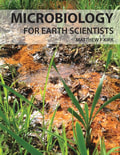
Dr. Matthew F. Kirk is an Associate Professor in the Department of Geology at Kansas State University's College of Arts and Sciences, where he joined in December 2012. His research integrates hydrogeology, geomicrobiology, and environmental geochemistry to address critical water resource challenges, particularly focused on groundwater systems in Kansas and the Great Plains region. As a K-State University Outstanding Scholar and Fellow of the Geological Society of America, Dr. Kirk has established himself as a leading researcher in groundwater quality and microbial processes. Dr. Kirk earned his Ph.D. from the University of New Mexico before joining Kansas State University. His educational background has prepared him for interdisciplinary research that bridges geological, chemical, and biological processes in natural environments. His academic journey has positioned him to tackle complex environmental challenges through integrated scientific approaches. Dr. Kirk's research primarily focuses on hydrogeology and geomicrobiology with emphasis on groundwater systems. His work examines water quality in the Great Bend Prairie aquifer, groundwater-surface water interactions across Kansas, the fate of carbon dioxide in soils at Konza Prairie, and geochemical controls on anaerobic microorganisms. He has recently published the open-access textbook "Microbiology for Earth Scientists" to help students understand the critical role of microorganisms in Earth systems. His research group actively investigates how land use changes affect water quality and availability, with particular attention to nitrate contamination from agricultural practices. Analysis of Dr. Kirk's recent publications reveals a strong focus on the intersection of hydrology, biogeochemistry, and ecosystem change. His work increasingly addresses how vegetation changes (particularly woody encroachment in grasslands) affect water movement and quality, while maintaining his core interest in microbial processes in groundwater systems. There's a clear trend toward more integrated, systems-based approaches that consider multiple environmental factors simultaneously, reflecting the complex nature of water resource challenges in changing landscapes. Dr. Kirk has received notable recognition for his scholarly contributions: K-State University Outstanding Scholar Fellow of the Geological Society of America Dr. Kirk actively mentors students through multiple avenues. He leads the Kansas Groundwater Geopaths program, an NSF-funded initiative (award #2230413) that provides undergraduate research experiences focused on groundwater quality monitoring in Kansas rural domestic water wells. This program serves K-State students as well as those from Barton and Dodge City Community Colleges, offering $3,000 scholarships and career-oriented training. He also supervises graduate students pursuing MS degrees in Geology and has developed an open-access textbook to support education in his field. His teaching portfolio includes Earth in Action, Introduction to Geochemistry, Geomicrobiology, Geochemical Modeling, and Water Resources Geochemistry. Dr. Kirk's research group operates as an interdisciplinary team focused on hydrogeology and geomicrobiology. Through the Kansas Groundwater Geopaths program, his team collaborates with the Kansas Department of Health and Environment, Kansas Water Institute, local Groundwater Management Districts, Kansas Geological Survey, and Kansas Water Office to address critical water quality issues affecting approximately 130,000 people who rely on the Great Bend Prairie aquifer for drinking water. His work has demonstrated that groundwater quality has decreased significantly over the past 40 years primarily due to nitrate accumulation from fertilizer use, highlighting urgent environmental concerns for Kansas communities.
Dr. Christoforos Benetatos is a Fixed-term Assistant Professor at the Department of Environmental, Land, and Infrastructure Engineering (DIATI) of Politecnico di Torino . Specializing in underground energy systems and geomechanics, his work addresses energy transition challenges through geological storage solutions. BSc and MSc in Civil and Environmental Engineering PhD in Underground Energy Storage Research Interests: CO2 and hydrogen storage Reservoir monitoring and modeling Subsidence analysis Geophysical data integration Energy transition infrastructure Key Projects: Scientific Manager for 3D geological modeling of Collalto storage field (2024) Regional-scale modeling of Gradizza field (2023) Static Reservoir Modeling (2023-2024) Publications focus on subsurface geomechanics, InSAR monitoring, and energy transition infrastructure. Recent works examine Bologna ground deformation patterns and anticline structural trap dynamics.
Valerie Milici is an Assistant Professor of Biology at the University of Bridgeport's College of Science & Society. Her research bridges plant community ecology with microbial interactions, exploring how environmental gradients and climate change influence tropical ecosystems through microbial dynamics. Ph.D. in Ecology and Evolutionary Biology, University of Connecticut B.S. in Biology, Indiana University Dr. Milici specializes in plant-microbial interactions, focusing on mineral weathering in basalt soils, conspecific density dependence in tropical forests, and climate change impacts on plant-pathogen relationships. Her fieldwork spans Panama's tropical forests and Arizona's Biosphere2. Recent publications highlight her work on mineral weathering patterns (2024, Geobiology), conspecific density effects (2024, Ecology Letters), and precipitation-driven disease dynamics (2024, Journal of Ecology). She has also contributed to spatial ecology methodologies (2022, Frontiers in Forests and Global Change) and long-term studies on Barro Colorado Island (2024, Smithsonian Institution Press). Dr. Milici teaches courses in conservation science (SCI 107) and climate change's impact on biodiversity (BIOL 326/426), reflecting her commitment to integrating research into education.
Unni Vik is an Associate Professor affiliated with the University of Oslo, specializing in microbial and fungal ecology. Their research explores plant-fungal interactions, symbiosis, and biogeography across Arctic, alpine, and urban ecosystems. Academic Rank: Associate Professor Institution: University of Oslo Vik's work spans diverse ecological contexts, from carbon capture biotechnology to climate change experiments. They have contributed to understanding microbial community structuring, mycorrhizal symbiosis, and environmental DNA sequencing methodologies. Recent publications focus on fungal diversity patterns, root-associated microbiomes, and ecological adaptation in extreme environments. Collaborative projects include the Centre for Integrative Microbial Evolution (CIME) and climate change observational studies. Key research areas include mycorrhizal networks, microbial ecology, and urban environmental education. Their methodological work in bioinformatics has improved fungal ITS sequence analysis for environmental datasets.
Mandar Dewoolkar is the Acting Dean of the College of Engineering and Mathematical Sciences and a Professor in the Department of Civil and Environmental Engineering at the University of Vermont (UVM). His expertise spans geotechnical and geoenvironmental engineering, with a focus on hazard mitigation, transportation systems, and space exploration. He holds a Ph.D. from the University of Colorado, Boulder, and has over 20 years of experience in research, consulting, and education. Education includes a Ph.D. in Geotechnical Engineering from the University of Colorado, Boulder, an M.Tech. from the Indian Institute of Technology, and a B.E. from the University of Mumbai. His research is funded by agencies like NSF, DTRA, and the Vermont Agency of Transportation. Notable projects include soil liquefaction studies, bridge-stream network modeling, and the use of recycled materials in construction. Research interests emphasize interdisciplinary collaboration, addressing challenges in infrastructure sustainability, environmental preservation, and engineering education. He has advised over 25 graduate students and 50 undergraduates, teaching courses like Geotechnical Principles and Statics. Awards include UVM’s Sustainability Fellow and Gund Institute Fellowship. Key contributions include structural health monitoring of bridges, flood mitigation strategies, and applications of unmanned aircraft systems for erosion monitoring. His work bridges geotechnical engineering with societal needs, emphasizing resilience and innovation.
Dr. Shikha Singh is an Assistant Professor at Washington State University's College of Agricultural, Human, and Natural Resource Sciences. Her research focuses on soil carbon dynamics, greenhouse gas emissions, and sustainable agroecosystems. She holds a Ph.D. in Environmental and Soil Science from the University of Tennessee, an M.S. in Plant Science from South Dakota State University, and a B.S. in Agriculture (honors) from Punjab Agricultural University. Her work emphasizes soil health improvement through diversified cropping systems and organic amendments. Key areas include biosolids' long-term impacts on dryland wheat systems, cover crop effectiveness in nitrate leaching reduction, and microbial community responses to agro-management strategies. She has contributed to over 30 peer-reviewed publications since 2017. Dr. Singh collaborates on projects addressing soil biogeochemistry in mixed forested systems and soil moisture extremes' effects on carbon decomposition. Her research integrates field experiments, meta-analyses, and mechanistic modeling to advance sustainable land-use practices.
Professor James Flint is a Professor of Wireless Systems Engineering at Loughborough University, serving as Associate Dean for Education & Student Experience. He leads the Electronic Communications Research Unit and holds academic qualifications including a PhD in Computational Electromagnetics (2000). His research focuses on wireless systems, electromagnetics, acoustics, biomimetics, and metamaterials, with notable projects in wearable antennas, energy harvesting, and acoustic signal processing for infrastructure monitoring. Prof. Flint’s expertise spans biomimetic engineering solutions, ultrasonic technology, and numerical modeling using Transmission Line Matrix techniques. His work on acoustic emission monitoring has applications in geotechnical testing, landslide预警 systems, and wind turbine blade condition monitoring. Professional affiliations include Fellow of the IET and Senior Member of IEEE. Recent articles highlight advancements in energy harvesters for industrial digitization, textile-based antenna innovations, and cybersecurity for LTE networks. His research demonstrates interdisciplinary impact across biomedical engineering, aerospace systems, and smart manufacturing. Ongoing projects include vibration energy harvesting for self-powered sensors and metamaterial antenna design for wearable applications. Prof. Flint actively contributes to educational technology through studies on digital learning tools like Microsoft OneNote. Professional Accolades: FIET, SMIEEE, SFHEA Key Labs: Electronic Communications Research Unit Notable Projects: Wearable antennas, bioacoustic bandgap structures, textile manufacturing for RF devices