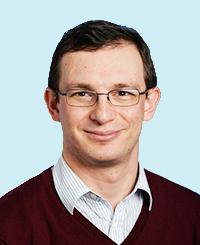
Dr. Pradip Sharma is an Associate Professor of Cybersecurity & AI at the University of Aberdeen, UK, within the School of Natural and Computing Sciences, Department of Computing Science. He is a globally recognized academic and researcher with expertise in Cybersecurity, Artificial Intelligence, Blockchain, and Edge Computing. His research interests span multiple domains including Cybersecurity, Blockchain, Edge Computing, Software-defined Networking, and IoT Security. Dr. Sharma's work focuses on developing innovative solutions for security challenges in emerging technologies, with particular emphasis on privacy-aware AI systems, secure data sharing frameworks, and intelligent network security mechanisms. His interdisciplinary approach bridges theoretical foundations with practical implementations across healthcare, smart mobility, and consumer electronics domains. Senior Fellowship Advance HE (SFHEA) IEEE Senior Member (SMIEEE) Dr. Sharma actively supervises doctoral researchers and is accepting new PhD students in Computing Science. His funded research portfolio exceeds £1M from sources including EPSRC, Innovate UK, and international agencies. Current projects include 'Secure, Privacy-aware, and Trusted Data Share in Smart Mobility' (EPSRC, £200K), 'ZECURE Data Exchange Platform' (Innovate UK, £236K), and 'Quantum-resistant Cybersecurity' (Royal Embassy of Saudi Arabia, £73K). He also serves as an editor for leading journals and is a regular keynote speaker at international conferences.
Onur Mutlu is a Professor of Computer Science at ETH Zurich, affiliated with the Department of Information Technology and Electrical Engineering. He also holds adjunct professorships at Carnegie Mellon University and Bilkent University. His research focuses on computer architecture, systems security, bioinformatics, and energy-efficient computing. He has pioneered work on memory-centric computing paradigms, RowHammer security vulnerabilities, and bio-inspired computing systems. He teaches courses such as Digital Design & Computer Architecture and supervises the SAFARI research group, which explores cutting-edge topics in memory systems, AI accelerators, and genomics. Recent activities include keynote talks at ISCA, HiPEAC, and IEEE conferences, emphasizing emerging hardware-software co-design principles. Key contributions include foundational work on memory reliability, cross-layer system design, and accelerating genomic data analysis. His research has been showcased in over 200 publications and industry collaborations with tech leaders like Intel, Huawei, and Micron.
Daniel Pettersson is a Professor at University of Gävle specializing in educational science with a particular focus on international knowledge measurements, comparative education, and curriculum studies. His work critically examines the hegemony of comparisons in education, particularly through large-scale assessments like PISA, and explores how these influence educational policy and practice. Professor Pettersson's research spans several interconnected domains within educational science. He investigates how international comparisons shape educational discourse and policy, examining the historical development of assessment practices and their impact on national education systems. His work frequently analyzes the production of educational knowledge through data visualization and quantification, revealing how numbers become authoritative in educational decision-making. A significant portion of his research focuses on Swedish education within international contexts, exploring how global educational trends are adopted, adapted, and contested in national settings. His extensive publication record reveals several key trends in his scholarly work. Over the past two decades, Pettersson has traced the evolution of international large-scale assessments from marginal research tools to central policy instruments. His recent work increasingly examines data visualization techniques in educational research and the historical construction of educational knowledge through quantification. He also explores the intersection of teacher education with international assessment frameworks, revealing tensions between global educational discourses and local teaching practices. Professor Pettersson has made significant contributions to understanding how educational policy is shaped by international comparisons. His research demonstrates how assessment data becomes transformed into policy narratives that influence educational reform. He has documented the historical trajectory of international assessment research, showing how it evolved from marginal academic interest to central policy instrument. His collaborative work with scholars like Sverker Lindblad, Thomas Popkewitz, and Tatiana Mikhaylova has been particularly influential in critically examining the political dimensions of educational measurement. His research activities include extensive work with international research teams, participation in major conferences including the Nordic Education Research Association (NERA) and the International Standing Conference for the History of Education (ISCHE), and contributions to systematic reviews of international comparative research. Professor Pettersson's work bridges historical analysis, policy studies, and critical examination of educational measurement practices, providing valuable insights into how global educational knowledge is produced and circulated.
Susan Scott is an Associate Professor in the Information Systems and Innovation Group at the Department of Management of The London School of Economics and Political Science. Her research focuses on the intersection of digital innovation and organizational change, particularly examining how information systems reshape work practices and risk management in financial services, travel, and publishing sectors. Education : PhD in Management Studies (University of Cambridge, 1993-1998), MSc in Analysis, Design and Management of Information Systems (LSE, 1991-1992), BA in History and Politics (SOAS, 1987-1990) Research Interests Digital Innovation Work Practices and Organizational Structuring Organizational Technologies Strategy, Structures, and Information Infrastructures Managing Change Materiality and Practice Research Her recent publications analyze the materiality of digital systems through case studies in book publishing and travel , while historical studies trace the evolution of financial infrastructure like SWIFT . She explores how metadata, software standards, and social media reshape organizational accountability and risk practices. Scientific Awards ICIS Best Paper in Field Award (2007) Nordic Exchange Scholarship (2000-2001) ESRC PhD Scholarship (1993-1996) Best Paper Nominations (Academy of Management, ECIS, ICIS) Selected for European Research Paper of the Year (2014, 2015) Grants and Professional Roles Recipient of grants from SWIFT , British Academy , and HEFCE . She has served on editorial boards of Information and Organization and Organization Science , and co-chaired conferences like IFIP 8.2 and ICIS .
Atrisha Sarkar is an Assistant Professor in the Department of Electrical and Computer Engineering at Western University , Canada, and heads the Humans and Autonomous Agents Lab . She is also a faculty member of the Rotman Institute of Philosophy and a Faculty Affiliate at the Schwartz Reisman Institute for Technology and Society . Her research integrates empirical and behavioral game theory with software engineering to design human-centric AI systems that prioritize safety and societal well-being. Education: Atrisha holds a PhD and has previously served as a postdoctoral fellow at the Schwartz Reisman Institute for Technology and Society at the University of Toronto under the supervision of Prof. Gillian Hadfield. Research Focus: Her work centers on human-centric multiagent systems , combining methods from: Behavioral and empirical game theory Software engineering Human-AI and human-robot interaction AI safety and reliability She applies these to domains such as autonomous driving, cooperative AI, and social media dynamics, aiming to ensure AI systems align with human values and societal norms. Publications and Impact: Atrisha has published extensively in top-tier venues including AAAI , AAMAS , ICRA , NeurIPS , and EC . Her work spans from theoretical models of strategic behavior to practical frameworks for validating autonomous systems, with a strong emphasis on real-world applicability. Labs and Teams: She leads the Humans and Autonomous Agents Lab at Western University, where her team focuses on designing AI agents that can cooperate effectively with humans in complex, dynamic environments.
Wenzhong Li is a Professor at the School of Computer Science, Nanjing University, where he leads research at the State Key Laboratory for Novel Software and Technology. His academic career spans over 15 years with significant contributions to AI-empowered distributed systems, big data mining, and networking applications. He teaches Computer Networks and guides graduate students in Distributed Computing Research. Professor Li's research focuses on cutting-edge areas including AI-Empowered Distributed Systems and Applications (MultiModal Large Models, Embodied Intelligence, Edge Computing), Big Data Mining (Time Series Analysis, Graph Computing, Social Networks Analysis), and AI-Based Distributed Resource Scheduling. His work bridges theoretical foundations with practical implementations in real-world systems. His recent publications demonstrate a strong trend toward integrating deep learning with graph theory and time series analysis, with applications in human activity recognition, network optimization, and multimodal systems. The research spans multiple disciplines including artificial intelligence, computer vision, networking, and data mining, with a particular emphasis on practical implementations for real-world problems. Best Paper Runner Up at KSEM 2023 for 'Learning-based Dichotomy Graph Sketch for Summarizing Graph Streams with High Accuracy' Best Paper Award at APNet 2018 for 'Toward Effective and Fair RDMA Resource Sharing' Professor Li has advised numerous PhD and Master's students who have gone on to prominent positions at institutions like Nanjing University, Huawei, Alibaba, Microsoft, and various international universities. His research is supported by substantial grants from the National Natural Science Foundation of China, Natural Science Foundation of Jiangsu Province, National Power Grid, and other major funding bodies, totaling multiple multi-year projects with significant budgets. He leads the AINet Group and is affiliated with the Sino-German Institute of Social Computing and MobileCloud research initiatives. His DISLAB provides the organizational framework for his research team, which includes dozens of graduate students and collaborators working on cutting-edge problems in AI, networking, and distributed systems.
Fabio Zanini is an Associate Professor at the University of New South Wales (UNSW) , leading a research group focused on computational biology , single-cell approaches , and transcriptomic analysis across diseases like severe dengue , neonatal lung disease , cancer , and marine biology . He previously conducted postdoctoral research at Stanford University (2016-2019) and earned a PhD in Bioinformatics from the Max Planck Institute for Developmental Biology and the University of Tuebingen (2015). Current Affiliation: Group leader, UNSW Previous Training: Postdoc (Stanford), PhD (Max Planck/University of Tuebingen) His research spans single-cell RNA sequencing , computational virology , developmental cell biology , and bioinformatics tool development , with recent work on: Severe dengue progression (viral-host interactions, immune signatures) Lung development (endothelial cell diversity, hyperoxia-induced injury) Cancer genomics (mutant HSC clones, AZA therapy response) Marine biology (plankton transcriptomics, evolutionary analysis) Bioinformatics (HTSeq 2.0, northstar algorithm) Recent scientific awards include grants from the Chan Zuckerberg Initiative ($270,000), NIH R01 (multiple), ARC Discovery Grant , and NHMRC Ideas Grant . Notable contributions include: Northstar - Cell classification algorithm SpectralSeq - Hyperspectral-transcriptomic integration Tabula Muris - Mouse aging atlas He has supervised research into hematopoietic stem cell regulation , lung vascular development , and autophagy in viral infections , with collaborations across Stanford , University of Sydney , and Harvard .
Professor Emil Lupu is a Professor of Computer Systems at the Department of Computing , Imperial College London. He leads the Resilient Information Systems Security Group and serves as Co-Director of the National Research Institute in Trustworthy Inter-Connected Cyber-Physical Systems (RITICS) . As a Security Science Fellow at Imperial’s Institute for Security Science and Technology, his work bridges academic research with real-world security challenges. Education: PhD in Computing, Imperial College London (1994–1998) His research focuses on security and resilience of cyber-physical systems (CPS) , with emphasis on defending against data spoofing attacks , adversarial machine learning , and IoT vulnerabilities . He pioneered the Ponder policy systems for access control and the Self-Managed Cell framework for autonomic computing, and developed Bayesian Attack Graphs for scalable risk assessment in CPS. Recent publications highlight trends in adversarial robustness (2025–2022), including LIDAR spoofing defense for autonomous vehicles, LLM security , and attack graph analysis for IoT. His work explores the intersection of safety and security , applying model-checking to identify adversarial threats in train control, microgrids, and aviation systems. Scientific Awards: Security Science Fellowship, Imperial College London (2011–present) As co-founder of the PETRAS National Centre of Excellence in IoT Cybersecurity (2016–2021), he advanced security methodologies for interconnected systems. His collaborations with institutions like the Cyber Security Body of Knowledge (CyBoK) demonstrate his leadership in shaping cybersecurity research standards. Current projects include the RITICS Institute , focusing on trustworthy cyber-physical systems, and exploring generative AI for security poisoning with practical defenses against adversarial ML.
Maria Leonilde Rocha Varela is an Associate Professor with Habilitation at the School of Engineering, University of Minho, Portugal, where she also serves as a Senior Researcher at the Algoritmi Research Centre. She has been an integrated member of the Algoritmi Research Centre since 2012 and works in the Department of Production and Systems. Dr. Varela earned her degree in Production Engineering from the University of Minho in 1994, completed a Master's in Computer Integrated Production at DPS-UMinho in 1999, and received her Ph.D. in Production and Systems from the University of Minho in 2007. Her primary research focuses on Manufacturing Management, particularly Production Planning, Control and Optimization, and Collaborative Paradigms, Networks and Decision Making Models. She maintains extensive international collaborations with institutions worldwide including the National Institute of Industrial Engineering, VSB-Technick Univerzita Ostrava, University of Belgrade, and others. Her research spans Web Applications and Services for supporting Engineering and Production Management, with increasing emphasis on Artificial Intelligence, Robotic Process Automation, and Industry 4.0/5.0 applications. She has made significant contributions to scheduling algorithms, optimization techniques, and decision support systems for manufacturing environments. Analysis of her recent publications reveals a strong trend toward integrating Artificial Intelligence with traditional manufacturing processes, particularly in Robotic Process Automation applications. Her research increasingly focuses on sustainable manufacturing practices, with numerous publications addressing energy efficiency, environmental sustainability, and resource optimization. There is a clear emphasis on multi-objective optimization approaches to solve complex manufacturing problems, particularly in distributed job shop scheduling. Her work demonstrates an evolution from traditional production planning methods to more advanced AI-driven approaches for Industry 4.0 and 5.0 environments. Dr. Varela has held significant academic leadership roles, currently serving as the director of the master's course in Engineering and Quality Management at DPS-UMinho. She previously coordinated the industrial management and systems subgroup from 2012 to 2021 and was part of the steering committee for the master's course in systems engineering between 2016 and 2019. She has successfully supervised more than 70 MSc projects, with over 15 currently ongoing, focusing on Production and Systems Engineering. Her supervision encompasses collaborative management models, traditional decision approaches, and web-based platforms incorporating AI techniques. She coordinates research projects including 2 concluded Ph.D. projects and 6 ongoing ones. She collaborates as a research member in several R&D projects with national and international industrial enterprises and institutions, and in international Erasmus projects. Dr. Varela is an active participant in the academic community, serving on editorial boards of several international journals and as a member of organizing and scientific committees for numerous international conferences. She is a member of several prestigious research networks including the Euro Working Group of Decision Support Systems (EWG-DSS), Institute of Electrical and Electronics Engineers (IEEE), Industrial Engineering Network, and the Institute of Industrial and Systems Engineers (IISE).
Dr. Barry Cardiff is an Assistant Professor in the School of Electrical and Electronic Engineering at University College Dublin (UCD), where he has been a member of academic staff since September 2013. His career spans both industry and academia, with significant experience at Nokia Mobile Phone (UK) Ltd and Silicon & Software Systems (S3 group) before returning to complete his PhD at UCD. Education: B.Eng (1992), M.Eng.Sc. (1995), PhD (2011) from University College Dublin Professional Experience: Design Engineer at Nokia (1993-2001), Systems Architect at S3 group (2001-2007, 2011-2013) Current Position: Assistant Professor at UCD School of Electrical and Electronic Engineering Dr. Cardiff's research focuses on Digital Signal Processing applications in communication systems, with particular emphasis on theoretical analysis and practical implementation. His work bridges traditional communication theory with emerging biomedical applications, especially in wearable IoT sensors. He has made significant contributions to power/complexity reduction techniques in circuit design, specifically DSP algorithms for digitally assisted analog circuits. His research program addresses critical challenges in biomedical signal processing, sensor fusion, and efficient data transmission for healthcare applications. His recent publications demonstrate a strong trend toward biomedical applications of signal processing techniques, with a focus on ECG analysis, atrial fibrillation detection, and respiratory rate estimation using multimodal sensor fusion. The research shows a clear progression from traditional communication systems toward healthcare applications, with an emphasis on edge computing solutions that reduce power consumption in wearable devices. IEEE BioCas best paper award (2024) IEEE senior member since 2019 Active reviewer for multiple IEEE journals including Transactions on Biomedical Circuits and Systems, Circuits and Systems, and VLSI Systems Dr. Cardiff has supervised numerous research projects and has been instrumental in developing curriculum for digital communications, signal processing, and wireless systems. His teaching philosophy emphasizes open, friendly, and hands-on approaches that encourage independent thinking. He coordinates multiple modules including Communication Theory, Digital Electronics, DSP Technology, and Wireless Systems, demonstrating his commitment to both theoretical foundations and practical applications of electrical engineering principles. His research group works at the intersection of signal processing, machine learning, and biomedical engineering, developing innovative solutions for wearable healthcare monitoring. Current projects focus on event-driven processing architectures, decentralized classification systems, and signal quality-aware fusion techniques that enable robust performance in noisy real-world environments.
Professor Kiyotaka Iwasaki at Waseda University's Faculty of Science and Engineering is a leading figure in biomedical engineering with a focus on cardiovascular device development , tissue engineering , and regulatory science . His career spans over two decades at Waseda University, including roles as Associate Professor (2006-2014) and positions at Harvard Medical School's Laboratory for Tissue Engineering. Holding a Doctor of Engineering from Waseda, he serves on numerous international regulatory committees and has contributed to ISO/TC194 standards for medical devices. 1993-2002: Waseda University Education in Mechanical Engineering 2001-2004: Research Associate at Waseda University 2004: Research Scientist at Harvard Medical School 2018-Present: Professor at Waseda University His research interests include Non-clinical testing methodologies for medical devices Regulatory science frameworks Tissue engineering for ligament and cardiac applications Cardiovascular biomedical engineering His scientific contributions reveal through Development of decellularized tissue grafts for orthopaedic surgery Innovations in 3D cardiac tissue engineering using fibrin-based cell sheet stacking Pioneering bioresorbable stent technology with magnesium alloys Creation of biomechanical simulators for valvular disease modeling His awards span from the 2021 Japanese Ministerial Science Commendation 2020 JSME Standards Award 2018 ARIA Innovation Award 2001 ASAIO Fellowship While his publications demonstrate expertise in Vascular and cardiac device testing Bioresorbable stent evaluation Machine learning in medical device regulation Decellularized tissue applications
Christian Smith is an Associate Professor and Lecturer at the Department of Robotics, Perception and Learning at Kungliga Tekniska Högskolan (KTH Royal Institute of Technology). His research focuses on robotics and applications in human-centered environments like home environments, small workshops, and healthcare facilities, including the development of new robotic systems for research. Teaching Roles: Course Coordinator/Teacher/Examiner for courses such as Introduction to Robotics (DD2410), Research Project in Robotics (DD2411), and Java Programming for Python Programmers (DD1380) Research Themes: Human-Robot Interaction, Behavior Trees, Exoskeletons, Intent Recognition, and Multimodal Perception Awards: No specific scientific awards mentioned in the provided text His KTH profile highlights work on adaptive robotics systems and formalized control strategies. The research portfolio spans from theoretical studies on behavior tree programming to applied work in assistive technologies and teleoperation systems.
Lauri Väkevä is a Professor in the Department of Education at the University of Helsinki, specializing in educational sciences with a focus on performing arts, music education, and STEAM pedagogy. He actively supervises doctoral students in the Doctoral Programme in School, Education, Society, and Culture and leads the SKAPA project (2024–2026) on developing study paths in arts education. His research explores the intersection of artificial intelligence, creativity, and multimodal learning environments. Key Affiliations: Department of Education, Sibelius Academy collaboration, Gaudeamus publishing network Research Themes: AI in music education, safe spaces for artistic expression, responsible AI pedagogy, historical evolution of Finnish music institutions Recent Work Highlights : 2025: Generative AI as a Collaborator in Music Education (Action-Network Theory application) 2025: Voicing Responsible AI Pedagogy (Ethical frameworks for arts education) 2024: Changing Role of Sibelius Academy (Historical analysis of Finnish music education) Leadership & Engagement : Project Manager for SKAPA, organizing committee member for the 2024 Ainedidaktinen Symposium, and active participant in AI research events.
Xin Peng is a Professor and Deputy Dean at the School of Computer Science, Fudan University, China. He leads the CodeWisdom research team focusing on intelligent software engineering techniques for development, maintenance, and operation of software systems. His educational background includes a PhD in Computer Science (2001-2006) and Bachelor's degree in Computer Science (1997-2001), both from Fudan University. He progressed through the academic ranks from Assistant Professor (2006-2010) to Associate Professor (2010-2015) and finally to Professor (2015-present). Professor Peng's research interests span Software Analytics, Intelligent Software Development, Microservice systems, and AIOps. His work leverages AI technologies including deep learning and knowledge graphs to develop intelligent software engineering techniques. A significant portion of his recent work focuses on applying Large Language Models to various software engineering tasks, including vulnerability detection, API usage analysis, and test automation. His publication record shows a clear trend toward increasingly sophisticated applications of AI in software engineering, with recent work heavily featuring LLMs for tasks ranging from vulnerability patch porting to resource leak detection. The research spans multiple domains including microservice systems, automotive software, and Web of Things security. Best Paper Award of ICSM 2011 ACM SIGSOFT Distinguished Paper Award of ASE 2018 and 2021 IEEE TCSE Distinguished Paper Award of ICSME 2018, 2019, and 2020 IEEE Transactions on Software Engineering Best Paper award for 2018 Professor Peng serves in numerous leadership roles including Deputy Director of CCF Technical Committee on Software Engineering, Co-Editor-in-Chief of Journal of Software: Evolution and Process, and Associate Editor for ACM Transactions on Software Engineering and Methodology. He has been actively involved in program committees for major software engineering conferences including ICSE, ASE, ESEC/FSE, and ICSME. He leads the CodeWisdom research team at Fudan University, which has developed several benchmark systems including TrainTicket for microservice research. The team's work bridges academic research with industrial applications, particularly in microservice systems analysis and intelligent software development tools.
Jozien Goense is an Associate Professor at the University of Illinois at Urbana-Champaign (UIUC), holding joint appointments in the Department of Psychology and Department of Bioengineering. She is also affiliated with the Beckman Institute for Advanced Science and Technology and the Neuroscience Program. Her primary research focuses on biomedical imaging, particularly functional MRI (fMRI) and its applications in understanding neurovascular coupling and cortical layer-specific activity. She is recognized for contributions to high-resolution fMRI methodology and laminar imaging techniques. Her work integrates advanced MRI techniques with neurophysiological studies, often using non-human primate models to validate findings in human studies. She has pioneered layer-specific fMRI approaches to map activity across cortical layers, particularly in the motor and visual cortices. Her expertise includes ultra-high field MRI (7T+), BOLD signal modeling, and software development for neuroimaging analysis (e.g., LayNII). Key research themes include the physiological basis of BOLD responses, neurovascular coupling mechanisms, and the application of laminar fMRI to study brain function in health and disease. She has collaborated extensively with neuroscientists, engineers, and clinicians to advance imaging technologies and their translational potential. Publications highlight her contributions to understanding dopamine and acetylcholine effects on neurovascular responses, resting-state gamma-band abnormalities in schizophrenia, and the development of high-resolution imaging protocols. Her work bridges basic science and clinical applications, including studies on vascular contributions to dementia and neuropharmacology. She has received the Beckman Seed Grant as part of a Bioengineering Faculty team, supporting innovative research initiatives. Her lab employs cutting-edge imaging tools and multidisciplinary approaches to unravel brain function at cellular and systems levels.