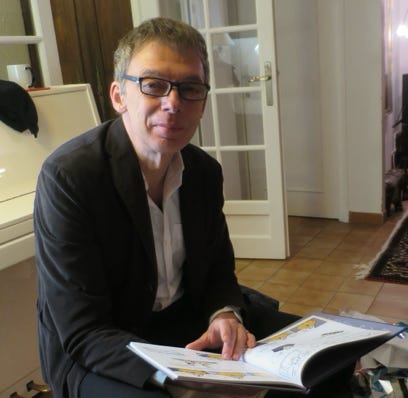
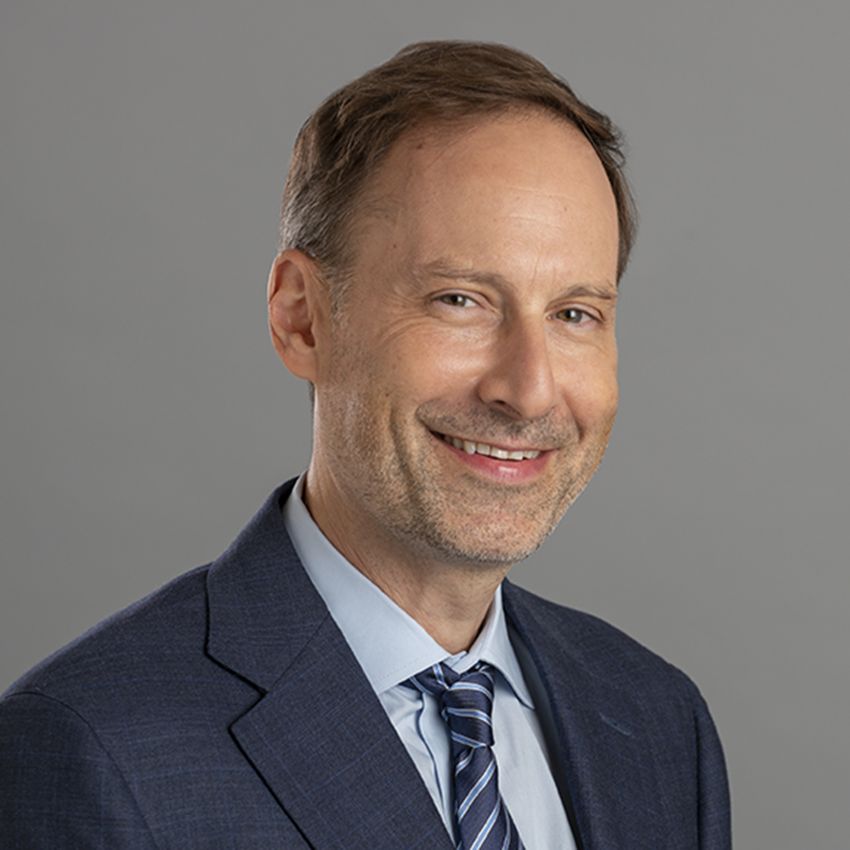
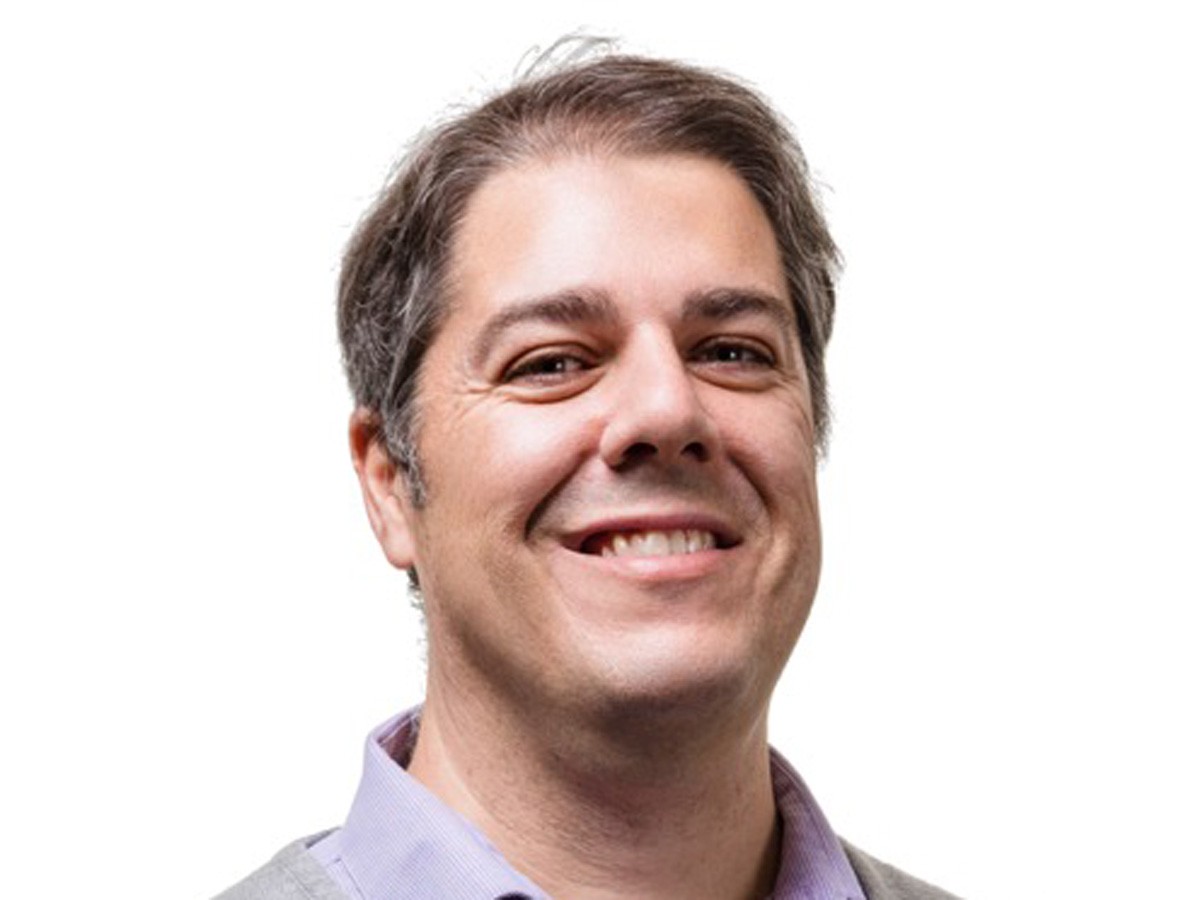
Hubert Saleur is a Professor of Physics and Astronomy at the University of Southern California and holds a Director of Research position at the IPhT CEA Saclay in France. His work bridges hard condensed matter physics and high-energy physics , with interdisciplinary focus on low-dimensional quantum field theories and statistical mechanics . He has led DOE-funded projects on quantum quench dynamics and non-equilibrium transport in nanostructures, and his research involves advanced mathematical techniques including non-semisimple representation theory . Education: Ph.D. in Physics, University of Paris (1987) Research interests span non-perturbative effects , transport out of equilibrium , topological defects , and AdS/CFT correspondence . Recent work includes geometrical correlation functions in Potts models and quantum simulation of conformal field theories on analog quantum computers. His scientific awards include: Jean Ricard Prize, French Physical Society (2018-2019) ERC Advanced Grant (2015-2016) Silver Medal, CNRS (2011-2012) Humboldt Senior Scientist Award (2001-2008) Packard Foundation Fellowship (1991-2001) Doisteau-Blutel Prize, French Academy of Sciences (1987) As an advisor, Saleur has mentored 15+ students/postdocs now in permanent research or academic roles at institutions like CNRS Paris , Imperial College , and Quantinuum Munich . He co-organizes international conferences such as Quantum Theory and Symmetry XI and serves on editorial boards for Physics Open , SIGMA , and SciPost . Recent courses include Introduction to Topological Phases and Criticality and the Renormalization Group .
Christian B. Teeter holds the rank of Adjunct Professor at the University of West Los Angeles, teaching part-time while maintaining private sector roles as a financial controller and HR director. His academic career includes prior positions at UC Berkeley Graduate School of Education, California State University, and Golden Gate University. Education: Earned B.A. in History (Phi Beta Kappa) from Colgate University, followed by M.B.A. and Ed.D. degrees from the University of Southern California. Research focuses on liberal arts education's relevance, workforce development strategies, and professional network dynamics in academia. Key themes include crisis responses in education systems, social capital formation among marginalized populations, and institutional branding in higher education. Publications span over a decade, with recent work analyzing pandemic impacts on food insecurity and longstanding contributions to incarcerated education access. His scholarship bridges educational theory with practical workforce development challenges.
Professor Jes Sammut is a faculty member at the University of New South Wales (UNSW) in the School of Biological, Earth & Environmental Sciences . He serves as Deputy Dean for External Engagement and leads the UNSW Aquaculture Research Group , while also holding the position of Deputy Director (International) at the Centre for Marine Science & Innovation. Additionally, he is an Honorary Research Fellow at ANSTO , where he uses nuclear tools to study seafood provenance. His research spans biological, physical, and social sciences, focusing on aquaculture solutions across Australia, Vietnam, Papua New Guinea, Indonesia, India, Thailand, and the Philippines.
Sam Weinstein is a Professor of Law at the Cardozo School of Law, Yeshiva University. He previously held positions at U.C. Berkeley School of Law as a fellow and at the U.S. Department of Justice's Antitrust Division. His expertise spans antitrust law, competition policy, and regulatory history. He holds a J.D. and Ph.D. in U.S. History from U.C. Berkeley, alongside a B.A. from Haverford College. Education: J.D. (Order of the Coif) and Ph.D. in U.S. History from U.C. Berkeley; B.A. from Haverford College Professional Background: Attorney at U.S. Department of Justice Antitrust Division; Litigator at Munger, Tolles & Olson His research focuses on antitrust enforcement, innovation policy, and the historical evolution of regulatory frameworks. Notable areas include dynamic pricing algorithms, venture capital antitrust issues, and blockchain regulation. He teaches courses such as Antitrust, Contracts, and Corporations. Professor Weinstein's scholarship appears in top law reviews including NYU Law Review, Georgia Law Review, and Washington University Law Review. His work bridges legal theory with practical regulatory challenges in tech, finance, and corporate sectors.
Professor David Nichols is a faculty member in the Melbourne School of Design at The University of Melbourne, holding the position of Professor in Urban Planning. His research focuses on urban planning history, theory, and socio-cultural planning with particular attention to 20th century Australian contexts. He has authored/co-authored significant works including Urban Australia and Post-Punk: Exploring Dogs in Space and The Alert Grey Twinkling Eyes of C. J. DeGaris . His research interests span urban and cultural heritage, architectural history, and the socio-cultural dimensions of urban development. Notable projects include the 'PastPort' mobile app for citizen heritage engagement and studies on community activism in public space conservation. Nichols teaches courses on urban planning history and has contributed to debates on postwar planning education and regional development strategies. His academic output reflects interdisciplinary engagement with topics ranging from suburban morphology to audiovisual technology in education. Current work includes exploring the legacy of Walter Burley Griffin’s urban designs and reinterpreting Australian country town dynamics. He maintains active collaborations in cultural heritage preservation and community-driven urban initiatives.
Ruhai Wu is a tenured Associate Professor of Marketing at McMaster University's DeGroote School of Business. He holds a B.Sc. and M.Sc. in Finance from Tsinghua University, and an M.A. and Ph.D. in Economics from the University of Texas at Austin. His research focuses on retail and industrial marketing strategies, including pricing, advertising, channel relationships, and platform management in digital ecosystems. He has been awarded grants from SSHRC and NSERC for projects analyzing sharing economies, mobile marketing, and social commerce. Dr. Wu's teaching portfolio includes courses on Digital Marketing, Marketing Management, and Marketing Research Methodology at both undergraduate and graduate levels. He actively supervises doctoral students and has published in top-tier journals such as the Journal of Retailing , Journal of Business Research , and Electronic Markets . His research explores platform governance, network effects, and online consumer behavior using game-theoretical models. Recent work examines live-stream shopping trends, cross-platform competition, and seller review manipulation. Dr. Wu has contributed to scholarly discussions on emerging digital marketing strategies and their societal impacts through media features and industry collaborations.
Daniel J McAllister is an Associate Professor at the National University of Singapore Business School , Department of Management and Organisation. His research explores interpersonal relationships in organizations , with particular emphasis on social emotions , trust dynamics , and their implications for organizational citizenship behavior and ethical leadership . He has published extensively in top-tier journals such as Academy of Management Review, Journal of Applied Psychology, and Academy of Management Journal. Academic Focus: Organizational Behavior, Trust/Distrust, Workplace Emotions Teaching Interests: Technical Knowledge, Practical Application, Ethical Decision-Making Key Courses: MNO2007 (Undergraduate), BMA5004A (MBA), MNO6012A (PhD) McAllister's research spans workplace underdog trajectories, awe in leadership, abusive supervision, and cross-cultural management in China. His work examines how emotions like contempt, envy, and schadenfreude influence organizational outcomes. He emphasizes creating a safe learning environment that integrates theoretical knowledge ( technical ), real-world application ( practical ), and ethical judgment ( wisdom ). McAllister has received consistently positive student feedback for his engaging teaching style , with recent evaluations highlighting improvements in time management and practical relevance. He distributes course materials post-class and avoids rote memorization, prioritizing conceptual understanding. His 2025 work on workplace underdogs and awe-driven leadership continues to shape contemporary organizational theory.
Prof. Bernhard U. Seeber is an Extraordinary Professor at the Technical University of Munich (TUM), leading the Chair of Audio Signal Processing within the TUM School of Computation, Information and Technology. His work bridges auditory neuroscience and engineering, focusing on improving hearing aids, cochlear implants, and virtual acoustic systems. He holds affiliations with the Bernstein Center for Computational Neuroscience, Munich Institute of Biomedical Engineering, and others. Education: Studied and earned his PhD (2003) in Electrical Engineering and Information Technology at TUM. Postdoctoral research included time at UC Berkeley and the MRC Institute of Hearing Research (UK), where he pioneered studies on binaural hearing and cochlear implant optimization. Research Interests: Combines experimental and theoretical approaches to explore auditory scene analysis, binaural unmasking, and spatial hearing. Key areas include signal coding for cochlear implants, virtual acoustics, and non-destructive acoustic monitoring. His work emphasizes interdisciplinary collaboration with industry and academia. Awards: Lothar Cremer Award (2010), Emmy Noether Fellowship (2007), and recognition from the German Acoustical Society. Teaching: Offers courses on audio communication, computational neuroscience, and technical acoustics. Projects: Leads initiatives like HAPPAA and Auralization, advancing sound field synthesis and hearing aid algorithms. Current Roles: Head of Chair of Audio Signal Processing, Board Member of DEGA, and spokesperson for the ITG Technical Committee on Hearing Acoustics.
John Joseph is a Professor of Strategy and Entrepreneurship at the Paul Merage School of Business, University of California, Irvine. His research and teaching focus on organizational design, strategic decision-making, innovation, and the integration of artificial intelligence in business strategy. He is actively involved in editorial leadership as Senior Editor at Organization Science and former editor of the Journal of Organization Design . PhD, Kellogg School of Management, Northwestern University MBA, Wharton School, University of Pennsylvania John Joseph's research centers on how organizations can be designed to enhance innovation, strategic planning, and decision-making. His work explores the role of attention, feedback mechanisms, and AI in shaping strategic outcomes. He investigates organizational structures in technology and healthcare sectors, with a focus on platform ecosystems and community-driven innovation. His recent publications and research projects examine AI-enabled organizational transformation, mobile industry innovation, and healthcare system design. The body of work shows a strong trend toward behavioral strategy, integrating cognitive and structural perspectives to understand how firms adapt and grow. 2017 Ralph Gomory Award, Industry Studies Association John Joseph has advised numerous organizations including General Electric, Samsung Electronics, Molina Healthcare, and UC Irvine. He has received multiple teaching awards and has taught in full-time, part-time, and executive education programs at Kellogg, Duke, and UC Irvine. He serves as Chair of the Behavioral Strategy Interest Group of the Strategic Management Society. His research is supported by engagements with centers such as the Center for Health Care Management and Policy and the Beall Center for Innovation and Entrepreneurship at UCI.
Prof. Robert Fuchs holds the Frommann Professorship of Applied English Linguistics at the University of Bonn, leading the Chair of Bonn Applied English Linguistics (BAEL) within the Department of English, American and Celtic Studies. His research focuses on World Englishes, corpus linguistics, sociolinguistics, and the impact of artificial intelligence on linguistic analysis. He actively supervises PhD students in topics aligned with his research group's interests, emphasizing empirical work and data science. Recent research explores language change in varieties like Hong Kong English, Trinidadian prosody, and intensifier usage across cultures. Fuchs frequently presents at international conferences, including ISLE, ICAME, and Sociolinguistics Symposium, and publishes extensively in journals like World Englishes and Language and Speech . His teaching includes advanced courses on corpus linguistics and language in culture, with a focus on climate change discourse analysis. He maintains an active academic presence through ResearchGate, Academia.edu, and LinkedIn. Research Interests: Fuchs investigates sociolinguistic variation, AI applications in linguistics, and the structural features of postcolonial Englishes. His work addresses topics such as vowel mergers in Hong Kong English, lexical stress perception in Indian English, and the role of gender in language use. He also explores diachronic changes in aspects like stative progressives and the perfect-past alternation across Asian Englishes. Advising & Grants: Fuchs oversees PhD student recruitment through research associate positions and self-funded scholarships, prioritizing applicants with strong empirical and analytical skills. His funded projects include studies on pandemic discourse (DisCOVIndUK) and linguistic trends in Caribbean English. His lab, BAEL, collaborates internationally, with ongoing work on Trinidadian prosody and Northeast Indian linguistic ecology. Labs/Teams: The Bonn Applied English Linguistics (BAEL) group, part of the University of Bonn's IAAK institute, focuses on cutting-edge research in global Englishes and computational linguistics, hosting international workshops and fostering interdisciplinary collaboration.
Frank Russo is a Professor in the Department of Psychology at Toronto Metropolitan University, where he holds the NSERC-Sonova Senior Research Chair in Auditory Cognitive Neuroscience. He leads the Science of Music Auditory Research and Technology (SMART) Lab and holds affiliate and adjunct positions at the University Health Network and the University of Toronto, respectively. Research Interests: Dr. Russo's work lies at the intersection of auditory cognitive neuroscience, music psychology, and rehabilitation. His research explores how humans perceive music and speech, particularly under challenging conditions such as hearing loss or non-native accents. He investigates the cognitive and neural mechanisms of listening effort, emotional speech processing, and the social and therapeutic benefits of music, especially through community choirs and digital interventions. Publication Trends: His recent publications emphasize objective measurement of listening effort using functional near-infrared spectroscopy (fNIRS), music-based interventions for Parkinson’s disease and dementia, vocal and emotional responses to singing, and multisensory integration in beat perception. The work is highly translational, bridging basic cognitive neuroscience with clinical and community applications. Scientific Awards and Honors: NSERC-Sonova Senior Research Chair in Auditory Cognitive Neuroscience Fellow of the Canadian Psychological Association Fellow of Massey College Fellow of the Canadian Society for Brain, Behavior and Cognitive Science Past President of the Canadian Acoustical Association Advising and Grants: Dr. Russo actively mentors students and researchers, as evidenced by his co-authorship with numerous junior colleagues. He has secured major funding through NSERC and industry partnerships, enabling the development of impactful technologies such as hearing aid algorithms, sensory substitution systems, and digital therapeutics. His SingWell project fosters collaboration across academic, clinical, and community sectors. Labs and Teams: He directs the SMART Lab at Toronto Metropolitan University, a hub for interdisciplinary research on music, hearing, and cognition. The lab collaborates extensively with KITE Research Institute, Rehabilitation Sciences at the University of Toronto, and various community organizations focused on aging, hearing loss, and neurodegenerative conditions.
William W. Burke-White is Professor of Law at the University of Pennsylvania Carey Law School , where he is a leading scholar at the intersection of international law and international relations. He also serves as Non-Resident Senior Fellow at the Brookings Institution and Senior Advisor to White & Case LLP , bridging academic research with policy and legal practice. He previously held leadership roles as Inaugural Director of Perry World House (2014–2019) and Deputy Dean of Penn Law (2011–2014). Harvard University – A.B., J.D. University of Cambridge – Ph.D. in International Relations (Fulbright Scholar) Burke-White’s research focuses on global governance, multilateral institutions, U.S. foreign policy, human rights, and international economic law . His work examines how shifting power dynamics affect international legal structures and how sub-state actors influence global norms. He has significant regional expertise in Russia, Eastern Europe, and Latin America . His current book project explores the new geography of global governance . His recent scholarly output reveals a consistent trend toward analyzing institutional reform, legal pluralism, and the interplay between domestic and international law . He frequently publishes in top journals on topics such as investor-state arbitration, complementarity in international criminal law, and the legitimacy of global legal regimes. His work often combines doctrinal legal analysis with political science theory. A. Leo Levin Award (2008) Robert A. Gorman Award for Excellence in Teaching (2007) Burke-White has advised governments, law firms, and investment funds on sanctions, sovereign debt, and international litigation. He has served as an expert witness in international arbitrations and currently advises sovereign states on cases before the International Court of Justice . He is also active in media commentary, contributing to The Hill, CNN, The Atlantic , and others. He has taught as a visiting professor at institutions including Harvard Law, Hebrew University, and Moscow State Institute of International Relations .
Sebastian Pokutta is a Professor at Technische Universität Berlin, Vice President at the Zuse Institute Berlin (ZIB), and Chair of the Cluster of Excellence MATH+ and MODAL. His research lies at the intersection of Artificial Intelligence, Optimization, and Machine Learning, with applications in sustainability, quantum computing, and mathematical discovery. Research Interests: Development of novel optimization algorithms, particularly Frank-Wolfe and Conditional Gradient methods. Integration of machine learning with decision-making and combinatorial optimization. AI for Science (AI4Science), including applications in quantum mechanics and ecology. AI and creativity, human-AI co-creativity, and social science modeling using multi-agent LLMs. His recent publications (2025) demonstrate a strong focus on scalable optimization, interpretability, and algorithmic foundations. The work spans theoretical advances in convergence analysis, practical implementations in Julia (FrankWolfe.jl), and real-world deployments in biomass estimation and quantum certification. Scientific Awards: Gödel Prize (2023) STOC Test of Time Award (2022) Science Prize of the Association for Pediatric Orthopedics (2025) Google Research Awards (2021, 2020) NSF CAREER Award (2015) He advises a vibrant research group, with former students and postdocs securing faculty positions at institutions like Inria, Carlos III University, and James Madison University. His group has received funding from Google, DFG, and Math+, and he leads major collaborative efforts such as the Thematic Einstein Semester on Mathematical Optimization for Machine Learning. Labs and Teams: Interactive Optimization and Learning Lab at TU Berlin and ZIB. Leadership in MODAL and MATH+ research clusters, fostering interdisciplinary collaboration in mathematical optimization and AI.
Filippo Maria Bianchi is an Associate Professor in the Department of Mathematics and Statistics at UiT The Arctic University of Norway, where he conducts research at the intersection of machine learning, dynamical systems, and complex networks. He is also a Senior Researcher at NORCE Norwegian Research Centre and actively contributes to the IEEE Task Force on Learning for Structured Data and the ELLIS Society. Department: Department of Mathematics and Statistics School: Faculty of Science and Technology University: UiT The Arctic University of Norway Adjunct Position: Senior Researcher, NORCE Education: Bachelor’s in Computer Engineering, Sapienza University of Rome Master’s in Artificial Intelligence & Robotics, Sapienza University of Rome (cum laude, 2012) PhD in Machine Learning, Sapienza University of Rome His research focuses on graph machine learning, time series analysis, reservoir computing, and probabilistic forecasting , with applications in energy analytics and remote sensing. He has led and contributed to numerous projects involving Arctic power grids, satellite-based environmental monitoring, and deep learning for sustainability. The recent publications reflect a strong trend in graph neural networks —particularly pooling mechanisms, spatiotemporal modeling, and explainability—alongside applications in energy forecasting, avalanche detection, and remote sensing . His work combines theoretical innovation with real-world impact, especially in Arctic and remote environments. Scientific Affiliations and Leadership: Vice-Chair, IEEE Task Force on Learning for Structured Data Member, ELLIS Society Co-founder, Northernmost Graph Machine Learning group Member, IEEE Task Force on Reservoir Computing Visiting Professor, Politecnico di Milano (2024–2025) He actively mentors students and collaborates on interdisciplinary research. He has led projects in power grid reliability, solar fault detection, and unsupervised change detection in satellite imagery . His work is supported by open-source implementations and reproducible research practices. Laboratories and Research Groups: Northernmost Graph Machine Learning group (co-founder) ARC Research Group, UiT Graph Machine Learning Group, Lugano
Dimitris Mitropoulos is an Assistant Professor at the National and Kapodistrian University of Athens (NKUA) in the Department of Business Administration, where he teaches courses on Distributed Ledger Technologies, Data Security and Privacy, Algorithms and Business Analytics, and Introduction to Programming. He also serves as Head of the Reliability Engineering Directorate at the National Infrastructures for Research and Technology (GRNET), Greece's national research and education network organization. Previously, he was a Postdoctoral Researcher in the Computer Science Department at Columbia University. Dr. Mitropoulos received his Ph.D. degree in Secure Software Development Technologies from the Athens University of Economics and Business (AUEB) in 2014. His doctoral research was supported by the Heracleitus II Scholarship, co-financed by the European Union and Greek national funds. He is a member of prestigious professional organizations including ACM, IEEE, and USENIX. Dr. Mitropoulos conducts pioneering research at the intersection of software engineering and cybersecurity, with particular expertise in secure software development, vulnerability analysis, and blockchain security. His work spans multiple dimensions of software security including code injection attacks, infrastructure as code security, smart contract analysis, and dependency management in software ecosystems. His research methodology combines static and dynamic analysis techniques with empirical studies of real-world software systems, particularly focusing on Java, Python, and Solidity ecosystems. His recent work has made significant contributions to understanding security vulnerabilities in modern software development practices and infrastructure management. Dr. Mitropoulos has received numerous prestigious awards for his research contributions, including the Research Excellence Award from NKUA (2025), Distinguished Paper and Artifact Awards at PLDI '22, Best Data Showcase Award at MSR 2018, and multiple postdoctoral research funding scholarships. His work on "Finding typing compiler bugs" was recognized with both Distinguished Paper and Artifact Awards at PLDI '22, highlighting the significance and reproducibility of his research. He has also received recognition for his service to the academic community, including a Certificate of Appreciation from ESEC/FSE '21 for his contributions to conference organization. Dr. Mitropoulos has been actively involved in securing research funding and leading significant research projects. He currently serves as Principal Investigator for the SecOPERA project (2023-Today), funded by the European Commission under Horizon Europe. Previously, he contributed to several major EU and US-funded projects including eSSIF-Lab (2019-2022), FASTEN (2019-2022), PRIViLEDGE (2018-2021), CERTCOOP (2017-2020), PANORAMIX (2016-2019), and TREDISEC (2016-2018). His research has been supported by diverse funding sources including the European Commission's Horizon 2020 program, the National Science Foundation, and the Defense Advanced Research Projects Agency (DARPA). Dr. Mitropoulos plays an active role in the international research community through various leadership positions. He serves on program committees for top-tier conferences including OOPSLA (2026), ICSE (2026), ESEC/FSE (2025), and ISSTA (2025). He has previously served as Workshop Co-Chair for ISSTA 2025 and Student Volunteer Chair for ESEC/FSE 2021. His contributions to mentoring the next generation of researchers include serving as a mentor for the ICSE Student Mentoring Workshop (2022) and supervising Google Summer of Code projects (2017).