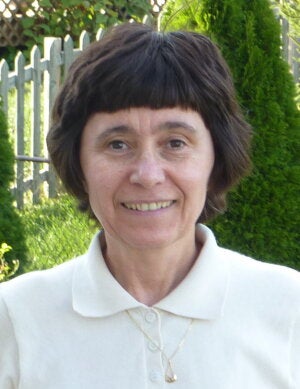
Sohrab Rohani is a Professor in the Department of Chemical and Biochemical Engineering at Western University . His research spans process control, crystallization, and advanced materials synthesis, with a focus on Metal-Organic Frameworks (MOFs) for energy and biomedical applications. Ph.D., University of Wales (1979) – Process Control B.Sc., Pahlavi University (1975) – Chemical Engineering Postdoctoral Fellow, ETH Zurich (1979-1981) Research Interests include: Materials Science : MOF synthesis for CO2 capture, supercapacitors, and drug delivery. Process Optimization : Machine learning in crystal design, CFD modeling, and waste valorization. Biomedical Applications : Stimuli-responsive drug carriers and cancer therapy platforms. Publication Trends highlight his work in: Designing multi-metal MOF electrodes for energy storage CO2 mineralization and metal recovery from industrial waste Green synthesis of MOF composites for pharmaceuticals and food packaging Machine learning-driven cocrystal prediction Scientific Awards include the Engineering Medal in Research and Development (2008) and the Western Faculty of Engineering Award for Excellence in Research (2009). Research Facilities at ZNML and CCPL labs focus on state-of-the-art material characterization (XRD, TGA, FTIR, HPLC, etc.) and industry collaborations.
Professor James Durrant at Swansea University's School of Engineering and Applied Sciences is a leading expert in Materials Science and Engineering . Based at the SPECIFIC research center and collaborating with his team at Imperial College London, he spearheads the £7 million ‘Sêr Solar’ initiative focused on low-cost, large-area photovoltaic technologies . His work bridges fundamental research in organic solar cells and perovskite systems with industrial applications in the printed solar manufacturing sector. His research interests span the Charge carrier dynamics Stability mechanisms in solar cells Nonfullerene acceptor design Perovskite crystallinity control Interface engineering Environmental degradation pathways with a strong emphasis on translating scientific insights into scalable, sustainable solutions. Analysis of his recent publications reveals a focus on Nonfullerene organic photovoltaics Perovskite defect passivation Charge separation in low-driving-force systems Transparent solar technology Catalytic heterostructures Photostability under operational stress His work consistently addresses efficiency-stability trade-offs in emerging solar technologies. Professor Durrant supervises postgraduate research and has contributed to EngD and PhD programs , including projects on perovskite circular economy and organic photovoltaic scalability . His lab at Swansea's Bay Campus (Engineering East, A202) specializes in advanced photovoltaic characterization and development.
Michael D. Byrne is a Professor in both the Department of Psychological Sciences and the Department of Computer Science at Rice University. His interdisciplinary work bridges cognitive psychology, human-computer interaction, and computational modeling. Ph.D. in Experimental Psychology, Georgia Institute of Technology, 1996 M.S. in Computer Science, Georgia Institute of Technology, 1995 M.S. in Experimental Psychology, Georgia Institute of Technology, 1993 B.S. in Engineering (Magna Cum Laude), University of Michigan, 1991 B.A. in Psychology (High Distinction), University of Michigan, 1991 Byrne's research focuses on human factors and human-computer interaction, with particular emphasis on cognitive modeling, visual attention, decision-making, and human performance modeling. His work applies computational cognitive architectures like ACT-R to understand human behavior in complex interactive systems. He has made significant contributions to understanding procedural errors, visual search behavior, and usability of complex systems including voting technologies. His interdisciplinary approach combines rigorous experimental methods with sophisticated computational modeling techniques to predict and explain human performance. His recent publications reveal a strong focus on human error prevention, particularly in routine procedural tasks and voting systems. The research demonstrates consistent application of cognitive modeling approaches to practical human-computer interaction problems, with particular attention to visual attention mechanisms, error patterns, and usability assessment. His work spans theoretical cognitive science and applied human factors research, often addressing real-world challenges in system design and evaluation. Kavli Fellow, National Academy of Science, Fall 2009 Outstanding Associate for 2001-2002, Mary Gibbs Jones residential college, Rice University Distinguished Faculty Associate for multiple years at Rice University NIMH Postdoctoral Fellow National Science Foundation Graduate Fellow Georgia Institute of Technology President's Fellow Byrne has successfully secured substantial external funding from NASA, NSF, NIST, and ONR for research on human performance modeling, cognitive architecture, and human-computer interaction. His grants portfolio demonstrates strong interdisciplinary collaboration across computer science, psychology, and engineering domains. He has advised numerous graduate students and mentored undergraduate researchers in his lab. Beyond research, Byrne has served prominently on editorial boards for major journals including Human Factors, Cognitive Science, and Journal of Experimental Psychology: Applied. Byrne directs the Computer-Human Interaction Laboratory (CHIL) at Rice University, where his team conducts cutting-edge research on human performance modeling, cognitive architectures, and human-computer interaction. His lab has been particularly active in applying computational cognitive models to practical problems in system design, voting technology, and aviation human factors. The laboratory environment fosters interdisciplinary collaboration between psychology, computer science, and engineering students and researchers.
Dr. Liya Zhao is a Senior Lecturer in the School of Mechanical and Manufacturing Engineering at the University of New South Wales (UNSW Sydney), where she leads the Dynamic Smart Structures and Energy Harvesting Laboratory. She previously held academic positions at the University of Technology Sydney (UTS), first as a Lecturer (2017) and later promoted to Senior Lecturer (2021), before joining UNSW in 2022. Her research is highly interdisciplinary, focusing on smart structures, nonlinear dynamics, and sustainable energy technologies. Education: Ph.D. in Structures & Mechanics, Nanyang Technological University, Singapore (2015) B.Eng. in Civil Engineering, Tongji University, China (2009) Research Interests: Dr. Zhao's work centers on energy harvesting from ambient sources (wind, vibration, human motion, waves), smart materials (piezoelectric, triboelectric), metamaterials, and nonlinear dynamics. She designs adaptive structures for broadband energy harvesting and vibration suppression, with applications in self-powered wireless sensor networks, structural health monitoring, and wearable devices. Her research integrates theoretical modeling, numerical simulation, and experimental validation. Publication Trends: Over the past decade, her research has evolved from fundamental electromechanical modeling toward multifunctional metastructures and real-world deployment. Her recent work emphasizes hybrid energy harvesting, nonlinear tuning for broadband response, and integration with self-powered sensing systems, reflecting a strong trend toward practical, sustainable technologies. Scientific Awards: ARC Discovery Early Career Researcher Award (DECRA), 2021–2024 World's Top 2% Scientists (Stanford University), 2020–2023 Nanyang Engineering Doctoral Scholarship (NEDS), NTU Singapore Grants & Supervision: Dr. Zhao has secured multiple competitive grants, including ARC Discovery Projects and internal university funding, as both sole and chief investigator. She actively supervises research students and welcomes motivated candidates in mechanics, dynamics, and energy systems. Her lab, Dynamic Smart Structures and Energy Harvesting Lab , fosters innovation through experimental and computational research. She also contributes to teaching, including Mechanics of Solids II and Introduction to Aircraft Engineering. Lab & Team: She leads a dynamic research group focused on next-generation smart structures, supported by state-of-the-art facilities at UNSW. Her team develops novel materials and systems for sustainable energy and sensing, aiming to bridge the gap between fundamental science and real-world applications.
Justine Cassell is an SCS Dean's Professor in the School of Computer Science at Carnegie Mellon University, where she also serves as associate dean for technology strategy and impact. She is director emerita of the Human-Computer Interaction Institute (HCII) and co-director of CMU's Simon Initiative and Yahoo-InMind collaboration. Additionally, she is a senior researcher in the ALMAnaCH NLP group at INRIA Paris and holds the founding international chair at the PRAIRIE Paris Institute on Interdisciplinary Research in AI. She maintains courtesy appointments in Psychology, Linguistics, and the Center for the Neural Basis of Cognition. Cassell earned her DEUG in Literature from the Université de Besançon, an M.Litt in Linguistics from the University of Edinburgh, and a dual Ph.D. from the University of Chicago in Psychology and Linguistics. Her academic journey includes founding director roles at the Center for Technology and Social Behavior and the Technology and Social Behavior joint Ph.D. program at Northwestern University, as well as a tenured professorship at the MIT Media Lab where she directed the Gesture and Narrative Language Research Group. Cassell's research focuses on human-human conversation and storytelling, progressively evolving to develop computational systems that can participate in these activities. She is credited with developing Embodied Conversational Agents (ECAs), virtual humans capable of interacting with humans using both language and nonverbal behavior. Her work increasingly addresses the impact of these technologies on learning and communication, particularly through virtual peer systems for children's language and literacy development, and studying online communities' effects on young people's self-esteem and sense of community. Her recent publications demonstrate a clear trajectory toward increasingly sophisticated multimodal interaction systems, with growing emphasis on social bonding, neural synchrony, and the application of conversational AI in educational contexts. The research shows progression from basic conversational agents to complex systems that model social dynamics and support learning through virtual peers, with recent work exploring large language models' role in conversational grounding and the application of multimodal approaches to studying social bonds. Edgerton prize at MIT (2001) Anita Borg Institute Women of Vision award for Leadership (2008) AAAS Fellow (2012) Royal Society of Edinburgh Fellow (2016) ACM Fellow (2016) Henry and Bryna David prize for social science applicable to public policy (2018) Honorary doctorate by the University of Edinburgh (2023) Cassell has been instrumental in developing numerous research initiatives including the Simon Initiative on Technology-Enhanced Learning and the Yahoo InMind Project on the Future of Personal Assistants. Her work has received significant funding for projects investigating virtual peer technology for children with autism, scaffolding science achievement in culturally diverse classrooms, and connection machines studying nonverbal behaviors in conversation. She has advised numerous students and researchers who have gone on to make significant contributions in human-computer interaction, social computing, and educational technology. As director of the HCII and through her current research leadership roles, Cassell has fostered interdisciplinary collaboration across computer science, psychology, linguistics, and education. Her ALMAnaCH research group at INRIA Paris and her continued work at CMU focus on advancing socially interactive agents, with particular attention to their applications in education and their ability to model and support human social interaction. Her leadership extends to the French governmental committee CNNUM (Conseil National du Numérique), where she contributes expertise on the future of digital technology.
Robert Walker is a Professor in the Department of Geography and Center for Latin American Studies at the University of Florida, Gainesville. His interdisciplinary work bridges quantitative geography and environmental science, focusing on land change dynamics in tropical development frontiers across Brazil, Mexico, and Ecuador. Walker earned his PhD in Regional Science from the University of Pennsylvania, collaborating with New Economic Geography pioneer Masahisa Fujita, and an MS in Environmental Engineering from the University of Florida working with systems ecologist Howard Odum. This dual training in social and physical sciences underpins his research approach. His research centers on nature-society interactions, particularly land reform conflicts, deforestation processes, and climate tipping points in Amazonia. Walker pioneered integrating remote sensing with household surveys to explain resource degradation, advancing forest transition theory and location rent applications. He uniquely blends empirical research with creative non-fiction, publishing groundbreaking works in the Annals of the American Association of Geographers and GeoHumanities to communicate environmental crises. Analysis of his 2020-2025 publications reveals intensifying focus on biocultural conservation, land grabbing dynamics, and climate tipping points. His work increasingly examines indigenous stewardship and creative communication strategies, reflecting an interdisciplinary synthesis of physical and social sciences to address urgent environmental challenges. Walker leads the Tropical Conservation and Development (TCD) program at UF, organizing flagship events including Tropilunch seminars and the Taste of the Tropics. His grant-funded fieldwork since the 1990s has produced longitudinal datasets across Amazonian frontiers, mentoring graduate students through doctoral research projects on mechanized agriculture impacts and land cover change in the Central Amazon Basin.
Ming Yan is an Associate Professor and Assistant Dean at the School of Data Science, The Chinese University of Hong Kong, Shenzhen (CUHK-Shenzhen), where he has been serving since 2022. Prior to this position, he was an Associate Professor at Michigan State University from 2021 to 2023 (on leave from 2022 to 2023) and an Assistant Professor from 2015 to 2021. His academic journey includes postdoctoral positions at UCLA and Rice University. His educational background includes: Ph.D. in Mathematics from University of California, Los Angeles (UCLA), 2012 M.S. in Mathematics from University of Science and Technology of China (USTC), 2008 B.S. in Mathematics from University of Science and Technology of China (USTC), 2005 Ming Yan's research focuses on optimization methods , particularly for sparse recovery and inverse problems . His work extends to federated and machine learning algorithms , parallel and distributed algorithms for large-scale data , and variational techniques in image processing . His approach often combines theoretical analysis with practical applications, developing algorithms that address computational challenges in modern data science. His recent publications demonstrate a strong focus on decentralized optimization , primal-dual algorithms , and sparse recovery techniques . These works span theoretical developments in convergence analysis and practical applications in machine learning and signal processing. His research has evolved from foundational work in image processing to more recent contributions in distributed learning and federated systems, reflecting the changing landscape of data science. Ming Yan is actively involved in mentoring students and has indicated that he is recruiting Ph.D. students, postdocs, and visiting students at CUHK-Shenzhen. His teaching portfolio includes courses in calculus, optimization, and computational methods across multiple institutions. His research is supported by various grants, though specific details are not provided in the available information. He has developed several algorithms and software implementations, including the PD3O framework for convex optimization algorithms.
Anthony Kelly serves as a Postdoctoral Research Fellow in the Department of Electronic and Computer Engineering within the Faculty of Science and Engineering at the University of Limerick, Ireland, with his office located in E2-006. His affiliation spans both engineering and healthcare domains through interdisciplinary research initiatives. His research demonstrates dual expertise in artificial intelligence applications for healthcare and advanced power electronics. In healthcare AI, he develops interpretable mental health models, diabetes management chatbots, and comorbid condition interventions with emphasis on clinician trust and safety evaluation. In power systems, he pioneers digital control techniques for DC-DC converters, FPGA power management, and machine learning-integrated circuit designs. This bifurcated focus reveals a strategic transition from hardware-centric research (2005-2019) toward AI-health convergence (2024-2025). Analysis of his 15 most recent publications shows a pronounced shift toward healthcare AI since 2024, with 80% of current work addressing mental health modeling, diabetes chatbots, and comorbid condition management. Earlier publications (2009-2019) consistently focused on power electronics innovations including current-sharing algorithms, adaptive controllers, and FPGA-based systems, establishing foundational expertise later applied to healthcare technology development.
Ernest Blatchley is the Lee A. Rieth Professor in Environmental Engineering and Professor in Environmental and Ecological Engineering at Purdue University's Lyles School of Civil and Construction Engineering. His research focuses on advancing UV-based technologies for water and air disinfection, mitigating disinfection byproducts, and sustainable water systems in underserved regions. He leads projects addressing public health challenges through innovative engineering solutions. Blatchley’s work spans indoor pool water chemistry, far-UVC radiation applications, and microbial risk assessment during pandemics. His lab develops UV photoreactor designs and evaluates their performance in real-world settings. Key contributions include frameworks for bioaerosol control in HVAC systems and sustainable water treatment in the Dominican Republic. Key Research Themes: UV Disinfection, Water Quality, Environmental Health Notable Projects: Far-UVC for Pandemic Control, Sustainable Water Access, Swimming Pool Chemistry His recent studies analyze UV-C air cleaners’ efficacy, UV-induced byproduct formation in chlorinated pools, and dual-wavelength UV microbial inactivation. Blatchley’s research bridges fundamental science and practical implementation, emphasizing scalability and global impact. Advising and grants: Blatchley’s research is supported by grants focused on water security and public health, though specific student advisees are not listed here. He collaborates with interdisciplinary teams to address environmental challenges in developing regions. Labs/Teams: Active in Purdue's Environmental Engineering research groups, contributing to initiatives like the Global Engineering Program.
Professor James Brown serves as the ABS Professor of Official Statistics and Head of Discipline for Mathematical Sciences at the University of Technology Sydney (UTS). He holds a B.Sc. (Hons) in Mathematics with Actuarial Studies (1993), M.Sc. in Social Statistics (1996), and Ph.D. in Census Coverage Assessment (2000) from the University of Southampton. His research focuses on census methodology, survey design, policy evaluation, and multilevel statistical modeling. He has led major projects including the 2012 Rwanda Census Quality Report and contributed to UK census coverage strategies. Professional roles include Fellow of the Royal Statistical Society, Chair of Scotland’s 2022 Census Steering Group, and member of the ABS Methodology Advisory Committee. He has editorial experience with journals like the Journal of the Royal Statistical Society Series A and International Statistical Review . Key funded projects include studies on HIV legal frameworks, food security during the pandemic, and healthcare safety regulation. Awards : Fellow of the Royal Statistical Society, Member of British Society for Population Studies Grants : Includes $3M for legal-environment assessments in HIV policy and census quality advisory roles in New Zealand and Australia. His advisory work spans national statistical agencies, including collaborations with the Office for National Statistics (UK) and Statistics New Zealand. Current research emphasizes administrative data integration and future population statistics frameworks.
Ben Ward-Cherrier is a Senior Lecturer in Robotics at the University of Bristol's School of Engineering Mathematics and Technology. His research focuses on biomimetic tactile sensing, neuromorphic systems for robotics, and haptic interfaces. He develops artificial tactile systems inspired by biological sensory mechanisms for applications in prosthetics, robotic manipulation, and human-robot interaction. Key research areas include neuromorphic tactile sensors that mimic biological afferents, real-time texture and edge classification algorithms, incipient slip detection for stable grasping, and vibrotactile feedback systems. Recent work integrates spiking neural networks with tactile hardware for efficient sensory processing. Publications demonstrate advancement in tactile sensing capabilities, including braille recognition in noisy environments, psychophysics-inspired benchmarking, multi-modal texture/velocity classification, and industrial applications like composite defect detection. Research bridges computational neuroscience with practical robotic systems.
H. Frederik Nijhout holds dual appointments as the John Franklin Crowell Distinguished Professor of Biology and Professor of Biology at Duke University’s Trinity College of Arts & Sciences, where he has been a faculty member since 1977. His work bridges developmental physiology, evolutionary biology, and mathematical modeling, focusing on how genetic and environmental factors interact to shape complex traits such as insect metamorphosis, polyphenic development, and wing pattern evolution. Educated at Harvard University (Ph.D. Biology, 1974; M.A. Biology, 1972) and the University of Notre Dame (B.S., 1970), Nijhout has pioneered studies on butterfly wing patterns, revealing their underlying genetic and hormonal mechanisms. His research also examines metabolic pathways like one-carbon metabolism and neurotransmitter dynamics, with implications for human health issues such as Parkinson’s disease and acetaminophen toxicity. His research interests include understanding phenotypic plasticity, hormonal signaling (e.g., juvenile hormone, ecdysone), and the evolution of developmental processes. He advocates for systems biology approaches to integrate molecular, physiological, and environmental factors in studying complex traits, emphasizing the limitations of statistical gene-environment interaction frameworks. Recent publications highlight advancements in modeling melatonin synthesis, serotonin transporter modulation under inflammation, and the genetic basis of polyphenisms. His work underscores the importance of developmental mechanisms in enabling evolutionary adaptations to environmental challenges. Nijhout’s awards include the National Academy of Sciences membership (2025), the Kowalevsky Medal (2016), and fellowships from the American Academy of Arts and Sciences (2018) and the American Association for the Advancement of Science (1989). He has advised students like Yuichiro Suzuki and collaborates with mathematicians and clinicians to advance interdisciplinary research. His lab at Duke University studies insects such as Manduca sexta and Onthophagus beetles, and he maintains an artistic practice in pottery and painting, inspired by biological principles of pattern formation.
Sarah Harvey is a Professor at the UCL School of Management, specializing in creative and knowledge work processes within groups and teams. She holds a PhD from London Business School and a BComm (Hons) from Queen’s University in Canada. Her research focuses on creativity, innovation, dynamic processes, and decision-making in diverse teams, particularly how interdisciplinary teams integrate knowledge to produce novel ideas. Education: PhD, London Business School BComm (Hons), Queen’s University, Canada Research Interests: Professor Harvey examines processes like idea evaluation, diversity’s dual effects on group creativity, and decision-making dynamics in healthcare teams. She emphasizes qualitative methods to understand how teams synthesize ideas and navigate moral challenges in AI innovation. Her work challenges assumptions that evaluation disrupts creativity, instead framing it as a generative process. Editorial Roles: Senior Editor, Organization Studies Editorial Boards: Academy of Management Review, Administrative Science Quarterly, Academy of Management Discoveries Advising & Grants: Supervises PhD students Martina Pizzinato and Jacob Venet. Research projects include healthcare team decision-making and temporal perspectives on creative work. Labs/Teams: Creative Processes in Groups Dynamic Diversity Effects in Teams Cancer Care Team Decision Analysis
Duarte Gonçalves is an Assistant Professor in the Department of Economics at University College London (UCL). He holds a Ph.D. in economics from Columbia University (2021). His research focuses on microeconomic theory and behavioral economics, with emphasis on information economics, strategic behavior, and the implications of online recommender systems. His work bridges theoretical frameworks with empirical applications, particularly in understanding decision-making dynamics and market mechanisms. Key research areas include sequential sampling equilibrium, incentives in strategic settings, and the welfare effects of platform dual roles. Collaborations with scholars like Guy Aridor, Teresa Esteban-Casanelles, and Jonathan Libgober have produced influential papers in top journals such as Econometrica and the American Economic Review. His field experiments on platforms like MovieLens explore user behavior and algorithmic impacts, contributing to both theoretical and applied economics. Gonçalves’ recent work addresses topics such as robust statistical mechanisms, complexity in decision processes, and the informational role of recommendation systems. His contributions span experimental economics, game theory, and computational social choice, reflecting a commitment to interdisciplinary approaches.
Denka Kutzarova is a Professor in the Department of Mathematics at the University of Illinois at Urbana-Champaign. She holds an office in Altgeld Hall and specializes in functional analysis, particularly focusing on the geometry of Banach spaces and approximation theory. Her work includes studies on subsymmetric sequences, norms in Banach spaces, and greedy algorithms. Education: 1983 Ph.D. in Mathematics, University of Sofia, Bulgaria Research Interests: Dr. Kutzarova’s research explores advanced topics in functional analysis, including the geometric properties of Banach spaces, renorming theory, and the structure of infinite-dimensional spaces. She investigates properties like uniform convexity, uniform smoothness, and the interplay between these properties and operator theory. Her work also delves into approximation theory, greedy algorithms, and the construction of explicit matrices with restricted isometry properties for compressed sensing applications. Publications Overview: Her recent work focuses on subsymmetric sequences, 2-rotund norms, and metric embeddings. Key themes include the structural analysis of Banach spaces, properties of sequence spaces, and applications to transportation cost spaces. Her research bridges theoretical functional analysis with practical applications in approximation and matrix theory. Additional Contributions: Beyond academic work, she authored a series of novels titled Journey of the Guinea Pig , exploring themes of academia and cultural identity. She also contributes poetry, including works published in both Bulgarian and Russian.