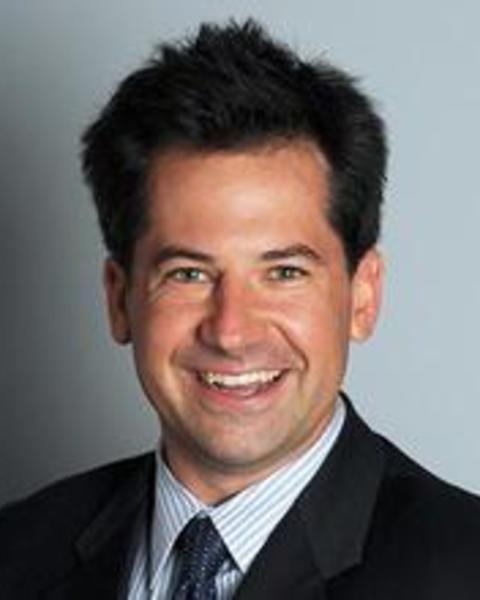
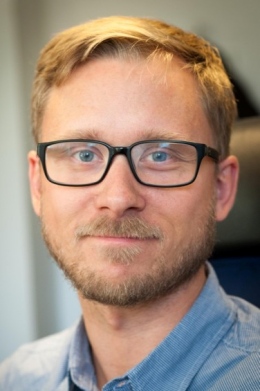
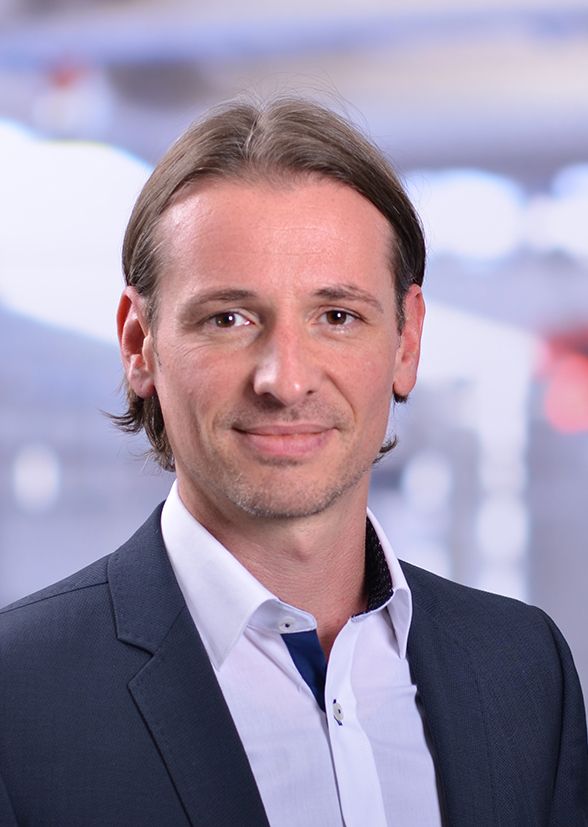
Dominik Schörkhuber is a PreDoc Researcher at the Vienna University of Technology (TU Wien) in the Computer Vision department. With a background in Informatics (BSc, Dipl.-Ing.), he focuses on computer vision applications for autonomous driving, robotics, and human-machine interaction. His work spans driver action recognition, pedestrian prediction, and adaptive lighting systems. Current projects: Empathic Vehicle (2024–2026), SyntheticCabin (2021–2025), SmartProtect (2020–2025) Research themes: Video transformers, synthetic data transfer learning, multi-task learning, and sensor-lighting integration Specializes in 3D sensing, nighttime driving analysis, and mobile video creation tools
Steve Worthington is an Adjunct Professor at Swinburne University of Technology's School of Business, Law and Entrepreneurship in Melbourne, Australia. Previously, he held a Professorship in Marketing at Monash University until 2013. His research focuses on financial services distribution via electronic channels, payment systems regulation, and cross-cultural financial practices. He has contributed extensively to academic journals such as the International Journal of Bank Marketing and practitioner outlets like The Financial Times and ANZ's BlueNotes . His work includes analyses of payment card markets in China and Japan, regulatory interventions in Australia's payment system, and expert testimony on financial services marketing disputes. Worthington's research interests span payment systems innovation, consumer behavior in financial contexts, and the intersection of technology with financial services. Notable contributions include studies on cashless society debates, payment fraud dynamics, and the cultural dimensions influencing financial product adoption. He frequently engages with industry conferences and media, offering insights into emerging trends like digital payment adoption and regulatory challenges in the financial sector. His publications highlight interdisciplinary approaches, blending economic policy analysis with marketing strategy. Key themes include the societal implications of cash decline, fairness perceptions in financial services, and the ethical dimensions of payment technologies. Despite no explicit awards listed, his prolific media engagement and advisory roles reflect recognition of his expertise in payment systems and financial markets.
Samuel G. Hanson is the William L. White Professor of Business Administration at Harvard Business School (HBS), a Research Associate at the National Bureau of Economic Research (NBER), and a Faculty Affiliate of the Harvard Department of Economics. He teaches Finance 1 in the MBA curriculum and Ph.D. courses in Corporate Finance and Empirical Methods. His research focuses on asset pricing, behavioral finance, corporate finance, and financial intermediation, with a particular emphasis on debt markets and financial stability. Hanson holds a Ph.D. in Business Economics from Harvard University and a B.A. in Quantitative Economics and Philosophy from Tufts University. Before academia, he worked at Lehman Brothers, the Federal Reserve Bank of New York, and the U.S. Treasury Department during the 2009 financial crisis. His work explores investor behavior, institutional factors, and policy interventions to enhance financial stability. Key awards include the 2014 RFS Rising Scholar Prize and the 2015 Brattle Group Distinguished Paper. His research is published in top journals like the Quarterly Journal of Economics, Journal of Finance, and Journal of Financial Economics. He also contributes to policy discussions on banking regulation and government debt management.
Justin Jansen is a Professor of Corporate Entrepreneurship at Rotterdam School of Management (RSM) within Erasmus University Rotterdam. Affiliated since 2001, his academic career spans over two decades. He holds a PhD in Management (2005) from Erasmus University. His research focuses on organizational growth, strategic renewal, and leadership dynamics in fast-growing firms. He co-founded the Erasmus Centre for Entrepreneurship (ECE) and pioneered the European ScaleUp Institute, fostering scale-up ecosystems across Europe. His work bridges academia and practice, addressing how organizations navigate paradoxes between exploration and exploitation. He has advised companies and governments on innovation strategies and entrepreneurial ecosystems. Editorships include Journal of Management Studies , and he’s an editorial board member of leading journals like Academy of Management Journal . Notable awards include the ERIM Best Paper Award and being named one of the world’s top entrepreneurship scholars. Research highlights include frameworks for scale-up DNA, leadership roles in ambidextrous organizations, and the role of social networks in corporate-startup collaborations. He co-developed BuildtoGrow, a venture applying research-based game-based learning tools for scaling organizations. Key collaborations include work with the European ScaleUp Institute and advisory roles for governmental agencies on entrepreneurial climate improvement. His 50+ publications span topics like absorptive capacity, strategic agility, and middle management roles in strategy implementation.
Dr. Sarah Smith is a Lecturer (Teaching & Scholarship) in the Business School at the University of Aberdeen, appointed in June 2020. She previously served as Reader at the University of Stirling from 2015 and as Senior Lecturer in Accounting, following a lectureship at Heriot-Watt University from 2001 to 2008. Education: BAcc in Accountancy, University of Stirling (1996, First Class Honours) MSc by Research, University of Stirling (1998) PhD, University of Stirling (2003) Her research centers on accounting and finance, with a strong focus on intellectual capital disclosure, corporate financing decisions, leasing, and academic labor in UK higher education. She employs empirical and methodological approaches, including content analysis and survey research, to explore disclosure practices and financial decision-making. Her work addresses both corporate reporting behavior and the sociology of accounting academia. Her recent publications (2018) analyze academic labor shortages in UK accounting departments and the role of social capital in PhD assessment, reflecting her dual interest in financial reporting and academic practice. Earlier works from the 2000s examine leasing, lease-debt substitutability, and the impact of disclosure on equity risk, establishing a long-standing contribution to financial accounting research. Scientific Awards: Best thesis on leasing across Europe (2003, Leaseurope) Carnegie Trust PhD Scholarship Dr. Smith has advised on research and contributed to academic discourse through extensive publishing, though no formal PhD or Master’s students are listed. She has not been associated with specific grants in the text, but her PhD was externally funded. Her teaching qualification (PGCAP) underscores her commitment to scholarship in education. She has not been affiliated with any named research labs or collaborative teams in the provided text, but her frequent co-authorship with Valerie Urquhart and Vic Beattie indicates strong research collaborations.
Dr. Claire Kremen is a Professor at the University of British Columbia (UBC), holding joint appointments in the Institute for Resources, Environment, and Sustainability (IRES) and Zoology within the Faculty of Science. She is the President’s Excellence Chair in Biodiversity and a highly-cited researcher since 2014. Her work focuses on reconciling agricultural land use with biodiversity conservation, emphasizing strategies like diversified farming systems to enhance ecological connectivity, ecosystem services (e.g., pollination), and sustainable livelihoods. Her research spans field, lab, and modeling studies, addressing how diversified farming systems influence wildlife population persistence, pest control, and socio-economic outcomes. She has held prior faculty roles at Princeton University and the University of California, Berkeley, where she co-founded the Berkeley Food Institute. Her international collaborations include work in Madagascar and roles on Conservation International’s Scientific Advisory Board. Research Interests: Community ecology, ecosystem services, agricultural diversification, conservation policy, and environmental change. Key projects investigate how landscape design and farming practices balance biodiversity conservation with food production, using case studies in strawberry farming, pollinator networks, and pest control. Awards & Recognition: President’s Excellence Chair in Biodiversity (UBC), Clarivate Analytics Highly Cited Researcher (2014–present). Grants & Advising: Advises students via courses like RES 509 (Advanced Conservation Science) and RES 510 (Social-Ecological Systems). Her lab integrates empirical and theoretical approaches to address barriers to sustainable agriculture adoption and promotes policy frameworks for biodiversity-friendly farming. Labs & Teams: Leads the Conservation and Sustainable Agriculture Lab (WorCS Lab), collaborating with interdisciplinary teams on global food systems and biodiversity research.
Prof. Dr. Johannes Sauer is a Professor at the Technical University of Munich (TUM), holding dual affiliations with the TUM School of Management and the TUM School of Life Sciences . His academic focus is on production and resource economics, with expertise in agricultural sustainability, policy evaluation, and circular economy strategies in Asia-Pacific and Latin America. Education: Bachelor’s/Master’s in Agricultural Economics from Universities of Tübingen, Hamburg, and Imperial College London. Doctorate (summa cum laude) in Agricultural Economics from the University of Bonn (2004). Research Interests: Prof. Sauer’s work spans productivity and resilience in agricultural systems, adoption of sustainable technologies, water resource valuation, and bioeconomic trends. He emphasizes smart technologies and circular economy applications in developing regions. His research employs econometric methods to analyze policy impacts and environmental-economic trade-offs. Key Trends in Publications: Recent articles highlight climate-smart agriculture, ICT adoption in rural China, and agroforestry’s role in reducing ecological-economic trade-offs. He explores behavioral drivers of policy participation and innovative tools like the IoFarm decision support system. Awards: 2021 Honorary Professorship at ANU OECD Fellow Awards (2010, 2016) Best Paper Awards (2008–2015) Consulting & Roles: OECD and Asian Development Bank consultant, ESRC Peer Review College member, and liaison lecturer for the German National Academic Foundation. He advises on agri-environmental policies and international development. Labs/Teams: Active in collaborative projects such as PONDERFUL Framework and IPM Popilia , focusing on nexus research and pest management strategies.
Valeria Caiati is an Assistant Professor at the Urban Planning Group within the Built Environment School at Eindhoven University of Technology. Her research focuses on sustainable urban mobility, smart cities, and the role of ICTs in fostering sustainable development. She leads the SCRIPTS project exploring demand-driven mobility services and platform technologies. She holds a PhD from TU/e, preceded by professional experience in international consultancy and research institutes in Italy. Valeria teaches courses like 'Built Environment and Smart Mobility' and contributes to 8 active/funded projects, including LEVERAGE and NEDAM initiatives. Her research interests revolve around Mobility as a Service (MaaS), sustainable transportation policies, and behavioral modeling of transport adoption. She employs mixed-methods approaches, including stated choice experiments and portfolio analysis to assess user preferences and system impacts. Recent work examines parking guidance systems, electric vehicle adoption drivers, and corporate sustainability interventions. Valeria has supervised 9 academic works and actively participates in peer-review for journals like Transportation and European Transport Research Review . She engages in professional activities such as invited talks on MaaS bundling strategies and workshop participations on transformative urban mobility. Her teaching portfolio includes courses integrating theory with practical studio projects in urban development.
Johan Eklöf is a Professor at Stockholm University within the Department of Ecology, Environment and Plant Sciences . His research emphasizes marine ecology , focusing on interactions between marine biodiversity, environmental conditions (including climate), and societal impacts . He teaches courses such as Management of Aquatic Resources in the Tropics , Marine Ecology for the Biogeo Program , and Ecology II . Research Focus: Causal relationships between biodiversity and ecosystem resilience Foundation species as drivers of ecosystem services Optimizing resource management under climate change Projects: Principal Investigator for FORCE (2023-present), a transdisciplinary Baltic Sea recovery project Contributor to NordSalt (climate impacts on Nordic salt marshes) and PlantFish (Baltic Sea vegetation-fish interactions) Scientific Leadership : Supervises 2 current PhD students and co-supervises 6 additional PhD/postdocs Formerly mentored 4 PhD graduates and >40 MSc students Environmental Context: His work spans Baltic Sea and Western Indian Ocean ecosystems, using seagrass beds , mussel beds , and coastal benthic systems as primary models. Recent publications highlight climate change impacts on trophic cascades , habitat connectivity , and policy frameworks for marine conservation .
Anna Grigolon is an Assistant Professor at the University of Twente , Netherlands, affiliated with the Transport Engineering and Management Research Group . Her research focuses on sustainable urban mobility , user-centric transport solutions , and travel behavior analysis using tools like discrete choice modeling , spatial analysis , and social psychology theories . Research Interests : Sustainable Urban Mobility Accessibility Modeling Travel Behavior Discrete Choice and Latent Class Modeling Spatial Analysis and GIS Shared Micromobility and Mobility Hubs Equity in Transport Planning Article Trends : Anna’s recent work (2025–2024) emphasizes mobility justice , 15-minute city transitions, and equity in transport access , particularly for marginalized communities like São Paulo favelas. She integrates digital tools (e.g., serious games, kiosks) and space-time metrics to evaluate mobility solutions. Projects : She currently leads the SmartHubs project and contributes to DREAMS and R-map , focusing on smart, equitable mobility systems in Europe and Saudi Arabia.
Dr. phil. Stefan Ladwig is a researcher at the Institute for Automotive Engineering (Institut für Kraftfahrzeuge) at RWTH Aachen University, specializing in traffic psychology, user acceptance, and human-machine interaction for automated driving systems. His work addresses psychological and ergonomic aspects of emerging mobility technologies, including seating ergonomics, trust-building mechanisms, and communication strategies for autonomous delivery robots. Research Focus: Automated driving, interior design psychology, driver/passenger behavior, and safety requirements. Projects: Lead roles in UrbANT (autonomous delivery robot) and SteeringBow (dynamic driving experience). Collaborations: Affiliated with Aldenhoven Testing Center, Future Mobility Partnership e.V., and innocam.NRW. Ladwig’s recent publications examine rotated seating positions, visual dominance in speed adaptation, and trust-relevant driving scenarios, reflecting his interdisciplinary approach to optimizing human-vehicle interactions. His work spans ergonomics, energy management, and behavioral interventions to enhance safety and usability in next-generation mobility solutions.
Dr. Srinivas Peeta is the Frederick R. Dickerson Chair and Professor in Transportation Systems Engineering at the Georgia Institute of Technology’s School of Civil and Environmental Engineering. He previously held the Jack and Kay Hockema Professorship at Purdue University, where he served for 24 years. He is also the Associate Director of the USDOT Center for Connected and Automated Transportation. Education: B. Tech. from IIT Madras, M.S. from Caltech, and Ph.D. from UT Austin, all in Civil Engineering. His research focuses on large-scale transportation systems, infrastructure interdependencies, and connected/automated vehicles. He has authored over 345 publications and secured over $48M in research funding. Research Interests: Dynamic traffic networks and driver behavior modeling Information-based navigation in vehicular systems Systems perspectives for complex adaptive infrastructure Autonomous vehicle integration and human-vehicle interactions Key Achievements: Developed DYNASMART software for traffic operations Recipient of NSF CAREER Award (1997) and ASCE Walter Huber Prize (2009) Directed NEXTRANS UTC and pioneered USDOT’s real-time route guidance systems Grants & Outreach: Secured funding from USDOT, NSF, FHWA, and international agencies Initiated NEXTRANS internship programs and K-12 outreach Labs/Teams: Active in Georgia Tech’s ACT Lab, focusing on autonomous transportation systems and human-vehicle-environment interactions.
Thompson S.H. Teo is a Professor in the Department of Analytics and Operations (DAO) at the National University of Singapore (NUS) Business School. He holds editorial roles in top journals including European Journal of Information Systems, International Journal of Information Management, and Communications of the AIS. His research spans information systems strategy, business-IT alignment, e-commerce, sustainability, and AI's societal impacts. With over 200 publications, he ranked #143 globally in 2023 among business scientists (research.com) and was recognized in Stanford's top 2% global scientists (2021-2023). Awards include the Best Associate Editor Award (2017) and AIS Distinguished Membership. Thompson's research interests include IT adoption, cyberloafing, supply chain digitalization, and green innovation. He teaches courses on innovation, Industry 4.0, and strategic IT at undergraduate, masters, and executive levels. Notable contributions include frameworks for commute experience analysis and AI adoption market signals. His work bridges theory and practice, addressing challenges in sustainability, organizational behavior, and digital governance. Affiliations: NUS Business School, Distinguished Editorial Advisory Board (IJoIM), Senior Member (INFORMS) Grants & Leadership: Extensive editorial leadership, supervised China Scholarship Council PhD students, and executive programs on innovation design thinking. Key Contributions: Over 270 publications, four co-edited books on IT/e-commerce, and policy-relevant studies on environmental regulations and green tech adoption. His research often employs mixed methods (e.g., QCA for corruption analysis, PLS-SEM for cyberloafing models) and addresses global issues like fake news mitigation via ChatGPT and pandemic-era customer engagement in short videos.
Jun Hwa (Jacky) Cheah is an Associate Professor in Marketing at the Norwich Business School, University of East Anglia (UEA), a position he has held since February 2023. Before joining UEA, he served as a Senior Lecturer at Universiti Putra Malaysia and Universiti Teknologi Malaysia in Malaysia. He holds a PhD in Business Economics and an MBA in International Business from Universiti Putra Malaysia, along with a Bachelor of Management in Marketing from Universiti Malaysia Terengganu. His research focuses on digital marketing, technology marketing, consumer behavior, data analytics, and statistical modeling. He has published extensively in top journals such as the Journal of Business Research , European Journal of Marketing , and Psychology & Marketing . He currently serves as a Guest Editor, Associate Editor, and Editorial Board member for multiple academic journals. Dr. Cheah has received several accolades, including the Emerald Young Researcher Award (2021) and a Young Researcher Award from his former university. He has supervised PhD students, one of whom successfully completed their doctoral program. He is actively engaged in PhD supervision and collaborative research, with a strong emphasis on advancing quantitative methodologies and addressing contemporary marketing challenges.
Christopher O'Donnell is a Professor of Econometrics at the University of Queensland's School of Economics. He holds a PhD from the University of Sydney and has held academic leadership roles including Director of the Centre for Efficiency and Productivity Analysis. His research focuses on productivity and efficiency analysis, econometric methods, and their applications in agriculture, public policy, and environmental economics. Education: PhD (University of Sydney), MCom (University of New South Wales), BAgEc (Hons) (University of New England). Research interests include economic and statistical methods for measuring productivity changes, stochastic frontier analysis, and metafrontier frameworks. He has authored/co-authored three books and over 80 journal articles, with notable contributions in the American Journal of Agricultural Economics , Journal of Econometrics , and European Journal of Operational Research . Scientific awards include being a Distinguished Fellow of the Australian Agricultural and Resource Economics Society. His work has been applied in sectors like healthcare, fisheries, and public utilities through collaborations with organizations such as the World Bank and Asian Productivity Organization. Key projects include measuring agricultural productivity in China, analyzing hospital efficiency, and evaluating climate impacts on farming. Grants include studies on productivity measurement in Australian universities and Northern Grains Region farms. Labs/Teams: Former Director of the Centre for Efficiency and Productivity Analysis, collaborating with global institutions on productivity benchmarking and policy analysis.