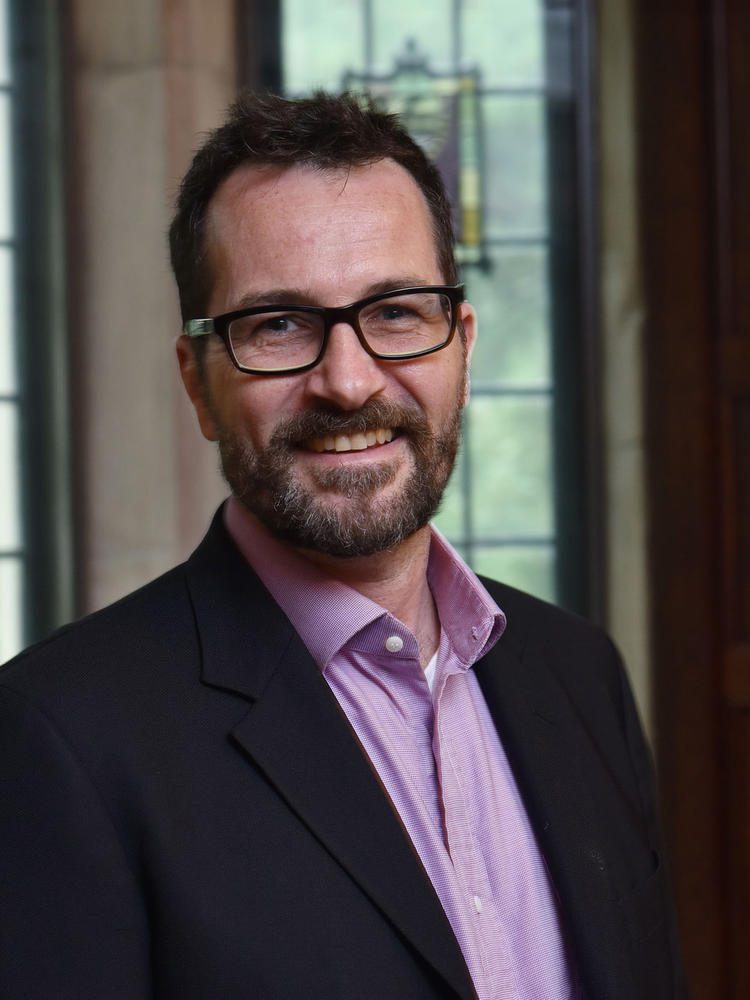
Sophie Volpp is a Professor in the Department of East Asian Languages and Cultures and Comparative Literature at the University of California, Berkeley. Her research focuses on Chinese literature from the 16th to 19th centuries, with particular emphasis on theatricality, material culture, and literary objects. She is the author of *Worldly Stage: Theatricality in Seventeenth-Century China* (2011) and *The Substance of Fiction: Literary Objects in China, 1550-1775* (2022). Her current projects include a book on the National Peiping Library’s preservation efforts during the Sino-Japanese War and an analysis of referents in *The Story of the Stone*. Her scholarly work bridges literary analysis and cultural history, examining themes such as gender, power, and spectacle in late-imperial China. She has translated works by pre-modern women poets and dramatists, contributing to gender-centric scholarship in East Asian studies. Her publications span journal articles and edited volumes, addressing topics like Qing-era theatrical design, material circulation in classical novels, and cross-cultural influences in literary production. Her research has been published in venues such as *Harvard Journal of Asiatic Studies* and *Journal of Asian Studies*.
Blair Hoxby is Professor of English at Stanford University's School of Humanities and Sciences, where he has taught since 2007. Previously, he served as Associate Professor of History and Literature at Harvard University (2005-2007) and Associate Professor of English at Yale University (2003-2005), where he began as Assistant Professor in 1998. His academic journey includes a Ph.D. in English from Yale University (1998), an M.Phil. in English Studies from the University of Oxford (1990), and an A.B. in English and American Literature and Language from Harvard University (1988). Hoxby's research focuses on literature and culture from 1500 to 1800, with particular emphasis on tragedy theory, Milton studies, and the intersection of literature and economics. His notable works include What Was Tragedy? Theory and the Early Modern Canon (2015) and Mammon's Music: Literature and Economics in the Age of Milton (2002). He argues that early modern tragedy differed significantly from contemporary understandings of the genre, with passions rather than deeds or character serving as the keys to early modern tragic performance. Hoxby's recent scholarly output reveals a consistent engagement with early modern theatrical practices, particularly tragedy and opera. His work demonstrates sophisticated interdisciplinary approaches, connecting literary analysis with historical context, economic theory, and performance studies. He has made significant contributions to understanding how commercial culture shaped literary production and how theatrical conventions evolved across national boundaries in Europe. Scientific Awards and Honors Internal Fellow, Stanford Humanities Center (2009-2010) Morse Fellowship, Juilliard School (2001-2002) Samuel and Ronnie Heyman Prize, Yale University (2001) John Addison Porter Prize, Yale University (1999) Rhodes Scholarship, University of Oxford (1988-1990) Hoxby has supervised numerous doctoral students and served in various administrative roles at Stanford, including Director of Undergraduate Studies (2011-2014) and Director of Graduate Admissions (2008-2011). His teaching portfolio includes courses on English poetry from the Renaissance to Romanticism, tragedy and tragic theory from Aristotle to the present, theater history, and performance theory. Currently, he teaches courses such as Court Theater from Shakespeare to Mozart and Introduction to English II: From Milton to the Romantics . Hoxby maintains active scholarly engagement through committee memberships, including the Executive Committee of the Milton Society of America (2009-2013) and service as a referee for major academic presses including Oxford University Press and the University of Pennsylvania Press.
Alison Landsberg is a Professor at George Mason University, affiliated with the Department of History and Art History and the Cultural Studies PhD program. Her research focuses on the politics of memory, affective engagements with the past, visual culture, and the intersections of race, aesthetics, and history. A leading scholar in memory studies, she explores how mass media and popular culture shape historical consciousness and political subjectivity. Her seminal works include *Prosthetic Memory* (2004) and *Engaging the Past* (2015), which analyze how mediated experiences of history foster empathy and progressive politics. Landsberg’s interdisciplinary work bridges film studies, cultural theory, and historiography. She examines how audiovisual media—from films to immersive digital exhibits—produce alternative historical narratives that challenge traditional academic historiography. Her current project, *Impossible Histories*, critiques conventional ‘historicism’ and explores counterhegemonic modes of historical representation. Her teaching spans courses on historical cinema, visual culture, and the politics of memory. She has advised over 20 doctoral students, many of whom explore topics like public history, digital memory, and cultural activism. Landsberg is a frequent keynote speaker at international conferences and has contributed to NPR’s *On the Media* and *The American Scholar* on topics ranging from racial representation to post-postracial America. Landsberg’s research emphasizes the urgency of rethinking historical engagement in an era of fragmented media and contested identities. Her work underscores the ethical and political stakes of how societies remember—and forget—the past.
Dr Kevin Hunt is a Lecturer in Piano (Jazz) at the Sydney Conservatorium of Music, University of Sydney. He holds a Doctor of Philosophy (2016) and a Master of Music in Jazz Performance (2004) from the same institution. His academic roles include supervising six research projects (2017) across Honours, Masters, and PhD levels. Education: MMus(Perf) Sydney (2004), PhD in Jazz Studies (2016). Professional training includes studies with Don Burrows, Bill Motzing, and a scholarship in NYC (2001). Research focuses on jazz piano performance, intercultural collaborations with Aboriginal Torres Strait Islander musicians, and the sonic qualities of Australian-made Stuart & Sons pianos. Key projects include the OUR MUSIC workshop-festivals (2012-2016) and the Ancient & New CD project blending ancient Indigenous chants with jazz improvisation. Performance highlights include the ABC FM Listeners Choice Award-winning JS Bach Trio (1998), recordings with Don Burrows and Simon Tedeschi, and collaborations in cabaret theatre such as Prince Bettliegend (2017). Active in education since 2005, he currently leads the Kevin Hunt Trio and performs with Emma Pask and Marie Wilson. Awards include the 2016 PhD and 1998 ABC award. His work bridges jazz innovation with cultural heritage preservation, evidenced by intercultural projects and academic publications on Yiddish theatre and Indigenous music collaboration.
David M Feldshuh is a Professor in Performing and Media Arts at Cornell University with over 40 years of service, uniquely combining a board-certified emergency medicine physician career with theater artistry. As founding Artistic Director of the Schwartz Center for the Performing Arts, he leads a resident company of professional actors collaborating with students across Cornell. His education spans Dartmouth College (B.A. Philosophy, Phi Beta Kappa, cum laude), London Academy of Music and Dramatic Arts, and dual Ph.D. (Theatre) and M.D. (Medicine) from the University of Minnesota, followed by Emergency Medicine residency at Hennepin County Medical Center and board certification. Feldshuh’s research centers on theater as a vehicle for social change, particularly at the arts-healthcare intersection. He pioneers creativity training methodologies derived from Zen meditation, Gestalt Therapy, and martial arts to enhance professional presence. His work examines ethical dilemmas in medical practice through performance, with emphasis on cultural bias mitigation and historical trauma processing. His creative output reveals consistent focus on social justice narratives, evolving from historical adaptations like Antigone to contemporary explorations of systemic inequity. Recent works demonstrate increasing formal innovation through multi-role performance structures and transmedia storytelling approaches that bridge academic and public engagement. Major honors include: Pulitzer Prize Finalist and 5 Emmy Awards for Miss Evers' Boys Cornell’s Stephen H. Weiss Presidential Fellowship (highest teaching honor) Distinguished Service Award from Tuskegee University’s National Bioethics Center AMA “Freddy” Award for medical film excellence CINE Golden Eagle for documentary work Feldshuh mentors through honors tutorials and developed the globally adopted eCornell course Acting in Public , teaching 1,600+ students across 15 countries. His Schwartz Center leadership established institutional grant frameworks supporting large-scale productions like Bernstein’s Mass with 138 performers. Current initiatives include leadership workshops for Cornell Tech and corporate clients, extending his presence-training methodology beyond academia. He maintains active creative practice through the Schwartz Center’s resident company, directing major productions while integrating medical ethics into performance pedagogy. His stadium announcing role at Cornell commencements for 20+ years exemplifies his commitment to institutional community engagement.
Christoph Wagner is a Lecturer in Lighting at the Royal Conservatoire of Scotland, where he has been employed since 2012. He holds a PhD (part-time) in scenography jointly from the Royal Conservatoire of Scotland and the University of St. Andrews, focusing on technological advancements in lighting design and archival methodologies since 1960. His research involves the Francis Reid Archive, Glyndebourne Opera archives, and practitioner interviews. Education: Graduated with distinction from Queen Margaret University College in Edinburgh, completed a Postgraduate Certificate in Teaching Higher Arts Education, and is pursuing his PhD. Research interests revolve around the intersection of technology and lighting design, particularly how innovations shape artistic expression and archival practices. He explores how historical lighting techniques are preserved and revived through modern digital tools, with a focus on operatic productions and archival documentation. Professional work includes lighting design for diverse theatre genres (devised theatre, cabaret, corporate events) across international stages, including the Tron Theatre, Soho Theatre, Tokyo Metropolitan Theatre, and The Arches. Notable projects include Hamlet , Victory , One Green Bottle , and collaborations with comedians like Eddie Izzard and Catherine Tate. His technical contributions are praised for enhancing dramatic storytelling through lighting, such as creating atmospheric tension in How To Act Around Cops and guiding audiences through narrative journeys in Victory .
Dr. Hester Lees-Jeffries is a University Associate Professor at the University of Cambridge and Fellow of St Catharine's College, where she serves as Director of Studies in English. She earned her BA and MA (Hons.) from the University of Canterbury, New Zealand, before completing her PhD at Cambridge as a Commonwealth Scholar. Her academic career includes a Research Fellowship at Magdalene College (2003-2006) and ongoing fellowship at St Catharine's since 2006. Her research focuses on Shakespeare and early modern literature, with particular expertise in performance studies, visual culture, and material textuality. She investigates topics including Renaissance textiles, costume semiotics, garden symbolism, and material objects in literature. Her interdisciplinary approach connects literary analysis with cultural history and performance theory. Lees-Jeffries maintains an active publication record with scholarly works spanning Shakespearean criticism, material culture studies, and Renaissance literature. Her research demonstrates consistent focus on textual materiality, performance interpretation, and interdisciplinary methodologies bridging literary analysis with visual and material culture. Her forthcoming publications include monographs on textile symbolism in Shakespeare and an introduction to Shakespeare's histories. Honors and Awards: Commonwealth Scholarship Research Fellowship, Magdalene College (2003-2006) Fellowship, St Catharine's College (since 2006) She coordinates exhibitions for the Centre for Material Texts and regularly contributes to Shakespeare Survey as London theater reviewer. Her innovative #SlowShakespeare projects provide daily literary analysis of Shakespeare's plays through social media platforms.
Dr. Isaias Fanlo serves as University Lecturer in Modern Iberian Literary and Cultural Studies within the Spanish & Portuguese Department of the Faculty of Modern and Medieval Languages and Linguistics at the University of Cambridge. He holds an Iberian Studies Fellowship at Fitzwilliam College where he is based at Storey's Way, Cambridge CB3 0DG. His research specializes in contemporary Iberian cultures with emphases on: Queer theory applied to theatrical and performative events in Spain Intersections of race, class, citizenship and HIV status in urban spaces Catalan and Spanish literatures from the 19th century to present Toponormativity and resistance against gentrification Archival studies of HIV/AIDS through performance Analysis of his 15 most recent publications reveals dominant trends in spatial politics and queer resistance, with 60% focusing on theatrical responses to urban gentrification and normative space usage. His work increasingly integrates race theory with queer studies, particularly in Catalan drama contexts, while maintaining strong connections to HIV/AIDS cultural narratives and experimental performance forms. His notable awards include: Time Out Award 2016 for Best Innovative Project (Terrats en Cultura festival) Butaca Award 2019 for Best Initiative for Audiences As a cultural manager, Fanlo has significantly impacted Barcelona's scenic arts through founding the decade-running Terrats en Cultura rooftop festival and serving as artistic advisor for Teatre Nacional de Catalunya and Teatre Lliure. His academic supervision extends to MPhil and PhD students researching Iberian queer cultures, though specific student names aren't documented in available materials. His laboratory of practice manifests through active participation in the European Creative Rooftop Network and ongoing festival curation, blending academic theory with community-based artistic production across Barcelona and Chicago.
C. Michael Sampson is an Associate Professor in the Department of Classics at the Faculty of Arts , University of Manitoba . Holding a PhD in Classical Studies (2009) from the University of Michigan, an MA in Classics (2003) from Dalhousie University, and a BA (First Class Honours) in Classics and Early Modern Studies (2001) from the University of King's College, Sampson is a broadly trained philologist specializing in Greek and Latin literature with a focus on poetry, and a papyrologist working on fragmentary texts from Egypt. Research interests: Greek/Latin literature, papyrology, reception studies, Hellenistic literature Current project: The Books of Karanis (interdisciplinary study of Greek literary culture in Egypt) Awards: SSHRC Insight Grant (2021-2025), SSHRC Connections Grant (2020-2022), Community Engagement Award (2018) Editorial roles: Digital Corpus of Literary Papyri, Pylon: Editions and Studies of Ancient Texts Teaching: Courses on Ancient Greek culture, Roman comedy, Euripides, and Archaic poetry
Professor Catherine Richardson serves as Professor of Early Modern Studies and Director of the Institute of Cultural and Creative Industries at the University of Kent. She joined the university in 2007 from The Shakespeare Institute and has held significant leadership positions including Associate Dean for Research and Innovation (Humanities) (2017-20), Deputy Head of School of English (2014-7), and Director of Research for the School of English (2012-7). Her research centers on the relationship between texts and material circumstances of production and consumption in early modern England, with particular focus on how material culture shaped social and cultural practices. Richardson examines the birth of creative industries in drama and performance cultures, skilled craft practices influenced by international migration patterns, and the evolution of cultural practices from the sixteenth century to present. She currently leads the AHRC-funded project 'The Cultural Lives of the Middling Sort, writing and material culture 1560-1660' in collaboration with The Shakespeare Birthplace Trust and Weald and Downland Living Museum. Richardson's extensive publication record reveals consistent scholarly engagement with material culture studies, with recent works increasingly incorporating digital humanities approaches. Her scholarship spans monographs, edited collections, and numerous journal articles examining domestic life, object biographies, and the intersection of physical artifacts with cultural narratives in early modern England. Her notable recognitions include: Fellow of the Royal Historical Society (2018) AHRC Peer Review and Strategic Review College Member (2017-22) The Malone Society council member (2002-) and Orders Secretary (2002-22) Pasold Research Fund Governor (Expert Member since 2019, 2021-present) As a dedicated supervisor, Richardson welcomes graduate students working on interdisciplinary projects related to early modern dramatic, social and cultural history. Her current AHRC project represents significant grant activity, developing digital resources that explore inclusion/exclusion dynamics in early modern English writing practices. She also serves as General Editor for the Oxford Complete Works of Christopher Marlowe and Series Editor for Arden Studies in Early Modern Material Culture. Through her directorship of the Institute of Cultural and Creative Industries, Richardson fosters research that bridges historical material culture studies with contemporary creative industry practices, creating innovative pathways for engaging with historical materials through modern technological approaches.
James P. Bednarz is a Professor of English at Long Island University, affiliated with the College of Liberal Arts and Sciences. He holds a B.A. from Columbia College and earned his M.A., M.Phil., and Ph.D. from the Columbia Graduate School of Arts and Sciences. A respected scholar of Shakespeare and the English Renaissance, Bednarz has made significant contributions to early modern literary studies through his publications, editorial work, and public engagement. His research focuses on Shakespeare and his contemporaries, including Christopher Marlowe, Ben Jonson, John Marston, and John Donne. He is the author of Shakespeare and the Poets’ War (2001), acclaimed as an 'International Book of the Year' by The Times Literary Supplement , and Shakespeare and the Truth of Love (2012), praised for transforming understanding of Shakespeare's work. His scholarship explores literary rivalry, intertextuality, authorship, and the political and religious contexts of Renaissance drama. His recent publications span topics such as Jonson’s satire of Shakespeare, the performance history of Volpone , the dating of Twelfth Night , and the cultural significance of quotation in early modern literature. These works reflect a deep engagement with textual analysis, historical context, and theatrical performance, particularly within the 'War of the Theaters' and Jacobean literary circles. Trustees’ Award for Excellence in Scholarship (LIU) Abraham Krasnoff Memorial Award for Excellence in Scholarship (LIU) David Newton Award for Excellence in Teaching (LIU) NEH Shakespeare Fellow Beverly Rogers Literary Award Essay (2020) Bednarz has advised university presses and journals, served on the PMLA advisory committee, and contributed to scholarly organizations such as the Shakespeare Association of America. He has also worked with theater groups like the Red Bull Theater and Theater for a New Audience to enhance public understanding of Shakespeare. Though no specific students are named, his mentorship extends to graduate education and teacher training programs. He has not received external grant funding mentioned in the text, but his fellowships from the Huntington Library underscore sustained research support. He is actively involved in academic and performance communities, serving as a consultant on Shakespearean productions and as a judge for the North Shore Student Shakespeare Festival. His work bridges the gap between scholarly research and public humanities, demonstrating a commitment to both rigorous criticism and accessible education.
Emmanuel Saez is a Professor of Economics and Director of the Stone Center on Wealth and Income Inequality at the University of California, Berkeley , where he has been a leading figure in the Department of Economics within the College of Letters and Science. His research is foundational in the study of income and wealth inequality, optimal taxation, and empirical public policy. His academic journey began with a PhD from MIT in 1999. His work, particularly in collaboration with Thomas Piketty and Gabriel Zucman, has revolutionized how economists measure and understand economic inequality. He is best known for constructing long-term top income share series, which reveal the dramatic rise in U.S. inequality since the 1980s. His influential 2019 book, The Triumph of Injustice , co-authored with Gabriel Zucman, presents a compelling critique of the decline in U.S. progressive taxation and proposes bold policy reforms for the 21st century. Saez's recent research spans a wide range of topics including real-time inequality measurement, wealth tax enforcement, labor market dynamics for older workers, and macroeconomic models of unemployment. His publications, often appearing in top journals like the Quarterly Journal of Economics , American Economic Review , and Brookings Papers on Economic Activity , consistently focus on empirical analysis with direct policy relevance. His work shows a strong trend toward integrating macroeconomic models with distributional data and evaluating the real-world impact of fiscal and social policies. John Bates Clark Medal, American Economic Association, 2009 MacArthur 'Genius' Fellowship, 2010 Honorary degree from Harvard University, 2019 Saez is deeply involved in mentoring and advising, though specific student names are not listed in the provided texts. He has been instrumental in major data initiatives such as the World Inequality Database (WID.world) and Real-Time Inequality , which provide open-access, high-quality data on economic distribution. He has also secured significant research funding from foundations like the Bill & Melinda Gates Foundation, the Russell Sage Foundation, and the Alfred P. Sloan Foundation. He leads the Stone Center on Wealth and Income Inequality, fostering interdisciplinary research on economic disparity.
Paize Keulemans is an Associate Professor of Chinese Literature at Princeton University's Department of East Asian Studies. His research focuses on the interplay between oral and written literary traditions in Chinese literature, particularly exploring acoustic dimensions in 19th-century martial arts fiction and the role of gossip and rumor in 17th-century texts. He holds a Ph.D. from the University of Chicago (2004) and a B.A. from Leiden University (Netherlands). His work bridges literary analysis with cultural studies, examining topics like Dutch-Chinese interactions since the 17th century and the adaptation of classical texts like The Three Kingdoms into modern media such as video games. Education: Ph.D. in East Asian Languages and Literatures, University of Chicago B.A. in Chinese Language and Literature, Leiden University Research Interests: Acoustic imagination in printed novels Rumor dynamics in late-Ming literature Cultural exchanges between the Netherlands and China Modern adaptations of classical Chinese narratives Publications highlight his exploration of Ming-Qing transition narratives through Dutch tragic plays and the sonic dimensions of martial arts fiction. Current projects include analyzing video game adaptations of classical texts and the role of 'idleness' in literary production.
Professor Annie Mahtani is a Professor of Electroacoustic Composition and Practice at the University of Birmingham's Department of Music. She holds a BMus (Hons), MA, MPhil, and PhD from the University of Birmingham and Birmingham City University. Her work focuses on electroacoustic music, acousmatic composition, multichannel audio, spatialisation, and field recordings, with significant contributions to site-specific installations and cross-disciplinary collaborations. She co-directs the SOUNDkitchen collective and serves on key boards such as the British ElectroAcoustic Network (BEAN) and the British Section of ISCM. Her research explores the sonic identity of environmental sounds, large-scale multichannel composition, and ambisonic audio techniques. As a performer with BEAST (Birmingham Electroacoustic Sound Theatre), she develops live acousmatic performances and soundwalks. Recent projects include Becoming Tree (an immersive audio retelling of a literary work) and Minimum Monument , performed at Birmingham Hippodrome. She actively collaborates with dance and theatre companies like Rosie Kay Dance Company. Professor Mahtani teaches undergraduate and postgraduate modules in electroacoustic composition and is involved in admissions and curriculum leadership. Her works have been performed globally in festivals like Klang! Électroacoustique and Sound + Environment, showcasing her innovative contributions to contemporary music and sound art.
Professor Matthias Bauer is a distinguished scholar of English literature at the Eberhard Karls University of Tübingen, where he has served as Professor of English since 2004. He currently holds the position of Chair of English Literatures and Cultures and acts as speaker for Modern Languages in the Faculty of Humanities. His academic journey includes a professorship at Saarland University (2001-2004) and extensive scholarly contributions across multiple research domains. First state examination in English and History from Münster University (1984) MA in English Literature from Yale University (1985) Dr. phil. from Münster University (1990; supervisor: Inge Leimberg) Habilitation from Münster University (1999) Professor Bauer's research spans Early Modern English literature (particularly Shakespeare and Metaphysical Poetry), nineteenth-century literature (with emphasis on Dickens), and poetry across historical periods. His work explores the aesthetics of co-creativity, the relationship between language and literature, and literary processes of sacralization and desacralization. He investigates how understanding literary texts functions, what competencies are required, and whether systematic annotation can facilitate comprehension. His recent publications reveal a strong focus on collaborative authorship in Early Modern literature, ambiguity studies, and the intersection of digital humanities with literary annotation. Professor Bauer consistently examines how texts create meaning through ambiguity, co-creation, and religious dimensions, connecting historical literary practices with contemporary theoretical frameworks. Deputy spokesperson for CRC/SFB 1391 "Different Aesthetics" (since 2019) Chair of project C5 "The Aesthetics of Co-Creativity in Early Modern English Literature" Chair of project C5 "Multiple Common Grounds" in CRC/SFB 1718 "Common Ground" Former chair of Research Training Group "Ambiguity: Production and Perception" (2013-2022) He actively supervises Bachelor's and Master's theses on literature from 1550-1900, literary theory, literature and linguistics, poetry, and literature and religion. His editorial work includes serving as co-editor of Connotations: A Journal for Critical Debate, the Literaturwissenschaftliches Jahrbuch, and multiple book series focusing on religion and literature. Professor Bauer leads research teams working on projects related to the Collaborative Research Center "Common Ground" (CRC/SFB 1718), where he chairs project C5 "Multiple Common Grounds: Linguistic Mechanisms for Literary Meaning." His department also hosts a peer-learning project on annotating literature, connecting theoretical research with practical pedagogical applications.