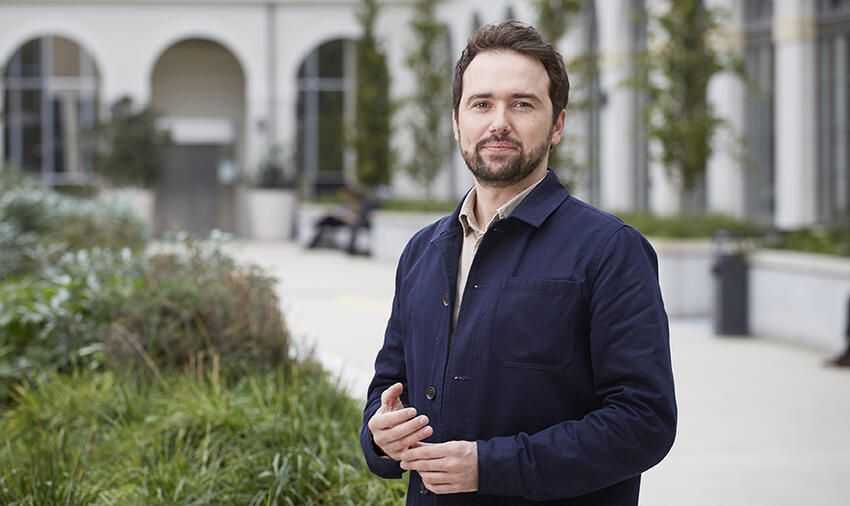
Adam Hollowell is an Adjunct Assistant Professor in the Program in Education at Duke University, where he also serves as Senior Research Associate at the Samuel DuBois Cook Center on Social Equity and Director of the Inequality Studies Minor. His teaching spans ethics, inequality studies, and history across Duke’s Kenan Institute for Ethics, Sanford School of Public Policy, and Department of History. Hollowell holds a Ph.D. from the University of Edinburgh (2009). His research focuses on inequality, higher education, public policy, and ethics, with notable work on pandemic impacts, telemedicine in education, and reproductive health access during crises. In Inequality Studies , Hollowell emphasizes understanding policies to drive social change, as highlighted in recent media coverage. His publications explore topics like student behavior shifts during the pandemic, telemedicine adoption in universities, and James Baldwin’s ethical challenges. He is a finalist for the Judith Deckers Prize (2024). Professionally, Hollowell leads projects such as Bass Connections on college contraception access and Story+ initiatives. His work bridges academia and public engagement, addressing systemic inequities through interdisciplinary approaches.
Professor Amy Maguire is a leading academic in human rights and public international law at the University of Newcastle, Australia. She holds roles as Deputy Head of the School of Law and Justice (2021-2024) and co-founder Director of the Centre for Law and Social Justice. Her research focuses on human rights accountability, Indigenous rights, climate change displacement, and refugee rights. She has secured over $2.7 million in grants, including an ARC Mid-Career Industry Fellowship (2024-2028) for national human rights reform initiatives. Maguire advises the Queensland Parliament on human rights compliance and collaborates with global institutions like the Australian Human Rights Commission. Her work has influenced policy, including Australia’s death penalty abolition strategy and Indigenous rights frameworks. She has been awarded multiple accolades for research and teaching excellence, including the 2020 Leadership Excellence Award and 2016 Early Career Researcher of the Year. Maguire’s education includes a BA, LLB (Hons), and PhD from the University of Newcastle. Her interdisciplinary approach bridges law and social justice, addressing issues like climate migration and legal responses to global crises. She leads projects such as the Hunter Region climate displacement study and the Human Rights Measurement System. Maguire’s public engagement includes over 70 articles for The Conversation, reaching 920,000+ readers, and expert media commentary globally. She advocates for inclusive education through initiatives like early entry programs for Indigenous and refugee students, earning a 2021 Senior Fellowship from Advance HE. Her research outputs span 60+ publications, with key works on MH17 litigation, climate justice, and Indigenous legal frameworks. Grants include a 2021 stimulus grant to establish the Centre for Law and Social Justice, supporting postdoctoral research and international collaborations. Maguire’s leadership extends to global networks, including the UN Human Rights Council evaluation project and the Human Rights for NSW Alliance. She remains committed to translating research into policy, education, and community impact through clinics, youth forums, and law reform advocacy.
Ram Rajagopal is an Associate Professor of Civil and Environmental Engineering and Electrical Engineering at Stanford University, and a Senior Fellow at the Precourt Institute for Energy. He leads the Stanford Sustainable Systems Lab (S3L), focusing on large-scale monitoring, data analytics, and stochastic control for infrastructure networks, particularly power systems. His research emphasizes renewable energy integration, smart distribution systems, and demand-side data analytics. Education: PhD in Electrical Engineering and Computer Sciences & MA in Statistics (UC Berkeley), MS in Electrical and Computer Engineering (UT Austin), and BEng in Electrical Engineering (Federal University of Rio de Janeiro). Research interests include power grid optimization, renewable energy systems, and data-driven approaches to infrastructure challenges. He has pioneered work in grid flexibility, distributed energy resources, and machine learning applications for energy systems. His lab develops technologies like Smart Dim Fuses and the EV-EcoSim platform for EV charging infrastructure optimization. Received NSF CAREER Award, Powell Foundation Fellowship, and Berkeley Regents Fellowship Over 30 patents and best paper awards Advises/founded companies in sensor networks, power systems, and data analytics Labs/Teams: Stanford Sustainable Systems Lab (S3L), Powernet Project. His work spans grid resilience, energy equity, and scalable energy solutions.
Amy Bruckman is a Regents’ Professor and Senior Associate Chair in the School of Interactive Computing at Georgia Institute of Technology. As a Fellow of The ACM and member of the SIGCHI Academy , she contributes to social computing research focusing on online collaboration, cross-cultural understanding, and content moderation. Her 2022 book "Should You Believe Wikipedia? Online Communities and the Construction of Knowledge" explores digital knowledge creation. Education: Ph.D. from MIT Media Lab (1997), B.A. in Physics from Harvard (1987) Research Affiliations: GVU Center, IRI People and Technology Her work addresses social computing challenges including: AI ethics in human-AI interaction Algorithmic bias in content moderation Epistemic justice in online communities Comparative platform analysis (Reddit, Discord, TikTok) Grassroots technology movements Recent publications examine: AI support tools for online counseling Community-driven research frameworks Racial bias mitigation in toxic language detection Designing teachable social media experiences Human trafficking intervention ethics Scientific recognition includes: ACM Fellowship SIGCHI Academy membership She has contributed to: Georgia Tech's Computing Education initiatives Research ethics frameworks for Human-Computer Interaction
Matthew D. Adler is the Richard A. Horvitz Distinguished Professor of Law and Professor of Economics, Philosophy, and Public Policy at Duke University. He is the founding director of the Duke Center for Law, Economics and Public Policy and holds a 3-year research fellowship at the London School of Economics. Education: B.A., Yale University (1984) J.D., Yale University (1991) M.Litt., University of Oxford (1987) - Marshall Scholar Research Interests: Adler specializes in prioritarianism, a theory that refines utilitarianism by prioritizing the worse-off. He integrates welfare economics, normative ethics, and legal theory to develop policy analysis tools like social welfare functions with distributional weights. His work spans climate change , risk regulation , health policy , and inequality measurement . Publications and Contributions: Adler has authored monographs including New Foundations of Cost-Benefit Analysis and Well-Being and Fair Distribution , and co-edited the Oxford Handbook of Well-Being and Public Policy . His recent work explores implementing prioritarianism in policy domains such as the social cost of carbon , health economics , and intergenerational equity . Scientific Awards: Marshall Scholar Ludwig M. Lachmann Professorial Research Fellow Professional Affiliations: Adler was an editor of Legal Theory until 2017 and is now an editor of Economics and Philosophy . He has held visiting professorships at Columbia, Chicago, and Virginia Law Schools.
Martin T. Wells is the Charles A. Alexander Professor of Statistical Sciences at Cornell University, with joint appointments in the Department of Statistical Science, Department of Biological Statistics and Computational Biology, Department of Social Statistics, and as Professor of Clinical Epidemiology and Health Services Research at Weill Medical School. He serves as Editor-in-Chief of the ASA-SIAM Book Series and Co-Editor of the Journal of Empirical Legal Studies. Cornell University, Ithaca, NY Weill Cornell Medical College Research Interests span applied and theoretical statistics, Bayesian methods, biostatistics, clinical epidemiology, and computational biology. His work bridges disciplines like finance, legal studies, and health services research. Article Trends highlight advancements in Bayesian modeling, quantum cognition machine learning, tensor analysis, and misclassification correction, with applications in genomics, finance, and public health. Fellow of the American Statistical Association Fellow of the Royal Statistical Society Contributions include developing statistical software (e.g., rTensor), methodological innovations in clinical trials, and empirical legal studies on civil rights and the death penalty.
Dr. K. Max Zhang is a Professor in the Sibley School of Mechanical and Aerospace Engineering at Cornell University. He is the director of the Energy and the Environment Research Laboratory (EERL) and a fellow at the Atkinson Center for a Sustainable Future. His research is deeply interdisciplinary, focusing on sustainable energy systems, air quality, and environmental justice, with significant impacts on policy and community development in New York and beyond. Ph.D., Mechanical Engineering, University of California-Davis, 2004 B.S., Thermal Engineering, Tianjin University, 1998 B.A., English Language, Tianjin University, 1998 Dr. Zhang’s research centers on the integration of energy and environmental systems. He investigates air pollution dynamics using advanced numerical models like CTAG, with applications in near-source pollution, indoor air quality, and environmental justice. His work on renewable energy systems includes designing sustainable solar farms and managing distributed energy resources such as heat pumps to enhance grid flexibility. He also leads a pioneering initiative to create the first statewide public IoT network in the U.S., enabling hyperlocal weather forecasting and microclimate monitoring. His recent publications reflect a strong trend toward agrivoltaics, peer-to-peer energy markets, and IoT-based environmental monitoring. These works demonstrate a consistent focus on data-driven modeling, community-scale energy solutions, and the integration of social considerations into technical systems. The keywords across his articles highlight expertise in sustainability, machine learning, air quality, and energy transition. Cornell Town-Gown Achievement Award (2022) Engaged Scholar Prize, Cornell University (2017) People's Choice Sign of Sustainability Award, Sustainable Tompkins (2016) Scientific and Technological Achievement Award, Environmental Protection Agency (2015) Fellow of the American Society of Mechanical Engineers Dr. Zhang is actively involved in mentoring students and securing research grants from agencies such as the National Science Foundation (NSF) and the New York State Energy Research and Development Authority (NYSERDA). His projects often involve interdisciplinary collaboration across eight Cornell colleges and 16 academic departments. He has led initiatives such as the Cornell Atkinson Academic Venture Fund projects and the development of a county-level energy roadmap for Tompkins County. He also teaches courses in engineering thermodynamics, future energy systems, and air quality, emphasizing experiential and community-based learning. Dr. Zhang leads the Energy and the Environment Research Laboratory (EERL) and collaborates with the Atkinson Center for a Sustainable Future. His lab functions as a hub for innovation in sustainable communities, combining advanced modeling with real-world applications. Through partnerships with community organizations, government agencies, and industry, his team develops science-driven solutions to urban and rural sustainability challenges.
Yochai Benkler is the Berkman Professor of Entrepreneurial Legal Studies at Harvard Law School and faculty co-director of the Berkman Klein Center for Internet and Society at Harvard University. He specializes in Law and Political Economy, Technology Law and Policy, Communications Law, and Access to Knowledge. His work bridges academia and activism, focusing on the intersection of technology, collaboration, and societal structures. Benkler's research emphasizes decentralized collaboration, information commons, and the impact of technology on democracy. He has advised governments and international organizations on innovation policy and telecommunications. His notable works include The Wealth of Networks (2006), which explores social production in the digital age, and Reconstructing Class Analysis (2024), co-authored with Talha Syed, which rethinks class dynamics within capitalism. He has received numerous awards, including the Oxford Internet Institute Lifetime Achievement Award (2012), Ford Foundation Visionaries Award (2011), and Electronic Frontier Foundation Pioneer Award (2007). His work is publicly accessible at benkler.org . Benkler serves on the boards of the Open Society Foundations and the Freedombox Foundation. His research spans law, political economy, and technology, addressing issues like fake news, network propaganda, and the role of the internet in governance.
Lucas Chancel is an Associate Professor of Economics at Sciences Po, affiliated with the Centre for Research on Social Inequalities (CRIS) and the Department of Economics. He is Co-Director of the World Inequality Lab at the Paris School of Economics (PSE), a Research Fellow at the Institute for Sustainable Development and International Relations (IDDRI), and Senior Advisor at the European Tax Observatory. He has held visiting positions at the London School of Economics (2021) and Harvard Kennedy School (2022). His research focuses on global income and wealth inequality , climate change , and tax policy , with a particular interest in the interplay between ecological transitions and social justice. He uses tax data, household surveys, and national accounts to analyze inequality trends across countries and over time. His recent publications span high-impact journals such as Nature Climate Change , Nature Sustainability , and the American Economic Journal: Applied Economics . Leading reports like the World Inequality Report (2018, 2022) and Climate Inequality Report (2023) reflect his role in shaping global discourse on inequality and sustainability. His work increasingly explores carbon inequality, wealth taxation, and climate finance, especially for the Global South. Selection of best books in economics – Financial Times (for 'Unsustainable Inequalities') Selection of best science books – Nature (for 'Unsustainable Inequalities') He supervises PhD students including Eulalie Saïsset, Philipp Bothe, and Yannic Rehm. His research is supported by collaborations with institutions like PSE, IDDRI, and the European Tax Observatory. He regularly contributes to public debate through op-eds in Le Monde and Time , and participates in international forums such as the World Economic Forum.
Amartya Sanyal is a Tenure Track Assistant Professor at the Department of Computer Science (DIKU), University of Copenhagen, specializing in Machine Learning. He also serves as an Adjunct Professor at the Indian Institute of Technology Kanpur (2023–2025). His research focuses on critical areas of AI safety, data privacy, and robust learning. University: University of Copenhagen Department: Department of Computer Science Academic Rank: Assistant Professor Adjunct Role: IIT Kanpur (2023–2025) His work addresses challenges like differential privacy , data poisoning attacks , machine unlearning , and robust mixture learning . Recent publications analyze privacy-preserving techniques for large language models, fairness in collective action algorithms, and certified data release mechanisms. Amartya has received the Villum Young Investigator Award (2025). His research outputs emphasize online learning , adversarial robustness , and privacy-utility tradeoffs through rigorous theoretical frameworks and practical implementations. Scientific Award: Villum Young Investigator Award His collaborations span institutions like IIT Kanpur and involve interdisciplinary projects with industry partners. Current activities include talks on privacy with correlated data and machine unlearning advancements.
Kevin Manaugh is an Associate Professor at McGill University, specializing in Urban Planning with a focus on sustainable transportation and spatial justice. His research examines how decision-making processes in urban development balance environmental, economic, and social equity goals, particularly through transport systems. He holds a PhD in Urban Planning from McGill University (2013). His key research interests include integrating social equity into land use policies, analyzing accessibility impacts on socioeconomically diverse populations, and studying behavior change related to sustainable transportation. Current projects explore equitable transit accessibility, responses to local mobility policies, and health/well-being effects of sustainable transport choices. Manaugh has published extensively on transportation equity, urban form analysis, and GIS applications. His work bridges theoretical frameworks with practical policy implementation, emphasizing participatory approaches to urban planning. Notable contributions include studies on pandemic street reallocation equity and cycling infrastructure prioritization strategies. His research has been supported by interdisciplinary collaborations and applied to Canadian urban contexts. Despite prolific output, Manaugh maintains an active engagement with public discourse on urban mobility challenges and equitable urban futures.
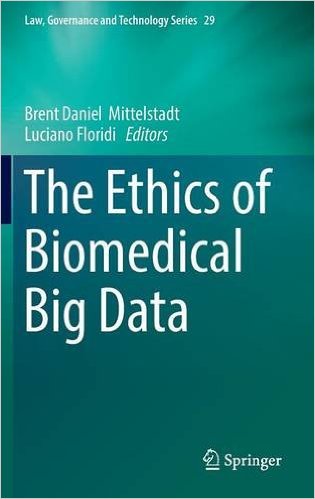
Professor Brent Mittelstadt is a leading academic in data ethics and AI governance at the University of Oxford's Oxford Internet Institute (OII), serving as Professor of Data Ethics and Policy and Director of Research. He coordinates the Governance of Emerging Technologies (GET) programme, focusing on ethics, law, and technology interplay. His work bridges academic research with policy impact, contributing frameworks like 'counterfactual explanations' and fairness metrics ('Conditional Demographic Disparity') used globally. He leads high-profile projects such as Trustworthiness Auditing for AI and A Right to Reasonable Inferences in Advertising and Financial Services. Research interests span AI ethics, medical ethics, technology governance, and non-discrimination law. He has pioneered ethical frameworks addressing algorithmic bias, GDPR compliance, and AI accountability. His work has influenced policy bodies like the UK Information Commissioner’s Office and the European Commission, and is implemented by tech giants such as Google and Microsoft. Awarded O2RB Excellence in Impact Awards (2018, 2021) and PLSC Best Paper (2019) Funded by Wellcome Trust, Sloan Foundation, and others Advisory roles for NHSx, GSK Consumer Healthcare, and regulatory bodies Recent work focuses on AI regulation (EU AI Act), generative AI ethics, and healthcare AI governance. He co-leads the OxonFair toolkit for algorithmic fairness and investigates societal impacts of deepfake proliferation and large language models.
Allison Koenecke is an Assistant Professor of Information Science at Cornell Tech and a field faculty member in Computer Science at Cornell University. Previously, she was a postdoctoral researcher at Microsoft Research New England and completed her PhD at Stanford University’s Institute for Computational & Mathematical Engineering. Her research focuses on algorithmic fairness, computational social science, and causal inference in public health, addressing disparities in automated systems like speech recognition and policy decision-making. Education : PhD, Stanford Institute for Computational & Mathematical Engineering MA/MS, Stanford University BA/BS, Massachusetts Institute of Technology Research Interests : Dr. Koenecke’s work bridges economics and computer science, emphasizing equity in AI systems. Key areas include: Algorithmic bias in speech recognition (e.g., racial disparities in voice assistants) Fairness in policy tools like environmental justice data systems Causal analysis in public health interventions Ethical implications of large language models in education Media & Impact : Her research has been featured in outlets like New York Times , Science , and Scientific American . Notable studies include exposing racial gaps in speech-to-text systems and advocating for inclusive dataset development. She also explores societal impacts of AI in education and governance. Awards : Sloan Research Fellow in Computer Science Forbes 30 Under 30 in Science NSF Awards Cornell CIS Teaching Excellence Award (2024) Teaching & Outreach : She teaches courses like Designing Fair Algorithms and Data Science for Global Development , emphasizing interdisciplinary collaboration. Her PhD Professionalization course addresses hidden curricula in academia. She advises on AI ethics for nonprofits, tech companies, and government agencies.
Jakob Merane is a postdoctoral researcher at ETH Zurich's Professorship of Law, Economics and Business, and a visiting researcher at the Max Planck Institute and Harvard Law School. He holds a Ph.D. from ETH Zurich and law degrees from the University of Basel, with additional studies in applied statistics. His research focuses on AI-driven legal enforcement, legal technology, and compliance-by-design approaches, leveraging computational and empirical methods. Merane's work includes developing tools like SwiLTra-Bench for multilingual legal translation and LEXam for benchmarking AI legal reasoning. He has contributed to GDPR compliance studies, automation of legal enforcement processes, and quantitative analyses of Swiss legal datasets. Awards include the 2024 Young Scholar Prize from the German Law and Economics Association. Teaching responsibilities include ETH's Law & Tech course since 2020, emphasizing AI regulation and interdisciplinary collaboration between law and computer science. Merane's research also addresses AI liability in medical contexts, digital advertising regulations, and ethical AI integration in legal systems. His work bridges legal theory with practical applications, aiming to enhance justice accessibility through technology.
Clio Andris is an Associate Professor at Georgia Tech, jointly appointed in the School of City and Regional Planning and the School of Interactive Computing. She directs the Friendly Cities Lab, focusing on mathematical models of social networks applied to urban planning, transportation, and geography. Her work integrates spatial analysis with visualization, emphasizing interdisciplinary collaboration. Education and Career: Andris earned a PhD in Urban Information Systems from MIT (2011), where she was an NDSEG Fellow. She held postdoctoral positions at Singapore-MIT Alliance for Research and Technology and the Santa Fe Institute. Prior to Georgia Tech, she was a faculty member at Penn State’s Department of Geography, affiliated with the GeoVISTA Center. Research Focus: Her research bridges social networks, geovisualization, and urban informatics. Key areas include spatial social network analysis, GIS applications for urban policy, and the impact of digital tools on civic engagement. She has developed innovative visual analytics tools like SNoMaN and ROBIN to democratize spatial data exploration. Awards: She received the NSF CAREER Award (2021) and NDSEG Fellowship (2011). Her lab is affiliated with the Center for Spatial Planning Analytics and Visualization (CSPAV) and the Information Visualization Lab. Labs and Collaborations: The Friendly Cities Lab focuses on socially just urban design through computational methods. Her work addresses issues like food security networks, pandemic impacts on biodiversity, and community mapping for activism. Grants and Outreach: Her NSF-funded projects emphasize public good applications, such as real-time pandemic risk communication and educational tools for migration data. She actively collaborates with non-profits and policymakers to translate research into actionable urban strategies.