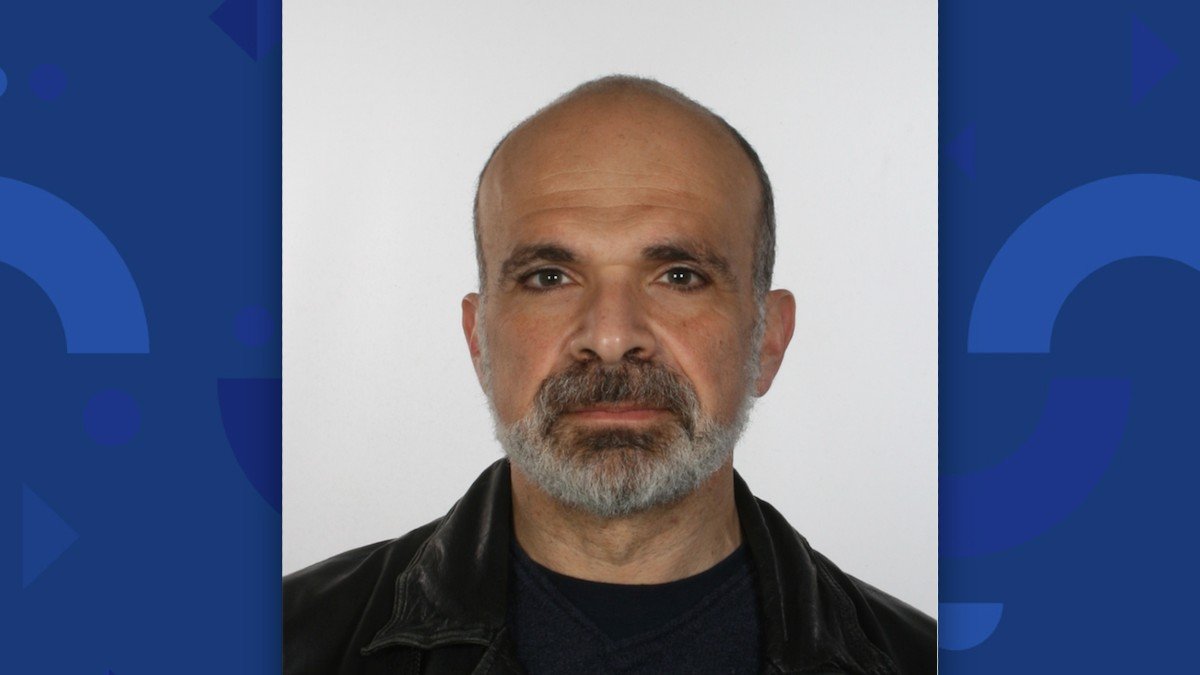
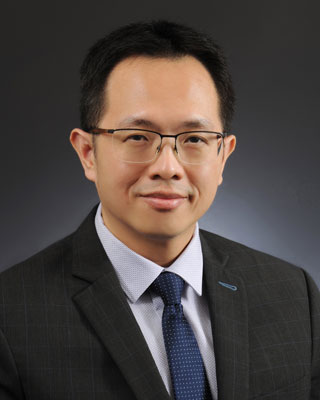
Eryk Dutkiewicz is Professor and Associate Dean (International) at University of Technology Sydney's Faculty of Engineering and Information Technology. Former Head of School of Electrical and Data Engineering (2015-2024), his research focuses on 5G/6G networks, IoT systems, and spectrum sharing technologies. Leads industry collaborations with Intel, DFAT, and ASEAN partners on projects including Vietnam's Industry 4.0 implementation, disaster management systems, and innovation ecosystems. Developed novel frameworks for secure satellite communications and metaverse resource allocation. Educational background: PhD in Telecommunications, University of Wollongong (1995) Industry experience includes positions at Motorola Labs, OTC, and Telstra. Holder of 19 patents in wireless communications. Author of over 400 publications in areas spanning cognitive radio, IoT security, and satellite networks.
Dr. Vahid Mirzabeiki is a Senior Lecturer in Operations Management at Surrey Business School, University of Surrey. He has held prior academic roles at Cranfield University (Senior Research Fellow/Lecturer) and Coventry University (Senior Lecturer and Director of Executive MBA Apprenticeship Programme). His research focuses on digitalization, co-opetition, sustainability, and resilience in supply chains, with publications in top journals like International Journal of Operations & Production Management (ABS 4) and International Journal of Production Research (ABS 3). He leads the Supply Chain Design, Planning and Analysis module in the Business Analytics MSc programme. Education: PhD in Supply Chain Management (Chalmers University of Technology, Sweden) PGCert in Academic Practice (Cranfield University, UK) Research Interests: Supply chain digitalization (blockchain, IoT) Co-opetition dynamics in logistics Sustainability through collaboration Supply chain resilience and agility Food and agri-food logistics Grants & Projects: ESRC-funded project on CBDC adoption by SMEs EU-funded SCALE project (agri-food logistics) Industry collaborations with DHL, Volvo, and Nestlé Awards: Recipient of Surrey Business School Mid-Career Researcher of the Year Award (2021/22) Member of EurOMA’s Harry Boer Best Paper Award Committee Teaching & Service: Visiting Lecturer at Bayes Business School External Examiner for Middlesex and Sussex Universities Executive MBA programme leadership
Professor Gregory Chockler is a full professor at the University of Surrey's Department of Computer Science, affiliated with the School of Computer Science and Electronic Engineering. He is Joint Head of the Distributed and Networked Systems Group and a member of the Surrey Centre for Cyber Security. His career spans roles at MIT, IBM Research, Royal Holloway University of London, and multiple visiting positions at institutions like EPFL and KTH. Education: Bachelor's and Master's degrees in Computer Science (Israel) PhD from the Hebrew University of Jerusalem Postdoctoral research at MIT (2003-2005) Research Interests: Chockler focuses on distributed systems, blockchain, and fault-tolerant computing. His work includes scalable consensus protocols, secure distributed storage, and applications of distributed algorithms in cloud and blockchain systems. Recent efforts emphasize resilient blockchain systems and efficient consensus mechanisms under communication failures. Key Contributions: His research has led to advancements in IBM WebSphere products, including Speculative Paxos for cloud management and event-monitoring techniques. Current projects explore NVM-based durable systems (e.g., Mangosteen) and channel reliability in distributed networks. Awards & Grants: IBM Outstanding Technical Achievement Award (2010s) Stellar Development Foundation Grant (2020) Facebook Faculty Award (2015) Advising & Collaboration: Supervises PhD students in distributed systems and collaborates with industry partners like IBM, Stellar, and Facebook. His work bridges academia and industry, addressing real-world scalability and security challenges. Labs & Teams: Leads the Distributed and Networked Systems Group, contributing to Surrey's Cyber Security Centre. Active in collaborative frameworks like CoMiFin for financial infrastructure protection.
Dr. Suhan Zhang is a Researcher in the School of Electrical and Electronic Engineering at the University of Sheffield, specializing in power systems engineering and integrated energy systems. His research focuses on optimizing cross-sector energy systems, cybersecurity in cyber-physical infrastructure, and developing advanced simulation and optimization methods for gas-electricity coupling, multi-timescale security analysis, and distributed energy resource management. He leads projects on fast gas flow calculation, dynamic energy flow analysis, and AI-driven approaches for energy storage system vulnerabilities. His work bridges theoretical advancements with practical applications in smart grid technologies and energy market mechanisms. Key research areas include: Integrated electricity-gas-heating systems Cyber-physical interdependence analysis Optimization under uncertainty Physics-informed machine learning Energy storage system security Multi-scale energy market design Recent contributions highlight novel methods like semi-implicit simulation approaches for fault propagation analysis, physics-informed neural networks for gas flow modeling, and truthful combinatorial auctions for regulation reserve aggregation. His work is published in top-tier journals and conferences, addressing both foundational and applied challenges in energy systems engineering.
Christos Masouros is a Professor of Signal Processing and Wireless Communications at University College London (UCL), affiliated with the Institute for Communications and Connected Systems. He holds a Ph.D. from the University of Manchester (2009) and has held research positions at Philips Research Labs, Queen’s University Belfast, and UCL. His expertise spans wireless communications, signal processing, and integrated sensing and communications (ISAC). Key roles include coordinating the EU-funded PAINLESS (2018–2022) and ISLANDS (2024–2028) projects, which focus on energy-autonomous networks and next-generation vehicular networks, respectively. Education: Diploma in Electrical and Computer Engineering, University of Patras (2004) MSc by Research, University of Manchester (2006) PhD in Electrical and Electronic Engineering, University of Manchester (2009) Research Interests: Green Communications Large-Scale Antenna Systems ISAC (Integrated Sensing and Communications) Interference Mitigation in MIMO and Multicarrier Systems Awards: 2024 IEEE SPS Best Paper Award 2023 IEEE ComSoc Stephen O. Rice Prize Fellow of IEEE, AIIA, and AAIA Leadership Roles: Vice-Chair, IEEE Emerging Technologies Initiative on ISAC Chair, IEEE SPS ISAC Technical Working Group Editorial roles in IEEE Transactions on Wireless Communications, IEEE Open Journal of the Communications Society, and others Labs/Teams: Active in UCL’s Information and Communication Engineering Research Group, contributing to standards development via IEEE and ETSI working groups.
Christina (Tanya) Politi is an Associate Professor at the Department of Electrical and Computer Engineering, University of Peloponnese. She specializes in optical networking, high-speed communications, and IoT/smart city technologies. With a PhD in Physics from the University of Essex, she has contributed to over 100 publications and collaborated with the NAM group at the University of Patras on 5G and digital infrastructure projects. Her work bridges optical systems, wireless technologies, and modern digital frameworks for smart urban environments. She is also an associated member of Patras Science Park. Education: B.Sc. in Physics, University of Athens (1998) M.Sc. in Physics of Laser Communications, University of Essex (2000) PhD in Optical Communications, University of Essex (2005) Research Focus: Optical packet switching and fiber-optic networks High-speed data center interconnections 5G/6G technologies and IoT applications Smart city infrastructure and digital twins Laser-based security and entropy generation Recent Research Trends: Her articles explore cutting-edge areas like quantum-dot spin-VCSELs for neuromorphic computing, laser-fabricated security systems, and metaverse-driven smart city frameworks. These reflect her dual focus on optical fundamentals and applied digital technologies. Collaborations and Labs: Active in the NAM group (University of Patras) for 5G experimentation and affiliated with Patras Science Park. Her work integrates theoretical research with industrial applications in telecommunications and smart infrastructure.
Prof LEE Poh Seng is a Professor and Head of the Department of Mechanical Engineering at the National University of Singapore (NUS), affiliated with the College of Design and Engineering. He holds a PhD from Purdue University and has extensive expertise in thermal systems, microfluidics, and solar energy solutions. His research focuses on high-performance cooling techniques, waste heat recovery, and solar thermal systems. He has developed novel passive methods to enhance microchannel heat sinks and holds 2 US patents. Education: PhD in Mechanical Engineering, Purdue University (2007) MEng in Mechanical Engineering, NUS BEng (1st Class Honors) in Mechanical Engineering, NUS Research interests span: High efficiency cooling for electronics (single/two-phase microchannel systems) Solar energy harvesting and thermal storage Low-grade waste heat recovery Innovative heat transfer enhancement techniques Key publications (2005–2012) focus on microchannel heat transfer, flow boiling dynamics, and wavy channel optimization. Awards include the Tan Kah Kee Young Inventors Award (2009) and IES Engineering Achievement Award (2011). He teaches modules like Heat Transfer and Applied Thermodynamics.
Valentin Laurent is a Senior Lecturer and Senior Teaching Fellow in Pedagogic Transformation at the Department of Earth Science & Engineering, Faculty of Engineering at Imperial College London. He specializes in structural geology, metamorphic petrology, and pedagogical innovation. He co-leads the ESE Undergraduate Senior Tutor role and participates in the EDIC Committee to advance Equity, Diversity, and Inclusivity in Geosciences. His research spans subduction zone dynamics, lithosphere rheology, and virtual fieldwork pedagogy. He teaches structural geology, metamorphic petrology, and field geology courses, coordinating modules like the Independent Geology Project and Rocks and Structures in the Field. Recent work focuses on virtual fieldtrip efficacy and geoscience education inclusivity. Research contributions include studies on Cycladic Blueschist Unit tectonics, argon isotope systematics in subduction zones, and synextensional granitoid dynamics in the Aegean region. His pedagogical research analyzes virtual field experiences’ impact on student learning during post-pandemic education disruptions. Key roles include course leadership for Geomaterials (40002), Metamorphic Geology (50007), and field-based modules 50005/60006. He actively collaborates with Dominik Weiss on academic governance and student partnership initiatives.
Prof. Dr. Ingo Schünemann is a Professor of Media Management at bbw Hochschule - University of Applied Sciences in Berlin. He leads the Media Management program and holds academic roles at HTW Berlin. His expertise spans media economics, educational innovation, and film production. He earned a PhD in Media Studies from TU Berlin and a Diplom-Betriebswirt from Fachhochschule Köln. Research interests include blended learning models for media education, German SME economic dynamics, and creative industry processes. He actively engages with media industries through roles at Splendid Medien AG and Polarlicht Film GmbH. His filmography includes directorial and production credits in independent cinema. Administrative roles include Vice President of Teaching and Program Director for Media Economics programs. Collaborates with institutions like fib Research Institute on applied media studies projects.
Mustafeed ZAMAN is an Associate Professor in Digital Marketing at EM Normandie Business School, joining in 2019. He holds a PhD in Management Sciences from Université de Perpignan Via Domitia (2018), focusing on digital innovation adoption in tourism SMEs. His research expertise spans digital transformation, ICT adoption, AI, Big Data, and hospitality management. Education: PhD in Management Sciences, Université de Perpignan Via Domitia, 2018 MSc and BSc in relevant fields (not explicitly stated) Research Interests: Dr. Zaman's work addresses innovativeness in digital services, AI-driven marketing strategies, cost-benefit analyses of emerging technologies (e.g., Metaverse), and sustainable tourism practices. His studies often blend quantitative and qualitative methods to explore technology adoption barriers and opportunities in hospitality and tourism sectors. Key Contributions: Over 50 peer-reviewed articles in journals like Journal of Travel Research , International Journal of Hospitality Management , and Journal of Sustainable Tourism . Notable work includes analyzing Gen Z consumer behavior, ethical tourism, and crisis management in hospitality during the pandemic. His 2025 studies on AI-enabled services and Metaverse adoption in luxury hotels highlight contemporary industry challenges. Awards: Academic Excellence Award (2021), Fondation EM Normandie Best PhD Thesis (2019), AFMAT Best Paper Award (2015), International Conference on Service Management Professional Experience: Associate Professor, EM Normandie (2019–present) Part-Time Lecturer, Excelia Tourism & Hospitality School (2015–2019) Researcher at Université de Perpignan (2016–2018) Engagement: Active in industry partnerships, contributing to policy discussions on overtourism and digital tools for sustainable destinations. Editorials in The Conversation and EM Normandie Blog amplify his research impact.
Rene Haijema serves as Associate Professor in Operations Research and Logistics at Wageningen University & Research, focusing on inventory management and food waste reduction in retail supply chains. He actively contributes to the International Society of Inventory Research (ISIR) as Executive Committee member and leads multi-disciplinary projects with industry partners to develop practical logistics solutions. Education background: Graduated with distinction from University of Amsterdam PhD in Operations Research (2008), University of Amsterdam; thesis on Markov Decision Theory for blood product inventory management His research centers on perishable inventory optimization using stochastic dynamic programming and simulation , with applications in food waste reduction, dynamic pricing, and omni-channel retail systems. Recent work emphasizes supply chain resilience against disruptions like COVID-19 through decision support systems that integrate real-time quality data. Haijema's publication trajectory shows increasing focus on food waste reduction since 2015, with 2020-2024 works concentrating on dynamic shelf life management, omni-channel inventory rationing, and resilience in European agri-food networks. His approach consistently bridges theoretical stochastic optimization with practical industry implementation. Scientific recognition includes: ORTEC Excellence in Advanced Planning Award (NGB/ORTEC) INFORMS Best Poster Award Finalist: KNAW-Christiaan Huygens Science Award Finalist: Euro Excellence in Practice Award ISIR Service Award (2024) Haijema has supervised four PhD completions and currently mentors three doctoral candidates. His grant portfolio features Horizon 2020's REFRESH project (dynamic pricing for waste reduction), TIFN RE-002 (spoilage reduction), and ZeroW (zero-waste supply chains), involving collaborations with European industry partners on decision support system development. He operates within Wageningen's Operations Research and Logistics group, which develops computational models for perishable supply chains. Current team efforts include REFRESH project implementations and DAVINC3I's virtualized floricultural logistics network, emphasizing real-world impact through industry-academia partnerships.
Shahab Asoodeh is an Assistant Professor in the Department of Computing and Software at McMaster University since August 2021. He is also a Faculty Affiliate at the Vector Institute and collaborates with Meta's Statistics & Privacy Team . His research focuses on the interplay between information theory, machine learning, and privacy , addressing challenges in differential privacy, algorithmic fairness, and trustworthy AI . Research interests include: Information-theoretic methods for privacy and fairness in machine learning Optimal noise design for differential privacy Contraction coefficients and data processing inequalities Sample complexity and hypothesis selection under privacy constraints Responsible AI with theoretical foundations Recent publications highlight his work on differential privacy for sampling, fair classification, and information bottleneck bounds. His work often bridges theoretical insights (e.g., Rényi divergence, saddle-point accountants) with practical applications in machine learning and communications engineering. Scientific awards : Natural Sciences and Engineering Research Council of Canada (NSERC): Discovery Grant and Launch Supplement (2022) Contact : asoodehs@mcmaster.ca | asoodeh@mcmaster.ca
Elodie HURE is a faculty member at Rennes School of Business, currently serving as Dean for Programmes (since September 2024). She holds an Associate Professor rank in the Marketing Academic Area. Previously, she served as Associate Dean for Accreditations (2022–2024) and Associate Dean for Programmes (2021–2022). Her academic background includes a PhD in Marketing from IGR-IAE Rennes (2012), focusing on cross-channel grocery shopping behavior. Her research interests center on retailing, consumer behavior, and omni-channel commerce strategies. Notable contributions include studies on omni-channel shopping value, mobile applications in retail, and multi-channel integration. She has published in journals like Journal of Business Research and International Journal of Retail and Distribution Management . Dr. HURE has received prestigious awards, including the Stanley C. Hollander Award (2013) and the Prix Académique de la recherche en Management (2019). She has led research projects funded by AMS-AFM, focusing on omni-channel strategies and consumer experiences.
Mark L. Adams is a Professor and Godbold Professor in the Department of Electrical and Computer Engineering at Auburn University's Samuel Ginn College of Engineering. He serves as Director of the Alabama Micro/Nano Science and Technology Center (AMSTC) and leads the STORM Lab (Sensors, Transducers, Optics, RF and MEMS). His affiliations include the Auburn University Applied Research Institute (AUARI), where he contributes to defense-related projects like the $1.1M U.S. Army Redstone Test Center initiative. Adams holds a Ph.D. and M.S. in Electrical Engineering from Caltech and a B.S. from Auburn University. His research spans MEMS, quantum cryptography, RF devices, and wireless sensor networks, with recent work focusing on quantum encryption systems and atmospheric sensing platforms. Laboratory facilities include AMSTC's quantum fabrication capabilities and the STORM Lab's micro/nano fabrication resources. His publication trends reveal a strong emphasis on MEMS-based sensors (40% of recent work), quantum applications (25%), and aerospace instrumentation (20%). Key themes include microfabrication for cryogenic environments, vibration isolation techniques, and satellite communication systems. Notable projects include the Globalsense atmospheric monitoring network and quantum key distribution research explaining satellite-based encryption over 700-mile distances. As a mentor, Adams actively recruits undergraduate and graduate researchers through the STORM Lab, focusing on hands-on projects in sensor development. His lab collaborates with defense agencies via AUARI and participates in quantum infrastructure expansion through AMSTC. Current initiatives include enhancing quantum capabilities for the Alabama Micro/Nano Science and Technology Center and developing wireless head impact monitoring systems.
Thierry Turletti is a Professor at INRIA with extensive research in computer networking, wireless communications, and network virtualization. His work focuses on network emulation, software-defined networking, 5G networks, and content-centric networking with numerous publications spanning over two decades. His primary research interests include developing advanced network emulation frameworks that maintain high fidelity in distributed environments, optimizing wireless network performance through innovative ray tracing techniques, and creating robust programmable networks with optimal failure recovery. His work bridges theoretical networking concepts with practical implementations, particularly in the areas of mobile edge computing and 5G network optimization. Recent publications demonstrate a clear trend toward solving practical networking challenges in large-scale distributed environments, with emphasis on network emulation fidelity, wireless signal propagation modeling, and network function placement. His research spans broad disciplines including computer networking, telecommunications engineering, and distributed systems, with specific focus on radio frequency mapping, network monitoring, and mobile network optimization. Dr. Turletti has been instrumental in developing network experimentation frameworks and tools that enable researchers to conduct realistic network testing in controlled environments. His work on Distrinet and Sophia-node represents significant contributions to the field of network testbeds and emulation platforms.