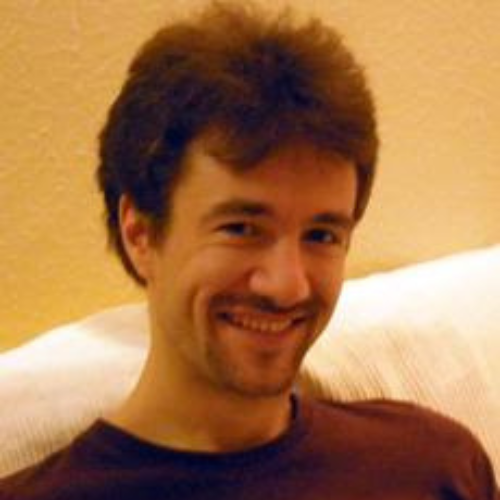
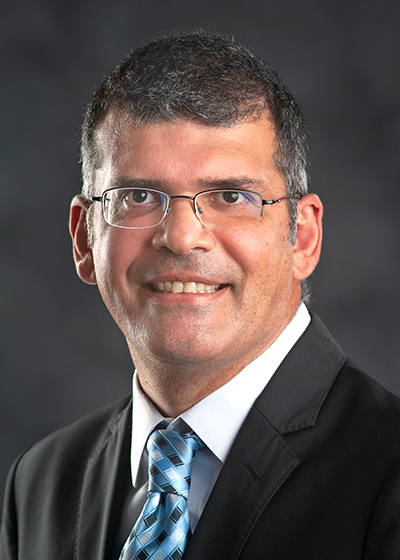
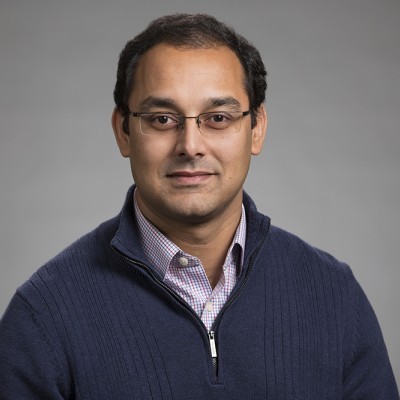
Stéphane Bonhomme is the Ann L. and Lawrence B. Buttenwieser Professor of Economics and the College at the University of Chicago's Kenneth C. Griffin Department of Economics. His research focuses on microeconometrics, econometric theory, and labor economics, with emphasis on latent variable modeling and panel data analysis. He holds a PhD from the University of Paris I, Panthéon-Sorbonne (2005). Key contributions include methodologies for handling unobserved heterogeneity in panel data, nonlinear persistence in consumption dynamics, and bias reduction in econometric models. His work has been published in top journals like Econometrica, Journal of Econometrics, and the Journal of Political Economy. Recent research explores grouped patterns of heterogeneity, firm-worker sorting effects, and functional differencing in networks. He is a Fellow of the Econometric Society (2017) and has developed widely used Stata/Python packages for bias correction and discrete heterogeneity estimation.
Lindi Wahl is a Professor of Mathematics at Western University, holding a Canada Research Chair in Mathematical Biology. She teaches courses in applied mathematics, including AM2402a scheduled for fall 2025, and directs an active research group focused on mathematical biology. Her office is located in Room 267, Middlesex College, and she maintains regular office hours on Wednesdays from 3:30-4:30pm. Wahl's research spans multiple areas of mathematical biology with a particular emphasis on evolutionary dynamics. Her work employs mathematical models to understand microbial evolution, viral dynamics (especially HIV), disease modeling, and bioinformatics. She has developed innovative approaches to studying how mutations arise and spread in evolving populations, with applications ranging from antibiotic resistance to viral evolution. Her research group regularly collaborates with experimentalists across diverse biological disciplines. Analysis of Wahl's recent publications reveals a strong focus on evolutionary processes in microbial systems, particularly examining how mutation spectra, population bottlenecks, and selection pressures shape evolutionary trajectories. Her work increasingly integrates theoretical models with empirical data, especially in virology and microbial evolution. Significant themes include the dynamics of prophages in bacterial genomes, within-host viral evolution (particularly SARS-CoV-2), and the mathematical foundations of evolutionary rescue. Canada Research Chair in Mathematical Biology Premier's Research Excellence Award from the Ontario Ministry of Science, Technology and Industry Wahl mentors a substantial research group comprising PhD and MSc students, postdoctoral fellows, and undergraduate researchers. Her group has received significant funding from NSERC, the Canada Foundation for Innovation, and other major granting agencies. She has been instrumental in developing educational initiatives, including the 'Students as Partners' program at Western's Teaching Support Centre where she served as a Teaching Fellow from 2017-2021. Her research group maintains active collaborations with institutions worldwide and has produced numerous high-impact publications across mathematical biology disciplines. Wahl's research laboratory operates as a collaborative hub for mathematical biologists, with students working on diverse projects spanning theoretical neuroscience, epidemiology, evolutionary game theory, and bioinformatics. The group has developed specialized computational approaches for analyzing complex biological systems and maintains strong connections with experimental laboratories to validate theoretical predictions.
Alexander Schied is a Professor of Statistics and Actuarial Science at the University of Waterloo, holding the Munich Re Chair in Stochastic Finance and a University Research Chair. His research focuses on quantitative finance, probability theory, and stochastic analysis, with applications to risk measurement, financial modeling, and market microstructure. He co-authored the seminal textbook Stochastic Finance: An Introduction in Discrete Time (5th ed., 2025) and serves as Co-Editor of Finance and Stochastics . Before joining Waterloo, Schied held positions at the University of Mannheim, TU Munich, Cornell University, and TU Berlin. He earned his doctorate in mathematics from the University of Bonn. His work bridges theoretical advancements in stochastic processes with practical applications in finance, including robust optimization, model uncertainty, and high-frequency trading dynamics. His recent research explores rough volatility models , pathwise Itô calculus , and market impact games , with publications in top journals like Annals of Applied Probability and Mathematical Finance . His contributions to risk management and stochastic analysis have positioned him as a leading figure in mathematical finance. Awards & Roles: Munich Re Chair in Stochastic Finance (University of Waterloo) University Research Chair (University of Waterloo) Co-Editor, Finance and Stochastics Editorial Board Member: Applied Mathematics and Optimization , Mathematical Finance , and SIAM Financial Mathematics series Key Themes in Publications (2020–2025): Model-free portfolio theory and continuous-time optimization Rough stochastic volatility and Hurst parameter estimation Market impact dynamics and game-theoretic models Robust risk measures and optimization under uncertainty
Sarp Akcay is an Assistant Professor/Lecturer in the School of Mathematics and Statistics at University College Dublin (UCD). He holds an Ad Astra Fellowship and has prior postdoctoral roles including IRC Postdoctoral Fellow at UCD (2014–2016) and STFC Fellowships at the University of Southampton (2009–2012 and 2013–2014). His research focuses on general relativity, gravitational waves, and compact binary systems, with affiliations in the LIGO-Virgo Collaboration and LISA Consortium. Education: PhD in Physics from the University of Texas at Austin, and a Professional Certificate in University Teaching & Learning from UCD. Research interests include modeling gravitational waveforms for compact binaries, spin precession effects, and extreme mass ratio inspirals. He leads the TEOBResumS waveform model development and collaborates on LIGO/Virgo data analyses. Currently supervises one PhD student and three undergraduates in gravitational wave projects. Grants include the Ad Astra Start-Up Grant (2020–2025) and Irish Research Council funding for self-force research. Teaching includes modules on General Relativity, Vector Calculus, and Mathematical Modelling.
Dr. Reetam Majumder is an Assistant Professor of Statistics in the Department of Mathematical Sciences at the University of Arkansas's Fulbright College of Arts & Sciences. Research Focus: Develops statistical methods for environmental extremes, including spatial modeling of climate extremes, wildfire risk assessment, and hydrological forecasting. Combines traditional statistics with deep learning approaches. Publications: Recent work demonstrates strong focus on environmental applications of extreme value theory, including streamflow modeling under climate change, spatial optimization for fire management, and climate model bias correction. Research frequently employs semi-parametric methods and neural network approximations for complex environmental systems.
Samee U. Khan is a Professor in the Department of Electrical & Computer Engineering at Mississippi State University (MSU), affiliated with the Bagley College of Engineering. He holds a Ph.D. from the University of Texas (2007) and a B.S. from GIK Institute of Engineering & Technology (1999). His research focuses on optimization, robustness, and security of computer systems, with recent emphasis on quantum computing, edge/fog computing, and machine learning applications in neuroscience and cybersecurity. Key research interests include quantum algorithm development, edge computing architectures, and neuro-inspired systems. His work integrates quantum computing with traditional machine learning to address challenges in visual perception modeling and medical imaging analysis. He also explores fog computing frameworks for IoT and distributed systems, emphasizing security and efficiency in heterogeneous environments. Publications highlight advancements in quantum noise mitigation, hybrid quantum optimization, and brain-computer interface models. His contributions span simulation toolkits like iFogSim and frameworks for vehicular networks and blockchain-based resource management. Khan’s research bridges theoretical computer science with practical applications in smart homes, healthcare, and autonomous systems.
Aveek Dutta is an Associate Professor in the Department of Electrical and Computer Engineering at the University at Albany's College of Nanotechnology, Science, and Engineering. He co-directs the Mobile Emerging Systems and Application (MESA) Lab and holds a PhD in Electrical Engineering from the University of Colorado Boulder (2013), an MS from the same institution (2008), and a Bachelor of Technology from Kalyani University (2002). Dr. Dutta's research spans wireless communications, cognitive radio, signal processing, and radio astronomy. His work focuses on developing advanced techniques for interference cancellation, spectrum sharing, and signal processing in non-stationary wireless environments, with applications in 5G networks, radio astronomy, and vehicular communications. His publications demonstrate consistent focus on wireless system optimization, featuring recent work on reconfigurable intelligent surfaces, MU-MIMO capacity optimization, eigenwave multiplexing, and blockchain applications for spectrum management. Research often bridges theoretical foundations with practical implementations in communication platforms.
Abolfazl Safikhani is an Assistant Professor in the Department of Statistics at George Mason University. He holds a PhD in Statistics and Probability from Michigan State University and has held prior positions at Columbia University and the University of Florida. His research focuses on network modeling, high-dimensional statistics, spatiotemporal models, and applications in urban planning, neuroscience, and smart cities. He is an Associate Editor for Technometrics , Statistica Sinica , and Data Science in Science . He has contributed to advancements in statistical methodologies for time series analysis, including change point detection, transfer learning, and spatiotemporal modeling. His work bridges theoretical statistics with practical applications in urban growth prediction, healthcare (e.g., cancer drug response modeling), and transportation systems. Recent research trends include leveraging explainable AI for land use modeling, longitudinal omics data analysis, and structural break detection in high-dimensional systems. His publications span theoretical developments and real-world case studies, such as subway ridership during the pandemic and New York City’s taxi demand dynamics. Despite no listed awards, his editorial roles highlight his influence in statistical science. He actively mentors students and collaborates on interdisciplinary projects, emphasizing data-driven solutions for complex societal challenges.
Naveen Bansal is Professor in Marquette University's Department of Mathematical and Statistical Sciences, specializing in Bayesian statistics and stochastic modeling. Research develops Bayesian methods for queueing systems, multivariate analysis, and biostatistical applications including gene expression data. Recent publications focus on parameter estimation in Markovian and Erlang queueing models.
Kannappan Palaniappan is a Curators' Distinguished Professor in Electrical Engineering and Computer Science at the University of Missouri. His pioneering work spans computer vision, high-performance computing, and biomedical image analysis, with applications from molecular microscopy to satellite remote sensing. Received prestigious honors including NASA Public Service Medal for scientific visualization innovations and National Academies Jefferson Science Fellowship. Research interests include large-scale image analysis, geospatial visualization, biomedical imaging, and parallel computing algorithms. Developed foundational techniques for the Digital Earth visualization system and co-founded NASA's Visualization and Analysis Lab. Publications demonstrate extensive applications across scales from cellular neuroscience to Earth observation. Recent works focus on neural circuit modeling, high-performance computing frameworks, and interdisciplinary applications in neuroscience and geospatial analysis. NASA Public Service Medal National Academies Jefferson Science Fellowship Air Force Summer Faculty Fellowship Boeing Welliver Faculty Fellowship William T. Kemper Teaching Fellowship Secured research funding from NIH, NSF, NASA, and DoD laboratories. Holds patents for moving object detection and camera pose estimation technologies.
Professor Liangxiu Han is Professor of Computational Science at Manchester Metropolitan University's Department of Computing and Mathematics, where she also serves as co-Director of the Centre for Advanced Computational Science and Deputy Director of the ManMet Crime and Well-Being Big Data Centre. Her research focuses on developing novel approaches to big data analytics, machine learning, and AI, with applications in precision agriculture, healthcare, smart cities, and cybersecurity. Professor Han's research integrates fundamental and applied work in large-scale data processing, intelligent management of distributed systems, and mathematical modeling. Her current activities aim to provide intelligent ICT-based solutions for societal challenges in food security, healthcare, and sustainable urban development. Her recent publications demonstrate leadership in applying AI to medical challenges like Alzheimer's drug discovery and glaucoma diagnosis. The research combines Bayesian deep learning, computational chemistry, and neuropharmacology to develop innovative therapeutic approaches and diagnostic tools.
Archana Dubey is a Senior Lecturer at the University of Central Florida (UCF), affiliated with the College of Sciences. She joined UCF in 2001 and holds a PhD in Physics from Bhavnagar University, India (1998). Her postdoctoral research at Rensselaer Polytechnic Institute (RPI) and UCF focused on theoretical and computational studies in physics and materials science. She was promoted to Associate Professor with tenure in 2014 as part of UCF's annual promotions and tenure cycle. Her research interests include electronic structure calculations, nuclear quadrupole interactions, hyperfine interactions, and biomolecular systems such as hemoglobin and rhizoferrin. She employs first-principles methods like Hartree-Fock and density functional theory to investigate material properties at the atomic level. Dr. Dubey's publications span 1998–2013, covering topics such as coordination chemistry of metalloproteins, nuclear magnetic resonance phenomena in biomolecules, and magnetic thin films. Her work has been published in journals like BioMetals , Hyperfine Interactions , and Journal of Applied Physics . She currently supervises graduate and undergraduate students in research projects related to theoretical physics and materials science. Her lab focuses on interdisciplinary studies at the intersection of physics, chemistry, and biology.
Howard Gifford is an Associate Professor in the Department of Biomedical Engineering at the University of Houston, part of the Cullen College of Engineering. His research focuses on biomedical image formation and system design, particularly in medical imaging technologies such as PET/SPECT and X-ray imaging. He explores how humans extract information from images, emphasizing the optimization of imaging systems for decision-making in clinical settings. Dr. Gifford holds a Ph.D. in Applied Mathematics from the University of Arizona (1997) and a Bachelor’s in Applied Physics from Harvey Mudd College. Before joining UH in 2012, he was an Associate Professor of Radiology at the University of Massachusetts Medical School. His professional affiliations include SPIE and the Medical Imaging Perception Society. His research interests include task-based technology assessment, visual perception variability, and reconstruction algorithms for PET/SPECT. Key areas of application involve optimizing tomographic gamma-ray imaging and x-ray imaging for breast cancer detection. Recent work emphasizes model observers for medical image quality assessment and adaptive feature selection strategies. Dr. Gifford’s publications span model observer development, image reconstruction techniques, and optimization of imaging parameters. He currently offers postdoctoral research opportunities in medical imaging science.
Catherine Schuman is an Assistant Professor in the Min H. Kao Department of Electrical Engineering and Computer Science at the University of Tennessee, Knoxville, part of the Tickle College of Engineering. Her work focuses on neuromorphic computing, spiking neural networks, and AI-driven hardware-software co-design. She holds a Ph.D. and B.S. in Computer Science and Mathematics from the University of Tennessee (2015 and 2010, respectively). Research interests include neuromorphic systems, energy-efficient computing architectures, stochastic devices, and applications of neuromorphic computing in scientific domains like materials science and quantum materials. She emphasizes benchmarking frameworks (NeuroBench) and real-world applications such as radiation detection and control systems. Her recent publications (2023-2025) highlight advancements in neuromorphic hardware-software co-design, spiking reinforcement learning frameworks, and neuromorphic implementations for scientific computing. Notable contributions include frameworks like SpikeRL, NeuroPong, and the RISP neuroprocessor, emphasizing open-source tools for embedded neuromorphic computing. No scientific awards are explicitly listed in the provided information. She actively explores cross-disciplinary applications, including combustion control and materials discovery through AI-enhanced device design.
Lucas Lehnert is an Assistant Professor in the Department of Computer Science at the University of Saskatchewan, specializing in Artificial Intelligence and Reinforcement Learning (RL). His research focuses on how intelligent systems can learn to solve complex decision-making tasks through representation learning, abstraction mechanisms, and lifelong learning strategies. He also explores applications of AI/RL in scientific and engineering domains. Education: PhD in Computer Science (Brown University, 2021), MSc (McGill University, 2016), BSc (McGill University, 2014). Postdoctoral positions included Meta's FAIR team (2022–2024) and the Mila Quebec AI Institute (2021–2022). Research interests include reinforcement learning fundamentals, generative AI reasoning, exploration strategies, and reward-predictive representations. His work bridges model-based and model-free RL paradigms, emphasizing scalable and generalizable solutions. Awards include the Best Student Workshop Paper Award (2017) and an NIMH training grant in cognitive neuroscience. His research has been published in top conferences like NeurIPS, ICML, and ICLR. He advises graduate students in RL and collaborates on projects involving transformer-based planning, exploration algorithms, and multi-agent systems. Current work includes developing SearchFormer for efficient planning tasks and exploring maximum entropy exploration methods.