Cicek Cavdar is an Associate Professor at the School of Electrical Engineering and Computer Science (EECS) at KTH Royal Institute of Technology , Sweden. She leads the Intelligent Network Systems research group and specializes in Telecommunication Networks , with a focus on Beyond 5G/6G Mobile Networks , Energy Efficiency , and AI-Assisted Network Management . PhD in Computer Science (2009) from University of California, Davis and Istanbul Technical University Her research spans Cell-Free Massive MIMO , Reconfigurable Intelligent Surfaces (RIS) , UAV Communication Systems , and Green Network Technologies . She actively contributes to 6G Network Architecture and Non-Terrestrial Networks , including satellite and aerial systems. Recent publications highlight AI-driven network optimization for handover management, energy-aware resource allocation , and multi-agent reinforcement learning in complex communication environments. She teaches advanced courses in Communication Systems , Machine Learning , and Software Engineering at KTH.
Per Krusell is Professor of Economics at Stockholm University and holds the Torsten and Ragnar Söderberg Chair at the Institute for International Economic Studies (IIES). He is a Fellow of the Econometric Society and served as President of the European Economic Association in 2020. He is currently the Secretary of the Prize Committee for the Sveriges Riksbank Prize in Economic Sciences in Memory of Alfred Nobel. Education: PhD in Economics, University of Minnesota Research Interests: Per Krusell’s research spans macroeconomics , inequality , climate economics , labor markets , and political economy . He has made foundational contributions to understanding incomplete markets, wealth distribution, optimal taxation, and the macroeconomic effects of climate change. His work often integrates dynamic stochastic general equilibrium (DSGE) models with heterogeneous agents to study long-run outcomes and policy impacts. Publications Trend: His recent publications (2022–2025) reflect a strong focus on climate policy , integrated assessment modeling , and macro-labor dynamics . Key themes include carbon taxation, labor supply responses to productivity growth, fiscal multipliers in heterogeneous-agent settings, and the macroeconomic consequences of vaccination and epidemic control. Awards & Honors: Fellow of the Econometric Society Torsten and Ragnar Söderberg Chair in Economics President, European Economic Association (2020) Secretary, Nobel Prize Committee in Economic Sciences Advising & Grants: While specific student names are not listed, his leadership roles in global economic associations and policy committees indicate extensive academic advising and grant involvement in macroeconomic policy and climate economics. Labs & Teams: He is affiliated with the Institute for International Economic Studies (IIES) at Stockholm University, a leading research institute in macroeconomics and international economics.
Henrik Sandberg is a Professor at the Division of Decision and Control Systems , KTH Royal Institute of Technology , Stockholm, Sweden. He holds the title of Deputy Head of Division and is affiliated with the School of Electrical Engineering and Computer Science . Education: MSc in Engineering Physics (1999) PhD in Automatic Control (2004) from Lund University Postdoctoral position at Caltech (pre-2007) Research Interests: Focus on cyber-physical systems security , power systems , model reduction , and fundamental limitations of control systems . Key sub-areas include attack detection , networked control , privacy-preserving estimation , and resilient control architectures . Publications: Over 150 papers across IEEE Transactions and Automatica , covering topics like stealthy attacks , distributed control , LQG optimization , and thermodynamic costs in filtering . Recent work includes LWE-based encrypted control and Bayesian deception mechanisms . Scientific Awards: Best Student Paper Award Finalist at IEEE CASE 2014; Best Student-Paper Award at IEEE CDC 2004. Grants & Projects: Leads the DYNACON project (WASP Cybersec cluster) and collaborates on CERCES (critical infrastructure resilience). Serves as examiner for multiple advanced courses in cybersecurity and control systems. Contact: Email: hsan@kth.se Phone: +46 (0)8 790 7294 Room: A:607, Malvinas Väg 10, Stockholm
Mikael Thollesson is a Senior Lecturer at Uppsala University, affiliated with the Department of Organismal Biology; Systematic Biology and Klubban’s Biological Station. His research focuses on evolutionary biology, phylogenetics, taxonomy, and molecular biology, particularly in marine and freshwater sponges (Porifera), bacterial pathogens, and computational methods in evolutionary analysis. Evolutionary Biology Marine Biology Taxonomy His recent publications highlight trends in sponge biodiversity, phylogeography, bacterial horizontal gene transfer, and mitochondrial gene evolution. Key articles include studies on Swedish demosponge faunas, Silene sect. Arenosae systematics, and computational tools like SPRIT for detecting gene transfers. No explicit awards or grants are mentioned.
Martin Jakobsson is a Professor of Marine Geology and Geophysics at Stockholm University's Department of Geological Sciences. His career spans international research expeditions and leadership roles, including Dean of Earth Science (2021) and Head of Department (2012-2018). A key member of the Marine Geology group, he studies Arctic and Antarctic glacial history through sediment analysis and seafloor mapping. PhD from Stockholm University (2000) Academy Fellow, Royal Swedish Academy of Sciences (2004-2009) Professor II position at University Centre of Svalbard (2011-) His research focuses on marine geological archives to reconstruct glacial cycles, ice-ocean interactions, and bathymetric mapping. As GEBCO Vice-Chair (2013-2020), he led initiatives for global seabed mapping through the Seabed 2030 project. Recent publications reveal expertise in: Arctic Ocean paleocirculation Methane release from thawing permafrost Ice sheet sensitivity to oceanic warming High-resolution bathymetric analysis Scientific recognition includes: Election to Royal Swedish Academy of Sciences (2012) 1st Vice President, Royal Swedish Academy of Sciences (2016-2019) Membership in Norwegian Scientific Academy for Polar Research (2016) He leads international collaborations on polar research vessels, with over a year of cumulative ship time and multiple Co-Chief Scientist roles on Arctic expeditions.
Lina Bertling Tjernberg is a Professor at the Department of Electrical Engineering, KTH Royal Institute of Technology, and Deputy Head of the School of Electrical Engineering and Computer Science (EECS) with responsibility for research conditions and impact. She served as Director of KTH's Energy Platform during 2018-2024 and holds memberships in IVA (Swedish Royal Academy of Engineering Sciences) and the IEEE Power & Energy Society. Research Focus: Applying mathematics (statistics, optimization, life cycle assessment) to enhance reliability and predictive maintenance in electric power systems, with emphasis on future electricity grids integrating microgrids, battery storage, HVDC, nuclear/pumped/hydro/wind/solar power, hydrogen, and electrified transport. Collaborations: Engaged with Comillas Pontifical University (Madrid), Addis Ababa University, Norwegian University of Science and Technology (NTNU), and IEA Wind. Key Research Trends: Recent articles highlight advancements in microgrid control (2025), SMR nuclear energy integration (2025), AI-driven asset management (2024), hydrogen sector coupling (2024), and renewable forecasting techniques (2024). Awards: 2021 Power Woman of the Year 2022 Energy Power List (Sweden’s top 20 energy influencers) Leadership Roles: Swedish Electromobility Center (SEC) board Chair of Swedish Electrical Standards (SEK Svensk Elstandard) Member, IEEE PES ISGT Europe steering committee
Kåre Synnes is a Professor in Pervasive and Mobile Computing at Luleå University of Technology, where he is affiliated with the Department of Computer Science, Electrical and Space Engineering. He is an active researcher and educator, recognized as an "Excellent lärare" (Excellent Teacher) and maintains his office in Luleå at location A3305a. Professor Synnes conducts research in pervasive computing and multimedia communication, with significant applications in eHealth. His work bridges theoretical computer science with practical implementations in distributed systems. He is also an affiliated researcher at the Centre for Distance-spanning Technology (CDT), focusing on technologies that enable communication across geographical boundaries. His recent publications demonstrate a clear trajectory toward sustainable computing solutions, with emphasis on circular economy applications, supply chain management, and environmental impact assessment. His research integrates computer science with economic and sustainability principles, showing how digital technologies can address contemporary environmental challenges through innovative auction systems, behavior analytics, and resource management frameworks. IST Prize winner as co-founder of Marratech AB Synnes has been deeply involved in European research projects since 1995, including multiple Framework Programme projects (FP4 through FP7). His work as an expert/reviewer for European projects since 2009 demonstrates his standing in the research community. His entrepreneurial success with Marratech AB, which was acquired by Google to form the basis for Google+ Hangouts, shows his ability to translate research into impactful commercial applications. Professor Synnes maintains strong connections with industry through his European project work and his entrepreneurial experience. His research group likely focuses on pervasive computing applications with real-world implementations, particularly in eHealth contexts, though specific lab details aren't provided in the available information.
Zhonghai Lu is a Professor of Electronic Systems Design (specializing in Dependable and Autonomous Systems) at KTH Royal Institute of Technology, part of the Department of Electrical Engineering in the School of Electrical Engineering and Computer Science (EECS). He serves as Program Director for KTH's Embedded Systems master's program and Director of Studies at the Division of Electronics and Embedded Systems. His research focuses on Network-on-Chip (NoC), computer architecture, embedded systems, and Prognostics and Health Management (PHM) of power electronics. He leads a research group exploring in-network processing and embedded intelligence, transforming passive networks into active computational frameworks. Lu holds a BSc from Beijing Normal University (1989), MSc and PhD from KTH (2002, 2007), and an MBA in Innovation and Growth from the University of Turku (2012). He has authored over 240 scientific papers, including journal articles and peer-reviewed conferences, with notable recognitions such as Best Paper Awards at NOCS’2015 and EU HiPEAC, and a Featured Paper in IEEE Transactions on Computers (2020). He serves as Associate Editor for ACM Transactions on Architecture and Code Optimization (TACO) and has chaired major conferences like HiPEAC’2017 and NOCS’2018. His research group’s recent work includes integrating AI into hardware acceleration, fault-tolerant neural networks, and RUL estimation for power electronics using recurrent neural networks. Lu has secured grants from the Swedish Research Council and Intel Corporation and developed courses like IL2230 (Hardware Architectures for Deep Learning) and IL2233 (Embedded Intelligence), pioneering embedded AI education at KTH. Education: BSc (Beijing Normal University), MSc/PhD (KTH), MBA (University of Turku) Awards: Best Paper Awards (NOCS, EU HiPEAC), Swedish Research Council Grants, Intel Research Gifts Labs/Teams: Research Group on In-Network Processing and Embedded Intelligence
Henrik Boström is a Professor of Computer Science specializing in Data Science Systems at the Division of Software and Computer Systems, KTH Royal Institute of Technology. His research focuses on trustworthy machine learning , with emphasis on conformal prediction (for confidence-calibrated predictions) and explainable AI . He is the developer of Python packages crepes (conformal classifiers/regressors) and xrf (explainable random forests). His primary research domains include: Developing robust methods for uncertainty quantification in predictive models Creating interpretable machine learning frameworks Optimizing ensemble techniques for high-dimensional data Applying ML to healthcare informatics and industrial diagnostics Analysis of his recent publications reveals strong emphasis on: (1) advancing conformal prediction theory for trustworthy AI, (2) enhancing interpretability of complex models like random forests and GNNs, and (3) developing efficient algorithms for uncertainty-aware learning in domains including healthcare, graph data, and high-dimensional regression. He serves as examiner for multiple degree projects and teaches courses including Programming for Data Science (ID2214) and Research Methodology and Scientific Writing (II2202) . He leads development of open-source tools for conformal prediction and model interpretation.
Luca Peretti is an Associate Professor in Electric Machines and Drives at KTH Royal Institute of Technology, affiliated with the School of Electrical Engineering and Computer Science and the Department of Electrical Engineering, Division of Electric Power and Energy Systems. He works as a researcher in the EMD (Electric Machines and Drives) group and serves as Partner Director for KTH's strategic partnership with ABB. Education: M.Sc. in Electronic Engineering (2005) from University of Udine, Ph.D. from University of Padova (2008) Professional Experience: Postdoc at University of Padova (2009-2010), Principal Scientist at ABB Corporate Research (2010-2018), Associate Professor at KTH (2018-present) His research focuses on: Automatic parameter estimation in electric machines Multiphase drive systems Sensorless control algorithms Loss segregation in drive systems Condition monitoring of industrial and transportation applications Recent publications demonstrate expertise in variable phase-pole machines, harmonic plane decomposition, predictive control algorithms, and advanced modeling of permanent magnet motors. Key application areas include transportation electrification, wind energy systems, and industrial drive technologies. Scientific roles include: Associate Editor, IET Electric Power Applications Journal (2019-present) Theme Co-Leader, Swedish Electromobility Center (2020-present) Member, IEEE (2021-present) and IET (2006-present) He leads the strategic partnership with ABB and contributes to doctoral program committees at University of Padova.
Pan Xu is a tenure-track assistant professor with joint appointments in the Department of Biostatistics & Bioinformatics, Department of Computer Science, and Department of Electrical & Computer Engineering at Duke University. Previously, Xu was a Postdoctoral Scholar Research Associate at Caltech's Department of Computing and Mathematical Science and earned a Ph.D. in Computer Science from UCLA. Xu's research focuses on developing computationally- and data-efficient machine learning algorithms with strong empirical performance and theoretical guarantees. Xu's research interests center around Machine Learning with broad applications in Artificial Intelligence, Data Science, Optimization, Reinforcement Learning, and High Dimensional Statistics. The research specifically targets real-world problems in Bioinformatics and Healthcare, with recent work emphasizing distributionally robust decision making, efficient exploration strategies, and multi-agent systems. Xu has developed novel algorithms that address the challenges of exploration in sequential decision making and robustness to distributional shifts between training and deployment environments. Xu's recent publications demonstrate a strong trend toward developing theoretically grounded yet practical algorithms for reinforcement learning and bandit problems, with particular emphasis on distributionally robust methods, efficient exploration techniques, and applications to healthcare. The work spans both theoretical analysis (providing minimax optimal regret bounds) and practical implementations (validated on benchmarks like Atari games and real healthcare datasets). Whitehead Scholar award from Duke University School of Medicine (2023) Best Paper Award at ACM FAccT 2023 for Queer In AI paper PIMCO Postdoctoral Fellowship in Data Science (2022) TMLR Featured Certification (2023) NSF award on approximate sampling based exploration (2023) Xu actively mentors multiple Ph.D. students across Duke's Biostatistics & Bioinformatics, Computer Science, and Electrical & Computer Engineering programs, with several alumni now pursuing doctoral studies at top institutions. The research group has secured competitive funding including an NSF award for approximate sampling based exploration for sequential decision making. Xu serves as an action editor for TMLR and as an area chair for major conferences including ICML, NeurIPS, AAAI, ICLR, and AISTATS. Xu leads a dynamic research group focused on sequential decision making, with projects spanning theoretical algorithm development, implementation of practical systems, and applications to healthcare and bioinformatics. The group maintains active collaborations across Duke's medical and engineering schools, with recent work applying machine learning to epidemic forecasting during the pandemic.
Dean B. Carson is a researcher at Umeå University , affiliated with the Faculty of Medicine, Department of Epidemiology and Global Health , and the Arctic Research Centre . His work focuses on rural health systems, social care workforce challenges, sustainable rural development, and community-based approaches to healthcare and food security. Rural Health : Explores capacity-building in rural health research and medical education reform. Public Health : Analyzes service delivery models and co-creation frameworks for elderly care. Geography : Investigates spatial dynamics in northern peripheries, including food production networks and micro-urbanization. Recent publications (2024-2025) examine topics such as rural health research capacity frameworks , hospital-to-home transfer systems , and non-commercial food distribution networks . His studies often integrate theoretical models like Rural Nursing Theory and Beyond Periphery while emphasizing stakeholder engagement and policy translation. Grants and Collaborations : Funded by the Swedish Research Council Formas, American National Science Foundation (NSF), and Riksbankens Jubileumsfond. Collaborates with Arctic-FROST networks and Lifestyle Migration Hub researchers.
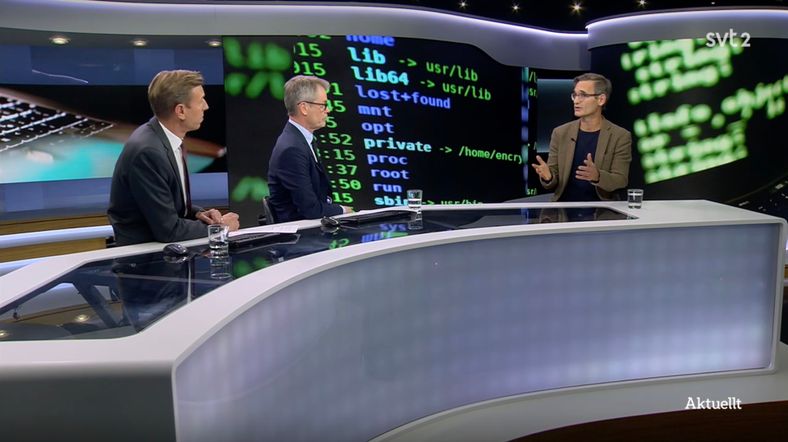
Pontus Johnson is a Professor at the KTH Royal Institute of Technology in Stockholm, Sweden. He leads the Center for Cyber Defense and Information Security (collaborating with Swedish Armed Forces, FRA, MSB, FOI, FHS) and serves as vice director of Cybercampus Sweden since 2024. His research focuses on cybersecurity , enterprise architecture analysis , and probabilistic threat modeling , particularly through his development of the Meta Attack Language (MAL) for simulating cyber attacks on networked systems. Education: MSc in Computer Science, Lund Institute of Technology (1997) PhD in Computer Science, KTH (2002) Docent title, KTH (2007) Leadership Roles: Director, Center for Cyber Defense and Information Security (2013–present) Vice Director, Cybercampus Sweden (2024–present) Board Member, Swedish Research Council (2025–present) Deputy Chair, Swedish Royal Academy of Engineering Sciences (IVA) Board (2024–present) His work spans cybersecurity research , attack simulation methodologies , and enterprise architecture frameworks . He has developed tools like securiCAD (acquired by Google) and pwnPr3d for probabilistic threat modeling. His 15 most recent publications highlight advancements in graph-based attack simulations , automated security assessments , and AI applications in cyber defense . Scientific recognition includes: Listed among Tech Awards Sweden's 50 Most Influential People in Swedish Tech (2022, 2023) Discovery of vulnerability in the Universal Turing Machine (2021) He supervises 16 PhD students and alumni (2005–2024), including Simon Gökstorp , Jakob Nyberg , and Sotirios Katsikeas . His academic service includes over 50 program committee roles and leadership positions in international conferences. He contributes to both academic and public domains through media appearances (SVT, Aftonbladet), courses in ethical hacking , and industry collaboration via his role at Google (20% of his time). His research group Software Systems Architecture and Security (SSAS) focuses on predictive security frameworks and system-of-systems analysis.
Johan Eklöf is a Professor at Stockholm University within the Department of Ecology, Environment and Plant Sciences . His research emphasizes marine ecology , focusing on interactions between marine biodiversity, environmental conditions (including climate), and societal impacts . He teaches courses such as Management of Aquatic Resources in the Tropics , Marine Ecology for the Biogeo Program , and Ecology II . Research Focus: Causal relationships between biodiversity and ecosystem resilience Foundation species as drivers of ecosystem services Optimizing resource management under climate change Projects: Principal Investigator for FORCE (2023-present), a transdisciplinary Baltic Sea recovery project Contributor to NordSalt (climate impacts on Nordic salt marshes) and PlantFish (Baltic Sea vegetation-fish interactions) Scientific Leadership : Supervises 2 current PhD students and co-supervises 6 additional PhD/postdocs Formerly mentored 4 PhD graduates and >40 MSc students Environmental Context: His work spans Baltic Sea and Western Indian Ocean ecosystems, using seagrass beds , mussel beds , and coastal benthic systems as primary models. Recent publications highlight climate change impacts on trophic cascades , habitat connectivity , and policy frameworks for marine conservation .
Xiaoming Hu is a Professor at the Division of Numerical Analysis, Optimization and Systems Theory within the Department of Mathematics at KTH Royal Institute of Technology (Kungliga Tekniska Högskolan) in Stockholm, Sweden. Born in Chengdu, China, he received his B.S. degree from University of Science and Technology of China in 1983, followed by M.S. and Ph.D. degrees from Arizona State University in 1986 and 1989 respectively. After serving as a research assistant at the Institute of Automation, Chinese Academy of Sciences (1983-1984), he was a Gustafsson Postdoctoral Fellow at KTH (1989-1990) before becoming a faculty member. His educational background includes: B.S. in Engineering, University of Science and Technology of China, 1983 M.S. in Engineering, Arizona State University, 1986 Ph.D. in Engineering, Arizona State University, 1989 Xiaoming Hu's research primarily focuses on multi-agent systems, nonlinear feedback stabilization, nonlinear observer design, and sensing and active perception. His work bridges theoretical control theory with practical applications in robotics and autonomous systems. He has made significant contributions to geometric control theory, mathematical systems theory, and nonlinear systems analysis and control. His research often involves developing theoretical frameworks for distributed control, formation control, and cooperative behavior in multi-robot systems. Professor Hu's publication record shows a consistent research trajectory with numerous high-impact publications in top-tier journals like Automatica, IEEE Transactions on Automatic Control, and Systems & Control Letters. His research has evolved from fundamental control theory to more applied problems in robotics and multi-agent systems, while maintaining strong mathematical foundations. Recent work shows increasing focus on safety-critical control, inverse problems in estimation, and networked systems. His scientific contributions include: Development of theoretical frameworks for multi-agent coordination and formation control Advances in nonlinear observer design for robotic systems Contributions to geometric control theory and systems theory Research on distributed estimation and control algorithms Applications of control theory to robotics and autonomous systems Professor Hu teaches several advanced courses including Mathematical Systems Theory, Geometric Control Theory, and Nonlinear Systems: Analysis and Control. He has supervised numerous degree projects at both undergraduate and graduate levels in mathematics, optimization, systems theory, and scientific computing. His teaching reflects his research expertise, providing students with both theoretical foundations and practical applications of control theory.