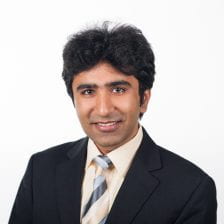
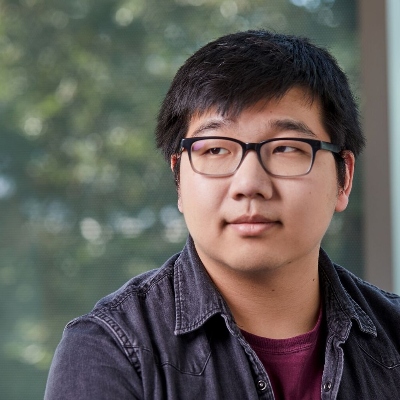
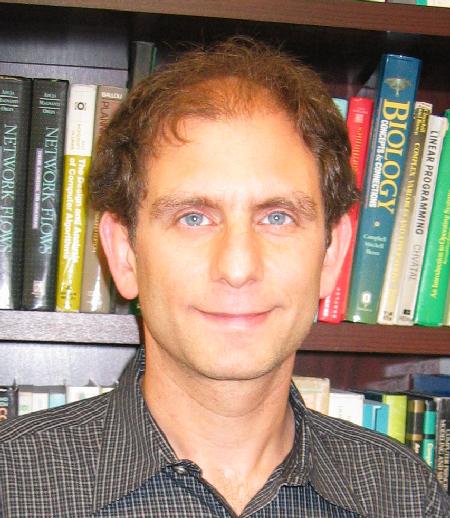
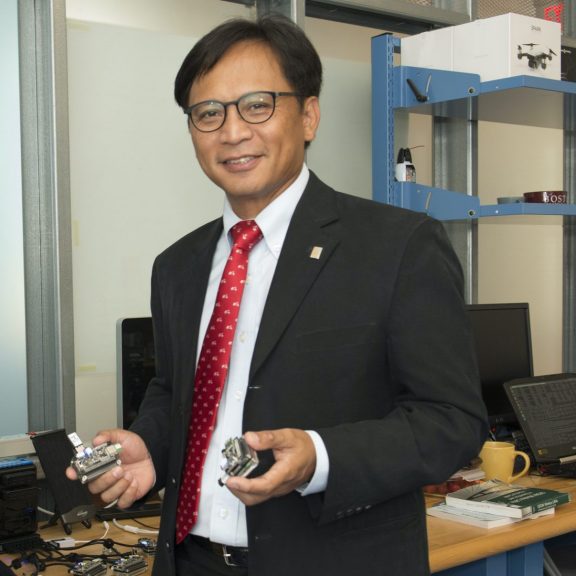
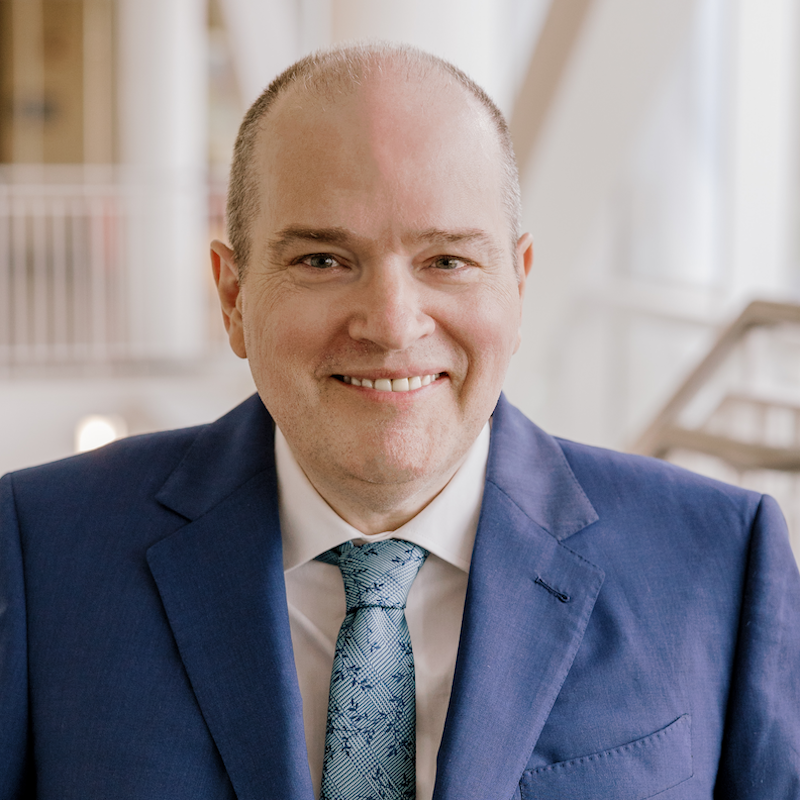
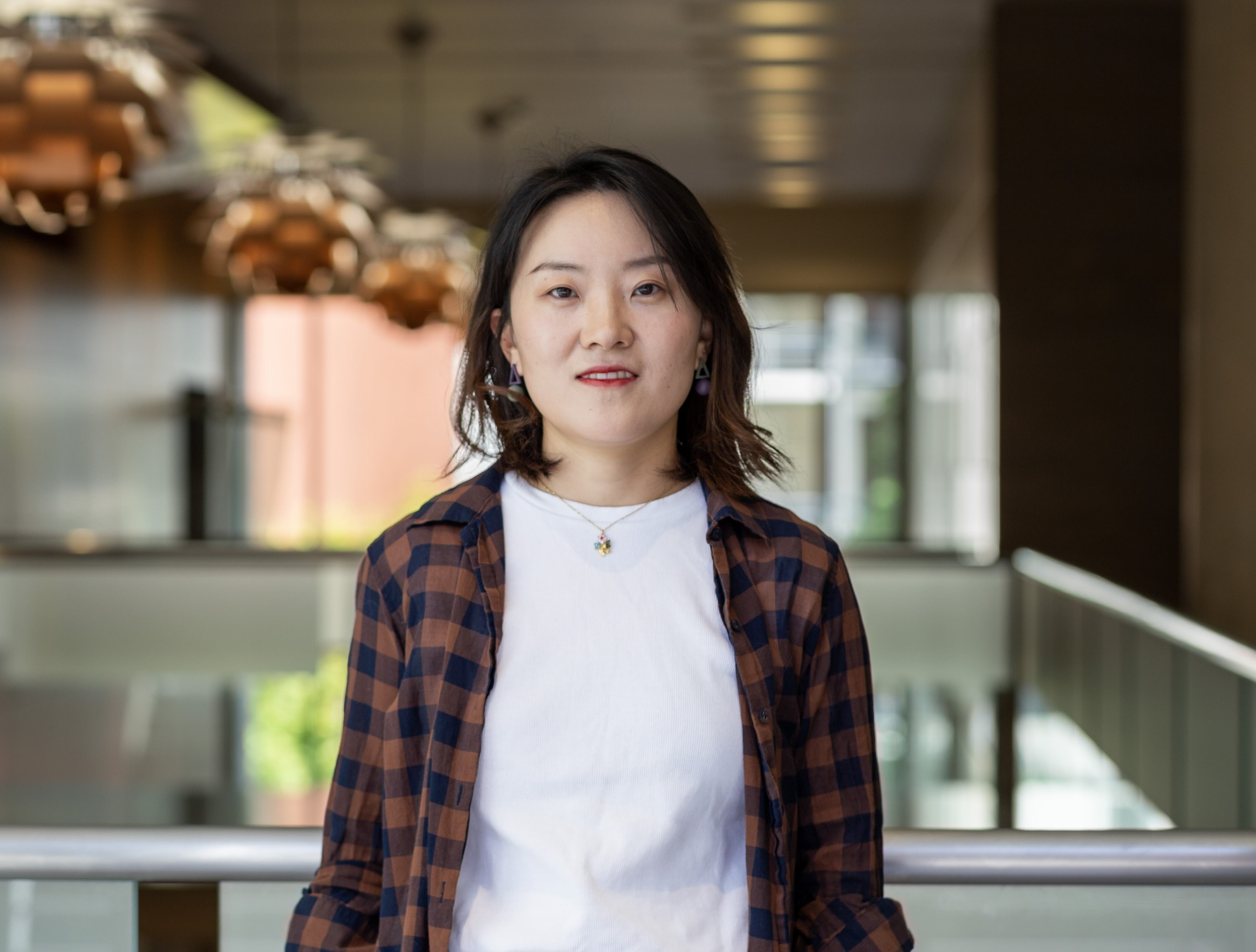
Renjie Feng is a Research Fellow in Mathematics and AI at the School of Mathematics and Statistics and the Sydney Mathematical Research Institute , University of Sydney. His work bridges probability theory, statistics, and applications in machine learning, deep learning, and artificial intelligence. His research interests focus on probability theory and its applications to machine learning , random matrix theory , and statistical physics . He investigates extreme value problems, spectral properties of random matrices, and topological features of random fields over Riemannian manifolds. Recent publications highlight trends in random matrix theory (GUE, GOE, GSE), extreme gap problems , determinantal point processes , and Wiener chaos . Collaborative works with F. Götze, D. Yao, and R. Adler emphasize U-statistics , multivariate linear statistics , and random topology inspired by Poisson point process studies.
University of Illinois Urbana-ChampaignUnited States
Dr. Jimeng Sun is a Health Innovation Professor at the Siebel School of Computing and Data Science and Carle Illinois College of Medicine at the University of Illinois Urbana-Champaign. Co-founder of Keiji AI , he leads groundbreaking research at the intersection of artificial intelligence and healthcare, actively deploying clinical AI systems and developing frameworks like PyHealth and Therapeutics Data Commons . His research spans four major areas: Clinical AI Systems : Developing interpretable models (e.g., RETAIN) for patient similarity, temporal event prediction, medication recommendation, and clinical outcome forecasting Drug Discovery : Creating molecular optimization frameworks, drug-target interaction models, and AI-driven platforms Clinical Trials : Pioneering patient-trial matching, outcome prediction, and optimization frameworks using deep learning and graph neural networks Biosignal Analysis : Advancing sleep staging, seizure classification, and automated EEG/Cardiac monitoring systems With over 500 top-tier publications (including in Nature , NEJM AI , and leading AI conferences) and an h-index of 99, his work has been recognized with the Top 100 AI Leaders in Drug Discovery and Advanced Healthcare award. He maintains active collaborations with institutions like Massachusetts General Hospital , Medidata Solutions , and OSF Healthcare . His recent publications reveal a strong focus on: Reinforcement learning applications in medical data analysis Large language model adaptation for clinical tasks Knowledge graph integration with AI systems Synthetic data generation for healthcare Multi-modal learning in clinical contexts Explainable AI for medical applications Dr. Sun's lab ( Sunlab ) emphasizes practical impact over theoretical work, actively collaborating with hospitals and healthtech companies. He welcomes contributions from clinicians, researchers, and industry partners through initiatives like his AI for Health webinar series .
Tushar Krishna is an Associate Professor in the School of Electrical and Computer Engineering at Georgia Institute of Technology, with a courtesy appointment in the School of Computer Science. He earned his PhD in Electrical Engineering and Computer Science from MIT in 2014, an MSE in Electrical Engineering from Princeton University in 2009, and a B.Tech in Electrical Engineering from IIT Delhi in 2007. His research spans computer architecture, interconnection networks, networks-on-chip (NoC), and AI/ML accelerator systems, with a focus on optimizing data movement in modern computing platforms. His work is funded by NSF, DARPA, IARPA, SRC, Department of Energy, Intel, Google, Meta, Qualcomm, and TSMC. His papers have been cited over 17,000 times, with three receiving IEEE Micro's Top Picks recognition, one earning an honorable mention, and four winning best paper awards. Dr. Krishna leads the Synergy Lab at Georgia Tech and has developed several influential tools including ASTRA-sim for distributed AI/ML training, MAESTRO and SCALE-sim for accelerator design space exploration, and Garnet2.0 for NoC simulation. His recent work focuses on large language model acceleration, distributed training systems, and neuro-symbolic AI architectures. He has received numerous teaching and research awards including induction into the HPCA Hall of Fame (2022), the Class of 1940 Teaching Effectiveness Award (2018), and the Roger P. Webb Outstanding Mid-career Faculty Award (2024). HPCA Hall of Fame Inductee (2022) Roger P. Webb Outstanding Mid-career Faculty Award (2024) Richard M. Bass/Eta Kappa Nu Outstanding Junior Teacher Award (2023) Roger P. Webb Outstanding Junior Faculty Award (2021) Class of 1940 Course Survey Teaching Effectiveness Award (2018) Dr. Krishna currently serves as Associate Director for the Center for Research into Novel Computing Hierarchies (CRNCH) and co-chair of the Chakra Execution Traces and Benchmarks Working Group. He has held the ON Semiconductor (Endowed) Junior Professorship at Georgia Tech (2019-2021) and has been a visiting professor at MIT EECS, Harvard University CS, and a researcher at Intel's VSSAD group.
Jiatao Gu is an Assistant Professor in the Department of Computer and Information Science (CIS) at the University of Pennsylvania, with a part-time role as Staff Research Scientist at Apple (MLR). He holds a Ph.D. in Electrical and Electronic Engineering from the University of Hong Kong (2018) and a B.Eng. in Electronic Engineering from Tsinghua University (2014). His research focuses on generative machine learning and AI agent interaction with the physical world, emphasizing multi-modal systems spanning language, images, videos, and 3D. Key themes include efficient modeling , flexible architecture design , and scalable decision-making frameworks . 2025: ICLR paper on DART framework 2024: TMLR work on GFlowNet alignment 2023: NeurIPS research on diffusion stability 2022: ACL papers on speech translation Recent publications explore diffusion models for text-to-image synthesis, 3D reconstruction, and efficient sampling techniques. His work addresses fundamental challenges in attention mechanisms, entropy collapse, and multi-stage distillation while advancing non-autoregressive translation and vision-language reasoning . Prospective students can apply through his recruitment process at UPenn. Prior affiliations include Meta AI (FAIR Labs) and academic collaborations with institutions like New York University's CILVR Lab.
Brian Lawrence is an Assistant Professor in the Department of Mathematics at the University of Wisconsin–Madison, currently on leave as of 2025. Previously, he held positions at UCLA, the University of Chicago, and Columbia University, following doctoral studies at Stanford University under Akshay Venkatesh. His educational background includes: PhD in Mathematics from Stanford University (advisor: Akshay Venkatesh) Lawrence's research centers on arithmetic geometry, specializing in Diophantine problems through p-adic methods. His work develops innovative approaches to Mordell's conjecture, Shafarevich-type results, and rational point distribution using p-adic Hodge theory, étale cohomology, and period mappings. He bridges theoretical number theory with computational frameworks, particularly in algorithmic solutions for Diophantine equations. His publication trends reveal sustained focus on foundational Diophantine geometry problems, with recent work emphasizing conditional algorithms for the Mordell problem and sparsity phenomena in integral points. Collaborations with leading mathematicians like Venkatesh and Sawin demonstrate interdisciplinary engagement across number theory and algebraic geometry. Lawrence actively mentors undergraduate researchers, supervising projects on resultants, Hodge theory, and symmetric polynomials by students including Pramana Saldin, Yuchen Chen, Anuj Sakarda, and Spencer Dembner. His organizational roles include founding the Crystalline Cohomology seminar at Columbia and co-organizing the University of Chicago Number Theory Seminar, fostering collaborative research environments. He contributes extensively through expository notes on schemes, polynomials on lattices, and Fibonacci numbers modulo p, reflecting commitment to mathematical education and knowledge dissemination across multiple institutions.
Clifford Stein is a Professor of Industrial Engineering and Operations Research (IEOR) and Computer Science at Columbia University, and Associate Director for Research at the Data Science Institute. He holds a Ph.D. (1992), M.S. (1989), and B.S.E. (1987) from MIT and Princeton University, respectively. His research focuses on algorithms, combinatorial optimization, operations research, scheduling, and computational biology. A co-author of the best-selling textbook Introduction to Algorithms , Stein has published widely in top venues and holds prestigious awards like ACM Fellow and NSF Career Award. His work includes foundational contributions to minimum cut algorithms, scheduling theory, and network optimization, supported by NSF and Sloan Foundation grants. Stein has advised over 40 graduate and undergraduate students, many now in academia and industry.
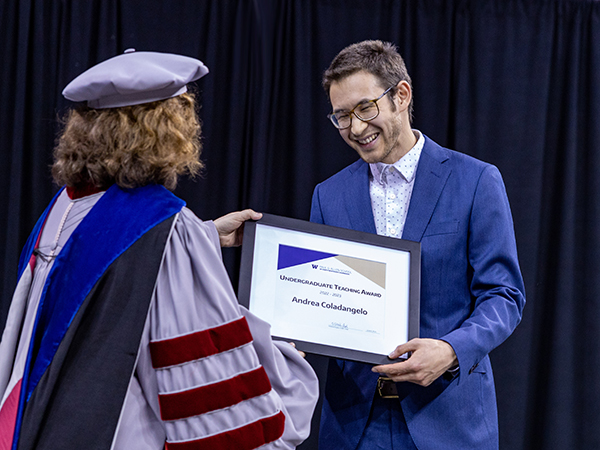
Andrea Coladangelo is an Assistant Professor at the Allen School of Computer Science & Engineering , University of Washington , co-leading the Quantum group and contributing to the Theory and Crypto groups. He coordinates the NSF-funded Quantum@UW REU program , fostering undergraduate research in quantum information. Previously, he was a postdoctoral researcher at UC Berkeley and the Simons Institute , advised by Umesh Vazirani , following a PhD in Computer Science at Caltech under Thomas Vidick . His academic journey began with a B.A. in Mathematics from Oxford and a Master in Mathematics from Cambridge . He co-founded qBraid , a platform for quantum computing education. Research Interests : Andrea explores the intersection of quantum computation and cryptography , focusing on foundational questions in entanglement , quantum correlations , and quantum learning theory . His work investigates quantum pseudorandomness , device-independent security , quantum algorithms , and quantum copy-protection , often leveraging computational assumptions to bridge quantum information theory with cryptographic applications. Scientific Awards : 2025 Google Research Scholar Program Award in Quantum Computing 2023 CSE Undergraduate Teaching Award for his course on quantum computation 2019 Best Student Paper Award at QIP Teaching & Outreach : Andrea designed and taught CSE 434: Intro to Quantum Computation (Spring 2023, 2024, 2025), CSE 534: Quantum Information and Computation (Autumn 2023), and CSE 599C: Quantum Learning Theory (Winter 2025). He also delivered lectures at the 22nd Bellairs Crypto Workshop (2024) and led a quantum programming tutorial using qBraid . Labs & Teams : As co-leader of the Quantum group at the Allen School, he collaborates with researchers in Theory and Crypto , advancing quantum computing through interdisciplinary projects and educational initiatives.
Massachusetts Institute of TechnologyUnited States
Moe Z. Win is the Robert R. Taylor Professor at the Massachusetts Institute of Technology (MIT), specializing in wireless communications, optical communications, and space communications systems. His research bridges theoretical and applied domains, including quantum sensing, network localization, and signal processing. B.S.E.E., Texas A&M (1987) M.S.E.E. & Ph.D., University of Southern California (1989, 1998) Recent work focuses on quantum-enhanced positioning, machine learning for localization, and next-generation (xG) non-terrestrial networks. He leads research at the Quantum neXus Laboratory (QX Lab), Wireless Information & Network Sciences Lab, and Laboratory for Information and Decision Systems. His career spans the Jet Propulsion Laboratory (1987-1995) and AT&T Research Laboratories (1998-2002). Key methodologies include soft information fusion, variational quantum sensing, and robust beam tracking for terahertz communications.
Florentina Bunea is a Professor in the Department of Statistics and Data Science at Cornell University’s Bowers College of Computing and Information Science, and an active member of the Graduate Fields of Statistics, Applied Mathematics, and Computer Science. She also serves on the Diversity and Inclusion Council of her college, championing workforce diversity in data-science disciplines. Education & Institutional Roles Professor, Department of Statistics and Data Science, Cornell University Member, Graduate Fields of Statistics, Applied Mathematics, Computer Science Member, Diversity and Inclusion Council, Bowers College of Computing and Information Science Research Interests Professor Bunea’s research lies at the intersection of statistical machine-learning theory and high-dimensional inference. She develops rigorous methodology supported by sharp theoretical guarantees to tackle core problems in modern data science. Recent themes include: Soft-max mixtures for understanding large-language-model/AI algorithms Optimal transport for high-dimensional mixture distributions Wasserstein-distance inference for sparse mixing measures in topic models Latent-space clustering and cluster-based inference in high dimensions Network modeling and hidden-structure inference Applications spanning genetics, systems immunology, neuroscience, sociology, and economics Research Funding & Awards Her work is supported by grants from the National Science Foundation (NSF-DMS). She is a Fellow of the Institute of Mathematical Statistics and a recipient of the IMS Medallion Award. Editorial & Service Contributions Associate Editor: Annals of Statistics, Bernoulli, JASA, JRSS-B, EJS, Annals of Applied Statistics Co-Editor: Chapman & Hall/CRC Statistics and Applied Probability Monograph Series Advising & Collaboration Professor Bunea has mentored numerous doctoral and post-doctoral researchers, including Xin Bing, Shuyu Liu, Seth Strimas-Mackey, and Yang Ning, among others. Collaborative projects extend across Cornell and external institutions, producing widely-used software packages and high-impact publications. Contact Office: 1184 Comstock Hall, Cornell University Email: fb238@cornell.edu Phone: (607) 255-8449
Larry Pileggi is the Coraluppi Head and Tanoto Professor of Electrical and Computer Engineering at Carnegie Mellon University (CMU). He is also the Department Head of CMU’s ECE Department and has held prior roles at Westinghouse Research and Development and the University of Texas at Austin. His work bridges academic research and industry innovation, with co-founding ventures like Fabbrix Inc., Extreme DA, and Pearl Street Technologies. Dr. Pileggi earned his Ph.D. in Electrical and Computer Engineering from CMU (1989), following an M.S. (1984) and B.S. (1983) in Electrical Engineering from the University of Pittsburgh. His research focuses on three core areas: secure integrated circuit hardware (mitigating supply-chain threats), integrated circuits design methodologies (supporting sub-20nm CMOS and heterogeneous technologies), and power systems simulation (developing robust grid analysis tools like SUGAR). He has been recognized with numerous awards, including the prestigious 2023 Phil Kaufman Award for contributions to electronic system design, and is an IEEE Fellow. His academic leadership includes fostering maker initiatives and interdisciplinary research programs to address future challenges in energy and computing systems. Pileggi’s advising record includes over 47 Ph.D. students, many of whom collaborate with him in industry ventures. Current and past grants support his work on resilient power grids and novel memory technologies, reflecting a commitment to both theoretical and applied research. His lab, the Pileggi Lab, develops cutting-edge solutions for energy and integrated systems, emphasizing scalable simulation, secure hardware design, and next-generation memory architectures. Collaborations span institutions like ETH Zurich and industry partners in EDA and semiconductor sectors.
Daniel Dominic Kaplan Sleator is a Professor of Computer Science at Carnegie Mellon University's School of Computer Science. He maintains an office in the Gates-Hillman Center (7205 Gates-Hillman) and teaches various courses in algorithms and theoretical computer science. Professor Sleator's research spans several areas of theoretical computer science and algorithms. His primary interests include: Algorithms and Data Structures Amortized Analysis and Competitive Analysis Persistent and Self-Adjusting Data Structures Computational Geometry and Combinatorial Optimization Combinatorial Game Theory and Mathematical Games Music Analysis using Computational Methods His extensive publication record shows a consistent focus on efficient data structures and algorithms. Over the years, his work has evolved from foundational data structures like splay trees and skew heaps to applications in diverse areas such as music analysis and combinatorial games. A notable trend in his work is the development of self-adjusting data structures that achieve excellent amortized performance without maintaining explicit structural constraints. His papers on splay trees, skew heaps, and persistent data structures have become classics in the field. Professor Sleator has made significant contributions across multiple domains of computer science. His work on competitive algorithms for paging and list update problems has been particularly influential, establishing fundamental results in online algorithms. His research extends beyond traditional computer science into interdisciplinary areas like computational music theory, demonstrating the broad applicability of algorithmic thinking. He teaches a variety of courses including Algorithms 15-451/651, Competition Programming 15-295, and specialized topics like mathematical games.
PD Dr. Christian Zillinger is a researcher at the Karlsruhe Institute of Technology (KIT), specifically within the Department of Mathematics. He leads the Junior Research Group "Stability and Instability in Fluids and Materials" (AP6) as part of the CRC 1173. His office is located at Kollegiengebäude Mathematik (20.30), room 2.024 in Karlsruhe, Germany. Dr. Zillinger obtained his PhD under the supervision of Herbert Koch at the University of Bonn. Following his doctorate, he served as an assistant professor (NTT) at the University of Southern California and was a postdoctoral fellow at BCAM (Basque Center for Applied Mathematics). He recently completed his habilitation thesis titled "On Mixing and Resonances in Fluid Systems" at KIT in 2023. Dr. Zillinger's research focuses on partial differential equations motivated by physical problems, particularly in fluid dynamics and material sciences. His work encompasses several key areas: Mixing as a (de)stabilizing mechanism in fluids and inviscid damping Cascades of resonances and instabilities in fluids and plasmas Convex integration and microstructures in materials, including rigidity and flexibility phenomena Magnetic fluids and magnetohydrodynamics Partial dissipation in the Boussinesq equations His recent publications demonstrate a strong focus on stability and instability phenomena in fluid systems, with particular attention to mathematical analysis of PDEs governing fluid behavior. He has made significant contributions to understanding echo chains, resonance phenomena, and damping mechanisms in various fluid models. His work bridges theoretical mathematics with applications in physics and materials science, often employing advanced analytical techniques to address challenging problems in nonlinear PDEs. Dr. Zillinger actively teaches courses at KIT, including "Klassische Methoden für partielle Differentialgleichungen" (Classical Methods for Partial Differential Equations), "Introduction to convex integration," "Introduction to Kinetic Equations," and seminars on microstructure in materials and fluid dynamics. He leads the Junior Research Group "Stability and Instability in Fluids and Materials" which is part of the Collaborative Research Centre (CRC) 1173 at KIT, focusing on wave phenomena. This research group investigates mathematical aspects of stability and instability in physical systems, with applications to fluid dynamics and material science.
Hans Beck serves as Professor of Greek History at the University of Münster (Westfälische Wilhelms-Universität) since 2018, with an additional appointment as Adjunct Professor in the Faculty of Arts at McGill University. His academic career includes previous positions as Professor of Ancient History and Director of Classical Studies at McGill University (2005-2018), Heisenberg Fellow at Goethe-Universität Frankfurt (2004-2005), and Research Assistant at the University of Cologne (1997-2004). Beck earned his academic training through doctoral studies at the Universities of Erlangen, Canterbury, and Cambridge (1989-1996), followed by a fellowship at the Center for Hellenic Studies in Washington, DC (2001-2002). His educational background reflects a strong international foundation in classical studies. His research spans multiple interconnected fields within ancient history, with particular emphasis on the history and culture of ancient Greece, historical geography of Greece, environmental studies of the ancient Greek world, political culture of the Roman Republic, and ancient historiography. Beck's work consistently explores themes of localism, federalism, and political structures across ancient societies, with notable contributions to understanding Greek city-states, regional identities, and comparative political systems. His approach often bridges geographical, historical, and cultural perspectives to examine how ancient communities organized themselves politically and maintained regional identities within larger frameworks. Analyzing his recent publications reveals a sustained focus on local political structures within broader contexts, particularly examining how Greek city-states maintained autonomy while participating in federal leagues. His work increasingly incorporates comparative approaches, connecting Greek political structures with those of Rome and even ancient China, reflecting his editorial work on cross-cultural studies. Beck demonstrates particular expertise in analyzing how physical landscapes shaped political organization and how religious practices reinforced regional identities. Fellow of the Royal Society of Canada (2018) Anneliese Maier Research Award from Alexander von Humboldt Foundation (2014) Heisenberg Fellowship from Deutsche Forschungsgemeinschaft (2004) Doctoral scholarship from German Academic Exchange Service (1995) Doctoral scholarship from Hanns Seidel Foundation (1994) Beck has supervised numerous doctoral students including Jordan Christopher (2022), Chandra Giroux (2021), Wentian Fu (2020), Rebecca Robinson (2017), Alex McAuley (2015), and François Gauthier (2015), covering diverse topics from ancient Qin and Macedon to cult practices in ancient empires. His academic leadership extends to directing research projects B3-49 'Belonging in/to Lakonia' and B3-40 'Localism and Religion in Ancient Greece' within the Excellence Cluster focusing on 'Religious Diversity and Legal-Political Unity.' As head of the project 'Belonging in/to Lakonia' and 'Localism and Religion in Ancient Greece,' Beck leads interdisciplinary research teams examining archaeological and historical evidence from the Sanctuary of Apollo at Amyklai and its surroundings. His work integrates textual analysis with material culture studies, creating comprehensive approaches to understanding ancient regional identities and religious practices. Beck's leadership in these projects demonstrates his commitment to bridging traditional disciplinary boundaries in classical studies.
Jieyu Zhao is an Assistant Professor in the Thomas Lord Department of Computer Science at the University of Southern California (USC), part of the Viterbi School of Engineering. She holds a Ph.D. from UCLA and was a NSF Computing Innovation Fellow at the University of Maryland. Her research focuses on fairness in machine learning and NLP, particularly addressing biases in AI systems and promoting ethical AI practices. Education: Ph.D. in Computer Science (UCLA, 2021), Postdoc at University of Maryland (2022-2023), and multiple research internships at Microsoft Research, Google Research, and AI2. She also completed her undergraduate studies at the University of Virginia. Research interests include bias detection and mitigation in NLP models, trustworthy AI, and social responsibility in technology. Her work has been recognized with awards such as the EMNLP Best Long Paper Award (2017), Microsoft PhD Fellowship (2020), and EECS Rising Star (2021). She has delivered talks at conferences like NeurIPS, EMNLP, and USC Law School, and serves on committees including AAAI workflow chair. Her lab explores topics like alignment of LLMs, fairness in sequential decision-making, and ethical model interventions. She actively participates in initiatives promoting diversity and inclusion in AI, such as the UN-WOMEN Beijing panel on gender equality. Awards: 100 Brilliant Women in AI Ethics (2025), Capital One Research Award (2024), Microsoft PhD Fellowship (2020) Grants: NSF Computing Innovation Fellowship, USC Viterbi funding Labs/Teams: Leads the USC Lab focused on trustworthy AI and ethical NLP
Renate Sachse is a Researcher at the Chair of Structural Analysis, Technical University of Munich (TUM), where she has worked since May 2024. Previously, she held postdoctoral positions at Harvard University's Bertoldi Lab (2024) and TUM's Chair of Computational Mechanics (2021-2024), following academic staff roles at the University of Stuttgart (2015-2020). Her interdisciplinary work bridges civil engineering, biomechanics, and computational modeling. Her educational foundation includes a Master's in Civil Engineering from the University of Stuttgart (2014; thesis: 'Isogeometric contact analysis of thin-walled structures') and a Bachelor's from the same institution (2011; thesis: 'A Primary School Pavilion for Magagula in South Africa - Structural Analysis'). She also completed ERASMUS studies at ESTP Paris and internships at Foster + Partners and Werner Sobek AG. Dr. Sachse's research centers on biomechanics and biomimetics, with pioneering work on plant-inspired structures. She investigates snapping mechanisms in carnivorous plants (Venus flytrap, waterwheel plant) to develop bio-inspired adaptive systems, soft robotics, and metamaterials. Her expertise spans motion design for large-deformation structures, isogeometric analysis, and hygroscopic actuation in 4D-printed materials, emphasizing computational modeling of contact mechanics and structural stability. Analysis of her 15 most recent publications reveals a dominant focus on biomechanics (60% of articles), particularly plant movement mechanics translated into engineering solutions. Her work consistently integrates computational structural analysis with biological principles, showing increasing emphasis on motion design (25% of recent output) and additive manufacturing applications (15%). Key trends include translating snap-buckling phenomena into robotics and developing material design spaces for responsive structures. Her distinguished awards include the Bertha Benz Prize (2022), Klaus Tschira Boost Fund Fellowship (2022-2024), and University of Stuttgart Publication Award (2022). Additional recognition comprises GAMM Juniors Fellowship (2020-2022), AVK Innovation Award (2017), and Emil Mörsch Study Prize (2014). She has secured independent funding through the Klaus Tschira Boost Fund for high-risk interdisciplinary projects and participates in collaborative initiatives including CoDA, MistralWind, WINSENT, and FlexWing. While teaching advanced courses at TUM (Advanced Finite Element Methods, Theory of Plates), her mentorship focuses on computational mechanics and biomimetic design principles. Currently based at TUM's Chair of Structural Analysis under Prof. Bletzinger, she maintains active collaboration with Harvard University's Bertoldi Lab in developing next-generation adaptive structures.