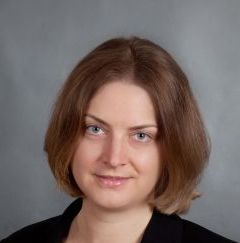
Dr. Mary E. Power is a Professor of the Graduate School at the University of California, Berkeley. She specializes in river ecology, focusing on algal-based food webs and their interactions with hydroclimatic regimes. Her research integrates field experiments and long-term monitoring in the South Fork Eel River, examining how flow variations and environmental conditions drive ecosystem state transitions. Primary Research Site: Angelo Coast Range Reserve (Mendocino Co., CA) Key Methodologies: In situ incubations, stable isotope probing, nanoSIMS analysis Current Focus: 2024- study of three alternative algal food web states during summer low flows Her work reveals critical thresholds where reduced summer flows and warming pools shift nutritious algal ecosystems toward toxic cyanobacterial dominance, impacting salmon and cross-ecosystem linkages. Selected Research Trends: Hydrological control of food web structure Cyanotoxin dynamics in river networks Climate change impacts on freshwater ecosystems Long-term ecological reconstructions via sediment cores Top-down and bottom-up regulation of river communities Her lab employs cutting-edge techniques to analyze microbiome elemental exchanges and successional patterns in Cladophora glomerata, a dominant green macroalga in the Eel River system.
Erica R.H. Fuchs is the Kavčić-Moura Professor in the Department of Engineering and Public Policy at Carnegie Mellon University (CMU), directing the Critical Technology Initiative (CTI). She holds courtesy faculty positions in Materials Science and Engineering and the Heinz College. Her research focuses on emerging technology development, commercialization, and global manufacturing, with emphasis on national policy implications. Fuchs leads interdisciplinary efforts at CTI to advance critical technology assessment frameworks, ensuring smart investments and policies for national security and economic competitiveness. Formerly, she directed the Manufacturing Futures Initiative, now an endowed institute at CMU. Education: She earned a Ph.D. (2006), M.Sc. (2003), and B.Sc. (1999) in Engineering Systems, Technology Policy, and Materials Science from MIT. Post-MIT, she was a UNIDO fellow in Beijing. Research Interests: Global innovation policy, technology commercialization pathways, and the intersection of technology with economic and security objectives. She authored influential works like the 2021 report *Securing America’s Future*, advocating for a National Technology Strategy to align multi-objective outcomes (security, equity, prosperity). Key Contributions: Catalyzed the National Network for Critical Technology Assessment, mobilizing 13+ universities to address technology gaps. Testified in Congress on supply chain resilience, EV battery policies, and semiconductor strategies. Advises entities like the National Semiconductor Technology Center and MIT’s Institute for Data, Systems, and Society. Affiliations: National Bureau of Economic Research (Research Associate), National Institute of Standards and Technology (NSTC Board), and Brookings Institution panelist. Her work is frequently cited in *Axios*, *Bloomberg*, and the *New York Times*.
Dr. Jessica Sunshine is a Professor in the Department of Geology at the University of Maryland. Her research focuses on planetary materials and processes, particularly using spectroscopy and morphological analysis to study comets, asteroids, meteorites, and lunar geology. She is a principal investigator on NASA missions such as the Double Asteroid Redirection Test (DART) and the Lucy Mission, contributing to breakthroughs in planetary defense and asteroid composition analysis. Dr. Sunshine holds a Ph.D. from Brown University (1994). Her work integrates field-based and remote sensing techniques, including thermal infrared spectroscopy, to explore topics like the origins of spinel-rich deposits on the Moon, the composition of Trojan asteroids, and the dynamics of impact ejecta. She leads the Lunar Vulkan Imaging and Spectroscopy Explorer (Lunar-VISE) mission to study non-mare volcanic regions on the Moon. Her recent studies include analyzing the DART mission's impact on Dimorphos, revealing insights into asteroid deflection mechanics and surface material responses. She has also contributed to understanding the geological history of Ceres and the compositional diversity of Jupiter Trojans through the Lucy mission's data.
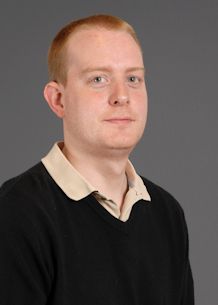
Jack Baker is the William Alden Campbell and Martha Campbell Professor of Engineering and Associate Dean for Faculty Affairs in the Stanford Doerr School of Sustainability at Stanford University. He is a Professor of Civil & Environmental Engineering with expertise in probabilistic and statistical tools for quantifying and managing disaster risk and resilience. His work has significantly influenced building codes, performance-based engineering guidelines, and catastrophe risk models. Dr. Baker's educational background includes: Ph.D. in Civil & Environmental Engineering from Stanford University (2005) M.A. in Statistics from Stanford University (2004) M.S. in Civil & Environmental Engineering from Stanford University (2002) B.A. in Mathematics/Physics from Whitman College (2000) His research focuses on disaster risk and resilience, particularly in earthquake engineering and seismic hazard analysis. Baker uses probabilistic and statistical approaches to analyze risk in spatially distributed systems, characterize earthquake ground motions, and simulate post-disaster recovery processes. His work bridges theoretical frameworks with practical applications in building codes and risk management strategies. He has made significant contributions to understanding the relationship between ground motion characteristics and structural response, while also expanding into climate-related hazards like atmospheric rivers and their compound effects. His recent publications demonstrate a growing focus on interdisciplinary research that connects engineering with socioeconomic factors in disaster contexts. There's a clear trend toward integrating machine learning techniques with traditional engineering approaches, particularly in modeling household displacement, economic recovery, and flood damage prediction. His work increasingly addresses the human dimension of disasters, examining how physical damage translates to social impacts and recovery timelines. Dr. Baker has received numerous prestigious awards recognizing his contributions to the field: William B. Joyner Lecture Award from the Seismological Society of America and Earthquake Engineering Research Institute (2023) PROSE Awards finalist for Seismic Hazard and Risk Analysis textbook (2022) Thorpe Medal from the European Council on Computing in Construction (2022) Walter L. Huber Civil Engineering Research Prize from the American Society of Civil Engineers (2018) CAREER Award from the National Science Foundation (2010) As an educator and mentor, Baker advises numerous doctoral and master's students while serving as Associate Dean for Faculty Affairs. His research group has secured significant funding for projects related to seismic risk, disaster recovery modeling, and infrastructure resilience. He has directed major initiatives like the Stanford Urban Resilience Initiative and co-founded the Haselton Baker Risk Group, demonstrating strong leadership in translating research into practical applications. Dr. Baker leads the Baker Research Group, which focuses on probabilistic approaches to disaster risk assessment and management. The group maintains active collaborations with government agencies, industry partners, and international research institutions to advance the state of knowledge in earthquake engineering and broader disaster resilience fields. Their work often involves developing innovative computational tools and frameworks that are made publicly available through GitHub repositories.
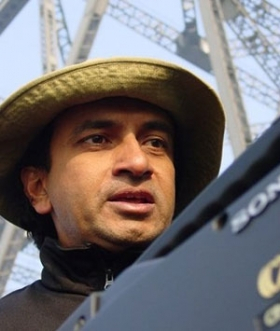
Sanjeev Chatterjee is a Professor at the University of Miami's School of Communication with primary appointments in the Department of Cinema and Interactive Media and secondary appointments in the Department of Journalism. He also serves on the faculties of the Salzburg Academy on Media and Global Change (since 2006) and the Young India Fellowship (since 2011). Chatterjee has been at the University of Miami since 1994, after previously teaching at Emerson College, Boston as an assistant professor starting in 1989. He earned his M.F.A. in Radio and Television from Brooklyn College in 1989 and an M.A. in English Literature from Delhi University in 1985. Chatterjee's research focuses on Documentary Media Making, Sustainability, Environment, and the Indian Diaspora. His work bridges academic scholarship with practical media production, creating documentaries that address global issues while serving educational purposes. He has developed numerous media projects that combine storytelling with social impact, particularly in the areas of water sustainability and cross-cultural understanding. His filmography demonstrates consistent engagement with environmental issues, particularly water resources, as seen in his acclaimed 'One Water' series and related projects. Chatterjee's work also explores urban environments, cultural identity, and diaspora communities, reflecting his interdisciplinary approach to media production. His documentaries have reached global audiences through film festivals, television distribution, and educational screenings worldwide. Fulbright Scholar (India) 2011 AMAP Prize at EcoVision film festival Best Environmental Feature Award at Artivist Film Festival Multiple Best Documentary awards at international film festivals King Award, Best of Festival at Broadcast Education Association Numerous technical merit awards for documentary production As an educator, Chatterjee has directed the University of Miami's semester abroad program in India (UIndia) since 2013 and founded the non-profit Media for Change in 2015. His administrative roles have included Vice Dean of the School of Communication (2006-2010) and founding Executive Director of the Knight Center for International Media (2007-2011). He has secured significant funding from organizations including the Knight Foundation, Florida Humanities Council, UNDP, UN Water, and the United States Institute for Peace to support his media projects. Chatterjee directs the University of Miami's semester abroad program in India and founded Media for Change, a Florida-based non-profit creating a global network of media changemakers. His work demonstrates a commitment to using media as a tool for social change, environmental awareness, and cross-cultural understanding.
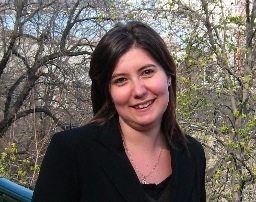
Prof. Tina Wakolbinger is a Professor at Vienna University of Economics and Business (WU) , where she serves as Deputy Head of the Institute for Transport Economics and Logistics and Head of the Supply Chain Management Research Institute. She also chairs the Senate and has led numerous research projects in supply chain management, humanitarian logistics, and the circular economy. PhD in Business Administration, Isenberg School of Management, UMASS Amherst (2007) Mag. in International Economics, University of Innsbruck (2002) Her research focuses on Supply Chain Management , with an emphasis on Humanitarian Logistics and the Circular Economy . She investigates how operational settings and disaster characteristics affect supply chain resilience, explores sustainable urban mobility solutions like electric scooters, and develops frameworks for resource allocation in disaster relief. She has published extensively on topics including disaster preparedness, outsourcing in humanitarian logistics, and the impact of digitalization on sustainable supply chains. Recent publications highlight trends in 2025 with strategic dependencies in supply chains, 2023 contributions to circular economy models and humanitarian logistics assessments, and 2022 analyses of pandemic-era supply chain disruptions. Earlier work includes studies on sustainable freight transport, e-waste management, and risk-sharing contracts. Scientific Awards Literati Award 2020 (Journal of Humanitarian Logistics) WU Cooperation Officer of the Year 2018 Talent promotion bonus of Upper Austria 2011 Best Paper Award 2008 (Fogelman College of Business) Graduate School Fellowship 2006 (UMASS Amherst) She has been involved in external positions such as Member of the Post Control Commission (2022–2027) and advisory roles for Caritas Österreich and Finland’s Strategic Research Council. Current projects include developing circular business models for timber supply chains and optimizing e-scooter fleet management in Vienna.
John Graham is a Professor at the School of Social Work, University of British Columbia Okanagan Campus. Former Director at UBC and Florida Atlantic University, his work spans social policy, spirituality in social work, multicultural practice, and homelessness prevention. Based in Kelowna, BC, he leads the Kelowna Homelessness Research Collaborative with over $1 million in funding. Ph.D. in Social Work (University of Toronto, 1996) MA (Queen’s University, 1990) MSW (University of Toronto, 1989) BA (Trinity College Toronto) His research integrates social policy analysis with community-based initiatives, focusing on employee well-being, multicultural social work frameworks, and Bedouin-Arab development studies. Current projects address homelessness reduction via the Journey Home initiative, combining spatial policy analysis with health interventions. Recent publications emphasize climate-related health risks for homeless populations, cross-sectoral partnerships, and spiritual dimensions in social work education. He has secured over $35 million in total research funding, with active projects targeting housing stability and community engagement. Fellow, American Academy of Social Work and Social Welfare (2022) Teaching Award for Graduate Student Mentoring (2014) As a mentor to over 100 graduate students, he bridges academic rigor with practical application. The Kelowna Homelessness Research Collaborative under his leadership prioritizes tier-one publications, interdisciplinary training, and policy advocacy.
Jia-Bin Huang is an Associate Professor in the Department of Computer Science at University of Maryland, College Park , with a secondary appointment at the University of Maryland Institute for Advanced Computer Studies . His work bridges computer vision , computer graphics , and machine learning . His research focuses on 3D scene reconstruction , neural radiance fields , generative models , and multimodal foundation models . He has made significant contributions to video super-resolution , text-driven 3D modeling , and inverse rendering techniques. 15 recent publications (2024-2025) at top venues: CVPR , NeurIPS , SIGGRAPH Asia , 3DV , and ECCV Pioneering work in Urban Scene Inverse Rendering , Generative Video Editing , and 3D Human Digitization He has received multiple awards including the 3M Non-Tenured Faculty Award , ETRA Best Paper , and NSF Grants . His lab trains 12 PhD students and has graduated 18 Masters/PhD students now at institutions like Stanford , Meta , and Google .
Dr Harry Munt is a Senior Lecturer in Medieval History at the University of York, specializing in the Islamic world (600–1500 CE), with particular focus on the Arabian Peninsula, holy cities, pilgrimage practices, and Arabic historiography. BA (Cambridge), DPhil (Oxford) Joined York in 2014 after British Academy Postdoctoral Fellowship at Oxford Research Interests Early Islamic Arabian Peninsula Origins of Arabic local history-writing Hajj pilgrimage development Economic history of Islamic Middle East Interfaith relations in medieval urban centers Contested processes of sacred space creation Recent Publications examine: Caliphal authority in ḥijāz economy Medieval Meccan historiography Hajj ritual evolution Local vs. universal historical narratives Awards British Academy Postdoctoral Fellowship Current Projects include a book on medieval Islamic local history-writing and its implications for understanding urban concepts and interfaith dynamics.
Mikael Rinne serves as Associate Professor in Rock Mechanics within the Department of Civil Engineering at Aalto University, Finland. Holding a Doctor of Science in Technology (D.Sc. Tech.), he brings extensive industry experience from Finnish and Swedish consulting firms (1988-2008) where he specialized in rock engineering and project management for tunneling and geological disposal of radioactive waste. His research focuses on rock and fracture mechanics with direct applications to rock engineering, mining, and tunneling. Current investigations center on digital characterization methods including photogrammetry, videogrammetry, and virtual reality systems for both practical engineering solutions and educational advancement. His work addresses critical challenges in fracture hydro-mechanics, rock mass characterization, and sustainable mining practices. Analysis of his 15 most recent publications (2023-2025) reveals a strong emphasis on digital transformation in rock mechanics. Key trends include non-contact surveying techniques for rock mass characterization, scale effects in fracture properties, and virtual learning environments for engineering education. His research bridges theoretical modeling with field applications in tunneling, mining, and radioactive waste disposal, demonstrating consistent innovation in measurement technologies and computational methods. No scientific awards were mentioned in the source materials. While specific advising details and grant information were not provided, his leadership of the Mineral-based materials and mechanics research group indicates active supervision of graduate students and management of research projects. His industry background suggests strong connections with tunneling and mining sectors for applied research collaboration. He directs the Mineral-based materials and mechanics research group at Aalto University, which develops advanced methodologies for rock characterization and engineering applications. Current initiatives integrate digital tools like smartphone LiDAR, 360-degree cameras, and virtual reality systems to enhance both field practices and educational outcomes in rock engineering.
R. Jayakrishnan , a Professor in the Department of Civil and Environmental Engineering at the Samueli School of Engineering , University of California, Irvine, is a leading researcher in transportation systems engineering. Ph.D., University of Texas, Austin, Civil Engineering, 1992 M.S., University of Texas, Austin, Civil Engineering, 1987 B.S., Indian Institute of Technology, Madras, India, 1985 His research focuses on dynamic traffic assignment , urban traffic simulation , and real-time information systems to improve congested traffic corridors. He is developing advanced dynamic simulation-assignment models for urban traffic networks. Recent publications highlight his contributions to: Crowdsourced delivery optimization using decomposition heuristics Eco-driving algorithms with V2I communication Multi-furniture placement applications via augmented reality Subscription mobility services cost-benefit analysis Agent-based lane-changing coordination systems These works demonstrate his interdisciplinary approach combining transportation engineering, optimization algorithms, and emerging technologies like AR and connected vehicles.
Adilson Motter is the Charles E. and Emma H. Morrison Professor of Physics and Astronomy and (by courtesy) Engineering Sciences and Applied Mathematics at Northwestern University. He serves as Director of the Center for Network Dynamics (CND) and has been a faculty member since March 2006. His academic appointments include affiliations with the Chemistry of Life Processes Institute (CLP), Molecular Biophysics Program, NSF-Simons National Institute for Theory and Mathematics in Biology (NITMB), Paula M. Trienens Institute for Sustainability and Energy, Graduate Program in Applied Physics, Center for Interdisciplinary Exploration and Research in Astrophysics (CIERA), Institute for Quantum Information Research and Engineering (INQUIRE), and Northwestern Institute on Complex Systems (NICO). Professor Motter received his Ph.D. in 2002 from UNICAMP (University of Campinas), Brazil, where he worked with Professor Patricio S. Letelier. Prior to joining Northwestern, he held positions as Guest Scientist at the Max Planck Institute for the Physics of Complex Systems in Germany and as Director's Funded Postdoctoral Fellow at the Center for Nonlinear Studies at Los Alamos National Laboratory. Professor Motter's research focuses on the dynamical behavior and control of complex systems and networks. His work spans theoretical and computational approaches to understanding phenomena in physical, biological, and engineered systems. Key research areas include: Cascading dynamics and network resilience Spontaneous synchronization and symmetry phenomena Network control theory and applications Quantum networks and information transfer Machine learning applications to network science Data-driven discovery in complex systems Applications to quantitative biology, biomedical research, renewable energy, smart power grids, microfluidics, and metamaterials Analysis of Professor Motter's recent publications reveals a strong interdisciplinary focus spanning physics, engineering, biology, and computer science. His work demonstrates consistent innovation in network science, with recent contributions advancing quantum networking architectures, understanding power grid limitations for electric vehicle integration, developing machine learning approaches for genetic analysis, and exploring fundamental synchronization phenomena. A notable trend is the increasing application of his theoretical frameworks to real-world challenges in energy systems, biomedical research, and quantum information technology. Professor Motter has received numerous prestigious awards and honors: Alfred P. Sloan Research Fellowship (2009) Weinberg Award for Excellence in Mentoring Undergraduate Research (2009) Northwestern-Argonne Early Career Investigator Award for Energy Research (2010) NSF Faculty Early Career Development (CAREER) Award (2011) Erdös-Rényi Prize in Network Science (2013) Fellow of the American Physical Society (2013) Simons Foundation Fellowship in Theoretical Physics (2015) Fellow of the American Association for the Advancement of Science (2015) Scialog Fellow (2015) Outstanding Referee, American Physical Society (2016) Fellow of the Network Science Society (2020) Senior Scientific Award, Complex Systems Society (2022) Professor Motter has demonstrated exceptional commitment to mentoring, as evidenced by the Weinberg Award for Excellence in Mentoring Undergraduate Research. His research group has received significant funding through multiple NSF grants, including his CAREER award, and collaborations with Argonne National Laboratory. Current research directions include mechanical metamaterial networks, quantum network science, and other areas of complex systems. The group has been actively recruiting postdoctoral researchers and has seen students recognized with awards and research grants. As Director of the Center for Network Dynamics (established September 2023), Professor Motter leads a multidisciplinary team exploring network phenomena across various domains. The Center has hosted significant events including the 'Brain Architecture and Computing 2024' workshop and is organizing the 2025 CDC Workshop on Neurocomputation and Dynamics in Rio de Janeiro. The Motter Group maintains active collaborations with experimentalists and researchers from diverse disciplines, facilitating the translation of theoretical insights into practical applications.
Dr. Silvia Bonomi serves as an Associate Professor in the Department of Computer, Control and Management Engineering at Sapienza University of Rome, where she has held academic positions since 2006. Her career progression includes Research Fellow (2010-2011), Tenure Track Assistant Professor (2016-2019), and current Associate Professor appointment since 2019. She maintains her office in Room B114 and is actively engaged in research and teaching within the university's engineering faculty. Her educational background includes: PhD in Computer Engineering, Sapienza University of Rome and Institut de Formation Supérieure en Informatique et Communication (IFSIC/IRISA), Rennes, France (completed under advisors Prof. Roberto Baldoni and Prof. Michel Raynal) Dr. Bonomi's research critically examines dynamic distributed systems where entities autonomously join and leave networks, with applications spanning VANETs, airborne networks, social networks, and distributed cloud services. She pioneers work in Byzantine fault tolerance for mobile environments, blockchain security with emphasis on smart contract vulnerability analysis, and resilient cybersecurity frameworks integrating human factors. Her investigations into publish-subscribe systems focus on quality-of-service enhancements, while her peer-to-peer systems research addresses fundamental connectivity challenges in large-scale decentralized environments. This interdisciplinary approach bridges theoretical distributed computing with practical cybersecurity applications. Analysis of her 15 most recent publications (2021-2024) reveals dominant trends in blockchain security (particularly smart contract vulnerability taxonomies and analysis tool efficacy) and fault-tolerant distributed systems (reliable communication under Byzantine faults in dynamic networks). Her work increasingly integrates human factors into cybersecurity models and develops visual analytics for business-centric risk assessment. Publications span top venues including IEEE CSR, OPODIS, SAFECOMP, and journals like Computers & Security, demonstrating consistent contributions to both theoretical foundations and practical cybersecurity implementations.
Zhibin Chen is an Assistant Professor of Engineering at NYU Shanghai and concurrently a Global Network Assistant Professor within the broader New York University system. Since January 2019 he has led research and teaching activities at the Division of Engineering and Computer Science in Shanghai, while maintaining university-wide collaborations through his Global Network appointment. Education Ph.D. in Transportation Engineering, University of Florida (2017) Research Interests Dr. Chen’s scholarship centres on Transportation Network Modeling and Optimization , Intelligent Transportation Systems , and Discrete Optimization . He integrates operations research, data science, and engineering to address emerging challenges in electric mobility, autonomous vehicles, and large-scale urban networks. Recent thrusts include: Data-driven analytics of electric-vehicle charging behaviour under usage heterogeneity. Optimization of charging and swapping infrastructure for electric buses and trucks. Network-level deployment and control strategies for connected and automated vehicles. Day-to-day traffic dynamics and equilibrium models with elastic demand. Pricing, policy, and incentive design for sustainable transportation systems. Scientific Awards Stella Dafermos Best Paper Award – awarded at the 95th Transportation Research Board Annual Meeting. Ryuichi Kitamura Paper Award – also conferred at the 95th TRB Annual Meeting. Editorial & Professional Service Dr. Chen currently serves on the Editorial Advisory Board of Transportation Research Part C: Emerging Technologies , shaping the editorial direction of the leading journal in his field. Grants & Collaborations While specific grant identifiers are not disclosed in the provided text, Dr. Chen’s extensive publication record in top-tier journals ( Transportation Science , Transportation Research Parts B, C, D , IEEE ITS , Applied Energy ) and his editorial role indicate sustained research funding and active collaboration with international partners across North America and China. Laboratories & Teams Operating within the Division of Engineering and Computer Science at NYU Shanghai , Dr. Chen leads a research group focused on next-generation mobility analytics, leveraging the university’s interdisciplinary ecosystem and NYU’s Global Network resources to advance smart and sustainable transportation.
Dengfeng Sun is a Professor and Associate Head of the Gambaro Graduate Program in the School of Aeronautics and Astronautics at Purdue University. His research focuses on distributed control systems, autonomy, resilient networks, and air traffic management. Sun holds a B.Eng. from Tsinghua University, an M.S. from The Ohio State University, and a Ph.D. from UC Berkeley. His work spans advanced air mobility, UAV trajectory planning, and stochastic optimization for large-scale systems. Key contributions include resilient UAV traffic control, distributed state estimation algorithms, and fault detection methods for navigation systems. Sun's research has been published in top journals like IEEE Transactions on Intelligent Transportation Systems and Transportation Research Part E. Education: B.Eng., Tsinghua University (2000) M.S., Ohio State University (2002) Ph.D., UC Berkeley (2008) He advises on cutting-edge projects integrating robotics, autonomous systems, and cloud-based traffic modeling. His lab develops solutions for urban air mobility, emergency medical UAV networks, and next-generation air traffic control systems. Notable collaborations include work with NASA and industry partners on continuous descent approach procedures and metroplex routing paradigms. Sun's work bridges theoretical control systems with practical applications in aviation and infrastructure optimization.