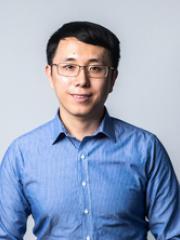
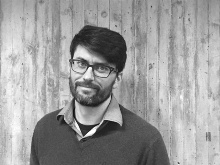
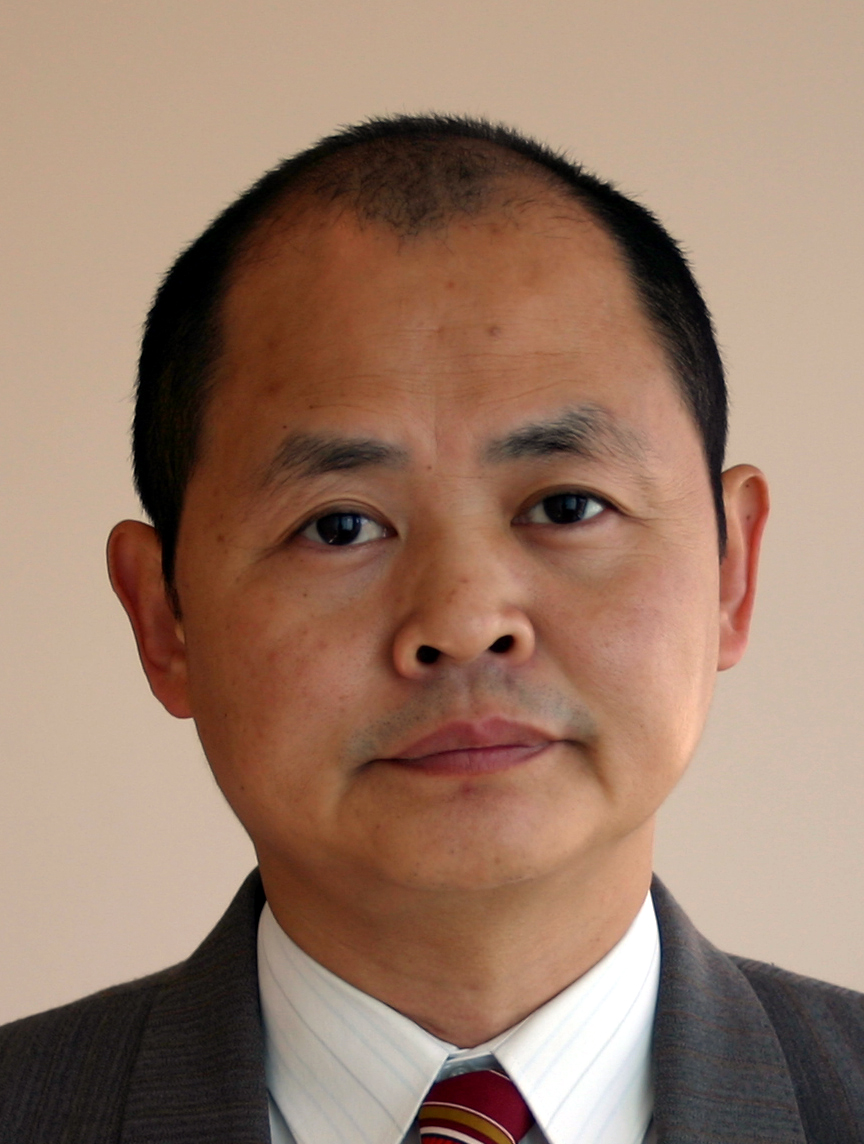
Dr. Da Chen is an Honorary Research Fellow at the School of Civil Engineering, The University of Queensland. His research focuses on composite structures, material mechanics, and structural analysis with applications in mechanical and civil engineering. Key Research Areas: Functionally graded porous materials, graphene reinforcement, multiscale modeling, thermal buckling, vibration analysis, and additive manufacturing. Publications: 28 journal articles, 4 book chapters, and 4 conference papers since 2014. Recent work includes machine learning applications for structural analysis and inverse design of porous systems. Email: d.chen@uq.edu.au
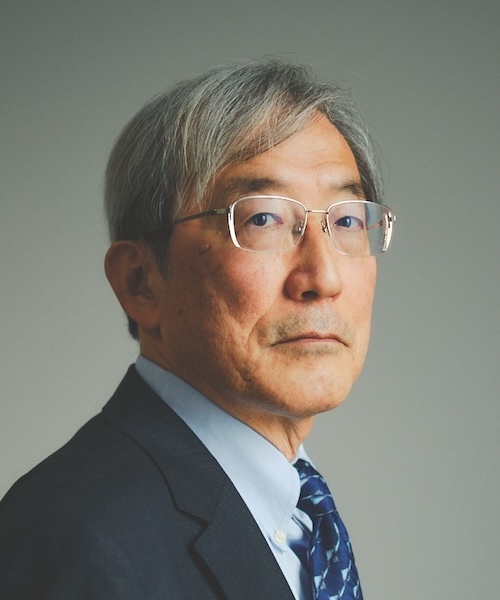
Hirofumi Matsuo is Professor of Operations Management and IIS Director at Tokyo International University. He holds a Ph.D. from MIT (1984), an M.E. (1979), and a B.A. (1977) from Kyoto University, both in Applied Mathematics and Physics. His academic appointments include professorships at Okayama Shoka University (2020-2021), Kobe University (2004-2020), University of Tsukuba (1999-2004), and University of Texas at Austin (1995-1999), where he advanced from Assistant to Associate Professor (1984-1995). His research focuses on Operations Management , Supply Chain Management , Service Operations , and Production Planning , addressing challenges in resilience, coordination, and optimization across high-tech, energy, and manufacturing sectors. His publications emphasize practical applications in semiconductor, automotive, and retail industries, with recurrent themes of risk mitigation and adaptive strategies. Awards include: JSPS Grants-in-Aid for Scientific Research (C) (five terms between 2000-2021) Fred H. Moore Centennial Professorship (1997-1999) Global Research Fellow at UT Austin's IC2 Institute (1988-2020)
Dr Hendrik Reefke is a Senior Lecturer and Course Director at the Cranfield School of Management , specializing in Logistics and Supply Chain Management . With academic experience across the UK, Germany, and New Zealand, Reefke's expertise spans Warehousing , Sustainable Supply Chain Management , and Service Supply Chains . He earned an award-winning PhD from the University of Auckland, along with MCom and BCom (Honours) degrees in operations and supply chain management. Academic Appointments: Senior Lecturer (Cranfield School of Management) Course Leadership: Director of Logistics, Procurement and Supply Chain Management MSc and Procurement and Supply Chain Management MSc Reefke's research focuses on Sustainable Supply Chains , with strong emphasis on decision models , maturity frameworks , and performance measurement . His work addresses contemporary challenges like geopolitical disruptions (e.g., Brexit impacts) and technological innovations in warehousing (e.g., mobile robots, micro-fulfillment centers). Key publication scientific_awards include: Award-winning PhD thesis on sustainable supply chain management Co-authorship in International Journal of Operations & Production Management (2023, 2020) Contributions to Springer and Routledge publications (2021–2019) His academic contributions also include consulting projects on Sustainable Transport in the UK, Health Supply Chain transformations in developing countries, and Supply Chain Trends analysis. Reefke actively welcomes empirical research students in sustainability-focused supply chains.
Jim Boerkoel is a Postdoctoral Associate with the Interactive Robotics Group at the Computer Science and Artificial Intelligence Lab (CSAIL) of the Massachusetts Institute of Technology . His research focuses on enhancing human-robot collaboration in industrial settings, particularly through a BMW-funded project to deploy mobile robot assistants in automotive manufacturing. His work combines AI and robotics to improve productivity, safety, and health for human workers. Key research areas include: Distributed constraint reasoning Multiagent coordination Automated planning and scheduling Temporal reasoning Human-agent interaction He earned his PhD at the University of Michigan , where he developed distributed approaches for constraint-based, multiagent scheduling.
Dr. Aniruddha Majumder is a Lecturer at the School of Engineering, University of Aberdeen, UK, since 2014. His academic journey includes a PhD in Chemical and Biomolecular Engineering from Nanyang Technological University (2011) and prior roles at Loughborough University, Purdue University, and Nanyang Technological University. Current Position: Lecturer, School of Engineering, University of Aberdeen (2014–Present) Past Roles: Research Associate (Loughborough), Visiting Scholar (Purdue), Research Assistant (NTU Singapore) Research focuses on: Crystallization (crystal shape control, enantiomer separation, polymorph control), Lattice Boltzmann Method (multiphase flow simulation), Biodegradation (anaerobic digestion), and Carbon Capture (adsorption process optimization). Recent work involves cellulose nanofiber applications and anti-fouling crystallizer design. Recent publications demonstrate expertise in: Pharmaceutical crystallization (2025: sulfathiazole nanocrystallization) Environmental remediation (2024: methylene blue removal via modified cellulose) Continuous manufacturing (2023: SM-PFC crystallizer simulation) Process modeling (2020: LBM for separation processes) Taught modules include Fluid Mechanics, Separation Processes, and Engineering Project. Collaborates with institutions in the UK, USA, and Belgium on topics like chiral resolution and sustainable chemical production. Scientific recognition includes: 2022/23 & 2017/18: Nominee for University of Aberdeen's Excellence in Teaching Award 2012: Best Poster Award (CMAC Open Day) Grants secured: Royal Society International Exchanges (2022, £12k), EPSRC CMAC Feasibility Study (2021, £59,893), and Binks Trust Fund (2018, £2.5k).
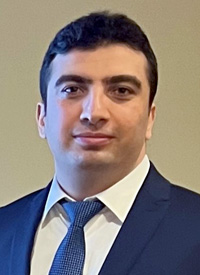
Najmaddin Akhundov is an Assistant Professor in the Decision Sciences and Marketing Department at the Robert B. Willumstad School of Business, Adelphi University. His expertise lies in operations research, with a focus on integer programming, stochastic optimization, and simulation-based methods applied to scheduling, logistics, energy systems, and risk management. Education: Ph.D., Industrial and Systems Engineering, University of Tennessee (2022) M.S., Systems Design Engineering, University of Waterloo (2015) B.S., Industrial Engineering, Baku Engineering University (2011) Research Interests: Dr. Akhundov’s research spans both methodological and applied domains. Methodologically, he advances integer programming , algorithmic development , simulation-based optimization , and stochastic programming . Application-wise, he tackles complex scheduling problems (staff, maintenance, power generators, production), reverse and last-mile logistics, evacuation planning, sustainable port management, and risk-informed maintenance planning. Recent publications (2019-2024) reveal a consistent trajectory toward integrating advanced optimization techniques with real-world operational challenges. Studies range from exploiting symmetry in job sequencing to configuring last-mile distribution networks, pricing risk in energy markets, and optimizing surveillance strategies against invasive species. Collectively, these works highlight a commitment to bridging theory and practice in operations research. Awards & Honors: INFORMS ENRE Best Publication Award in Natural Resources (2022) Harvey J. Greenberg Research Award – Honorable Mention, INFORMS Computing Society (2022) Graduate Fellowship Award, University of Tennessee (2018-2022) Best Graduate Presentation, Dana Knox Student Research Showcase (2018) Study Abroad Fellowship, Ministry of Education of Azerbaijan (2013-2015) Merit-Based Scholarships from Azercell Telecom and Baku Engineering University Teaching & Mentoring: At Adelphi, Dr. Akhundov teaches courses such as Management of Production/Operations and Statistical Methods, having previously taught Applied Operations Research, Optimization Techniques, and Mathematical Programming with MATLAB. While no specific advisees are listed in the provided text, his active research program and course offerings indicate ongoing engagement with both undergraduate and graduate students. Laboratories & Teams: While no dedicated laboratory is explicitly mentioned, his collaborative work with researchers from the University of Tennessee, University of Waterloo, and multiple international partners suggests participation in interdisciplinary research teams focused on optimization and logistics.
Oliver A. Bucklin is a Researcher and doctoral candidate at the Institute for Computational Design and Construction (ICD) at the University of Stuttgart. His work focuses on sustainable building practices, particularly the development of energy-efficient solid timber construction systems using computational design and advanced fabrication techniques. Master of Architecture (M.Arch) – Harvard Graduate School of Design Bachelor of Fine Arts in Ceramics – University of Washington His research explores the integration of thermodynamic principles, robotics, and computational models to optimize timber building envelopes. Additional interests include embedded electronics, sensing networks, and kinematic control algorithms. He contributes to teaching in computational design and robotic fabrication within the ITECH Master’s Program at the University of Stuttgart. Oliver’s projects include the IBA Timber Prototype House and the ITECH Research Demonstrator , emphasizing material efficiency and recyclability. He is part of the Performative Wood research group at ICD, advancing innovations in solid timber systems.
Karim Elasri is an Associate Professor of Finance at KEDGE Business School and Associate Researcher at CERGAM (Aix-Marseille Center for Management Studies and Research). He holds an engineering degree from Polytech Nancy and a PhD in Economics, Finance, and International Business from Aix-Marseille University with additional academic experience at Chalmers University (Sweden). Education : Engineering degree (Polytech Nancy), PhD (Aix-Marseille University), Academic exchange (Chalmers University) Research Focus : International finance, investment strategies, innovation strategy, and international business. His work connects behavioral biases with financial markets, explores co-creation in digital industries, and analyzes liquidity management in banking crises. Recent Publications : Examines AI adoption in auditing, Silicon Valley Bank's liquidity challenges, service co-creation models, and 5G frequency allocation policies. His research spans equity portfolio behavior, electric vehicle battery production, and distribution channel conflicts across global industries. Teaching Areas : Applies expertise in financial analysis to case studies covering stock market games, banking strategies, and international corporate positioning.
Dr. Christian Johannes Meyer is a researcher at the University of Oxford, serving as Director of the Oxford Martin Programme on the Future of Development. He is affiliated with the Department of Economics, Nuffield College, the Centre for the Study of African Economies (CSAE), and the Mind & Behaviour Research Group. His work integrates development, labor, and behavioral economics through field experiments in low- and middle-income countries, particularly Ethiopia and Germany. Meyer's research focuses on experimental methodologies to address economic behavior, labor market dynamics, and prosocial incentives. He has led studies on firm downsizing, pandemic impacts on female workers, and public commitment mechanisms in blood donation. His work often involves partner organizations like the World Bank and Center for Global Development. The 15 most recent articles demonstrate a focus on Ethiopia's ready-made garment industry, prosocial behavior incentives, and policy frameworks for shared prosperity. Key methodologies include field experiments, behavioral analysis, and data-driven development policy. Scientific Awards: Postdoctoral Prize Research Fellow, Nuffield College (2021-2014) Meyer co-founded Tabiya, a non-profit advancing digital public infrastructure for youth employment. He is also Co-Director of the Oxford Digital Public Infrastructure Research Lab, emphasizing technology's role in economic development.
Maarten Blommaert is an Assistant Professor at the Department of Mechanical Engineering, Faculty of Engineering Technology at KU Leuven. He leads the Applied Mechanics and Energy conversion (TME) unit at the Geel Campus and heads the Subdivisie EnergyVille TME. His research focuses on numerical optimization of thermal systems, particularly district heating networks, additive manufactured heat exchangers, and plasma-facing components for nuclear fusion reactors. Assistant Professor, KU Leuven Head, Subdivisie EnergyVille TME Member, KIES Institute Member, Leuven.AM Institute Member, EnergyVille Blommaert's research explores three main areas: heat network optimization through automated design tools like PATHOPT, additive manufacturing of high-performance heat exchangers, and thermally resistant wall modules for nuclear fusion reactors. His work combines computational modeling with advanced manufacturing techniques to enhance energy efficiency and reduce carbon emissions. Scientific awards include collaborative research contributions in: Optimizing district heating networks for renewable energy integration Developing next-generation heat exchangers Advancing nuclear fusion reactor technology Blommaert actively supervises research projects in thermal-fluid systems and collaborates with institutions like VITO and EnergyVille. His research team IDEAL (Innovative Design for Energy Applications Lab) specializes in free-shape and topology optimization techniques for energy components and systems.
Jean-Daniel Penot is a Researcher at CESI's Research and Innovation Department , with expertise in additive manufacturing, materials science, and industrial integration. His work bridges advanced manufacturing technologies with environmental sustainability and educational innovation. Doctorate in Materials Physics (2010) Engineering Degree in Physics (2007) Research Master in Optoelectronics (2007) Penot's research spans Additive Manufacturing and its applications in automotive, nuclear, and construction sectors. He focuses on Laser-Material Interaction , Machine Learning for process optimization, and Sustainable Engineering through life cycle assessments and geopolymer applications. His recent publications emphasize BIM , AM Modular Plants , and Defect Analysis in 3D-printed metals. Penot leads France Additive initiatives and contributes to International Standards as a board member. Penot supervises PhD students including Maryam Houhou and Amal Khabouchi , with a focus on Industrial Security and Energy Transitions . His projects integrate Thermal Comfort , Ultrasonic Inspection , and Quality Assurance in additive manufacturing systems.
Professor Gang-Ding Peng is a leading academic in photonics and optical communications at the School of Electrical Engineering and Telecommunications , University of New South Wales (UNSW). With over three decades of experience, his research focuses on silica and polymer optical fibers, fiber lasers, sensors, and photonic signal processing. Education: B.Sc. in Physics (1982, Fudan University), M.Sc. in Applied Physics (1984), Ph.D. in Electronic Engineering (1987, both Shanghai Jiao Tong University) Career: Lecturer at Shanghai Jiao Tong (1987-1988), Postdoctoral Fellow at Australian National University (1988-1991), UNSW Faculty since 1991, Queen Elizabeth II Fellow (1992-1996) Research Interests: Specialized in specialty optical fibers, nonlinear optics, and photonic devices. His work spans: Silica and polymer fiber amplifiers/lasers Electro-optic and liquid-crystal-doped fibers Multi-core fiber Bragg grating systems Photonic crystal fiber sensing 3D-printed optical components Quantum and neuromorphic photonic applications Scientific Awards: Queen Elizabeth II Fellowship (1992-1996) Fellow and Life Member of OSA & SPIE Supervision: Active mentor in Bi/Er co-doped fibers, 3D-printed optical fibers, and fiber sensing technologies.
Auday Al-Dulaimy is a Senior Lecturer at the Department of Information Science, School of Information and Engineering, Dalarna University. His teaching responsibilities include coordinating courses on Distributed Computing , Internet of Things (IoT) , and Internship in Data Science . His research focuses on cloud computing, IoT, and smart production systems. Distributed Computing (GIK2NX) Internet of Things (GMI2MD) Internship in Data Science (AMI23J) His recent publications explore trends in cloud-based services for smart production, fault tolerance mechanisms, and computing continuum architectures integrating IoT and cloud technologies.
Dr. Zoltán Kis serves as a Senior Lecturer (Associate Professor) in the School of Chemical, Materials and Biological Engineering at The University of Sheffield and holds an Honorary Lecturer position at Imperial College London's Department of Chemical Engineering. His research focuses on innovating disease-agnostic RNA vaccine and therapeutics manufacturing platforms through process digitalization and intensification. Dr. Kis earned his Ph.D. in Bioengineering from Imperial College London, complemented by an M.Sc. in Applied Biotechnology and a B.Eng. in Chemical with Biochemical Engineering. His interdisciplinary training bridges chemical engineering, biotechnology, and bioengineering disciplines. His research integrates experimental and computational methodologies to revolutionize mRNA production: Development of continuous enzymatic synthesis, purification, and LNP formulation processes Process intensification through novel unit operations and equipment design Digital twin deployment for real-time monitoring and control Techno-economic modeling to reduce production costs Quality by Digital Design framework implementation for regulatory compliance Analysis of recent publications reveals dominant trends in continuous bioprocessing and digital transformation of mRNA manufacturing. Key subfields include oligo-dT chromatography optimization, tangential flow filtration for mRNA purification, and digital twin applications for process control, with strong emphasis on pandemic-response capabilities and cost reduction strategies. Dr. Kis actively supervises PhD students in mRNA bioprocessing and teaches Biopharmaceutical Manufacturing (CPE336/CPE6043) and Introduction to Bioengineering (BIE103). His industry engagement includes advisory roles on Sanofi's mRNA CMC Board and Pfizer's mRNA Technology Advisory Board. He leads the RNA Manufacturing Innovation Team and has secured substantial research funding, including: £3.7 million CEPI grant for RNAbox platform (2024-2027) £7.6 million UK-SEA Vaccine Manufacturing Hub (2023-2028) £2 million Innovate UK project for automated RNA platform (2023-2025) Multi-million USD Wellcome Leap R3 grant for distributed RNA production His work demonstrates significant impact through industry partnerships, policy advisory roles including WHO mRNA Technology Transfer Hub consultancy, and leadership in advancing global vaccine manufacturing capabilities.
Davood Pourkargar is an Assistant Professor in the Tim Taylor Department of Chemical Engineering at Kansas State University. He is also a Graduate Faculty Member at the Food Science Institute and a Faculty Researcher at the Johnson Cancer Research Center. His work focuses on integrating data with first-principle models to understand complex systems across multiple scales. Ph.D. in Chemical Engineering from Pennsylvania State University (2015) M.S. in Process Simulation and Control from Sharif University of Technology (2010) B.S. in Chemical Engineering from Sharif University of Technology (2008) His research interests span computational multiscale modeling, digital twin development, applied artificial intelligence, and optimization-based control of complex process networks. Dr. Pourkargar's work integrates process systems engineering with artificial intelligence to address challenging problems in chemical, biological, energy, and food systems. He develops intelligent frameworks for controlling complex process networks, designing cyber-physical architectures for smart manufacturing, and advancing system identification using machine learning and process data analytics. A significant aspect of his research involves physics-informed machine learning applied to cancer dynamics modeling and drug distribution in the human body. Dr. Pourkargar's publication record shows a strong focus on predictive modeling and control of chemical processes, particularly ammonia synthesis systems, polysilicon reactor systems, and food extrusion processes. His recent work increasingly incorporates machine learning techniques, especially transformer architectures and physics-informed approaches, applied to both traditional chemical processes and emerging areas like organ-on-a-chip systems for drug discovery. 2024 Carl R. Ice College of Engineering Outstanding Assistant Professor Award NSF EPSCoR Research Fellowship 2023 Kansas EPSCoR First Award AFOSR Faculty Fellowship Big XII Faculty Fellowship Robert F. Smith School Distinguished Junior Researcher Award from Cornell University (2017) O. Hugo Schuck Best Paper Award (2014) Dr. Pourkargar has successfully mentored numerous graduate students through their master's and doctoral research, with several receiving departmental and college-level awards. His research has been supported by significant grants from the National Science Foundation, Kansas EPSCoR, and K-State's Global Food Systems initiative. His lab has presented extensively at major conferences including AIChE Annual Meetings and American Control Conferences. The Intelligent Systems and Process Systems Laboratory (ISPSL) led by Dr. Pourkargar operates computational and experimental facilities in Durland Hall. The lab is expanding into robotic additive manufacturing and autonomous biomanufacturing, supported by research infrastructure grants. The group maintains active collaborations with the Johnson Cancer Research Center and the Terasaki Institute for Biomedical Innovation.