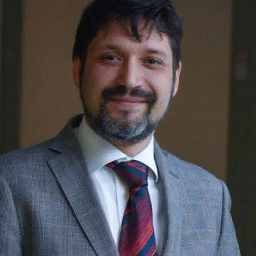
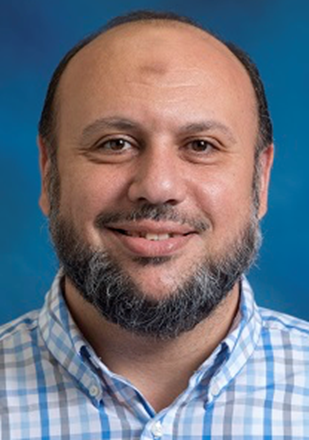
Dr. Gowri Sankar Ramachandran is a Senior Lecturer in the School of Information Systems at Queensland University of Technology (QUT), specializing in cybersecurity and distributed systems. She holds a PhD from KU Leuven (Belgium) and a postdoctoral position at the University of Southern California (USC). Her research focuses on open-source software security, runtime threat detection, blockchain applications, and IoT vulnerabilities. Notable contributions include the FUSE tool for detecting malicious packages and the discovery of hyperlink hijacking vulnerabilities affecting millions of domains. Research interests span software supply chain security, metadata-based risk analysis, and generative AI for cyber risk modeling. Awards include Best Paper Awards at ACM CBSE (2016), Mobiquitous (2017), and BigMM (2019). Collaborations include projects with CSIRO, the City of Los Angeles, and the University of São Paulo. She teaches courses on cybersecurity, database management, and network security, and actively supervises PhD students in cybersecurity and blockchain domains. Recent publications address blockchain-based data governance, quantum-resilient IoT protocols, and decentralized identity systems. Her work bridges academic research with real-world impact, addressing critical challenges in digital systems security and privacy.
Rasheed Hussain is an Associate Professor of Intelligent Network Security at the Smart Internet Lab and Bristol Digital Futures Institute (BDFI), School of Electrical, Electronic and Mechanical Engineering at the University of Bristol, UK. Previously, he served as a Senior Lecturer at the same institution from December 2021 to July 2025. He has held academic positions at Innopolis University, Russia, where he served as Associate Professor and Director of the Institute of Information Security and Cyber-Physical Systems, and as a guest researcher at the University of Amsterdam, Netherlands. His educational background includes a PhD in Computer Engineering from Hanyang University, South Korea (2011-2015), an MS in Computer Engineering from the same institution (2008-2010), and a B.Sc in Computer Software Engineering from the University of Engineering and Technology, Peshawar, Pakistan (2003-2007). Hussain's research focuses on network and cybersecurity, particularly future network security including 6G, the role of Digital Twins in future networks and systems security, and Responsible AI including fairness, trustworthiness, and explainability. His work spans information security, privacy, applied cryptography, vehicular networks, Internet of Things, Content-Centric Networking, cloud computing, API security, and blockchain applications. Senior member of IEEE Member of ACM ACM Distinguished Speaker Editorial board member for IEEE Communications Surveys & Tutorials, IEEE Access, and other journals His recent publications demonstrate a strong focus on the intersection of AI, networking, and security, with particular emphasis on Digital Twins, blockchain applications, federated learning, and 6G security. His research shows a clear trajectory toward addressing security challenges in emerging network architectures while incorporating responsible AI principles. Scientific Recognition: ACM Distinguished Speaker Netherlands University Teaching Qualification (Basis Kwalificatie Onderwijs, BKO) Hussain serves as a reviewer for major IEEE transactions, Springer and Elsevier journals, and participates in technical program committees for conferences including IEEE VTC, IEEE VNC, IEEE Globecom, and IEEE ICC. He is also certified as a trainer for the Instructional Skills Workshop (ISW) and contributes to the ESRC Centre for Sociodigital Futures (CenSoF) at the University of Bristol. His laboratory work centers around the Networks and Blockchain Lab, which focuses on security solutions for next-generation networks, with particular emphasis on Digital Twins security, blockchain applications, and AI-driven network security solutions. His current projects involve developing secure frameworks for future networks, trustworthy AI models, and privacy-preserving federated learning approaches.
Guido Perboli is a Full Professor in the Department of Management and Production Engineering (DIGEP) at the Polytechnic University of Turin, where he also serves as Logistics Coordinator and Project Coordinator for activities supporting relationships with government bodies. He is a member of the Interdepartmental Center CARS@PoliTO (Center for Automotive Research and Sustainable Mobility) and serves as Director of the ICT for City Logistics and Enterprises (ICElab@Polito) research center, which he founded in 2016. His research interests span a broad range of topics including Operations Research, Logistics, Last-mile Delivery, Sustainable Logistics, Combinatorial Optimization, Stochastic Programming, Business Development, and Lean Business methodologies. His work particularly focuses on City Logistics, Green Logistics, and the application of emerging technologies like Blockchain and AI in supply chain management. He has developed GUEST, a Lean Business methodology for innovation processes from early idea definition to implementation. Professor Perboli's recent publications demonstrate a strong focus on urban logistics, last-mile delivery optimization, blockchain applications in supply chains, and the integration of AI techniques in transportation systems. His work shows an increasing trend toward interdisciplinary research that combines optimization methods with emerging technologies to address sustainable urban mobility challenges. Professional Recognition: CASE Best Paper award from IEEE Conference on Automation Science and Engineering (2011) Effective member of INFORMS (2019-present) Effective member of EURO (1995-present) Effective member of AIRO (1995-present) Associate Editor for Journal of Applied Research and Technology (2020-present) Associate Editor for Sustainability (2018-present) Professor Perboli actively advises PhD students and has supervised numerous research projects, including EU-funded initiatives like SINFONICA, HESTER, and 5G-LOGINNOV. He serves as Scientific Director for multiple commercial research projects focused on blockchain, IoT, and AI applications in logistics. Beyond academia, he is Chief Scientific Officer of Arisk S.p.A., a fintech company specializing in business crisis prediction using AI and machine learning. His research group, ICElab@Polito, focuses on two main areas supporting urban growth: logistics and enterprises. The center collaborates with numerous companies including Amazon, DHL, and FCA, addressing real-world challenges in urban logistics and supply chain management through innovative research approaches.
Brett Hemenway Falk is a Researcher in the Department of Computer and Information Science at the University of Pennsylvania. He serves as director of the Crypto and Society Lab, focusing on privacy and security in digital environments and facilitating transparency and trust. His work combines rigorous mathematical approaches with practical implementations in cryptography and blockchain technology. Education: Sc.B. in Mathematics from Brown University Ph.D. in Mathematics from UCLA Research Interests include: Cryptography and secure multi-party computation protocols Blockchain technology (cross-chain interoperability, financial network stability, on-chain governance) Privacy-preserving algorithms and data security Coding theory applications in secure systems Scientific Contributions include: Developing practical secure computation protocols Advancing ORAM (Oblivious RAM) architectures Analyzing decentralized governance mechanisms Exploring DeFi network stability and token economics His teaching activities feature the popular MCIT 582 Blockchain course at Penn. Research funding comes from NSF, DARPA, IARPA, ONR, ARL, NIH , and the Laura and John Arnold Foundation.
Naranker Dulay is a Professor in the Department of Computing at Imperial College London, part of the Faculty of Engineering. He holds affiliations with the Centre for Cryptocurrency Research and Engineering, Centre for Smart Connected Futures, and the Distributed Software Engineering group. His research focuses on Distributed Computing, Applied Economics, Policy and Administration Law, Computer Software, and Information Systems. His work explores blockchain technologies, smart contracts, consensus algorithms, and distributed systems. Recent research includes optimizing post-trade processing using distributed ledgers and developing adaptive protocols for dispute resolution in smart contracts. He is also involved in cybersecurity and privacy-preserving technologies for data management. Key contributions include frameworks like Chainlog for logic-based smart contracts and FADE for self-destructing data. His articles span over a decade, emphasizing blockchain scalability, energy-efficient neural networks, and decentralized macro-programming in wireless sensor networks. Dr. Dulay collaborates across interdisciplinary domains, blending technical innovation with socio-technical challenges. His affiliations reflect a commitment to advancing smart connected futures through cutting-edge research.
Dr. Ioanna Kantzavelou is an Associate Professor at the Department of Informatics and Computer Engineering, School of Engineering, University of West Attica. She leads the INSSec Research Group, focusing on Information, Networks, and Systems Security. Her expertise spans Cybersecurity, Game Theoretic approaches in Intrusion Detection, and Critical Infrastructure Protection. She holds a Ph.D. from the University of the Aegean (2011), an M.Sc. from University College Dublin (1994), and a B.Sc. from the Technological Educational Institution of Athens (1991). Education: Ph.D. in Intrusion Detection with Game Theoretic Approaches – University of the Aegean (2011) M.Sc. in Computer Security – University College Dublin (1994) B.Sc. in Informatics – TEI of Athens (1991) Research Interests: Intrusion Detection in IoT/Wireless Sensor Networks (WSN) and Cyber-Physical Systems Cyber Ranges for Education and Research Cybersecurity for Merchant Shipping and Critical Infrastructures Hybrid Threats, Cyberterrorism, and Cyberwarfare Digital Forensics and Blockchain-Based Authentication Systems Her work includes over 30 peer-reviewed publications, three books, and contributions to R&D projects funded by the Greek government, EU, and Irish government. She actively reviews for IEEE, Elsevier, and Springer journals, and is a member of ACM, IEEE Computer Society, and the Greek Computer Society. Grants & Collaborations: EU-funded projects on Cybersecurity and Critical Infrastructure Protection Greek government grants for Cyber Ranges and IoT Security Labs/Teams: Head of the INSSec Research Group, collaborating with industry partners on Cybersecurity solutions for maritime and industrial sectors.
Nickolai Zeldovich is the Joan and Irwin M. Jacobs Professor of Electrical Engineering and Computer Science at MIT, and a member of the Computer Science and Artificial Intelligence Laboratory (CSAIL). He received his PhD from Stanford University in 2008 and focuses on building practical secure systems, including encrypted databases, undefined behavior detection tools, formally verified file systems, and cryptocurrency protocols. His work spans both theoretical and applied aspects of computer security and distributed systems. Research interests include: Secure system design Distributed consensus mechanisms Formal verification of software/hardware Cryptographic protocols Privacy-preserving web technologies Publications & Verification Tools Recent work focuses on modular verification of complex systems, including: Shipwright (2025): Byzantine-fault-tolerant distributed system verification PoWER (2025): Crash consistency verification framework K2 Architecture (2023): Trustworthy hardware security modules Grove (2023): Separation-logic-based verification library Tiptoe (2023): Private web search protocols Major Awards Best paper award, ACM SOSP (2011, 2015, 2017) Sloan Research Fellowship (2010) NSF CAREER award (2011) MIT Jamieson Award for Teaching (2024) Active in multiple startup ventures including Algorand (cryptocurrency), MokaFive (virtualization), and PreVeil (end-to-end encryption).
John Breslin is a Personal Professor in Electronic Engineering at the College of Science and Engineering, University of Galway, serving as Director of the TechInnovate and AgInnovate programmes. Associated with two Taighde Éireann – Research Ireland Centres, he is a Principal Investigator at Insight Centre for Data Analytics (specializing in data analytics) and a Funded Investigator at VistaMilk (Agri-Technology), while also leading the EDIH Data2Sustain project. With an h-index of 50, over 12,000 citations, and 300+ peer-reviewed publications including seminal books on the Social Semantic Web, he ranks among Ireland's most influential researchers in digital technologies. Breslin's research fundamentally bridges Semantic Web technologies, AI-driven data analytics, and practical innovation. His co-creation of the SIOC framework—implemented across 65,000+ websites by entities like Yahoo and Boeing—demonstrates real-world impact in social data interoperability. Current work leverages blockchain and federated learning for sustainable Agri-Technology through VistaMilk, while his TechInnovate programmes translate academic research into commercial ventures across healthcare, smart manufacturing, and energy systems. Analysis of his 15 most recent publications reveals dominant themes in AI-enhanced security (35% of works), blockchain applications for sustainability (27%), and multimodal AI for healthcare (20%). His team pioneers privacy-preserving techniques for IoT and medical devices, neurosymbolic visual reasoning frameworks, and federated learning architectures addressing data heterogeneity—directly supporting his roles in national research infrastructures like Insight and VistaMilk. John has received several prestigious awards: IIA Net Visionary Award (twice) ITAG Outstanding Contribution to the ICT Sector Award Galway Chamber President’s Award Best Irish-Published Book Award (2020 for Old Ireland in Colour) Multiple Best Paper Awards He leads major research initiatives funded by Taighde Éireann – Research Ireland: Insight Centre for Data Analytics (as Principal Investigator) VistaMilk SFI Research Centre (as Funded Investigator) EDIH Data2Sustain (as Principal Investigator) His entrepreneurial programs TechInnovate and AgInnovate have mentored 200+ startups, securing €50M+ in follow-on funding. Breslin co-founded PorterShed (Galway City Innovation District) and serves on Scale Ireland's Steering Group, creating Ireland's most active regional innovation ecosystem outside Dublin. He maintains active industry partnerships with Vodafone, Boeing, and agricultural cooperatives through VistaMilk's testbed facilities.
Dr. Kruakae Pothong is a researcher affiliated with the Department of Media and Communications at the London School of Economics and Political Science (LSE). She holds a primary research role at 5Rights, focusing on children’s education data, child-centred design of digital services, and broader areas including digital ethics, human-computer interaction, and Internet policies. Her work emphasizes deliberative methods to integrate human values into technological advancements like IoT and distributed ledgers. Collaborating with LSE’s Professor Sonia Livingstone on the Digital Futures Commission project , she bridges user experiences with emerging technologies to foster inclusive design. Her research spans applications in agriculture, ambient environments, and energy management, engaging diverse groups such as youth, adults, and people with hearing loss. She advocates for participatory approaches to ensure technology development aligns with societal needs and ethical standards.
Joao Carlos Amaro Ferreira is a Professor at the Faculty of Logistics, Molde University College (HiMolde), Norway. He holds PhDs in Computer Engineering and Industrial Engineering from the Technical University of Lisbon and the University of Minho, respectively. His research focuses on Artificial Intelligence (AI) applications in healthcare, energy, transportation, IoT, blockchain, and smart cities. He has led over 40 projects, including 6 as Principal Investigator, and contributed to international conferences like OAIR and INTSYS. He served as IEEE CIS President (2016-2018) and is an IEEE Senior Member since 2015. His academic contributions span AI-driven solutions for public sector informatics, healthcare data quality, and cybersecurity. He actively participates in European projects such as e-Hospital4Future and explores blockchain applications in supply chains and medical records. Ferreira leads the ABC-AI research group, emphasizing ethical and applied AI. His work bridges academia and industry through projects like gamification systems for eco-driving and AI in fisheries traceability. Recent publications highlight AI's role in cardiovascular disease detection, emergency department optimization, and blockchain-enhanced healthcare interoperability. He collaborates internationally, co-editing journals like Applied Sciences , and has authored patents in edge computing for maritime monitoring.
Maozhen Li is a Professor in the Department of Electronic and Electrical Engineering at Brunel University of London , within the College of Engineering, Design and Physical Sciences . He serves as the Vice-Dean of the NCUT Transnational Education (TNE) programme, overseeing a joint school with North China University of Technology. He has been at Brunel since 2002, progressing from Lecturer to Professor in 2013. Education: PhD, Institute of Software, Chinese Academy of Sciences (1997) Postdoctoral Research, School of Computer Science and Informatics, Cardiff University (1999–2002) His primary research interests lie in high performance computing, big data analytics, and artificial intelligence, with applications in smart grids, smart manufacturing, and cybersecurity. He focuses on developing interpretable, robust, and lightweight AI models, including work in causal AI, parallel machine learning, and edge computing. His research integrates advanced techniques such as deep learning, reinforcement learning, and blockchain for real-world system optimization. An analysis of his recent publications reveals a strong and consistent research trajectory in AI-driven solutions for environmental monitoring (e.g., PM2.5 prediction), industrial defect detection, IoT security, and intelligent transportation. His work frequently combines deep learning with graph-based modeling and federated or reinforcement learning, emphasizing scalability, efficiency, and robustness in distributed and edge environments. Scientific Awards and Recognition: Fellow of the Institution of Engineering and Technology (IET) Fellow of the British Computer Society (BCS) Shortlisted for the Computing UK BIG DATA EXCELLENCE AWARDS 2018 in the category of Most Innovative Big Data Solution Maozhen Li has successfully supervised 25 PhD students and examined over 30 PhD theses externally. He has secured significant research funding from EPSRC, the European Union (Horizon 2020), Innovate UK, and the Royal Society , with projects including Z-BRE4K, IoRL, and TDX-ASSIST. He serves as an Associate Editor for journals such as the Journal of Cloud Computing and the International Journal of Grid and High Performance Computing . Research Groups and Teams: He is affiliated with the Intelligent Engineering Frameworks (IEF) research group at Brunel, contributing to collaborative efforts in AI, IoT, and smart systems. His leadership in transnational education also fosters international research collaboration between Brunel and Chinese institutions.
Sherif Khattab is a Teaching Assistant Professor in the Department of Computer Science at the University of Pittsburgh's School of Computing and Information. With a Ph.D. in Computer Science from the University of Pittsburgh (2008), he brings extensive expertise in cybersecurity systems with applications across cloud computing, Internet of Things, electronic voting, and Big Data security. His research focuses on the systems aspects of cybersecurity, maintaining an h-index of 16 (Google Scholar) and 10 (Scopus) with over 60 publications. Khattab has successfully supervised more than 15 graduate students throughout his academic career. Prior to his position at Pitt, he served as an Associate Professor at Cairo University's Department of Computer Science, Faculty of Computers and Information. Professor Khattab teaches numerous undergraduate and graduate courses, with particular emphasis on hands-on ethical hacking and security education. His current teaching portfolio includes Algorithms and Data Structures (CS 0445) and Network Security (CS 1653), with extensive experience teaching operating systems, formal methods, and computer networks across multiple semesters. His research publications reveal consistent focus on practical security solutions for emerging technologies, with recent work addressing IoT security frameworks, blockchain-based voting systems, and cloud security challenges. The publication trend shows increasing emphasis on practical implementation aspects alongside theoretical security models. With industry experience from internships at Google Inc., Ericsson Data Networks, and Bosch Research, Khattab bridges academic research with real-world security challenges. His educational background includes a Bachelor's in Computer Engineering from Cairo University (1998) and both M.Sc. and Ph.D. in Computer Science from the University of Pittsburgh (2004 and 2008).
Dr Joseph Lee is a Reader in Corporate and Financial Law at the University of Manchester School of Law . Previously, he served as Senior Lecturer at the University of Exeter and Assistant Professor at the University of Nottingham. He directs the Manchester Online LLM in International Commercial and Technology Law and authored key publications including Crypto-Finance, Law and Regulation (2021) and Web3 Governance: Law and Policy (2025). Principal Investigator for UKRI/British Academy-funded projects Holds visiting positions at Bocconi University, KU Leuven, and National Taiwan University Acting Arbitrator in crypto-assets and fintech disputes His research focuses on commercial law intersecting with emerging technologies, including blockchain governance, AI systems in finance, and cybersecurity regulation. Recent work explores decentralized finance (DeFi), token transferability, and Web3 policy frameworks. Dr Lee contributes to the UN Sustainable Development Goals through digital trust initiatives. His projects include the AI Law and Policy: UK, US and EU Comparative Study (2023-2024), and he convenes the Digital Technology, Crime and the Law Conference 2025 .
Leonid Reyzin is a Professor and Associate Chair of Academics at Boston University, specializing in cryptography. His research focuses on enabling secure computation, communication, and collaboration in untrusted environments, with contributions to biometric security, cryptographic protocols, and privacy-preserving technologies. He earned his Ph.D. from MIT and has advised on industry standards and received prestigious awards including the NSF CAREER Award and Boston University’s Neu Family Award for Excellence in Teaching. His work spans cryptographic primitives such as fuzzy extractors, verifiable random functions, and proofs of space, addressing challenges like secure key derivation from noisy data and blockchain security. He has collaborated on standards like RFC 9381 and contributed to cryptographic tools for distributed systems and privacy-enhancing technologies. Reyzin’s research emphasizes practical applications, including secure authentication systems, cryptographic protocols for blockchain and distributed ledgers, and mitigating threats like side-channel attacks. His recent work explores advancements in proofs of space, memory-hard functions, and asynchronous authenticated data structures, reflecting a balance between theoretical rigor and real-world applicability. Awards: NSF CAREER Award, Neu Family Award for Excellence in Teaching Key Contributions: Fuzzy extractors, VRFs, cryptographic standards development, blockchain security frameworks Education: Ph.D. in Computer Science, MIT
Agostino Capponi is a Professor of Industrial Engineering and Operations Research at Columbia University, affiliated with Columbia Engineering and the Data Science Institute (DSI). He holds academic fellowships at the Luohan Academy (Alibaba Group) and the Fintech@Cornell Center. His research focuses on systemic risk, financial technology, blockchain economics, and machine learning applications in finance. He has authored a best-selling book on machine learning in financial markets and received prestigious awards including the NSF CAREER Award and the JP Morgan AI Faculty Research Award. Education: Master's and PhD in Computer Science and Applied & Computational Mathematics from Caltech (2006-2009). Professional roles include Editor of Management Science , co-editor of Mathematics and Financial Economics , and leadership positions in the Bachelier Finance Society and INFORMS Finance Section. His research has been funded by NSF, DARPA, J.P. Morgan, Ethereum Foundation, and others. Research interests span blockchain governance, decentralized finance protocols, and systemic risk mitigation in financial networks. Notable contributions include work on liquidity risk, crypto-economic systems, and causal inference in financial modeling. Media coverage includes American Banker, Vox, and Chicago Booth Review. He holds a patent in military network tracking and served as a visiting scholar at the Federal Reserve Bank of New York.