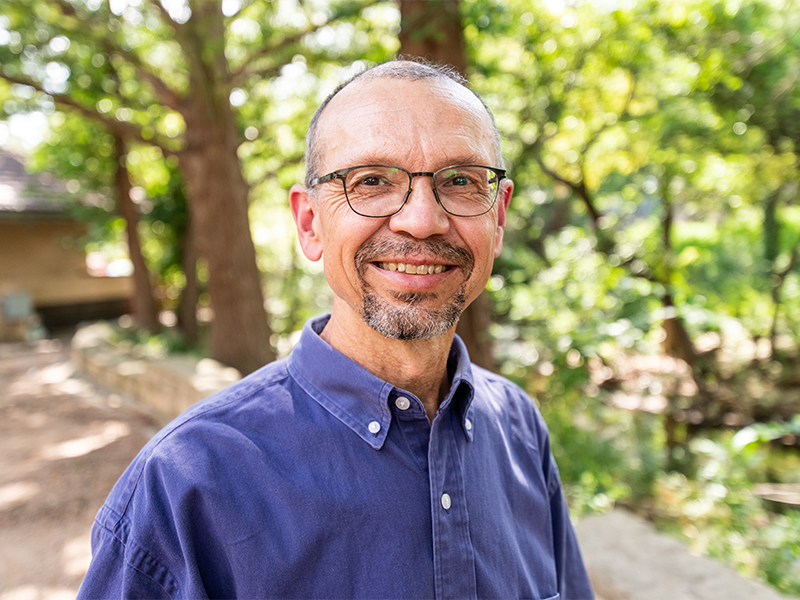
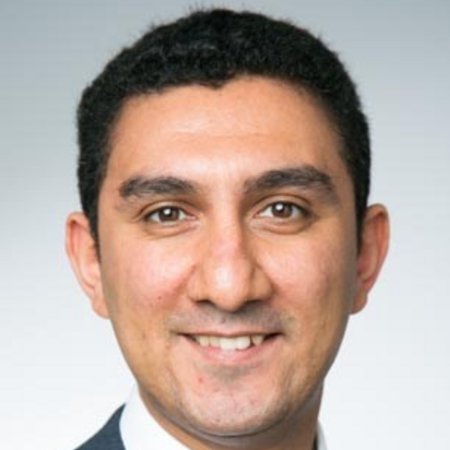
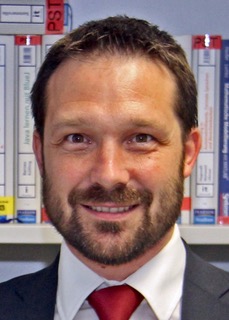
Sameer Naik is a Senior Lecturer at the School of Mechanical Engineering , Purdue University, where he has been actively involved in research since his Ph.D. graduation from Purdue in 2004. His work bridges fundamental combustion science and applied engineering for energy systems. Ph.D., Purdue University, 2004 Dr. Naik's research focuses on gas turbine combustion and internal combustion engines , utilizing advanced laser-based spectroscopy techniques for diagnostics. His expertise spans thermodynamics , combustion chemistry , and environmental impact analysis in propulsion systems. His publication record (10+ peer-reviewed articles) demonstrates technical leadership in laser-induced fluorescence applications, CARS spectroscopy , and high-pressure combustion analysis . These works address critical challenges in sustainable energy and transportation technologies , particularly in reducing emissions from gas turbines. Contact: naiks@purdue.edu
Peter W. Glynn is the Thomas Ford Professor in the Department of Management Science and Engineering (MS&E) at Stanford University's School of Engineering, and also holds a courtesy appointment in the Department of Electrical Engineering. Additionally, he serves as a Senior Fellow of the Hong Kong Institute for Advanced Study at City University of Hong Kong. His distinguished career spans over four decades, with significant contributions to the fields of simulation, computational probability, and stochastic modeling. Professor Glynn received his Ph.D. in Operations Research from Stanford University in 1982 and his B.S. with Honors in Mathematics from Carleton University in 1978. His academic journey began at the University of Wisconsin at Madison (1982-1987) before returning to Stanford, where he has held various leadership positions including Deputy Chair of MS&E (1999-2005), Director of Stanford's Institute for Computational and Mathematical Engineering (2006-2010), and Chair of MS&E (2011-2015). His research interests focus on simulation , computational probability , queueing theory , statistical inference for stochastic processes , and stochastic modeling . Professor Glynn's work has developed algorithms widely used across the field of Monte Carlo simulation, with applications in financial risk management, service systems engineering, logistics, and retail operations. His recent publications demonstrate continued innovation in areas such as numerical methods for stochastic systems, rare-event simulation, and analysis of queueing systems under various traffic conditions, showing a strong trajectory of advancing both theoretical foundations and practical applications. Professor Glynn's scholarly contributions have been recognized with numerous prestigious awards, including: Fellow of INFORMS (2007) Fellow of the Institute of Mathematical Statistics (1998) John von Neumann Theory Prize from INFORMS (2010) Member of the US National Academy of Engineering (2012) Lifetime Professional Achievement Award, INFORMS Simulation Society (2021) Philip McCord Morse Lecturer, INFORMS (2020) Throughout his career, Professor Glynn has mentored numerous doctoral students whose research has made significant contributions to operations research and related fields. His editorial service has been extensive, including founding Editor-in-Chief of Stochastic Systems and service on the editorial boards of leading journals in operations research, probability, and statistics. His professional service extends to numerous advisory boards and committees at national and international levels, reflecting his standing as a leader in his field.
Allen Mincer is a Professor of Physics and Collegiate Professor at New York University's College of Arts and Science, Department of Physics. He leads research in experimental high energy particle physics and astrophysics as a member of the NYU Experimental Particle Physics Group, with major contributions to the ATLAS and Milagro collaborations. His educational background includes a Ph.D. from the University of Maryland, College Park (1984) and a B.S. from Brooklyn College (1978). Mincer's research spans particle physics discoveries (top quark, Higgs boson) and cosmic ray astrophysics. He specializes in detector development, data analysis for high-energy collisions, and cosmic ray observations. His work integrates experimental physics with innovative educational approaches, particularly in physics pedagogy. Analysis of his publications (2020-2005) reveals dual research trajectories: LHC-focused studies on Higgs physics, supersymmetry searches, and trigger systems via ATLAS, alongside Milagro-based cosmic ray research mapping TeV emissions and anisotropies in the Galactic plane. His scientific recognition includes: Teach/Tech Award, New York University (2018) Collegiate Professor appointment at NYU (2008) Golden Dozen Teaching Award, NYU (1995, 2000) Mincer mentors undergraduate and graduate researchers while pioneering physics education through flipped classrooms, experimental pedagogy courses, and curriculum development for courses ranging from introductory physics to graduate particle physics. He actively contributes to the NYU Experimental Particle Physics Group, maintaining leadership roles in ATLAS detector operations and Milagro cosmic ray data analysis.
Matthew J. Hall is a Professor in the Department of Mechanical Engineering at the University of Texas at Austin , where he also holds the Louis T. Yule Fellowship in Engineering . He has been a faculty member since 1991 and is affiliated with the Cockrell School of Engineering . His research spans engine combustion processes , thermal fluids systems , engine controls , optical diagnostics , battery safety , and alternative fuels . He is particularly known for his work on cold-start emissions , spark ignition , engine friction reduction , and thermoelectric energy recovery . He teaches courses in Thermodynamics , including modeling of power cycles and HVAC systems , and has published over 150 technical articles. His recent work includes innovations in ammonia combustion , biomass gasification , and advanced engine diagnostics . Scientific Awards & Honors: Fellow of the Society of Automotive Engineers (SAE) Louis T. Yule Fellowship in Engineering Associate Editor, SAE International Journal of Engines Research Impact & Leadership: Prof. Hall leads multidisciplinary efforts in combustion science , energy systems , and sustainable propulsion . His lab has contributed to reducing engine friction by up to 40%, improving fuel efficiency at idle, and advancing the use of ammonia as a low-carbon fuel. He also explores thermoelectric generators for extending drone flight range and improving vehicle energy recovery systems.
Laura T. Starks is a Professor of Finance holding the George Kozmetsky Centennial University Distinguished Chair at the McCombs School of Business, University of Texas at Austin. She has served the school in various leadership roles including interim dean, associate dean for research, chair of the Department of Finance, and graduate adviser. Starks is also a Research Associate of the National Bureau of Economic Research, a Senior Fellow of the Asian Bureau of Finance and Economic Research, and a Fellow of several prestigious organizations including the American Finance Association, the Financial Management Association, the European Corporate Governance Institute, and the Centre for Economic Policy Research. Her research expertise spans multiple areas in finance: Asset Pricing Corporate Finance Corporate Governance Environmental, Social, and Governance (ESG) Issues Corporate Sustainability Institutional Investment Management Climate Finance Starks' recent research demonstrates a strong trend toward ESG and sustainable finance, particularly in the last 5-7 years, with numerous publications examining climate risk disclosure, ESG engagement, corporate ESG profiles, and the relationship between sustainability factors and financial performance. Her work bridges traditional finance with emerging sustainable investment practices, making significant contributions to understanding how environmental and social factors impact institutional investment decisions and corporate behavior. Her significant awards and honors include: 2024 Texas Exes Distinguished Alumnus Award 2022 Swedish Skandia Research Award on Long-Term Savings 2021 Moskowitz Prize for Outstanding Research in Sustainable Finance Fellow of the European Corporate Governance Institute (2024) Fellow of the American Finance Association (2023) Editor's Choice for publication 'Climate Risk Disclosure and Institutional Investors' (July 2023) Starks has served as president of four major academic finance associations: the American Finance Association, the Society for Financial Studies, the Western Finance Association, and the Financial Management Association. She has also been editor of The Review of Financial Studies and associate editor of numerous academic journals. Currently, she serves on advisory committees for AIF Global, FTSE Russell, the Investment Company Institute, Kroner Center for Financial Research, Netspar, Principles for Responsible Investing, and Texas Wall Street Women, demonstrating her influence across both academic and industry spheres of finance.
Jamie Callan is a Professor at Carnegie Mellon University's Language Technologies Institute (School of Computer Science), where he leads research in Information Retrieval and Neural Search Architectures . He teaches advanced courses on search engine design and mentors students in multiple programs. Research Focus: Federated retrieval, knowledge graph integration in search, ClueWeb dataset development, and neural approaches to document ranking Leadership: Past SIGIR Treasurer/Chair, Co-founding Editor of Foundations and Trends in IR, former TOIS Editor-in-Chief His recent work explores: Neural Retrieval: Latent vocabulary for sparse systems, hypothetical documents for dense vector retrieval Dataset Innovation: Maintenance and distribution of ClueWeb09, ClueWeb12, and ClueWeb22 datasets Search Efficiency: Selective search architectures with 90% reduced computational costs Scientific Recognition: International ACM SIGIR Conference Leadership Co-founding Editor-in-Chief, Foundations and Trends in IR Former Editor-in-Chief of ACM TOIS Dr. Callan's Lemur Project has produced Indri/Galago search engines and supported TREC evaluations through dataset contributions.
Professor Amr Rizk is the Director of the Networks and Communication Systems (NCS) Lab at the University of Duisburg-Essen, where he has been serving as Professor since April 2021. Previously, he was Assistant Professor at Ulm University (2019-2021) and completed his habilitation at TU Darmstadt in 2019. His academic journey includes research positions at prestigious institutions including University of Massachusetts Amherst, University of Warwick, and TU Darmstadt where he was an Athene Young Investigator. Professor Rizk's research spans multiple aspects of networking and communication systems with a particular focus on network performance analysis, stochastic modeling, and practical implementations. His work bridges theoretical foundations with real-world applications, especially in content delivery, video streaming, and network protocols. He has made significant contributions to network calculus, quality of experience optimization, and novel approaches to congestion control and caching mechanisms. His publication record demonstrates consistent high-impact contributions across top networking conferences and journals. Recent work shows a growing emphasis on programmable data planes, AI/ML applications in networking, and advanced techniques for network measurement and performance prediction. His research group at Duisburg-Essen maintains strong connections with both academic and industrial partners in the networking ecosystem. Best Paper Award at ACM MMSys Conference (2023) Distinguished TPC Member for IEEE INFOCOM (2020, 2022) Best Paper Award at ACM/USENIX Middleware Conference (2017) Athene Young Investigator Award, TU Darmstadt (2017) Professor Rizk serves as Associate Editor for Elsevier Computer Communications and has extensive experience with research funding bodies as a reviewer. His leadership extends to conference organization, including roles as PC Co-Chair for IEEE MIPR (2023) and Steering Committee member for Workshop on Network Calculus (2022). He maintains active participation in numerous top networking conferences as Technical Program Committee member, reflecting his standing within the international networking research community.
Andrew McClellan is a Professor in the Department of History of Art and Architecture at Tufts University's School of Arts and Sciences. His work focuses on the history of museums, exhibitions, and art collecting, with a particular emphasis on Early Modern European art and theory. He has authored five influential books and received fellowships including the Carl & Lily Pforzheimer Fellowship (2022–2023) and the Getty Postdoctoral Fellowship. Education: PhD (Courtauld Institute of Art, University of London), MA (University of East Anglia), BA (University College London) His research explores institutional frameworks, art display, and reception, with current work on Boston's Isabella Stewart Gardner Museum and Museum of Fine Arts. His publications span topics such as museum expansion, curatorial ethics, and art fraud, reflecting a career-long engagement with the interplay between art and its publics. Scientific Awards: Best Book Award for The Art of Curating (2019), Carl & Lily Pforzheimer Fellowship (2022–2023) McClellan has taught courses on art museums, curating, and the Age of Rembrandt and Bernini, while holding administrative roles including Dean of Academic Affairs at Tufts (2006–2012) and serving on editorial boards for journals like Journal of Curatorial Studies and Curator: The Museum Journal .
Tatjana Thelen is a Full Professor of Social and Cultural Anthropology at the University of Vienna and holds fellowships at the Institute for Advanced Study (IAS) in Paris and the FMSH (Fondation Maison des Sciences de l'homme). She serves as Deputy Director of the Vienna Doctoral School of Social Sciences and co-directs the Research Platform for the Study of Transformations and Eastern Europe. Her work bridges kinship studies , care ethics , and state anthropology , with a focus on post-socialist Europe and interdisciplinary critique of Western epistemologies. Academic Leadership : Deputy Director of Vienna Doctoral School; Co-founder of CAST (Care and State) network; Director of Vienna Ethnography Laboratories Research Themes : Kinship-state interplay, care practices in political belonging, post-socialist transformation, relational theory, social security frameworks Her relational anthropology examines how care responsibilities shape state boundaries and generate inclusion/exclusion dynamics through kinship measurements. She critiques the Western assumption that modernity diminishes political kinship, analyzing its persistence in citizenship, property relations, and welfare systems. Current projects explore political atmospheres and their role in state boundary demarcation. Scientific Recognition : Distinguished Visiting Austrian Chair, Stanford University (2023) Fellow, Institute for Advanced Study (IAS), Paris (2020-21) Fellow, Center for Interdisciplinary Research (ZiF), Bielefeld (2016-17) She has supervised PhD projects on topics including: Ukrainian female labor migration and left-behind families Corporate Social Responsibility in Turkey Ecological villages in China Kinship-politics conceptual history State care in socialist Hungary Rural Hungarian state rescaling Serbian local state practices
Rupert Frank is a Professor of Mathematics at the University of Munich (LMU Munich) . He has held academic positions at Caltech (2013–2021) and Princeton University (2009–2013). His research spans Mathematical Physics , Spectral Theory , and Functional Inequalities , with a focus on quantum many-body systems, stability of matter, and nonlocal operators. Research Themes : Analysis of eigenvalues for Schrödinger and Pauli operators with complex potentials Semi-classical spectral asymptotics and effective theories for quantum systems Matrix inequalities and quantum information theory Calculus of variations in models like the liquid drop problem Geometric inequalities and their applications to quantum mechanics Magnetic field effects on spectral properties Recent Publications : 2025: Sharp stability for Sobolev/log-Sobolev inequalities with dimensional dependence 2025: Endpoint Schatten class properties of commutators 2024: Degenerate stability of Caffarelli-Kohn-Nirenberg inequality 2024: Hardy inequalities for large fermionic systems 2023: Review on Scott conjecture for Coulomb systems Scientific Awards : Young Scientist Prize in Mathematical Physics (2009) Grants and Collaborations : Principal Investigator in CRC TRR 352 (2023–) PI in Munich Center for Quantum Science and Technology (2019–) Multiple NSF grants (2009–2020) DFG and DAAD grants Editorial and Conference Leadership : Editorial boards: Communications in Mathematical Physics , Journal in Mathematical Physics , Journal of Spectral Theory , SIAM Journal on Mathematical Analysis , Springer Lecture Notes Organized conferences/workshops on quantum many-body systems, spectral methods, and functional inequalities (2018–2025)
Craig Knoblock serves as Keston Executive Director of the Information Sciences Institute (ISI) at the University of Southern California (USC), Vice Dean of the USC Viterbi School of Engineering, and Research Professor of Computer Science and Spatial Sciences. He also directs the Data Science Program and the Center on Knowledge Graphs at USC. His educational background includes a Ph.D. and M.S. in Computer Science from Carnegie Mellon University (1991, 1988) and a B.S. with honors in Computer Science from Syracuse University (1984). Knoblock's research focuses on data semantics , specializing in source modeling, schema and ontology alignment, entity and record linkage, data cleaning, Web data extraction, and knowledge graph construction. His work bridges computer science, geospatial analysis, and artificial intelligence to solve complex data integration challenges. Recent projects emphasize historical map digitization, geospatial knowledge graphs, and smart city applications. His 300+ publications demonstrate consistent contributions to knowledge graphs and geospatial data integration, with a growing emphasis on historical map analysis and urban applications. The research trajectory shows increasing interdisciplinary collaboration across computer vision, geoinformatics, and domain-specific applications. IEEE Fellow (2020) ACM Fellow (2017) AAAI Fellow (2004) Robert S. Engelmore Memorial Lecture Award (2014) Donald E. Walker Distinguished Service Award (IJCAI, 2018) Use-Inspired Research Award (USC Viterbi, 2018) As Executive Director of ISI, Knoblock oversees one of USC's premier research centers with significant federal funding. His leadership extends to directing the Center on Knowledge Graphs and the Data Science Program. While specific grant details aren't provided, his extensive publication record and leadership roles indicate substantial research funding across data integration, knowledge representation, and geospatial applications. His work bridges theoretical computer science with practical applications in historical preservation, urban planning, and resource management through collaborative projects with government agencies and industry partners. Knoblock leads the Center on Knowledge Graphs at USC, focusing on developing techniques for building and utilizing knowledge graphs across diverse domains. His team combines expertise in artificial intelligence, geospatial analysis, and data integration to tackle challenges in historical map digitization, urban applications, and resource discovery. The research group maintains strong connections with both academic and government partners through the Information Sciences Institute's extensive network.
Javier Lezaun is an Associate Professor at the University of Oxford's School of Anthropology and Museum Ethnography, and Lead Researcher at the Institute for Science, Innovation and Society. His work bridges Anthropology and Science and Technology Studies (STS), focusing on biomedical governance and climate change as intertwined scientific-political challenges. Current projects include analyzing carbon sequestration technologies and leading the Oxford Net Zero programme's research on equitable climate transitions. Director of ERC-funded Bioproperty project Co-investigator in UNESCO’s International Bioethics Committee His research spans pharmaceutical R&D organization, citizen participation in technology assessment, and the socio-technical dynamics of disease outbreaks. He actively supervises DPhil students in STS and Global Health, and teaches courses on Science and Technology Studies. Lezaun's publications reveal a consistent engagement with intellectual property, climate justice, and public health infrastructure. Recent articles highlight his focus on marine carbon removal, malaria drug discovery, and the epistemological challenges of epidemic responses. Collaborations span institutions like the Universidad de los Andes (Colombia) and the OceanNETs consortium. Scientific Awards & Grants: ERC-funded Bioproperty project British Academy-funded Diseased Landscapes project
Edwin Romeijn holds the Jill Stewart Archer Family Chair and Professor position in the H. Milton Stewart School of Industrial and Systems Engineering at Georgia Institute of Technology. He served as School Chair from 2015-2024, overseeing the nation's top-ranked industrial engineering program. Previously, he held faculty positions at the University of Michigan, University of Florida, and Erasmus University Rotterdam, and served as Program Director at the National Science Foundation. Education: Ph.D. in Operations Research (1992), Erasmus University Rotterdam M.S. in Econometrics (1988), Erasmus University Rotterdam Romeijn's research centers on optimization theory and applications , with dual focus areas in radiation therapy treatment planning and supply chain management . His radiation therapy work develops algorithms for cancer treatment planning and clinic scheduling, while his supply chain research addresses integrated optimization of production, inventory, and transportation under demand flexibility, resource constraints, perishability, and uncertainty. His methodologies bridge theoretical operations research with real-world healthcare and logistics systems. His publication portfolio demonstrates consistent contributions to optimization methods across diverse application domains, with recent work spanning healthcare systems, renewable energy, sports analytics, and unconventional logistics. The research exhibits strong methodological continuity in stochastic programming, network optimization, and decision-making under uncertainty. Scientific Awards: Fellow of IISE and INFORMS (2017) Richard C. Wilson Faculty Scholar (2012-2013) Multiple best paper awards in industrial engineering conferences Pierskalla Best Paper Award (2003) Young Investigator’s Award at ICCR (2004) Romeijn has advised numerous graduate students and secured significant research funding through NSF and other agencies. His leadership extends to program direction at NSF and chairing Georgia Tech's Industrial and Systems Engineering school. He maintains active collaborations with healthcare institutions and manufacturing enterprises, translating theoretical advances into practical solutions for radiation oncology and supply chain resilience.
Dr Rosemary Stott is a faculty member at the University of East London, serving as Dean of the School of Arts and Creative Industries. She holds a PhD in Film from Reading University, an MA in Film from Westminster University, and a BA from Oxford University. Education: BA (Oxford), MA (Westminster), PhD (Reading) Leadership roles at UEL, London Metropolitan University, and Ravensbourne University London Research focus: East German film (DEFA), cultural transference, inclusive learning design, digital education Her research explores the intersection of film history, pedagogy, and educational technology. Key projects include World on our Doorsteps (2022-2025, Arts Council England) and Embedding Mental Well-Being in the Curriculum (2020-21). Earlier work involved a Horizon 2020 wearable technology project and Jisc-funded initiatives for dyslexic students. Recent publications analyze Critical Race Theory in film education, DEFA film legacy, and digital pedagogy innovations. Awards include funding from Jisc, HEFCE, and HEA for educational technology projects. She supervises PhD students in German film, media practice, and transnational cinema.
John Graham is a Professor at the School of Social Work, University of British Columbia Okanagan Campus. Former Director at UBC and Florida Atlantic University, his work spans social policy, spirituality in social work, multicultural practice, and homelessness prevention. Based in Kelowna, BC, he leads the Kelowna Homelessness Research Collaborative with over $1 million in funding. Ph.D. in Social Work (University of Toronto, 1996) MA (Queen’s University, 1990) MSW (University of Toronto, 1989) BA (Trinity College Toronto) His research integrates social policy analysis with community-based initiatives, focusing on employee well-being, multicultural social work frameworks, and Bedouin-Arab development studies. Current projects address homelessness reduction via the Journey Home initiative, combining spatial policy analysis with health interventions. Recent publications emphasize climate-related health risks for homeless populations, cross-sectoral partnerships, and spiritual dimensions in social work education. He has secured over $35 million in total research funding, with active projects targeting housing stability and community engagement. Fellow, American Academy of Social Work and Social Welfare (2022) Teaching Award for Graduate Student Mentoring (2014) As a mentor to over 100 graduate students, he bridges academic rigor with practical application. The Kelowna Homelessness Research Collaborative under his leadership prioritizes tier-one publications, interdisciplinary training, and policy advocacy.