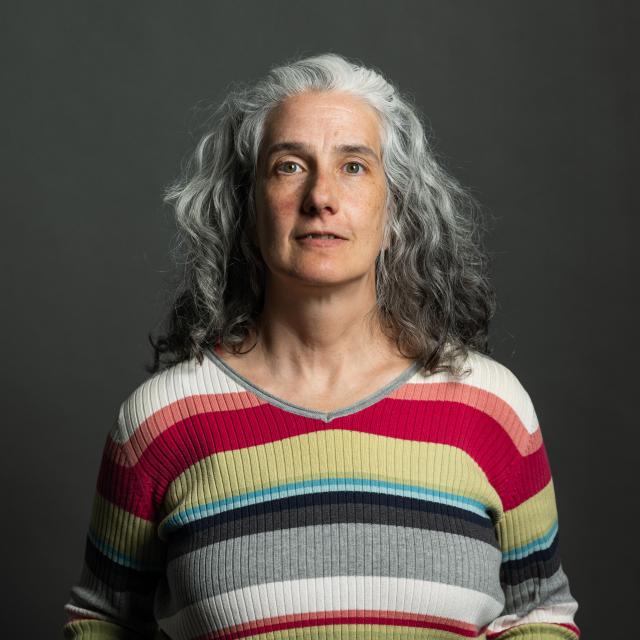
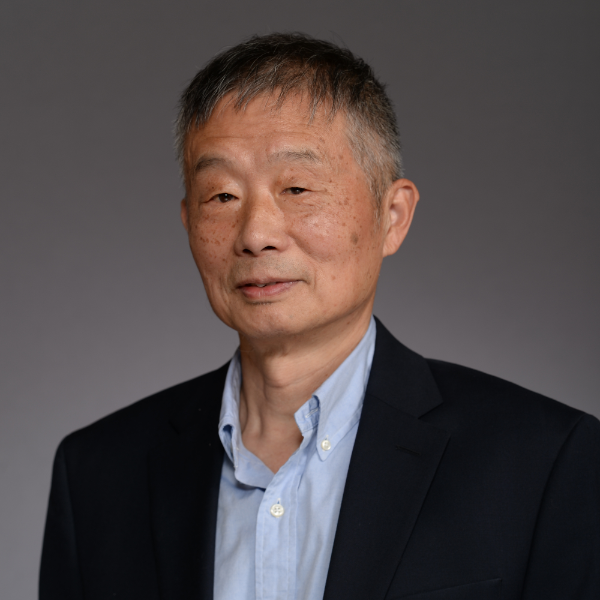
Ľubomír SnohaView profile
Professor
prof. RNDr. Ľubomír Snoha, DSc., DrSc. is a Professor in the Department of Mathematics at the Faculty of Arts, Matej Bel University in Banská Bystrica, Slovakia. His research and teaching focus on advanced mathematical theory, with significant contributions to dynamical systems and topology. He maintains an active academic presence through recent publications and structured consultation hours. His academic credentials include: MSc. from Faculty of Natural Sciences, Comenius University in Bratislava (1978) RNDr. from Faculty of Natural Sciences, Comenius University in Bratislava (1978) CSc. from Faculty of Mathematics and Physics, Comenius University in Bratislava (1986) Doc. from Faculty of Mathematics and Physics, Comenius University in Bratislava (1989) DSc. from Czech Academy of Sciences, Prague (2005) DrSc. from Comenius University in Bratislava (2007) Prof. from Silesian University in Opava (2008) Professor Snoha's research centers on dynamical systems and ergodic theory (MSC 37-XX) and general topology (MSC 54-XX). His work explores chaos phenomena, entropy measures, minimal sets, and transitivity in topological spaces. He investigates complex structures including intervals, graphs, dendrites, and manifolds, often revealing fundamental properties of dynamical behavior. His theoretical contributions bridge abstract topology with concrete dynamical systems analysis. Analysis of his 15 most recent publications (2001-2024) reveals consistent advancement in minimality concepts, semigroup actions, and chaos characterization. Key trends include extending classical interval map results to graph bundles and dendrites, refining entropy frameworks, and establishing connections between scrambled sets and Li-Yorke chaos. His 2024 work on polynomial entropy demonstrates evolving focus toward rigidity-flexibility dichotomies in dynamical complexity. No specific scientific awards or fellowships were documented in the provided materials. As an educator, Professor Snoha teaches advanced courses including Dynamical Systems, Ergodic Theory, Topology, and Mathematical Analysis. His consultation schedule maintains Monday office hours (11:30-12:30), though no formal advising relationships or grant-funded projects were specified. His teaching portfolio spans foundational calculus to specialized graduate topics in mathematical dynamics. The documentation does not reference dedicated research laboratories or structured collaborative teams led by Professor Snoha, though his extensive co-authorship network indicates active scholarly collaboration within the international mathematics community.