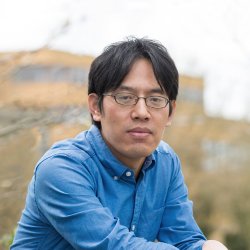
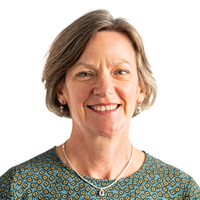
Andreas Vlachos is a Professor of Natural Language Processing and Machine Learning at the Department of Computer Science and Technology, University of Cambridge, and holds the Dinesh Dhamija Fellowship at Fitzwilliam College. His research spans dialogue modeling, automated fact-checking, imitation learning, semantic parsing, biomedical text mining, and trustworthiness in AI systems. PhD in Computer Science, University of Cambridge (supervised by Ted Briscoe and Zoubin Ghahramani) Lecturer at University of Sheffield Postdoctoral roles at UCL, University of Cambridge (NLIP group, Stephen Clark), and University of Wisconsin-Madison (Mark Craven) Current research focuses on evaluating and mitigating biases in language models, advancing fact-checking methodologies, and improving model robustness through interpolation, reinforcement learning, and causal reasoning. His work integrates natural logic, knowledge graphs, and multimodal evidence for verification tasks. Recent publications address uncertainty quantification, temporal planning benchmarks, and ethical framing of NLP artifacts. Grants from ERC, EPSRC, Facebook, Google, and the Alan Turing Institute fund his research team. Collaborations include Sebastian Riedel, Stephen Clark, and Mark Craven. Key projects explore disinformation detection, long-form generation, and confidence calibration in AI systems.
Professor Andrew Chadwick is a leading scholar in political communication and digital media studies at Loughborough University, where he directs the Online Civic Culture Centre (O3C). He holds a BSocSc from Birmingham, MSc and PhD from the London School of Economics. His research focuses on hybrid media systems, disinformation dynamics, and digital politics. Key contributions include conceptualizing hybrid media events and analyzing misinformation in personal messaging platforms. His work has been recognized with prestigious awards, including the APSA Best Book Award. He supervises numerous PhD students exploring topics like social media influence, public opinion, and digital disinformation. Current projects include the Leverhulme-funded Everyday Misinformation Project examining numerical disinformation on messaging apps. His media engagements span BBC Radio 4 to The Washington Post. Research highlights include studies on misinformation warnings' ineffectiveness, vaccine hesitancy, and the role of celebrities in political representation. O3C serves as a hub for interdisciplinary research on digital civic culture. Chadwick’s academic leadership includes roles in editorial boards for top journals and international conference keynotes.
Professor Kay O'Halloran serves as Chair Professor and Head of Department of Communication and Media within the School of the Arts at the University of Liverpool since August 2019. She concurrently holds the position of Co-Director for the Digital Media and Society Institute (DMSI), demonstrating significant leadership across academic and research domains. Her career spans prestigious institutions including Curtin University (2013-2019) and National University of Singapore (1998-2013), where she directed the Multimodal Analysis Lab and served as Deputy Director of the Interactive & Digital Media Institute. PhD from Murdoch University (1996) Postdoctoral position at Martin Luther University (1997-1998) Visiting Distinguished Professor at Shanghai Jiaotong University (2017-2020) Professor O'Halloran's research focuses on multimodal discourse analysis, particularly the interaction of language with visual and mathematical resources. Her pioneering work in systemic functional multimodal discourse analysis (SF-MDA) has significantly impacted mathematics education and digital communication studies. Current research emphasizes digital tools for multimodal analysis and mixed methods approaches to big data analytics, addressing contemporary challenges in misinformation and public health communication. Her recent publications reveal strong thematic concentration in pandemic-related communication analysis, misinformation resistance mechanisms, and multimodal argumentation across social and cultural contexts. The 15 most recent articles demonstrate consistent application of multimodal frameworks to urgent societal issues including public health crises, political discourse, and digital literacy challenges. Founding editor of Routledge Studies in Multimodality book series (57+ volumes) Over 150 publications in leading international journals 50+ plenary/keynote presentations globally Competitive funding from National Research Foundation, MOE Singapore, US Air Force, ARC, NHMRC, and others Professor O'Halloran has directed interdisciplinary research teams comprising social scientists, computer scientists, and designers. Her leadership extends to developing commercial multimodal analysis software (Multimodal Analysis Image and Video) adopted internationally. Current projects include Eurovision 2023 wellbeing evaluation and COVID-19 misinformation immunity development, demonstrating continued relevance to contemporary societal challenges.
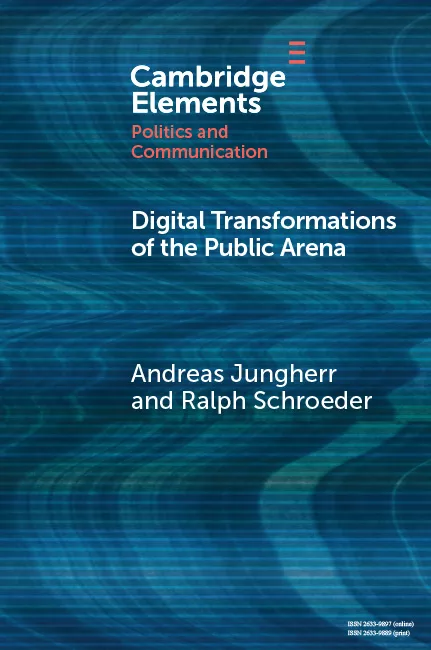
Ralph Schroeder is a Professor of Social Science of the Internet at the University of Oxford’s Oxford Internet Institute (OII). He has held roles including Programme Director of the MSc in Social Science of the Internet (2018–2023), Director of Research (2009–2012), and Senior Research Fellow since 2009. He previously held academic positions at Chalmers University, Royal Holloway, and Brunel University. His research focuses on digital media and populism, AI-driven social theory, and virtual environments. He has authored/co-authored over 170 papers and books, including Social Theory after the Internet (2018) and Knowledge Machines (2015). His work examines how digital technologies transform political communication, governance, and social interaction in countries like India, China, and Sweden. Education: Ph.D. in Government (London School of Economics, 1988), M.Sc. in Political Philosophy (LSE, 1981), B.A. in Philosophy and History (Williams College, 1980). Grants & Awards: Recipient of the 2023 Social Sciences Teaching Excellence Award, Erskine Fellowship (2023), and multiple research grants from the Swedish Research Council, EU Horizon 2020, and the Tencent Internet and Society Institute. His work explores AI ethics, digital misinformation, and the societal implications of emerging technologies. Labs & Collaborations: Leads projects on AI governance, digital media transformations, and the radicalization of Sweden’s global image. Collaborates with institutions globally, including the Chinese University of Hong Kong and the Indian Institute of Management Kozhikode.
Royal Holloway, University of LondonUnited Kingdom
Cristian Vaccari is a Professor in the Politics and International Relations department at the University of Edinburgh . He is a leading scholar in political communication, digital misinformation, and media studies, with a focus on credibility evaluation and social media dynamics. Vaccari served as Editor-in-Chief of The International Journal of Press/Politics for six years, overseeing over 250 articles and organizing six journal conferences, including the 2024 and 2023 University of Edinburgh events. His research includes the Everyday Misinformation Project , funded by the Leverhulme Trust, which investigates disinformation spread on platforms like WhatsApp and Facebook Messenger through mixed-methods surveys and longitudinal studies. Collaborative work with Andrew Chadwick and others explores how source credibility impacts information sharing, the role of peer networks in combating numerical misinformation, and the potential of group rulemaking to reduce disinformation. Vaccari also contributes to policy through roles like Co-Rapporteur for the Council of Europe Committee of Experts on the Integrity of Online Information . Recent publications highlight his expertise in digital credibility, misinformation mitigation, and platform dynamics. He emphasizes bridging disciplinary divides through qualitative and quantitative methodologies, with a global perspective on media-politics intersections. Vaccari’s work informs debates on media trust, AI’s role in journalism, and strategies to counter democratic backsliding.
Rafael Grohmann is an Assistant Professor of Media Studies at the Department of Arts, Culture and Media , University of Toronto. He is also affiliated with Universidade do Vale do Rio dos Sinos (Unisinos University) , Brazil, as an Assistant Professor in Communication. Grohmann serves as Principal Investigator for the Fairwork project in Brazil , Coordinator of DigiLabour Research Lab , and editor of DigiLabour newsletter . His work bridges Latin American digital labor studies, AI's societal impacts, and platform cooperativism. Education: Ph.D. in Communication, University of São Paulo (2016) M.Sc. in Communication, University of São Paulo (2012) BA in Social Sciences, Federal University of Juiz de Fora (2009) Research interests include platform labor , AI and work , datafication , and worker-owned platforms , with a focus on Global South and gender perspectives . His recent work analyzes Brazilian women's hidden labor on AI platforms and labor migration in the gaming industry. Scientific awards include grants from SSHRC , CNPq , FAPESP , and COST Action . Grohmann is an editorial board member of Big Data & Society , Work, Employment and Society , and co-founder of the Platforms & Society journal. He is actively involved in public engagement, including podcasts like Tech Won't Save Us and op-eds on data sovereignty. Projects: Creative Labour and Critical Futures (CLCF) : Studies ethical approaches to AI in creative sectors. Worker-Owned Intersectional Platforms (WOIP) : Explores worker-owned tech solutions in Brazil and Argentina.
Peter Knight is a Professor of American Studies at the University of Manchester , affiliated with the School of Arts, Languages and Cultures (English, American Studies & Creative Writing). He focuses on conspiracy theories and cultural approaches to finance , with over two decades of research grants and leadership in major interdisciplinary projects. UN Sustainable Development Goals (SDG151: United States) Co-editor of Routledge Handbook of Conspiracy Theories His research reconfigures conspiracy theory analysis through cultural lenses, challenging psychological dismissals. Key projects include Everything Is Connected (AHRC, 2016-20) and REDACT (EU CHANSE, 2022-25). Publications span Routledge, Edinburgh UP, and Cambridge UP. Recent work with Clare Birchall and Michael Butter explores coronavirus pandemic conspiracies , while his Reading the Market (2016) examines Gilded Age financial narratives. He co-curated the Show Me the Money exhibition (2014-16), visualizing financial history. Scientific Awards BAAS Book Prize (2017) Peter supervises projects on topics like 19th-20th century American literature , digital conspiracy theories , and financial epistemology . His media commentary (The Conversation, BBC) addresses public understanding of economic and conspiratorial discourse.
Dr Glenda Cooper is Reader in Journalism Studies and Head of the Department of Journalism at City St George's, University of London , where she leads a team of 25 staff, 50 visiting lecturers, and over 500 students from 53 countries. She holds a PhD in Journalism from City and an MA in English Language and Literature from Oxford, and has played a pivotal role in elevating the BA Journalism programme to 1st place nationally in the Guardian and Complete University Guide (2023), as well as 1st for Graduate Prospects (Sunday Times 2022). Education: MA in Academic Practice, City, University of London (2022) PhD in Journalism, City, University of London MA in Creative Writing, City, University of London BA (Hons) English Language and Literature, St Hilda's College, University of Oxford PG Diploma in Newspaper Journalism, City University of London Glenda's research focuses on crisis and humanitarian reporting , journalism ethics , live journalism , and the intersection of media and politics, particularly through the legacy of Alistair Cooke’s Letter from America . She has led major funded projects with the British Academy, ESRC, Google Digital News Initiative, and HEIF. Her current research explores AI’s impact on journalism through the DMINR project and innovative storytelling formats via the News on Stage initiative and the Contemporary Narratives Lab . Her recent publications span topics such as AI in newsrooms, humanitarian scandals (#AidToo), refugee representation, and digital narrative innovation. These works reflect a strong interdisciplinary trend, combining journalism studies with media technology, ethics, performance, and political communication. The articles indicate a growing focus on digital transformation, ethical challenges in sourcing, and the evolving role of journalists in public discourse. Scientific Awards and Recognition: Laurence Stern Fellow at the Post (2001) Guardian Research Fellow at Nuffield College, Oxford (2006–2007) AURORA Role Model for Future Women Leaders in Academia (2018) Glenda has supervised PhD students on topics ranging from political communication in Istanbul to the manosphere's influence on journalism. She has been instrumental in curriculum development, notably designing a core ethics module for final-year journalism students. She also serves as Reviews Editor for Journalism: Theory, Practice and Criticism , UK Director of the European Journalism Observatory, and Board Member of The Conversation UK . She co-founded and co-presented the Knowhow podcast, bridging academia and media. She co-directs the Contemporary Narratives Lab and co-founded the News on Stage project, which merges journalism with theatre through live events such as News Cabaret and News on the Street . Her play Aid Memoir , based on her PhD research, was performed at the Pleasance Theatre and featured in the ESRC Festival of Social Science.
Professor Jo Fox serves as Pro Vice-Chancellor (Research & Engagement) and Dean of the School of Advanced Study at the University of London. She previously held leadership roles at Durham University, including the first female Director of the Institute of Historical Research and first female Professor of Modern History. Her research focuses on 20th-century propaganda, psychological warfare, and disinformation, with notable projects on WWII British-German propaganda dynamics and contemporary fake news analysis. Education and Career: Completed PhD in History at Durham University (1999 onward). Key roles include Chair of the Wellcome Trust Early Research Panel and Honorary Communications Director of the Royal Historical Society. Research Interests: Specializes in historical and modern disinformation campaigns, propaganda’s impact on public opinion, and the intersection of media and conflict. Active in projects like the Leverhulme-funded 'Political Warfare Executive' study and AHRC’s 'COVID-19 Rumours' research. Key Projects: Leading collaborative initiatives on covert propaganda’s role in British culture and historical context of disinformation during crises. Formerly examined Nazi cinematic propaganda and WWII documentary film strategies. Awards: National Teaching Fellow (2007), Fellow of the Royal Historical Society, and Fellow of the Royal Society of Arts. Grants and Consultancy: Secured major funding from the Leverhulme Trust and AHRC. Engages in media commentary on historical and contemporary misinformation. Currently chairs Wellcome Trust panels and advises on historical media studies. Labs/Teams: Collaborates with Durham University researchers on propaganda and cultural history projects. Oversees interdisciplinary teams in historical research initiatives.
Dr Thomas Paul Colley holds dual roles as Senior Lecturer in Defence and International Affairs at the Royal Military Academy Sandhurst and Senior Visiting Research Fellow in the Department of War Studies at King’s College London. His work bridges academic research and strategic policy application across multiple domains. Research Expertise Propaganda and strategic communication in conflict Strategic narratives in international relations Military strategy communication dynamics Insurgency and counterinsurgency frameworks Climate change strategic communication Social media analysis for defense applications Disinformation impact assessment Scientific Contributions 2022 : News Wars (book, with Martin Moore) 2021 : Book chapter on diplomatic engagement 2020 : Multiple high-impact articles on disinformation and insurgency Awards & Recognition Recipient of King’s College London’s Rising Star Teaching Excellence Award Featured expert in major UK media (BBC, The Times, The Independent) Consulting for UK government agencies (Home Office, Cabinet Office, DSTL) Teaching & Supervision Co-convenor of MA War Studies flagship modules PhD supervision on UK combatant memory of Afghanistan Global defense engagement training for international officers
Patrick J. Vernon is a Lecturer in Gender and War Studies at King's College London's Department of War Studies. Their research specializes in queer and feminist approaches to international relations, with a focus on the intersection of coloniality, political violence, and identity politics. Employing critical theoretical frameworks Analysing humanitarian intervention through queer/decolonial lenses Contributing to debates on post-truth politics and bordering processes Key research areas include the racialized and gendered dimensions of colonial violence, LGBTQ+ inclusion in security studies, and the epistemicide of marginalized knowledge systems in global politics. Their 2024 monograph The Coloniality of Humanitarian Intervention examines how colonial temporalities shape contemporary interventionist practices through heteronormative and racist epistemologies. Recent publications demonstrate thematic clusters in: (1) queer critiques of sovereignty and security frameworks; (2) decolonial analysis of humanitarian intervention; (3) post-truth politics as discursive violence; (4) civilizational discourse in international events; and (5) LGBTQ+ inclusion in UN peacebuilding initiatives. This work consistently challenges Western-centric narratives in international relations while centering trans*, indigenous, and Palestinian lived experiences. As co-curator of The Healing Gardens of Bab and producer of community engagement projects like immersion: a celebration of community and belonging , Vernon bridges academic research with creative activism focused on minoritized communities. Their interdisciplinary methodology combines discourse analysis with queer phenomenology to interrogate the violent reproduction of international hierarchies.
Shujun Li is a Professor of Cyber Security and Head of the Cyber Security Research Group at the School of Computing, University of Kent. He also holds a Visiting Professorship at the Department of Computer Science, University of Surrey. His research focuses on cyber security, privacy, AI applications, and human-centric computing. He leads the Institute of Cyber Security for Society (iCSS), a university-wide interdisciplinary research centre. Education: PhD in Information and Communication Engineering (Xi'an Jiaotong University, 2003), followed by postdoctoral research at City University of Hong Kong, Humboldt Research Fellowship at FernUniversität in Hagen, and a 5-year Zukunftskolleg Research Fellowship at Universität Konstanz. Research interests include cyber security (usable security, digital forensics, misinformation), AI safety, human factors, and socio-technical systems. He has published over 100 papers, with awards including the IEEE Guillemin-Cauer Best Paper Award and EPSRC recognition. Awards: Includes IEEE Transactions Best Paper Awards, EPSRC peer review recognition, and multiple conference best paper awards. Active in interdisciplinary projects like MACRO (cyber risks in mobility systems) and ACCEPT (reducing human-related cyber risks). Labs/Teams: Directs iCSS, co-founded Kent & Medway Cyber Cluster, and leads the Kent Interdisciplinary Research Centre in Cyber Security (KirCCS). Collaborates with industry and government agencies on cyber resilience and AI ethics.
London School of Economics and Political Science (LSE)United Kingdom
Lee Edwards is a Professor of Strategic Communications and Public Engagement at the London School of Economics and Political Science (LSE), within the Department of Media and Communications. Her academic career spans roles including Associate Professor at LSE (2017-2021) and the University of Leeds (2011-2017). She holds a PhD from Leeds Metropolitan University (2007), an MSc from the University of Auckland (1995), and a BSc from the University of Surrey (1991). Her research focuses on critical public relations, promotional culture, deliberation processes, and copyright policy. She has authored influential books including *Understanding Public Relations: Theory, Culture, and Society* (2018) and *Power, Diversity, and Public Relations* (2014). Professor Edwards has received awards such as the ICA Environmental Communication Division Top Faculty Paper Award (2020) and the LSE Excellence in Education Award (2018-19). She has contributed to over 100 scholarly articles, book chapters, and research reports, including studies on media literacy, misinformation, and policy design. Her professional service includes roles as Secretary of the ICA PR Division (2014-2016), editorship of *PR Inquiry* (2014-2018), and external examiner for multiple universities. She has led grants totaling over £500k, including AHRC-funded projects on deliberation and copyright. Edwards is a vocal advocate for diversity in PR and media industries, founding the Ignite Networking Group (2010-2013). She has advised organizations like the PRCA and participated in leadership programs such as the Aurora Leadership Initiative (2018-2019).
Femi Olan is a Senior Lecturer at the Strategy, Operations and Entrepreneurship department within Essex Business School at the University of Essex. His academic work bridges the intersection of digital entrepreneurship, knowledge management, and artificial intelligence in organisational contexts. Educational Background: PhD, University of Plymouth Research interests focus on digital entrepreneurship , artificial intelligence , and knowledge management , particularly examining how these technologies enhance organisational resilience and sustainability. His publications in journals like Information Systems Frontiers and Technological Forecasting & Social Change highlight applications of AI in supply chains, crisis information management, and sustainability. Recent editorial roles include Cogent Business & Management Journal (2024) and guest editorships for special issues on fake news, sustainable agriculture supply chains, and crisis information management. His 15 most recent articles (2022-2025) span topics such as explainable AI in B2B marketing, CSR implementation in African SMEs, and Industry 4.0 adoption in agriculture. He supervises PhD candidates in entrepreneurship and has secured funding from the UK Higher Education Academy and European Commission . As a coordinating board member of the Euro Working Group – Decision Support Systems , he contributes to international research networks and conferences.
Professor Gina Neff is a Professor of Responsible AI at the Digital Environment Research Institute (DERI), Queen Mary University of London. She specializes in the ethical and societal implications of emerging technologies, particularly AI's impact on democracy, digital rights, and creative industries. Her work bridges academic research, policy-making, and industry collaboration. She holds dual roles as Deputy CEO of Responsible AI UK (a £33M initiative) and Executive Director of the Minderoo Centre for Technology & Democracy at the University of Cambridge. These roles emphasize her commitment to shaping AI governance frameworks and fostering democratic accountability in technological innovation. Her research focuses on AI ethics, digital policy, and sociotechnical systems. Key themes include mitigating harmful algorithmic practices, protecting creative sector rights in the AI era, and ensuring equitable technological development. Neff has advised governments and organizations on AI regulation, misinformation mitigation, and data governance. Recent initiatives include leading the ESRC’s Digital Good Network and contributing to UK policy consultations on copyright and AI. She frequently engages with media and policymakers, advocating for transparent, human-centered approaches to technology.