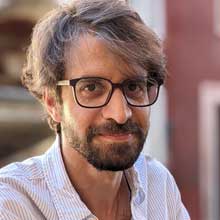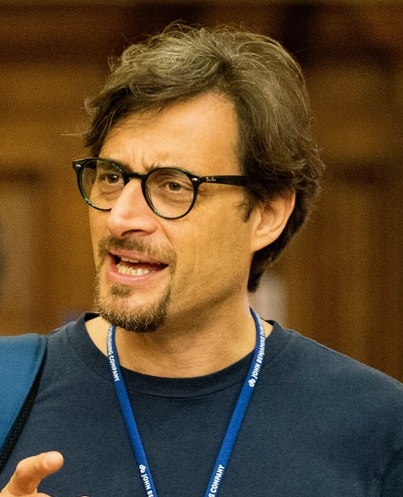
Marco VenutiView profile
Researcher
Marco Venuti is a tenured researcher in English Language, Translation, and Linguistics at the Department of Humanities, University of Catania, where he teaches Statistics in Corpus Linguistics and English Linguistics and ESP. He previously held a research position at the University of Naples Federico II from 2006 to 2014. He is a founding member of the Interuniversity Research Center I-LanD (Identity, Language, and Diversity), the Center for Humanistic Computing (CInUm), and the Neurohumanities Research Center at the University of Catania. He serves as the Department's delegate for Digital Humanities and Digital Sociology and is a member of the Departmental Research Committee. His primary research interests include: Critical Discourse Analysis Corpus Assisted Discourse Studies News and Political Discourse Institutional Discourse Social Media in the Public Sphere Language and Gender His recent scholarly work focuses on the discursive construction of social and political events across media and cultures, particularly analyzing news values, identity representation, and evaluative language. His publications reveal a strong methodological consistency in combining corpus linguistics with critical discourse analysis, often in cross-cultural and multilingual contexts, examining topics such as same-sex marriage rulings, EU perception in media, and the linguistic framing of riots and political briefings. He has developed and analyzed major corpora, including the CompWHoB Corpus (White House Press Briefings) and the CorDis Corpus (Iraq War discourse). Scientific contributions and projects include: Principal Investigator (PI) of the interdepartmental research project on online journalism (2020–2024) Departmental PI of the project on Crisis in/of Democracy, focusing on populism and social media Co-development of linguistic corpora for political and media discourse analysis He actively mentors students, supervising theses on discourse analysis, media language, and gender. His research bridges linguistics, sociology, and digital humanities, contributing to both theoretical and applied understandings of language in public and institutional domains.