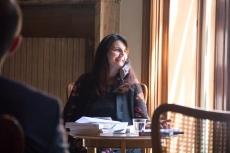
Philip Miller is a Professor of General and English Linguistics at University of Paris Cité. He specializes in syntax, semantics, and discourse pragmatics, with a focus on verbal complementation, perception verbs, VP ellipsis, pseudogapping, anaphora, and deixis. His work often compares English and French, and he has supervised several PhD students in linguistics. PhD in Linguistics, Utrecht University (1991) His research explores the interface between syntax, semantics, and pragmatics, particularly in areas like auxiliary verbs, ellipsis mechanisms, and discourse constraints. Recent publications analyze VP ellipsis, anaphora, and nominal phrase structures. Professor Miller actively supervises doctoral research in topics such as verbal complementation and discourse pragmatics. He contributes to edited volumes like Sens conventionnel et implicite and Experimental Approaches to Ellipsis .
Milena Podolsak is a PhD candidate in Scandinavian languages and lecturer in Swedish as a foreign language at Stockholm University's Department of Swedish Language and Multilingualism. She is actively engaged in research on lexical semantics with particular focus on metaphor and metonymy in political discourse. Her research interests center on lexical semantics, metaphor analysis, and metonymy within political discourse. She examines how motion and journey metaphors function in political rhetoric, with particular attention to conceptual integration and metaphorical meaning construction. Her work bridges cognitive linguistics with political communication analysis, exploring how language shapes political messaging and public perception. Her research output primarily focuses on conceptual metaphors in Swedish political speeches, demonstrating trends in how political actors use spatial metaphors to frame policy discussions and national direction. Her analytical approach combines Conceptual Metaphor Theory, Blending Theory, and Holistic Spatial Semantics to examine discrepancies in metaphorical projection from concrete motion to political activity. Milena teaches courses in grammar, text analysis, multimodality, and Swedish as a foreign language, contributing to both undergraduate education and language instruction for international students.
Anne Le Draoulec is a CNRS Research Officer affiliated with the Cognition, Languages, Ergonomics (CLLE) laboratory at the University of Toulouse 2 - Jean Jaurès. Her work focuses on Semantics, Discourse Analysis, and Temporal Markers , particularly the pragmaticalization of temporal expressions and their interaction with spatial and subjective elements in French language. Current affiliation: CNRS research officer, CLLE laboratory, University of Toulouse 2 Research interests include: Evolution of temporal locutions into pragmatic markers (e.g., "à un moment donné") Semantic-pragmatic interface in French discourse Interplay between spatial and temporal expressions Complex prepositions and enunciative rupture markers Recent article trends highlight her exploration of: Pragmaticalization processes in oral/written French Temporal deixis ("dans x temps", "ici") Discourse markers like "après", "maintenant", "ensuite" Gender asymmetry in linguistic structures
Alexandra Stan serves as a Lecturer in the Department of Theoretical and Applied Linguistics at the Faculty of Letters, Transilvania University of Brasov, Romania. Holding a PhD, she actively contributes to linguistics education and research within this institution, focusing on theoretical and practical language analysis. Her research centers on semantics, lexicography, and contrastive linguistics between English and Romanian, with significant emphasis on idiomatic expressions, bilingual dictionaries, and English for Specific Purposes (ESP). Stan's work explores lexical semantics across cultural contexts, examining how concepts like natural phenomena, physical attributes, and digital communication manifest in language structures. She investigates terminology variation, semantic fields, and the impact of technology on language learning. Recent publications (2022-2024) reveal expanding research trajectories into digital discourse, including code-switching in gaming communities and specialized glossary development. Her scholarship consistently employs contrastive methodology to analyze linguistic phenomena across English and Romanian, with growing attention to cultural metaphors, literary language, and technology-enhanced language education. This trajectory demonstrates increasing interdisciplinary connections between computational linguistics, sociolinguistics, and educational technology.
Francisco de Arriba Perez serves as an Assistant Professor in the Department of Computer Science at the School of Telecommunications Engineering, University of Vigo, where he contributes to the Research Center for Telecommunication Technologies and leads research within the TC1 Group of Information Technologies. He earned his PhD from the University of Vigo in 2019 with a dissertation titled Application of wrist wearables in educational environments for the characterization of sleep and stress , supervised by Dr. Manuel Caeiro Rodríguez and Dr. Juan Manuel Santos Gago. His research centers on Explainable Artificial Intelligence and Natural Language Processing , with pioneering applications in mental health monitoring (postpartum depression, anxiety, cognitive decline), wearable technology integration , and real-time stream analysis for social networks and financial systems. He specializes in developing interpretable machine learning frameworks that bridge theoretical AI advancements with practical healthcare implementations, particularly through large language models for clinical decision support. Analysis of his 15 most recent publications reveals a dominant research trajectory toward healthcare AI (60% of works), with significant contributions to mental health diagnostics using conversational interfaces, followed by applications in social network security (20%) and financial forecasting (20%). His methodology consistently emphasizes explainability , real-time processing , and stream-based adaptation to address data drift challenges. As an active member of the TC1 Group of Information Technologies, he collaborates on interdisciplinary projects advancing telecommunication technologies and information systems, with recent work exploring robotic avatars for social pilgrimage and accessibility enhancements through wearable computing.
Dr. Chernova Irina Viktorivna is an Associate Professor at Zaporizhzhia Polytechnic National University's Faculty of Business Technologies and Economics, Department of Business and Management. With a Candidate of Philological Sciences degree (1999) and Master's in Architecture (2021), her expertise bridges Ukrainian cultural history with modern business communication. Specializes in Management Psychology , Public Relations , and Corporate Branding Developed 120+ scientific works including 3 Web of Science/Scopus publications Led international educational projects with Prometheus and DVV International Her research examines: Branding and Digital Marketing strategies Communication Systems in post-conflict management Historical Preservation in urban development Recent publications analyze: Ukraine's national image in global economics Ukrainian business communication challenges Psychopedagogical motivation frameworks
Prof. Camilla Miglio is a full-time Professor of German Literature at the Department of European, American and Intercultural Studies , Sapienza University of Rome. She specializes in 20th-century German poetry, translation studies, and intercultural geopoetics. PhD in German Literature from Pisa (1996), focusing on Paul Celan Key research areas: Literary Geography, German-Italian Cultural Dialogue, Jewish-German Literature, and Poetics of Translation Her work interrogates the interplay between nature, memory, and poetic form in German literature from the 18th to 21st centuries. Recent projects include Europe as a Space of Translation (EACEA 2007-2013) and the ongoing PRIN A Physical Geography of German-speaking Literature (2023-2025). Scientific Awards include: Ladislao-Mittner-Preis (2005) Bundesverdienstkreuz (2010) Corresponding Member, Accademia Nazionale dei Lincei (2023) She leads seminars on German elegy, nature poetry, and intercultural translation , with guest collaborations from poets like Jan Wagner and scholars from Leipzig University. Classes held in Lab 4, Marco Polo Building, Rome.
Julian Santano Moreno is an Associate Professor at the Department of European, American and Intercultural Studies in Sapienza University of Rome. His academic work focuses on the Romance languages with particular emphasis on historical linguistics, dialectology, and cognitive semantics. Faculty of Arts Department of European, American and Intercultural Studies Research interests: Romance and Indo-European etymology, linguistic historiography, historical lexicology Contact: julian.santano@uniroma1.it His research explores the evolution of Romance languages through the lens of cognitive semantics and historical linguistics, with a special focus on Indo-European substrata. He has published extensively on topics such as: Occitan dialect koinéization Traditionalist linguistic theory Proto-Indo-European root reconstruction Historical lexicology of Spanish Semantic change in Romance verbs Onomastic analyses of lexical families Publications demonstrate expertise in: Historical linguistics Etymology Dialectological convergence Semantic evolution Philological methodology Linguistic historiography
Derek Ball is a Senior Lecturer in the Department of Philosophy at the University of St Andrews , affiliated with the Arché Philosophical Research Centre and the Global Research Centre for Diverse Intelligences . He contributes to the St Andrews SETI Post-Detection Hub and engages in interdisciplinary research. Research Focus: Philosophy of mind, philosophy of language, semantic theory, conceptual engineering, and comparative psychology. Key Projects: 'What Kind of Mind?' (2018-2019) and 'Rethinking Mind and Meaning' (2014-2016), funded by the Arts and Humanities Research Council. Public Engagement: Delivered workshops with Kingsbarns Primary School (2016) to communicate research on animal and infant minds. Collaborations: Partnered with international researchers in cognitive science and linguistics. Publications: Notable works include Definition and Dispute: A Defense of Temporal Externalism (2024) and research on metasemantic ethics, semantic accommodation, and nonhuman cognition. Supervision: Currently advising PhD students including Nick Allen, Isabella Bartoli, and Sabina Dominguez Parrado.
Prof. PhD Anastasia Nicheva Petrova is a distinguished Professor in the Department of General Linguistics and Old Bulgarian Studies at the Faculty of Modern Languages, University of Veliko Tarnovo ("St. Cyril and St. Methodius" University). With an extensive publication record spanning over three decades, she has established herself as a leading expert in Balkan linguistics, phraseology, and linguistic-cultural studies. Her academic career demonstrates deep engagement with the complex linguistic landscape of the Balkan region, examining both historical and contemporary aspects of language contact and convergence. Prof. Petrova's research interests span multiple dimensions of linguistic inquiry, with particular emphasis on the Balkan linguistic union, phraseology, and the intersection of language with culture and cognition. Her work explores how linguistic structures reflect cultural models, examining everything from semantic fields to the multimodal nature of perception and expression. She has made significant contributions to understanding how Slavic lexical elements have been incorporated into other Balkan languages, the phonetic motivation behind phraseological units, and the mythological programming of everyday language. Her research bridges theoretical linguistics with cultural anthropology, creating a comprehensive framework for understanding the Balkan linguistic space as both a historical phenomenon and a living, evolving system. The analysis of Prof. Petrova's 15 most recent publications (2019-2025) reveals a consistent focus on the intricate relationships between language, culture, and cognition in the Balkan context. Her work demonstrates a sophisticated methodological approach that combines comparative analysis with cultural interpretation. A notable trend is her increasing attention to multimodal aspects of language, examining how perception, emotion, and cultural concepts are linguistically encoded. Her research shows a clear evolution from traditional comparative linguistics toward more integrated approaches that incorporate cognitive science, anthropology, and cultural studies. Prof. Petrova has been actively involved in numerous research projects that strengthen international academic collaboration. She has participated in projects focused on Balkan linguistic and cultural symbiosis, digital humanities, and the development of academic networks across Southeastern Europe. Her work with international teams from universities in Nis, Warsaw, and Craiova demonstrates her commitment to building sustainable academic partnerships that transcend national boundaries. She has also contributed to projects aimed at enhancing doctoral education and research, helping to establish platforms for young researchers to showcase their work.
Assoc. Prof. Teodora Kurteva Rabovyanova is an Associate Professor at the Department of Modern Bulgarian Language, Faculty of Modern Languages, St. Cyril and St. Methodius University of Veliko Tarnovo. Her research focuses on Bulgarian linguistics, syntax, and semantics, with particular emphasis on causative verbs, transitivity, and language culture. University: St. Cyril and St. Methodius University of Veliko Tarnovo Department: Department of Modern Bulgarian Language Her work explores the evolving dynamics of the Bulgarian verb system, including de-reflexive verbs, poly-prefixed verbs, and the stylistic and grammatical implications of these phenomena. She actively participates in projects like Oral Communication in the Digital Age and Bulgarian Language in a Globalizing World , which aim to digitize spoken language archives and analyze Bulgarian's role in international contexts. Recent publications highlight her expertise in causative verbs, transitivity, and their cultural reflections in Bulgarian phraseology. Her contributions include studies on prepositional syntax, colloquial verb usage, and the interplay between literal and figurative meanings in polysemous verbs. Notable Projects: Oral Communication in the Digital Age Bulgarian Language in a Globalizing World Oral Communication – Current Issues and Scientific Solutions
Iliyana Dimitrova is a Senior Lecturer at the Department of Modern Bulgarian Language within the Faculty of Modern Languages at St. Cyril and St. Methodius University of Veliko Turnovo in Bulgaria. She holds a PhD and has established herself as a prominent researcher in Bulgarian linguistics with a specialization in the relationship between language, culture, and cognition. Her research interests span Bulgarian Linguistics, Sociolinguistics, Language and Culture, Second Language Acquisition, Intercultural Communication, Cognitive Linguistics, and Contrastive Linguistics. Dr. Dimitrova's work extensively examines how cultural concepts are encoded in language, with particular focus on the Bulgarian linguistic picture of the world, sociocultural competence in language learning, oral communication patterns, and language contact phenomena, especially between Bulgarian and English. Her research bridges theoretical linguistic frameworks with practical applications in language teaching, particularly for Bulgarian as a foreign language. Analysis of her publication trends reveals consistent focus on conceptual domains like cleverness/intellect, success/failure, hospitality, and collective vs. individual identity in Bulgarian culture. Her work demonstrates sophisticated integration of cognitive linguistic approaches with empirical research on language use, often employing contrastive analysis (particularly Bulgarian-English comparisons) and discourse analysis. A significant portion of her research addresses the challenges of teaching Bulgarian language and culture to non-native speakers, including frameworks for incorporating sociocultural competence into language curricula. Dr. Dimitrova actively participates in research projects including 'Integration of Students and Doctoral Students into Research Initiatives and Practices of the Faculty of Philology at VTU' (2025), 'Oral Communication in the Digital Age – Problems and Perspectives' (2023), and 'Oral Communication – Current Problems and Scientific Solutions' (2020). These projects reflect her commitment to advancing research in linguistic communication, digitizing linguistic resources, and mentoring the next generation of scholars. Through her ongoing involvement in the 'Problems of Oral Communication' conference series and other academic initiatives, she maintains an active role in the Bulgarian and international linguistics community.
Dr. Anne Wienholz is a Researcher at the Institute for German Sign Language (IDGS) within the Department of Language, Literature, and Media, University of Hamburg's Faculty of Humanities. She works on DFG-funded projects focused on experimental sign language research. Her research spans sign language linguistics, psycholinguistics, and neurolinguistics. Key interests include sentence processing in German Sign Language (DGS) and American Sign Language (ASL), language acquisition in deaf children, pronominal reference resolution, and age-of-acquisition effects. She employs eye tracking, ERP, and experimental methodologies to investigate cognitive and neurophysiological mechanisms. Analysis of her 12 publications (2018-2025) reveals consistent experimental investigations of sign language syntax, reference resolution, and developmental trajectories. Work frequently compares DGS and ASL, examining adjective placement, anaphora, and age effects through integrated behavioral and neurophysiological approaches. Dr. Wienholz contributes to DFG projects advancing sign language resources including the DGS Corpus and specialized dictionaries. These grants support corpus development and experimental infrastructure at the IDGS. She is affiliated with the Experimental Sign Language Laboratory (EGS-Labor), utilizing eye tracking and EEG. The IDGS develops critical resources like the Digital Dictionary of German Sign Language (DW-DGS) and domain-specific lexicons for health, psychology, and social work.
Daniel Green is a Teaching and Research Associate at the Vienna University of Economics and Business (WU), where he has been working since February 2022. His academic credentials include a BA in English and American studies, a teaching degree (Mag.phil.) in English and History from the University of Vienna, and an LL.M from the University of Edinburgh. His research explores the critical intersection of language, law, and business through the lens of applied legal linguistics. Green's scholarly focus centers on judicial discourse across historical and contemporary contexts, with particular attention to how linguistic analysis can address practical challenges in legal settings including police interviewing techniques and courtroom communication dynamics. As founding president of the Austrian Association for Legal Linguistics (AALL), he has established a platform for advancing research on language use in legal environments. Green's publication record reveals a methodologically sophisticated approach combining jurisprudential insights with quantitative and qualitative linguistic analysis. His recent work examines strategic indeterminacy in privacy policies, discourses of discrimination in criminal law, and gender representation in legislative texts, demonstrating consistent scholarly contribution to understanding language's role in legal systems. His academic trajectory includes prior teaching positions at the Centre for Teacher Education and the Department of English at the University of Vienna, along with experience teaching English, history, and law at secondary adult education institutions. Green has also contributed to research seminars on computer-assisted statutory interpretation and completed an internship with Vienna's state prosecution service. Through organizing projects promoting legal literacy, access to justice, and human rights, Green demonstrates commitment to applying academic insights to real-world legal challenges. His PhD project investigating discourses of indeterminacy in Austrian criminal proceedings represents ongoing scholarly contribution to understanding language in legal processes.
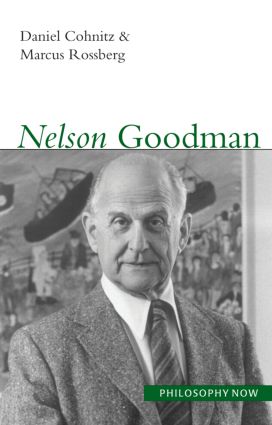
Marcus Rossberg is Professor of Philosophy at the University of Connecticut, director of the UConn Logic Group, and co-director of the Graduate Certificate in Logic program. He holds dual affiliations with the UConn Department of Mathematics and the Connecticut Institute for the Brain and Cognitive Sciences. Rossberg serves as editor of Erkenntnis, associate editor of Journal for the History of Analytical Philosophy (having previously been editor-in-chief), and editorial board member for Thought. His research centers on logic, philosophy of mathematics, and history of analytic philosophy, with specialized expertise in Frege studies. Key interests include abstractionism, second-order logic, neo-logicism, philosophy of arithmetic, and foundational issues in mathematical logic. His work examines conceptual frameworks in Frege's Grundgesetze, historical developments in analytic philosophy, and contemporary applications of logical systems across disciplines. Recent publications reveal sustained engagement with Fregean scholarship, particularly analyzing Grundgesetze, Russell's paradox, and abstraction principles. His research demonstrates consistent focus on logical systems' philosophical implications, historical context of analytic philosophy, and interplay between mathematical foundations and linguistic analysis. The work shows increasing attention to interdisciplinary applications connecting logic with cognitive science. Rossberg leads the UConn Logic Group, which organizes seminars, workshops, and conferences promoting interdisciplinary research in logic. The group supports the Graduate Certificate in Logic program, fostering collaboration between philosophy, mathematics, and cognitive science departments while advancing UConn's position in logical studies.