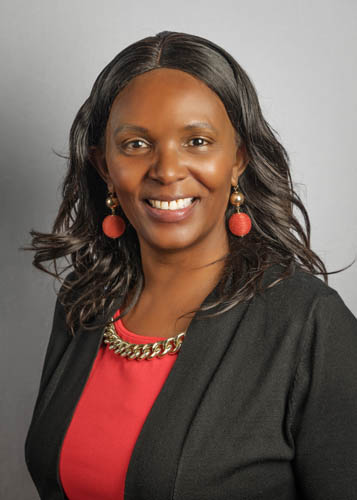
Faith Maina is a Professor in the Department of Curriculum & Instruction at Texas Tech University (since 2015). Previously, she served as a Professor at the State University of New York, Oswego (2000–2015), where she also directed the McNair Post-Baccalaureate Program. She holds a Ph.D. from the University of British Columbia (Canada), an M.A. from Trent University (Canada), and a B.Ed. from Kenyatta University (Kenya). Her research focuses on cultural and linguistic diversity in classrooms, culturally responsive teaching, and preparing diverse learners for STEM careers. Key areas of expertise include social justice in education, multicultural curriculum integration, and teacher empowerment through action research. Maina has authored and edited works such as Nurturing Reflexive Practice in Higher Education (2014) and contributed to studies on Kenyan educational contexts, gender dynamics, and community-based research. She has received prestigious awards, including the Carnegie African Diaspora Fellowship (2018) and Fulbright Scholar (2011).
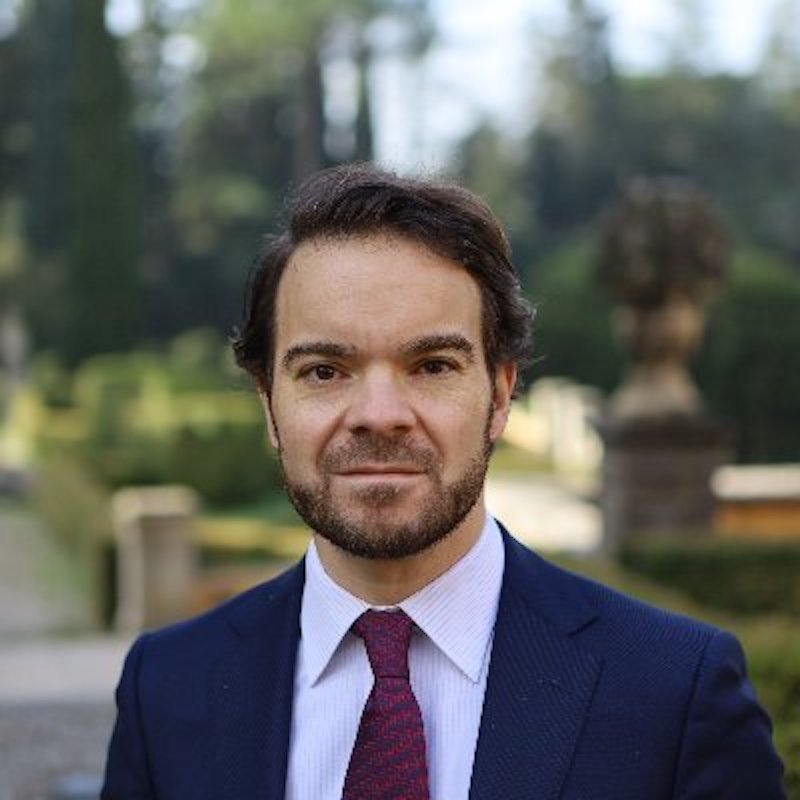
Nicolas Petit is a Full-time Professor and Head of the Department of Law at the European University Institute (EUI). His expertise lies in EU and US competition law, law and economics, and the intersection of law and technological change. He co-founded the Dynamic Competition Initiative (DCI) with UC Berkeley in 2022. Petit holds a PhD from the University of Liège, Belgium, where he was previously a Full Professor. He has held visiting roles at Harvard Law School, Stanford University, and the College of Europe. His research focuses on dynamic competition, digital markets, and the 'more economic approach' to antitrust. Key projects include analyzing platform regulation, AI governance, and the EU Digital Markets Act (DMA). Petit has advised the European Commission’s High-Level Expert Group on Artificial Intelligence and contributed to policy submissions for India, Brazil, and the EU. Publications span top journals like the Antitrust Law Journal and European Law Review , with an SSRN ranking of 23 among top legal scholars. He regularly engages in public discourse through platforms like Bluesky, addressing topics such as antitrust limits, AI regulation, and digital market dynamics. Current roles include Project Director at the EUI and leadership in initiatives like the Competition Law and Policy Workshop. His work integrates doctrinal, economic, and empirical methods to address modern regulatory challenges.
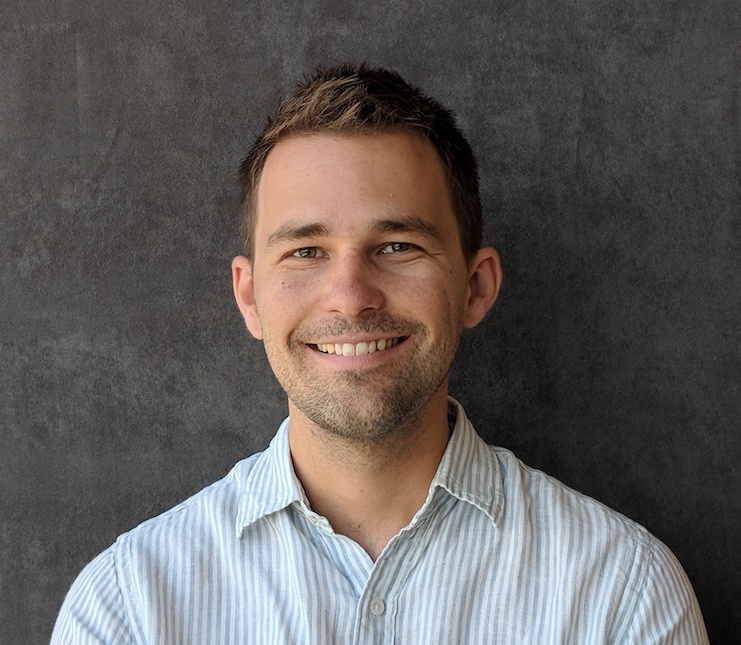
Ashton Anderson is an Associate Professor in the Department of Computer Science at the University of Toronto's Faculty of Arts & Science, where he leads the Computational Social Science Lab. His work intersects AI, data science, and societal impact, examining topics from algorithmic fairness to online behavior. Research investigates human-AI collaboration , social media dynamics , and computational ethics . Recent projects evaluate LLMs' impact on creativity and social media's agenda-setting power. His group develops methods to audit algorithmic systems for bias and alignment. Honored with a Google PhD Fellowship and NSERC Scholarship, he mentors graduate students in social computing and human-centered AI. His teaching covers social network analysis and computational social science methodologies.
David Aers is the James B. Duke Distinguished Professor of English at Duke University, with affiliations in the Department of English, Religious Studies, and Divinity School. He holds academic appointments since 1994, including directorship of the Medieval and Renaissance Studies Center since 2019. His expertise spans medieval and early modern literature, theology, and political culture, with a focus on Christian tradition and its intersections with ethics, gender, and community. Education: PhD from the University of York (1971) and BA from the University of Cambridge (1968). Research interests include late medieval English writing (e.g., Chaucer, Langland), theological doctrines like election and sin, and the evolution of Christian thought across the medieval/early modern divide. His recent works explore themes like enemy love in theology, gender identity, and the legacy of Constantinian Christianity. Recognition includes the Duke Distinguished Professorship. Teaching spans courses on Milton, medieval literature, and historical theology. He has served as editor for journals like Journal of Medieval and Early Modern Studies and contributed to academic service through editorial roles and professional committees. Labs/Teams: Leads the Medieval and Renaissance Studies Center, fostering interdisciplinary research in premodern cultures.
Professor Paul A. Raschky is affiliated with the Department of Economics at Monash University , where he also directs the SoDa Labs and co-founded the KASPR Datahaus PTY LTD and IP Observatory . His academic focus spans Political Economy , Environmental Economics , Insurance Economics , and Development Economics , with a specialization in natural hazards and data science applications. Education: PhD (University of Innsbruck, 2008), with a postdoctoral research visit at the Wharton School . Research: Explores intersections of disaster risk , governance , and economic development , leveraging machine learning and big data . Recent Publications: Focus on generative AI productivity , ethnic favoritism , disaster insurance , and conflict economics . Awards: Recipient of the ABDC Award for Innovation and Excellence in Research (2022) and Dean’s Excellence in Research Award (2016) . Projects: Leads initiatives on internet suppression in Myanmar , news media availability , and AI-driven policy insights in South-East Asia and the Pacific. Future Work: Will be on sabbatical in 2025 , likely expanding on AI applications and disaster resilience .
William O'Donohue, Ph.D., is a Professor in the Department of Psychology at the University of Nevada, Reno (UNR), within the College of Science. He holds advanced degrees in both clinical psychology (Ph.D., SUNY Stony Brook) and philosophy (M.A., Indiana University). His research focuses on forensic psychology, sexual assault, evidence-based practice, and the philosophy of psychology. He has directed a NIJ-funded clinic for 27 years, providing free services to victims of sexual abuse, and secured over $3 million in grants. He has authored 90 books and 300+ publications, serving on key committees like the APA's DSM revision panel. Education: Ph.D. in Psychology, SUNY Stony Brook (1986) M.S. in Psychology, SUNY Stony Brook (1982) B.S. in Psychology, University of Illinois (1979) M.A. in Philosophy, Indiana University (1988) Research Themes: His work critically examines forensic interviewing protocols, ideological bias in psychology, and the scientific validity of therapeutic practices. He advocates for procedural justice in psychological practice and challenges social justice movements' methodological rigor. Grants & Clinical Work: His clinic's NIJ grant supports free services for sexual abuse victims. He has consulted for the U.S. military and legal professionals on evidence-based practices. Labs/Teams: Operates a long-term clinical research program focused on forensic assessment and victim support through his UNR clinic infrastructure.
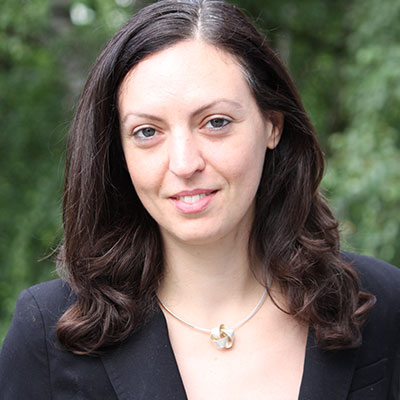
Giovanna Gioli is a Senior Lecturer in Human Geography at Bath Spa University's School of Sciences. She is a co-investigator in the Leverhulme Trust-funded project Digital Climate Futures , exploring decolonial and justice perspectives in climate change adaptation. Her research focuses on political ecology, climate migration, gender equity, and socio-ecological resilience in mountain regions of the Global South, particularly South Asia. PhD in Political Philosophy (University of Parma) MA in Political Philosophy (University of Pisa) MSc in European Studies and Migration (London School of Economics) Her research interests intersect political ecology, climate change adaptation, and the socio-cultural dimensions of migration. She examines how gender, conflict, and environmental hazards shape livelihoods and vulnerability in regions like Pakistan, Nepal, and the Hindu Kush Himalaya. Her work challenges dominant narratives, advocating for justice-oriented approaches to digitalized climate adaptation and decolonizing environmental research frameworks. Gioli has contributed to major projects such as HI-AWARE, analyzing vulnerability in glacier-dependent river basins, and authored commissioned reports for UN Women on migrant workers' socio-economic impacts in Nepal. She also co-edited Water Security across the Gender Divide and Thinking as Anarchists , advancing interdisciplinary debates in environmental humanities and critical theory. Teaching: Directed BSc Global Development and Sustainability at Bath Spa University (2020–2025), module leader for Cities and Environment , and teaches interdisciplinary research methods in environmental humanities. Grants: Leverhulme Trust (Digital Climate Futures, 2023–2026), HI-AWARE (2014–2018), and others addressing environmental migration and vulnerability. She is affiliated with the Research Centre for Environmental Humanities and the Climate, Hazards and Environmental Change Research Cluster at Bath Spa University. Her work bridges philosophical inquiry (e.g., Deleuze, Sartre) with applied research on environmental displacement, emphasizing the need for equitable, community-centered solutions.
Paige West is The Claire Tow Professor of Anthropology at Barnard College and a faculty member at Columbia University. She directs Columbia's Climate School Transdisciplinary Research Lab. Her work focuses on environmental conservation, Indigenous sovereignty in Melanesia, and climate change adaptation. She earned her Ph.D. in cultural and environmental anthropology from Rutgers University, with earlier degrees from Wofford College and the University of Georgia. Dr. West has conducted over 100 months of fieldwork in Papua New Guinea, collaborating with Indigenous communities to revitalize socio-ecological systems. Her research bridges anthropology with political ecology, examining linkages between environmental policy and international development. Key interests include Indigenous knowledge systems, conservation inequities, and commodity cultures. Director: Columbia University Climate School Transdisciplinary Research Lab Co-founder: PNG Institute of Biological Research and Roviana Solwara Skul Anthropological Director: Ailan Awareness NGO Award-winning author of three books, she founded the journal *Environment and Society: Advances in Research*. Her 2016 book *Dispossession and the Environment* won the Columbia University Distinguished Book Award. Current projects include a Guggenheim-funded book on climate change and kinship. Notable recognitions include Guggenheim Fellowship, Phi Beta Kappa Lecturer (2017-2018), and designation as one of 2021's 50 people changing the world by The Explorers Club. Her work integrates academic research with applied conservation initiatives, emphasizing Indigenous-led methodologies.
Dr. Aykut Ozturk is a Lecturer in Political & International Studies at the University of Glasgow's School of Social & Political Sciences. He joined in 2020 after earning his PhD in Political Science from Syracuse University. His research focuses on democracy/authoritarianism, political identities, and online survey methods. He teaches courses on authoritarian political communication and authoritarianism. Education: PhD in Political Science, Syracuse University Research Interests: His work spans public opinion (political identities, polarization), comparative politics (democracy/authoritarianism dynamics, Turkish politics), and methodological innovations in online surveys/experiments. He explores how authoritarian regimes sustain support through propaganda and emotional appeals. Grants & Collaborations: GCID Small Research Grant: 'Fighting Disinformation' (collaborator: Candas Ayan et al.) Research on Kurdish political participation with Dr. Sevinc Ozturk Teaching: Authoritarian Political Communication (PGT) Issues in Authoritarianism (Honors) Advising: Currently supervising Candas Ayan (de-citizenization in Turkey/India) and Siyuan Zhang (gendered expectations on Chinese social media).
Richard Steigmann-Gall is an Associate Professor of History at Kent State University's Department of History, within the College of Arts & Sciences. He previously served as Director of the Jewish Studies Program (2004–2010). Holding degrees from the University of Michigan (BA, MA) and the University of Toronto (PhD), his research focuses on religion and Nazi Germany, transatlantic fascism, and antisemitism. His seminal work, *The Holy Reich: Nazi Conceptions of Christianity, 1919-1945*, has been translated into Spanish, Portuguese, and Italian, earning widespread academic and public acclaim. His research has been supported by grants from institutions like the Social Science and Humanities Research Council of Canada, the Max Planck Institute, and the U.S. Holocaust Memorial Museum. Dr. Steigmann-Gall has presented globally, including at Georgetown, NYU, Cambridge University, and the University of Sydney. He is a recipient of the Distinguished Teaching Award from Kent State's College of Arts & Sciences (2004) and has been a frequent media commentator on fascism and modern political movements. Research & Education: His expertise spans Nazism’s religious dimensions, comparative fascist ideologies, and the cultural underpinnings of antisemitism. Current projects include a chapter on religion and genocide in pre-WWII American fascist thought for *American Fascism: Past and Present* (Cambridge). He has published in journals like *German History*, *Journal of Holocaust Research*, and *Totalitarian Movements and Political Religions*. Teaching & Outreach: Dr. Steigmann-Gall teaches courses on modern European history, fascism, and the Holocaust. He has mentored students in topics including Nazi Germany and transnational extremism, and his pedagogical approach has been recognized through teaching awards and nominations. He has also engaged with public discourse through media appearances in *The New York Times*, *The Daily Beast*, and documentaries on the History Channel. Awards & Grants: Distinguished Teaching Award (2004) Grants from the Max Planck Institute, SSHRC, and the U.S. Holocaust Memorial Museum Collaborations & Networks: He has collaborated on edited volumes and contributed to projects at institutions worldwide, reflecting his commitment to transnational historical inquiry.
Robert Braun is an Associate Professor of Sociology and Political Science at the University of California, Berkeley. He holds a PhD from Cornell University (2017) and previously taught at Northwestern University. His research focuses on civil society dynamics during social upheaval, intergroup relationships in conflict settings, and the historical dimensions of political fear and persecution. His work has been published in prestigious journals like the American Journal of Sociology and American Political Science Review. Key contributions include his book Protectors of Pluralism (Cambridge UP, 2019), analyzing community responses to mass persecution, and his forthcoming project Bogeymen , tracing political fear through Central European folklore. Braun also examines healthcare economics, studying private equity impacts on medical practices and hospice care quality. His interdisciplinary approach bridges historical sociology, political theory, and quantitative analysis. Education: PhD in Sociology, Cornell University, 2017 Research Interests: Genocide Studies, Healthcare Policy, Ethnopolitical Conflict, Moral Mobilization Awards: Not explicitly mentioned in available texts Braun’s work on Holocaust resistance patterns and bystander dynamics has influenced debates on collective action and moral responsibility. His recent studies on healthcare consolidation highlight financialization effects in medical sectors, contributing to policy discussions on equity and access.
Gunnar Blohm is an Assistant Professor in the Department of Biomedical and Molecular Sciences at Queen's University, affiliated with the School of Medicine and Faculty of Health Sciences. His research focuses on sensorimotor neuroscience, particularly 3D sensorimotor control, eye-hand coordination, and computational modeling of neural processes. He holds a Ph.D. from Université Catholique de Louvain and has held postdoctoral positions at York University and his alma mater. Cross-appointed to the School of Computing, Department of Psychology, and Department of Mathematics and Statistics, he is also Vice-Director of the Connected Minds initiative. His research integrates behavioral experiments, brain imaging (MEG/EEG), and patient studies to understand how sensory information is transformed into goal-directed actions. Key areas include visuomotor transformations, multisensory integration, and Bayesian processes in neural computations. Blohm leads the Computational Sensorimotor Neuroscience Lab, emphasizing collaborative projects like Neuromatch Academy and contributions to open science initiatives. Affiliated with Queen's Centre for Neuroscience Studies and Ingenuity Labs, his work bridges computational approaches with clinical applications, aiming to develop frameworks for understanding brain dysfunction and clinical tools. His recent articles explore topics like saccade dynamics, pupil responses, and generative adversarial collaborations in scientific discourse.
Laura Fine is a Professor of English and holds the Norma Rose Chair in English at Meredith College. She specializes in literary analysis with a focus on gender, race, and cultural dynamics in American and Southern literature. Her research explores themes such as identity formation, social critique, and narrative structure in works by authors like Harper Lee, Jesmyn Ward, and Bonnie Jo Campbell. She actively contributes to academic conferences and publications, balancing her scholarly work with department leadership and undergraduate education. Dr. Fine earned her B.A. from the University of Minnesota, followed by M.A. and Ph.D. degrees from the University of California at Davis. Her teaching philosophy emphasizes connecting students to literary themes through small-class discussions, fostering critical thinking and effective communication. Her research spans contemporary and classic texts, with publications analyzing gender in modern American fiction, race in Southern Gothic narratives, and postcolonial identity in works like Jhumpa Lahiri’s stories. Recent work includes a chapter on rape culture in Bonnie Jo Campbell’s fiction and re-evaluations of Harper Lee’s legacy. As department head, Fine prioritizes community-building among English majors, faculty, and staff. She has contributed to major reference works like the Encyclopedia Britannica and engages with public discourse through platforms like The Conversation.
Professor Richard Thomas is Head of the School of Culture and Communication at Swansea University and holds a Professorship in Media within the department of Media, Communications, Journalism and Public Relations. He is a globally recognized academic in political communication and media research, co-authoring Reporting Elections: Rethinking the Logic of Campaign Coverage , and leading research on alternative media’s role in democracy. His work has been funded by the Economic and Social Research Council (£517,000 project on online political media), influencing 21st-century journalism practices. Research interests span political communication, media methods, and the treatment of elections in alternative media. He employs content analysis and critical discourse analysis to study media framing of economics, politics, and conflict. Recent work explores right-wing media perspectives and UK election coverage. Grants & Impact : Co-led a £517k ESRC project (2019–2022) analyzing alternative political news online. His research informs media regulators and has been published in top journals like International Communication Gazette and Journalism . He is a Fellow of the Higher Education Academy and advises global journalism programs through his role as Global Chair of the Erasmus Mundus Joint Degrees Advisory Board. Teaching & Leadership : Teaches modules on media analysis and 21st-century journalism. Serves on Swansea University Senate and Faculty Leadership. Supervises PhDs on topics like Nigerian activism, gender in sports journalism, and Saudi Arabia media narratives. Publications : Over 30 peer-reviewed articles and books, including works on Brexit media coverage, BuzzFeed’s election reporting, and cricket’s cultural history. Recent focus areas include media literacy via YouTube essays and the BBC’s election role.
Dr. Caoimhe Nic Lochlainn holds the rank of Professor at Dublin City University's Fiontar & Scoil na Gaeilge, the university's School of Irish and Celtic Studies. She earned her BA Joint Honours in Irish and French, MA in Irish, and PhD in Irish at Queen's University Belfast. Her research focuses on translation methodologies, children's literature, and cultural history with a particular emphasis on Irish-language texts. Her academic contributions include co-editing major volumes such as Laethanta Gréine & Oícheanta Sí (2013) and Thar an Tairseach (2014), as well as publishing extensively on children's literary culture and folklore adaptation. She has also authored children's books like Scéalta le hInsint don Ghealach (2018). Recent publications explore representation in Irish-language YA fiction (2025), Scottish cultural depictions in Irish prose (2023), and Gaelic translation challenges (2022). Awards include the 2025 Research Ally designation and 2019 IBBY Honour List recognition. Current supervision includes three PhD candidates: Dara De Poire, Eilis Neary, and Mohamed Yazjeen. She actively participates in academic committees such as the Irish Association for the Study of Children's Literature (EASCL) and serves on Rádio na Life's board.