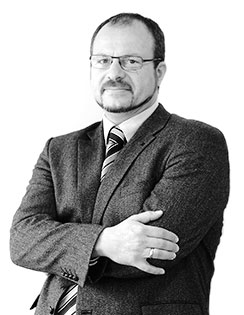
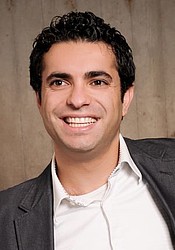
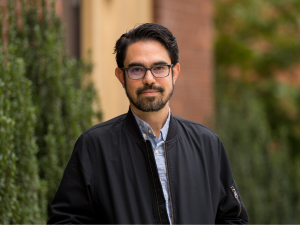
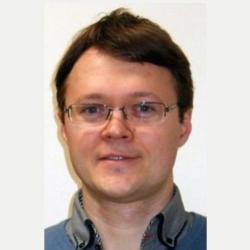
Dr. Christos Koritos serves as the Associate Dean of Academic Programs and Academic Director of the MSc in Marketing at The American College of Greece (Alba Graduate School of Business). He holds a Ph.D. from Athens University of Economics & Business, an M.Sc. from the University of Stirling, and a B.Sc. from Athens University of Economics & Business. His academic role includes teaching and leading strategic initiatives across multiple master’s programs in Marketing, International Business, and Tourism Management. Dr. Koritos’ research focuses on Consumer Psychology, Marketing of Services, Advertising, and Corporate Social Responsibility. His work explores topics such as customer behavior in hospitality settings, servicescape design, and the impact of rhetoric in advertising. He has published extensively in journals like Tourism Management , Journal of Business Research , and European Journal of Marketing . His consultancy work spans over 20 Greek and multinational companies, addressing strategic marketing challenges. He actively contributes to EU-funded projects and serves as a reviewer for academic journals and conferences. His teaching spans institutions including Alba, Athens University of Economics & Business, and the Greek Open University. Dr. Koritos’ recent research highlights include analyzing customer threats in hospitality, greenwashing in tourism, and the effects of music in service environments. His work bridges theoretical insights with practical applications, emphasizing empirical rigor and cross-disciplinary relevance.
Brenda Rinard is a Continuing Lecturer and Assistant Director of the Writing Across the Curriculum (WAC) Program at the University of California, Davis. She specializes in teaching advanced composition and discipline-specific writing courses, including UWP 101, UWP 104D, and graduate-level writing seminars. Her work focuses on rhetoric, genre pedagogy, multilingual writing, and cross-disciplinary writing initiatives. Rinard has held administrative roles in writing programs at both UC Davis and Stanford University, where she developed curricula for international students. Education : Ph.D. in Education (Language, Literacy, and Culture), UC Davis, 2010 MA in English Composition, San Francisco State University, 2002 BA in English (High Honors), UC Berkeley, 1997 Research Interests : Genre theory, writing transfer to professional contexts, STEM writing instruction, and large-classroom pedagogy. Current projects explore genre awareness as a bridge between academic and workplace writing. Awards : Nominated twice for the ASUCD Excellence in Education Award (2012, 2014) Grants & Service : Principal Investigator on a Spencer-Teagle grant (2008–2010); active in writing program administration, grant-writing consulting, and peer review for Gifted Child Quarterly and NCTE. Labs/Teams : Core contributor to UC Davis’s WAC Program and the Area Three Writing Project.
Dr. Jacqueline Burgess is a Senior Lecturer in International Business at the University of the Sunshine Coast's School of Business and Creative Industries. As Australia's leading researcher in business and game studies, she directs research on narrative brands, digital media marketing, and creative industries. Her work bridges academic rigor and industry practice through collaborations with companies like Ubisoft. She holds a PhD in Marketing from the University of the Sunshine Coast, a BBus(Hons), and BArt/Bus. Her teaching focuses on marketing communication, brand management, and interdisciplinary approaches to business education. Research explores narrative brand management across media ecosystems, consumer attachments to fictional characters, marketing practices in publishing and game industries, and digital employability competencies. Recent publications demonstrate sustained examination of author marketing knowledge, video game brand authenticity, and creative industry business models. Awards: 2023 Finalist Regional Universities Network Learning and Teaching Awards 2022 Emerald Literati Award 2022 DASSH Award for Leadership and Excellence in Employability 2022 SBCI Award for Excellence in Learning Experience Design 2022 Commendation UniSC Vice-Chancellor and President's Awards 2019 Vice-Chancellor and President's Award for Excellence She actively supervises doctoral candidates researching digitalization impacts on B2B firms, intuitive VR interfaces, and YA literature censorship. Grant funding includes Endeavour Foundation VR Barista Project ($80,000) and Australian Small Business Ombudsman research. As Digital Games Research Association Australia board member, she mentors emerging researchers and leads industry-academic initiatives.
Professor Paul S.C. Tacon is a leading figure in rock art research, serving as a Professor and Chair in Rock Art Research at Griffith University’s Griffith Centre for Social and Cultural Research. He directs the Place, Evolution and Rock Art Heritage Unit (PERAHU) and is affiliated with the Australian Research Centre for Human Evolution. His work focuses on global rock art, particularly in Australia, Southeast Asia, and beyond. With over 93 months of fieldwork across 20+ countries, Tacon has made groundbreaking discoveries in Arnhem Land and Wollemi National Park. He has authored/co-authored over 315 publications, including influential books like Relating to Rock Art in the Contemporary World and Histories of Australian Rock Art Research . Education: BA (Hons) from the University of Waterloo (1980), MA from Trent University (1984), and PhD from the Australian National University (1990). Research Interests: Global rock art analysis, Indigenous archaeology, rock art preservation, and cultural evolution. Key areas include First Nations rock art in Australia, Southeast Asian prehistory, and the intersection of rock art with climate change and cultural heritage. Notable Awards: Rhys Jones Medal (2016), ARC Australian Laureate Fellowship (2016–2021), and Griffith Vice-Chancellor’s Research Excellence Award (2016). Labs/Teams: Director of PERAHU and collaborator in Griffith’s Human Evolution Centre. Supervises numerous PhD students focusing on global rock art projects. Active in grant-funded initiatives like the Art at a Crossroads project and Australian Rock Art History program.
Murat Tarakci is a Professor of Innovation Strategy at the Rotterdam School of Management (RSM) , part of Erasmus University Rotterdam . He holds the Chair of Innovation Strategy and is affiliated with the Department of Technology and Operations Management . His research focuses on how organizations adapt to environmental challenges, emphasizing innovation strategies that address societal grand challenges. He has been affiliated with RSM since 2008. Prof. Tarakci earned his PhD in Behavioral Strategy from Erasmus University in 2013, with a focus on strategic consensus, power dynamics, and networks. He advises executives and organizations on innovation and strategy, blending academic rigor with practical insights. Research Interests: His work spans innovation strategy, organizational behavior, digital transformation, and middle management dynamics. He explores how organizations structure themselves to innovate responsibly and tackle global issues. Recent studies include CEO political partisanship effects, digital disruption impacts, and humanitarian coordination challenges. Publications: His work appears in top journals like Academy of Management Journal , MIS Quarterly , and Strategic Management Journal . Notable articles include analyses of corporate misconduct, digital strategy frameworks, and middle management roles. He has authored over 27 academic articles and contributed to practitioner outlets like Harvard Business Review . Editorial Roles: He serves on editorial boards for journals including Academy of Management Journal , Journal of Management , and Journal of Management Studies . Advising & Teaching: Supervised PhD candidates such as Timo van Balen (2014-2019) and Magnus van Haaren (2022-present). Developed teaching cases on corporate innovation (e.g., Philips’ Lighting Up Shipping) and partnership models (e.g., Antibiotics Crisis). Lab/Teams: Engaged in interdisciplinary research through RSM’s strategic networks and ERIM (Erasmus Research Institute of Management), focusing on innovation ecosystems and organizational resilience.
Paul Cooke is the Centenary Chair in World Cinemas at the University of Leeds, affiliated with the School of Languages, Cultures and Societies. He holds a PhD in German Studies from the University of Birmingham and has extensive experience in German Cinema, GDR Studies, and participatory video methodologies. His academic career spans roles such as Pro-Dean for Research and Innovation and acting Dean of the Faculty of Arts. Research focuses on participatory arts in public health (e.g., CE4AMR for antimicrobial resistance) and mental health (Project CREATE). He has led global initiatives like Changing the Story (post-conflict civil society) and CARAN (Nepal antibiotic resistance). Films include Roebourne , Operación Berlín , and Ek Notun Probhat , earning awards at international festivals. He directs the Centre for World Cinemas and Digital Cultures and collaborates across disciplines, including with NGOs and policymakers. Key contributions include theorizing participatory film’s role in health advocacy and heritage studies through projects like Voicing Hidden Histories .
Shaohui Foong is an Associate Professor in the Engineering Product Development (EPD) pillar at Singapore University of Technology and Design (SUTD). He previously served as a Visiting Assistant Professor at MIT's Department of Mechanical Engineering (2011). His research focuses on innovative robotics and UAV systems, medical technology, and design-centric pedagogy. Core projects include magnetic localization for medical devices, nature-inspired aerial robotics (e.g., THOR hybrid UAV), and competitive engineering design activities like Designettes. Research interests span biomimetic flight systems, autonomous navigation, and interdisciplinary educational frameworks. Notable innovations include the Transformable HOvering Rotorcraft (THOR), which merges fixed-wing and rotor-wing capabilities, and magnetic localization for nasogastric tube tracking. His work emphasizes practical applications in healthcare, infrastructure inspection, and environmental monitoring. Teaching emphasizes ethical engineering practice and hands-on design. He actively mentors students across PhD, master’s, and undergraduate levels, offering research opportunities in robotics, control systems, and medical technology. Collaborative projects with industry and academic partners are encouraged, with a focus on sustainability and technological innovation. Current research trends reflect a blend of bio-inspired design, advanced control algorithms, and cross-disciplinary problem-solving. Recent publications highlight advancements in monocopter dynamics, hybrid UAV architectures, and sensor integration for medical and industrial applications.
Zachary Wallmark is an Associate Professor of Musicology and Area Chair of Musicology and Ethnomusicology at the University of Oregon's School of Music and Dance. His interdisciplinary research bridges musicology, cognitive science, and sound studies, with a particular focus on musical timbre and its relationship to emotion, meaning, and cultural context. Wallmark maintains a joint affiliation with the Center for Translational Neuroscience at the University of Oregon, reflecting his cross-disciplinary approach. His research interests span popular music studies, timbre analysis, music cognition, and sound studies, with particular attention to how musical timbre functions in emotional response, aesthetic judgment, and music sociology. Wallmark's work explores these themes across diverse musical contexts including American popular music, free jazz, extreme heavy metal, and traditional Japanese music. Wallmark's publications reveal a consistent focus on timbre as a critical yet undertheorized dimension of musical experience. His work spans empirical studies of timbre perception, corpus analyses of timbre semantics, interdisciplinary investigations of timbre's role in meaning-making, and theoretical explorations of timbre's relationship to cultural and social contexts. Recent publications increasingly integrate cognitive neuroscience methodologies with traditional musicological approaches. GRAMMY Museum Foundation Scientific Research Grant UO Presidential Fellowship in Humanistic Study AMS Ruth A. Solie Award Social Sciences and Humanities Research Council (SSHRC) of Canada Partnership Grant National Endowment for the Humanities (NEH) Fellowship Wallmark's research has received significant external funding from prestigious organizations including the NEH and the GRAMMY Museum Foundation. He is active in the Analysis, Creation, and Teaching of Orchestration (ACTOR) group, an international research partnership funded by the Canadian Social Sciences and Humanities Research Council. His work has been presented at major international conferences including the American Musicological Society (AMS), Society for Music Perception and Cognition (SMPC), Society for Music Theory (SMT), and Society for Ethnomusicology (SEM). Wallmark has also been invited to lecture at notable venues including the National Academy of Sciences in Washington, D.C. Beyond his academic work, he is a published composer, commercial musician, jazz bassist, and performer of the Japanese shakuhachi flute.
Alexandre Asselineau is an Associate Professor and Head of the MSE Department at Burgundy School of Business . His work focuses on Entrepreneurship and Innovation through the lens of Strategic Management and Territorial Development . He actively explores Coopetition , Sustainable Strategic Management , and the Role of Silence in Organizations . Department: Management, Strategy and Entrepreneurship Disciplinary Team: Management / HR / Strategy Research Interests : Dr. Asselineau investigates territorial strategies for sustainable development, coopetition dynamics in rural contexts, and managerial silence as an underutilized tool. His work bridges strategic theory with field-based intervention research , particularly in SMEs and traditional industries. Recent publication trends (2022-2025) show focus on: - Territorial development through collaborative strategies - Coopetition in wine and cutlery sectors - Sustainability and social progress balance in SMEs - Managerial silence as a strategic resource Scientific Contributions : He has published extensively (104+ works) on topics including: - Responsible strategic management - Proximity-based innovation - Ecological transition strategies - Collective territorial strategies Professional Engagement : Active participant in academic conferences (AOM, EURAM, ISEOR) and contributor to The Conversation and Le Monde . Collaborates with researchers like Albert-Cromarias , Grolleau , and Ingham .
Dr. Huhua Cao is a Full Professor in the Department of Geography, Environment and Geomatics at the University of Ottawa (Faculty of Arts) and an Affiliated Professor at the School of International Development & Global Studies (Faculty of Social Sciences). His career spans over 25 years, focusing on urban studies, population mobility, and environmental policy in China, Canada, and Africa. Ph.D. in Urban Social Geography (Université Laval, 1998) Postdoctoral in Urban Geography (INRS-Urbanisation, 1998) M.Arch. in Architecture (Université Laval, 1994) B.Ur. in Urban Planning (Tong-Ji University, 1983) His research encompasses three main areas: Urban & Ethnic Studies: Analyzing spatial inequalities, mobility patterns, and inclusion of ethnic minorities in China and Canada, including Uyghur communities and Chinese immigrants. Environmental Policy: Pioneering Ecosystem Assessment and Management (EAM) and studying climate impacts on cities, with projects funded by Chinese Government and IDRC. Policy Engagement: Bridging academic research with policy-making through initiatives like ICCCASU and projects on brownfield redevelopment (HRSDC/EU funding). Dr. Cao founded the triannual International Conference on Canadian, Chinese and African Sustainable Urbanization (ICCCASU) , fostering triangular collaboration among 30% of the world's urban population. His work includes over 75 publications and leadership of the "City Development: Issues and Best Practices" book series (Springer, 2020-present). Current supervision includes Ph.D. and Master's students researching topics such as urban mobility, PPGIS, and environmental governance. His projects span China, Canada, Europe, and Africa, emphasizing cross-disciplinary and cross-cultural collaborations.
Anna Chiara SCAPOLAN is an Associate Professor at the Department of Communication and Economics, Università degli Studi di Modena e Reggio Emilia (UNIMORE). Her office is located at Viale Allegri 9, 42121 Reggio Emilia, 2nd floor, office 3.10. She specializes in Business Organization (Scientific-Disciplinary Sector ECON-08/A) and teaches courses related to human resources management, organizational behavior, and sustainable growth. Her research interests focus on: Human Resources Management and Strategic HR Organizational Behavior and Work Organization Digital Workplace and Work Datafication Collaborative Spaces and Coworking Environments Generation Z Work Expectations and Career Development Performance Management in Hybrid Work Contexts Professor Scapolan's research examines the intersection of traditional organizational structures with emerging digital work environments. Her work particularly investigates how digital transformation impacts employee performance, work-life balance, and organizational purpose in both traditional and alternative work settings like coworking spaces. She has conducted extensive empirical research on Italian freelancers, digital nomads, and Generation Z's expectations from the workplace. Her scientific contributions reveal several key trends: The dual impact of digitalization on work-related stress - increasing stress when exceeding certain thresholds of digital actions but reducing stress through positive employee attitudes How collaborative spaces foster organizational purpose and community among freelancers The evolving expectations of Generation Z regarding meaningful work and organizational culture The role of physical workspace design in supporting creativity and innovation Professor Scapolan actively teaches multiple courses at UNIMORE including: Human Resources and Sustainable Growth Organization of Labor Relations People Management Organization and Human Resources Her teaching approach combines traditional lectures with testimonials from managers, case studies, and group project work. She emphasizes the connection between theoretical concepts and practical applications in contemporary organizational settings.
Gideon Nave is the Carlos and Rosa de la Cruz Associate Professor of Marketing at The Wharton School, University of Pennsylvania. He holds a prominent position within the Department of Marketing and contributes significantly to the school's research and teaching missions in consumer behavior, marketing analytics, and decision sciences. His academic journey began with B.Sc and M.Sc degrees in Electrical Engineering from the Technion – Israel Institute of Technology, specializing in Signal Processing. He then pursued and earned his PhD in Computation & Neural Systems from the California Institute of Technology (Caltech), establishing the interdisciplinary foundation for his current research program. Nave's research focuses on how technological developments in measurement instruments have granted unprecedented access to individual-level data. His work spans several interconnected domains: Consumer neuroscience and neuroeconomics Applications of genetic data in marketing AI's impact on creativity and consumer research Ethical implications of new data collection technologies Decision-making processes across various contexts He investigates how digital footprints of online behavior, MRI, genotyping, and hormonal assays can help understand consumer preferences and behavior, while critically evaluating the ethical challenges these technologies present. His publication record demonstrates a clear trajectory toward understanding the intersection of emerging technologies and consumer behavior. Recent work particularly emphasizes AI applications in marketing research, genetic data utilization for personalization, and neuroscientific approaches to understanding decision-making processes. His methodological approach often combines large-scale datasets with rigorous experimental designs, contributing significantly to both theoretical advancement and practical applications in marketing. Nave's contributions to the field have been recognized with several prestigious awards: National Science Foundation Faculty Early Career Development (CAREER) Award (2020-2025) Association For Consumer Research (ACR) Early Career Award (2024-2025) APS Rising Star Award (2020) Poets & Quants Selection as one of the "World's Best 40 B-School Professors under the Age of 40" (2021) As a recipient of the NSF CAREER Award, Nave leads significant research initiatives examining the applications and ethical implications of new measurement technologies in marketing and consumer behavior. His work has attracted considerable media attention, with features in major outlets including The New York Times, The Guardian, CNN, and The Economist, reflecting the broad relevance and impact of his research. While specific lab names aren't prominently featured in his public profile, Nave's research appears to involve extensive interdisciplinary collaborations spanning neuroscience, genetics, computer science, and marketing. His publications frequently include co-authors from diverse disciplinary backgrounds, suggesting a team-based research approach that bridges traditional academic boundaries.
Dr. Yevhen Suprunenko is a Visiting Researcher in the Department of Plant Sciences at the University of Cambridge, actively contributing to the Epidemiology and Modelling research group. His work bridges theoretical physics and plant pathology to address critical challenges in agricultural sustainability and global food security through advanced spatial modeling of disease dynamics. He holds a PhD in Theoretical Physics (Condensed Matter) from Lancaster University, UK, which provides the mathematical foundation for his interdisciplinary research in plant disease epidemiology. This unique background enables innovative approaches to complex biological systems. Suprunenko's research centers on mathematical modeling of spatial epidemic spread in agricultural systems, focusing on intrinsic scales of epidemics, cropping patterns, and host landscape structure. He investigates how spatially explicit dynamics, stochasticity, and time-variability influence pest/pathogen distribution, epidemic severity, and optimal control strategies for threats like oak processionary moth and cassava brown streak disease. His work integrates computational methods with field data to develop practical solutions for crop protection. Analysis of his publication trajectory reveals a distinct evolution from chronotaxic systems in physics (2012-2017) to advanced spatial epidemiology in plant sciences (2019-2025). Recent work demonstrates increasing sophistication in modeling landscape-pathogen interactions, with strong emphasis on analytical approximations for invasion thresholds, individual-based model frameworks, and real-world applications in crop disease management. Key thematic areas include spatial scaling effects, infection rate optimization, and data refinement techniques for improved predictive accuracy. No scientific awards were explicitly documented in the provided materials. While specific student supervision details are absent from available records, Suprunenko's collaborative publications indicate active mentorship within the Epidemiology and Modelling group. Grant funding specifics are not disclosed, though his research aligns with major initiatives in agricultural security and environmental sustainability at Cambridge. As a core member of the Epidemiology and Modelling research group, Suprunenko collaborates on projects addressing plant-pathogen interactions within the Department of Plant Sciences. His work interfaces with Cambridge's broader environmental research ecosystem including the Centre for Global Wood Security and Global Food Security IRC, contributing to interdisciplinary efforts in ecosystem conservation and agricultural resilience.
Associate Professor Andrew Jackson is a faculty member at the University of New South Wales (UNSW) Business School, School of Accounting, Auditing and Taxation, since 2005. He was awarded a Scientia Fellowship in 2019 and serves as Editor-in-Chief of the Australian Journal of Management and President (Australia) of the Accounting and Finance Association of Australia and New Zealand (AFAANZ) . Prior to UNSW, he taught at Victoria University of Wellington, New Zealand. Education: PhD, University of New South Wales (2010) MCA, Victoria University of Wellington (2004) BCA, Victoria University of Wellington (2002) AMusTCL, Trinity College London (1998) Andrew's research focuses on financial accounting and financial statement analysis , particularly earnings co-movements , decomposition of earnings into market-wide , industry , and firm-specific components , and implications for asset pricing models and earnings forecasting . His work also explores corporate disclosure practices , stock return volatility , and audit quality . He has published extensively in journals such as Australian Accounting Review , Abacus , and Review of Accounting Studies , with interdisciplinary contributions to Inorganic Chemistry and Nuclear Medicine and Biology . His recent publications (2023-2017) span topics from digital asset accounting to AI in education , regulatory compliance , and medical imaging . Notable trends include earnings decomposition , technology integration in accounting, and cross-disciplinary research in chemistry and medicine. Scientific Awards: 2018 UNSW Business School Research Achievement Award 2009 ABACUS Manuscript Award Scientia Fellowship (2019) Andrew supervises research students and has secured grants including an ARC Discovery Grant (DP210101354) (2021-23) for studying financial performance and corporate investment , and UNSW Business School Special Research Grant (2019) with Shane Dikolli and Marlene Plumlee. He also held an AFAANZ PhD Scholarship (2009).
Daniel M.T. Fessler is a Professor of Anthropology at the University of California, Los Angeles (UCLA), where he is affiliated with the Department of Anthropology in the College of Letters and Science. He serves as the Director of the UCLA Bedari Kindness Institute and is a core member of the UCLA Center for Behavior, Evolution and Culture (BEC). His research integrates anthropological, psychological, and biological perspectives to understand human behavior from an evolutionary standpoint. Fessler's educational background includes a Ph.D. from the University of California San Diego (1995). His academic journey has positioned him as a leading figure in evolutionary anthropology, with significant contributions to understanding how evolutionary processes shape human behavior, cognition, and social organization. Fessler's research spans multiple domains of human behavior and cognition, with particular emphasis on the evolutionary foundations of emotions, morality, and social behavior. His work investigates how evolved psychological mechanisms interact with cultural systems to produce the rich diversity of human experience. Key areas of focus include disease avoidance behaviors, prosociality and cooperation, aggression and risk-taking, cultural transmission processes, food-related behaviors, and reproductive strategies. His approach is characterized by methodological pluralism, incorporating experimental, ethnographic, and comparative approaches to test evolutionary hypotheses about human nature. His publication record demonstrates consistent productivity across evolutionary psychology, biological anthropology, and evolutionary medicine. His work often appears in high-impact interdisciplinary journals, reflecting the breadth of his research interests and the relevance of evolutionary perspectives to multiple domains of human inquiry. Fessler's research program has evolved to address increasingly complex questions about the interplay between evolved psychological mechanisms and cultural systems. Live fast, die young, and sleep later: Life history strategy and human sleep behavior (2021) Elevation, an emotion for prosocial contagion (2019) An evolutionary account of vigilance in grief (2018) Ectoparasite defence in humans (2018) Political orientation predicts credulity regarding putative hazards (2017) Fessler has established significant collaborations with researchers across multiple institutions including Clark Barrett, Rob Boyd, Greg Bryant, Martie Haselton, Joe Henrich, Colin Holbrook, Rob Kurzban, Joan Silk, and Stephen Stich. His work bridges disciplinary boundaries, connecting evolutionary theory with practical applications in health, medicine, and social policy. As an advisor, Fessler currently mentors graduate student Theo Samore, whose research focuses on political psychology, traditionalism, and evolutionary approaches to emotion and medicine. His FessLab provides undergraduate students with hands-on research experience in systematic experimental social science, serving as an apprenticeship model where students progressively take on greater research responsibilities. Many FessLab participants have earned co-authorship on publications through their significant contributions to research projects. Fessler leads the FessLab research group, which has operated continuously since at least 2011. The lab provides undergraduate students with hands-on experience in experimental social science research through an apprenticeship model where students begin with simple tasks and gain additional responsibilities as they demonstrate skills and potential. The lab environment emphasizes collaborative research and has produced numerous publications with student co-authors. FessLab has developed a strong community identity, as evidenced by photos of lab members spanning multiple years from 2011 through 2018.