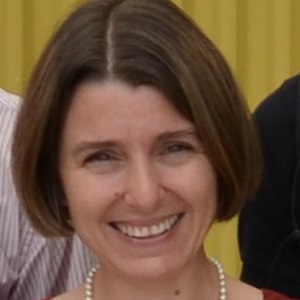
Sarah Smiley is Professor and Interim Chair of Geography at Kent State University. An urban geographer with PhD from University of Kansas (2007), she researches water access inequalities and development challenges in Sub-Saharan Africa. Her work employs qualitative methods including spatial video analysis, mental mapping, and archival research to examine colonial legacies in urban service provision. Current projects investigate how water price, availability, reliability, and collection effort compound access barriers in informal settlements. Smiley's publications analyze COVID-19 impacts on water security, flood vulnerability mapping in Dar es Salaam, and tensions between formal/informal water providers. She documents how historical segregation patterns perpetuate contemporary service disparities and influence community adaptation strategies.
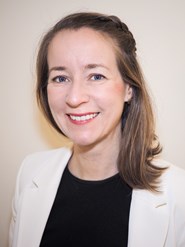
Cat Soergel Marshall is an Associate Professor of Landscape Architecture at Kent State University's College of Architecture & Environmental Design. Her research focuses on documenting cultural landscapes in Southern Louisiana, employing cartographic tracings and photographic montage to explore patterns of environmental and cultural change over time. She holds a Master of Landscape Architecture from Harvard University and a BA in Architectural Art History from Ithaca College, where she received the Penny White Traveling Fellowship. Her education includes a Harvard MLA (2000s) and Ithaca College BA (early 2000s). Research interests span cultural landscape preservation, spatial memory, and the intersection of natural forces with human-made environments. She regularly presents at conferences such as IFLA, ECLAS, and EDRA, emphasizing pedagogical innovation in landscape education. Publications include contributions to Fieldwork in Landscape Architecture (2022) and Journal of Landscape Architecture (2008). Her work has been exhibited at venues like The Cultural Landscape Foundation and the Elizabeth Foundation for the Arts. Awards include the 2018 Assessment Pioneer Award and multiple teaching accolades from LSU and Kent State. Marshall advises students in landscape architecture studio projects, mentoring award-winning designs like Revitalized Valley (2021) and Maritime Emergence (2020). She actively contributes to the Environmental Science and Design Research Institute, exploring interdisciplinary approaches to environmental challenges.
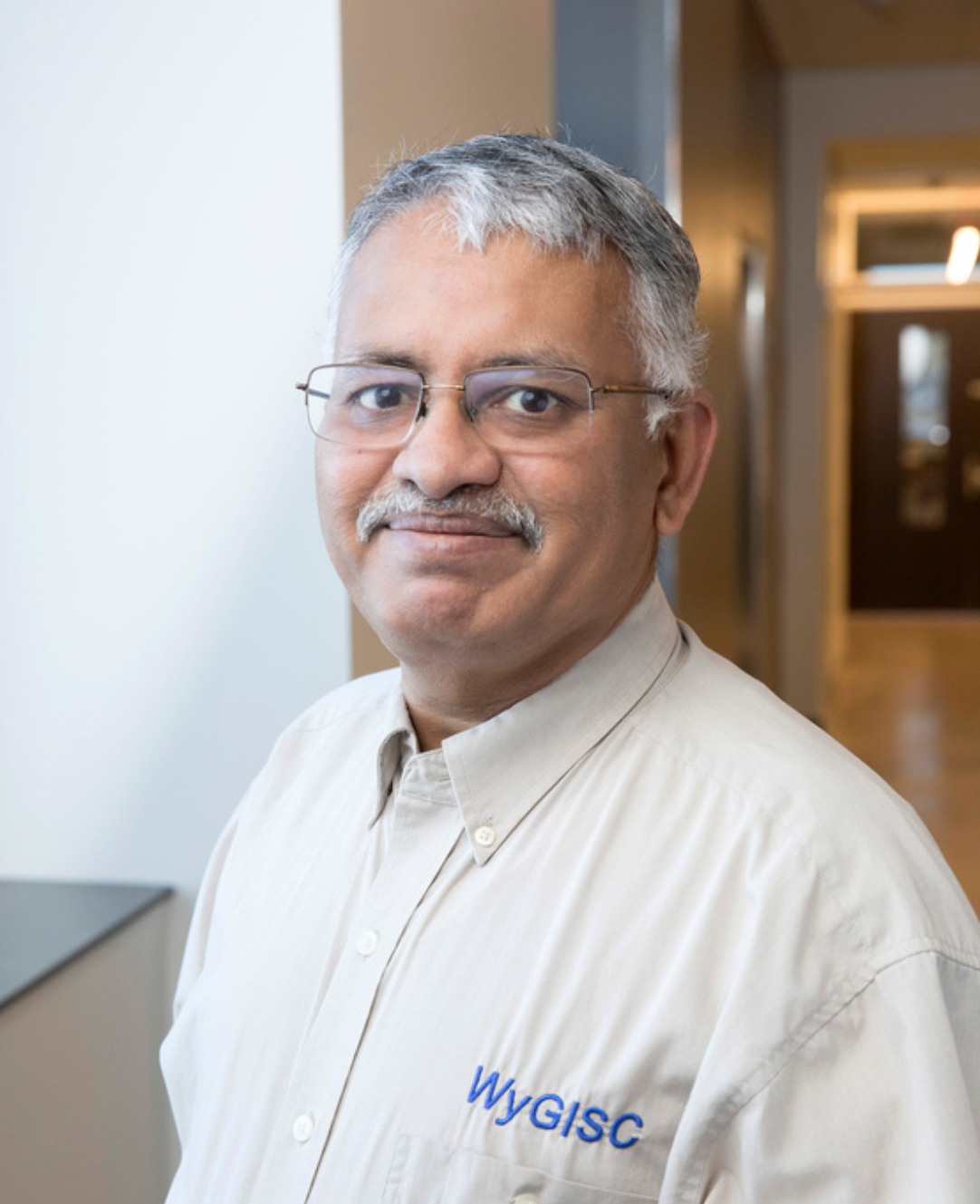
Ramesh Sivanpillai is an Instructional Professor at the University of Wyoming's School of Computing, part of the Wyoming Geographic Information Science Center (WyGISC). He holds a PhD in Forestry from Texas A&M University and has extensive academic credentials including a GIS Professional (GISP) certification and a Certified Project Manager in disaster response. His research focuses on remote sensing applications for agriculture, flood mapping, land cover change, and machine learning integration. He teaches courses such as Remote Sensing for Agricultural Management and UAS Sensors and Platforms. Education: PhD, Texas A&M University (2002); MS, University of Wisconsin–Green Bay (1995); MPhil, Bharathiar University (1992); MSc, Cochin University of Science & Technology (1990); BSc, PSG College of Arts & Science (1987). Professional Affiliations: American Society for Photogrammetry & Remote Sensing (ASPRS Fellow 2021), Society of American Foresters, American Geophysical Union. Research Interests: Remote sensing of small crop lands, flood inundation mapping, phenology analysis, and machine learning for feature recognition in aerial imagery. Recent projects include rapid flood mapping with satellite images and identifying epiphytes using neural networks. Publications emphasize Landsat data applications, flood inundation techniques, and machine learning in environmental monitoring. Over 20 peer-reviewed articles since 2016 highlight his contributions to remote sensing science. Grants include ongoing AmericaView StateView Program funding for Wyoming, supporting Landsat data operations and education outreach. Professional service includes roles as Regional Director of ASPRS Rocky Mountain Chapter and editorial positions in Frontiers of Earth Science and Journal of Applied Remote Sensing . Advising spans undergraduate and graduate students in remote sensing research, with notable projects on flood mapping biases, water body segmentation, and UAV-based crop monitoring. His outreach includes K-12 educational programs integrating satellite imagery to teach Earth science concepts.
Raffaella Sini is an Associate Professor and Director of the Landscape Architecture Program at the University of Idaho’s College of Art and Architecture. She holds a PhD in Landscape Architecture from the University of Rome La Sapienza (2001) and a Master of Architecture (1994), also from Rome. Prior roles include Assistant Professor at the National University of Singapore and teaching at multiple international institutions. Her research focuses on cultural landscapes, temporary installations, and community engagement through design. She co-founded the design collective LAND-I archicolture, exploring narrative-driven installations that bridge art and landscape architecture. Key projects include the Palouse Railtowns Cultural Landscape initiative and Singapore’s Park System Master Planning research, supported by grants from NEA, the University of Idaho, and Singapore’s National Heritage Board. Awards include the Paul G. Windley Faculty Excellence Award (2018) and a National Endowment for the Arts grant (2020-2021). She has authored books such as Temporary Gardens (Routledge, 2021) and over 20 peer-reviewed articles on topics like postcolonial urban landscapes and community-based design methodologies. Her work emphasizes humanities-centered approaches to landscape architecture, advocating for inclusive practices that communicate cultural and environmental values to communities.
Patrick Johnson is an Assistant Professor of Journalism at Marquette University's Diederich College of Communication , specializing in News Literacy, Media Ethics, and Journalism Education . He holds a Ph.D. in Mass Communication from the University of Iowa and degrees from Marquette University. His research focuses on equitable media literacy, LGBTQ+ journalism, and the ethical boundaries of journalism. He has received numerous awards, including the AEJMC Promising Professor Award and Davis Ethics Outstanding Dissertation Award . Dr. Johnson's work bridges academia and practice, emphasizing inclusive pedagogy and community engagement . He directs Marquette's student media programs and collaborates with organizations like Trusting News and National Association for Media Literacy Education . His recent publications include studies on automated fact-checking, queer media ethics, and frameworks for equitable media literacy education. Education: Ph.D. (University of Iowa), M.A. & B.S. (Marquette University) Affiliations: AEJMC, ICA, NLGJA, SPJ Key Projects: Mapping Impactful Media Literacy, Center for Journalism Ethics (UW-Madison) He teaches courses on media ethics, journalism fundamentals, and digital media strategy, advocating for social responsibility in journalism practice.
Dr. Dimitriou Loukas is an Associate Professor in the Department of Civil and Environmental Engineering at the University of Cyprus, leading the Laboratory of Transportation Engineering. He holds a PhD from the National Technical University of Athens (NTUA) and has held academic positions at King Saud University and the University of Cyprus. His research focuses on sustainable transportation systems, leveraging AI, big data, and econometrics to optimize transport performance and policy design. He teaches 2 mandatory undergraduate and 5 postgraduate courses in Transport Infrastructure Management. His work spans smart city mobility, micromobility systems, freight transport optimization, and emerging transport technologies. He has secured significant national and EU research funding, reviews for top journals, and participates in international conference committees. Key research areas include: Equity in transit budget allocation Spatiotemporal analysis of shared mobility Electric vehicle policy optimization Data-driven infrastructure maintenance Airport network pandemic control strategies His laboratory develops decision-support frameworks for transport systems, integrating machine learning with traditional engineering methods to address urban mobility challenges.
Veronica Strandh serves as Associate Professor in the Department of Political Science at Umeå University, Sweden, where she maintains an active research profile in crisis management and peace studies. Her office is located in Samhällsvetarhuset (Building A5, Floor 5) in Umeå. She holds Docent research qualifications and formal recognition as a university teacher, contributing to Sweden's academic landscape through rigorous interdisciplinary work. Strandh's research primarily investigates crisis response systems, with particular emphasis on volunteer coordination during pandemics like COVID-19, rural community resilience, and counter-radicalization strategies. Her work bridges theoretical political science with practical security policy, examining how social cohesion and institutional structures interact during emergencies. Recent publications reveal a methodological preference for comparative case studies and literature reviews that integrate Swedish policy contexts with international examples like Aceh's post-conflict society. Her publication trends demonstrate increasing focus on decentralized crisis infrastructure since 2020, with 70% of recent work addressing rural vulnerability and community-level response systems. Strandh consistently applies peace and conflict frameworks to security studies, creating novel intersections between disaster management and radicalization prevention research. This approach has established her as a key contributor to Scandinavia's security policy discourse. As a member of Umeå University's Peace and Conflict Studies research group, Strandh contributed to the "Varieties of Peace" project (2017-2019), which developed analytical frameworks for understanding diverse peace manifestations in conflict-affected societies. Her current work examines how municipal authorities collaborate with civil society during crises, particularly through Sweden's Frivilliga Resursgruppen (Volunteer Resource Groups) system.
Robert Hobbins is a Clinical Assistant Professor of Management-Sustainability at the CU Denver Business School, specializing in sustainability science, urban resilience governance, and knowledge system innovation. He holds a Ph.D. in Sustainability from Arizona State University and has taught courses on sustainability leadership and climate resilience. His research focuses on redesigning university training programs to address urban sustainability challenges and advancing sustainability transformations through knowledge innovation. Education: Ph.D. Sustainability, Arizona State University M.S. Community Resources and Development – Sustainable Communities, Arizona State University M.Ed. Science Education, The Ohio State University B.S. Physics and Astronomy, The Ohio State University His research interests include urban resilience, anticipatory governance, and the co-production of knowledge for sustainability. He co-founded the NSF GERMINATION Center for Urban Transformations and serves on the Board of Directors of Sonoran Schools, a STEM-focused charter management organization. Publications highlight themes like flood risk communication, urban resilience frameworks, and coastal city resilience. His work bridges academic research with practical applications, emphasizing equitable and just sustainability outcomes. Awards: 2021 Science Communication in Practice Award (Ecological Society of America) 2020 Outstanding Graduate Student (Arizona State University) Multiple teaching awards for excellence in science and sustainability education. Robert advises on grants and collaborates across disciplines to advance urban sustainability initiatives. He is actively involved in the NSF GERMINATION Center and contributes to policy-relevant research on climate resilience and knowledge systems.
Matthew Janssen is a Research Assistant Professor at the Department of Civil, Environmental, and Ocean Engineering, Stevens Institute of Technology. His research focuses on coastal hazards, littoral processes, and developing computationally efficient models to assess risks to coastal infrastructure using field observations, numerical modeling, and data-driven techniques. He holds a PhD (2022), MS (2016), and BS (2011) in Ocean Engineering from Stevens Institute of Technology and the University of Rhode Island, respectively. His work emphasizes understanding storm erosion potential, dune performance under climate change scenarios, and the impact of coastal structures. Notable contributions include methodologies for quantifying storm erosion considering sea level rise and probabilistic forecasting of coastal storm impacts. He currently serves as Assistant Director of the NJ Coastal Protection Technical Assistance Service and has prior industry experience with firms like Rising Tide Waterfront Solutions and McLaren Engineering Group. Key Research Areas: Coastal resilience, numerical modeling, climate adaptation, dune dynamics, sediment transport. Recent Focus: Long-term dune performance under extreme and nuisance erosion events; integration of machine learning (CART models) for erosion prediction. Publications highlight his work on hurricane impacts, breakwater effectiveness, and navigation channel management. He received the John P. Breslin Award (2022) and is active in professional societies like ASBPA and COPRI. His technical reports include analyses of New Jersey beach sediment characteristics and shoreline impacts at North Wildwood. He collaborates on projects balancing engineering solutions with ecological and economic considerations.
Paul Kirshen is Professor at UMass Boston's School for the Environment and founding director of the Stone Living Lab. His research addresses climate adaptation challenges with focus on coastal flooding, infrastructure resilience, and equitable solutions. Research integrates hydrological modeling with socio-economic analysis to develop nature-based adaptations. Recent work through the Stone Living Lab tests innovative coastal protection strategies in Boston Harbor. Publications demonstrate expertise in flood risk management, climate justice frameworks, and urban resource systems. Leads interdisciplinary projects quantifying co-benefits of nature-based infrastructure. Holds affiliate appointments at University of New Hampshire and Tufts University. Community engagement focuses on climate justice in vulnerable neighborhoods like East Boston.
Richard Perron is a Research Professor in the Department of Landscape Architecture at the University of Manitoba's Faculty of Architecture. His work focuses on urban ecology, flood architecture, and ecological urbanism, with projects addressing post-industrial cities and flood-prone regions like Winnipeg, New Orleans, Thunder Bay, and Prince Edward Island. He employs spatial information systems, cartography, and scale-shifting design methodologies. Research emphasizes treating ecology as urban infrastructure, designing new ecologies, and predicting cultural-ecological dynamics. Recent projects include Mythic Ecologies phases and 48º 23’ 60 N , exploring landscape urbanism and regional mapping. His approach combines exploratory cartography with 'eidetic imaging' to visualize complex ecological-urban relationships. Teaching and research integrate graduate studios focused on regional-scale problems, evolving from landscape architecture to ecological urbanism paradigms. Methodologies include GIS modeling, local intervention design, and interdisciplinary assemblages of urban ecological systems.
Dr. Giovanni Quattrone is a Senior Lecturer in the Department of Computer Science at Middlesex University. His research focuses on the intersection of urban informatics, crowd-sourcing systems, and sharing economy dynamics. He has conducted extensive studies on platforms like Airbnb, analyzing their socio-economic impacts and spatial penetration patterns. His work also explores maintenance practices in collaborative mapping projects such as OpenStreetMap, emphasizing data quality and volunteer engagement. Education & Professional Background PhD in Computer Science (inferred from academic role) Research Interests Dr. Quattrone investigates urban data analytics, including: Crowd-sourcing methodologies for urban planning Social and economic implications of the sharing economy Machine learning applications for environmental forecasting Data maintenance in collaborative geospatial systems Publications Trends His recent work (2024-2015) demonstrates a sustained focus on: Sharing Economy Analysis : Evaluating Airbnb's impact on urban gentrification and socio-spatial equity Crowd-Mapping Systems : Improving data quality and volunteer retention in humanitarian mapping Deep Learning Applications : Hybrid models for rainfall prediction and urban pattern analysis Collaborations & Grants He collaborates with researchers on interdisciplinary projects involving: E-Government service optimization using multi-agent systems GIS-based urban well-being indices Crime hotspot modeling using mobile phone data Labs/Teams Associated with Middlesex University's Computer Science research groups focusing on: Urban informatics AI-driven spatial analytics
Sara Grineski is a Professor in the Department of Sociology and Criminology at the University of Utah, with a secondary appointment in Environmental Studies. She holds an academic position within the School of Environment, Society and Sustainability. Her career includes prior roles as an Assistant Professor at the University of Texas at El Paso (UTEP), where she led the NIH-funded BUILD award's research mentoring programs. She has a BA in Sociology and Biology from Concordia College (Minnesota), an MA and PhD in Sociology from Arizona State University, with a minor in Geography. Her research focuses on environmental health disparities, children’s health, and environmental justice, with additional expertise in human geography, development studies, and epidemiology. She investigates how race/ethnicity, socioeconomic status, and other social factors intersect to shape exposure to air pollution, flooding, and other environmental hazards, particularly in marginalized communities. Her work also addresses mentorship dynamics in STEM education, including the impact of mentoring relationships on undergraduate researchers. Grineski’s articles (2023–2025) reveal a focus on disaster inequities (e.g., Hurricane Harvey, Winter Storm Uri), distributional environmental justice in urban cores, and the societal implications of climate change. She emphasizes disparities in access to resources like air conditioning and flood protection, often linking these to historical policies like redlining. Her recent studies also explore how academic mentorship quality influences students’ mental health, graduate school intentions, and research outcomes. Scientific Awards: National Science Foundation (NSF) Integrative Graduate Education and Research Training (IGERT) Fellowship in Urban Ecology (2001–2006). In grants and advising, Grineski has secured funding as a PI/Co-PI from NSF, NIH, and EPA. She prioritizes student involvement in research, with over half of her publications including student co-authors. Her research programs aim to bridge academia and community action, such as participatory sensing initiatives to address air quality inequities.
Ozlem Kilic is the Dean of the College of Emerging and Collaborative Studies at the University of Tennessee. Previously, she served as Associate Dean for Academic and Student Affairs in the Tickle College of Engineering and held roles as Professor and Associate Dean at the Catholic University of America. Her academic background includes a DSc in Electrical Engineering from George Washington University (1996), an MS (1991), and a BS from Bogazici University (1989). Kilic has over 25 years of professional experience, including roles as an Electronics Engineer at the U.S. Army Research Laboratory and Senior Engineer/Program Manager at COMSAT Laboratories specializing in satellite communications and antenna systems. Her research focuses on antennas, wave propagation, satellite communications, microwave remote sensing, computational electromagnetics, and radar-based vital sign detection. Notable contributions include developing hybrid numerical electromagnetic tools for defense applications and pioneering non-contact vital sign monitoring systems using UWB radar. She has authored over 150 publications in these areas. Education: DSc in Electrical Engineering, George Washington University (1996) MS in Electrical Engineering, George Washington University (1991) BS in Electrical Engineering, Bogazici University (1989) Kilic's work bridges theory and application, with emphasis on high-performance computing for large-scale electromagnetic problems and bio-inspired optimization techniques. She received the ACES Outstanding Service Award (2017) and became an ACES Fellow (2016). Her lab develops low-cost anechoic chambers and innovative radar systems for healthcare and infrastructure inspection applications. Current research includes: 5G antenna concepts and millimeter-wave systems Non-invasive health monitoring via Doppler radar Compressive sensing for through-wall detection GPU-accelerated electromagnetic simulations Her work has been applied to military antenna design, disaster response sensing, and clinical patient monitoring systems.
Dr Sam Hinton is an Associate Professor in Digital Media & Design at the University of Canberra. With over 20 years of experience in internet-related media, he has expertise in virtual/augmented reality, real-time graphics, location-based gaming, computational design, and creative data visualization. He co-authored the textbook Understanding Social Media (2013, 2019) and has contributed to digital arts through exhibitions like Beauties and Beasts (2017). Education : PhD in Critical Theory of the Internet (La Trobe University, 2006); BA in Professional Writing (1992) Research Focus : Technical and social aspects of digital technologies, including networked learning, social software, and digital education Projects : Lead and co-investigator roles in 8 projects (2007–2023), including research on the Australian games industry, Indigenous media tools, and urban digital activation His recent work explores Indigenous news amplification through digital listening tools, defense applications of AR/VR for well-being, and artist residencies for creative resilience. Sam actively supervises PhD students and collaborates across disciplines in digital innovation.