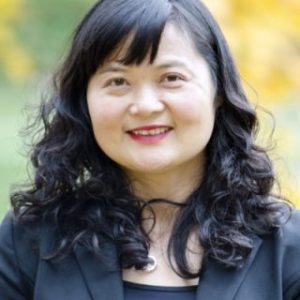
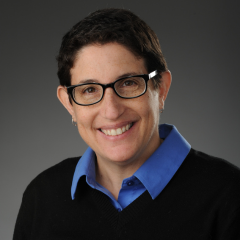
Rachel Best is an Associate Professor and Director of Graduate Studies in the Department of Sociology at the University of Michigan. Her research focuses on the intersections of politics, culture, inequality, and health, with a particular emphasis on disease advocacy, disability discrimination, and the sociological implications of medical policy. She directs the Sociology graduate program and leads computational studies on disease stigma, advocacy strategies, and ADA litigation outcomes. Her work bridges medical sociology, legal studies, and public health, addressing how societal structures shape health outcomes and policy responses. Her research interests include analyzing how disease campaigns influence health policy, the political consequences of overestimating individual health control, and the role of stigma in disability rights litigation. Notable projects use computational methods to trace policy advocacy impacts and explore visibility dynamics in disability cases. Recent publications (2022–2025) highlight her focus on disease stigma’s societal effects, legal interpretations of invisible disabilities, and the evolving nature of advocacy in health policy. Her earlier works, such as Common Enemies: Disease Campaigns in America , critique single-disease advocacy frameworks and their unintended policy consequences. Rachel Best advises on graduate studies and collaborates with interdisciplinary teams. Her research has been supported by grants focusing on sociological methods in health policy analysis. She is affiliated with the University of Michigan’s Sociology Department and the LSA College, contributing to discussions on inequality and institutional sociology.
Guofang Li is a Professor in the Department of Language and Literacy Education at the Faculty of Education, affiliated with the Centre for Early Childhood Education & Research (CECER). Her work centers on bilingual development and literacy education within multicultural contexts, particularly focusing on Chinese-Canadian communities. Her research interests include: Early bilingual development Family literacy practices Early literacy instruction methodologies Early education for minority learners Teacher education for multilingual classrooms Analysis of her 2021-2025 publications reveals a concentrated focus on Chinese-Canadian children's bilingual development, examining home literacy environments, digital technology impacts, and pandemic-related disruptions. She consistently advocates for equity-focused approaches in superdiverse educational settings, emphasizing translanguaging practices and critical perspectives on linguistic justice. Scientific Awards: No awards explicitly mentioned in source materials Advising and Grants: No specific student names or grant information provided in source materials Labs and Teams: Centre for Early Childhood Education & Research (CECER): An interdisciplinary hub facilitating collaborative research between academics, educators, and community partners focused on advancing evidence-based early childhood education practices through longitudinal studies and community-engaged projects.
Eric Y. Drogin is an Adjunct Professor and Honorary Professor with dual expertise in clinical psychology and law. He is affiliated with Harvard Medical School, serving on the staff of the Forensic Psychiatry Service at Beth Israel Deaconess Medical Center, and is involved in the Harvard Longwood Psychiatry Residency Training Program. He also teaches at the University of New Hampshire School of Law and lectures internationally at Prifysgol Aberystwyth (formerly University of Wales) in both Psychology and Law. His work integrates mental health and legal systems through research, education, and practice. Education: Doctor of Philosophy (Ph.D.) in Clinical Psychology – Hahnemann University Juris Doctor (J.D.) – Villanova University School of Law Dr. Drogin's research interests center on the intersection of psychology, psychiatry, and law, particularly in forensic assessment, expert testimony, ethics, and mental disability law. His work emphasizes multidisciplinary approaches to legal and clinical challenges, supporting both mental health professionals and attorneys. He regularly presents continuing education seminars across North America, Europe, Asia, and Australia. His scholarly publications span criminal and civil law applications of psychological evidence, guardianship evaluation, forensic assessment standards, and the role of mental health professionals in court. These works reflect a consistent focus on improving legal processes through scientific rigor and ethical practice. Scientific Honors and Professional Recognition: Fellow of the American Psychological Association Fellow of the American Academy of Forensic Psychology Diplomate, American Board of Forensic Psychology Diplomate, American Board of Professional Psychology Life Fellow, American Bar Foundation Dr. Drogin has held leadership roles in major professional organizations, including President of the American Board of Forensic Psychology, Chair of APA committees on Legal Issues and Professional Practice, and Co-Chair of the ABA’s Behavioral & Neuroscience Law Committee. He serves as Editor-in-Chief of The Journal of Psychiatry & Law and has co-authored over 250 publications. While formal student advising is not detailed, his instructional roles in residency programs and trial workshops indicate active mentorship. He is a key figure in advancing forensic psychology through education, policy, and interdisciplinary collaboration.
Naomi Rogers, Ph.D. (She/Her) is Professor of the History of Medicine in the Section of the History of Medicine and the Program in the History of Science and Medicine at Yale University. She holds courtesy appointments in the History Department and the Women's, Gender and Sexuality Studies Program, and serves on Yale's Dean's Advisory Council for LGBTQI Affairs. Professor Rogers teaches undergraduate, graduate, and medical students, regularly lecturing on the history of AIDS, reproduction, health economics, eugenics, nutrition, disability, and health activism. Professor Rogers' educational background includes: PhD in History from University of Pennsylvania (1986) MA from University of Pennsylvania (1986) BA in Music from Melbourne University (1980) BA with Honors from Melbourne University (1979) Her research focuses on 20th and 21st century history of medicine with emphasis on health inequities and social justice. Professor Rogers' historical interests span gender and health, disease and public health, disability studies, feminism, alternative medicine, health policy, and health activism. Her work critically examines the intersection of medical practices with social movements, particularly how marginalized communities have challenged medical orthodoxy throughout American history. She has published extensively in journals such as American Journal of Public Health, Bulletin of the History of Medicine, Journal of Medical Humanities, Radical History Review, Social History of Medicine, and Women and Health. Professor Rogers' recent scholarship demonstrates a consistent focus on the historical dimensions of contemporary health issues, particularly vaccine politics, abortion history, and community health activism. Her publications reveal patterns of resistance to medical authority, the role of race and gender in shaping health outcomes, and the historical roots of current health justice movements. Her work bridges academic history with public engagement, as evidenced by her frequent media commentary on COVID-19 and other health issues in outlets including BBC Radio, CNN, Huffington Post, National Public Radio, New York Times, Wall Street Journal, and Washington Post. Among her notable recognitions: AAHN's Lavinia L. Dock Award for Exemplary Historical Research for 'Polio Wars: Sister Kenny and the Golden Age of American Medicine' (2014) Presenter of the AAHM's Garrison Lecture: 'Radical Visions of American Medicine: Politics and Activism in the History of Medicine' (2017) Professor Rogers has been actively involved in academic leadership and mentoring. She has served as Director of Graduate Studies for the 2022-23 academic year, Chair of the Women's Faculty Forum, and Liaison to the Committee on Status of Women in Medicine. Her service extends to editorial boards including the Journal of the History of Medicine and Allied Sciences since 2018. She has also contributed to public understanding of medicine through consultations for documentaries including 'The Polio Crusade' (PBS), 'On the Basis of Sex' (Focus Features), and 'War on Science' (in process). Currently, Professor Rogers serves on the Medical School's OBGYN 'Dobbs' Sessions Planning Committee, which has organized webinars for the Yale community, and was co-organizer of the history-themed session 'Rooted in History: Abortion, Law and American Health Care.' She is working on her book project 'Health Radicalism and the Humanization of American Medicine' (under contract with Oxford), examining critics of medical orthodoxy since 1945 including civil rights, consumer, and feminist activists. She also conducts ongoing research on antisemitism in American medicine in the decades before and after World War II.
Dr. Zhiying Ma is an Assistant Professor at the University of Chicago Crown Family School of Social Work, Policy, and Practice , with faculty affiliations at the Center for East Asian Studies, Center for the Study of Gender and Sexuality, and Global Studies Program. She holds a joint PhD in Comparative Human Development and Anthropology from the University of Chicago and bachelor's degrees in Psychology and Philosophy from Peking University. Research Focus: Examines biopolitical paternalism in China's mental health governance Develops peer support systems for persons with serious mental illnesses Investigates intersections of disability rights, care ethics, and welfare systems Conducts ethnographic fieldwork in psychiatric hospitals and community teams Key Projects: Led a CBPR pilot project (2019-2021) to create peer support manuals in Guangzhou, and currently scales services in Guangzhou/Yunnan with Cyrus Tang Foundation support. Collaborated with the WHO on community mental health models. Scientific Recognition: 2021 Ford Global Fellow Published in SSM-Mental Health , Cultural Anthropology , and Disability Studies Quarterly Advocacy & Impact: Combines scholarship and activism , consulting for NGOs on disability livelihoods and gender equality. Collaborates with China's community mental health teams to improve service fidelity and client satisfaction.
Priyank Chandra is an Assistant Professor at the University of Toronto's Faculty of Information and Director of the STREET Lab (SocioTechnical Resistance and Ethical Technologies Lab). His interdisciplinary research focuses on sociotechnical practices of marginalized communities, leveraging HCI, CSCW, STS, and development studies to design inclusive technologies. He holds a PhD in Information from the University of Michigan, along with MS in Economics and BE in Electronics Engineering. Chandra has received awards at ACM CHI and CSCW for his work on labor movements, digital resistance, and accessibility. Education: PhD in Information, University of Michigan (2019) MS in Economics BE in Electronics Engineering Research Interests: Chandra explores how marginalized communities reconfigure technologies to foster self-organization and resistance. His work bridges HCI/CSCW with theories from development studies and institutional analysis, emphasizing ethical, socially just systems. Recent projects include studying farmer movements in India, gig economy platforms, and weather risk communication for visually impaired Ontarians. Grants & Awards: SSHRC Grant: Repertoires of Contention in Digital Labour Platforms (2023-2024) NSERC Grant: Designing Inclusive Platforms for the Gig Economy (2022-2027) Connaught New Researcher Award (2023) ACM CHI/CSCW Awards for contributions to labor studies and accessibility Advising & Labs: Supervises students in ICTs, design, and marginality. Directs the STREET Lab at KMDI, focusing on ethical tech for vulnerable communities. Teaches courses on inclusive design and marginalized communities' ICT practices.
Anna Villarroya Planas is a Professor at the Universitat de Barcelona, serving as Director of the Research Center for Information, Communication and Culture. She holds a law degree and economics degree from the Universitat de Barcelona, and a PhD in Public Sector Economics from the same institution. Affiliated with both the Faculty of Information and Audiovisual Media and the Department of Economics, she has been teaching courses related to cultural economics and cultural policies since 1993. Her research focuses on digital culture and content, with special emphasis on open access to science and economic studies on culture, particularly examining gender perspectives in cultural sectors. She serves as President of the European Association of Cultural Researchers and coordinates the Interuniversity Doctoral Program in Gender Studies: Cultures, Societies and Policies. Analysis of her recent publications (2022-2024) reveals a strong focus on gender equality in cultural sectors, particularly examining gender discrimination in the performing arts, LGBTQ perspectives in information studies, and cultural policies with gender perspectives. Her work spans multiple disciplines including cultural economics, gender studies, library science, and policy analysis, demonstrating interdisciplinary approaches to understanding cultural production, consumption, and policy implementation. She has participated in numerous research projects funded by public entities including the World Bank, Council of Europe, ERICarts, Organization of Ibero-American States, Spanish Ministry of Culture, Catalan Department of Culture, and Barcelona Provincial Council, as well as private foundations like "la Caixa" Banking Foundation, Carulla Foundation, and Alternativas Foundation. Since 2006, she has authored the report on cultural policy in Spain included in the Compendium of Cultural Policies and Trends, and since 2017 has been a member of the Council of the Association of the Compendium of Cultural Policies and Trends. Her leadership extends to directing research projects focused on gender perspectives in information and media studies, including the GEMPIMS (Gender Perspective Mentoring Program in Information & Media Studies) initiative at the University of Barcelona.
Laura Wernick is an Associate Professor at Fordham University's Graduate School of Social Service. Her academic background includes a PhD and MA from the University of Michigan, an MSW and MPA from Columbia University, and a BA from UC Berkeley. Dr. Wernick specializes in transformative community organizing models addressing intersectional power dynamics, with a focus on LGBTQ+ youth, domestic worker movements, and disability justice. She employs participatory action research methods to co-create solutions with marginalized communities. Her research explores how organizing models combat ableism, white supremacy in academia, and systemic oppression. Notable areas include youth-led advocacy, wealth mobilization for social justice, and employer-employee dynamics among domestic workers. Dr. Wernick's work bridges theory and practice through youth-adult partnerships and institutional reform initiatives. She maintains an active blog and public scholarship presence at www.laurawernick.com . Recent scholarship highlights include dismantling ableism in social work education and analyzing pandemic-related stigma. Her 2024 publications emphasize disability justice pedagogy and intersectional approaches to youth organizing. Methodologically, she advocates for participatory action research that disrupts traditional academic hierarchies. Leveraging over 20 years of practice experience, Dr. Wernick collaborates with community organizations to design interventions that foster healing and systemic change. Her current projects address racial disparities in school discipline and the mental health benefits of youth activism. She teaches courses on community organizing, social justice pedagogy, and marginalized populations.
Dr. Laura Pacheco is an Assistant Professor at the School of Social Work at Memorial University. She holds a BSW and MSW from McGill University and a PhD in Rehabilitation Medicine from the University of Alberta. Her research focuses on reproductive justice, intellectual disability and parenting, structural violence against women with disabilities, neurodiversity in aging, and social justice within health and social service systems. She has conducted post-doctoral work on support needs for parents with intellectual disabilities and has been a clinician, advocate, and program coordinator in parenting services for over 14 years. She teaches courses emphasizing critical social work practice, anti-oppression, and disability studies. Her funded research includes studies on neurodiverse aging (2020–2023) and service pathways for parents with intellectual impairments (2018–2021). She is an executive member of the International Association on the Scientific Study of Intellectual Disability (IASSIDD) and has contributed to international workshops and conferences. Her work bridges academic research with community engagement, advocating for systemic equity and inclusive policies.
Dr. Daniel Read is a Senior Lecturer at the Institute for Sport Business , Loughborough University London. His interdisciplinary research addresses critical integrity issues in sport through qualitative and quantitative methodologies, focusing on athlete welfare, governance, sponsorship, fan behavior, and digital media. PhD in Sport Business (Loughborough University London) MRes in Psychology BSc in Sports Science and Physiology Dan's current projects examine: Athlete welfare (care-seeking behavior, medicine misuse, education) Commercial innovation vs. sporting tradition Digital divide impacts on sport access 21st-century sport governance He collaborates with organizations such as the World Anti-Doping Agency , FIFA , World Rugby , and the Professional Footballers’ Association . His teaching expertise spans research methods, data analytics, sport integrity, and digital media, alongside PhD supervision.
Titti Mattsson is a Professor of Public Law at the Faculty of Law, Lund University, specializing in Health Law, Social Welfare Law (including child law and elder law), and Human Rights Law. She served as Pro Dean of Research at the same faculty from 2021 to 2023. Editor of the European Journal of Health Law Board member of the Swedish Institute of Human Rights, Swedish National Agency for Health and Care Analysis, and Swedish National Council on Medical Ethics Vice Chair of the Region Skåne Ethical Board Coordinator of the Health Law Research Centre and the Law and Vulnerabilities Group at Lund University Her research focuses on the governance of welfare state issues from national and transnational perspectives, emphasizing outcomes for vulnerable groups and the individual through a human rights lens. Key areas include legal, social, and ethical issues in health and community care for children, disabled persons, and older adults. She leads interdisciplinary projects such as Children's Rights and Evidence-based Care (2020-2023) and Child Care Investigation in Private Government (2018-2022), funded by organizations like Forte and the Kamprad family research foundation. Her work contributes to UN Sustainable Development Goals, particularly in Social Sciences and Law. Mattsson teaches public law, health law, and elder law at advanced levels, supervises six doctoral projects, and engages in outreach through expert assignments and collaborations with international institutions like Emory University and Haifa University.
Marie-Eve Carrier-Moisan holds the Joint Chair in Women’s Studies at Carleton University and the University of Ottawa (2023-2025). She is a faculty member in Carleton's Department of Sociology and Anthropology and cross-appointed with the Feminist Institute for Social Transformation and the Institute for Political Economy. Her work bridges feminist anthropology, visual ethnography, and critical studies of institutional power. Her research investigates institutional abandonment in Québec school systems for autistic students, analyzing transportation access crises through material ethnography of policies and lived experiences. Concurrently, she examines sex tourism in Brazil, particularly during the 2014 World Cup, revealing how anti-trafficking campaigns perpetuate urban exclusion. Carrier-Moisan pioneers multimodal knowledge translation, notably through the graphic novel Gringo Love: Stories of Sex Tourism in Brazil developed with illustrator Débora Santos. She supervises graduate students across anthropology, sociology, and political economy on topics including carceral harm reduction, Indigenous women's rights, and gender fluidity. Funded by SSHRC, her current work collaborates with Autisme-Québec and the Comité pour le droit à la scolarisation to address school exclusion. Key collaborators include Dr. Laurence Simard-Gagnon and narrative cartography initiatives exploring alternative research dissemination.
Emiliya Lazarova is a Professor of Economics and Head of the School of Economics at the University of East Anglia (UEA). She chairs the Royal Economics Society’s Conference of Heads of Departments of Economics. Her research focuses on coalition formation, matching theory, and applied economics, with recent projects analyzing technological innovation via patent data, biodiversity market measurements, and international environmental agreements. She has held academic roles at the University of Birmingham and Queen’s University Belfast, teaching quantitative courses like Applied Econometrics and topics in applied microeconomics. Her research interests include coalition dynamics, social housing allocation, and the political economy of environmental policies. Current projects with Dr. Yuan Gao include developing an ex-ante novelty index for inventions and studying biodiversity valuation mechanisms. Lazarova has secured grants from the Royal Economic Society and British Academy, focusing on property rights and economic development in emerging economies. Her work bridges theoretical models and empirical applications, addressing issues like firm behavior under political pressure, patent innovation cycles, and disability discrimination impacts. Collaborations span institutions globally, reflecting her interdisciplinary approach to economic challenges. Advisory roles include supervising PhD students on topics such as status-seeking in matching markets and conflict resolution via coalition theory. Her teaching expertise complements her research, emphasizing quantitative methods and policy analysis.
Elaine Gerber is an Associate Professor of Anthropology at Montclair State University (MSU), affiliated with the College of Humanities and Social Sciences. Her research focuses on the intersection of disability studies, medical anthropology, and food systems, emphasizing disability as a social construct. She holds a PhD from UCLA and has conducted extensive fieldwork on disability culture, accessibility, and food insecurity. Education: PhD, Anthropology, University of California, Los Angeles (1999) MA, Anthropology, University of California, Los Angeles (1999) BA, Anthropology, University of Michigan, Ann Arbor (1989) Research Interests: Disability studies and cultural anthropology Food insecurity among disabled populations Audio description and accessibility Intersection of race, gender, and disability Her work bridges theory and practice, including community-based participatory research projects like the #EatDis initiative examining barriers to food access for disabled individuals. Notable publications explore disability identity, food as a site of resistance, and the built environment's impact on marginalized groups. Awards & Grants: Recipient of the 2018 Society for Applied Anthropology Fellowship, Chateaubriand Fellowship (1996), and Montclair State’s “Best Professor” recognition (2019). Funded projects include a Robert Wood Johnson Foundation grant ($100k) on physical activity barriers for people with disabilities. Teaching & Service: Teaches courses on disability studies, medical anthropology, and food studies. Founded MSU’s Disability Caucus and volunteers with organizations like the Reelabilities Film Festival. Served as President of the Society for Disability Studies (2007–2009). Labs/Teams: Leads the #EatDis research project and collaborates with the World Institute on Disability on food education initiatives.
Masuma Shahid is an Assistant Professor and Lecturer at the Erasmus School of Law, specializing in International and European Union Law, with a dedicated research focus on LGBTQ+ rights, AI and human rights, and privacy law. She is affiliated with the International and European Union Law (IEUR) department and actively contributes to academic and public discourse on equality and digital governance. Assistant Professor, Erasmus School of Law Lecturer, International and European Union Law (IEUR) Co-Coordinator, LGBTQI+ Working Group, Berkeley Center on Comparative Equality and Anti-Discrimination Law Member, Diversity Platform, Erasmus School of Law Her research centers on the intersection of LGBTQ+ rights and artificial intelligence, queer data, equal marriage rights, European internal market law, competition law, and international human rights law. She employs critical legal theory to examine how legal systems address marginalization and digital discrimination. Her recent scholarly work includes a doctoral thesis on equal marriage rights litigation in major courts, publications on AI’s impact on LGBTQ+ communities, and authoritative textbooks on EU law. The articles reflect a strong trend in using comparative legal analysis to advocate for inclusive legal frameworks, particularly in digital and human rights contexts. She has been recognized through invitations to speak at academic forums and contribute to public debates on LGBTQ+ rights and AI ethics. Her media contributions highlight her role as a public intellectual in advancing legal inclusivity. Invited speaker on Queer Legal Theory and AI governance Expert commentator on LGBTQ+ rights in Dutch media Contributor to discussions on constitutional reforms for LGBTQIA+ and disabled persons Masuma Shahid advises on legal research and contributes to collaborative academic initiatives, particularly through her role at the Berkeley Center. While no formal grants are listed, her extensive publication and speaking record indicate active research funding and institutional support. She is involved in shaping policy discourse through academic and public engagement. She is a key figure in the LGBTQI+ Working Group at the Berkeley Center on Comparative Equality and Anti-Discrimination Law, contributing to an international network focused on anti-discrimination law and equality. Her work bridges academia, policy, and social justice advocacy.