Professor John Muellbauer is a Senior Research Fellow at Nuffield College and Professor of Economics at the University of Oxford. He co-directs the Macroeconomics and Finance Programme at the Institute for New Economic Thinking (INET) Oxford Martin School. His work bridges household economics, housing markets, and finance-real economy interactions, with a focus on credit channels and monetary transmission mechanisms. Education: B.A. from Cambridge University, Ph.D. from UC Berkeley Former roles: Professor at Birkbeck College (London), Lecturer at Warwick University His research emphasizes systems approaches to consumption, house prices, and debt, critiquing conventional central bank models. Recent work includes international house price cycles (Journal of Economic Literature, 2021) and ECB policy model critiques (2022). He collaborates with central banks globally and contributes to macroprudential policy frameworks. Scientific awards include the 2014 Kendrick Prize for his work on credit and housing markets. He is a Fellow of the British Academy, Econometric Society, and European Economic Association, and a CEPR Research Fellow. Policy engagement spans HM Treasury, OECD, Swedish Prudential Authority, and the Resolution Foundation. He advocates for a Green Land Value Tax to address UK housing challenges and frequently contributes to VoxEU debates.
Anna Danielsson is a Professor of Science Education at Stockholm University's Department of Teaching and Learning, where she also serves as head of the science education section. Her academic career spans prestigious institutions including Uppsala University, King's College London, and the University of Cambridge, with her current research focusing on equity and inclusion in science education contexts. Professor Danielsson earned her PhD in physics education research from Uppsala University in 2009. Her educational journey includes a two-year postdoctoral fellowship at the University of Cambridge's Faculty of Education, followed by positions as senior lecturer at Uppsala University and Reader in Science Education at King's College London during 2016/17. She was promoted to Professor in Curriculum Studies at Uppsala University in January 2018 before joining Stockholm University. Her research program centers on critical examinations of gender, identity, and power dynamics in science and technology education. As leader of the Science Education Equity research group, she investigates inclusion-exclusion patterns and participation barriers for minoritized learners in science, with particular emphasis on physical sciences. Her work employs innovative narrative and discourse methodologies to explore how students construct identities within science learning contexts. Analysis of her recent publications reveals a sustained focus on identity construction in physics education, particularly examining how underrepresented students navigate disciplinary spaces. Her scholarship bridges theoretical frameworks from post-structuralism, cultural studies, and critical discourse analysis with empirical research in both formal and informal learning environments. A notable trend is her increasing attention to mathematics education and cross-disciplinary identity formation, as evidenced by her 2025 work on mathematics capital. Principal Investigator for 'In(ex)clusion in higher education mathematics and physics: Identity enactment in educational trajectories and scientific practices' Lead researcher on 'The unlikely scientists: Exploring what has enabled students from under-represented groups to continue to higher education science studies' (Swedish Research Council, 2019-2023) Collaborator on multiple Swedish Research Council-funded projects examining identity, gender, and equity in STEM pathways Professor Danielsson directs the Science Education Equity research group, which creates interdisciplinary spaces for examining how marginalized learners engage with science education. The group's work combines theoretical innovation with practical implications for creating more inclusive science classrooms and curricula, particularly focusing on how physical sciences can become more accessible to diverse student populations.
Susannah Heschel serves as the Eli M. Black Distinguished Professor of Jewish Studies and Chair of the Jewish Studies Program at Dartmouth College, holding a faculty appointment in the Religion Department. Her academic leadership extends through elected memberships in the American Academy for Jewish Research and American Society for the Study of Religion, with visiting professorships at Frankfurt, Cape Town, and Princeton Universities. Her educational background includes: A.B. from Trinity College M.T.S. from Harvard Divinity School Ph.D. from the University of Pennsylvania Heschel's research centers on 19th-20th century Jewish and Protestant intellectual history, with groundbreaking work on Christian theologians in Nazi Germany, Jewish scholarship on Islam, and the theological roots of antisemitism. Her scholarship uniquely bridges biblical studies, feminist theory, and Holocaust research, examining how religious frameworks shape identity and persecution. Current projects explore European Jewish scholarship on Islam through a Guggenheim Fellowship. Her recent publications reveal persistent engagement with prophetic tradition across Jewish-Christian contexts, Holocaust memory studies, and the intersection of race/gender in theological ethics. Works consistently analyze how religious texts are weaponized for oppression while recovering marginalized voices in interfaith dialogue. Honors include: National Jewish Book Award for Abraham Geiger and the Jewish Jesus Mendelssohn Prize from Leo Baeck Institute Five international honorary doctorates Guggenheim Fellowship Research support spans major foundations: Current: Guggenheim Fellowship (2023-2024) Maimonides Institute Fellowship (University of Hamburg, Winter 2024) Previous: Rockefeller Fellowship (National Humanities Center) Wissenschaftskolleg Berlin Fellowship (2011-2012) Carnegie Foundation grants Ford Foundation grants Though not directing formal labs, Heschel collaborates internationally through fellowships at Hamburg's Maimonides Institute and Berlin's Wissenschaftskolleg, advancing comparative research on Jewish-Muslim-Christian intellectual history while mentoring junior scholars through Dartmouth's Jewish Studies Program.
Marianna Ivashina is a Professor and Head of the Antenna Systems Research Group at Chalmers University of Technology's Department of Electrical Engineering . Her work focuses on array antennas , antenna integration with electronics , optimal beamforming , and over-the-air measurement methods . The group has achieved international recognition for innovations in ultra-wideband (UWB) feeds , Gap waveguide antennas , and Doherty-power-amplifier-integrated antennas for 5G/6G and radio telescope applications. Key projects include the SSF Sweden-Taiwan collaboration , EU Horizon 2020 MyWave , and VINNOVA ENERGETIC initiatives. Her recent publications emphasize millimeter-wave (mmWave) communication and reconfigurable intelligent surfaces (RIS) , with applications in 5G/6G networks , satellite communication (SatCom) , and advanced antenna testing chambers . She explores beamforming optimization , self-interference mitigation , and hybrid OTA environments to enhance wireless system performance. The group's work bridges theoretical advancements with practical implementations, including RFSoC testbeds and high-efficiency antenna arrays . Marianna leads major research programs funded by Ericsson , VINNOVA , and EUREKA EURIPIDES2 , addressing challenges in beamforming , antenna-IC integration , and automated design for 5G/6G . These projects highlight her role in advancing millimeter-wave communication and sensor integration technologies.
Professor David Taubman is a distinguished academic serving as Professor and Deputy Head of School (Research) at the School of Electrical Engineering and Telecommunications (EE&T) at the University of New South Wales (UNSW) in Sydney, Australia. He is also co-director of Kakadu Software Pty. Ltd. and its affiliates Kakadu R&D and Kakadu GPU. With a career spanning over three decades, Professor Taubman has made significant contributions to the field of image and video compression, most notably as the author of the EBCOT coding algorithm adopted in the JPEG2000 international standard. Professor Taubman earned his B.Sc. in Mathematics and Computer Science (1986) and B.E. (Medal) in Electrical Engineering (1988) from the University of Sydney, followed by an M.Sc. (1992) and Ph.D. (1994) in Electrical Engineering from the University of California at Berkeley. His professional journey includes engineering work at the Electricity Commission of N.S.W. (1988-1990), research positions at Hewlett-Packard Laboratories in Palo Alto (1994-1998), and an academic career at UNSW where he progressed from Senior Lecturer (1998-2003) to Associate Professor (2004-2009) and finally to Professor (2009-present). He has held various leadership roles including Head of the EE&T Telecommunications Research Group (2003-2014), Head of the EE&T Signal Processing Research Group (2014-present), Director of Research for the School of EE&T (2011-2016), and Deputy Head of School (Research) since 2017. Professor Taubman's research interests center on image and video compression, with particular expertise in JPEG2000 standards and implementations. His work spans signal processing, wavelet transforms, scalable video coding, motion modeling, and multimedia systems. He has pioneered numerous compression algorithms and frameworks, including the EBCOT coding algorithm that became central to the JPEG2000 standard. His recent research focuses on efficient motion modeling with cuboidal partitioning, learned lifting-based transform structures, and high-throughput implementations of JPEG2000 for video applications. His work bridges theoretical foundations with practical implementations, as evidenced by the commercially successful Kakadu Software tools that have garnered around 500 commercial licensees. Analysis of Professor Taubman's recent publications reveals a consistent focus on advancing compression technologies with particular emphasis on scalability, efficiency, and adaptability. His work spans traditional image compression (JPEG2000 extensions), video coding (cuboid-based partitioning for UHD/360-degree video), and emerging applications (nanopore sequencing data compression). A notable trend is the integration of machine learning techniques with traditional compression frameworks, as seen in his work on learned lifting-based transform structures. His research maintains strong connections to real-world applications across diverse domains including medical imaging, astronomical data processing, and genomic sequencing. IEEE Fellow Engineers Australia Fellow (by invitation) Professor Taubman has served as Associate Editor for the IEEE Transactions on Image Processing for two four-year appointments (2003-2005 and 2010-2013). He has been actively involved in numerous research grants focused on image and video compression technologies, particularly those related to the JPEG2000 standard and its extensions. His work has received significant industry support, reflected in his consultancy with various U.S., Japanese, and Australian corporations. He has also contributed to international standards development as a member of Standards Australia Technical Committee MS-065 (mirroring ISO TC42 on Digital Photography) and as a constitutional member of Standards Australia Technical Committee IT-029 (Coded Representation of Picture, Audio and Multimedia/Hypermedia Information). Professor Taubman co-directs Kakadu Software Pty. Ltd. and its research affiliates Kakadu R&D and Kakadu GPU, which have developed the commercially successful Kakadu Software tools for JPEG2000. His research group at UNSW focuses on advanced image and video compression techniques, with particular expertise in wavelet-based methods, scalable coding, and motion modeling. The group maintains strong industry connections and has contributed significantly to the development and standardization of image compression technologies worldwide.
Aideen Quilty is Associate Professor of Gender Studies and Social Justice at University College Dublin (UCD), where she also serves as Head of School for the School of Social Policy, Social Work and Social Justice and as Associate Dean of Social Sciences. With academic responsibility for all social science undergraduate degrees and programs at UCD, she plays a significant leadership role in one of the university's largest academic units. Her educational background includes a BEd, M Equality Studies, and PhD from Maynooth University, along with a Diploma in Public Relations from the Public Relations Institute of Ireland. Her academic journey reflects a deep commitment to social justice, equality, and community engagement. Professor Quilty's research is profoundly interdisciplinary, weaving together gender studies, queer theory, human geography, and adult education. Her work centers on two major strands: LGBTQI+ experiences in higher education and society, and widening participation in higher education through spatial theory and critical pedagogies. She approaches her scholarship as a form of critical civic practice, seeking to challenge normative structures and promote social change through education. Her research consistently addresses issues of intersectionality, particularly how gender, sexuality, and spatial positioning affect educational access and outcomes. Her publication record demonstrates a consistent focus on LGBTQI+ issues, particularly youth homelessness and educational inclusion. The most recent articles show an increasing emphasis on spatial justice and the intersections of gender, sexuality, and place. Her work consistently applies queer and feminist theoretical frameworks to practical educational and social contexts, with a strong focus on Irish society while maintaining a European perspective through transnational collaborations. Professor Quilty has received numerous prestigious awards recognizing her excellence in teaching and commitment to student learning: University teaching excellence award (2022) Research Fellowship in teaching and learning from UCD (2019-2021) University Award for Outstanding Contribution to Student Learning (2017) College Teaching and Learning excellence award (2017) UCD Values in Action (VIA) award for her work on the Active Bystander Programme As an advisor, Professor Quilty supervises PhD students working in LGBQI+ and transgender scholarship and EDI in higher education. Her grant activity includes significant projects such as the first nationally funded qualitative research investigation into LGBTQI+ Youth Homelessness in Ireland (2018-2020) and a transnational ERASMUS+ research project developing an LGBTQI+ Inclusion Index for Higher Education Institutions in Europe (2020-2023), which she leads as Principal Investigator. She was also Co-PI on the EU-funded DAPHNE programme (2013-15) exploring LGBTQ youth empowerment. Professor Quilty co-directs the innovative research centre for Gender, Feminisms and Sexualities (CGFS) and works closely with community outreach partners, particularly the Women's Collective Ireland (WCI), as a trusted 'critical friend.' Her work bridges academic research with practical community engagement, creating meaningful connections between university resources and social justice initiatives. She is currently conducting a cross-university impact evaluation research project on the Bystander Programme (2021-22) and serves on the Royal Irish Academy's interdisciplinary committee of social sciences.
Prof. Dr. Yavuz Yakut serves as full-time Professor and Head of the Department of Physiotherapy and Rehabilitation at Hasan Kalyoncu University's Faculty of Health Sciences since 2016. Previously, he held academic positions at Hacettepe University from 1985 to 2016, progressing from Research Assistant to Professor, while concurrently serving on national committees including the Ministry of Health and Ministry of Finance Budget Implementation Commissions (1997-2003) and YÖK Physiotherapy Sub-Commission (2013-2016). His educational foundation includes a Bachelor's (1984), Master's (1987), and PhD (1990) in Physiotherapy and Rehabilitation, all completed at Hacettepe University. Yakut's research demonstrates exceptional breadth across rehabilitation science, with concentrated expertise in biomechanics and scoliosis rehabilitation . His work significantly advances neurological rehabilitation for conditions like multiple sclerosis and cerebral palsy, while pioneering applications in burn rehabilitation and orthotics/prosthetics . Recent publications reveal strategic integration of biopsychosocial models and telerehabilitation , particularly addressing pandemic-related challenges and chronic disease management across diverse populations. Analysis of his 2023-2025 publications shows consistent interdisciplinary innovation: validating cross-cultural assessment tools (e.g., Turkish translations of scoliosis and ADL questionnaires), developing novel exercise protocols (dance therapy, cognitive exercise therapy), and investigating rehabilitation responses in complex cases including HIV, rheumatic diseases, and post-earthquake trauma. His methodology frequently combines biomechanical analysis with patient-centered outcomes, demonstrating particular rigor in controlled trials for spinal deformities and burn recovery. His leadership extends beyond direct research through committee roles shaping national rehabilitation policy and educational standards, including his current departmental leadership and recent systematic review on physiotherapy distance education during pandemic disruptions.
Gavin Schwarz is a Professor and Head of School at the School of Management and Governance within the UNSW Business School . He specializes in organizational change , organizational failure and inertia , and the dynamics of virtual teams , with a focus on how organizations fail during change processes and how to develop applied strategies for change management . His work spans diverse sectors including healthcare, technology, and education, with publications in leading journals such as Academy of Management Learning and Education and Administrative Science Quarterly . Education : PhD in Management (University of Queensland), MPhil (Hons) in Management (University of Auckland), BA in Management and English (University of Auckland). Grants : 2020 Brock University grant for "University communication in times of COVID-19" , 2020 UNSW Medicine grant for "Translation and change: Embedding effective change management in health" , and earlier Australian Research Council and Gordon J. Samuels Fellowship awards. His research explores the development of knowledge in organizational theories , with an emphasis on collective responses to change , HR management during crises , and technology strategy . He has contributed to understanding organizational communication , team innovation , and structural inertia . His 15 most recent publications cover topics from AI’s role in organizational change to pandemic-driven research adaptation, with keywords spanning management science , behavioral economics , and digital transformation . Scientific Awards 2021-2023 : Outstanding Reviewer Awards (Academy of Management Review) 2017-2020 : Best Reviewer Awards (Journal of Organizational Behavior) 2019, 2013, 2011 : Best Paper Finalist/Awardee (Academy of Management divisions) 2007, 2006 : Editorial Board Excellence (Academy of Management Journal) and Gordon J. Samuels Fellowship As an active supervisor in organizational change and HR development , his work supports healthcare innovation and digital transformation. He serves as Editor-in-Chief for the Journal of Applied Behavioral Science and is on the editorial boards of Academy of Management Review , Journal of Management , and Journal of Organizational Behavior . Contact: g.schwarz@unsw.edu.au
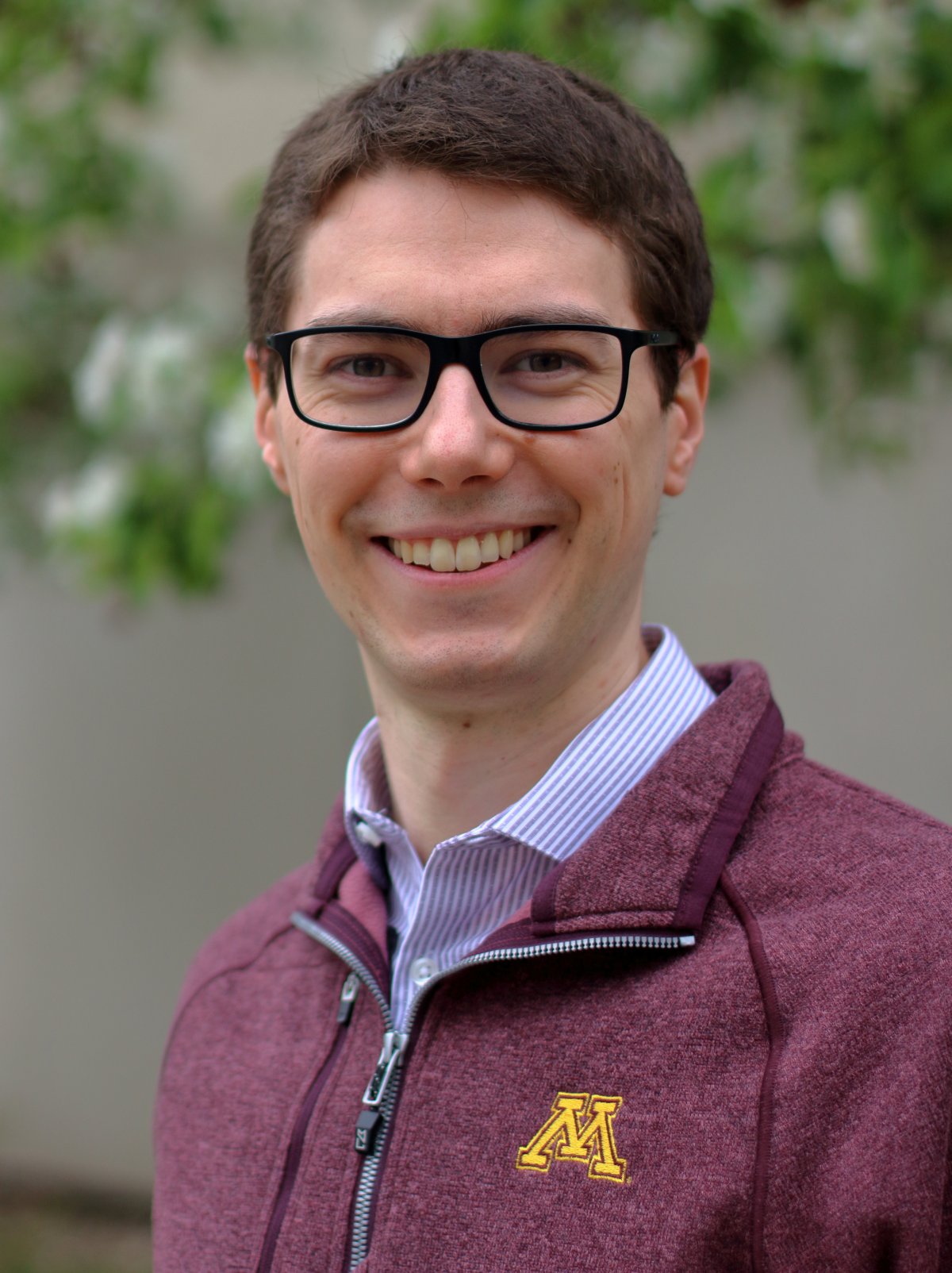
Ryan Caverly serves as an Associate Professor in the Department of Aerospace Engineering and Mechanics at the University of Minnesota, Twin Cities, holding the prestigious McKnight Land-Grant Professorship. His research bridges theoretical control frameworks with practical aerospace and robotics applications, focusing on dynamic modeling and system control. Education: BS in Honours Mechanical Engineering from McGill University MS in Aerospace Engineering from the University of Michigan PhD in Aerospace Engineering from the University of Michigan Professor Caverly's research centers on input-output stability, robust control of nonlinear systems, and computationally efficient modeling of flexible structures. His work spans aerospace vehicles, spacecraft, and robotic manipulators, emphasizing theoretical rigor alongside real-world implementation challenges in structural flexibility and control precision. Recent publications reveal strong emphasis on predictive control for orbital mechanics, hypersonic vehicle dynamics, and cable-driven systems. His work consistently integrates convex optimization, state estimation, and structural dynamics to solve complex problems in solar sail technology, UAV navigation, and hypersonic flow measurement. Scientific Awards: McKnight Land-Grant Professor Caverly leads multiple externally funded projects including NASA-sponsored research on solar sail momentum management, UAV state estimation with Honeywell, hypersonic bow shock measurements with the Air Force, and deployable space structure control. His grants portfolio demonstrates significant industry and government collaboration in aerospace innovation. He directs the Aerospace, Robotics, Dynamics, and Control (ARDC) Lab, which specializes in the intersection of dynamic modeling and control theory for flexible multi-body systems, with particular focus on cable-driven mechanisms and lightweight aerospace structures.
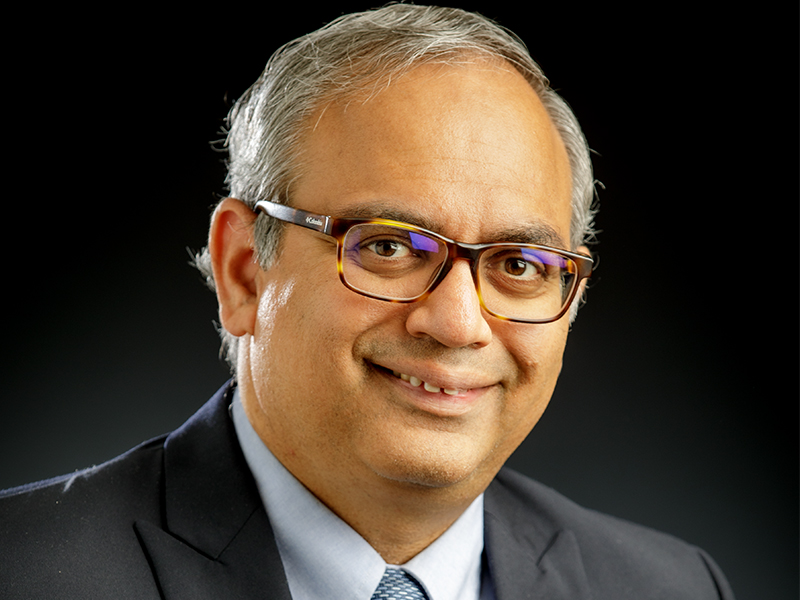
Jindal Shah is a Professor and holds the Anadarko Petroleum Chair in Chemical Engineering at Oklahoma State University, where he also serves as the Graduate Program Director. He is affiliated with the Department of Chemical Engineering within the College of Engineering at Oklahoma State University. Dr. Shah received his educational training from prestigious institutions worldwide. He earned his Ph.D. in Chemical Engineering from the University of Notre Dame in 2005, followed by an M.S. in Environmental Engineering from the University of Cincinnati in 1999, and completed his undergraduate education with a B.Tech. in Chemical Engineering from the Indian Institute of Technology (IIT) Bombay in 1996. Dr. Shah's research focuses on the application of molecular simulation methodologies to understand molecular-level interactions that give rise to macroscopic phenomena. His primary research interests include Monte Carlo and Molecular Dynamics Simulations, Phase Equilibria, Ionic liquids, and Dye-sensitized solar cells. A significant portion of his work centers on designing novel biodegradable ionic liquids with properties suitable for chemical processes, with applications in next-generation batteries and carbon capture. He also investigates molecular-level interactions responsible for device efficiency in dye-sensitized solar cells to rationally design novel dye molecules. Additionally, Dr. Shah employs data science and machine learning techniques to correlate properties of ionic liquids and generate new molecules with desired properties. An analysis of Dr. Shah's recent publications reveals a strong focus on ionic liquids and their applications in energy storage and carbon capture technologies. His work consistently bridges fundamental molecular-level understanding with practical applications, particularly in developing electrolytes for batteries and CO2 capture systems. A notable trend is the integration of machine learning techniques with traditional molecular simulation methods to accelerate materials discovery and optimization. His research demonstrates a progression from fundamental molecular simulations toward applied technologies with significant environmental impact, particularly in climate action (SDG 13) and affordable clean energy (SDG 7). Dr. Shah has secured substantial research funding from multiple prestigious sources including the National Science Foundation, U.S. Department of Energy, National Aeronautics and Space Administration, and industry partners. His funded projects include 'Collaborative Research: Cyber Training-Implementation, Medium, Establishing Sustainable Ecosystem for Computational Molecular Science Training & Education' (NSF), 'Ionic Liquids for Direct Air Capture of CO2 using Electric-Field-Mediated Moisture Gradient Process' (DOE), and 'CAREER: Computation-Enabled Rational Design of Cytochrome P450 for Ionic Liquid Biodegradation' (NSF). These grants support his research in computational molecular science, CO2 capture technologies, and the development of biodegradable ionic liquids. As an educator, Dr. Shah has been actively involved in teaching graduate courses including Principles of Chemical Engineering Thermodynamics, Doctoral Thesis supervision, and specialized courses such as Machine Learning for Chemical Processes and Introduction to Chemical Process Analytics. His teaching philosophy integrates cutting-edge research with educational practice, preparing students for the computational challenges of modern chemical engineering. He has also mentored numerous doctoral students through their dissertation research, contributing to the development of the next generation of chemical engineers and computational scientists.
Adam T. Smith is Distinguished Professor of Arts and Sciences in Anthropology at Cornell University, where he has been faculty since 2011. He is a leading scholar in Eurasian archaeology with a focus on the South Caucasus, particularly Armenia. Smith co-founded Project ArAGATS, a long-term archaeological program in Armenia, and co-directs the Aragats Foundation and Caucasus Heritage Watch, organizations dedicated to heritage preservation in the region. His educational background includes: Ph.D. (1996) in Anthropology from the University of Arizona M.A. (1993) in Anthropology from the University of Arizona M.Phil. (1991) in Social and Political Science from the University of Cambridge B.A. (1990) in Anthropology and Political Science from Brown University Smith's research centers on the role of material culture in political life, examining how objects, landscapes, and built environments shape political procedures and values. His work spans archaeological theory, political anthropology, and heritage studies, with a particular focus on the South Caucasus region. He investigates the long-term social and political dynamics from the Bronze Age to contemporary times, exploring themes of sovereignty, heritage preservation, and the political dimensions of material culture. His approach integrates theoretical frameworks with empirical fieldwork to understand political power through material evidence. His recent publications demonstrate a consistent focus on the archaeology of power and politics in Eurasia, with increasing attention to contemporary heritage issues. Smith's work bridges theoretical frameworks with empirical research, particularly through his long-term fieldwork in Armenia and the Caucasus region. His scholarship shows a progression from studies of ancient political systems to contemporary issues of cultural heritage and political violence, with a strong emphasis on ethical engagement with archaeological practice and heritage management. Smith has received numerous prestigious awards including: 2023-2025 Fellow, Milstein Program in Technology and Humanity, Cornell University 2023 Finalist, Falling Walls Science Breakthrough of the Year, Social Sciences and Humanities 2023 Certificate of Communal Partnership, St. James AME Zion Church, Ithaca NY 2010-2011 John Simon Guggenheim Memorial Foundation Fellow 2010-2011 Fellow, Cornell University Society for the Humanities 2006-2007 Fellow, Howard Foundation Smith has directed multiple field seasons and collaborative research projects in Armenia, involving both American and Armenian scholars. His work with Project ArAGATS has received continuous support over two decades, while Caucasus Heritage Watch represents a newer initiative addressing urgent heritage preservation needs through satellite monitoring. He has supervised numerous graduate students and secured significant research funding for his projects, demonstrating strong leadership in both academic and community-engaged research contexts. Smith leads several research initiatives including Project ArAGATS, the Aragats Foundation, and Caucasus Heritage Watch. His Landscapes and Objects Laboratory at Cornell serves as a hub for material culture studies, while his work with the St. James AME Zion Community Excavations demonstrates his commitment to community-engaged archaeology. These teams bring together interdisciplinary scholars to address complex questions about political power, material culture, and heritage preservation across time, with particular attention to how archaeological practice can engage with contemporary political issues and community needs.
Dr. Ava Fatah gen. Schieck is a Professor of Media Architecture and Urban Digital Interaction at The Bartlett School of Architecture, University College London (UCL) , where she has been affiliated since 2001. She teaches in the MSc Architectural Computation program, focusing on embodied interactions and urban digital experiences. Education: ATQ03 - Recognised by the HEA as a Fellow (UCL, 2008) Certificate in Learning and Teaching (UCL, 2007) Master of Science (UCL, 2001) Her research explores the intersection of architecture, digital media, and urban spaces. Key themes include: Mediated spatial experiences in museums and public environments Embodied interactions through dance, movement, and performative design Urban screens and community-centered digital installations Smart city critiques focusing on marginalized communities Pervasive computing's impact on social dynamics Her publication corpus (149+ outputs) predominantly addresses media architecture, HCI, museum technology, and sensory interactions , with recent work emphasizing olfactory interfaces, pandemic urbanism, and heritage digitization. Awards & Honors: Fellow of the Royal Society of Arts (FRSA, 2023) Projects & Grants: As Principal Investigator for the EPSRC-funded 'Screens in the Wild' , she examines networked urban screens for community engagement. She previously led the 'SCREAM' project (UrbanBuzz program) and contributed to EPSRC's 'Urban Design and Pervasive Systems'. She reviews grants for EPSRC, UKRI, SNSF, and other international bodies. She directs research through UCL's Space Research Group and VR Centre for the Built Environment , collaborating globally. As program chair for the Media Architecture Biennale (2012-2020), she fosters interdisciplinary dialogue across architecture, HCI, and interaction design.
Adrian Weller is a Director of Research in Machine Learning at the University of Cambridge and Head of Safe and Ethical AI at The Alan Turing Institute, where he also serves as a Turing Fellow. He additionally directs the Trust and Society programme at the Leverhulme Centre for the Future of Intelligence. His career includes senior roles in finance and advisory positions for governmental AI ethics bodies. His research integrates technical and societal dimensions of artificial intelligence, with major foci including: Foundational ML : Statistical methods, high-dimensional inference, causality, and Monte Carlo techniques Trustworthy AI : Fairness, privacy, bias mitigation, and algorithmic transparency Applied Domains : Computer vision, reinforcement learning, and bio-applications of ML Socio-technical Systems : Policy frameworks, human perceptions of algorithms, and ethical deployment Notable recognition includes an MBE (2022) for pioneering contributions to digital innovation. His work actively informs UK and EU AI policy discussions.
Aliya Saperstein is a Professor of Sociology and the Benjamin Scott Crocker Professor in Human Biology at Stanford University. She holds a Ph.D. in Sociology and Demography from the University of California, Berkeley (2008) and a B.A. in Sociology from the University of Washington. Her research focuses on the social processes through which racial and gender categories are constructed, how these classifications create and sustain inequality, and how methodological choices in survey research affect findings on stratification and health disparities. Stanford University faculty since 2011 Visiting Scholar, Sciences Po and Russell Sage Foundation Expert committee member for National Academies of Sciences consensus studies on race/ethnicity (2024) and gender measurement (2022) Her work has been recognized with multiple awards including the Population Association of America Early Achievement Award (2016) , Oliver Cromwell Cox Best Article Award (2014) , and IPUMS Research Award (2013) . She leads the Lab for Social Research at Stanford, which trains undergraduate researchers and collaborates with interdisciplinary teams. Research trends in her publications reveal a progression from foundational work on racial fluidity (2012-2014) to contemporary analyses of genetic ancestry testing's sociological implications. Her recent projects examine how direct-to-consumer genetic testing affects racial self-identification patterns and challenges traditional survey methodologies, particularly in multiracial populations and gender categorization. Scientific contributions include: Transforming sex/gender questions in the 2018 General Social Survey Key findings on how genetic ancestry testing increases multiracial identification Experimental evidence showing ancestry question order affects racial reporting Theoretical advancements in racial formation theory
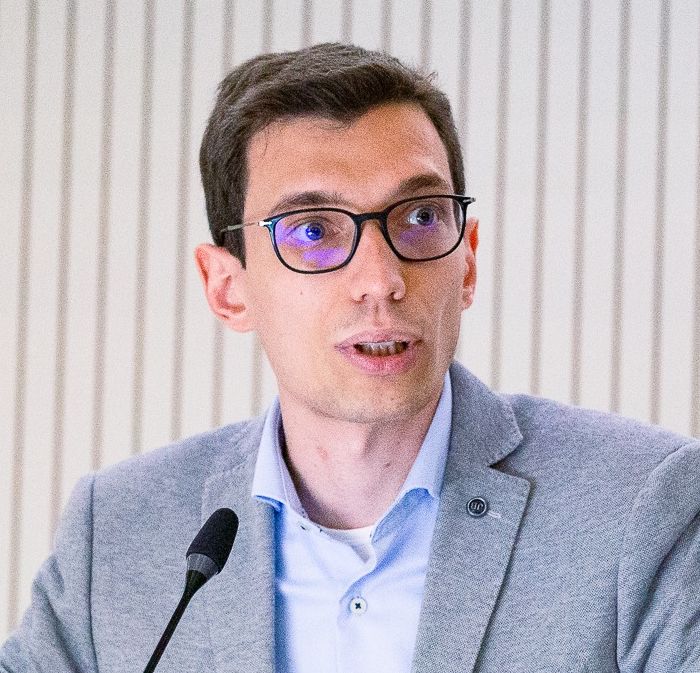
Lorenzo Baraldi is an Associate Professor at the University of Modena and Reggio Emilia, where he leads research in deep learning, vision-language integration, and multimodal AI systems. He serves as an ELLIS Scholar and Coordinator of the Modena ELLIS Unit, and has held the position of deputy director at the Interdepartmental Center on Digital Humanities since 2021. Previously, he worked at Facebook AI Research laboratory in Paris in 2017, developing video-matching algorithms for content moderation. His research spans multiple areas including Vision-and-Language integration, Multimodal Retrieval, Image and Video Captioning, Visual-Semantic alignment, Large-Scale model development, High Performance Computing, and Embodied AI. With over 120 publications in international journals and conferences, his work demonstrates consistent contributions to advancing multimodal AI capabilities. He has served as an Associate Editor for Computer Vision and Image Understanding and Pattern Recognition, and as Area Chair for major conferences including ICCV, WACV 2026, and ACM Multimedia 2025. His recent publication record shows significant impact in the field, with multiple papers accepted to top-tier conferences in 2024-2025 including CVPR, ICCV, BMVC, ICLR, ECCV, and NeurIPS. Notably, his paper "Hyperbolic Safety-Aware Vision-Language Models" was selected as a highlight paper at CVPR 2025. His research often involves collaboration with Rita Cucchiara and other researchers at his institution. ELLIS Scholar and Coordinator of the Modena ELLIS Unit Associate Editor for Computer Vision and Image Understanding Area Chair for ICCV and major multimedia conferences Highlight paper at CVPR 2025 Professor Baraldi teaches courses in Computer Vision and Cognitive Systems, Scalable AI, and Computer Architecture for the Artificial Intelligence Engineering and Computer Engineering programs. His teaching spans both undergraduate and graduate levels, with a focus on providing students with both theoretical foundations and practical implementation skills. He has developed educational materials including Deep Learning tutorials for classroom instruction.