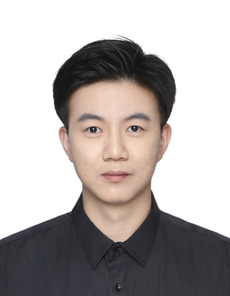
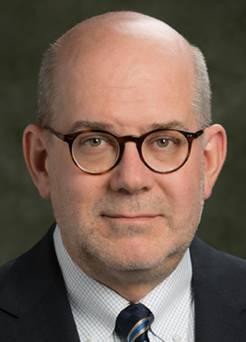
Gerald Fuller is the Fletcher Jones Professor in the School of Engineering at Stanford University. His research focuses on the microstructural and rheological behavior of complex fluids, including polymers, suspensions, emulsions, and biological fluids. He employs advanced optical methods and rheometry to study deformation, orientation, and flow dynamics of these materials. Education: PhD in Engineering from California Institute of Technology (Caltech, 1980). Research interests include: Interfacial phenomena in complex fluids Rheological characterization of biological systems (e.g., mucus, tear films) Development of novel experimental techniques (e.g., magnetic microwire rheometry, hyperspectral imaging) Industrial applications of antifoaming agents and emulsion stabilization Biomedical engineering of in vitro models for disease and tissue mechanics His laboratory integrates advanced microscopy (fluorescence, atomic force), high-speed imaging (2,000 fps), and rheological instruments (shear rheometer, extensional rheometers) to analyze material behavior under controlled flow conditions. Key contributions include pioneering work on droplet interface bilayers, tear film stability, and the mechanics of epithelial delamination at air-liquid interfaces. Current projects address pathological mucus gelation in respiratory diseases and the design of 3D-printable biopolymer composites. Labs/Teams: Fuller Research Group , collaborating across chemical engineering, biomedical engineering, and materials science disciplines. Active in developing translational technologies for drug delivery and diagnostic platforms.
Dr. Rui Li serves as a Postdoctoral Researcher and Emmy-Noether Group Leader at the Karlsruhe Institute of Technology's Institute of Nanotechnology, specializing in the Mechanics of Nanoscale Materials research unit. Based in Eggenstein-Leopoldshafen, Germany, her work pioneers femtosecond laser-based fabrication techniques for functional nanoarchitectures with direct biomedical applications, particularly in microrobotics for targeted therapy and microscale manipulation within physiological environments. Her research spans four interconnected domains: Nanoarchitected Metamaterials: Designing materials with engineered nanoscale architectures for enhanced mechanical, magnetic, and optical properties Advanced Microfabrication: Developing femtosecond laser 3D/4D printing methods for metals, alloys, and polymers at micro/nanoscale resolution Intelligent Microrobotics: Creating magnetically actuated microswimmers capable of complex locomotion in biological fluids and adaptive shape-morphing Biomedical Translation: Applying microscale systems to cancer therapy, neural tissue engineering, and microfluidic manipulation Dr. Li's interdisciplinary approach integrates mechanical engineering principles with cutting-edge materials science to solve critical challenges in minimally invasive medicine. Analysis of her 15 most recent publications (2021-2025) reveals a strategic evolution from fundamental fabrication techniques toward increasingly sophisticated functional systems. Key trends include: Transition from static microstructures to reconfigurable, environmentally adaptive microrobots with multi-stimuli responsiveness Integration of multi-material printing (metals, alloys, polymers) to achieve unprecedented functional complexity Development of blood-flow-compatible magnetic actuation systems enabling in vivo navigation Convergence of optical, magnetic, and thermal control mechanisms for precise spatiotemporal manipulation This trajectory demonstrates a clear focus on translating nanoscale material innovations into clinically viable microscale robotic solutions. No scientific awards or fellowship distinctions were documented in the source materials. Similarly, there is no mention of graduate student supervision or externally funded research grants. Dr. Li leads the Emmy-Noether-funded Nanoarchitected Metamaterials group within KIT's Institute of Nanotechnology infrastructure, leveraging the Karlsruhe Nano Micro Facility's (KNMF) advanced femtosecond laser systems and cleanroom facilities. Her team maintains active collaborations across KIT's engineering and medical faculties to advance microscale robotic systems for biomedical applications.
Dr. Thomas Kissinger is a Lecturer in Optical Instrumentation at the Centre for Engineering Photonics at Cranfield University. He holds a prestigious 5-year Royal Academy of Engineering Research Fellowship (2018-2023) focused on "Doppler-enhanced lidar system using range-resolved interferometry". With a background in physics and electrical engineering, Dr. Kissinger has been with the Centre for Engineering Photonics since 2011, first as a PhD student and then as a Research Fellow. Dr. Kissinger earned his physics degree (Dipl.-Phys.) and a Bachelor of Science in Electrical Engineering. His PhD research in range-resolved interferometric signal processing for fiber sensing applications won the 2016 Lord Kings Norton prize for the best overall PhD thesis across Cranfield University. Dr. Kissinger's research focuses on applying interferometric and optical measurement techniques to engineering problems. His main research areas include 3D Imaging and Lidar, Precision Optical Interferometry and Vibrometry, Optical Fibre Sensing (particularly Fibre Optic Shape Sensing), Manufacturing Instrumentation, and Optical Gas Sensing. His work has significant applications in manufacturing, robotics, autonomous vehicles, and healthcare. Analysis of Dr. Kissinger's recent publications (2022-2026) reveals a strong focus on precision optical measurement techniques, particularly in the areas of interferometry, fiber optic sensing, and metrology. His work shows increasing collaboration with international researchers and a growing emphasis on practical applications in manufacturing, aerospace, and nanotechnology. The trend indicates a shift toward more complex multi-parameter sensing systems and higher precision measurement capabilities. Lord Kings Norton prize for the best overall PhD thesis across Cranfield University (2016) Dr. Kissinger has been actively involved in several significant research grants, including a Royal Academy of Engineering Research Fellowship (2018-2023), an EPSRC grant on "Novel optical instrumentation for robotic manufacturing" (2015-2018), and the ATI-funded BladeSense project (2015-2019). He collaborates extensively with industry partners including Oxford Instruments Nanoscience, National Physical Laboratory, QinetiQ Group PLC, and Airbus SE, applying his research to real-world problems in welding, laser processing, and aerospace applications. Dr. Kissinger works within the Centre for Engineering Photonics, which holds three consecutive EPSRC Platform Grants. His research has practical applications in helicopter rotor blade monitoring, robotic manufacturing, and laser-based welding and additive manufacturing. His work on fiber optic shape sensing has particular relevance for structural health monitoring in aerospace applications.
Mahyar Fazeli is a Postdoctoral Researcher at the School of Chemical Engineering , Aalto University . His research focuses on developing sustainable composite materials through innovative processing techniques, including the utilization of textile waste, agricultural byproducts, and lignocellulosic biomass. Current Affiliation: Aalto University, Bioproducts and Biosystems Research Groups: Bioproduct Technology, Postdoctoral Researcher Research Interests include composite material design, biopolymer processing, and environmental impact assessment. His work addresses challenges in sustainable manufacturing, carbon footprint reduction, and functional packaging solutions. Recent Publication Trends highlight advancements in biocomposites, with emphasis on Textile waste recycling Life cycle assessment Hydrogel-based additive manufacturing Lignin valorization Cellulose nanofiber integration Biomedical device fabrication Labs & Teams : Collaborates with interdisciplinary researchers in composite development, including teams led by Prof. Orlando J. Rojas, Prof. Jukka Seppälä, and Prof. Eero Kontturi.
Professor Bo Cui is a distinguished faculty member at the University of Waterloo's Department of Electrical and Computer Engineering, where he serves as Director of the Waterloo Nanofabrication Group. His research focuses on cutting-edge nanofabrication techniques and their applications across multiple disciplines. Professor Cui received his educational training at prestigious institutions: BSc in Physics from Peking University (1994), followed by MA (2000) and PhD (2003) in Electrical Engineering from Princeton University. After completing his doctoral studies under Professor Stephen Y. Chou at the Nanostructure Laboratory, he worked at the National Research Council of Canada before joining the University of Waterloo in 2008. His research interests span micro-nanofabrication, lithography techniques, MEMS fabrication, microneedle technology, AFM probe fabrication, terahertz photoconductive antenna development, and dry plasma etching. Professor Cui's work bridges fundamental nanofabrication science with practical applications in biomedical devices, nanoelectronics, and photonics. His group has developed innovative methods for electron beam lithography on irregular surfaces, silicon microneedle fabrication, high aspect ratio AFM probes, and terahertz spectroscopy components. Analysis of his recent publications reveals a strong focus on advancing nanofabrication capabilities, particularly in electron beam lithography techniques, plasmonic nanostructures for sensing applications, and novel resist materials. His work demonstrates consistent innovation in overcoming fundamental limitations in nanofabrication processes while maintaining practical relevance to industry applications. Professor Cui leads the Waterloo Nanofabrication Group, which maintains extensive collaborations with industry partners in biomedical devices, sensors, and terahertz spectroscopy. The group utilizes state-of-the-art cleanroom facilities including electron beam lithography, focused ion beam, ICP-RIE/deep RIE, laser direct writing, and physical/chemical vapor deposition systems.
Victoria Lowell is a Clinical Professor in the Department of Curriculum and Instruction at Purdue University's College of Education, serving since 2023 after progressing from Assistant Professor (2012-2018) to Associate Professor (2018-2023). Her expertise centers on integrating emerging technologies for authentic learning experiences across educational contexts. Education: Ph.D. in Education, Regent University, Distance Education; Higher Education – Research and Institutional Planning (2009) M.Ed. in Educational Technology, University of Hawaii (2004) Post-Bac Teacher Education Certification, Secondary Social Studies, University of Hawaii (1998) B.A. in History, Virginia Wesleyan College, graduated with honors (1994) Research Interests: Dr. Lowell leads the Emerging Technologies in Learning, Design, and Technology (ETLDT) group, pioneering VR/AR/MR/AI applications for collaborative and experiential learning. Her parallel Language Learning and Technology (LLT) research explores digital tools for EFL/ELL development in speaking, writing, and pronunciation. Her work bridges immersive technology with situated learning theory to create authentic educational experiences from K-12 to professional training. Research Trends: Analysis of her recent publications reveals accelerating integration of generative AI (particularly ChatGPT) with extended reality in language education. Key themes include VR role-play for speaking skills, AI literacy development for educators, and AR-enhanced learning experience design. Systematic reviews dominate her methodology, emphasizing practical implementation frameworks and self-efficacy outcomes in authentic learning environments. Scientific Awards: Emerging Learning Technologies Award (AECT, 2023) Teaching Leadership Award (Purdue, 2023) Teaching for Tomorrow Fellowship Award (Purdue, 2023 & 2017) Distance Learning Article Award (AECT, 2022) Best Practices Awards (AECT, 2020 & 2016) Outstanding Graduate Faculty Mentor Award (Purdue, 2020) Research Best Paper Awards (AERA, 2020 & 2019) Distinguished Alumni Award (University of Hawaii, 2017) Advising and Grants: As former Online Program Convener (2012-2017) for Purdue's LDT Master's program, she developed mentoring frameworks recognized with AECT's Best Practices Award (2020). Current grants include 'Augmented Reality-Enhanced Instructional Resources for Taxonomy' (2023) and 'XR Integration for Experiential Learning' (2023), focusing on K-12 teacher training and higher education innovation. Labs and Teams: The ETLDT group conducts rigorous studies on VR/AR/AI implementation across formal/informal settings, while the LLT group investigates technology-mediated language acquisition through projects involving VR conversation simulations and AI-enhanced pronunciation tools for diverse learner populations.
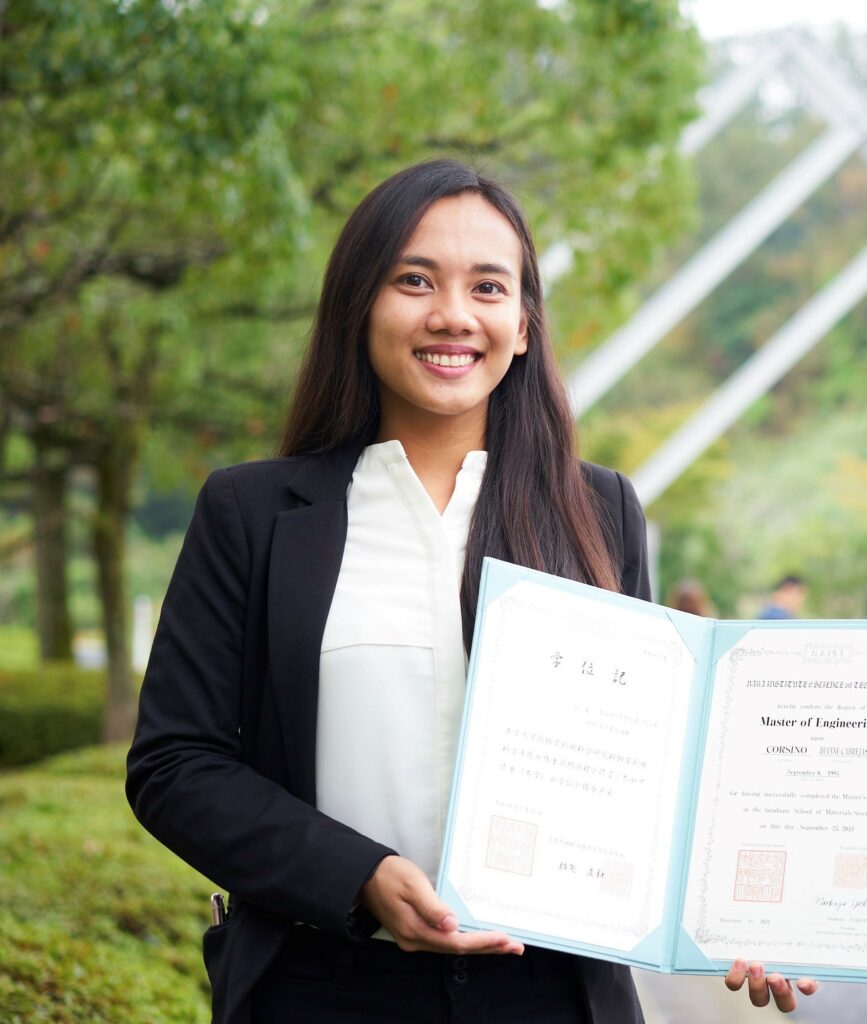
Dianne Corsino is a Postdoctoral Research Fellow in the Faculty of Science and Technology at the Free University of Bozen-Bolzano, specializing in the fabrication and characterization of flexible electronics. Her research bridges materials science and electrical engineering to develop innovative thin-film transistor technologies for next-generation wearable and transparent electronic systems. Dr. Corsino earned her academic credentials through international training, completing her Bachelor of Science in Materials Engineering from the University of the Philippines – Diliman (2016), followed by a Master of Engineering (2018) and Doctor of Engineering (2021) in Materials Science from Nara Institute of Science and Technology in Japan. Her graduate work focused on atomic layer deposition techniques for oxide semiconductor passivation and photo-assisted methods for transforming oxide semiconductors into conductors. Her research expertise centers on flexible thin-film transistors using oxide semiconductor materials, with particular emphasis on fully solution-processed fabrication techniques that eliminate expensive vacuum processing. Dr. Corsino has developed significant expertise in photo-assisted methods including UV irradiation and laser technologies, and has made notable contributions to self-aligned transistor architectures that improve high-frequency performance on transparent flexible substrates. Her work addresses critical challenges in flexible electronics including device miniaturization, mechanical stability during bending, and environmental reliability. Analysis of Dr. Corsino's publication record reveals a consistent progression from fundamental materials processing to sophisticated device integration. Her recent work demonstrates increasing innovation in transistor architecture, with multiple publications on self-aligned structures achieving channel lengths below 5μm and oscillation frequencies exceeding 100MHz. A unifying theme across her research is the development of cost-effective manufacturing approaches that maintain high device performance, particularly through solution-based processing and photo-functionalization techniques that operate at low temperatures compatible with flexible substrates. Dr. Corsino maintains active research collaborations across Europe, particularly with colleagues at the Free University of Bozen-Bolzano where she currently works, and retains connections with Japanese institutions where she completed her graduate studies. Her publication record demonstrates strong interdisciplinary work spanning materials science, electrical engineering, and nanotechnology, with frequent contributions to IEEE journals and international conferences in flexible electronics.
Ketki Lichade serves as an Assistant Professor in the Department of Mechanical and Aerospace Engineering at the University at Buffalo's School of Engineering and Applied Sciences, where she drives innovation in advanced manufacturing methodologies with applications spanning biomedical engineering and sustainable materials development. Educational background: PhD in Mechanical and Industrial Engineering, University of Illinois at Chicago (2023) BE in Mechanical Engineering, Savitribai Phule Pune University (2016) Her research program centers on Advanced Manufacturing and Additive Manufacturing with specialized focus on process-structure-property relationships and bio-inspired design . She pioneers acoustic-assisted photopolymerization, direct ink writing, and multiscale manufacturing techniques to engineer functional materials with programmable adhesion and hierarchical structures. This work enables breakthroughs in conductive hydrogels for flexible electronics, bone-mimetic scaffolds for tissue engineering, and atmospheric water harvesting systems, fundamentally advancing the integration of materials science with precision manufacturing. Analysis of her 15 most recent publications (2021-2025) reveals dominant innovation in acoustic assembly photopolymerization for bioinspired multifunctional materials. Key trends include rapid single-layer fabrication processes, multimaterial 3D printing with spatially controlled properties, and hierarchical porous structures that replicate natural systems. These contributions bridge mechanical engineering, fluid dynamics, and biomimetics to solve critical challenges in manufacturing speed, material functionality, and sustainability. As principal investigator of the Advanced Manufacturing Lab, Dr. Lichade secures external funding for cutting-edge research in sustainable production methods and multifunctional material systems. She actively mentors graduate researchers while collaborating with industry partners to translate academic discoveries into industrial manufacturing solutions, particularly in medical device fabrication and environmental technology sectors. The Advanced Manufacturing Lab team specializes in acoustic streaming, two-photon polymerization, and electrohydrodynamic printing techniques. Current initiatives focus on developing programmable adhesion surfaces for biomedical implants, scalable water vapor harvesting systems using biomimetic composites, and AI-driven process optimization for multimaterial additive manufacturing, positioning the lab at the forefront of next-generation sustainable manufacturing research.
Professor David Musker is the **Professor of International Design Law** at the **Centre for Commercial Law Studies (CCLS)**, Queen Mary University of London. He specializes in **design law**, **patent law**, and **intellectual property (IP) procedural law**, with a focus on comparative and international frameworks, Unitary Patents, and IP professional regulation. His work bridges academia and practice, having authored influential texts like Community Design Law: Principles and Practice , cited globally in judicial rulings. Education & Professional Roles: Holds a BSc (Hons) in London, ARSM, and an LLM from Nottingham Trent University. He is a **Chartered Patent Attorney**, **European Patent Attorney**, and member of key IP bodies such as the Chartered Institute of Patent Attorneys (CIPA) and the Intellectual Property Regulation Board (IPReg). Previously chaired CIPA’s Designs and Copyright Committee and served as President of UNION’s Designs Commission. Research & Influence: Research emphasizes **cross-border design protection**, legal professional privilege in IP, and procedural harmonization. Notable contributions include filing the first Registered Community Design and advising on EU IP policy. His writing spans journals like Journal of Intellectual Property Law & Practice and European Copyright and Design Reports . Awards & Recognition: Received the **Worldleaders European IP Award (2004)** for contributions to Community Design education. Active in global IP networks, lecturing at institutions like ETH Zurich and CEIPI Strasbourg. Teaching & Supervision: Teaches modules on international design law, EU/US design systems, and IP management. Supervises research in design/patent law and IP litigation.
Philip Shapira is a Part-Time Professor at the Jimmy and Rosalynn Carter School of Public Policy, Georgia Institute of Technology, and a Professor of Management, Innovation and Policy at the Manchester Institute of Innovation Research, University of Manchester. His work focuses on science and technology policy, innovation systems, and responsible research and innovation. Shapira holds a Ph.D. from UC Berkeley in City and Regional Planning, an M.A. in Economics, an M.C.P. from MIT in City Planning, and a Dip.TP from Gloucestershire College of Art and Design. He directs the Georgia Tech Program in Science, Technology, and Innovation Policy and the Georgia Manufacturing Survey. His research spans nanotechnology, synthetic biology, and AI ethics, with recent emphasis on generative AI’s impact on scientific publishing. Shapira is a Fellow of the AAAS and RSA, and co-edited key handbooks on innovation policy. Research Interests: Shapira’s work bridges policy and practice, analyzing how innovation systems drive economic development while addressing societal challenges. Key areas include: Technology trajectories and policy evaluation Responsible innovation in emerging fields like synthetic biology AI ethics and academic integrity Manufacturing competitiveness and equity Articles Trends: Recent publications examine generative AI’s role in scientific writing, societal alignment in innovation, and bioeconomy strategies. His 2024 work on ChatGPT’s influence on academic prose highlights methodological innovations in detecting AI-generated text. Awards: Recognized for contributions to science policy, Shapira’s fellowships underscore his dual focus on scholarly rigor and public engagement. Advising & Grants: Leads initiatives like the Georgia Manufacturing Survey and collaborates on EU-funded open innovation networks. Current projects include analyzing AI’s impact on science and designing tools for rapid sustainability assessment in biotechnology. Labs/Teams: Associated with the Technology Policy and Assessment Center at Georgia Tech and SYNBIOCHEM (Manchester), focusing on biofoundries and translational research.
Richard O'Leary is a Lecturer in the Department of Electronic and Electrical Engineering at the University of Strathclyde, Faculty of Engineering. His work bridges teaching and research in ultrasonic engineering, measurement systems, and transducer development, with strong applications in biomedical and industrial domains. Research Interests: Ultrasonic transduction using novel polymer materials Design and fabrication of piezoelectric and capacitive transducers 3D printing of tissue-mimicking phantoms and microvascular structures Finite element modeling and wave propagation analysis Applications in non-destructive testing, ultrasound imaging, and sonochemistry The recent publications indicate a strong trend toward additive manufacturing of functional materials and phantoms for advanced ultrasound applications, particularly in high-resolution imaging and therapeutic research. His work increasingly integrates microfabrication, biomimetic design, and acoustic characterization. Professional Roles and Projects: Principal Investigator, EPSRC Centre for Doctoral Training in Future Ultrasonic Engineering (FUSE) Co-investigator, Transformative Anatomically accurate Microvascular flow Phantoms for Ultrasound therapy research (TAMP-US) Co-investigator, Bio-Inspired Adaptive Ultrasonic NDE feasibility study Principal Investigator, Industrial Case Account project (2015–2022) External Examiner for PhD programs at Technical University of Madrid and other institutions He contributes to teaching in measurement principles, analog/digital circuits, and project supervision for final-year engineering students. He is also active in professional service, including organizing workshops and contributing to IEEE conferences. Labs and Research Groups: His research is based in the Centre for Ultrasonic Engineering at the University of Strathclyde, a leading interdisciplinary group focused on ultrasonic sensor development, imaging, and industrial applications.
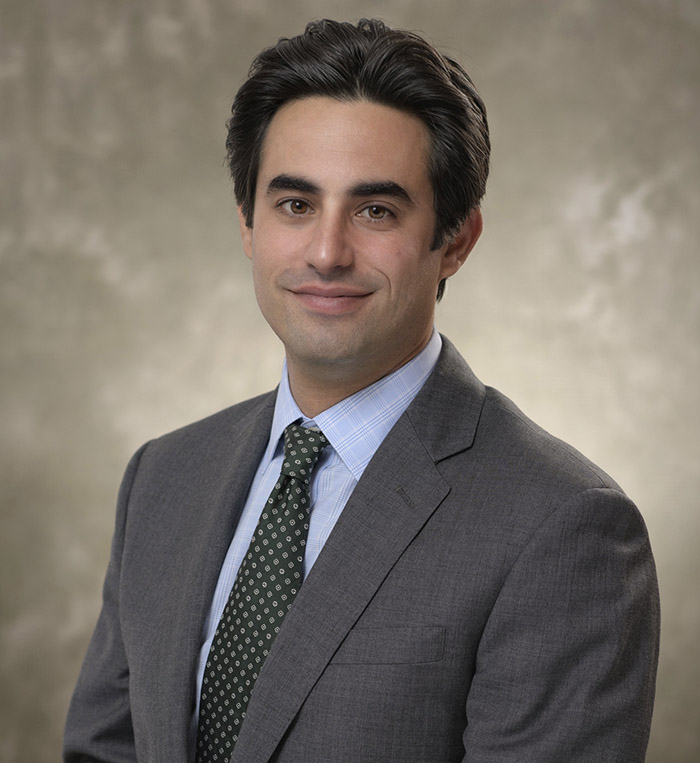
Jacob S Sherkow is the Richard W. and Marie L. Corman Professor of Law at the University of Illinois College of Law, with additional appointments as Professor of Medicine at the Carle Illinois College of Medicine, Professor at the European Union Center, and Affiliate of the Carl R. Woese Institute for Genomic Biology. He serves as Director of the Innovation Law and Technology Program and maintains concurrent appointments at the Center for Advanced Studies in Biomedical Innovation Law at the University of Copenhagen. Sherkow received his JD from the University of Michigan Law School, where he was an editor of the Michigan Law Review, an MA in biotechnology from Columbia University, and a BSc in molecular biology and English literature from McGill University. His background includes several years of experience as a research scientist in molecular biology and he is a certified Editor in the Life Sciences (BELS). Professor Sherkow's research focuses on the intersection of intellectual property law, regulation, and bioethics as they apply to advanced biotechnologies. He is widely recognized as a leading expert on IP protection for genome-editing technologies, particularly CRISPR. His scholarship spans patent law, regulatory policy, and the ethical implications of emerging biotechnologies, with particular attention to how legal frameworks can both promote and hinder scientific innovation in the life sciences. He has published over 75 articles in prestigious venues including Science, Nature, JAMA, the Yale Law Journal, and the Stanford Law Review, with his work cited by various federal courts including the Supreme Court. Analysis of Sherkow's recent publications reveals a strong focus on CRISPR patent disputes, gene patenting after the Myriad decision, regulation of direct-to-consumer genetic testing, and the intersection of patent law with pharmaceutical regulation. His work demonstrates a consistent pattern of addressing timely legal questions at the cutting edge of biotechnology, often providing empirical analysis and practical insights for policymakers, courts, and industry stakeholders. A notable trend is his increasing attention to global governance frameworks for emerging biotechnologies and the implications of patent law for public health initiatives. University Scholar (2024) - University of Illinois System's highest honor for faculty Carroll P. Hurd Award for Scholarly Excellence (2024) Otto L. Walter Distinguished Writing Award (2018) Class of 2017 Teaching Award (previous institution) Emerging Leader in Health and Medicine Scholar, National Academy of Medicine (2018-2021) Professor Sherkow serves as an expert in patent disputes in both the United States and Germany and has advised France's National Assembly on biotechnology patenting issues. He regularly consults with investment firms on patent litigation in the biosciences and has been extensively quoted in major media outlets including The Wall Street Journal, The New York Times, and NPR. His legal practice background includes patent litigation at Gibson, Dunn & Crutcher LLP and clerkship experience in the U.S. District Court for the Eastern District of New York. He teaches courses including Patent Law, Property, Genomics and the Law, and Advanced Topics in Patent Law. Sherkow's work connects multiple research ecosystems including the Carl R. Woese Institute for Genomic Biology where he contributes to interdisciplinary genomic research initiatives. His international collaborations extend to the Center for Advanced Studies in Biomedical Innovation Law in Copenhagen, where he has maintained appointments since 2018, and he has presented his research at institutions including the University of Cambridge. His scholarship bridges legal theory with practical applications in the rapidly evolving field of biotechnology.
Mark D. Poliks is a SUNY Distinguished Professor and Director of the School of Systems Science and Industrial Engineering at SUNY Binghamton. He also leads the Center for Advanced Microelectronics Manufacturing (CAMM), a New York State Center of Advanced Technology. His research focuses on flexible electronics, additive manufacturing, and hybrid electronics, with applications in wearable sensors, aerospace, and healthcare. He has secured over $50M in combined research and equipment funding, and holds 48 U.S. patents. Poliks holds a BS in Chemistry and Mathematics (University of Massachusetts) and a PhD in Materials Science and Engineering (University of Connecticut). Before academia, he held senior roles at IBM Microelectronics and Endicott Interconnect. Research Interests: Flexible and stretchable electronics Additive manufacturing techniques (aerosol jet, 3D printing) High-temperature electronics packaging Sensor systems for medical and industrial uses Awards & Recognition: SUNY Chancellor’s Award for Excellence in Research 2017 NextFlex Fellow Leader of DoD NextFlex Manufacturing USA Node His work emphasizes industry collaboration, with projects funded by federal agencies, NY state, and corporations. Key contributions include developing roll-to-roll manufacturing processes and novel interconnect technologies for flexible electronics.
Nadia Grossiord is a University Researcher at Eindhoven University of Technology (TU/e) and a Scientific Advisor for the Stimuli-responsive Functional Materials & Devices (SFD) research group. She is employed by SABIC, where she focuses on functional surfaces and high-performance polymers. Her academic background includes a Ph.D. in Polymer Chemistry from TU/e (2003) and postdoctoral research at Warwick University and Holst Centre/TNO. Her research interests span wettability, polymer materials, smart responsive surfaces, and thin films. Notable contributions include work on electrochromic foils, light-responsive polymers, and photonic materials. She has authored over 40 publications, with recent highlights in ACS Applied Materials and Interfaces and Advanced Materials .
Dr. Jim Marquardson is an Assistant Professor in the Information Assurance & Cyber Defense department at Northern Michigan University's College of Business . With a Ph.D. in Management Information Systems from the University of Arizona, his research focuses on lie detection with technology, human-computer interaction, persuasive technology, information security, data analytics, and educational methodologies. Ph.D. in Management Information Systems (University of Arizona) Teaching credentials in cybersecurity, network simulation, and virtual labs Industry experience at Zions Bank and Exxon Mobil Research Interests revolve around integrating hands-on learning into cybersecurity education, including Amazon Web Services Academy implementations, GitHub-based tutorials , and Security Operations Center (SOC) frameworks . His work bridges academic theory with practical applications in information assurance and network design. Publications highlight trends in cybersecurity pedagogy , cloud computing education , risk management , and persistent skill gaps in entry-level cybersecurity roles. Articles from 2017-2025 demonstrate sustained focus on improving educational outcomes through simulation , AI integration , and collaborative learning techniques . Teaching Philosophy emphasizes practical experience , with students actively building computer networks , creating virtual machines , and developing security software . His background in corporate IT informs real-world applications of theoretical concepts. Mountain Biking Baking College Football Ethical Hacking Programming Music