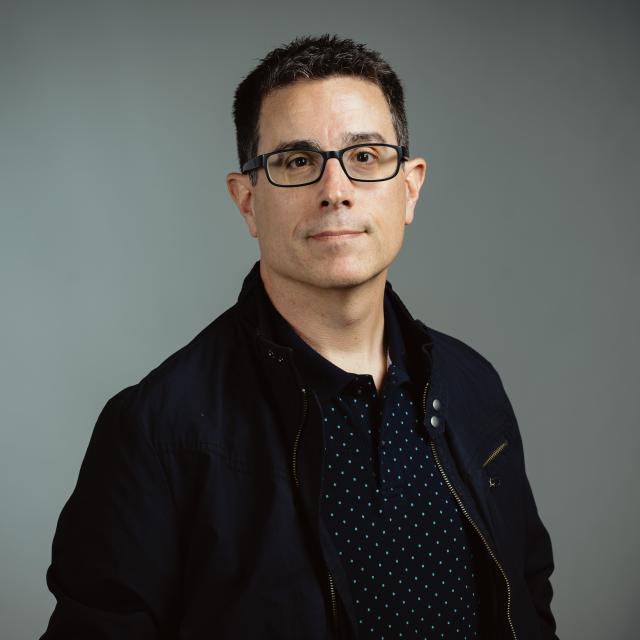
Patrick SENET is a Professor of Condensed Matter Physics and Molecular Biophysics at the University of Burgundy (Dijon, France) since 2001. He leads research in theoretical and computational approaches to protein dynamics, nanopore technology, and density functional theory. Affiliated with the Nanosciences Department at the Laboratoire Interdisciplinaire Carnot de Bourgogne (ICB). Scientific director of the university's computational center (CCuB) since 2016. Former leader of the 'Physics Applied to Proteins' research group (2007-2021). Research Focus Protein Folding & Dynamics: Investigates conformational changes, misfolding, and aggregation mechanisms using molecular dynamics and free-energy landscape analysis. Nanopore Technology: Develops 2D MoS2 solid-state nanopores for protein sequencing and biomolecule detection. Density Functional Theory: Applies conceptual DFT to study reactivity, polarizability, and electronic responses in molecular systems. Complex Systems: Utilizes Monte Carlo simulations and graph theory to model nanomaterials and biological processes. Publications Trends Recent work focuses on: 2D nanopore applications for protein sequencing (2022-2025). Statistical analysis of protein folding/unfolding dynamics (2020-2024). Computational modeling of glutathione transferases and their biological roles (2018-2023). Integration of machine learning in nanopore-based detection systems (2022).
Alessandro Pandini is a Senior Lecturer in Computer Science at Brunel University's College of Engineering, Design and Physical Sciences . His work bridges computational methods with biological systems, focusing on protein dynamics and drug discovery. PhD in Computational Chemistry from University of Milan-Bicocca Marie Curie Inter European Fellowship (2008) BBSRC-funded postdoctoral research at King's College London (2011-2014) His research integrates molecular dynamics , structural bioinformatics , and machine learning to study protein-ligand binding, allosteric regulation, and drug design . Recent work with Dr. Arianna Fornili (QMUL) and Dr. Shahid Khan (LBNL) explores conformational transitions in proteins and residue coevolution in bacterial systems. Key trends in his 2025-2024 publications include graph embedding for protein dynamics, self-organizing maps in MD analysis, and ubiquitin signaling in TNF regulation. Scientific Awards : Marie Curie Fellowship (2008) Grants : Leverhulme Trust (2017-2020) for AI-driven protein dynamics redesign He supervises PhD students and contributes to teaching courses like Machine Learning (CS5706) and Big Data Analytics (CS5608). His lab affiliation includes the COBIO research group .
Jean-Pierre BUCHER is a Professor at the University of Strasbourg, where he heads the Research Group "Scanning probes for Nanomagnetism" at the IPCMS (Institut de Physique et Chimie des Matériaux de Strasbourg). He is also a Senior member of the Institut Universitaire de France, recognizing his significant contributions to research and teaching in nanomagnetism and molecular electronics. BUCHER received his PhD from the Ecole Polytechnique Fédérale de Lausanne (EPFL) for his study by spin-echo-NMR of quantum size effects and adsorbate induced modifications in Pt nanoclusters. His academic journey includes a two-year Fellowship for Advanced Researcher from the Swiss National Science Foundation at the University of Virginia, research positions at KFA-Jülich in Germany, and EPFL before becoming a full professor at Université Louis Pasteur (now part of University of Strasbourg) in 1994. His research focuses on magnetotransport in STM junctions in the spin-polarized configuration (SP-STM), where atoms and molecules are addressed on an individual basis to study and control magnetic properties at the atomic scale. He has made pioneering contributions to the field of nanomagnetism, particularly in the study of magnetic clusters, single molecule magnets, and quantum size effects. His work bridges fundamental physics with potential applications in spintronics and quantum information processing. Analysis of his recent publications reveals a strong focus on single molecule magnets, particularly TbPc2 complexes, and their behavior on metal substrates. His research increasingly incorporates molecular dynamics simulations alongside experimental work, exploring self-assembly processes, magnetic bistability, and quantum spin phenomena at the nanoscale. The interdisciplinary nature of his work spans condensed matter physics, surface science, and molecular electronics. His scientific achievements have been recognized through several prestigious awards: Senior member of the Institut Universitaire de France Reward of scientific excellence Fellowship for Advanced Researcher of the Swiss National Science Foundation (1989) United States Patent on "High density magnetic recording medium" (Patent Number: 5,830,588, Nov. 3, 1998) BUCHER has directed and co-directed nineteen PhD theses, mentoring the next generation of scientists in nanomagnetism and surface science. His research has been supported by numerous international projects including QUSTEC – Quantum Science and Technologies at the European Campus, iJURC research program of Institute for Chemical Research (Kyoto University), LabEx NIE, Institut Universitaire de France (IUF) "SPINMAP", and various European Framework Programs. At IPCMS, he is responsible for instrumental platforms serving 150 researchers across 15 nodes, and specifically coordinates the SINGLEMO platform dedicated to the magnetic spectroscopy of single objects, particularly molecule magnets. His laboratory combines advanced scanning probe techniques with molecular synthesis and theoretical modeling to explore quantum magnetic phenomena at the atomic scale.
Jinghang Xie is an Assistant Professor in the Department of Molecular Physiology and Biological Physics at the University of Virginia. He holds a B.E. in Engineering in Life Sciences and Biotechnologies and an M.S. in Microbiology and Biochemistry from China Pharmaceutical University, followed by a Ph.D. in Pharmaceutical and Chemical Sciences from the University of the Pacific. His research focuses on developing cutting-edge molecular imaging tools at the intersection of biology, chemistry, and medicine. Primary research interests include: Molecular imaging probe development for real-time biological visualization Immunological response mechanisms in cancer immunotherapy and vaccines Antibiotic resistance pathways in pathogenic bacteria Translational applications in diagnostics and therapeutic monitoring Publication analysis reveals strong emphasis on in vivo imaging techniques for monitoring disease mechanisms and therapeutic responses. Recent work features advanced probes for detecting antibiotic-resistant bacteria, tracking immune cell activity in cancer immunotherapies, and imaging enzyme activity in tumors. Longitudinal studies demonstrate consistent innovation in fluorescence and bioluminescence imaging platforms. Dr. Xie leads collaborative research developing novel imaging technologies to visualize biological processes in real-time. Current work emphasizes the Snyder Translational Research Building facilities for interdisciplinary projects bridging chemical biology and clinical applications.
Elif Akalin is affiliated with Istanbul University and has made significant contributions to quantum chemistry, spectroscopy, and computational modeling. Her research spans molecular docking, ADME studies, and the vibrational analysis of pharmaceuticals and semiconductor materials. Specializes in DFT calculations, molecular dynamics, and Raman/FT-IR spectroscopic techniques. Collaborates internationally on topics like GaAsBi alloys, anti-aging peptides, and drug-clay interactions. Her work bridges materials science and pharmaceutical research, with a focus on theoretical and experimental spectroscopic analysis.
Dr. Andrés Felipe Cruz Ortiz is a Marie Curie contract researcher at the Research Center in Biological Chemistry and Molecular Materials (CIQUS) within the University of Santiago de Compostela . His work focuses on advanced spectroscopic techniques and biomedical applications of nanotechnology. Education: PhD in Chemistry, National University of Córdoba (2020) Specializing in Inorganic Chemistry and Mass Spectrometry , Dr. Cruz Ortiz investigates: Ion-molecule interactions in DNA bases Metal coordination effects on nucleobase tautomerism Development of nanotools for biomedical research Environmental applications of pyrometallurgical recycling AI-based safety systems for mining operations Research trends revealed in his publications include: Combining IRMPD spectroscopy with computational methods Exploring alkaline earth and transition metal ion interactions Interdisciplinary approaches bridging chemistry and environmental engineering Scientific Recognition: Marie Curie Fellowship
Professor Wolfgang Wernsdorfer is a leading physicist and Humboldt Professor at the Karlsruher Institut für Technologie (KIT), affiliated with the Physikalisches Institut. He leads a prominent research group focused on advancing quantum technologies through molecular systems. His career includes key roles as a research director at CNRS in Grenoble, France, and he holds a habilitation from Université Joseph Fourier. His work bridges physics and chemistry, aiming to realize quantum computing using molecular spintronics. His research interests center on molecular quantum spintronics , single-molecule magnets , and hybrid quantum devices . He pioneers the development of quantum bits encoded in magnetic molecules, utilizing their quantum properties for information processing. His group fabricates nanoscale devices using UHV deposition and STM/AFM techniques, exploring couplings between molecular spins and quantum dots, nanomechanical systems, superconducting circuits, and NV centers. This interdisciplinary approach leverages supramolecular chemistry to engineer complex molecular architectures for proof-of-principle quantum processors. The recent publications highlight a strong trend in quantum information science and advanced materials . His work spans from fundamental studies of quantum tunneling in dysprosium and holmium complexes to the engineering of superconducting qubits and hybrid quantum systems. Key themes include the electrical control of molecular spins, the development of high-impedance quantum circuits using granular aluminum, and the integration of molecular magnets with solid-state devices for scalable quantum technologies. Scientific Awards: Bronze Medal from CNRS (1998) Wohlfarth Prize Lecture (2002) Agilent Europhysics Prize (2002) International Olivier Kahn Award (2006) ERC Advanced Grant (2008) Prix Special from SFP (2012) Gutenberg Lecture Award (2012) Alexander von Humboldt Professorship (2016) CNRS Silver Medal (2016) Gottfried Wilhelm Leibniz Prize (2019) Professor Wernsdorfer actively advises students and postdoctoral researchers, fostering the next generation of quantum scientists. His group has received substantial research grants, including an ERC Advanced Grant, to support its ambitious work. He leads a large, collaborative research team and maintains extensive partnerships with chemists from KIT, University of Orsay, and University of Modena, as well as physics groups at Mainz and CNRS. This collaborative network is essential for synthesizing novel magnetic molecules and characterizing their quantum properties. His research group is at the forefront of building a unique low-temperature research platform for molecular quantum spintronics. The team works on cutting-edge projects involving the fabrication and measurement of molecular spin devices, quantum sensors, and hybrid quantum circuits. Their work on granular aluminum resonators and fluxonium qubits represents significant advancements in quantum hardware, aiming to overcome decoherence and scalability challenges in quantum computing.
Julia Kenyon is an Associate Professor and Pre-Clinical Director of Studies in Medicine at the University of Cambridge , affiliated with the Department of Medicine . She supervises undergraduate students in Medicine and Natural Sciences (Biological), teaching courses such as Molecules in Medical Science 1A , Biology of Cells 1A , and Biology of Disease/Pathology 1B . Education: MA, MPhil, PhD in Medicine and Natural Sciences (Biological) Research Interests Dr. Kenyon's research focuses on the structural organization of viral genomes, particularly RNA viruses like HIV, FIV, dengue, and influenza. Her work aims to understand how viral RNA interacts with proteins during genome encapsidation and particle formation, with the goal of developing drugs that inhibit these processes. Techniques developed by her team enable advanced visualization of RNA conformers and structural transitions. Publications Trends Her recent publications emphasize RNA structure analysis, virus-protein interactions, and mechanisms of genome packaging. Key subfields include RNA dimerization, SHAPE methodology, viral RNA leader regions, and functional RNA motifs in lentiviruses. Labs & Teams Dr. Kenyon leads and collaborates on research within the Department of Medicine, working alongside researchers such as Andrew Lever, David Klenerman, and Stephen Le Grice.
Amit Joshi is a Professor and Vice Chair for Research and Clinical Affairs in the Joint Department of Biomedical Engineering at Marquette University and Medical College of Wisconsin, with a secondary appointment as Professor in the MCW Department of Radiology. He directs the Nanomedicine & Image-Guided Interventions Laboratory (NIGIL), where his team develops innovative imaging and therapeutic approaches using nanotechnology. His educational background includes a Ph.D. in Chemical Engineering from Texas A&M University (2005) and a B.E. in Chemical Engineering from Punjab University (2000). Dr. Joshi teaches specialized courses including BIEN 4931/5931 Special Topics in BME (Biomed Optics & Nanophotonics) and BIEN 6931 Special Topics in BME (Principles of Biomedical Optical Imaging & Therapy). Dr. Joshi's research focuses on molecular image-guided and remote-triggered therapies , particularly using gold nanoparticles with tunable surface plasmons for imaging and photo-thermal ablation in breast cancer treatment. His work spans near-infrared optical imaging and tomography of lymphatics and multimodal optical-MRI contrast agent development . His approach integrates nanotechnology, optical imaging, and cancer biology to develop precision therapeutic interventions. Analyzing his recent publications reveals a strong focus on translational imaging technologies, with particular emphasis on breast cancer, lymphatic imaging, and radiation injury assessment. His work consistently bridges fundamental nanoparticle science with clinical applications, demonstrating expertise in both engineering principles and biological systems. Dr. Joshi has secured significant research funding as Principal Investigator on multiple projects including an NIH R01 grant titled 'Leveraging genetic mapping for personalized targeting of breast cancer microenvironment' (2022-2027) and several grants from the Advancing a Healthier Wisconsin Endowment. His grant portfolio demonstrates strong institutional support for his innovative research in nanomedicine and image-guided interventions. As Director of the Nanomedicine & Image-Guided Interventions Laboratory (NIGIL), Dr. Joshi leads a multidisciplinary research team focused on developing and translating nanotechnology-based solutions for cancer diagnosis and treatment. The laboratory serves as a hub for innovation at the intersection of biomedical engineering, oncology, and imaging sciences, with particular strengths in optical imaging instrumentation and nanoparticle therapeutics development.
Antonios Messinis is an Assistant Professor of Organic Chemistry at the University of Crete , where he leads research in environmentally sustainable catalytic processes with a focus on iron complex chemistry . His work bridges organometallic chemistry and mechanistic studies , emphasizing green chemistry principles. Education : PhD (2014) and MSc in synthetic organophosphorus chemistry from the University of Durham, funded by SASOL Technology UK and the Foundation for Education and European Culture. Career : Postdoctoral research at the University of Bristol and the University of Göttingen, including a Marie Curie Individual Fellowship (2020). Research Interests : Developing sustainable catalytic methodologies using iron complexes, particularly for C–H activation and cross-coupling reactions . His mechanistic investigations employ spectroscopic techniques , kinetic analysis , and computational modeling . Publication Trends : Recent work focuses on iron-catalyzed C–H activation (2020–2024), including photopromoted alkenylation, cyclometallation, and weak O-chelation strategies. Earlier studies (2018–2019) explore tungsten complexes for ethylene dimerization and diphosphine ligands in Negishi coupling. Scientific Awards : Marie Curie Individual Fellowship (2020) Scholarship from the Foundation for Education and European Culture Laboratory : Located in room C305/G305 , conducting research on homogeneous and heterogeneous catalytic systems.
Gökhan GÖKOĞLU is a Professor and Dean at Karabuk University's Faculty of Engineering and Natural Sciences, Department of Mechatronics Engineering, where he has maintained continuous academic appointments since 2007. He previously served as Department Head (2011-2017) and continues to teach courses including General Physics and Solid State Physics. His educational background includes a PhD in Physics Engineering from Hacettepe University (2002-2007), Master's degree in Physics Engineering from the same institution (2000-2002), and a B.Sc. in Physics Engineering (1995-2000). He completed post-doctoral work at Bilkent University's Department of Physics (2007-2008). GÖKOĞLU's research focuses on Condensed Matter Physics, Materials Physics, and Statistical Physics, with particular expertise in computational studies of 2D materials, electronic structure calculations, and novel material properties. His work spans transition metal dichalcogenides, phosphorene, boron-based monolayers, and magnetic materials, often examining how structural modifications affect electronic, mechanical, and magnetic properties. He employs first-principles calculations to investigate material behaviors at the atomic level, with applications in nanoelectronics, energy storage, and spintronics. His publication record shows consistent output with 52 total publications, including 49 SCI-indexed journal articles. His most recent work (2025) explores alloy effects in 2D BPN-Ga(1-x)Al(x)N monolayers, continuing a research trajectory that has produced significant contributions in 2D materials science over the past decade. As an academic advisor, he has supervised three Master's students to completion: Aynur Anutgan (2017), Ulvi Kanbur (2011), and Savaş Ağduk (2011). He has collaborated extensively with Ethem Aktürk (23 joint publications), establishing a productive research partnership that has yielded numerous high-impact studies in materials physics. GÖKOĞLU leads a research team focused on computational materials science, with particular strength in investigating novel 2D material systems and their potential applications in next-generation electronic devices. His laboratory work integrates theoretical modeling with practical applications in nanotechnology and materials engineering.
Damien Thévenin is a Professor in the Department of Chemistry at Lehigh University, specializing in membrane protein structure and function, therapeutic peptides design, and targeted cancer therapy. His research integrates chemistry, biophysics, and cell biology to develop pH-sensitive peptides like the pHLIP platform for tumor-specific drug delivery and investigate receptor protein-tyrosine phosphatases in cancer signaling. Education Ph.D. in Chemistry & Biochemistry, University of Delaware M.S. in Biology & Biotechnology, Université Paul Sabatier B.S. in Structural Biochemistry, Université Paul Sabatier Research Interests The Thévenin Lab focuses on membrane protein cell signaling, protein-membrane interactions, and innovative cancer drug delivery strategies. Key projects include pH-sensitive peptide platforms for tumor targeting, systems biology analysis of receptor phosphatase mutations, and structural dynamics of transmembrane domain interactions using high-resolution NMR and cryo-EM. Teaching CHM 371: Elements of Biochemistry CHM 336: Clinical Chemistry CHM 362: Molecular Biophysics CHM 465: Protein Separation & Biophysical Characterization
Madelaine Bartlett is a Research Fellow at the University of Cambridge within the Department of Plant Sciences . Her work focuses on unraveling the genetic and developmental mechanisms driving morphological diversity in grasses, with implications for synthetic biology, crop engineering, and biomimetics. She actively supervises doctoral students through the Cambridge NERC Doctoral Landscape Awards (Training Partnerships) and C-CLEAR DTP programs. Her research explores how conserved genes are repurposed during evolution to generate novel traits, particularly in grasses. Key projects include the evolution of floral sexuality and awn development , both critical for plant fitness and crop productivity. Using CRISPR/Cas9, phylogenetics, and molecular genetics, her lab investigates gene function and ecological correlations. University of Cambridge Department of Plant Sciences Cambridge NERC Doctoral Landscape Awards C-CLEAR Doctoral Training Partnership Recent publications highlight her work on developmental constraints , gene family evolution , and epigenetic regulation in grasses. She contributes to advancing genome editing for agricultural sustainability and chairs diversity initiatives in academic training programs. Contact: mb2705@cam.ac.uk
Peter Baumann is a Professor at the Institute for Molecular Biology (IMB) within Johannes Gutenberg University Mainz, Germany. His laboratory investigates fundamental mechanisms of chromosome biology with emphasis on telomere maintenance, meiotic processes, and evolutionary consequences of hybridization. The Baumann Lab operates from Ackermannweg 4, 55128 Mainz, and maintains active collaborations through DFG-funded initiatives including the SFB1361 consortium and the GeneEvo Research Training Group. Research interests center on three interconnected domains: (1) Telomerase biogenesis focusing on ncRNA subunit processing and regulatory mechanisms controlling telomerase activity; (2) Molecular triggers of parthenogenesis and clonal reproduction in vertebrates, particularly using Aspidoscelis lizards as model systems; (3) Hybridization and polyploidy effects on gene expression and fitness. His work bridges molecular mechanisms with evolutionary outcomes through innovative experimental approaches including in vitro evolution assays and synthetic speciation. Analysis of recent publications reveals consistent focus on telomerase RNA processing mechanisms across multiple model organisms, with increasing emphasis on evolutionary genomics of asexual vertebrate lineages. Key methodologies include fission yeast genetics, RNA biochemistry, and comparative cytogenetics of reptilian systems. EMBO Membership (2019) DFG Research Training Group 'Gene Regulation in Evolution' (GenEvo) Funding Baumann actively supervises doctoral researchers including Valentine Patterson and Lukas Ende (both joined 2019), with recent successful thesis defenses by Cameron. His laboratory participates in major collaborative grants including the SFB1361 consortium investigating chromosome organization. The research environment includes established protocols for fission yeast studies and specialized facilities for reptilian genomics. Lab activities documented through group photos, field excursions (lizard hunting, canoe trips), and scientific celebrations reflect an integrated research community focused on chromosome biology from molecular to evolutionary scales.
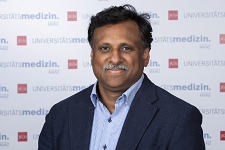
Univ.-Prof. Dr. Krishnaraj Rajalingam serves as Head of the Cell Biology Unit at University Medical Center Mainz since 2018 and holds a Distinguished Visiting Research Directorship at IMCB, A*STAR Singapore. A tenured Heisenberg Professor (W3) in Cell Biology at Johannes Gutenberg University (JGU) Mainz, he leads interdisciplinary research bridging fundamental cell signaling mechanisms with clinical translation in cancer and immune disorders. Research Focus: His laboratory investigates molecular signaling networks controlling cell death/survival, migration, and differentiation, with emphasis on RAS/MAPK pathways , prohibitin biology , and oncogenic kinase regulation . The team employs proteogenomics, chemical biology, and translational models to identify druggable targets in thyroid/lung cancers and autoimmune conditions, recently launching KHR Biotec GmbH to advance therapeutic development. Key Awards: Heisenberg Professorship (DFG, 2013) PLUS3 Fellow (Boehringer Ingelheim Foundation, 2012) EMMY Noether Group Leader (DFG, 2007 - first South Asian selected) AACR-AFLAC Scholar-in-Training (2005) Leadership: Editorial board member for Cell Death & Disease , FEBS Journal , and Translational Oncology ; Scientific Advisory Board member for Indivumed Group; reviewer for DFG, Wellcome Trust, and NHMRC Singapore. His patented work includes prohibitin-targeted cancer therapy and KRAS inhibitors.