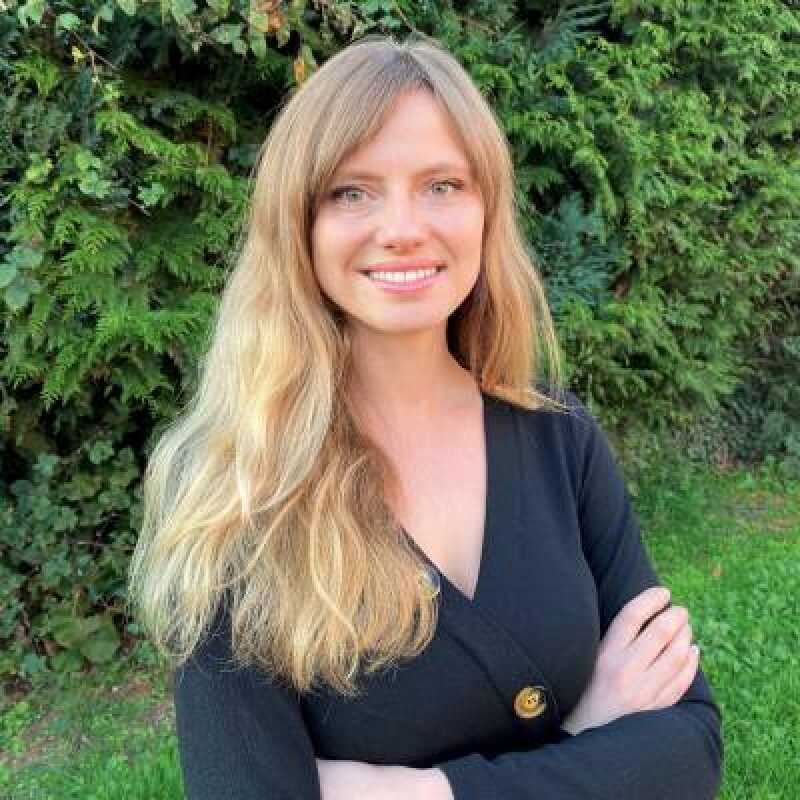
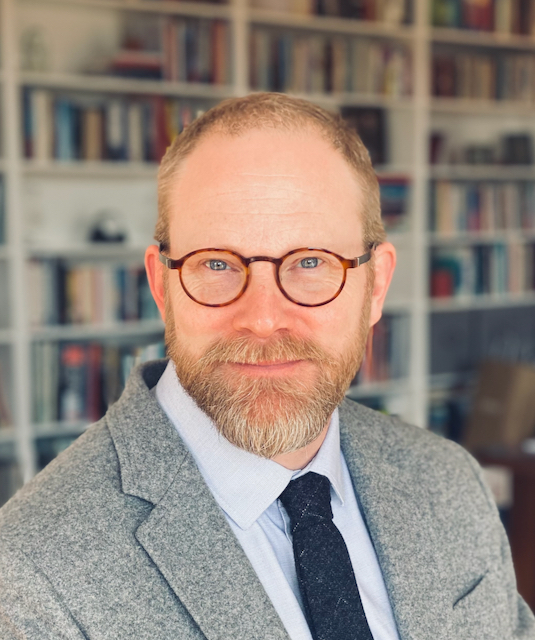
Claire Bowern is Professor of Linguistics at Yale University specializing in historical linguistics, language documentation, and Australian Indigenous languages. Her research employs computational phylogenetics to study language evolution and supports language revitalization through digital archives and fieldwork methodologies. Recent publications address: Phylogenetic signal in lexical evolution across language families Digital infrastructure for endangered language documentation (FLEx software analysis) Decolonizing linguistics pedagogy and research practices Her work consistently integrates linguistic, anthropological, and computational approaches to analyze language diversity and change. She contributes to global databases including Grambank and D-PLACE, examining links between linguistic, cultural, and environmental patterns.
Jillian Bohlen is an Associate Professor at the University of Georgia within the College of Agricultural & Environmental Sciences , specifically the Department of Animal and Dairy Science . Her work focuses on dairy cattle reproduction, teaching, and youth development in agricultural sciences. Education: B.S. in Dairy Science, University of Georgia (2003) M.S. in Dairy Science, University of Georgia (2005) Ph.D. in Animal Sciences, Clemson University (2012) Dr. Bohlen's research emphasizes applied reproduction in cattle , including synchronization techniques, ultrasound applications in reproductive programs, and embryo competency. She integrates students into all research projects despite lacking a formal research appointment. Her teaching interests span dairy cattle production , reproductive management , and contemporary agricultural issues , with courses like ADSC 3620 (Dairy Cattle Production), ADSC 4010 (Issues in Animal Agriculture), and ADSC 4410 (Applied Reproductive Management). Scientific awards include: Student Career Success Influencer Award (2024) Russell Award for Excellence in Undergraduate Teaching (2023) UGA Creative Teaching Award (2022) CAES Early Career Teaching Award (2022) Hoard's Dairyman Youth Development Award (2021) Larry Benyshek Teaching Award (2017) She actively promotes agricultural education through programs like the Commercial Heifer Project , Dairy Cattle Judging , and Dairy Quiz Bowl . Additionally, she participates in funded projects related to methane emissions , heat stress mitigation , and antibiotic alternatives in dairy farming.
Adèle Garnier is an Associate Professor at the Department of Geography, Université Laval's Faculty of Forestry, Geography and Geomatics. She serves as Director of undergraduate geography programs and the certificate in sustainable tourism. Her research focuses on political geography, migration dynamics, and humanitarian governance, particularly examining refugee labor market participation, temporary migration policies, and technological impacts on immigration systems. Education : PhD in Political Science (Macquarie University/Universität Leipzig, 2012), MA in Political Science (Universität Leipzig, 2006), Diploma in Political Science (Paris, 2002) Her research integrates political geography , migration studies , and geographies of inequality , analyzing power structures in migration governance. Recent work explores Canada's digitalization of immigration, multiscalar impacts of refugee policies, and settler-colonial migration frameworks. Current research trends focus on technological governance of migration , refugee resettlement , and marketization of humanitarian services , with interdisciplinary approaches bridging political science and geography. Research Units : Graduate School of International Studies (ESEI), Immigration Research Team (ERIQA), Cultures-Arts-Societies Center (CELAT) Collaborations : Study Group on Ethnic Relations (Flers), Center for Refugee Studies (York University), Peace Research Institute Oslo She supervises graduate students in geography and co-leads multiple funded projects, including Liberating Migrant Labour (2023-2030) and digital migration governance research (2023-2028).
Sara Stymne is a Senior Lecturer in Computational Linguistics at the Department of Linguistics and Philology, Uppsala University, where she has been working since 2012. She initially joined as a post-doc (2012-2015), then worked as a researcher (2015-2017), and served as an assistant professor (2017-2023) before her current position as Senior Lecturer. Prior to Uppsala, she was a researcher at Linköping University's Department of Computer and Information Science. Dr. Stymne earned her PhD in Computational Linguistics from Linköping University in 2012 with the thesis 'Text Harmonization Strategies for Phrase-Based Statistical Machine Translation,' following a Licentiate degree in Computational Linguistics (2009) and a Master's degree in Cognitive Science (2006), both also from Linköping University. During her doctoral studies, she spent the autumn of 2010 and spring of 2009 at Xerox Research Centre Europe in Grenoble, France. Her primary research interests focus on cross-lingual natural language processing and digital humanities, with particular emphasis on multilingual dependency parsing. Dr. Stymne is passionate about applying computational linguistics to solve research questions in other fields, including language history, literary analysis, and political science. Her earlier work concentrated on machine translation, with specific interests in discourse-aware translation, compound processing, and error analysis. She has made significant contributions to the development of language technology tools for analyzing dialogue, narrative, and stylistic features in literature. Analysis of Dr. Stymne's recent publications reveals a strong focus on cross-lingual and cross-domain natural language processing. Her work spans multiple subfields including dependency parsing across genres and topics, discourse relation analysis in low-resource languages like Egyptian Arabic, direct speech identification in Swedish literature, and causality detection in governmental documents. A notable trend is her application of NLP techniques to digital humanities problems, particularly in analyzing literary texts and historical language change. Her research often involves creating and utilizing specialized datasets for specific linguistic phenomena across multiple languages. Dr. Stymne actively supervises graduate students, having guided numerous master's and bachelor's theses on topics ranging from speech recognition to multilingual parsing and causality detection. She leads or participates in several research projects including 'Fictional prose and language change' (funded by VR, 2021-2023) and 'Enabling climate-resilient development' (funded by Marianne and Marcus Wallenberg Foundation, 2023-2027), demonstrating her commitment to interdisciplinary research with practical applications. Her work has resulted in several notable software resources including uuPronPred for cross-lingual pronoun prediction, uuparser for dependency parsing, and Docent for document-level machine translation. Within the Computational Linguistics and Language Technology group at Uppsala University, Dr. Stymne contributes to multiple research initiatives focused on developing language technology tools for digital humanities applications. Her team works closely with literary scholars and historians to create computational methods for analyzing large corpora of literary texts, particularly focusing on Swedish literature across different historical periods. Her research bridges the gap between theoretical computational linguistics and practical applications in the humanities, creating new methodologies for quantitative analysis of literary and historical texts.
Dr Alison Powell is an Associate Professor in the Department of Media and Communications at the London School of Economics and Political Science (LSE), serving as Programme Director for the MSc Media and Communications (Data and Society). Her research focuses on technology design, public sector technology, and digital futures. She is known for her book Undoing Optimization: Civic Action in Smart Cities (2021) and her participatory research method, data walking. From 2019–2023, she directed the JUST AI network, supported by the Ada Lovelace Institute and UKRI, advancing AI ethics research. Her work integrates critical theory, participatory methods, and interdisciplinary collaboration. Education: PhD in Communication from Concordia University (Canada), MA in Media Studies from Toronto Metropolitan University, and postdoctoral research at the Oxford Internet Institute. Prior to academia, she worked in the film and TV industry. Research interests include civic engagement in data-driven governance, ethical AI, and participatory urbanism. She has advised projects like Africa Just AI and Operationalising Ethics for AI, funded by Horizon Europe, AHRC, and the Open Society Foundations. Her articles address topics such as AI governance, urban light ecology, feminist research praxis, and the ethical implications of technology for marginalized communities. She contributes to blogs like Media@LSE and leads initiatives at Polis and the LSE’s Digital Futures for Children project. Grants and collaborations include work with Projects by IF, Open Rights Group, and the Human Data Interactions Network (EPSRC). She explores intersections of technology, justice, and sustainability, emphasizing equitable and inclusive innovation.
Professor Gabrielle Lynch is a leading scholar in Comparative Politics and African Studies at the University of Warwick. She holds the academic rank of Professor and serves as PAIS Impact Director, Comparative Politics cluster lead, and Warwick UCU Equalities Officer. Her research focuses on ethnic identities, elections, transitional justice, and social media's role in African politics. Lynch earned her BA, MPhil, and DPhil from the University of Oxford. She has conducted extensive fieldwork in Kenya, Ghana, and Uganda, supported by grants from the ESRC, Warwick Policy Support Fund, and others. Her awards include the ESRC Award for Outstanding International Impact (2019) and the Market Research Society’s President’s Medal. Lynch is editor of African Affairs and a member of the African Studies Association of the UK and British Institute in Eastern Africa. Lynch’s work bridges academia and public engagement, including columns in The Saturday Nation and The East African . She founded the African Judiciaries Research Network and co-authored influential books like Performances of Injustices and The Moral Economy of Elections in Africa . Her research emphasizes democratization challenges, electoral integrity, and the intersection of technology and politics in Africa.
Jae Eun Chung is a Professor in the Department of Communication Studies at Howard University's School of Communications. Her research focuses on new media technologies, their psychosocial impacts, and health communication, with a particular emphasis on community engagement and digital discourse. Ph.D. in Communication from the University of Southern California M.A. in Telecommunications from Indiana University at Bloomington Dr. Chung's work explores the intersection of social media and health, analyzing how digital platforms influence public health perceptions, patient-doctor interactions, and health equity. She has published extensively in journals like Journal of Communication , Computers in Human Behavior , and Health Communication , often employing community-based participatory research (CBPR) to address disparities in asthma care, maternal health, and HPV-associated cancer awareness. Recent publications highlight trends in leveraging social media for health interventions, examining misinformation dynamics during crises like the COVID-19 pandemic, and analyzing digital ecosystems. Her methodological approaches include network analysis, narrative studies, and assessments of digital engagement metrics. Howard University RCMI Grant: Enhancing recruitment of African-Americans and Hispanics in health research NSF HDR Grant: Collaborative research on data analytics for community enrichment PACRI Grant: Improving health outcomes for asthmatic children in public housing Bezos Earth Fund: Indoor environmental quality disparities in underserved communities Dr. Chung collaborates with interdisciplinary teams, including public health experts and data scientists, to advance health communication strategies. She has mentored students and researchers in projects analyzing social media's role in health promotion, digital privacy, and community-academic partnerships.
Zizi Papacharissi is a UIC Distinguished Professor of Communication and Political Science at the University of Illinois at Chicago (UIC), serving as Department Head of Communication. She is also a University Scholar and affiliate faculty at the Discovery Partners Institute (University of Illinois System). Her research explores the social and political implications of digital media, with a focus on affective publics, networked identities, and democratic processes. She holds a PhD from the University of Texas at Austin and has authored over 10 books and 80+ journal articles. Education: PhD, University of Texas at Austin (2000) in New Media Technologies and Political Communication MA, Kent State University (1997) in Communication Studies BA, Mount Holyoke College (1995) in Media Studies and Economics Research Interests: Dr. Papacharissi investigates how digital media shape political participation, identity formation, and public discourse. Key areas include affective publics (emotional dimensions of online activism), the role of social media in democracy, and the ethical implications of AI and connective technologies. Her work bridges communication studies, political theory, and sociology. Recent Contributions: Her 2021 book After Democracy explores post-democratic futures in the digital age. She edits Social Media & Society and collaborates with tech firms like Facebook/Meta and Tencent on media ethics and policy. Her research on #Egypt and #OWS movements highlights social media’s role in mobilizing protests. Awards & Recognition: 2018 Wayne Danielson Award (National Communication Association) 2015 Best Book Award (NCA Human Communication and Technology Division) High-Impact Scholar (University of Texas at Austin) Advising & Grants: While no student names are listed, her courses (e.g., Democracy in a Digital Age ) reflect her mentorship in critical media studies. She has secured grants from the National Academies of Science and the Institute of Medicine for projects on youth well-being and digital media. Labs & Teams: Her research lab focuses on digital media’s societal impact, collaborating with global institutions like the Oxford Internet Institute and the Harvard Kennedy School. She chairs UIC’s interdisciplinary Digital Media and Democracy initiative.
Karsten Lambers is Professor of Digital and Computational Archaeology at the Faculty of Archaeology, Leiden University, where he leads research and teaching in the application of computational methods to archaeological data. His work integrates machine learning, remote sensing, text mining, and citizen science to advance archaeological prospection and heritage management. He is affiliated with the Department of Archaeological Sciences and plays key roles in research groups and university-wide initiatives such as SAILS and ARCHON. His research interests span Digital Archaeology , Machine Learning in Archaeology , Remote Sensing , Geoarchaeology , and Human-Environment Interaction . He investigates how computational tools can extract meaningful archaeological information from large datasets, including LiDAR imagery and excavation reports. His fieldwork spans Central Europe and Latin America, with a focus on prehistoric landscapes and cultural heritage. The analysis of his recent publications reveals a strong trend toward automated detection using deep learning (e.g., R-CNN, WODAN), named entity recognition in archaeological texts (e.g., ArcheoBERTje), and citizen science integration for data validation. His work bridges archaeology with computer science, geomatics, and environmental science, emphasizing interdisciplinary collaboration and methodological rigor. His scientific awards include: Best Thesis Award (University of Zurich, 2005) EUROPA NOSTRA Award (2020, 2022) Membership in the German Archaeological Institute (since 2022) Lambers actively supervises students and leads major research projects such as ABMA, EXALT, and Heritage Quest. He has secured substantial research funding and collaborates widely with computer scientists, geophysicists, and palaeoecologists. His teaching includes digital methods, modeling, and simulation, often linked to ongoing research. He has also contributed to open educational resources and digital textbooks in archaeology. He leads or participates in several research labs and teams, including the Digital Archaeology Research Group (which he chairs), the Heritage Quest citizen science project, and interdisciplinary teams focusing on alpine terraces and Iraqi prospection. His work emphasizes the integration of digital tools into practical archaeological workflows, advocating for complementary human-computer strategies.
Professor Aleksandra Cichocka is a Professor of Political Psychology and Deputy Head of the School of Psychology at the University of Kent. She holds a PhD in Psychology from the University of Warsaw and was a Fulbright Fellow at New York University. Her research focuses on political psychology, particularly collective narcissism, self-worth dynamics, and the psychological underpinnings of political attitudes. She leads the Political Psychology Lab and has been on leave until Summer 2025. Education: PhD in Psychology (University of Warsaw, 2013), Fulbright Fellowship (New York University, 2009-2013). Research interests include links between narcissism and political behavior, collective narcissism's social consequences, and psychological factors driving political engagement. Her work has been published in top journals like Journal of Personality and Social Psychology and Political Psychology . Key achievements include major grants from the Leverhulme Trust and Nuffield Foundation, and awards such as the Jos Jaspars Medal (2017) and Andrzej Malewski Award (2016). She supervises current and past PhD students in topics like conspiracy theories and identity politics. Professional roles include editorial positions at PNAS Nexus and European Journal of Social Psychology . Her research spans global collaborations on topics like pandemic responses and nationalism.
Arvind Karunakaran is an Assistant Professor at Stanford University in the Department of Management Science and Engineering. He holds affiliations with the Center for Work, Technology, and Organization (WTO) , Stanford Technology Ventures Program (STVP) , Stanford Institute for Human-centered Artificial Intelligence (HAI) , and the Digital Economy Lab (DEL) . His research focuses on authority and accountability in the workplace , particularly under technological change and human-AI augmentation. Education: Ph.D. from MIT Sloan School of Management (2018) His work employs ethnographic and field-based methods to study empirical puzzles in workplace dynamics, complemented by comparative-historical analysis and quantitative/textual data analysis . Key research areas include social/algorithmic evaluation of workers , human-AI reskilling , and conflicts in symmetrical relations . Recent publications analyze AI's impact on workplace inequality , platform governance , and crowd-based accountability . His findings are published in top journals like Administrative Science Quarterly and Organization Science . Scientific Awards & Recognitions: Best Published Paper Award (ASA, 2025) Gerard J. Tellis Best Junior Faculty Paper Award (AIM Conference, 2025) W. Richard Scott Article Award (ASA, 2024) Responsible Research in Management Award (RRBM, 2024) Future of Organizations Fellowship (2024) Professor Karunakaran advises doctoral and master's students in areas related to technology and organizations , and teaches courses on organizational behavior , organizational theory , and innovation management .
Professor Christopher Carman is the Stevenson Professor of Citizenship at the University of Glasgow, holding a PhD from the University of Houston. He has served in leadership roles including Head of Subject (Politics & International Relations), Head of the School of Social and Political Sciences, and Deputy Head of the School. His research focuses on political representation, electoral processes, public opinion, and Scottish politics, with notable contributions to studies on the Scottish Parliament and rural-urban political divides. Carman has led the Scottish Election Study (SES) since 2011 and co-leads the NORFACE-funded RUDE project on European rural-urban dynamics. He also contributes to the Glasgow-Nankai Joint Graduate School and the Stevenson Trust, fostering citizenship education and democratic research. Education: PhD in Political Science, University of Houston (2000). Previous academic roles include professorships at the Universities of Strathclyde and Pittsburgh. Research Interests: Political representation alternatives (e.g., public petitions systems), electoral behavior, Scottish and UK politics, direct democracy, and comparative legislative politics. Recent work addresses rural-urban divides in Europe and political compromise in democratic systems. Key Projects: Scottish Election Study (SES), Rural and Urban Divide in Europe (RUDE), and studies on political scandals and multilevel governance. His publications span electoral studies, comparative politics, and political behavior, with a focus on institutional trust and democratic engagement. Grants and Funding: ESRC and NORFACE grants support his research. The Stevenson Trust supports his work on citizenship education and public lectures.
Professor Andrew Chadwick is a leading scholar in political communication and digital media studies at Loughborough University, where he directs the Online Civic Culture Centre (O3C). He holds a BSocSc from Birmingham, MSc and PhD from the London School of Economics. His research focuses on hybrid media systems, disinformation dynamics, and digital politics. Key contributions include conceptualizing hybrid media events and analyzing misinformation in personal messaging platforms. His work has been recognized with prestigious awards, including the APSA Best Book Award. He supervises numerous PhD students exploring topics like social media influence, public opinion, and digital disinformation. Current projects include the Leverhulme-funded Everyday Misinformation Project examining numerical disinformation on messaging apps. His media engagements span BBC Radio 4 to The Washington Post. Research highlights include studies on misinformation warnings' ineffectiveness, vaccine hesitancy, and the role of celebrities in political representation. O3C serves as a hub for interdisciplinary research on digital civic culture. Chadwick’s academic leadership includes roles in editorial boards for top journals and international conference keynotes.
Elif BAŞTÜRK is an Associate Professor at Kırşehir Ahi Evran University's Faculty of Arts and Sciences, Department of Archaeology, specializing in Settlement Archaeology, Hittite studies, and Early Bronze Age ceramics. With a PhD from Ege University (2014), she has led excavations at Tanır Yassıhöyük since 2022 and participated in major projects across Anatolia. Education: PhD in Protohistory and Near Eastern Archaeology, Ege University (2014) MA in Protohistory and Near Eastern Archaeology, Ege University (2006) BA in Archaeology, Ege University (2003) Research Focus: Her work examines archaeological transitions in Anatolia and the Near East, particularly ceramic traditions, settlement patterns, and Assyrian influence during the Bronze and Iron Ages. She employs statistical and technological methods to analyze material culture. Projects: Notable projects include the Tanır Yassıhöyük excavations (2021–present), Assyrian trade influence studies in Afşin-Elbistan plain, and documentation of Early Bronze Age ceramics in Siirt Başur Höyük. She has also led regional surveys threatened by the Ilısu Dam. Publications: Recent outputs include 2025 studies on Iron Age ceramics and Assyrian mill technology, alongside excavation reports from 2016–2024. Her work bridges field archaeology with material analysis, contributing to understanding cultural dynamics in ancient Anatolia.
Professor Ernest Foo is a distinguished academic at Griffith University's School of Information and Communication Technology, specializing in cybersecurity with a focus on industrial control systems and cryptographic protocols. With over 15 years of experience in computer networking, he has established himself as a leading expert in SCADA security and smart grid cybersecurity. His research has significant practical applications in critical infrastructure protection, and he has developed hands-on security training programs that have trained professionals from major Australian utilities and government agencies. Professor Foo's educational background includes: Bachelor of Engineering with Honours in Electronic and Computer Engineering from University of Queensland Doctor of Philosophy from Queensland University of Technology Professor Foo's research interests center around secure cryptographic protocols with specific applications in industrial control system security and cyber physical systems. His work spans SCADA security, smart grid protection, wireless sensor network security, and post-quantum cryptography. He has made significant contributions to understanding vulnerabilities in industrial protocols like Modbus and DNP3, and has pioneered the application of process mining and data mining techniques for attack detection in critical infrastructure systems. His research bridges theoretical security concepts with practical implementations in real-world industrial environments. Professor Foo's recent publications demonstrate a clear trajectory toward increasingly sophisticated security frameworks for critical infrastructure. His work shows a progression from foundational SCADA security research to advanced applications of artificial intelligence, machine learning, and formal methods in cybersecurity. A notable trend is the integration of zero trust principles with industrial control systems, alongside growing emphasis on post-quantum cryptographic solutions. His publications span high-impact journals and conferences in cybersecurity, with increasing focus on anomaly detection in cyber-physical systems and the application of graph-based machine learning techniques to network security challenges. Professor Foo's notable scientific achievements include: Best paper award at the 2nd International Cyber Resilience Conference for "Gap analysis of Intrusion Detection in Smart Grids" Professor Foo has secured significant research funding including an ARC Linkage grant with Powerlink Queensland focused on cyber security for electricity sub-stations. He currently leads multiple research projects including Westpac Micro-Credentials in Financial Crime Investigation, Digital Banking Micro-credentials with ANZ, and research on quantum-safe cryptography. As a dedicated educator, he serves as Program Director for multiple cybersecurity programs including the Master of Cyber Security, and has supervised numerous doctoral and masters students. His Cyber Security: Industrial Control System course, conducted annually from 2013-2018, featured innovative hands-on training with real-world participants from major Australian utilities. Professor Foo has been instrumental in establishing the SCADA security research laboratory with multiple vendor system miniatures running industrial PLCs. His work bridges theoretical security concepts with practical implementations, making significant contributions to the security of industrial control systems and critical infrastructure worldwide.