Soumia Bardhan is an Assistant Professor in the Department of Communication at the University of Colorado Denver, specializing in intercultural communication, Islamic studies, and digital media analysis. Her research explores Muslim diasporic identities, counterpublic rhetoric, and communication strategies in authoritarian contexts.
Carla Tanguay is a Clinical Associate Professor and Assistant Dean for Educator Preparation and Accreditation at Georgia State University's College of Education & Human Development (CEHD). She has held leadership roles in teacher preparation since 2007, including 12 years coordinating the BS in Elementary Education program. Her work focuses on clinical practice, teacher development, accreditation, and urban education partnerships. She co-chairs the P-20 Metro-Atlanta Collaborative and leads the NSF-funded 'Preparing, Supporting and Retaining Elementary Mathematics Specialists (PSREMS)' project. Tanguay chairs the CEHD Assessment and Accreditation Committee and serves on state policy committees for teacher performance assessments (edTPA). Education: Ph.D. (2018), Ed.S. (2006), M.A. (1991), and B.A. (1985) in Education fields from Georgia State University and other institutions. Specializations include teacher education, school partnerships, instructional supervision, and accreditation. She has led program evaluations, policy development, and university-school collaborations to strengthen educator preparation. Research emphasizes teacher development, assessment systems, urban education challenges, and mathematics specialist training. Her work bridges policy implementation and practical classroom needs, with a focus on equity and educator effectiveness. She collaborates with national organizations like CEEDAR and state committees to shape teacher preparation standards.
Dr. Kylie Budge is a Senior Research Fellow (Urban Living and Society) and Adjunct Researcher at Western Sydney University's Institute for Culture and Society. Her research focuses on intersections of technology, culture, and society, with emphases on digital/material cultures of art/design, cultural institutions, and social media engagement. She holds a PhD from the University of Melbourne (2014) and a Master of Arts in Education from Macquarie University (1998). Her work critically examines how creative producers, audiences, and social media shape urban spaces and cultural narratives. Key themes include visual culture's role in identity construction via platforms like Instagram, and the evolving role of museums in digital engagement. She previously worked in Australia and Japan within universities and the GLAM sector (Galleries, Libraries, Archives, Museums). Publications span journals like Australian Geographer , Continuum , and Curator: The Museum Journal , reflecting interdisciplinary engagement with cultural geography, media studies, and art education. Research highlights include analyzing 'makerspaces' as urban innovation hubs and the agency of museum objects in digital contexts. Dr. Budge serves on the Advisory Board of the Australasian Consortium of Humanities Research Centres, reflecting her commitment to advancing cultural research networks.
Stephanie Renee Toliver is an Assistant Professor of Curriculum and Instruction at the University of Illinois, specializing in English Education and Adolescent/Secondary Literacy. Her research focuses on Black storytelling, Afrofuturism, and arts-based pedagogies to address systemic inequities in education. She authored the award-winning book Recovering Black Storytelling in Qualitative Research: Endarkened Storywork , and her work appears in journals like Teachers College Record and Journal of Literacy Research . Toliver has received multiple accolades, including the Steve Cahir Early Career Award and the AERA Qualitative Research SIG Award. Her scholarship emphasizes speculative fiction as a tool for social justice and culturally sustaining pedagogies for Black youth. Key research areas include: Black storytelling as social critique, speculative fiction for youth empowerment, and critical literacy pedagogies for pre-service teachers. Her recent work explores intersections of AI, digital literacy, and historical trauma. Toliver advocates for radical imagination in education to challenge anti-Blackness and promote equitable learning environments. Education: Ph.D. in Education. Grants & Collaborations: Active in interdisciplinary research networks, focusing on qualitative methods and Black feminist epistemologies. Labs/Teams: Engages with communities through arts-based research initiatives and public scholarship in media like Chicago Tribune and Ms. Magazine .
Prof. Bob de Graaff is a Professor of Intelligence and Security Studies at Utrecht University's Department of History and Art History, part of the Faculty of Humanities. He holds a PhD from Leiden University and has held multiple academic positions, including at Leiden University’s Campus The Hague (2007–2009) and the Netherlands Defense Academy (2010–2017). His research focuses on intelligence history, terrorism, and international relations, with notable projects including a history of the Netherlands Defense Intelligence and Security Service (ongoing until 2022). Education: MA in Contemporary History, Vrije Universiteit Amsterdam (1979) PhD in History, Leiden University (1997), thesis: Kalm temidden van woedende golven. Het Ministerie van Koloniën en zijn taakomgeving, 1912–1940 Research Interests: Intelligence studies, Cold War history, terrorism and counterterrorism, Srebrenica inquiry, Dutch decolonization, and military history. He has authored/co-authored over 50 publications, including Villa Maarheeze: de geschiedenis van de Inlichtingendienst Buitenland (1998) and Intelligence and Cold War behind the Dikes (1997). Projects: Leading the History of the Military Intelligence and Security Service project (2019–2022) Member of the editorial board for the Journal of Mediterranean and Balkan Intelligence Grants & Collaborations: Funded by the Netherlands Ministry of Defence for the Military Intelligence project Co-founder and board member of the Netherlands Intelligence Studies Association (NISA) Labs/Teams: Active in academic intelligence networks, particularly through NISA and editorial contributions to intelligence journals.
Catherine Sullivan, MPH, RDN, LDN, IBCLC, RLC, FAND, is an Assistant Professor and Director of the Carolina Global Breastfeeding Institute (CGBI) within the Department of Maternal and Child Health at the University of North Carolina at Chapel Hill's Gillings School of Global Public Health. She leads CGBI's initiatives in breastfeeding-friendly healthcare, childcare, communities, and lactation training. Sullivan holds roles as Principal Investigator (PI) and Co-PI on projects like the EMPower Breastfeeding Initiative and ENRICH Carolinas. She coordinates the Mary Rose Tully Training Initiative, a CAAHEP-accredited lactation program. Her service includes roles on the US Breastfeeding Committee and North Carolina Maternity Center review committees. Education: MPH in Nutrition (UNC-Chapel Hill, 2000), BS in Dietetics (East Carolina University, 1997). Prior experience includes State Breastfeeding Coordinator in NC (2006–2013), WIC Director, and faculty/clinician at East Carolina University's Brody School of Medicine. Research focuses on breastfeeding practices' impact on healthcare and community systems. Key areas include lactation training, maternity care improvement, and breastfeeding advocacy. Recent work includes evaluating pandemic-adapted breastfeeding education and analyzing breastfeeding support systems in hospitals. Awards highlight her clinical excellence, teaching, and advocacy, including the 2025 Judith Lauwers Award and 2017 Fellow of the Academy of Nutrition and Dietetics. Advising & Grants: Sullivan leads initiatives like ENRICH Carolinas and RISE: Lactation Training Model. She collaborates with agencies like the CDC and the Duke Endowment. Her work bridges clinical practice, policy, and community health. Labs/Teams: Carolina Global Breastfeeding Institute (CGBI) is central to her work, focusing on global breastfeeding advocacy and training programs.
Professor Alastair Owens is a historical geographer and social/economic historian at Queen Mary University of London , specializing in modern Britain since 1800 with a focus on London . He received a Leverhulme Research Fellowship (2024) for his project on inheritance, families, and 'wealthfare' in England and Wales (1850–1930). Owens has held leadership roles including Chair of Trustees at the Geographical Association (UK’s leading geography teaching body) and Head of School of Geography (2018–2022). Research Themes : Anglicanism & inner city crisis (1970s–1990s), COVID-19 domestic geographies , inheritance & middle-class wealth (1850–1930), inclusive heritage in East London. Collaborations : Partnered with Museum of the Home , Museum of London , Spitalfields Music , and Tower Hamlets Archives for projects blending geography with history, archaeology, and heritage. Teaching : Led innovative modules like Boston Reworked (fieldwork in the US) and Victorian London , winning the Drapers’ Award for Excellence in Teaching (2003). Public Engagement : Created heritage trails (e.g., Bengali Heritage Trail ), co-produced museum exhibitions, and advised TV/film production companies. Scientific Awards : Leverhulme Research Fellowship (2024) Drapers’ Award for Excellence in Teaching (2003) Research Trends : His recent work examines pandemic-induced transformations of domestic space, inner-city religious responses to social crises, and the role of inheritance in shaping social inequality. He emphasizes interdisciplinary methodologies, combining archival research with oral histories and material culture analysis.
Grant Michelson is a Professor of Management in the Department of Management at Macquarie Business School, Macquarie University. He has held leadership roles including Chair of the Department of Management (2016–2019), interim Associate Dean for Learning & Teaching, and Academic Senate member (2021–2026). His research focuses on business ethics, corporate social responsibility (CSR), organizational behavior, and workplace dynamics, with notable contributions to modern slavery eradication, auditor transparency, and pandemic-era ethics. Michelson has extensive international experience, including roles at Audencia Business School (France) and visiting positions at institutions like the University of Zagreb and University of Sydney. Education: Qualifications from the Universities of Canterbury, Otago, and Sydney. Leadership: Served on review panels for UNSW, Griffith University, and others. Research: Over 70 publications, including studies on workplace gossip, industrial relations, and CSR strategies. Projects: Led initiatives on accounting career pathways and early-career skills. Collaborations: Global networks with institutions in China, France, and Croatia. Research Interests: Combines ethical theory with practical challenges, emphasizing CSR in crises, modern slavery, and the impact of technology on work. Recent work explores post-pandemic workplace ethics and NGO roles in human rights advocacy. Grants & Projects: Includes studies on auditor transparency (2024), sustainable accounting careers (2020–2021), and early-career accountant skill gaps (2020). Lab/Teams: Active in Macquarie Business School research groups and international advisory boards.
Mariel Borowitz is an Associate Professor at the Sam Nunn School of International Affairs, Georgia Institute of Technology, and a leading expert in international space policy. Her work examines the intersection of technology, security, and global governance, with a focus on remote sensing, Earth observation, and space sustainability. PhD in Public Policy, University of Maryland MA in International Science and Technology Policy, George Washington University BS in Aerospace Engineering, Massachusetts Institute of Technology Her research explores space security , commercialization of space , and data sharing policies , analyzing how nations balance economic, environmental, and strategic interests. Recent publications address cislunar governance, satellite health monitoring, and the role of weather satellites in diplomacy. She has received multiple research awards, including the Ivan Allen College Gold Star Faculty Research Award (2024, 2021), and her work is supported by NSF, DoD, and NASA grants. Ivan Allen College Gold Star Faculty Research Award, 2024 MGMWERX Space Case Study Prize Challenge, 2020 European Commission Travel Grant, 2014 Dr. Borowitz serves as Director of International Space Situational Awareness Engagement at the U.S. Office of Space Commerce and has advised Congress on space safety. She has contributed to media outlets like NPR, The Verge, and Science Magazine.
Sinéad C. Mac Namara is an Associate Professor in the School of Architecture and the College of Engineering and Computer Science (ECS) at Syracuse University. Her work bridges structural engineering and architecture, emphasizing interdisciplinary collaboration and innovative pedagogy. She holds a PhD from Princeton University and degrees from Trinity College, University of Dublin. Education: MSE and PhD in Civil and Environmental Engineering, Princeton University BA and BAI in Civil, Structural and Environmental Engineering, Trinity College, University of Dublin Research & Interests: Focuses on collaborative practice between architects and engineers, structural art, shell structures, and community-engaged design. Notable projects include the Play Perch design-build initiative and the Park Studio community project. Her book Collaborations in Architecture and Engineering (Routledge, 2014) explores interdisciplinary educational strategies. Grants & Awards: NSF Innovations in Engineering Education (PI, $400k, 2009-2013) Chancellors Award for Public Engagement (2013, 2014) ACSA Design Build Educator Award (2014) Princeton E-council Teaching Excellence (2005) Service & Leadership: Roles include President Elect of BTES, ASEE Division Chair, and SU Senate Committee on Budget and Fiscal Affairs. She mentors the Freedom By Design student group and advises projects like Runway and Digital Soapbox. Labs & Teams: Engages in design-build initiatives, community projects, and international collaborations, including study abroad programs in Mexico City and Ethiopia.
Patricio G. Herbst is a Professor in the Marsal Family School of Education and the Department of Mathematics at the University of Michigan. He holds dual roles as a professor of education and mathematics, bridging both the College of Literature, Science, and the Arts and the School of Education. His research focuses on understanding the professional work of mathematics teachers and university instructors, with an emphasis on teacher knowledge, decision-making, and the design of online learning environments. Key areas of interest include geometry education, mathematical proof, and the development of technologies such as Anotemos and LessonDepict for learning from video and storyboarding. Herbst has led numerous grants and projects, including 'GRIP: Mathematics Grasping the Rationality of Instructional Practice,' which explores geometry teaching and teacher training. He has also contributed to initiatives like the 'LessonSketch' platform and 'GeT Support' for teacher professional development. His work spans international collaborations and curriculum development efforts in secondary mathematics education. Herbst’s research publications emphasize the integration of theoretical frameworks with practical classroom applications, particularly in geometry instruction and teacher cognition. His book, *The Learning and Teaching of Geometry in Secondary Schools: A Modeling Perspective*, underscores his commitment to advancing pedagogical models in mathematics education. He is affiliated with the GRIP lab, a research group dedicated to studying geometry, reasoning, and instructional practices. His contributions to mathematics education include designing interventions, analyzing teacher rationality, and advancing the use of multimedia tools in teacher training.
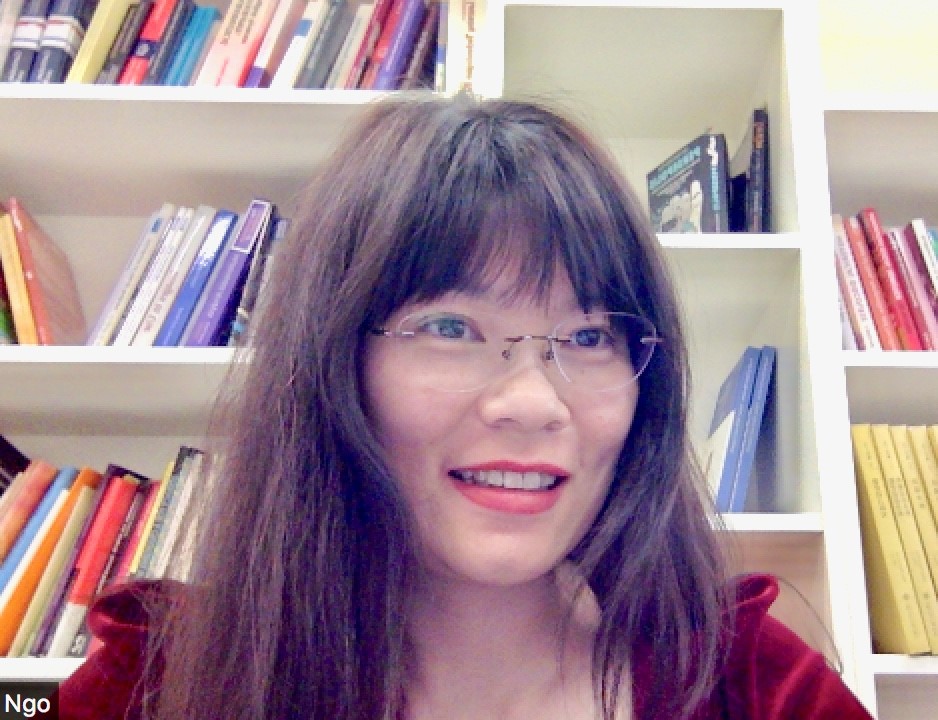
Dr Thu Ngo is a Researcher at UNSW Sydney, affiliated with the School of Arts, Design & Architecture. She holds a Ph.D. in Education Linguistics from the University of New England, Australia, focusing on evaluative language deployment. Her expertise spans Systemic Functional Linguistics, Multimodal Digital Literacy Education, Paralanguage analysis (body language, gesture, facial expressions), and Children’s Literature. Dr Ngo has received grants including the ACU Teaching Development Grant (2019-2020) for visualizing multimodal literacy pedagogy and the Explorance Faculty Research Grant (2021) for student-feedback-based course redesign. Her research integrates linguistic theory with practical educational applications. Recent work explores emotional expression in music education through semiotics, gesture in science communication, and the role of paralanguage in fostering equity for international students. She actively contributes to interdisciplinary projects, such as analyzing characterisation in children’s literature adaptations and refining appraisal frameworks in ESL contexts. Dr Ngo’s publications include a 2021 book on paralanguage modeling and peer-reviewed articles in journals like Research Studies in Music Education and Research in Science Education . She is also active on ResearchGate and maintains an ORCID profile.
Tovah Klein is an Adjunct Associate Professor of Psychology and Director of the Toddler Center at Barnard College, Columbia University. She specializes in child development, parenting strategies, and trauma resilience. Her research focuses on children’s social-emotional growth, parental influences, and family dynamics, including pandemic parenting challenges. Dr. Klein authored two books: Raising Resilience (2024) and How Toddlers Thrive (2014). She advises global children’s programs and media outlets like National Geographic and Apple TV+. Her work emphasizes play as a tool for emotional processing and has been featured widely in media, including The New York Times and CNBC.
Michele Ewing is a Professor in the School of Media and Journalism at Kent State University, part of the College of Communication & Information. With over 30 years of experience in public relations practice and education, she specializes in integrating digital and social media strategies into curricula. She teaches courses like PR Tactics, PR Campaigns, and pioneered the Digital Public Relations course. As PRSSA Kent faculty adviser, she led the chapter to national awards, including 2019 and 2014 Outstanding Chapter distinctions. Her research focuses on internal communication, leadership development, and digital engagement, addressing challenges like fake news management and AI ethics in PR. Education: B.A. in Speech Communication/Telecommunications from Youngstown State University and M.A. in Public Relations from Kent State University. She previously served as vice president at Marcus Thomas LLC, contributing to healthcare and internal communication strategies. Research highlights include exploring data analytics in PR leadership, social media's role in employee engagement, and mitigating fake news crises. Her work emphasizes bridging academic and professional PR practices, with notable contributions to PRSA's standards and pedagogy innovation. Awards include the 2014 Davis Young Award for mentoring and induction into PRSA College of Fellows. Advocacy and grants: Advised student teams achieving national recognition, such as the 2019 PRSA East Central District Diamond Award for the Donate Life Ohio campaign. She has shaped PRSSA Kent into a model chapter, fostering student leadership and professional readiness. Labs/Teams: Actively involved with the Public Relations Student Society of America (PRSSA) and the School of Media and Journalism's academic leadership committees. Her research collaborates with industry practitioners to address modern PR challenges like AI ethics and data-driven strategies.
Brian Leventhal is an Associate Professor of Graduate Psychology and Director of the Assessment & Measurement PhD program at James Madison University. He holds a PhD in Research Methodology, Measurement, and Statistics from the University of Pittsburgh (2017), an MA in Applied Statistics (2013), and a BS in Mathematics from Clarkson University (2011). His work focuses on advancing psychometric methodologies, particularly in item response theory (IRT), Bayesian applications, and survey development. Leventhal’s research emphasizes multidimensional IRT, response style analysis, and the application of IRTree models to assess disengagement and validation processes. He leads the ITEMS (Interactive Tools for Measurement Education) initiative, developing online modules to enhance educational measurement practices. His recent work explores interprofessional collaboration between behavior analysts and school psychologists, as well as alignment between general education and program-specific learning outcomes. He has contributed to the NCME’s digital modules on data visualization and Monte Carlo simulations, and his articles frequently address methodological innovations in psychometrics. Leventhal is actively involved in James Madison University’s CARS (Center for Assessment and Research Studies), driving institutional assessment strategies and program evaluation initiatives.