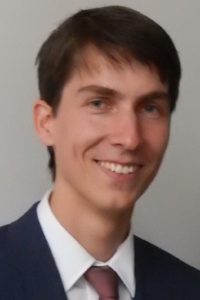
Timothy M. Baran, Ph.D., is an Assistant Professor in the University of Rochester's Department of Imaging Sciences, Biomedical Engineering (joint), and The Institute for Optics (joint). He holds a B.S. in Electrical Engineering from Rensselaer Polytechnic Institute (2007) and a Ph.D. in Optics from the University of Rochester (2013). His research focuses on photodynamic therapy (PDT), diffuse optical spectroscopy, and medical image processing, with applications in infection treatment, tumor therapy, and telemedicine. Key projects include a Phase 1 clinical trial for PDT in abscess treatment, AI-driven ultrasound segmentation (WATUNet), and global health initiatives like teleultrasound in Peru. His work bridges optics, engineering, and clinical medicine, emphasizing patient-specific treatment planning and accessibility. Baran has received awards including the Lasers in Surgery Young Investigators Award (2013) and the OSA Biomedical Optics Student Award (2012). His lab collaborates on NIH-funded projects (e.g., R01 EB029921) and involves students in PDT, optical modeling, and lung image processing.
David Mugglin is an Industry Professor in the Department of Applied Physics at New York University's Tandon School of Engineering. His academic appointments include full-time faculty responsibilities focused on experimental and theoretical atomic physics. Education Bachelor of Science, Monmouth College Master of Science, Lehigh University Doctor of Philosophy, Lehigh University Research Focus Professor Mugglin specializes in three primary domains: Surface Enhanced Raman Scattering for molecular analysis, Light Induced Kinetic Effects in atomic systems, and Nonlinear Dynamics and Chaos in quantum phenomena. His work bridges experimental techniques and theoretical modeling. Recognition Honored as an institutional exemplar for collegiality and academic collaboration
David Busch is an Assistant Professor at the University of Texas Southwestern Medical Center in the Departments of Anesthesiology and Pain Management, Neurology, and Biomedical Engineering. His research develops non-invasive optical technologies for monitoring brain and spinal cord health during critical care, with a focus on diffuse optical and correlation spectroscopy applications. Ph.D. in Physics from University of Pennsylvania (2011) Postdoctoral Fellowship in Neurology at Children's Hospital of Philadelphia Key research areas include: Real-time cerebral autoregulation monitoring during ECMO Spinal cord ischemia detection using diffuse correlation spectroscopy COVID-19 microvascular impairment assessment Breast cancer neoadjuvant therapy response prediction Development of compact SCOS monitoring devices His publications show a strong focus on optical hemodynamic monitoring in critical care settings, with recent work spanning 2025-2016 in journals like ASAIO Journal , Nature Biomedical Engineering , and Neurophotonics . Awards include NIH-NINDS/NIBIB grants, Fulbright, Thrasher Research Foundation, and Hartwell Foundation funding.
Mara Salvato is a Senior Scientist at the Max Planck Institute for Extraterrestrial Physics (MPE) and the Origins Excellence Cluster in Garching, Germany, specializing in high-energy astrophysics with a focus on X-ray astronomy and active galactic nuclei (AGN). Her work bridges observational astronomy, cosmology, and data science through comprehensive multiwavelength surveys. Research Interests: Photometric redshifts for AGN, developing advanced methods to determine distances to active galaxies using multiwavelength data X-ray Surveys, particularly through missions like eROSITA, analyzing large-scale cosmic structures and AGN populations Environment of AGN and morphology of their host galaxies, studying how active nuclei relate to their galactic environments across cosmic time Multiwavelength survey integration, creating comprehensive catalogs that combine data from across the electromagnetic spectrum Dr. Salvato's research has significantly advanced our understanding of AGN populations and their evolution through innovative approaches to photometric redshift estimation and multiwavelength data analysis, with particular emphasis on the COSMOS field and eROSITA survey data. Scientific Awards: 2017/2018/2019/2022: Listed among the top 100 Highly Cited Researchers in Space Science (Clarivate Data, ex Thomson Reuters); one of the only 9 women in the list at that time 2023/2024/2025/2026: Listed among the top 3% scientists in Germany, Europe and World 2024: Ranked N.84 among the Best female scientists in the world 2023: Listed among the 100 women more successful women in Italy (Forbes Italia) Dr. Salvato leads significant contributions to major astronomical surveys and has developed influential methodologies for photometric redshift estimation specifically tailored for AGN populations. Her work on the COSMOS field and eROSITA survey has provided critical insights into the evolution of supermassive black holes and their host galaxies. She maintains active collaborations across international astronomical communities and contributes to major data archives that support the broader research community.
Fatima Boukari is an Associate Professor in Computer Science within the Division of Physics, Engineering, Mathematics and Computer Sciences at Delaware State University. Her research bridges artificial intelligence, deep learning, and mathematical modeling to develop robust solutions for biomedical engineering, cell biology, and agricultural technology challenges. Education: B.Sc. in Computer Science Engineering from University of Annaba, Algeria Dual M.Sc. degrees in Computer Systems Architectures and Parallel Computing from Algeria-Glasgow Ph.D. in Mathematics & Physics from Delaware State University Dr. Boukari's research centers on foundational Deep Learning architectures and mathematical modeling applied to biomedical diagnostics and cell dynamics analysis. Her work in reinforcement learning and transfer learning enhances decision-making for autonomous systems, while her cognitive modeling research decodes human perception using EEG data. She pioneers multi-modal distributed learning systems that maintain privacy across heterogeneous sensor networks, addressing critical gaps in military ISR applications. Her recent publications reveal a strong trajectory toward spectral data analysis for medical diagnostics and AI-driven cognitive modeling , with increasing emphasis on trustworthy AI solutions for healthcare and environmental sustainability. The consistent focus on cell segmentation/tracking algorithms demonstrates her commitment to advancing biomedical image analysis. Scientific Awards: No scientific awards, prizes, or fellowships listed in available information Dr. Boukari has mentored over 40 undergraduate and 2 graduate students from underrepresented STEM backgrounds. Her active research portfolio includes: NSF CISE grant for biomolecular detection using physics-informed machine learning Air Force RITA/UARC project on neuroscience computational modeling Air Force project building robust multi-modal distributed learning systems DE-CTR ACCEL project for COVID-19 respiratory disease diagnosis NSF grant for Delaware and Mid-Atlantic Data Science Corps Research scientist role in AI-CLIMATE National AI Research Institute She leads the Applied Interdisciplinary Data Science (AIDA) Laboratory and serves as Project Lead for the CAST E-IoT Center's four agricultural research thrusts. As Team Lead of the 1890 Working Group on Artificial Intelligence, she drives initiatives addressing climate change resilience and food security through responsible AI development.
Dr. Krishnarjun Banerjee is a UKRI Postdoctoral Fellow at the School of Engineering and Materials Science, Queen Mary University of London. His research focuses on lead-free ferroelectric materials for energy storage, electrocaloric applications, and piezoelectric properties. Recent studies include structural modifications in PZT ceramics, defect engineering in relaxor ferroelectrics, and thermal stability analysis of sodium bismuth titanate-based systems. His work explores correlations between composition, microstructure, and functional performance. UKRI Postdoctoral Fellowship He investigates energy storage mechanisms through experimental and computational approaches, collaborating on applications in biomedical and green energy technologies. Detailed supervisory roles and student advisement are not specified in the provided materials.
Scott Huettel is a Professor in the Department of Psychology and Neuroscience at Duke University, holding concurrent roles as Senior Associate Dean for Research in Trinity College of Arts & Sciences and Bass Fellow. He also serves as Professor of Neurobiology and Psychiatry and Behavioral Sciences, and holds affiliations with multiple interdisciplinary centers including the Center for Cognitive Neuroscience and Duke Institute for Brain Sciences. His research focuses on decision neuroscience, investigating brain mechanisms underlying economic and social decisions using fMRI, behavioral assays, and computational methods. He has authored influential textbooks like Functional Magnetic Resonance Imaging and pioneered applications of fMRI analysis techniques such as functional connectivity and pattern classification. Education: Ph.D. in Psychology from Duke University (1999). Research Interests : Decision neuroscience, neuroeconomics, social decision making, and the neural basis of individual differences in behavior. His work bridges cognitive neuroscience with computational models to explore how brain systems mediate complex choices, particularly in contexts involving risk, ambiguity, and social dynamics. Grants & Leadership : Leads major grants including the NIH-funded Neurobiology Training Program and Duke’s Psychiatry Physician-Scientist Residency Program. Past roles include Chair of Psychology and Neuroscience and Interim Co-Director of the Duke Institute for Brain Sciences. Active in educational innovation through Bass Connections and courses like Decision Neuroscience. Labs & Teams : Core faculty in the Center for Brain Imaging and Analysis, contributing to advanced neuroimaging methodologies. Collaborates across disciplines to address translational challenges in health behavior, consumer decision-making, and aging.
Roarke Horstmeyer is an Assistant Professor of Biomedical Engineering at Duke University, with secondary appointments in Electrical and Computer Engineering and Physics. He leads the Computational Optics Lab, focusing on advancing optical imaging techniques through machine learning and algorithm design. His research includes developing multi-camera array microscopes (MCAMs) for high-throughput, gigapixel-scale imaging, and applying deep learning to improve biomedical diagnostics. Education: B.S. in Physics and Japanese from Duke University (2006), M.S. from MIT Media Lab (2011), Ph.D. in Electrical Engineering from Caltech (2016). Postdoctoral training included an Einstein Fellowship at Charité Medical School in Berlin and a role as Interim CTO at Kernel Inc. Research Interests: Computational optics, machine learning for hardware design, Fourier ptychography, diffuse correlation spectroscopy, and imaging neural activity in freely moving organisms. His lab collaborates with industry via startups like Ramona Optics and MIRA Inc. Key Achievements: Developed the multi-camera array microscope (MCAM) enabling 3D topographic imaging at cellular resolution. Awarded the APL Photonics Future Luminary Award (2021). Over 150 peer-reviewed publications in top journals like Nature Photonics, Optica, and Neurophotonics. Labs/Teams: Computational Optics Lab at Duke, collaborations with Erlangen School of Advanced Optical Technologies Grants: NSF, NIH, and industry partnerships supporting imaging innovation
Kurtulus Izzetoglu is an Associate Professor in the School of Biomedical Engineering at Drexel University, with affiliated faculty status in the School of Education. He holds a PhD in Biomedical Engineering from Drexel University and has academic affiliations in Electrical Engineering from Middle East Technical University. PhD, Drexel University (Biomedical Engineering) MS & BS, Middle East Technical University (Electrical Engineering) His research focuses on functional brain imaging , human performance assessment , and medical sensor development , with applications in neuroergonomics , aviation psychology , and clinical translational research . He specializes in fNIRS technology for workload monitoring in high-stakes environments like UAV operation, surgical training, and anesthesia care. Recent publications highlight multimodal neuroimaging in aviation, VR-based training assessment , and portable optical sensors for field care. His work bridges biomedical engineering with human-system teaming in operational contexts. Dr. Izzetoglu has served as a principal investigator for FAA Centers of Excellence (TTHP, UAS-ASSURE) and contributed to grants involving neurotechnology applications in training and performance assessment. He actively participates in program committees for conferences like the International Symposium on Aviation Psychology.
Andrew Mackenzie is a Professor at the University of St Andrews' School of Physics and Astronomy, specializing in condensed matter physics, quantum materials, and superconductivity. His research investigates strongly correlated electron systems, unconventional superconductors (notably Sr2RuO4), and quantum transport phenomena. Mackenzie directs PhD students on projects involving electron irradiation effects, elastocaloric measurements, and quantum material synthesis. He holds dual affiliations with the Max Planck Institute for Chemical Physics of Solids in Dresden. Research spans: Quantum criticality in oxide metals Anomalous electron transport regimes Strain engineering of superconductors Low-temperature material properties Awards include Fellowships from the Royal Society (2014), Royal Society of Edinburgh (2004), and American Physical Society (2011).
Pascale Ehrenfreund is a Research Professor of Space Policy and International Affairs at George Washington University's Space Policy Institute. She concurrently serves as President of the Committee on Space Research (COSPAR), Board Director of the Space Foundation, and Co-chair of the World Economic Forum's Global Future Council on Space. Active in planetary science for three decades, she has contributed to ESA/NASA missions involving the International Space Station and interstellar research. Her education includes a PhD in Astrophysics (University of Paris VII/University of Vienna) and master's degrees in Molecular Biology and Management/Leadership. Notable awards include the Harrie Massey Award (2022), Polarstern Preis (2022), and France's Legion of Honour (2019). She is ranked in Stanford's Top 2% Scientists (2022) and has an asteroid named after her (9826 Ehrenfreund). Research focuses on astrobiology, space policy, and interstellar medium studies. Over 216 peer-reviewed articles and 136 invited reviews highlight expertise in biosignature detection, planetary protection, and space mission instrumentation. Leadership roles include President of the International Space University (2021-2023), Chair of Germany's DLR Executive Board (2015-2020), and President of Austria's Science Fund (2013-2015). Key projects include EDIBLES interstellar band surveys, Mars analogue research (MASE project), and development of the ORIGIN space biosignature instrument. Her work bridges astrophysics, policy, and international collaboration across space exploration initiatives.
Dr. Freddy Rabouw is an Associate Professor at Utrecht University's Faculty of Science, affiliated with the Debye Institute for Nanomaterials Science. His research focuses on energy, charge, and mass transport in nanostructured materials, with applications in sustainability, catalysis, and photonics. Expertise: Spectroscopy, Nanomaterials, Quantum Materials Soft Condensed Matter research sub-unit He employs time-resolved optical microscopy/spectroscopy and mathematical modeling to study individual nanocrystals and catalyst systems. Recent work includes: Energy-transfer pathways in rare-earth-doped materials Single-nanocrystal property variations Molecular diffusion in heterogeneous catalysts His 15 most recent publications span quantum dots, luminescence thermometry, and catalysis, emphasizing energy transfer mechanisms and operando analysis of dynamic systems. Media coverage includes articles in Trouw and Het Parool about quantum cutting and nanocrystal-based light generation.
Dr. Arnold Boersma is an Associate Professor at Utrecht University's Faculty of Science (Cellular Protein Chemistry department) and Associate Scientist at DWI-Leibniz Institute for Interactive Materials in Germany. His academic trajectory includes a PhD cum laude from the University of Groningen, postdoctoral research at Oxford University, and leadership roles at Groningen's Biochemistry Institute. Research focuses on macromolecular crowding effects in cellular environments, developing innovative protein-based sensors to study molecular organization. Key interests include protein self-association dynamics, intracellular crowding mechanisms, and biomolecular condensates. Recent investigations examine how crowding influences protein homeostasis, cellular aging, and bacterial cellular functions. Publications demonstrate consistent focus on biophysical characterization techniques , with evolving work in artificial cell engineering and advanced spectroscopy methods. Articles frequently explore crowding sensor development, phase separation phenomena, and biomimetic systems using microfluidic platforms. Scientific Recognition: Fellow of Max Planck School 'Matter to Life' (2021-2023) NWO Vidi Grant (2016-2018) NWO Veni Grant (2012-2015) NWO Rubicon Fellowship (2009-2012) PhD cum laude (Top 5%) Leads research teams at Utrecht University and collaborates internationally through the Boersma Lab, focusing on crowding effects in biological systems and artificial cell development.
Justin R. Caram is an Associate Professor in the Department of Chemistry and Biochemistry at the University of California, Los Angeles (UCLA), where he was promoted from Assistant Professor in 2023. He serves as Vice Chair of Space Allocation and leads the Caram Group, which develops and studies novel photophysical materials using photon-resolved spectroscopic methods. Dr. Caram received his A.B. in Chemistry from Harvard University and his Ph.D. in Chemistry from the University of Chicago, followed by a postdoctoral fellowship at MIT through the MIT-Harvard Center for Excitonics. Dr. Caram's research leverages the detection, sorting, and timing of individual photons to unravel heterogeneity, complex chemical processes, and energy flow in nanomaterial and biological systems. His work combines time correlated single photon counting (TCSPC) and path length interferometry to develop new spectroscopies that probe chemical systems across the visible and shortwave infrared. His research spans the influence of energetic disorder on optoelectronic materials, the complex chemistry of oxidative stress, and quantum functional groups with applications from efficient light harvesting materials to understanding disease mechanisms. His experimental approach integrates advanced spectroscopic techniques with theoretical modeling to address fundamental questions in photophysics and materials science. Analysis of Dr. Caram's recent publications reveals a strong focus on shortwave infrared materials, quantum sensing platforms, and molecular design principles that push the boundaries of optical properties. His work bridges fundamental quantum phenomena with practical applications in imaging, sensing, and energy conversion. The research demonstrates increasing sophistication in manipulating light-matter interactions at the molecular level, with particular emphasis on ytterbium complexes for quantum applications, HgTe quantum dots with exceptional photoluminescent properties, and novel molecular designs for enhanced emission in the shortwave infrared region. Dr. Caram's scientific achievements have been recognized with numerous prestigious awards including the Richard P. Van Duyne Early Career Award for Experimental Physical Chemistry (2024), Sloan Research Fellowship (2023), Camille Dreyfus Teacher-Scholar Award (2022), Cottrell Scholar (2021), and the NSF Career Award (2020). His contributions to diversity in science were acknowledged through the Center for Diversity Leadership in Science Inaugural Faculty Fellowship (2018-2019). As a principal investigator, Dr. Caram has secured substantial funding from the Sloan Foundation, National Science Foundation (including multiple grants as PI and co-PI), Department of Energy, and the Dreyfus Foundation. His research program encompasses fundamental investigations of excitonic phenomena, development of novel spectroscopic techniques, and applications in quantum information science and biomedical imaging. Dr. Caram is actively involved in mentoring students and postdoctoral researchers in his laboratory, fostering a collaborative research environment that bridges chemistry, physics, and materials science. The Caram Group maintains a strong collaborative network with researchers across multiple institutions, particularly in the areas of quantum information science, molecular spectroscopy, and nanomaterials. The group's work has evolved from fundamental studies of quantum coherence in photosynthetic systems to the design and characterization of novel materials with tailored photophysical properties for advanced technological applications.
Dr.-Ing. Thomas M. Koller is a Group Leader at the Institute of Advanced Optical Technologies - Thermophysical Properties within the Department of Chemical and Biological Engineering (CBI) at Friedrich-Alexander-Universität Erlangen-Nürnberg (FAU). His research focuses on thermophysical properties of multiphase systems, particularly interfacial dynamics in vapor-liquid, liquid-liquid, and particle dispersions. He employs advanced experimental methods like surface light scattering and molecular dynamics simulations to study systems such as nanofluids, ionic liquids, and liquid organic hydrogen carriers. Key Research Areas: Thermophysical property characterization of multiphase systems Interfacial tension and viscosity analysis Nanofluid thermal conductivity and stability Hydrogen carrier system optimization Surface science of ionic liquid mixtures Publication Trends span 2012–2025, emphasizing thermal conductivity, viscosity, and diffusion in nanofluids, ionic liquids, and hydrogen carriers. Collaborations with institutions like Max Planck and Helmholtz are evident. Recent work includes high-temperature measurements and predictive modeling for transport properties.