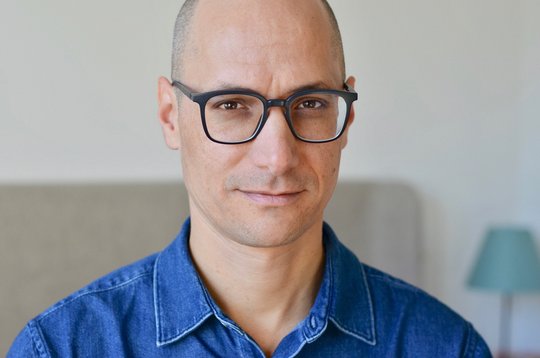
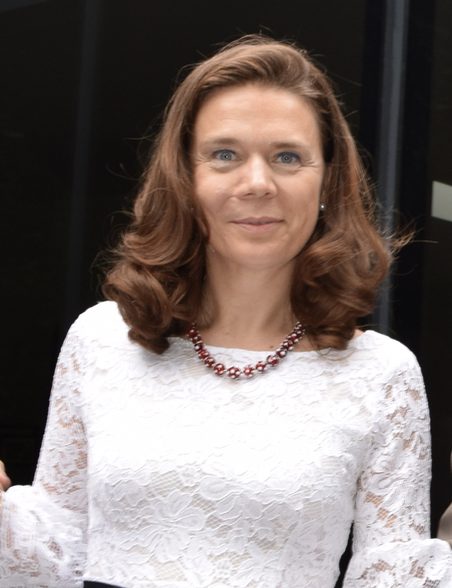
Klaus Peter is a Professor of German Linguistics and Language Didactics at Vorarlberg University of Education's Institute for Secondary Education and Subject Didactics in Feldkirch, Austria. His work bridges theoretical linguistics and practical pedagogy, with a focus on enhancing language education through innovative methodologies. His research explores: German language teaching methodologies Writing and reading didactics across educational levels Multilingual education frameworks Digital tools for language learning AI's impact on foundational competencies He develops MOOCs for teacher training in linguistics fundamentals and academic writing. Peter's publications (2015-2024) reveal evolving interests in multilingual pedagogy, collaborative writing, and educational technology. Recent works critically examine AI's role in language education while maintaining focus on core linguistic competencies. His research consistently addresses classroom applications, teacher training, and inclusive language education strategies. He leads projects like Mehrsprachiges Lesetheater (Multilingual Reading Theater), which integrates drama pedagogy and multilingual approaches. Collaborations span universities across German-speaking Europe, focusing on curriculum development and teacher resources.
Prof. Gary A. Rendsburg serves as the Blanche and Irving Laurie Professor of Jewish History in the Department of Jewish Studies at Rutgers University. He holds advanced degrees from New York University and has established himself as a leading scholar in Biblical Studies and Ancient Near Eastern languages with approximately 190 scholarly publications. Dr. Rendsburg earned his M.A. and Ph.D. from New York University, developing expertise in Hebrew language and Biblical literature that would define his academic career. His educational background provided the foundation for his distinctive approach combining linguistic precision with literary analysis. Professor Rendsburg's research spans multiple dimensions of Biblical scholarship: Linguistic analysis of Biblical Hebrew, particularly regional dialects within the Bible Literary structure and composition of biblical narratives Connections between biblical texts and ancient Near Eastern contexts, especially Egyptology Hebrew language evolution from Biblical to Rabbinic periods Integration of archaeological findings with textual analysis Biblical poetics and rhetorical devices His extensive publication record demonstrates consistent engagement with core questions of biblical composition and interpretation. Rendsburg's work often bridges traditional rabbinic interpretation with modern critical scholarship, examining literary structures, linguistic features, and historical contexts. His recent writings show particular interest in Egyptian influences on biblical narratives, literary artistry of biblical composition, and linguistic peculiarities of the Hebrew Bible. The publication of his book How the Bible Is Written represents a culmination of his lifelong study of biblical literary techniques. Professor Rendsburg has authored seven books and approximately 190 scholarly articles throughout his distinguished career. His most recent monograph explores the sophisticated literary techniques employed by biblical authors, demonstrating how ancient writers used language creatively to enhance textual meaning and aesthetic quality. His academic leadership includes mentoring students in Jewish Studies and contributing to scholarly discourse on the intersection of traditional and critical approaches to biblical texts. Rendsburg advocates for what he describes as "an ideal balance in Torah study" that allows for both critical study of the text as well as traditional study, ideally putting the two in conversation with each other.
Dani Byrd is a Professor of Linguistics at the University of Southern California's Dornsife College of Letters, Arts and Sciences. She has held significant administrative leadership roles including Interim Dean, Executive Vice Dean, and multiple Vice Dean positions focusing on research advancement, faculty affairs, and institutional matters. Her interdisciplinary research bridges linguistics, engineering, and neuroscience to investigate human speech production and articulatory coordination. Byrd earned her PhD in Linguistics from UCLA in 1994 with a dissertation on 'Articulatory Timing in English Consonant Sequences.' She received simultaneous MA and BA degrees from Yale University in 1990, graduating magna cum laude with Distinction in Linguistics. Following her PhD, she completed post-doctoral training at Haskins Laboratories in New Haven, Connecticut. Her research specializes in speech production and articulatory coordination, employing cutting-edge magnetometer and real-time MRI technologies to track vocal tract movements during speech. Byrd's work investigates language production from a dynamical systems perspective, examining how linguistic structures relate to temporal speech realization. She combines theoretical linguistics with experimental speech science to understand the cognitive representation of language through physical production. Byrd's recent publications demonstrate a strong interdisciplinary trajectory, integrating linguistics, neuroscience, and artificial intelligence. Her work increasingly focuses on mental health applications of speech analysis, using AI to detect depression and suicidal ideation from speech and eye movements. She continues advancing vocal tract imaging techniques while expanding into speech foundation models that characterize speaker traits and dialect variations across languages. USC Dornsife Dean's Award for Distinguished Service (2012) Fellow of the Acoustical Society of America (2008) R. Bruce Lindsay Award for scholars under 35 NSF Graduate Fellow (1990-1992) UCLA Graduate Woman of the Year Award (1994) Professor Byrd has chaired or served on numerous PhD thesis committees across Linguistics, Electrical Engineering, and Psychology departments at USC. Her research has been continuously funded for three decades by the National Science Foundation and NIH's National Institute on Deafness and Other Communication Disorders. Current major grants include NSF funding for structured variability in vocal tract articulation dynamics and an IARPA contract for spoken human signal anonymization, totaling over $5 million in active funding. Byrd's research takes place in the Dynamic Imaging Science Center at the USC Michelson Center for Convergent Bioscience. She leads the USC SPAN (Speech Production and Articulation kNowledge) Research Group, which combines real-time MR imaging, linguistic experimentation, and machine learning to advance understanding of spoken language. Her team includes engineers, linguists, and neuroscientists working collaboratively on speech production research.
Josef Eskhult is an Affiliated Researcher at the Department of Linguistics and Philology within the Faculty of Languages at Uppsala University. His scholarly work focuses on the historical development of linguistic thought, particularly from 1400-1800, with special attention to Neo-Latin scholarly traditions, Hebrew philology, and biblical translation history. His research bridges multiple disciplines including linguistics, religious studies, and intellectual history. Dr. Eskhult's primary research interests include the history of Western linguistic thought from antiquity to the present (particularly 1400-1800), Neo-Latin philology (Latin scholarly texts 1400-1800), the history of Hebrew philology and Latin Bible translations (1500-1750), the history of translation theory from antiquity to the Renaissance and Enlightenment, and Augustine's language philosophy and its impact on Western semio-linguistic thinking. His interdisciplinary approach combines philological analysis with historical and philosophical inquiry. His publication record demonstrates a consistent focus on how scholars from the Renaissance through Enlightenment conceptualized language origins, diversity, and change. A significant portion of his work examines the reception of Augustine's linguistic theories and their influence on subsequent thought. He has made notable contributions to understanding the development of concepts like 'Vulgar Latin' during the Renaissance and the role of Hebrew in early modern linguistic thought, particularly examining how 17th-century theorists like Georg Stiernhielm, Claudius Salmasius, and Christian Ravius approached dialect classification. Dr. Eskhult has published extensively in leading journals such as Journal of Latin Linguistics, Historiographia Linguistica, and Revue d'Etudes Augustiniennes et Patristiques, as well as contributing chapters to scholarly collections on early Christianity, Neo-Latin studies, and historical linguistics. His work shows strong international recognition with references in multiple Wikipedia pages and academic platforms.
Claire Nance is a Professor of Phonetics at Lancaster University's Department of Linguistics and English Language, within the Faculty of Arts and Social Sciences. Her research focuses on sociolinguistics, phonetics, and laboratory phonology, with a specialization in Celtic languages (particularly Scottish Gaelic), bilingualism, minority language revitalization, and ultrasound tongue imaging. She leads projects on North-West English dialects, such as the 'Lancashire Tongues' initiative, and studies intonation patterns in Glasgow Gaelic and Liverpool English. Her academic contributions include work on articulatory phonetics in multilingual contexts, the acoustics of Gaelic sonorants, and the sociolinguistic implications of language contact. She supervises PhD students in sociophonetics, bilingualism, and minority language studies. Nance is affiliated with the Phonetics Lab and collaborates on public engagement initiatives like 'Visible Voices' and 'Linguistics in the City,' bridging academic research with community outreach. Recent research projects include investigations into child language acquisition of Estonian palatalization and the phonetic dynamics of Gaelic-English bilingualism. She actively contributes to revitalization efforts for minority languages through both scholarly work and community-based activities.
Veronique Hoste is a Full Professor of Computational Linguistics at Ghent University's Faculty of Arts and Philosophy , where she serves as Department Head of the Department of Translation, Interpreting and Communication and Director of the LT3 Language and Translation Technology Team . Her work bridges machine learning with natural language processing, focusing on semantics, discourse modeling, and practical applications in emotion detection, irony recognition, and customer service dialogue analysis. PhD in Computational Linguistics from University of Antwerp (2005) 2023-2024: Francqui Chair at Université Libre de Bruxelles 2024: Elected to Royal Flemish Academy of Belgium (KVAB) Research Interests: Specializes in machine learning approaches to coreference resolution, sentiment analysis, and multimodal emotion detection. Leads projects like FlandersAI (empathy in conversational agents), METRICS (emotion trajectories in service dialogues), and SENTiVENT (financial event extraction). Develops high-quality datasets (e.g., EmotioNL , ENCORE ) for broader NLP community use. Recent Publications span Dutch social media irony detection, Classical Chinese poetry sentiment analysis, and multimodal emotion datasets. Collaborates on interdisciplinary initiatives like NewsDNA (news recommendation) and SentEMO (commercial sentiment analysis). Scientific Awards Francqui Chair (2023-2024) KVAB Membership (2024) Outreach includes co-founding AlfaSent (LT3 spin-off for customer feedback analysis) and authoring the first Dutch-language NLP book Taaltechnologie Ontrafeld (2024). Coordinates AI education initiatives like the AI at School project.
Francesco Vespignani is an Associate Professor at the University of Padova. His research focuses on the cognitive and neural mechanisms underlying language comprehension, particularly sentence processing, ERPs (event-related potentials), and interactions between syntax and pragmatics. He investigates how language influences visual attention, bilingualism, aging, and deafness. His work integrates psycholinguistic, ERP, and EEG methodologies. Research areas: ERPs and sentence comprehension, syntax-pragmatics interaction, language and visual attention, language in atypical populations (bilingualism, aging, deafness). Publications: Over 40 peer-reviewed articles in journals like Journal of Experimental Psychology , Brain and Language , and Discourse Processes . Recent articles highlight speaker-specific speech prediction, pragmatic leniency toward foreigners, and neural mechanisms of language processing in cochlear implant users. His work bridges cognitive psychology, neuroscience, and linguistics. Key findings include the role of novel linguistic labels in visual attention disengagement and ERP evidence of discourse expectations linked to the question under discussion. Collaborations span Italy, Germany, and the UK, focusing on bilingualism and neurocognitive language processing.
Sara Zahler is an Assistant Professor in the Department of World Languages and Cultures at North Carolina State University. She holds a PhD in Hispanic Linguistics from Indiana University, Bloomington, and previously taught at SUNY Albany. Her research focuses on language variation and change, particularly in second language acquisition, sociolinguistic variation, and individual differences in language learning. She employs usage-based approaches to explore how cognitive mechanisms influence language acquisition and use. Dr. Zahler teaches courses such as Spanish Syntax and Morphology, History of the Spanish Language, and Second Language Acquisition, emphasizing project-based learning and real-world linguistic analysis. Her work examines trill variation in Spanish, study abroad impacts, and the role of phonological memory in L2 phonology. She has presented at major conferences like NWAV and HLS, and her research spans topics including grammaticalization, dialectal differences, and L2 morphosyntax. Her current projects include analyzing sociolinguistic variation in language classrooms, the acquisition of Spanish trills by L2 learners, and the influence of working memory on pronunciation. She collaborates with scholars on studies involving Spanish variation in Central America and the Caribbean, as well as L3 acquisition of French by Spanish learners. Zahler’s teaching philosophy integrates pedagogical innovations like High Quality Project-Based Learning to engage students in authentic research experiences.
Marit Westergaard is a Professor of English Linguistics at UiT The Arctic University of Norway, affiliated with the Department of Language and Culture within the Faculty of Humanities, Social Sciences and Education. She also serves as Secretary General of The Norwegian Academy of Science and Letters. Her research focuses on multilingualism, bilingualism, and language acquisition, with special emphasis on syntactic variation, grammatical gender, and heritage languages. She leads the Center for Language, Brain & Learning (C-LaBL), funded by the Trond Mohn Foundation, which explores multilingualism through experimental methods like eye-tracking and EEG/ERP. Key projects include AcqVA (Acquisition, Variation & Attrition), the Psycholinguistics of Language Representation (PoLaR) lab, and international networks such as MultiGender and MuMin. She develops theoretical frameworks like the Micro-cue Model and Linguistic Proximity Model, explaining language acquisition and cross-linguistic influence. Her work engages with Norwegian dialects, Russian, German, and English, addressing topics like word order variation, attrition, and diachronic change. She collaborates with Bilingualism Matters to provide evidence-based advice for multilingual families through the initiative "Flere språk til flere." Recent research highlights include investigating CLI in L3 acquisition, syntactic variation in heritage languages, and the role of structural similarity in bilingual cognition. She supervises interdisciplinary projects funded by the RCN and EU, contributing to both theoretical and applied linguistics domains.
Professor Elinor Payne is a Professor of Phonetics and Phonology at the University of Oxford's Faculty of Linguistics, Philology, and Phonetics, and a member of the Phonetics Lab. She holds additional roles as a Governing Body Fellow at St Hilda’s College and a Lecturer at Oriel College. Her research focuses on cross-linguistic speech variation, prosody, and the interplay between prosody and gesture in communication. Current projects include studies on Cypriot prosody, Indian English variation, Venetan dialect prosody, and multimodal communication in Russian media. She has been on research leave since 2021 and supervises doctoral students in phonetics, phonology, and contact phonetics. Her research themes encompass speech acquisition, multilingual phonetics, prosody, and sociolinguistic variation. She has led projects funded by institutions like the Leverhulme Trust and the AHRC, investigating topics such as speech timing, intonation, and the effects of language contact. Teaching includes phonetics and phonology modules for undergraduate and postgraduate programs in Linguistics, Modern Languages, and Psychology. Professor Payne’s work bridges experimental phonetics, computational methods, and interdisciplinary approaches, with a focus on endangered languages and sociolinguistic dynamics. Her lab, the Phonetics Lab, collaborates on projects like digital mapping of prosodic patterns and multimodal dataset analysis.
Dr. Samantha Rarrick is a Senior Lecturer at Griffith University's School of Humanities, Languages and Social Science, affiliated with the Griffith Centre for Social and Cultural Research. Her research focuses on documenting endangered languages, particularly signed and spoken languages of the Pacific, including Kere and Sinasina Sign Language in Papua New Guinea, and Hawai‘i Sign Language. She emphasizes community-driven approaches to linguistic research, ensuring local stakeholders participate in decision-making. Dr. Rarrick holds a PhD in Linguistics from the University of Hawaii at Mānoa (2017), and has conducted postdoctoral research funded by the National Science Foundation (2017–2019). Her teaching interests include language endangerment, documentation, Pacific languages, and sign languages. She supervises doctoral and master's students on topics ranging from climate-related semantics in Danish dialects to phonological variation in Hawai‘i Sign Language. Dr. Rarrick has received the 2021 Student Experience of Teaching Commendation and actively contributes to professional organizations like the Australian Linguistic Society and the Foundation for Endangered Languages. Her work bridges signed and spoken language documentation, addressing methodological challenges in corpus design and cross-modal linguistic analysis. Key research projects include documenting Sinasina Sign Language, analyzing language ideologies in Papua New Guinea, and developing multimedia resources for Central Queensland Aboriginal languages. Dr. Rarrick's interdisciplinary approach integrates ethnography, typology, and computational methods to preserve linguistic diversity while fostering global awareness of endangered languages.
Prof. Dr. Johannes Basch is a Professor for Business Psychology at the Sales and Sustainable Business Institute within the Faculty of Business and Economics at Neu-Ulm University of Applied Sciences. A native of the region, he completed his bachelor's, master's, and PhD in psychology at the University of Ulm, focusing on the comparability of technology-mediated and traditional job interviews. His research emphasizes digitization in HR processes, including video interviews, gamified selection systems, and bias mitigation in hiring. He co-founded the personnel consultancy mindwise in 2020, applying academic insights to real-world challenges. Education: Bachelor's and Master's in Psychology, University of Ulm PhD in Industrial and Organizational Psychology, University of Ulm Postdoctoral research at University of Ulm Research Interests: Basch explores how digital tools like video conferencing and gamified platforms impact personnel selection validity. Key topics include regional dialect bias in interviews, Zoom fatigue effects, and asynchronous video interview perceptions. He advocates bridging academic research with practical HR solutions, particularly for SMEs in Southern Germany. Teaching Focus: Courses on digital personnel psychology, communication strategies in HR, and rhetoric/pitch development for business psychologists. Emphasizes practical skill-building alongside theoretical foundations in personality psychology and marketing/advertising psychology. Consultancy & Impact: Through mindwise , collaborates with companies to design adaptive HR solutions. Recent work includes AI-driven recruitment systems for safety-critical roles and bias-reduction frameworks for video interviews. Regional Affiliation: Resides in the Neu-Ulm area, valuing its rural charm and proximity to major cities like Ulm and Lake Constance. Active in local entrepreneurship ecosystems through HNU's partnerships.
Russell Barlow is a Postdoctoral Researcher at the Department of Linguistic and Cultural Evolution within the Max Planck Institute for Evolutionary Anthropology in Leipzig, Germany. His work focuses on endangered languages of Papua New Guinea, particularly within the Keram language family. His educational background includes: PhD in Linguistics (2018), University of Hawai‘i at Mānoa MA in Linguistics (2016), University of Hawai‘i at Mānoa BA in Indo-European Studies (2013), CUNY Baccalaureate BA in Film Studies (2006), Wesleyan University Barlow's research centers on language documentation, historical linguistics, and linguistic typology with a geographical focus on the Pacific region. His fieldwork-intensive approach emphasizes preserving endangered Keram languages like Ulwa, Pondi, and Tomoip. He investigates numeral systems, language contact phenomena between Papuan and Austronesian languages, and morphosyntactic structures including antipassive constructions. His methodology combines traditional fieldwork with computational approaches to language evolution. His publication record shows consistent output in top linguistics journals with recent work examining numeral colexification patterns, areal loanwords in New Britain, and detailed grammatical descriptions of endangered languages. The publications demonstrate interdisciplinary connections between linguistic typology, cultural evolution, and cognitive science. As an active member of the Comparative Oceanic Linguistics (CoOL) research group, Barlow has secured significant research funding through Fulbright and DAAD programs. His fieldwork spans Indonesia (Gorontalo State University), Papua New Guinea, and Germany (MPI-SHH in Jena prior to Leipzig). His research infrastructure includes extensive language archives at SOAS, PARADISEC, and Kaipuleohone, ensuring long-term preservation of endangered language materials. Current projects involve analyzing esoteric numeral systems and cross-linguistic patterns in infix preservation.
James Allen is a Professor of Philosophy at the University of Toronto Mississauga (UTM), specializing in ancient Greek and Roman philosophy. He holds a BA from Yale University and a PhD from Princeton University. His research focuses on ancient philosophical methodologies, including rhetoric, dialectic, and epistemological debates across figures like Plato, Aristotle, and the Stoics. Key research areas include the analysis of ancient medical texts, the structure of philosophical argumentation in works like Plato’s Gorgias , and the historical development of skepticism in Hellenistic thought. His contributions span monographs like Inference from Signs: Ancient Debates about the Nature of Evidence (2001) and numerous articles on Aristotle’s logic, Stoic linguistics, and the New Academy’s aporetic tradition. Allen’s work bridges textual analysis with methodological inquiry, exploring how ancient thinkers conceptualized evidence, probability, and the boundaries between theoretical and practical knowledge. His recent publications (2018–2020) address topics such as Megarian dialectics, Galen’s medical philosophy, and the ethical foundations of ancient goods/evils dichotomy.
Yulia Tsvetkov is an Associate Professor at the University of Washington's Paul G. Allen School of Computer Science & Engineering. Previously, she was an Assistant Professor at Carnegie Mellon University (CMU) and holds a PhD from CMU. Her research focuses on Natural Language Processing (NLP), AI ethics, multilingual learning, and large language models. She leads a research group advancing ethical AI, NLP fairness, and cross-cultural language technologies. Education: PhD in Language Technologies, Carnegie Mellon University Postdoctoral research at Stanford NLP Group M.Sc. in Computer Science (Multi-word Expressions), University of Haifa Research Interests: Hybrid solutions combining machine learning with linguistic theory Addressing ethical challenges in AI Multilingual NLP for underrepresented languages Large language model robustness and alignment Recent Work Trends: Recent publications emphasize ethical AI, bias mitigation, and cross-lingual fairness. Notable contributions include frameworks for knowledge-aware LLMs and methods to detect/hallucination. Awards: Best Paper Award (MatFormer, 2023) Outstanding Paper Award (Don't Hallucinate..., 2024) Wikimedia Foundation Award (Controlled Analyses..., 2021) Teaching: Teaches graduate courses on Ethics in AI and undergraduate NLP at UW. Previously taught Multilingual NLP at CMU. Labs/Teams: Leads the Tsvetkov Lab focused on ethical and equitable NLP systems.