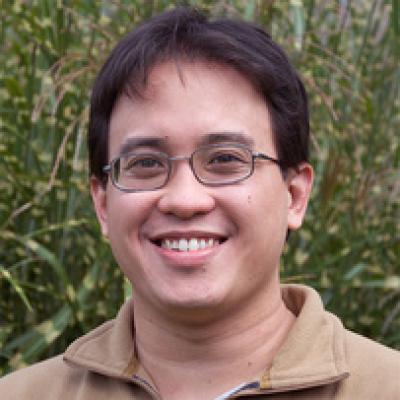
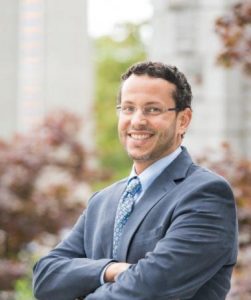
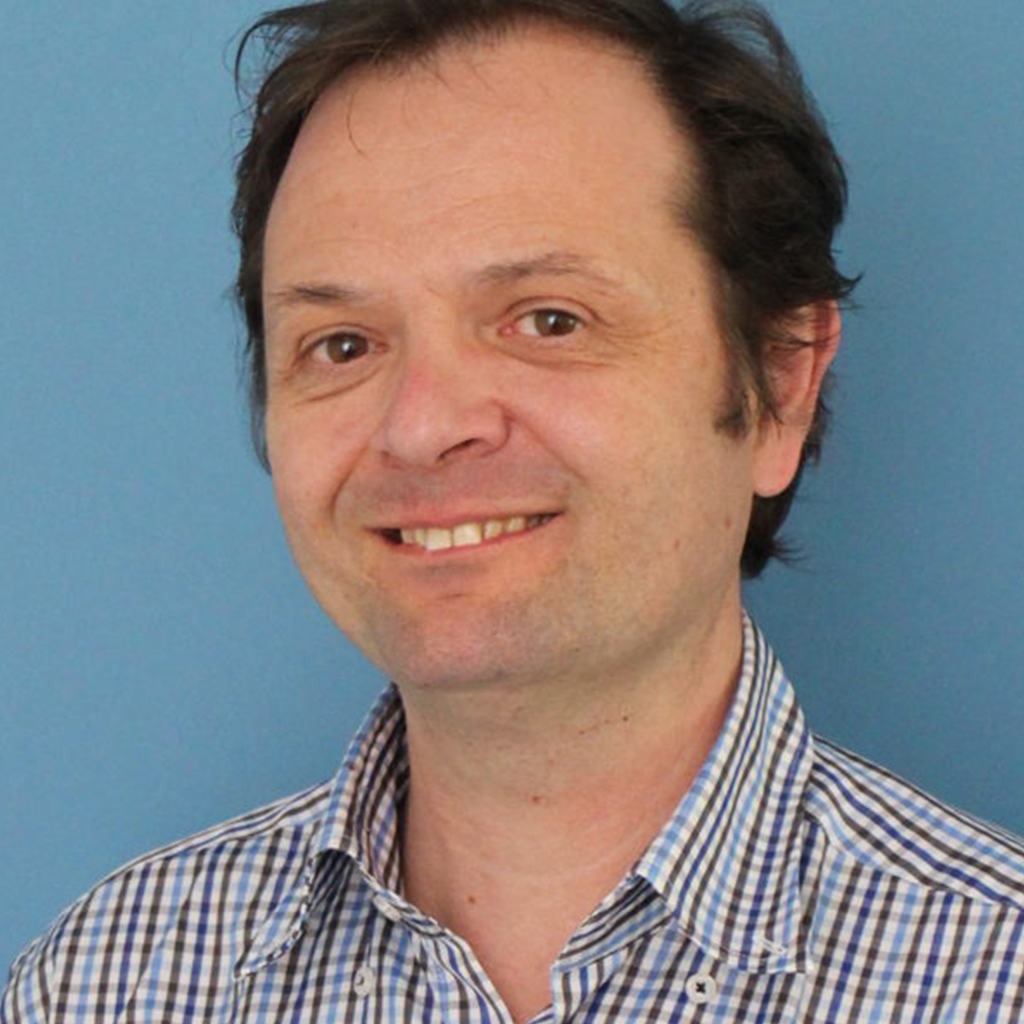
Jiwon Yun is an Associate Professor in the Department of Linguistics at Stony Brook University. She holds a Ph.D. in Linguistics from Cornell University (2013) and a B.S.E. in Computer Science & Engineering from Seoul National University (cum laude with honors). Her research focuses on speech prosody, syntax-semantics interfaces, and computational modeling of sentence processing, with special attention to East Asian languages like Korean, Mandarin, and Japanese. Dr. Yun teaches undergraduate and graduate courses in computational linguistics, semantics, pragmatics, and experimental phonetics. Her work bridges theoretical linguistics and experimental methods, examining how prosody interacts with syntactic and semantic structures. Recent publications investigate prosodic disambiguation of syntactic ambiguities, computational models of relative clause processing, and intonation patterns in Korean and Mandarin. She has developed tools for automated speech corpus analysis and maintains a Hangul-Yale Romanization Converter for linguistic research. Her research has been published in journals like Humanities and Social Sciences Communications , Linguistic Inquiry , and Journal of East Asian Linguistics . Teaching responsibilities include courses such as LIN 335 (Computational Linguistics) and LIN 627 (Computational Semantics).
Brendan O'Connor is an Associate Professor in the Manning College of Information and Computer Sciences (CICS) at the University of Massachusetts Amherst. His research focuses on computational social science and natural language processing (NLP), particularly exploring how social factors influence language technologies and using text analysis to understand societal trends. His work includes studies on racial bias in NLP, political event analysis, and social media linguistics. He holds a PhD in Machine Learning from Carnegie Mellon University (2014) and dual MS/BS in Symbolic Systems from Stanford University (2006). Education: PhD in Machine Learning, Carnegie Mellon University (2014) MS in Symbolic Systems, Stanford University (2006) BS in Symbolic Systems, Stanford University (2006) Research interests span AI ethics, social media analysis, and computational methods for studying language and society. Notably, he investigates racial disparities in NLP systems, linguistic variation in African American English, and event detection in news and social media. His work has been recognized with NSF CAREER and Google Faculty awards, and his research has been cited thousands of times. His lab, the Statistical Social Language Analysis Lab, develops tools for analyzing large-scale text data. He is affiliated with the Center for Data Science, Center for Intelligent Information Retrieval, and Computational Social Science Institute. Recent projects include analyzing global news coverage of critical events and developing frameworks for zero-shot argument explication. Awards and Honors: NSF CAREER Award Google Faculty Research Award Best Paper Award Advising and Grants: O'Connor has advised projects on social media polling representativeness and demographic analysis. His grants include collaborative research on sociopolitical event extraction and bias mitigation in AI systems. He has also contributed to platforms like Rookie for news archive exploration and ezCoref for coreference resolution. Labs/Teams: Leads the Statistical Social Language Analysis Lab and collaborates with the UMass NLP Group and Harvard Institute for Quantitative Social Science. His work bridges NLP with social science methodologies, emphasizing transparency in algorithms and causal inference using text data.
Dr. Muhammad Abdul-Mageed is an Associate Professor in the School of Information at The University of British Columbia, with joint appointments in Linguistics and an associate membership in Computer Science. He holds the Canada Research Chair in Natural Language Processing and Machine Learning. His research focuses on deep learning, socio-pragmatics, and speech/language technologies, particularly for Arabic and African languages. He leads the UBC Deep Learning & NLP Group and co-directs SSHRC-funded grants like I Trust AI and Ensuring Full Literacy. He is a founding member of the Center for Artificial Intelligence Decision making and Action and a member of the Institute for Computing, Information, and Cognitive Systems. His work spans automatic speech recognition, machine translation, computational socio-pragmatics, and low-resource language technologies. Notable projects include developing Arabic speech recognition systems, multidialectal Arabic benchmarks, and tools for African language processing. He has authored over 100 peer-reviewed papers and leads initiatives like the NADI Arabic Dialect Identification shared task and the NileChat project for culturally-aware LLMs. His research aims to create equitable, socially-aware AI systems for health, social media, and information management.
Dr Aaron D. Hornkohl is an Associate Professor in Hebrew and Bye-Fellow at Girton College, University of Cambridge. He serves as Director of Studies in Asian and Middle Eastern Studies at Girton and Homerton Colleges. His academic background includes a BA from Biola University, MA from The Hebrew University of Jerusalem, and PhD (2012) on the linguistic analysis of the Book of Jeremiah. His research focuses on ancient Hebrew philology, linguistic periodization, and exegesis, with a particular interest in the diachronic development of Hebrew and textual criticism of biblical manuscripts. Teaching responsibilities include courses on ancient and modern Hebrew literature, language history, and Middle Eastern culture. He co-organizes initiatives like the Sutton Trust Summer School and leads AHRC-funded research on critical editions of Hebrew texts, including the Kaufmann MS of the Mishna. Recent publications explore Tiberian reading traditions, Masoretic vocalization, and linguistic features in Qumran manuscripts. Research projects include Grammar of Biblical Hebrew Books (2024) and Studies in the Masoretic Tradition (2022). His work bridges linguistic analysis with historical context, addressing questions of language evolution and textual authenticity in Hebrew biblical and rabbinic corpora.
Zainab Hermes is an Associate Instructional Professor in the Department of Near Eastern Studies at the University of Chicago, where she has taught since 2018. She holds a PhD in Linguistics from the University of Illinois at Urbana-Champaign (2018), earned through experimental research combining phonetics and neuroscience methodologies. Education PhD in Linguistics, University of Illinois at Urbana-Champaign (2018) Research Interests Her work focuses on experimental linguistics, particularly the articulation of Arabic dialects (Cairene, Lebanese, Jordanian, Saudi). Key projects involve: MRI studies of vocal tract configurations for back consonants MEG investigations of neurological representations during Arabic diglossic code-switching Self-paced reading studies on L2 acquisition of Arabic grammatical gender Publications & Methodologies Her research employs advanced imaging techniques (rt-MRI, EMA) and neurolinguistic methods (MEG) to analyze speech production and processing. Her teaching includes courses on Arabic linguistics, dialectology, and academic reading. Academic Contributions She collaborates on interdisciplinary studies bridging phonetics, neuroscience, and language acquisition frameworks.
David Yarowsky is a Professor in the Department of Computer Science at Johns Hopkins University. He leads the Low-Resource Languages Lab and is a member of the Center for Language and Speech Processing. Harvard University - Bachelor of Arts in Computer Science (1987) University of Pennsylvania - Master of Science in Engineering (1993) and PhD in Computer and Information Science (1996) Research Interests : Natural Language Processing, particularly focusing on word sense disambiguation, minimally supervised induction algorithms, multilingual NLP, and machine translation for low-resource languages. His work bridges theoretical linguistics with practical applications in information retrieval, spoken language systems, and very large text databases. Article Trends : His publications emphasize cross-lingual transfer learning, universal morphology, and low-resource language technologies. Key themes include morphological analysis, computational etymology, and adversarial speech recognition. Scientific Awards : ACL Fellow (2013-present) Professional Service : Served as Treasurer and Executive Committee Member of the Association for Computational Linguistics, Secretary-Treasurer of SIGDAT, and chair/co-chair of major conferences including EMNLP 2013, IJCNLP 2011, and ACL 2014. Labs & Teams : Director of the Low-Resource Languages Lab at JHU and active member of the Center for Language and Speech Processing.
Gerold Schneider is an Associate Professor at the University of Zurich , affiliated with the Department of Computational Linguistics under the Faculty of Arts and Social Sciences and Faculty of Business, Economics and Informatics . He leads the Text Crunching Center (TCC) , focusing on interdisciplinary research at the intersection of NLP, Digital Humanities, and Health Data Science. Research Interests His work spans Text Analytics , Digital Humanities , Corpus Linguistics , and Health Data Science , with applications in: Biomedical NLP (e.g., Alzheimer’s detection, clinical trials) Digital Humanities projects (e.g., analyzing Charles Dickens, UN archives) Migration discourse framing across languages Adversarial data collection for hate speech detection Interdisciplinary methodologies for digital unstructured data Recent Publications 2025–2024 research highlights include annotated corpora for preclinical and neurological studies, AI-driven analysis of historical linguistic variation, and innovative tools for language learners. His NLP applications address health diagnostics, ethical AI, and cross-lingual political discourse. Labs & Teams As TCC leader, he spearheads collaborative projects within the Digital Society Initiative (DSI) communities (AI & Law, Health, Ethics, etc.), integrating computational methods with humanities and health research.
Georgia Zellou is an Associate Professor in the Department of Linguistics at the University of California, Davis, where she co-directs the Phonetics Lab and conducts award-winning research at the intersection of phonetics, speech perception, and human-AI interaction. Her work investigates how phonetic detail is cognitively represented through variations in speech production, with significant contributions to understanding speech alignment with voice assistants, face-masked speech intelligibility, and cross-linguistic perception of synthetic voices. Her academic credentials include a Ph.D. in Linguistics from the University of Colorado at Boulder (2012), an M.A. in Linguistics from Stony Brook University (2007), and a B.A. in Linguistics & Anthropology from the University of Florida (2005, Cum Laude, Phi Beta Kappa). Ph.D., Linguistics, University of Colorado at Boulder (2012) M.A., Linguistics, Stony Brook University (2007) B.A., Linguistics & Anthropology, University of Florida (2005) Professor Zellou's research program centers on laboratory phonology approaches to real-world communication challenges, examining how acoustic-phonetic details influence speech perception across contexts. Her studies span speech alignment with voice-AI systems (e.g., Amazon Alexa), sociophonetic variation in bilingual speech, and the cognitive mechanisms underlying perceptual compensation for coarticulation. She employs experimental methods including eye-tracking, acoustic analysis, and perceptual testing to uncover how phonetic variation functions pragmatically in human communication and human-machine interaction. Analysis of her 15 most recent publications (2023-2025) reveals three dominant research trajectories: (1) human-AI voice interaction dynamics, including prosodic alignment and social evaluation of TTS voices; (2) intelligibility optimization in challenging contexts (face masks, clear speech for diverse listeners); and (3) cross-linguistic phonetic variation in vowelless words and consonant clusters. These works consistently bridge theoretical phonology with applied speech technology, demonstrating how fine-grained phonetic detail influences communication effectiveness in both human-human and human-machine contexts. Her scientific recognition includes: Fulbright Scholar (2022) for research in France Chancellor’s Award for Excellence in Undergraduate Mentoring (2019) Fellow of the Linguistic Society of America (2020) Amazon Faculty Research Award (2019) for Alexa-related speech studies Dean’s Fellow designation at UC Davis (2020-2023) Professor Zellou maintains an active mentoring practice recognized with the Chancellor’s Award, supervising undergraduate researchers in the Phonetics Lab while teaching core linguistics courses from introductory to advanced graduate levels. Her research program is supported by competitive grants including NSF funding, Amazon Research Awards, and UC Davis internal grants (Hellman Foundation, ISS Junior Faculty Grant), reflecting the translational value of her work for speech technology development. She has co-directed major initiatives including the 2019 LSA Linguistic Institute. The Phonetics Lab she co-leads serves as a hub for experimental phonetics research, focusing on speech production-perception relationships through projects investigating vocal accommodation to voice assistants, nasal coarticulation dynamics, and cross-linguistic prosody. Current collaborations with industry partners aim to implement human speech adaptation principles into voice assistant design to enhance naturalness and engagement.
Jeremy Rau is a Professor of Linguistics and Classics at Harvard University's Department of Linguistics, part of the Faculty of Arts and Sciences. He currently serves as Director of Graduate Studies for Fall 2024 and is on leave for Spring 2025. His office is located in Boylston Hall, Cambridge, MA. Rau specializes in Greek and Latin historical linguistics with a particular focus on Homeric language, Indo-European linguistic systems, and Indo-Iranian comparative studies. His research explores ancient language structures, verb morphology, and diachronic phonological changes in pre-classical texts. Research Interests: Proto-Indo-European root analysis Mycenaean Greek linguistic features Homer's language and epic conventions Indo-Iranian comparative linguistics Verb derivation mechanisms Publications reflect deep engagement with ancient language structures, including studies on Mycenaean contract verbs, Homeric noun inflections, and Proto-Germanic lexicon. He has contributed to journals like Die Sprache , Glotta , and Historische Sprachforschung , as well as edited volumes such as Verba Docenti . Administratively, Rau oversees graduate programs and participates in departmental governance. His work bridges historical linguistics with philological scholarship, emphasizing systematic analysis of ancient language data.
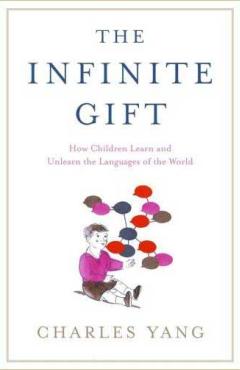
Charles Yang is a Professor of Linguistics and Computer Science at the University of Pennsylvania , where he also directs the Cognitive Science Program. His research integrates computational models with studies of language acquisition, processing, and evolution. Education: Ph.D. in Computer Science, MIT, 2000 Yang's work spans language acquisition , computational linguistics, and the evolution of cognition. He has authored The Price of Linguistic Productivity (2016), which received the Leonard Bloomfield Award from the LSA. Recent publications focus on large language models as cognitive models, the Chinese aspectual system , and statistical approaches to linguistic patterns. His 15 most recent articles (2025-2021) demonstrate a trajectory from computational models of language change to machine translation and multiword expression analysis . Yang has received significant funding from the National Science Foundation and the Guggenheim Foundation . He co-directs the Integrated Language Science and Technology group with John Trueswell and mentors students in linguistics, computer science, and psychology.
Sharon Levy is an Assistant Professor in the Department of Computer Science at Rutgers University, USA. Her research focuses on Natural Language Processing (NLP) with an emphasis on Responsible AI, addressing fairness, safety, and trustworthiness in language systems. She holds a Ph.D. from the University of California, Santa Barbara (2023), and conducted postdoctoral work at Johns Hopkins University (2023-2024). Education: PhD in Computer Science (UCSB, 2023), MS (UCSB, 2018), BS (UCSB, 2017). Professional experience includes roles at AWS, Facebook AI, Pinterest, and Akamai Technologies. Research Interests: Fairness in non-English contexts, safety of LLM outputs, misinformation detection, and computational social science applications. Her work frequently intersects with public health, gender studies, and political science. Teaching: Instructs Rutgers' Natural Language Processing course (Spring 2025) and co-taught JHU's Trustworthy NLP course. Active guest lecturer at institutions including Stanford and UT Austin. Mentorship: Supervises 14+ students across PhD, MS, and undergraduate levels, with notable advisees winning CRA awards. Labs/Teams: Currently leads research within Rutgers' CS department, previously collaborated with Johns Hopkins' CLSP.
Ana Celia Zentella is a distinguished Professor in the Department of Ethnic Studies at the University of California, San Diego, renowned for pioneering "anthro-political linguistics" that examines language through sociopolitical and justice-oriented frameworks. Her work centers on U.S. Latin@ language communities, challenging linguistic discrimination and advocating for language rights. Education: Ph.D. in Educational Linguistics, University of Pennsylvania M.A. in Romance Languages and Literatures, Pennsylvania State University B.A. in Spanish, Hunter College (Bronx) Zentella's research critically analyzes U.S. Latin@ varieties of Spanish and English, Spanglish, and language socialization in families, with particular focus on Puerto Rican communities. She exposes how English-only laws and anti-bilingual education policies facilitate linguistic profiling that marginalizes communities. Her scholarship consistently bridges academic rigor and community advocacy, emphasizing "el habla del pueblo" (the people's speech) as resistance against top-down language classifications. Her publications reveal enduring themes: language as a site of political struggle (2018-2023), border linguistics examining Tijuana-San Diego dynamics (2013-2016), and historical analyses of Nuyorican language (2004). She challenges harmful frameworks like the U.S. Census Bureau's "linguistically isolated" category while documenting language revitalization efforts in multilingual urban centers. Scientific Awards: British Association of Applied Linguistics Book Prize (1997) Association of Latina and Latino Anthropologists Book Award (1997) Manhattan's "Doctor Ana Celia Zentella Day" declaration (1997) LASA Public Intellectual of the Year (2014) Society for Linguistic Anthropology Public Outreach Award (2016) American Academy of Arts and Sciences induction (2023) Choice Outstanding Academic Title (2018) Zentella actively mentors through community-engaged scholarship, co-authoring Multilingual San Diego (2008) and Multilingual Philadelphia (2010) with undergraduates. Her public outreach includes challenging linguistic erasure and advising policymakers on language-inclusive practices, demonstrating consistent commitment to translating academic work into tangible community impact.
Professor Helena Sanson is a Full Professor of Italian, History of Linguistics, and Women's Studies at the University of Cambridge , where she is also a Fellow of Clare College and serves as Postgraduate Teaching and Examining Officer for the Italian Section. She joined Cambridge in 2005 after teaching at University College London (1998-2003) following her British Academy Postdoctoral Fellowship. PhD from University of Reading (2002) Her interdisciplinary research focuses on the intersection of Italian linguistic history , literary culture , and gender studies from the Renaissance to post-Unification period. Particular emphasis includes women's contributions to linguistic thought , conduct literature analysis , and female roles in translation networks . Her work examines how women navigated language standardization, educational access, and literary production across social strata. Recent projects include Leverhulme-funded research on women's linguistic experiences in 18th-19th century Italy and co-edited volumes on transnational travelers' accounts and early modern female education . She founded the Women and Gender in Italy (1500-1900) book series and the journal Women Language Literature in Italy . Scientific awards include: British Academy Postdoctoral Fellowship Leverhulme Research Fellowship Philip Leverhulme Prize CRASSH Early Career Fellowship Isaac Newton Trust grant Senior Visiting Fellowship at University of Bologna She supervises graduate research in topics spanning women's writing , linguistic thought , translation history , and cultural marginalization in 16th-20th century Italy. Her work bridges philology, literary criticism, and social history through rigorous textual analysis.
Brita Wårvik is a Professor in the Department of Languages at Åbo Akademi University, affiliated with the Faculty of Humanities, Psychology and Theology. She holds a Doctor of Philosophy (Phil. Dr.) from the same institution, awarded in 2013, and has been actively contributing to linguistic research for decades. Doctor of Philosophy (Phil. Dr.), Åbo Akademi University, 2013 Her research centers on discourse analysis, pragmatics, and historical English linguistics, with a particular focus on Early Modern and Medieval English texts. She investigates discourse interaction, textual structures, and pragmatic conservatism in religious prose, often employing corpus-based and textual analysis methods. Her work bridges micro and macro perspectives in discourse, exploring how semantic units contribute to broader text worlds. Analysis of her recent publications reveals a consistent trajectory in historical discourse studies, with increasing emphasis on corpus linguistics, manuscript variation, and the evolution of discourse markers. Her editorial work, such as the 2024 volume Structures in Discourse , highlights her leadership in synthesizing interdisciplinary perspectives on language use. Scientific Awards: Teacher of the Year (2001) ÅAU Student Union's Rose (2007) Brita Wårvik actively supervises and mentors academic visitors and collaborators, as seen in her hosting of scholars like Carmen Lee and Lieselotte Anderwald. She is the coordinator of the ongoing Project ICLE (International Corpus of Learner English) , securing research continuity and international collaboration. Her involvement in organizing workshops, such as the ICLE+30 FI-subcorpus Workshop in 2024, underscores her role in fostering academic exchange. In terms of research infrastructure, she is deeply embedded in the ICLE network, contributing to the development of learner language corpora. Her activities reflect strong international collaborations, particularly in the fields of historical linguistics and discourse studies, with a visible presence in both research and academic community-building.
Jérôme Picard is a Researcher at the French National Center for Scientific Research (CNRS) affiliated with UMR 8586 - PRODIG at Campus Condorcet. His work focuses on Geomatics, Remote Sensing, Cartography , and Environmental Changes . His research involves GIS project management Linguistic and ethnic cartography Land use and territorial dynamics in Central Africa and the Himalayas Recent publications include cartographic contributions to linguistic studies in Africa, Asia, and the Himalayas (2016-2021), with methods integrating GIS and remote sensing for analyzing environmental and societal issues . Scientific awards include Award at Pastoralism and Wide Open Spaces festival for 'The Waters of Discord' He has collaborated with institutions like the University of Bangui, ENSG-Marne la Vallée, and the French Society of Photogrammetry and Remote Sensing (SFPT), and contributed to GIS training programs for doctoral students and researchers.