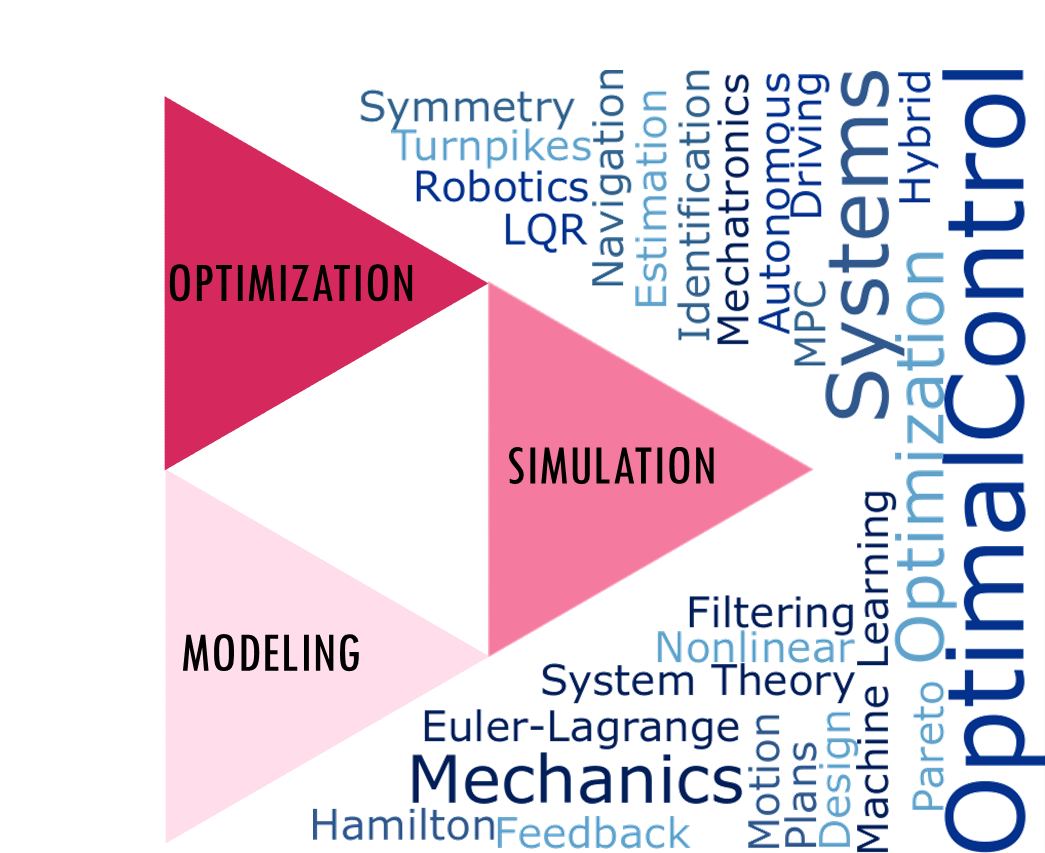
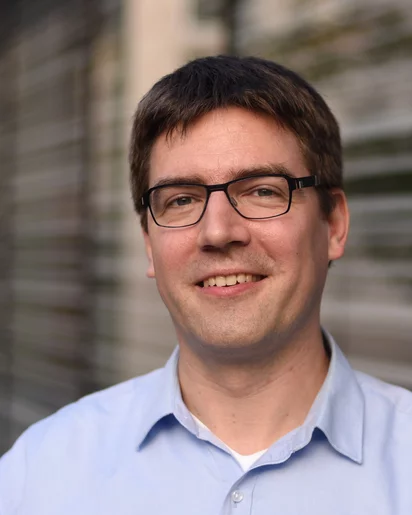
Kathrin Flaßkamp is a Professor at Saarland University, specializing in the Department of Systems Engineering. Her work focuses on modeling and simulation of technical systems, with applications spanning robotics, optimal control, and biomedical engineering. She is based at Campus A5 1, Room 1.04, Saarbrücken. Her research integrates control theory, artificial intelligence, and optimization to address challenges in mobile robotics, autonomous vehicles, and medical devices. A key trend in her recent articles involves leveraging model predictive control, neural networks, and Koopman operators for energy-efficient and cooperative trajectory planning. She also explores applications in stereotactic neurosurgery using continuum robots, emphasizing precision and adaptability. Her work frequently bridges theoretical advancements with real-world engineering problems, including systems with symmetries, multi-agent coordination, and data-driven methods for dynamical systems. Despite no explicit awards listed, her contributions to optimal control and robotics are evident in her extensive publication record.
Maarten van Steen is a Professor active in the fields of Distributed Systems , Artificial Intelligence , and Cybersecurity . With an h-index of 35 and over 5,400 citations, his work focuses on Edge AI , Privacy Preservation , and WiFi-Based Sensing . His research emphasizes non-intrusive authentication, anonymization techniques, and crowd monitoring without compromising individual privacy. Key research areas: Distributed Systems, Privacy Preservation, WiFi Security Recent projects: RoomKey, LocKey, FlowPrint Crowd-monitoring applications: Subway travelers, pedestrian dynamics Van Steen's work combines Machine Learning with Homomorphic Encryption to develop privacy-first solutions. He has contributed to mobile app fingerprinting , WiFi authentication , and blockchain scalability challenges. His 2024–2025 publications reveal trends in contextual security , crowd behavior analysis , and automated threat intelligence . Notable methods include Bloom Filters, automata learning, and WiFi beacon frame analysis. Dutch Cyber Security Best Research Paper Award 2024 Runner-up (shared prize) Van Steen supervises research teams and collaborates on datasets like Code for Threat Intelligence Processing and DeepCASE . His work spans 20+ years , with 208 total research outputs and significant contributions to decentralized systems, network traffic analysis, and urban mobility.
John Sarff is a Professor in the Department of Physics at the University of Wisconsin-Madison, specializing in plasma physics with a focus on tokamak and reversed field pinch (RFP) research . His work explores magnetohydrodynamic (MHD) stability , runaway electron dynamics , and magnetic reconnection phenomena in fusion devices such as the Madison Symmetric Torus (MST) and DIII-D tokamak. Key Research Areas: Tokamak disruptions, RFP relaxation, gyrokinetic simulations, and anomalous transport. Labs/Institutions: Wisconsin Plasma Physics Laboratory (WiPPL), MST, DIII-D collaborations. Techniques: Development of advanced diagnostics (e.g., Bdot-Mach probes, soft X-ray cameras) and computational modeling (NIMROD code).
Brandon Lucia is a Full Professor in the Department of Electrical and Computer Engineering at Carnegie Mellon University's College of Engineering. He leads the abstract research group focusing on the intersection of computer architecture, systems, and programming languages. His work bridges theoretical foundations with practical implementations in energy-constrained environments. Lucia's research centers on intermittent computing systems and edge computing in extreme environments. His work on energy-harvesting systems has established fundamental principles for batteryless computing, while his orbital edge computing research pioneers computational intelligence for nanosatellite constellations. These research thrusts address critical challenges in reliability, efficiency, and programmability for systems operating under severe power constraints. His publication record shows a clear evolution from foundational work on intermittent computing models to sophisticated applications in space computing and edge intelligence. Recent publications demonstrate increasing integration of dataflow architectures with energy-harvesting constraints, particularly in satellite constellations where computational resources must be managed across distributed, power-constrained platforms operating in extreme environments. NSF CAREER Award (2017) IEEE TCCA Young Computer Architect Award (2019) Sloan Foundation Fellowship (2021) ASPLOS Best Paper Awards (2018, 2020) OOPSLA Distinguished Paper and Artifact Awards (2015) Lucia actively mentors numerous PhD students including Brad Denby, Zhuo Cheng, and Emily Ruppel, many of whom contribute significantly to his research program. His abstract research group maintains strong industry connections while pursuing fundamental advances in computing systems. The group has developed multiple open-source tools including Legerdemain for program analysis and MultiCacheSim for cache coherence simulation. His laboratory work spans from theoretical foundations of intermittent computing to practical implementations in space systems. Current projects include computational nanosatellite constellations, energy-minimal dataflow architectures, and secure edge computing systems that operate reliably despite frequent power failures.
Dr. Saidi Siuhi serves as an Associate Professor of Civil Engineering at South Carolina State University, where he teaches undergraduate and graduate courses while conducting research and providing institutional service across departmental and university levels. His academic credentials include: Ph.D. in Civil Engineering from the University of Nevada, Las Vegas (2009) M.Sc. in Civil Engineering from Florida State University (2006) B.Sc. in Civil Engineering from the University of Dar-es-Salaam (2003) Specializing in transportation engineering, Dr. Siuhi's research focuses on traffic safety, transportation planning, and microscopic traffic simulation. His work addresses critical transportation challenges including distracted driving/walking behaviors, traffic management during special events (notably the 2017 solar eclipse), and the application of advanced computational methods to transportation networks. He integrates emerging technologies like virtual reality, machine learning, and deep learning to develop innovative safety solutions for complex transportation systems. Analysis of his recent publications (2021-2025) reveals a strong trajectory toward computational transportation safety, with increasing emphasis on AI-driven solutions for pedestrian safety, driver behavior analysis, and infrastructure monitoring. His work consistently bridges theoretical transportation models with practical safety applications, particularly in distracted behavior analysis and event-based traffic management. Dr. Siuhi actively mentors students through senior design projects (CE 459/460) and graduate coursework, though specific advisee names aren't documented. His service contributions span departmental, college, and university committees, supporting academic operations and strategic initiatives within the engineering program.
Dario De Marinis is an Assistant Professor at the Department of Mechanics, Mathematics & Management, Politecnico di Bari, Italy. His research focuses on fluid dynamics with applications in biomedical engineering, aerospace, and computational physics. Research Interests Fluid-structure interaction modeling Microfluidics and particle transport Biomedical applications (blood flow, valve mechanics) Aerospace engineering (hypersonic flows, turbulence) Numerical methods (Lattice Boltzmann, immersed boundary) Publications Trend Dario's recent work (2015–2025) spans computational fluid dynamics, with emphasis on multiphase flows, viscoelastic material behavior, and biomedical microfluidic devices. He has contributed to aerospace applications and turbulent thermal flows.
Yury Illarionov is an Associate Professor in the Department of Materials Science and Engineering at Southern University of Science and Technology (SUSTech), Shenzhen, China. He was previously a postdoc researcher at TU Wien's Institute for Microelectronics (2016-2022) and a PhD student at TU Wien and Ioffe Institute (2011-2015). His research focuses on 2D materials for nanoelectronics, optoelectronics, and sensors, with an emphasis on gate insulator development and device reliability. Education: B.Sc. & M.Sc., Technical Physics, Peter the Great St-Petersburg Polytechnic University (2009, 2011) Double M.Sc., Advanced Material Science, Erasmus Mundus FAME Program (2012) Ph.D., Semiconductor Physics, Ioffe Institute (2015) Ph.D., Technical Sciences, TU Wien (2015) His research interests center on: Fabrication of 2D FETs, photodetectors, and sensors with novel insulators (fluorides, native oxides) Advanced device characterization across temperature ranges TCAD modeling for performance and reliability Scalable fabrication techniques compatible with industrial thermal budgets Publications highlight trends in 2D nanoelectronics, oxide trap analysis, and reliability engineering for next-generation devices, spanning journals like Nature Electronics, Nature Communications, ACS Nano, and IEEE Transactions on Electron Devices. Scientific Recognition : IEEE Senior Member (2020) Co-supervisor of multiple PhD awards (2015-2023) Best poster award (ICP2DC4, 2019) Erasmus Mundus scholarship (2010) High school gold medal (2005) Advising includes direct supervision of PhD students like T. Knobloch, with collaborative efforts across international teams. His lab, Laboratory of 2D Optoelectronics and Nanoelectronics (L2DON) , combines academic rigor with industrial partnerships to advance scalable 2D device technologies.
Dr. Stuart Marshall serves as Associate Dean of Academic Development in the Faculty of Science and Engineering at Victoria University of Wellington - Te Herenga Waka, where he also holds the academic rank of Senior Lecturer. Previously, he served as Head of School for the School of Engineering and Computer Science from 2015-2021 after joining the institution as a Lecturer in 2003. His academic journey includes completing his BSc, MSc, and PhD in Computer Science at Victoria University of Wellington, with his doctoral research focusing on software reuse. Marshall's research interests center on information and data visualization, particularly exploring how visualization can function as collaborative tools in team environments rather than single-user applications. He also investigates explainable AI and mobile user interface design with emphasis on promoting healthy device usage patterns. His work bridges theoretical computer science with practical applications in education and environmental analysis. Analysis of his publication record reveals a consistent focus on visualization techniques, with recent work shifting toward immersive analytics and virtual reality applications for complex data analysis, particularly in ecosystem services. Earlier publications concentrated on mobile learning applications grounded in transactional distance theory, software visualization for large codebases, and graph layout algorithms. Marshall has supervised six PhD students and eight Masters students to completion, with current doctoral supervision spanning immersive environments for reading assistance, medical diagnosis interfaces, and cardiac procedure simulation. His grant portfolio includes multiple ACM ISS 2022 projects with industry partners including Sensor Holdings Limited, Niantic, Autodesk, and Northeastern University, along with an Australian Research Council grant for digital games preservation. Teaching responsibilities encompass foundational programming, safety-critical systems, human-computer interaction, and data visualization across undergraduate and graduate courses. He teaches subjects including SWEN326 (Safety-Critical Systems), CGRA151 (Introduction to Computer Graphics and Games), and DATA301 (Data Science in Practice), with teaching assignments scheduled through 2026.
Andries "Andy" van Dam is a distinguished Dutch-American professor of computer science at Brown University, where he also served as vice-president for research. Born in Groningen, the Netherlands on December 8, 1938, van Dam has been instrumental in shaping computer science education and research for over five decades. He helped establish Brown's computer science program, serving as its first department chair from 1979 to 1985, and was appointed Thomas J. Watson, Jr. University Professor of Technology and Education in 1995. His educational background includes a B.S. with Honors in Engineering Sciences from Swarthmore College (1960) and M.S. and Ph.D. degrees from the University of Pennsylvania (1963, 1966), where he was the second person to receive a PhD in Computer Science. Van Dam's research interests span computer graphics, hypertext systems, virtual reality, and educational technology. He is particularly known for his pioneering work in hypertext systems, having co-developed the first hypertext system with Ted Nelson in the late 1960s. His influential textbook "Computer Graphics: Principles and Practice" is often referred to as the "Bible" of computer graphics. His work has consistently focused on making complex computing concepts accessible through innovative interfaces and educational approaches. His research publications demonstrate a consistent trajectory from foundational work in computer graphics and hypertext to more recent explorations in immersive virtual reality, digital visual literacy, and next-generation educational software. His work bridges theoretical computer science with practical applications in education, medicine, and scientific visualization. Among his notable honors are: IEEE Centennial Medal (1984) Fellow of the Association for Computing Machinery (1994) ACM SIGGRAPH Distinguished Educator Award (2019) Van Dam has mentored numerous students who have gone on to make significant contributions in computer science, including Randy Pausch, Danah boyd, Scott Draves, and Steven K. Feiner. His teaching extends beyond traditional academic settings, as evidenced by his influence on the character of Andy in the film Toy Story, which pays tribute to his pioneering work in computer graphics. He continues to serve on the technical board of Microsoft Research and as chairman of the Rhode Island Governor's Science and Technology Advisory Council. His research lab has been instrumental in developing innovative approaches to human-computer interaction, with particular focus on post-WIMP (Windows, Icons, Menus, Pointer) interfaces, immersive environments, and educational technologies that transform how we learn and interact with digital information.
Dr. Faisal Mohd-Yasin is a Senior Lecturer in the School of Engineering and Built Environment at Griffith University, specializing in Electrical and Electronic Engineering. He has been with Griffith University since 2010, initially as a Lecturer (2010-2016) and promoted to Senior Lecturer in 2017. He is also a member of the Queensland Quantum and Advanced Technologies Research Institute (QUATRI) since 2025. His research spans microelectronics, MEMS technology, compound semiconductors, and electronic sensors/instrumentation, with particular expertise in silicon carbide-based devices for harsh environments. Dr. Mohd-Yasin holds dual PhD qualifications: a Doctor of Philosophy (Engineering) from Multimedia University, Cyberjaya, Malaysia (2014) and a PhD in Engineering from Ibaraki University, Hitachi, Japan (2009). His educational background provides a strong foundation for his interdisciplinary research that bridges semiconductor physics, sensor technology, and electronic circuit design. His research interests focus on Microelectromechanical systems (MEMS), compound semiconductors (particularly $$ ext{SiC}$$), electronic sensors, and electronic instrumentation. He has made significant contributions to the development of silicon carbide MEMS devices for harsh environments, piezoelectric energy harvesters, and noise analysis in microelectronic systems. His work has important applications in sustainable cities (SDG 11), health and well-being (SDG 3), and clean energy (SDG 7). Analysis of his recent publications reveals a strong trend toward MEMS sensor technology, particularly silicon carbide-based devices for harsh environments, and noise analysis in piezoelectric sensors. His research also demonstrates a growing interest in engineering education, with several publications on practical electronics teaching methods. The publications span electrical engineering, sensor technology, energy harvesting, and engineering education, reflecting his interdisciplinary approach to research and teaching. Dr. Mohd-Yasin has successfully supervised multiple doctoral and masters students through completion, including Utkarsh Jadli (PhD on Parasitic Capacitances of Power Transistors), Siti Aisyah Zawawi (PhD on MEMS capacitive microphone), Mei Kum Khaw (PhD on magnetically actuated droplets), Abid Iqbal (PhD on AlN thin films), Noraini Marsi (PhD on MEMS pressure sensors), and Kai Meng Mui (Masters on Power management IC). He has also secured numerous research grants totaling over $1.5 million from various sources including Griffith University, Innovative Manufacturing CRC, IRU, and Malaysian research councils. He is actively involved in professional service as a peer reviewer for the IEEE Sensors Conference series (2015-2025), Micro and Nano Engineering Conference series (2009-2018), and the International Conference on Solid-State Sensors, Actuators and Microsystems (2018-2019). He is also a member of IEEE (Institute of Electrical and Electronics Engineers) since 1997. Dr. Mohd-Yasin's research is primarily conducted through the Queensland Quantum and Advanced Technologies Research Institute (QUATRI), where he collaborates with researchers working on advanced semiconductor technologies and quantum applications. His laboratory work focuses on MEMS fabrication, sensor characterization, and circuit design for harsh environment applications.
Sonia Lopez Alarcon is an Associate Professor in the Department of Computer Engineering at the Kate Gleason College of Engineering, Rochester Institute of Technology (RIT). She has been a faculty member since 2009, teaching core courses like Computer Organization and developing quantum computing curricula including the new CMPE-257 undergraduate course and CMPE-757 graduate course. Her research bridges computer architecture and quantum computing with emphasis on practical quantum circuit implementation. Her educational background includes a Bachelor of Physics and Master's in Device Physics from the University Complutense of Madrid (2002), followed by a PhD in Computer Engineering (2009) where she researched cache hierarchy in simultaneous multithreaded architectures. During her studies, she gained industry experience at Lucent Technologies and Fundetel working on integrated circuit design. Dr. Lopez Alarcon's primary research focuses on Quantum Computing and heterogeneous hardware solutions, specifically quantum circuit compilation processes, scalability challenges, and error resilience techniques. She investigates how to translate theoretical quantum algorithms into executable circuits while managing noise and resource constraints, with applications in optimization problems and physics simulations. Her work connects computer engineering principles to emerging quantum technologies. Analysis of her publication timeline shows a strategic shift from traditional computer architecture (2015-2018 cache/HLS research for GPU/heterogeneous systems) to quantum computing (2019-2021). Recent work explores quantum algorithms for combinatorial optimization (Grover's), quantum simulation of physical systems, and machine learning applications, reflecting her adaptation to the rapidly evolving quantum landscape while maintaining her architectural expertise. Her teaching excellence has been recognized through multiple awards: Kate Gleason College of Engineering Exemplary Performance in Teaching Award (2016, 2017, 2020) Computer Engineering Most Effective Teacher Award (2016) She actively mentors graduate students including Mark Danza (MS Computer Engineering candidate 2025), with whom she collaborated on quantum machine learning research featured in Quantum Zeitgeist (May 2025). She contributes to RIT's quantum information science minor launched in 2022, developing curriculum and supervising student research in this emerging field. Dr. Lopez Alarcon leads quantum computing research efforts within RIT's Department of Computer Engineering, collaborating with colleagues like Cory Merkel on quantum algorithm applications. Her work is supported through her personal research website and integration into university-wide quantum initiatives, positioning her at the forefront of academic quantum computing education and research.
Labros Bisdounis is a Professor at the Department of Electrical and Computer Engineering, University of the Peloponnese, Greece. He previously held positions at the Technological Educational Institute of Western Greece, including Associate Professor, Full Professor, and Dean of the School of Technological Applications (2016–2018). He has extensive industry experience as a senior research engineer and project manager at Intracom S.A. (2000–2008), focusing on VLSI circuits and telecom applications. His research interests include CMOS circuit timing/power modeling, low-power/high-speed design, MOSFET modeling, and sensor applications. He has authored over 30 papers with 740+ citations and is an IEEE member. Education: Diploma in Electrical Engineering (1992), University of Patras Ph.D. in Electrical Engineering (1999), University of Patras Research Interests: CMOS circuit timing and power dissipation modeling Deep-submicron/nano-CMOS circuit design MOSFET device modeling Low-power embedded systems and SoC Sensor applications and organic electronics Leadership Roles: Dean of the School of Engineering, University of the Peloponnese (2023–present) Director of Training & Lifelong Learning Centre (2019–2019) Board Member, Hellenic NARIC (2016–2019) Collaborations: Active at the Hellenic Open University as a tutor in Computer Architecture and Digital Systems modules. Co-developed the AETHER framework for pervasive computing and contributed to energy-aware SoC designs for 5 GHz WLANs.
Professor Deyu Li is a faculty member in the Department of Mechanical Engineering at Vanderbilt University's School of Engineering. His research focuses on advancing energy and biomedical technologies through the study of micro/nano-scale thermal and fluid phenomena, nanofabrication techniques, and computational simulations using molecular dynamics and Monte Carlo methods. He leads the Micro/Nanofluidics Lab (MNTFL), which develops novel devices for energy conversion and medical applications. Education background includes: Ph.D., Mechanical Engineering, University of California M.E., Thermal Science, Tsinghua University B.E., Engineering Thermophysics, University of Science & Technology of China His research interests span several key areas, with a strong emphasis on nanoscale thermal and fluid transport, nanomaterials engineering, and the development of advanced microfluidic platforms. He explores these topics through experimental and computational approaches, including molecular dynamics simulations and nanofabrication. Specific areas of focus include: Micro/Nano energy systems and their applications in sustainable technologies Optimization of thermoelectric materials via phonon engineering Design of lab-on-a-chip devices for biomedical research Electrochemical flow capacitors and their performance in energy storage Characterization of nanowire and nanotube thermal properties Development of biocompatible microfluidic platforms Recent publications (2021–2025) highlight innovations in nanoscale thermal and fluid transport, including breakthroughs in phonon-mediated heat conduction, advanced thermoelectric materials, and biomedical applications of microfluidics. His work addresses challenges in energy efficiency, material interface optimization, and scalable fabrication of nanodevices. No scientific awards are explicitly mentioned in the provided text. Professor Li's advising and grants narrative remains unspecified, as no formal advisees or grants are listed. His research activities are centered on the Micro/Nanoscale Thermal-Fluids Lab (MNTFL), which bridges fundamental physics with practical applications in renewable energy and healthcare.
Dr. Cornelius Hempel is a Research Fellow at the Paul Scherrer Institute (PSI) in Switzerland, leading the Ion Trap Quantum Computation group at the PSI Quantum Computing Hub since April 2021. He previously served as a Principal Investigator at the University of Sydney's Quantum Control Laboratory and was promoted to Senior Research Fellow in 2020. His academic training includes physics studies at Martin Luther University and the University of Michigan, followed by a PhD at the University of Innsbruck under Prof. Rainer Blatt and Dr. Christian Roos. Key Affiliations: Paul Scherrer Institute (PSI) – Group Head, Ion Trap Quantum Computing University of Sydney – Senior Research Fellow, Quantum Control Laboratory Institut for Quantum Optics and Quantum Information (IQOQI) – Postdoctoral Researcher Research Focus: Hempel specializes in quantum computing using trapped ion systems , with emphasis on analog quantum simulation, error correction, and laser-based quantum control. His work bridges quantum information science and chemical dynamics , enabling quantum simulations of molecular processes. Publications Trends: Recent articles highlight advancements in trapped ion quantum computing, including 3D laser fabrication of ion traps, geometric phase interference studies, and software tools for error suppression. His work combines quantum simulation , quantum control , and quantum chemistry to enhance quantum hardware capabilities. Laboratory Leadership: Hempel leads the Ion Trap Quantum Computation group at the PSI Quantum Computing Hub , focusing on scalable quantum systems and practical implementations of quantum algorithms.
Prof. Kwang W. Oh is a Professor and Director of Graduate Studies in the Department of Electrical Engineering at the University at Buffalo (SUNY), with an adjunct appointment in the Department of Biomedical Engineering. He directs the Sensors and MicroActuators Learning Lab (SMALL), focusing on biomedical microfluidic devices, sensors, and actuators for applications in medical diagnostics and biological research. His educational background includes: PhD in Electrical and Computer Engineering from the University of Cincinnati (2001) MS in Electrical and Computer Engineering from the University of Cincinnati (1997) BS in Physics with summa cum laude from Chonbuk National University, Korea (1994) Prof. Oh's research centers on microfluidics and BioMEMS (Bio Micro Electro Mechanical Systems), with specializations in LOC (lab-on-a-chip), MicroTAS (Micro Total Analysis Systems), and SANS (Sample-to-Answer Nano/microfluidic Systems). His work develops practical microfluidic devices for medical diagnostics, including point-of-care blood testing, single cell manipulation, and nanobiosensors. His lab has pioneered innovative approaches like the "pysanky" wax-based technique for rapid prototyping of microfluidic devices and vacuum-driven micropumps for plasma separation from finger-prick blood samples. His recent publications reveal a strong trend toward practical medical applications of microfluidics, particularly in photoacoustic imaging test phantoms, point-of-care diagnostics, and nanoparticle synthesis for viral treatment. His research bridges engineering with clinical needs, focusing on making laboratory functions portable and accessible through microfluidic integration. Among his notable awards: The SUNY Chancellor's Award for Excellence in Teaching (2020) President Emeritus and Mrs. Meyerson Award for Distinguished Undergraduate Teaching and Mentoring (2019) Qualcomm Faculty Award (2019) Senior Teacher of the Year Award, SEAS, UB (2017) Emerging Investigators 2012, Lab Chip, Royal Society of Chemistry (2013) Honor of CEO, Samsung Electronics for development of a micro PCR system (2003) Prof. Oh has advised numerous graduate students including Dr. Anyang Wang, Dr. Nikhila Nyayapathi, and Dr. Domin Koh, who have gone on to successful careers in academia and industry. His research has been supported by significant grants, including a Qualcomm Faculty Award in 2019, which recognizes research that "inspires students and sparks new approaches in key technology areas." He actively participates in professional service as an editorial board member for several journals including Sensors and Micromachines. He directs the Sensors and MicroActuators Learning Lab (SMALL), which houses state-of-the-art facilities for microfluidic device fabrication and testing. The lab focuses on developing practical microfluidic solutions for medical diagnostics, with recent projects including test phantoms for photoacoustic imaging, vacuum-driven micropumps for point-of-care blood separation, and microfluidic devices for nanoparticle synthesis targeting viral treatments. The lab fosters interdisciplinary collaboration between engineering, medicine, and life sciences to translate microfluidic innovations into real-world medical applications.