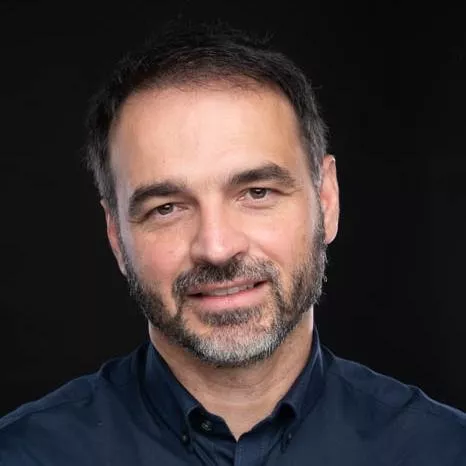
Hakim GUEDJOU is a Teacher-Researcher affiliated with CESI School of Engineering and part of the Engineering and Digital Tools research team. His work bridges human-robot interaction and autonomous learning systems with applications in social behavior analysis.
Mohammad Reza Mousavi is a Professor of Software Engineering at the Department of Informatics , Faculty of Natural, Mathematical & Engineering Sciences , King's College London. His research focuses on Software Testing , Autonomous Systems , Cyber-Physical Systems , Software Product Lines , and Formal Semantics and Verification . Key projects include ITEA GENIUS (2025–2028), GreenCode (2024–2027), and QAssure (2024–2026), addressing topics like quantum software verification and ethical autonomous systems . Recent work explores carbon footprint analysis in code development, doping detection in concurrent systems, and trust calibration in AI-enabled systems. He contributes to IEEE TRANSACTIONS ON SOFTWARE ENGINEERING , ACM TRANSACTIONS ON SOFTWARE ENGINEERING AND METHODOLOGY , and workshops like ResponsibleSE 2025 and CONCUR 2025 . Collaborations span institutions including Reykjavik University , Eindhoven University of Technology , and Chalmers University of Technology .
Bruno Laeng is a Professor of Cognitive Neuropsychology at the Department of Psychology, University of Oslo , where he has worked since 2008. He is director of the Eye Tracking and Pupillometry Laboratory and a principal investigator at the RITMO Centre for Interdisciplinary Studies in Rhythm, Time and Motion . His international academic background includes positions at Harvard University, Massachusetts General Hospital, and universities in Bergen, Tromsø, and Guelph. His research spans perceptual illusions mental imagery music-emotion interactions synesthesia cross-modal cognition pupillometry as a cognitive window with recent work examining how music affects mental effort, social absorption in string quartets, and robotic expressivity. His publications bridge psychology, neuroscience, and music science, often employing eye-tracking and physiological measures. Scientific achievements include 2018 election to the Norwegian Academy of Sciences and Letters 2003 University of Tromsø Teaching Award 2000 University of Tromsø Young Researcher Award Laurea Summa Cum Laude from Università di Roma His interdisciplinary approach combines cognitive theory with computational methods and physiological measures across diverse domains from art perception to human-robot interaction.
Dr Dominic Farris is an Associate Professor in the Department of Public Health and Sport Sciences at the University of Exeter. His research focuses on neuromuscular biomechanics, particularly how muscle-tendon interactions drive human movement and how these mechanisms can inspire wearable assistive devices. He serves as Co-Director of Global Engagement for his department. PhD in Musculoskeletal Biomechanics (University of Bath, 2010) BSc(Hons) 1st class in Sport and Exercise Science (University of Bath, 2006) Farris employs advanced techniques such as ultrasound imaging, motion analysis, electromyography, and computer simulations to study muscle mechanics during locomotion. His work bridges evolutionary biology and engineering, aiming to understand how muscle structure optimizes functional performance and to apply this knowledge to prosthetics and assistive technologies. His recent research trends, evident from publications, emphasize exoskeleton design, muscle-tendon dynamics under varied conditions (e.g., surface stiffness, load carriage), and biomechanical modeling of human locomotion. Articles frequently explore applications in sports performance, military ergonomics, and rehabilitation. Farris actively mentors students and welcomes research inquiries in neuromuscular biomechanics and assistive device development. Prospective students may access funding opportunities like the EPSRC DTP scholarships or China Scholarship Council partnerships. Co-Director of Global Engagement, Public Health and Sport Sciences Member of Exeter Research Networks: Health Analytics & Health Technologies
Frank Foerster is a Senior Lecturer in the Department of Computer Science at the School of Physics, Engineering & Computer Science, University of Hertfordshire. He is a core member of both the Adaptive Systems Research Group and Robotics Research Group within the Centre for AI and Robotics Research, specializing in developmental and cognitive robotics with a focus on human-robot interaction. His research centers on language acquisition in robots and communicative interaction between humans and machines, drawing from cognitive science, developmental psychology, and conversation analysis. Foerster investigates how social interaction regularities can inform machine learning for socially intelligent robots, including work on motor resonance in human-robot dyads. He has organized influential workshops at ICRA 2020 on human-robot handovers and UK-RAS workshops on failures in robotic speech interfaces. Analysis of his 2023-2025 publications reveals concentrated efforts on improving human-robot communication through formal reporting standards, failure/repair mechanisms in speech interfaces, and the relationship between fast interactions and perceived robot agency. His work bridges theoretical cognitive science with practical robotics applications. Foerster leads three significant research projects: FLUIDITY (on fluid speech interface interactions), CATLYP (addressing loneliness in older adults using social robots), and a 2022 project charting speech interface limitations. He serves as Associate Editor for IEEE Transactions on Cognitive and Developmental Systems and actively reviews for major robotics journals. He teaches key courses including Models and Methods of Computing (BSc), Introduction to Robotics (BSc), and Theory and Practice of Artificial Intelligence (MSc), while supervising numerous AI-focused BSc projects. His ORCID profile (0000-0003-1797-682X) documents 31 research outputs spanning 2009-2025.
Konrad Maj is an Assistant Professor at SWPS University, affiliated with the Faculty of Psychology in Warsaw and the Department of Social Psychology. He serves as Head of the HumanTech Center for Social and Technological Innovation, leading interdisciplinary research at the intersection of psychology and emerging technologies. Dr. Maj's research focuses on the psychology of new technologies, particularly artificial intelligence, metaverse applications, and Human-Robot Interaction (HRI). His work examines how social influence mechanisms operate in digital environments and how humans anthropomorphize technological agents. He has conducted significant research on children's interactions with robots, exploring how robot behavior characteristics affect human responses. His recent publications demonstrate a strong trend toward understanding the social and psychological implications of emerging technologies, with particular emphasis on educational applications, workplace integration of AI, and ethical considerations in human-technology relationships. The research shows increasing sophistication in examining gender differences, developmental aspects, and cross-cultural perspectives in technology adoption. Stefan Szuman Award (2025) for research on child-robot interaction Recognized as one of the top 25 alumni of SWPS University's 25th anniversary Awarded in the XIX edition of 'Popularyzator Nauki' competition Dr. Maj has served as Representative of the Vice-Rector for Research (2013-2016), focusing on commercialization of research results and social innovations. He collaborates with the Dutch Research Council (NWO) as a grant reviewer and participates in numerous technology policy initiatives including the Expert Group on Technology and Democracy of the Stefan Batory Foundation and the Committee on Metaverse of the Digital Poland Association. As Head of the HumanTech Center for Social and Technological Innovation, Dr. Maj leads the HumanTech Meetings projects, organizing educational initiatives that explore the relationship between social sciences and new technologies. The center has produced significant research including reports on Polish attitudes toward robots developed in collaboration with IDEAS NCBR.
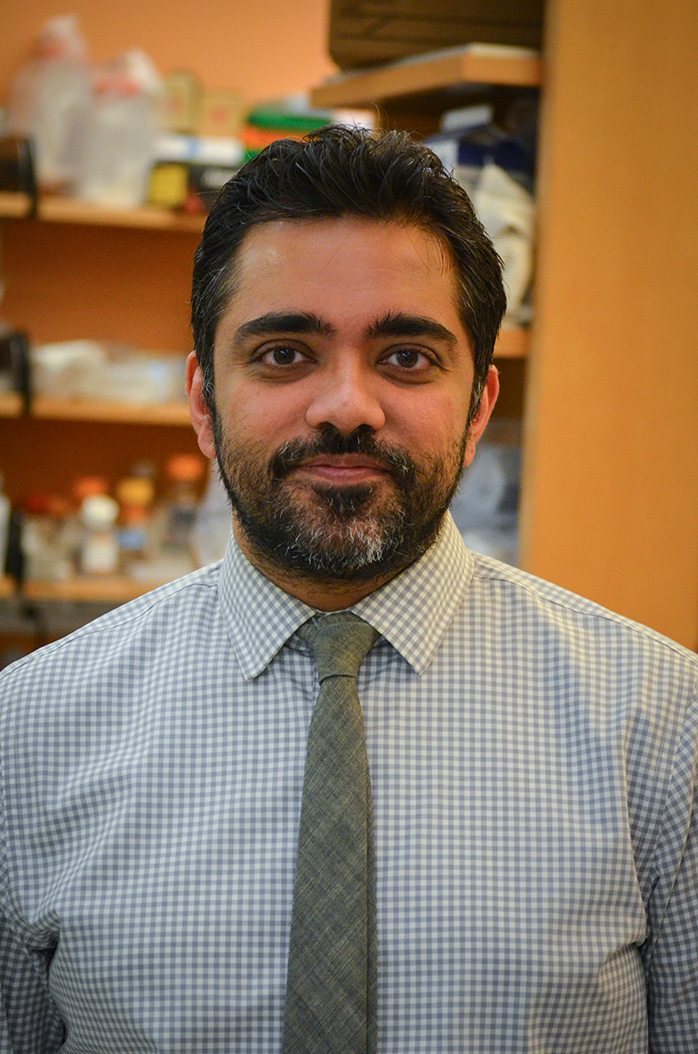
Rohit Chandwani is an Assistant Professor of Surgery and of Cell & Developmental Biology at Weill Cornell Medicine, where he also serves as the Frank Glenn Faculty Scholar in Surgery and the Mildred L. and John F. Rasweiler Scholar in Cancer Research. He is Co-Program Leader in Cancer Therapeutics at the Sandra and Edward Meyer Cancer Center and leads an active research laboratory focused on epigenetic mechanisms in inflammation and cancer. His clinical and scientific training spans Harvard, Yale, Columbia, The Rockefeller University, and Memorial Sloan Kettering Cancer Center. Undergraduate: Economics, Harvard University Medical Degree: Yale University School of Medicine Ph.D.: The Rockefeller University (Chromatin Biology) Clinical Training: General Surgery (Columbia), Surgical Oncology (MSKCC) Postdoctoral Fellowship: Steven D. Leach Lab, MSKCC Dr. Chandwani's research centers on epigenetic memory, chromatin dynamics, and lineage plasticity in the context of pancreatic cancer initiation and progression. His lab investigates how inflammatory insults leave lasting epigenetic imprints that predispose cells to neoplastic transformation, and how KRAS mutations enforce oncogenic cell fate through chromatin remodeling. Using mouse models, lineage tracing, and low-input epigenomic tools, his team deciphers the regulatory logic of dynamic chromatin in epithelial cells. His recent publications reveal trends in epigenetic dysregulation, tumor heterogeneity, and KRAS effector dependencies . Work from his lab has identified how inflammatory memory controls lineage plasticity , how specific KRAS mutants drive distinct clinical outcomes , and how chromatin accessibility signatures predict prognosis . These studies bridge basic science with translational applications, aiming to develop epigenetic-based cancer prevention and therapy strategies. Scientific awards include: National Pancreas Foundation Rising Star Award (2023) New York Super Doctors (2023, 2020–2018) Fellow, Society of Surgical Oncology (2020) Fellow, American College of Surgeons (2020) American Surgical Association Fellowship Award (2018) Dr. Chandwani has advised several graduate students and postdoctoral fellows, including Cathy Meng, William Fall, David Falvo, Korin Sahinyan, and Adrien Grimont . His lab has received support from institutional and national funding sources, enabling cutting-edge research in epigenetics and cancer biology. He continues to mentor trainees and lead collaborative projects focused on understanding and targeting the epigenetic drivers of cancer. The Chandwani Laboratory is part of a vibrant research ecosystem at Weill Cornell Medicine and the Meyer Cancer Center, with strong ties to clinical oncology and translational research. The lab actively recruits postdoctoral fellows, graduate students, and technicians, emphasizing interdisciplinary approaches to study chromatin-based mechanisms in tumorigenesis .
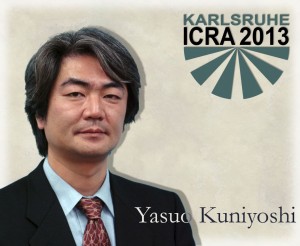
Yasuo Kuniyoshi is a Professor at the Department of Mechano-Informatics, School of Information Science and Technology, The University of Tokyo, Japan. He also serves as Director of the Social ICT Research Center at the same institution and as Director of the RIKEN BSI-Toyota Collaboration Center (BTCC), reflecting his leadership in interdisciplinary research. His research focuses on understanding the origins of human-like intelligence through robotics and developmental models. He investigates how embodied physical interactions with the environment give rise to cognitive structures, particularly through self-organizing neural systems and motor development in humanoid and fetal simulations. His work bridges robotics, neuroscience, psychology, and developmental science. The available article reflects a strong trend in embodied and developmental intelligence, particularly in simulating fetal motor development to understand the emergence of cognition. His research integrates physics-based embodiment, neural self-organization, and interdisciplinary data to model early human development. Outstanding Paper Award from International Joint Conference on Artificial Intelligence Best Paper Awards from Robotics Society of Japan Sato Memorial Award for Intelligent Robotics Research Okawa Publication Prize Gold Medal of Tokyo Techno Forum21 As a principal investigator, Kuniyoshi leads major collaborative projects such as the 'Constructive Developmental Science' initiative, integrating robotics with psychology and medical science. He mentors a research team and collaborates with institutions like RIKEN and MIT, though specific student names are not listed. His work is supported by institutional and industrial partnerships, including Toyota. He leads the Social ICT Research Center at the University of Tokyo and the RIKEN BSI-Toyota Collaboration Center, where interdisciplinary teams explore the foundations of human development and intelligence using robotic and computational models.
Constantinos (Costas) S. Tzafestas is an Associate Professor of Robotics at the School of Electrical and Computer Engineering, National Technical University of Athens (NTUA). With over 160 scientific publications, he has established himself as a leading researcher in assistive robotics and human-robot interaction, particularly in applications for elderly care and medical assistance. Electrical and Computer Engineering Degree from NTUA (1993) D.E.A. in Robotics from Université Pierre et Marie Curie (Paris 6) (1994) Ph.D. in Robotics from Université Pierre et Marie Curie (Paris 6) (1998) Professor Tzafestas's research focuses on cognitive assistive robotics and human-robot interaction, with special emphasis on haptics and telerobotics applications in medical and surgical robotics. His work spans intelligent robot control, interactive motion planning, and robot learning for advanced manipulation, with applications in mobile and field robotics. His research is strongly oriented toward practical implementations that address real-world challenges in elderly assistance and healthcare. The analysis of Professor Tzafestas's recent publications reveals a strong focus on assistive technologies for elderly care, particularly robotic rollators and bathing assistance systems. His work consistently integrates advanced machine learning techniques with human-centered design principles, emphasizing real-world usability and effectiveness. The research shows progression from fundamental robotics concepts toward increasingly sophisticated, user-adaptive systems that respond to individual user needs and capabilities. Professor Tzafestas serves as an Executive Board Editor of the Journal of Intelligent and Robotic Systems, contributing to the scholarly community through editorial leadership. Project Coordinator for numerous European and national research projects Principal Investigator for multiple robotics initiatives Scientific Manager for collaborative research efforts His laboratory work centers around several key research projects including Softgrip, i-Walk, BabyRobot, ISupport, and Mobot, which collectively represent a comprehensive approach to developing intelligent robotic systems for assisted living, with particular emphasis on mobility assistance and personal care for elderly populations.
Sinan KALKAN is a full professor at the Department of Computer Engineering , Middle East Technical University (METU) , Ankara, Turkey. He actively contributes to interdisciplinary research at the intersection of Computer Vision, Machine Learning , and Robotics , with a focus on imbalanced learning, bias/fairness, and detection/segmentation tasks. As a member of multiple research centers ( METU Robotics and AI Center , METU Image Processing Lab , COVIG Lab (Denmark) , and BCCN Center (Germany) ), he drives collaborative innovation across Turkey, Denmark, and Germany. Research Interests include: Computer Vision (Object Detection, Segmentation, Recognition) Machine/Deep Learning (Imbalance Problems, Bias and Fairness) Robotics (Human-Robot Interaction, Context Modeling) Recent Article Trends show expertise in: Unified loss functions for detection/classification Uncertainty-aware neural architectures Fairness in affective computing Imbalance mitigation strategies Energy modeling under climate change Transformer-based time-series forecasting Scientific Awards : Best Paper Award, IEEE Transactions on Cognitive and Developmental Systems (2016) Labs and Teams : METU Robotics and AI Center METU Image Analysis Center METU Image Processing Laboratory METU Balance METU Energy Cambridge University AFAR
Rickard Sandberg is a Professor at the Department of Cell and Molecular Biology, Karolinska Institutet , and an EMBO Member (2019). He is also part of the Nobel Assembly (2019), which selects Nobel laureates in Physiology or Medicine. His research combines single-cell transcriptomics , computational biology , and robotics to decode gene regulation principles. Education : PhD in Molecular Biology (KI, 2004), Postdoc at MIT (2005-2007) Awards : Torsten Söderberg Professorship (2022), EMBO Young Investigator (2012), Anders Jahre’s Medical Prize (2014) Methods : Developed Smart-seq3xpress , NASC-seq , and Molecular Spikes for precise RNA quantification and splicing analysis. His work focuses on transcriptional bursting , splicing regulation , and RNA sequencing in clinical applications . He has published extensively in top journals like Nature , Cell , and Nature Biotechnology , often addressing cellular heterogeneity in diseases such as cancer and psychiatric disorders. Key Trends in Publications : 2024-2025 studies emphasize single-cell RNA-seq innovations , clonal mutation analysis , inflammatory gene dynamics , and splicing defects in cancer . Techniques like Smart-seq3xpress and NASC-seq dominate, with applications in neuroscience, oncology, and developmental biology. Scientific Awards : Torsten Söderberg Academy Professorship (2022) EMBO Membership (2019) Anders Jahre’s Medical Prize (2014) EMBO Young Investigator (2012) Sven and Ebba-Christina Hagbergs Prize (2012) Research Themes : Transcriptional Burst Kinetics Single-Cell Gene Expression RNA Splicing in Brain Cells Computational Tools for Transcriptomics His lab integrates dry and wet lab approaches equally, a model now standard but pioneered in 2008. Outside academia, he advocates for open scientific discourse and enjoys racket sports and cycling.
Minseok Kang is a Lecturer at the Institute of Neuroinformatics (INI), Faculty of Computer Science, Ruhr University Bochum, teaching Autonomous Robotics lab courses and Computational Neuroscience: Neural Dynamics lectures from Winter 2022/2023 through Summer 2025. Education: Master of Science (M.Sc.) Research Interests: Cognitive Systems Embodied Cognition Neural Dynamics Analogy Making Computational Neuroscience Robotics His research develops neural dynamic models using Dynamical Field Theory (DFT) to explain cognitive processes like analogy formation, with emphasis on developmental aspects in children through inhibitory control mechanisms. Publication Trends: His 2024 Cognitive Science Society publication integrates neural dynamics, developmental psychology, and cognitive modeling to explain analogical reasoning development, demonstrating cross-disciplinary applications in cognitive architecture and neural computation. Scientific Awards: No awards documented in source material. Advising and Grants: No information available regarding student supervision or research funding. Labs and Teams: Active in the Theory of Cognitive Systems and Theory of Embodied Cognition research groups at INI, which investigates natural cognitive principles through experimental psychology, neurophysiology, machine learning, and robotics to advance artificial cognitive systems.
Kate E. Manz, Ph.D. is an Assistant Professor of Environmental Health Sciences at the University of Michigan School of Public Health, where she leads the Manz Lab . Her research integrates cutting-edge analytical chemistry and exposomics to understand how chemicals behave in the environment and within human bodies, with a particular focus on PFAS and other emerging contaminants. Education Ph.D. in Energy Science and Engineering, University of Tennessee, 2018 M.S. in Environmental Engineering, University of Tennessee, 2016 B.S. in Chemistry and Psychology, Rensselaer Polytechnic Institute, 2013 Research Interests Dr Manz’s program is built around three pillars: Natural Chemical Transformation – tracking how pollutants evolve in groundwater and soils under varying redox conditions. Remediation Technologies – developing low-temperature activated-persulfate and carbon-based systems to destroy PFAS and co-occurring contaminants. Human Exposure & Metabolism – coupling non-targeted high-resolution mass spectrometry with metabolomics to discover novel exposures and understand molecular mechanisms of toxicity. Her work spans water quality , air quality , maternal & child health , and precision environmental health . Scientific Output & Trends Since 2021, Dr Manz has authored more than 60 peer-reviewed publications. Her 2024-2025 papers emphasize: Large-scale PFAS fate studies in AFFF-impacted soils and microcosms. Clinical and epidemiological cohort analyses (MIREC, HOME, MILES) linking prenatal PFAS mixtures to cardiometabolic and neurodevelopmental outcomes. Methodological advances in exposome burden scoring, non-targeted analysis workflows, and HRMS data harmonization. Translational toxicology using zebrafish and murine models to examine endocrine disruption and neurotoxicity. Honours & Recognition While specific named awards are not detailed in the provided text, Dr Manz’s work has been continuously funded by federal grants (NIH NIEHS, NSF) and is frequently featured in high-impact journals such as Environmental Science & Technology , Journal of Hazardous Materials , and the Journal of Exposure Science & Environmental Epidemiology . Advising & Grants Dr Manz currently mentors graduate students, post-doctoral researchers, and undergraduate trainees in the Manz Lab. The lab operates on multiple active R01-level grants aimed at PFAS remediation, exposome mapping, and community-engaged environmental health interventions. Facilities & Collaborations The Manz Lab houses state-of-the-art instrumentation, including: Thermo Scientific Q-Exactive HF-X high-resolution mass spectrometer Automated solid-phase extraction robot for high-throughput sample prep Combustion ion chromatograph for fluorine speciation in complex matrices Collaborative networks span the University of Michigan, Harvard, Emory, and international partners in exposomics and environmental engineering.
Dr. Ellen H. Morrow, MD, MS, FACS is a Clinical Associate Professor in the Department of Surgery at the University of Utah School of Medicine. She practices at both University of Utah Hospital and Veteran's Hospitals, specializing in minimally invasive gastrointestinal, foregut, and bariatric surgery. With expertise in esophageal surgery and pathophysiology diagnosis, Dr. Morrow performs high-volume laparoscopic procedures for reflux, paraesophageal hernias, and achalasia, and is certified in weight loss surgery including gastric bypass and sleeve gastrectomy. Dr. Morrow received her B.S. in Molecular, Cellular, & Developmental Biology from Yale University, her M.D. from Stanford University Medical School, completed her Surgery Residency at Stanford University Hospital, pursued a Senior Fellowship in Minimally Invasive Surgery at University of Washington, and earned an M.S.C.I. in Clinical Investigation from University of Utah. Her educational journey reflects a progressive specialization in surgical techniques and clinical research methodology. Her research focuses on minimally invasive gastrointestinal surgery outcomes, particularly in bariatric procedures and esophageal disorders. She investigates patient-reported outcomes, surgical techniques for hiatal hernias, and the psychological aspects of both surgical patients and healthcare providers. Notably, her work extends beyond traditional surgical research to include studies on healthcare professional well-being, burnout, and resilience during the pandemic, demonstrating a holistic approach to surgical care that considers both patient and provider mental health. Analysis of Dr. Morrow's recent publications reveals a strong pattern connecting surgical outcomes with psychological factors. Her research spans from technical surgical questions (like hiatal hernia repair during gastric bypass) to broader healthcare system issues (like provider well-being measurement). This interdisciplinary approach bridges clinical surgery with psychological science, particularly evident in her mindfulness intervention studies for healthcare professionals and resilience research during the pandemic. American Board of Surgery Certification Dr. Morrow provides patient-centered care with a focus on helping patients improve their health and lives through surgical intervention. While specific grant information isn't detailed in the provided text, her participation in the PCORnet Bariatric Study Collaborative indicates involvement in large-scale, multi-institutional research. Her clinical practice encompasses minimally invasive gastrointestinal surgery, gastric/esophageal surgery, upper gastrointestinal tract surgery, and hernia surgery using open, laparoscopic, and robotic techniques. Patient reviews generally rate her highly (4.9/5 based on 52 reviews), noting her knowledge, experience, and thorough explanations, though some comments indicate variability in patient experiences regarding communication style.
Clare Fitzpatrick is an Associate Professor at Boise State University’s Mechanical and Biomedical Engineering Department, focusing on orthopaedic biomechanics and computational modeling of joint mechanics. Her research spans knee and hip implants, patellar instability, and multi-scale modeling of musculoskeletal systems. Ph.D. in Mechanical Engineering (2007) from University College Dublin Senior Research Engineer (2011–2016) and Post-Doctoral Fellow (2009–2011) at the University of Denver Her work integrates finite element analysis, statistical shape modeling, and in vitro testing to address clinical challenges in total knee arthroplasty (TKA), hip dysplasia, and age-related biomechanical adaptations. She employs machine learning for real-time prediction of joint mechanics and investigates cellular responses in engineered bone analogs. Scientific awards include: Best of the ORS, Orthopaedic Research Society (2015) Featured Article, Journal of Orthopaedic Research (2013) She currently leads industry- and federally-funded projects, including a National Science Foundation CAREER award for subject-specific osteoarthritis risk prediction and a National Institute of General Medical Sciences grant on systems-level osteoarthritis progression.

.jpg)