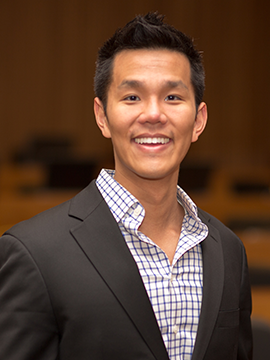
Kristy Robinson is an Associate Professor in the Department of Educational and Counselling Psychology at McGill University , where she investigates classroom teaching practices and contextual factors that enhance student motivation and wellbeing. Her research program focuses on creating theoretical and empirical frameworks to support equitable instructional strategies for students' goal achievement. SSHRC-funded researcher FQRSC grant recipient Key Research Areas Motivational climate theory Expectancy-value-cost models STEM education equity Self-determination theory Emotion dynamics in learning Awards & Recognition Canadian Psychological Society President's New Researcher Award AERA Division C Outstanding Early Career Scholar AERA Motivation SIG Wilbert C. McKeachie Early Career Award Top-Producing Educational Psychology Scholar (2024) Research Platforms Director of MILES Lab (Motivation, Instructional, and Learning Experience Study) Developer of "mFlip" flipped classroom framework
Gigi Luk is Professor and Program Director for M.Ed. Concentrations in Educational Psychology and Human Development within the Department of Educational and Counselling Psychology at McGill University's Faculty of Education. Her research program investigates the cognitive consequences of bilingualism across the lifespan, bridging scientific understanding with practical educational applications to cultivate inclusive environments for linguistically diverse learners. Her educational background includes: Ph.D. in Psychology (Developmental and Cognitive Processes) from York University M.A. in Psychology (Developmental and Cognitive Processes) from York University Specialized Honors B.A. in Psychology from York University Dr. Luk's research centers on bilingualism's cognitive and neural mechanisms, with three interconnected thrusts: (1) characterizing bilingualism beyond English proficiency in communities, (2) examining cognitive skills supporting language/literacy outcomes, and (3) establishing neural correlates of learning in diverse language learners. Her work integrates cognitive neuroscience with educational practice to address real-world challenges in multilingual classrooms, emphasizing culturally responsive pedagogy that respects linguistic diversity. This dual focus on basic science and practical implementation defines her contributions to understanding how bilingual experiences shape cognitive development and educational equity. Analysis of her 15 most recent publications (2022-2024) reveals consistent interdisciplinary investigation of bilingualism through cognitive, neural, and sociocultural lenses. Her work spans educational psychology, cognitive neuroscience, and sociolinguistics, with growing emphasis on neural correlates of language processing, methodological rigor in bilingual assessment, and equity implications of bilingual research. Key trends include examination of multilingual children's cognitive development, critical reframing of the "bilingual advantage" discourse, and innovative approaches like music-based literacy interventions. Scientific recognition includes: National Academy of Education/Spencer Postdoctoral Fellowship (2013-2014) Dr. Luk actively supervises graduate students (accepting new students for 2025-2026) and secures competitive research funding, currently supported by the Natural Sciences and Engineering Research Council of Canada (NSERC) and Fonds de recherche Société et culture (FRQSC). Her grant portfolio demonstrates sustained commitment to advancing understanding of bilingual cognition and its educational applications through rigorous empirical work. She directs the Bilingualism.Experience.Education Lab, which functions as an interdisciplinary hub for investigating how language experiences shape cognitive development and educational outcomes. The lab employs diverse methodologies including neuroimaging, behavioral experiments, and classroom-based research to address questions about bilingualism's cognitive effects and practical implications for educators.
Karine GAGNÉ is an Assistant Professor at the School of Psychoeducation, University of Montreal, within the Faculty of Arts and Sciences. Her research focuses on parental mentalization (both verbal and non-verbal), parent-child relationships, socio-emotional development, and clinical processes. She holds affiliations with the Centre de recherche sur les jeunes et les familles (CRUJeF) and the Ordre des psychoéducateurs et psychoéducatrices du Québec (OPPQ). Education: PhD in Psychoeducation (University of Sherbrooke, 2021), Master's in Psychoeducation (2014), and Bachelor's in Psychology (UQAM, 2011). Active in teaching, she instructs courses like PSE-4001 and PSE-66112, and contributes to programs in psychoeducation at undergraduate and graduate levels. Her recent projects include studies on parental mentalization profiles, migration trajectories and parenting, and embodiment in mentalization. Key awards include the 2022 Prix Relève Étoile Paul Guérin-Lajoie and a Joseph-Armand Bombardier Doctoral Scholarship (2017–2020). Grants include funding from the CRSH for projects on mentalization-based interventions and parental attachment dynamics. Labs/Teams: CRUJeF, where she is a regular researcher, focusing on youth and family research.
Associate Professor Jean-Paul Paluzzi is part of the Biology Department at York University's Faculty of Science, serving as Graduate Program Director. His research focuses on neuroendocrine mechanisms in blood-feeding arthropods like mosquitoes and ticks, particularly how hormones regulate physiological processes such as osmoregulation and reproduction. His lab uses multidisciplinary approaches (physiological, genetic, molecular) to study signaling pathways in disease vectors like Aedes aegypti (yellow fever mosquito) and Ixodes scapularis (Lyme disease vector). Key research areas include neurohormonal control of epithelial tissues, stress responses, and the functional roles of proteins involved in neuroendocrine communication. Recent work explores CAPA neuropeptides' anti-diuretic effects, aquaporin regulation, and receptor characterization. His lab's findings aim to advance strategies for controlling disease-transmitting insects. Paluzzi leads the Paluzzi Lab and has contributed to over 50 peer-reviewed articles. His work aligns with UN Sustainable Development Goal 'Life on Land' by addressing vector-borne disease challenges.
Guillaume Bourque is a Professor in the Department of Human Genetics at McGill University's Faculty of Medicine. He serves as an Investigator at the Victor Phillip Dahdaleh Institute of Genomic Medicine and as the Scientific Director of the Canadian Centre for Computational Genomics (C3G). His laboratory is based at 740 Dr Penfield Ave, Room 6103, Montréal, Québec, Canada, H3A 1A4, where he leads research in computational genomics and bioinformatics. Professor Bourque's research focuses on understanding mammalian genomes using comparative genomic and epigenomic analyses. His lab investigates the evolution of regulatory sequences , the role of transposable elements in gene regulation , and the impact of genome rearrangements in evolution and cancer . His team develops computational methods and resources for the functional annotation of genomes with special emphasis on sequencing-based assays including ChIP-seq, RNA-Seq, exome- and whole-genome sequencing, and single-cell analysis. The lab's work involves examining billions of DNA base pairs to interpret how variation impacts basic biology and disease. Recent publications (2024-2025) demonstrate Bourque's leadership in pangenome graph construction , transposable element analysis , epigenomic profiling , and cancer genomics . His work spans multiple disciplines from basic genome evolution to clinical applications in cancer and infectious disease. Notable projects include the development of tools like DeepPolisher for genome assembly polishing and contributions to understanding the genomic basis of long COVID. Bourque's laboratory is actively recruiting postdocs and graduate students with backgrounds in programming or statistics. The lab emphasizes quantitative approaches to biology, requiring applicants to have experience in quantitative biology as a plus. His collaborative work extends across multiple institutions and international consortia, reflecting the interdisciplinary nature of modern genomic research.
Dr. Kimberly Schonert-Reichl is a Professor in the Department of Educational and Counselling Psychology, and Special Education within the Faculty of Education at the University of British Columbia. A world-renowned expert in social and emotional learning (SEL), her research focuses on fostering empathy, compassion, and resiliency in children through classroom-based interventions and interdisciplinary biological investigations. Her academic journey includes an MA in Educational Psychology from the University of Chicago, a Ph.D. from the University of Iowa, and postdoctoral training as an NIMH Fellow at the University of Chicago and Northwestern University Medical School. Prior to academia, she worked as a middle school teacher and at an alternative high school for at-risk adolescents. Dr. Schonert-Reichl's research spans SEL program evaluation (Roots of Empathy, MindUp), neurobiological mechanisms of learning, and population-level well-being assessment through the Middle Years Development Instrument (MDI). Recent work reveals growing emphasis on teacher adaptation in SEL implementation, trauma-informed approaches, and compassion training's neural correlates, with increasing international collaboration across 6+ countries. Her scientific contributions are recognized through: 2015 Joseph E. Zins Distinguished Scholar Award 2009 Paz Buttedahl Career Achievement Award 2007 UBC Killam Teaching Prize Fellowships with Mind and Life Institute and Botin Foundation 2004 Vancouver School Board Recognition Award She actively shapes policy as advisor to BC Ministry of Education, OECD Education 2030, CASEL Board Member, and Chair of Hawn Foundation's Scientific Research Advisory Board. Her public engagement includes 300+ presentations to educators and media appearances in The New York Times , CBC , and NPR . Leading the MDI project team, she coordinates cross-sector collaboration with researchers, policymakers, and educators across British Columbia, Australia, Germany, UK, and Croatia to transform child well-being measurement into actionable policy insights at population scale.
Maria Rogers is an Associate Professor in the Counseling Psychology program at Carleton University, holding the prestigious Tier II Canada Research Chair in Child and Youth Well-being. She concurrently serves as an Adjunct Professor in the Faculty of Education at the University of Ottawa, where her institutional email is maintained. Her clinical credentials include licensure as a child and adolescent psychologist in Ontario and Quebec, enabling direct practice alongside academic work. Professor Rogers' research program centers on interpersonal dynamics in child development, with three interconnected pillars: (1) relational health of children with neurodevelopmental disorders (particularly ADHD) and its academic implications, (2) chronic school absenteeism and its mental health correlates, and (3) Indigenous children's educational well-being through community partnerships. Her work consistently examines how parent-child and teacher-student relationships mediate learning outcomes, especially during crisis periods like the COVID-19 pandemic. Analysis of her recent publications reveals evolving methodological sophistication, transitioning from single-institution studies to national longitudinal designs. Key emerging trends include intersectional analysis of ADHD symptomatology across gender identities, integration of physical activity metrics into mental health models, and development of virtual single-session interventions for parental support. Her work increasingly incorporates Indigenous research methodologies through community-led partnerships. Scientific Recognition: Tier II Canada Research Chair in Child and Youth Well-being As co-founder of the Canadian Partnership for School Attendance (CPSA), Rogers leads a transdisciplinary research collective involving school boards, mental health agencies, and Indigenous communities. Her lab develops evidence-based frameworks for addressing school absenteeism, with recent focus on pandemic recovery strategies and culturally responsive interventions for Indigenous youth. Current projects examine the effectiveness of mindfulness adaptations for neurodiverse learners and longitudinal tracking of mental health trajectories following school reintegration.
Dr. Kelly Burkett is an Associate Professor in the Department of Mathematics and Statistics at the University of Ottawa, within the Faculty of Science. She specializes in Statistical Genetics and Genetic Epidemiology, focusing on genealogical relationships, population substructure, and family-based study designs. Her work includes software development for genetic data analysis, such as SMLE and GENLIB. Dr. Burkett holds an MSc and PhD from Simon Fraser University. Research Interests: Dr. Burkett’s research addresses challenges in genetic epidemiology, including maternal effects, gene-environment interactions, and the impact of population substructure on study design. Her methodologies often integrate computational tools to analyze large-scale genetic datasets. She actively collaborates with biomedical researchers, inspiring new questions in statistical genetics and genomics. Publications & Software: Her recent work includes studies on orofacial clefting etiology, software for high-dimensional feature screening, and genealogical simulations in French Canadian populations. Her articles span topics from computational genetics to molecular biology, emphasizing interdisciplinary approaches. Advising & Collaborations: Dr. Burkett has mentored over 20 students and trainees across MSc, PhD, and postdoctoral programs. Current advisees include Yuewen Pan (MSc) and Yuhao Feng (PhD). Past students hold roles in academia, healthcare, and industry. She collaborates on biomedical projects, leveraging statistical methods to address genetic and environmental interactions. Labs & Teams: While no formal lab is explicitly mentioned, her software contributions (e.g., hapassoc, sampletrees) and collaborative projects suggest involvement in computational biology and genetics research networks at the University of Ottawa and beyond.
Nicholas J. Provart is a Professor and Chair of the Department of Cell & Systems Biology at the University of Toronto. He is a founding member of the Centre for the Analysis of Genome Evolution and Function (CAGEF) and a key contributor to the Bio-Analytic Resource (BAR), which provides essential bioinformatics tools for plant research. His work focuses on integrating genomic and transcriptomic data to uncover mechanisms of plant stress biology, development, and evolution. Provart earned his Ph.D. from Freie Universität Berlin (1996), and his M.Sc. and B.Sc. from the University of Toronto (1993 and 1990, respectively). Research Interests: Provart’s lab employs systems biology approaches to analyze plant responses to abiotic and biotic stresses, particularly using cluster analysis of gene expression data. Key areas include plant stress signaling, seed development, and the functional roles of transcription factors and cytochrome P450s. His team develops tools like the BAR platform to facilitate large-scale data integration and visualization. Recent Grant: $2.5M NSERC grant (2024) to advance plant health visualization tools. Award: Recognized with the Arabidopsis community award (2025) for decades of research and outreach. Provart also serves on the Multinational Arabidopsis Steering Committee and chairs the Bioinformatics and Computational Biology Program. His lab’s work spans diverse plant species, including Arabidopsis, maize, and wheat, with a focus on translational applications of genomic data.
Dr. Eric S. Kim is an Assistant Professor of Psychology at the University of British Columbia (UBC) and a Visiting Scientist with the Lee Kum Sheung Center for Health and Happiness (Harvard T.H. Chan School of Public Health) and the Human Flourishing Program (Harvard University’s Institute for Quantitative Social Science). With a Ph.D. from the University of Michigan (2015) and postdoctoral training at Harvard (2017), he focuses on psychological well-being and social connection’s role in reducing age-related chronic conditions. His work spans health psychology, social epidemiology, gerontology, and translational science. Education: B.A. (2009), Ph.D. (2015) from University of Michigan; Postdoctoral Fellowship at Harvard (2017) Dr. Kim’s research examines biobehavioral pathways linking psychological well-being to physical health through health behaviors , biological mechanisms , and stress-buffering . He leverages population-based cohort studies , causal inference methods , and machine learning to assess psychosocial factors via social media footprints. His work addresses social adversities like racial disparities , neighborhood cohesion , and economic shocks . His 15 most recent publications reveal trends in using longitudinal designs to study adolescent well-being’s long-term health impacts , epigenetic aging , and social cohesion interventions . Key journals include PNAS , JAMA Psychiatry , and Health Psychology , with media coverage in New York Times , BBC , and Washington Post . Scientific Awards MSFHR Scholar (2020) APA Division 20 Early Career Award (2020) AJE Article of the Year (2020) NIH K99/R00 (2018) Forbes 30 Under 30 in Healthcare (2016) IPPA Early Career Researcher Award Dr. Kim provides pro bono statistical consulting to nonprofits and collaborates with AARP , UnitedHealth Group , and Chan Zuckerberg Initiative . His lab at UBC, the Psychosocial Flourishing and Health Lab , trains graduate and undergraduate researchers in healthy aging and population-level interventions .
Dr. Laura Parfrey is an Associate Professor in the Departments of Botany and Zoology at the University of British Columbia (UBC), Faculty of Science. She is affiliated with the Biodiversity Research Centre, where her research focuses on microbial ecology of eukaryotic microbes (protists) and their interactions with bacteria in marine and mammalian ecosystems. Her research spans two primary areas: (1) the gut microbiome of mammals, investigating the consequences of microbial diversity loss and (2) coastal ecosystems in British Columbia, studying microbial colonization of marine hosts (e.g., invertebrates, seaweed) and their impact on host and ecosystem health. The Parfrey Lab employs experimental and descriptive approaches to understand microbial community dynamics under environmental stressors like salinity changes and anthropogenic impacts. Key research trends in her articles include microbial responses to abiotic stress, disease dynamics in kelp/seagrass, and the interplay between prenatal alcohol exposure and immune/gut microbiota changes. Her work bridges marine and terrestrial microbiology, emphasizing ecological and evolutionary processes. Dr. Parfrey’s lab actively collaborates on projects such as the AFRIBIOTA initiative, addressing gut microbiome and health outcomes in African populations. While no awards are explicitly listed, her contributions to microbial diversity research are recognized through high-profile collaborations and publications. Advising and grants: No formal student advisees are listed, but the lab participates in training programs via the Biodiversity Research Centre. Grant details are not provided in the text. Labs/teams: The Parfrey Lab is based in the Department of Botany, UBC, and contributes to interdisciplinary projects at the Biodiversity Research Centre.
Dr. Hélène Deacon is a Professor in the Department of Psychology and Neuroscience at Dalhousie University (Faculty of Science), directing the Language and Literacy Lab. She holds a BSc (Hons.) from the University of Prince Edward Island, a DPhil from the University of Oxford (as a Rhodes Scholar), and a Postdoctoral Fellowship from the University of British Columbia. Her research focuses on reading development, digital literacy, bilingualism, and child development, with a particular emphasis on understanding how children acquire reading skills in diverse contexts. She leads a 2.5-million-dollar Partnership Grant exploring literacy in multicultural and digital environments and has been recognized as a top 2% scientist globally by Stanford University. Education: BSc (UPEI), DPhil (Oxford), PDF (UBC) Key Roles: Co-Director of Partnership Grant, Lab Director, Editorial Advisory Board Member for multiple journals Affiliations: Cross-listed at Dalhousie’s Faculty of Health Professions and IWK Health Centre’s Developmental Pediatrics Her research interests span morphological awareness, syntactic skills, prosodic sensitivity, and challenges faced by university students with reading difficulties. She collaborates globally with schools and institutions, influencing public policy and educational practices. Awards include the Royal Society of Canada’s College of New Scholars membership and the Killam Professorship. Lab & Impact: The Language and Literacy Lab (LLL) investigates reading development through studies on orthographic learning, sentence comprehension, and bilingualism. Collaborations include schools nationally and internationally, with a focus on practical applications for education and clinical settings. Teaching: Courses include Introduction to Psychology II, Development of Language and Literacy, and Special Topics in Developmental Psychology Service: Member of Dalhousie’s Human Ethics Committee, Ad Hoc Review Committee, and Honours Advisor
Dr. Lantana Usman is a Professor in the School of Education at the University of Northern British Columbia (UNBC), where he has been a faculty member since 2002. He is affiliated with the Institute for Social Research and is actively involved in graduate supervision across multiple programs, including MEd in Education, MA and MSc in Interdisciplinary Studies, and MA in Gender Studies. His research interests span a wide and interdisciplinary spectrum within education, with a strong focus on equity, policy, leadership, and international development. Key areas include gender and women's studies in education, poverty and education, rural education, refugee and immigrant education, and social justice. His expertise lies in educational policy studies, leadership, human resource management in schools, and the sociology of education. Dr. Usman employs qualitative and mixed research methods in his work, often addressing issues related to human rights, peace education, multiculturalism, and organizational behavior in educational contexts. While specific publications are listed on his Google Scholar profile, the trends in his research consistently emphasize policy-practice linkages, international comparative studies, and the intersection of education with broader societal challenges. PhD – University of Alberta MEd – Ahmadu Bello University MBA – Ahmadu Bello University NCE – Ahmadu Bello University BEd (Upper-Second Class) – Ahmadu Bello University Dr. Usman has supervised graduate students in multiple disciplines and continues to accept new advisees. Although no specific grants are mentioned in the text, his extensive research profile suggests active engagement in funded scholarly work. He contributes significantly to interdisciplinary research and policy-oriented studies in education. He is a member of the Institute for Social Research at UNBC, which supports collaborative, community-engaged, and policy-relevant research. This affiliation highlights his commitment to research that addresses real-world social challenges through academic inquiry. No scientific awards listed in the provided text.
Jean-Claude Labbé is Full Professor in the Department of Pathology and Cell Biology, Faculty of Medicine, Université de Montréal, and Principal Investigator of the “Cell Division and Differentiation” research unit at the Institute for Research in Immunology and Cancer (IRIC). Recruited in 2005, he leads an internationally recognized program that exploits the nematode C. elegans to decipher the molecular logic governing stem cell division, polarity and tissue organization. Education & Training: PhD in Biochemistry, Université de Montréal (supervisors: Luis A. Rokeach & Siegfried Hekimi) Postdoctoral Fellow, Department of Biology, University of North Carolina at Chapel Hill, USA (with Bob Goldstein) Postdoctoral Fellow, Institute of Biochemistry, ETH Zurich, Switzerland (with Monica Gotta) Research Focus: His laboratory investigates how germline stem cells balance self-renewal and differentiation through oriented divisions that maintain contact with the distal tip cell niche, and how syncytial germline architecture is established, expanded and maintained. These studies integrate advanced live-cell imaging, quantitative image analysis, genetics and biochemistry, and provide fundamental insights relevant to mammalian development, tissue regeneration and cancer. Funding & Awards: Canada Research Chair in Cell Division and Differentiation (2006–2016) CIHR New Investigator Award (2005–2006) Ongoing operating grants from CIHR, NSERC and the Cancer Research Society Team & Mentorship: He currently mentors several graduate students (Mohamed Réda Zellag, Kimia Zarnani, Léa Lacroix) and research associates within a vibrant, collaborative environment at IRIC.
Loic Binan is an Assistant Professor in the Department of Human Genetics at McGill University, with additional affiliations as an Associate Member in the Department of Biomedical Engineering and the Integrated Program in Neuroscience. His research focuses on developing cutting-edge technologies to investigate how gene networks control the self-organization of cells into complex 3D tissues during development and in disease conditions. Dr. Binan's research interests span multiple interdisciplinary fields, with particular emphasis on cancer metastasis , where he investigates the genetic mechanisms allowing cells to reversibly transition between epithelial and mesenchymal phenotypes. His work also explores isoforms and non-coding regions , developing technologies to understand alternative splicing in neurodegenerative diseases, and examining how past cell-cell interactions shape present transcriptional activity during development. His laboratory employs a diverse array of techniques including CRISPR gene editing, spatial transcriptomics, single-cell RNA sequencing, advanced microscopy, and computational methods for image analysis. The recent publications reveal a strong trend toward integrating high-throughput genetic screening with spatial transcriptomics to map gene regulatory networks across both cancer biology and neuroscience contexts. Dr. Binan leads the Binan Lab at the Lady Davis Institute for Medical Research, where his team develops precision gene editing tools such as Cas9 and Cas12 for high-throughput screens, creates novel imaging tools to collect spatial context data, and builds computational tools to analyze these complex new data types. His research primarily focuses on cancer and neurodegenerative diseases, with particular attention to brain development and tumor microenvironments.