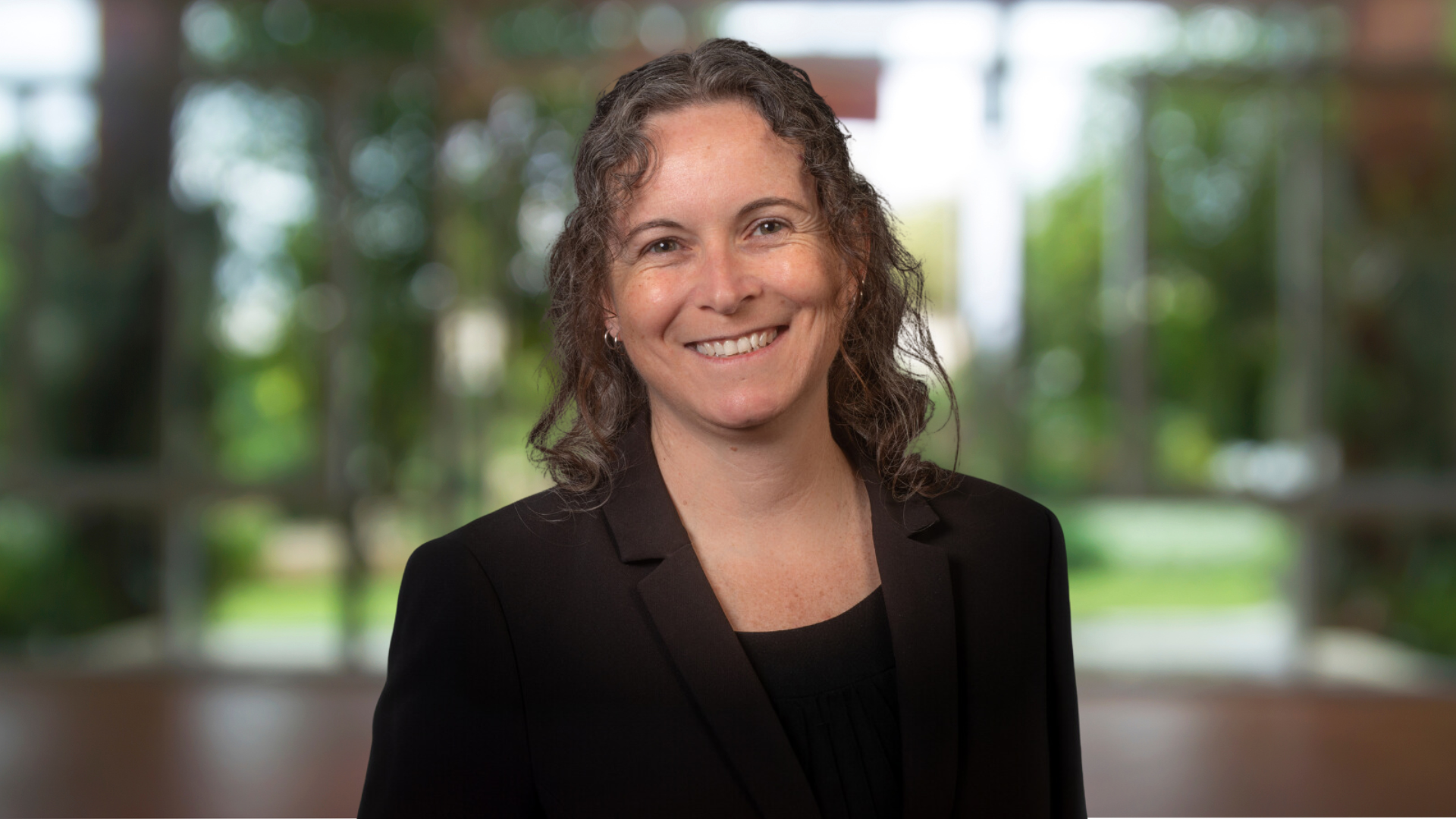
Professor Harriet Bulkeley is a faculty member at Durham University, affiliated with the Department of Geography within the Faculty of Social Sciences . Her research focuses on urban responses to climate change, nature-based solutions, transnational environmental governance, and the politics of urban sustainability transitions. Research Interests : Climate change governance in urban contexts Nature-based solutions for sustainable cities Transnational policy networks Urban political ecology Biodiversity and climate policy intersections Supervisions : Daniella Rolle (MA, current) Amy Robson (PhD, completed) Robbie Gilmore (PhD, current) Erwin Nugraha (PhD, completed) Rebecca Pearl-Martinez (PhD, current) Andrea Elizabeth Armstrong (PhD, completed) Carlos Tornel (PhD, completed)
Trish Ruebottom serves as Associate Professor and Director of the PhD Program in the Department of Human Resources and Management at McMaster University's DeGroote School of Business, where she holds the University Scholar designation (2024). As a full-time faculty member, she leads doctoral education while maintaining an active research agenda focused on transgressive social dynamics across stigmatized contexts. Her research interrogates the tension between societal need for norms and human desire for freedom, examining how misfits, outsiders, and dissenters create new worlds through norm transgression. Key contexts include entrepreneurship in the sex industry, gender activism in post-civil war Libya, rock concerts for social change, and voyeurism-based business models. She investigates discursive, temporal, and emotional forces maintaining status quos in media, clean tech, finance, and everyday work. Analysis of her recent publications reveals dominant themes of stigma entrepreneurship, emotional drivers of social change, and value creation through transgression. Her work bridges organizational theory, sociology, and critical management studies, with consistent focus on marginalized populations and institutional disruption across sectors like sex work, refugee entrepreneurship, and political polarization. Her scientific recognition includes: University Scholar award (2024) As PhD Program Director, Ruebottom shapes doctoral education through mentorship and curriculum leadership. While specific grant details aren't publicized, her prolific output in top journals (Academy of Management Journal, Organization Studies) indicates sustained research funding. Her media commentary on topics like reality TV's political influence and corporate voyeurism demonstrates real-world impact of her scholarship on organizational behavior and social change.
Prof. Dr. Martin Spindler is a Professor for Statistics at the Department of Statistics with Application in Business Administration, University of Hamburg Business School. His research bridges Econometrics, Statistics, and Machine Learning, focusing on high-dimensional methods, causal inference, and applications in finance, insurance, and health economics. Current position since 2016 Visiting Professor at University Mannheim (2016), Boston College (2015), and MIT (2015, 2013-2014) Senior Researcher at Max Planck Society (2012-2016) Education: PhD in Economics, University of Munich (2012) Master in Mathematics and Economics, University of Munich (2008) and Regensburg (2003) B.A. in Mathematics, University of Regensburg (2005) His methodological work includes L2Boosting for treatment effect estimation, double machine learning frameworks, and nonparametric approaches for asymmetric information. Applications span from fraud detection in claims management to pandemic shielding strategies and financial forecasting. Research Trends: Recent publications emphasize high-dimensional statistical methods, causal machine learning, and interdisciplinary applications. Key tools include double machine learning, attention networks, and transformation models. Collaborations: Active partnerships with institutions like MIT, Boston College, and Max Planck Society, alongside contributions to open-source software (e.g., DoubleML, hdm package).
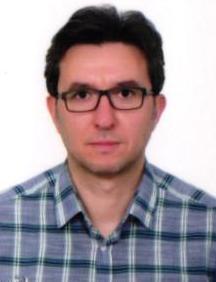
Prof. Dr. İbrahim Halil Ekşi is a faculty member at Gaziantep University’s Faculty of Economics and Administrative Sciences, Department of Business Administration. He has served as Professor (2020-present), Associate Professor (2014-2020), and Assistant Professor (2008-2014) at Gaziantep and Kilis 7 Aralık Universities. His research focuses on finance, financial markets, risk management, and corporate governance, with 57 academic publications. He has advised 9 PhD and 19 Master’s students, and received awards such as the 2024 Mesleki Dernekler Lisansüstü Gayrimenkul Tez Ödülleri Yarışması and 2017 Uludağ University Bilim-Sanat Ödülü. His education includes a PhD in Business Administration (2007, Süleyman Demirel University), Master’s in Business Administration (2003, Gaziantep University), and BSc in Business Administration (1998, Uludağ University). He has led projects like TÜBİTAK 1001’s 'Finansman ve Halka Açılma Tutumları (ISO 1000 Uygulaması)' and EU-funded studies on refugee financial inclusion. His editorial roles span journals like Journal of Economics and Business Issues and Financial Inclusion Across Asia . Active in professional associations (MUFAD, Finans Bilim Platformu), he teaches courses in International Finance, Financial Management, and Investment Analysis. Hakemli makaleleri, kitap bölümleri ve uluslararası konferans bildirileri Türkiye, Balkan ülkeleri ve BRICS-T ekonomileri üzerine bankacılık düzenlemeleri, küresel çatışmaların finansal piyasalara etkisi, ve yapay zekâ uygulamaları gibi temalarda yoğunlaşmıştır. 57 makale ve 8 kitap yayımlarında finansal piyasalar, kurumsal yönetim, ve risk yönetimi gibi disiplinlerde katkı sağlamıştır. 2024 yılında Finance Research Letters dergisinde 'Climate Uncertainty and Green Betas' başlıklı makale ile 2023 yılında Energies ’de 'Geothermal Energy and FDI' gibi çalışmalarıyla güncel finansal gelişmelere katkıda bulunmuştur. 2018 Nobel Yayınevi’nden yayınlanan Yatırımların Temelleri kitabında portföy yönetimi ve vergi stratejisi bölümleri kaleme almıştır. Ödülleri: 2024: Mesleki Dernekler Lisansüstü Gayrimenkul Tez Ödülleri Yarışması (GYODER ve İktisadi Araştırmalar Vakfı Proje Ödülü) 2017: Uludağ Üniversitesi Bilim-Sanat Ödülü Önemli projeleri: 2022-2024: Avrupa Birliği fonu ile 'Suriyeli Mültecilerin Finansmana Erişimi' 2021-2022: TÜBİTAK 1001 destekli 'Türkiye’de Reel Sektör Firmalarının Finansmanı' 2018-2019: Gaziantep Üniversitesi destekli 'Kalkınma Ajansı Finansal Desteklerinin Firmalara Etkisi'
Associate Professor Ivan Guo is a faculty member at Monash University's School of Mathematics, where he leads research in mathematical finance and stochastic modeling. He obtained his PhD in Mathematics from the University of Sydney in 2014 and currently accepts PhD students. His work bridges theoretical mathematics and practical financial applications, with active projects spanning 2022-2026. Research Focus Dr. Guo's research centers on three interconnected areas: Optimal Transport Applications : Developing transport-based methods for financial model calibration and derivatives pricing Market Microstructure : Analyzing market-making strategies, liquidity, and high-frequency trading dynamics Sustainable Finance : Modeling green investment impacts and energy market transitions using game-theoretic approaches Active Projects Can green investors drive transition to a low-emission economy? (2022-2026) Integrating energy storage into electricity markets (2022-2024) Data61 CRP #46 - Risklab mathematical sciences (2020-2023) Efficient computational techniques for econophysics (2019-2021) The role of liquidity in financial markets (2017-2020) His research consistently addresses model uncertainty, volatility dynamics, and computational methods across 18+ publications since 2012.
Prof. Dr. Christopher Roth serves as a Professor of Economics and Management at the Faculty of Management, Economics and Social Sciences , University of Cologne (since 2021). He is affiliated with multiple prestigious institutions, including the ECONtribute Cluster of Excellence (since 2021), the Center for Social and Economic Behavior (C-SEB) (since 2021), and the Max Planck Institute for Collective Goods (Senior Research Fellow, since 2021). His previous roles include Assistant Professor at the University of Warwick (2019–2021) and postdoctoral positions at briq and CESifo. Education: DPhil in Economics (Edgeworth Prize, University of Oxford, 2014–2018), MPhil in Economics (with distinction, University of Oxford, 2012–2014), BSc in Psychology (University of Hagen, 2010–2013), BSc in Economics (First Class Honours, University of Warwick, 2009–2012) Roth’s research focuses on Behavioral Economics , Macroeconomic Expectations , and Beliefs & Attention . His work examines how subjective beliefs about public debt, racial discrimination, and macroeconomic trends influence household behavior and policy preferences. He uses experimental methods to study information dissemination, fact-checking demand, and political engagement dynamics. Recent publications address information frictions , political polarization , redistribution preferences , and macroeconomic perception . His work has appeared in top journals like the Quarterly Journal of Economics , Review of Economic Studies , and American Economic Review . Roth received the Edgeworth Prize for his PhD research. Awards & Affiliations : Edgeworth Prize (University of Oxford); Member of ECONtribute Cluster of Excellence, C-SEB, and Max Planck Institute Teaching : Offers courses on Experimental Methods (MSc, University of Cologne), Experimental Economics (MSc, Warwick), and macroeconomic beliefs (PhD, Copenhagen)
Hugh Kennedy , Professor at SOAS University of London within the School of Languages, Cultures and Linguistics, is a leading scholar in early Islamic history. His research spans political structures, military systems, and cultural transitions in the Islamic world. Fields of Interest : Early Islamic History, Abbasid Caliphate, Sacred Space, Historical Geography, Islamic Law. Research Trends : His work explores the evolution of Islamic political terminology, frontier interactions, and the socioeconomic impacts of Muslim rule. He has published extensively on the Ḥajj, urban development, and manuscript production in the Abbasid era. Supervised Theses : Tanaka (zandaqah), Ye (ʿAbbāsid mysticism), Habib (sacred space), Khatun (trade networks), Manstetten (madrasa origins), Lodhi (hijra law), Webb (Arab origins).
Dr. Nafis Alam is a Professor and Head of the School of Business at Monash University Malaysia. With over 20 years in higher education, he has held leadership roles at institutions including the Henley Business School Malaysia, University of Reading Malaysia, and Asia Pacific University. His expertise spans FinTech, financial regulation, and Islamic finance, with over 50 peer-reviewed publications and nine co-authored books. He actively engages with global industry and policy, contributing to reports by the Cambridge Centre for Alternative Finance (CCAF). Awards include the Global Islamic Finance Award's 'Upcoming Personality' (2016) and Monash University's Vice-Chancellor Medal (2016). Education: PhD in Banking and Finance (Monash University), MBA (Multimedia University), and Economics (Patna University). He holds a Postgraduate Certificate in Higher Education (PGCHE) from the University of Nottingham and is a Senior Fellow of the Higher Education Academy (SFHEA). Research focuses on FinTech regulation, digital currencies, AI ethics, and Islamic finance innovation. Recent projects include Malaysia's consumer credit framework and blockchain in energy legal systems. Media contributions include commentaries on cryptocurrency, fiscal reforms, and ESG evaluations. Key Supervision Areas: FinTech, Financial Regulation, Technology Adoption Grants/Projects: Active roles in 2023-2026 projects on legal frameworks for blockchain and consumer credit Labs/Teams: Collaborations with global institutions like CCAF and industry partners in Southeast Asia. Advocates for market-driven education programs and adult learning strategies.
Christine Cheng serves as Assistant Professor of Accountancy at the University of Mississippi's Patterson School of Accountancy, specializing in Tax and Data Analytics. She previously held a visiting scholar position at the Securities and Exchange Commission Division of Economic and Risk Analysis (2020-2022) and currently contributes to the Financial Accounting Standards Board Taxonomy Advisory Group. Her academic credentials include: Ph.D. in Business Administration from Pennsylvania State University (2011) M.B.A. in Business Administration from Pennsylvania State University Harrisburg (2003) Dr. Cheng's research examines machine-readable financial reporting determinants, tax-influenced decision making, and the intersection of tax analytics with corporate strategy. Her work bridges theoretical accounting frameworks with practical data science applications, particularly in post-Wayfair e-commerce taxation and marriage tax policy analysis. She employs advanced tools like Alteryx and robotic process automation to model complex tax scenarios. Publication trends reveal a strategic shift toward data-driven tax education and regulatory compliance, with 60% of recent work integrating analytics into financial reporting. Her articles frequently address real-world policy impacts, such as same-sex marriage tax implications and hail damage fraud detection, demonstrating applied relevance to both academic and practitioner audiences. Major recognitions include: 2023 Public Interest Section Best Paper Award (American Taxation Association) 2023 Graduate Teacher Award (American Accounting Association) Three ATA/Deloitte Teaching Innovation Awards (2019-2022) 2019 Best Article Award from The Tax Adviser As an educator, she pioneered Ole Miss's Master's of Taxation and Data Analytics program and maintains a YouTube channel with 200+ instructional videos. Her advising includes master's student Taylor, J. (lead author on a 2015 publication), and she has secured multiple curriculum development grants through Deloitte partnerships. Current projects focus on SEC disclosure analytics and blockchain-based tax compliance systems.
Bruno Deffains serves as Professor of Economic Sciences at Paris-Panthéon-Assas University, where he directs the Master's program in Law and Economics, the Center for Research in Economics and Law (CRED), and the Digital Transformation of Law and Legaltech University Diploma. His academic leadership extends to the Yale-ESSEC-Paris 2 Summer School in Law and Economics and the Legal Security Index initiative. Affiliated with the Faculty of Law, he bridges economic theory with legal practice through extensive research and institutional engagement. Doctor of Economic Sciences (1991) Accreditation to Supervise Research (Habilitation à Diriger des Recherches, 1993) Deffains' research centers on the Economics of Law, examining how legal frameworks influence economic outcomes across diverse domains. His work in Public Economics investigates tax compliance and redistribution mechanisms, while Industrial Economics research analyzes competition policy and market regulation. Recent scholarship explores digital transformation's impact on legal practice, compliance systems, and the cognitive functions of law. He employs rigorous economic modeling to dissect liability rules, dispute resolution mechanisms, and the comparative performance of legal traditions, consistently linking theoretical insights to real-world policy challenges in antitrust, corruption, and judicial efficiency. His publication trajectory reveals deepening engagement with contemporary legal-economic intersections, evolving from foundational work on liability and legal origins toward cutting-edge analysis of digitalization and compliance. The consistent thread across his oeuvre is the application of microeconomic principles to institutional design, with increasing emphasis on behavioral dimensions and technological disruption in legal systems. Institut Universitaire de France Fellowship (2013) As academic director of the Law and Economics Master's program and CRED research center, Deffains oversees numerous doctoral theses and research initiatives. His role in the trilateral Summer School with Yale Law School and ESSEC cultivates international scholarly exchange, while leadership in the French Association of Law and Economics and European Association of Law and Economics demonstrates sustained commitment to field-building. External responsibilities include chairing the Commercial Practices Examination Commission and advising the National Consultative Commission on Human Rights, reflecting policy-relevant scholarship grounded in empirical economic analysis. Deffains leads the Center for Research in Economics and Law (CRED), a prominent research unit specializing in institutional analysis of legal systems. Through the Summer School in Law and Economics and Digital Transformation initiatives, he fosters interdisciplinary collaboration between economists, legal scholars, and practitioners. His directorship of the Legal Security Index project connects academic research with practical legal metrics development, while involvement with the Club des Juristes' digital pole positions him at the forefront of technology-law convergence debates.
Dr. Roger Moser is a Senior Lecturer at Macquarie University's Department of Management Innovation, Strategy and Entrepreneurship Research Centre. He also holds adjunct roles at the Indian Institute of Management Udaipur (since 2012) and the University of St. Gallen (since 2012). His research focuses on Decision Intelligence, Strategic Management, and International Management, particularly exploring how executives leverage data (small/big) to enhance decision-making frameworks. He has over 99 publications since 2005, with notable works in journals like Journal of Service Research and Journal of Business Research . Dr. Moser holds a Dr. rer. pol. from EBS European Business School (2006) and a lic. oec. HSG (MSc) from the University of St. Gallen (2003). His research interests include Decision Model Innovation, Social Capital in emerging markets, and strategic alignment in supply chains. He has conducted impactful studies on access-based services in India, supplier integration in China's automotive sector, and humanitarian logistics using satellite data. His recent work emphasizes technology integration in B2B value creation, decision frameworks for uncertainty reduction (e.g., in agriculture and disaster management), and AI-driven expert systems. He has presented at global forums on topics like digital transformation and decision intelligence applications, contributing to both academic and practitioner discourse. External Roles: Adjunct Professor of Business Policy, Indian Institute of Management Udaipur Titularprofessor / Permanent Lecturer, University of St. Gallen Notable impacts include a project providing clean drinking water in India through access-based solutions, recognized for quality-of-life and societal contributions. His research has been cited over 1,666 times with an h-index of 21.
Elizabeth Ooi is a Senior Lecturer of Finance at the UWA Business School, University of Western Australia. She holds a PhD from Monash University and has extensive experience in financial literacy and personal finance research, including consulting for the OECD. Her research focuses on superannuation governance, financial education, and corporate governance, with notable contributions to policy reports and peer-reviewed journals. She has secured over $140,000 in research grants and co-founded the UnderstandingSuper initiative to enhance financial literacy. Education: BA, BCom, PGradDipEc&Com (Monash University), PhD (Monash University). Research interests include financial literacy measurement, gender disparities in financial knowledge, superannuation fund governance, and socially responsible investing. Her work aligns with UN Sustainable Development Goals related to economic empowerment and financial inclusion. Grants and funding include projects with CPA Australia, Industry Superannuation Australia, and the NSW TechVoucher grant. She has supervised multiple PhD and honours students, contributing to academic and policy discussions on financial systems reform. Professional roles include Deputy Director of External Engagement (2018-2022), seminar series coordinator, and board memberships. She has presented globally at institutions like the OECD and the United Nations, and her media engagements include contributions to The Conversation, The Australian, and Sydney Morning Herald.
Dr. Alexander Campbell is a Senior Lecturer at the Peter Faber Business School within the Australian Catholic University . His work bridges social marketing , educational technology , and public health , focusing on behavioral change through corporate and social interventions. Research Themes : Corporate social marketing, social advocacy models, AI in education, financial decision-making, and public health risks associated with supplement use. Academic Contributions : Recent studies explore the dual-edged impact of generative AI on learning outcomes and academic integrity, while earlier works develop frameworks for social advocacy and constructivist learning . Article Trends : A shift toward understanding technology's role in education (2025) and sustained focus on social marketing effectiveness (2023-2024), with historical roots in public health campaigns (2018-2021). Collaborations : Regularly works with researchers like Janneke Blijlevens, Sameer Deshpande, Sharyn Rundle-Thiele, and Tracey West across interdisciplinary projects.
Prof. Dr. Fatih BOZKURT serves as an Associate Professor in the Department of History at Sakarya University's Faculty of Humanities and Social Sciences. With academic appointments dating back to 2012, he has established himself as a prominent scholar specializing in Ottoman socio-economic history, material culture, and estate records research. His academic journey reflects deep engagement with Ottoman institutional structures and daily life patterns. Doctorate (2005-2011): Sakarya University, Institute of Social Sciences/History (Thesis: Estate books and change in Ottoman material culture (1785-1875 Istanbul example)) MA (2000-2003): Celal Bayar University, Institute of Social Sciences/Modern Age History (Thesis: Social and economic situation of Gördes district according to the Ministry of Finance Dividend Books) Licence (1996-2000): Istanbul University, Faculty of Literature/Department of History Professor BOZKURT's research primarily focuses on Ottoman socio-economic structures, particularly through the lens of estate records (tereke defterleri). His work examines material culture transformations, tradesmen organization, and daily life patterns in Ottoman society. He has made significant contributions to understanding Ottoman urban economies, inheritance practices, and cultural changes, especially during the 18th and 19th centuries. His methodological approach combines archival research with social history frameworks to reconstruct Ottoman economic and social realities. His extensive publication record reveals consistent thematic focus on Ottoman economic history, with particular attention to estate records as historical sources. The research demonstrates evolving sophistication in using these records to explore wealth distribution, consumption patterns, and social structures. His work bridges economic history with cultural studies, examining how material culture reflected and influenced social relations in Ottoman society. Certificate of Appreciation from the DIRECTORATE OF RELIGIOUS AFFAIRS (2015) Certificate of Appreciation from OSARK (International Ottoman Research Congress) (2015) Professor BOZKURT has supervised numerous graduate theses focusing on Ottoman institutions and civilization, guiding research on topics ranging from estate records to daily life practices. His current research includes a TÜBİTAK-1001 project titled 'Osmanlı İstanbul'unun Servet ve Demografik Yapısı (1650-1810)' which continues his longstanding interest in Ottoman economic and demographic structures. He has also participated in various TÜBA (Turkish Academy of Sciences) projects related to Turkish-Islamic scientific and cultural heritage. As an active academic administrator, he has served as Deputy Director of the Social Sciences Institute (2019) and History Department Deputy Chair (2023-2024). He has organized and participated in multiple International Ottoman Research Congresses (OSARK), contributing significantly to the institutional framework of Ottoman studies in Turkey.
Dr. Anna Raffoni serves as a Senior Lecturer in Accounting and Finance at Loughborough Business School, Loughborough University, and holds the strategic role of Programme Lead for Social Science Research (Business and Management Studies). She joined the institution in January 2015 after accumulating academic experience at the University of East Anglia, Cranfield University School of Management, and the University of Bologna, establishing herself as a key contributor to the Accounting and Finance research group. Her academic foundation includes a PhD in Management Accounting (specializing in customer value management) awarded by the University of Florence in 2009, which continues to inform her interdisciplinary research trajectory. Raffoni's scholarly work centers on performance management, business analytics, and strategic management accounting, with publications appearing in premier journals including the European Journal of Operational Research, British Accounting Review, Production, Planning & Control, and Omega. Her research uniquely bridges quantitative operations research methods with accounting frameworks, particularly examining how data analytics transforms traditional performance measurement in banking and service sectors through techniques like machine learning and data envelopment analysis. Analysis of her 15 most recent publications (2012-2024) reveals a clear evolution toward integrating advanced analytics with performance management systems. She has pioneered multidimensional efficiency measurement in banking branches, explored total cost of ownership in supply chains, and investigated strategic performance measurement adoption, consistently demonstrating how operational research methods solve real-world accounting challenges while advancing theoretical models. Her scientific recognition features the Dean’s Award for Early Career Teacher of the Year (2017), acknowledging her excellence in undergraduate and postgraduate instruction. In her capacity as Programme Lead, Raffoni shapes research strategy and supports faculty development across Business and Management Studies. While specific supervisees and grant details aren't documented in available materials, her leadership role and active publication record indicate substantial engagement in research mentorship and academic community building. She actively collaborates within Loughborough's Accounting and Finance research group, contributing to interdisciplinary projects that address contemporary challenges in financial management through analytical approaches, with emerging work suggesting increasing focus on artificial intelligence applications in performance systems.