Prof. Niki Kilbertus is an Assistant Professor at the Technical University of Munich (TUM) in the Department of Informatics, and Group Leader at Helmholtz AI. His research focuses on causal machine learning, ethical AI systems, and applications in healthcare, climate science, and dynamical systems. He earned his PhD from the University of Cambridge (2020) and has held positions at DeepMind, Google, and Amazon during his studies. His research interests include causal discovery, fairness in AI, counterfactual reasoning, and integrating physics-based constraints into neural networks. Key contributions include foundational work on fair machine learning (e.g., avoiding discrimination through causal models) and developing methods for causal inference in complex systems like healthcare and climate modeling. Recent work emphasizes generative models for causal interventions, robust treatment effect estimation, and physically consistent neural differential equations. He leads a large interdisciplinary group with over 20 students and postdocs working on projects funded by Helmholtz Association, ERC, and industry collaborations. Notable awards include the Leopoldina Prize for Young Scientists (2024) and membership in the Junge Akademie. His lab maintains active partnerships with ELLIS, MCML, and the Zuse Institute Berlin.
Prof. Kai S. Exner is a Professor of Theoretical Inorganic Chemistry at the University of Duisburg-Essen's Faculty of Chemistry and a member of the Zentrum für Medizinische Biotechnologie (ZMB). His research focuses on electrocatalysis , particularly optimizing electrode materials for energy applications such as batteries, electrolyzers, and fuel cells. He employs computational methods like ab initio calculations and microkinetic modeling to bridge theoretical insights with experimental and industrial applications, emphasizing sustainable catalyst design without relying on noble metals. His work integrates basic research with applied medical biotechnology through ZMB collaborations, though his primary affiliation lies in the Faculty of Chemistry. Exner has pioneered concepts like the electrochemical-step asymmetry index and free-energy span model, which are critical for screening electrocatalysts. His research group, 'Theoretical Inorganic Chemistry,' actively explores mechanisms behind oxygen and chlorine evolution reactions, emphasizing selectivity control and reaction pathway complexity. Exner received the Gottschalk-Diederich-Baedeker-Preis (2024) for advancing the energy transition through foundational electrocatalysis research. He leads Aktuelles Projekt funded by third-party grants and collaborates with facilities like the Analytics Core Facility Essen (ACE) and Imaging Center Campus Essen (ICCE). His advisory role focuses on guiding theoretical and computational approaches in electrochemistry, and he has established a reputation for interdisciplinary research connecting computational chemistry with practical energy solutions.
Michael Carbin is the Jamieson Career Development Assistant Professor of Electrical Engineering and Computer Science at the Massachusetts Institute of Technology (MIT) and leads the MIT Programming Systems Group. His research focuses on programming systems that address system uncertainty to enhance performance, energy efficiency, and resilience, particularly in environments involving neural networks , approximate computing , and unreliable hardware . His work spans probabilistic programming , quantum computing , and machine learning systems . Articles highlight contributions in pruning neural networks , quantum data structures , and compiler optimization , reflecting trends in deep learning , formal verification , and language-driven systems . Scientific Awards : MIT Frank E. Perkins Award (2020) Sloan Research Fellowship (2020) Facebook Research Award (2019) NSF CAREER Award (2018) Best Paper Awards at OOPSLA (2013, 2014) He has advised numerous graduate students and postdocs including Eric Atkinson, Cambridge Yang, and Charles Yuan, and served on program committees for conferences like POPL, OOPSLA, and ICLR. His group collaborates with institutions such as MIT CSAIL and explores applications in quantum algorithms and probabilistic inference .
Lutz Schubert is a researcher at the Institute of Computer Science , University of Cologne. He focuses on efficient distributed and parallel execution environments for heterogeneous systems, notably the MyThOS operating system in collaboration with Brandenburg University of Technology, Cottbus-Senftenberg. His interdisciplinary work bridges computer science and digital archaeology , addressing modeling of non-deterministic events from sparse excavation data and exploring human behavior constraints in archaeological contexts. Research Interests Design of modular, scalable operating systems for distributed systems Optimization of execution environments for heterogeneous hardware Application of complex systems modeling to digital archaeology Statistical and probabilistic methods for archaeological interpretation Autonomic resource distribution and adaptation in computing Publication Trends : His work spans operating systems , parallel computing , and digital humanities , with recent emphasis on probabilistic reasoning in archaeology and adaptive OS design for multicore architectures. Labs & Collaborations : He collaborates with Brandenburg University of Technology on MyThOS and leads research in computational archaeology as chair of Computer Applications and Quantitative Methods in Archaeology (CAA) , Germany.
Prof. Matthias Nießner is a Professor at the Technical University of Munich, leading the Visual Computing Lab. His research intersects computer graphics, vision, and AI, focusing on 3D reconstruction, semantic understanding, and AI-driven video synthesis. He holds a PhD from the University of Erlangen-Nuremberg (2013) and was a Visiting Assistant Professor at Stanford University (2013–2017). Notable awards include the ERC Starting Grant (2018), Nvidia Professorship Award, and Eurographics Young Researcher Award (2019). His work has been featured in mainstream media and led to startups like Synthesia Inc. Research spans Gaussian splatting, neural radiance fields, and generative AI for 3D avatars. Over 150 publications include SIGGRAPH, CVPR, and ECCV, with best paper awards. Projects like Face2Face and ScanNet have driven innovation in facial reenactment and 3D scene datasets. Education: PhD in Computer Science, University of Erlangen-Nuremberg (2013) Diploma in Computer Science, University of Erlangen-Nuremberg (2010) Research Interests: 3D digitization, neural rendering, generative AI, non-rigid reconstruction, and applications in AR/VR. Awards: ERC Starting Grant (2018) Nvidia Professorship Award (2018) Google Faculty Award (2018) SIGGRAPH Best Emerging Tech Award (2016) Grants: Over €1.5M from ERC and industry partnerships. Labs/Teams: Visual Computing Lab at TUM and Synthesia Inc. (co-founder). Key projects include ScanNet (large 3D indoor dataset), Face2Face (real-time facial reenactment), and Gaussian-based 3D avatars. Current work focuses on diffusion models, neural radiance fields, and AI-generated media detection.
Prof. Dr. Claudine Moulin is a Full Professor of Historical Linguistics at the Department of German Studies, University of Trier. She co-directs the Trier Center for Digital Humanities and serves as Vertrauensdozentin der Deutschen Forschungsgemeinschaft. With academic roots in Brussels and Bamberg, she completed her PhD in 1990 and Habilitation in 1999 at the University of Bamberg. Her research spans medieval and early modern languages, manuscript studies, digital humanities, and Luxembourgish linguistics. As a leading scholar in historical linguistics, Moulin's work explores urban language history, phraseology, and cultural knowledge transmission through manuscripts. She has directed major digital humanities projects like LexicoLux and Cartul@rium, while pioneering digital codicology methods for medieval texts. Her research combines traditional philology with computational approaches. Her academic accolades include the Akademiepreis Rheinland-Pfalz (2010), Landesverdienstorden (2014), and the Verdienstkreuz am Bande (2025). She has held visiting professorships at Sorbonne, EHESS Paris, and EPHE, and received fellowships from the Humboldt Foundation and European Science Foundation. Notable Academic Roles: Co-founder and Chair of DHd (Digital Humanities in German-speaking countries) Founding member of Trier Center for Language and Communication Member of German Historical Institute Paris scientific board Advisory positions at Austrian Center for Digital Humanities and Herzog August Bibliothek Her editorial leadership includes chief editorship of Sprachwissenschaft journal and co-editorship of Germanistische Bibliothek monograph series. She has mentored over 40 graduate students in topics ranging from medieval marginalia to urban language studies.
Syed Hani Hassan Abidi is an Associate Professor at the Department of Biomedical Sciences , School of Medicine , Nazarbayev University , Kazakhstan. His research integrates virology , immunology , viral oncology , and bioinformatics , with a focus on HIV molecular epidemiology , viral evolution , and drug resistance . He has led international projects across Pakistan, Kenya, Afghanistan, and Kazakhstan, and is recognized for innovative teaching and MOOC development. Education: PhD in Virology and Immunology Research Interests: His laboratory employs bioinformatics (machine learning, AI), genomics , and proteomics to study HIV phylodynamics , viral co-infections , and oncogenic viruses like EBV in prostate cancer. He also explores microbiome-immunity interactions and designs antiviral drugs/vaccines . Recent Research Trends: His 2025 publications emphasize COVID-19 immunopathology , HIV/syphilis epidemiology in Pakistan , and particle physics contributions via ATLAS , showcasing interdisciplinary impact. Awards & Recognition: Outstanding Teachers Award (2019, Aga Khan University) Fellowship of Higher Education (UK, 2022) Teaching & Grants: He pioneered Pakistan’s first MOOC on Computer-Based Drug Discovery (2014) and received a 2022 SoTL grant for MOOC-based molecular biology education. His teaching integrates animations , films , and flipped classrooms . Collaborations & Labs: Leads projects on HIV drug resistance , HCV genomics in Kazakhstan , and AI-driven dementia diagnostics (Kazakh Brain Atlas). His lab collaborates with global institutions to advance viral disease surveillance and therapeutic innovation .
Paul Gölz is an Assistant Professor at Cornell University's School of Operations Research and Information Engineering (ORIE), with affiliations in Computer Science. His research focuses on computational social choice, algorithmic fairness, and AI ethics, addressing topics like democratic innovation, fair resource allocation, and AI systems for diverse users. Education: Undergraduate studies at Saarland University (Germany), PhD in Computer Science from Carnegie Mellon University, followed by postdoctoral research at Harvard University, UC Berkeley, and the Simons Laufer Mathematical Sciences Institute. His work has been recognized with awards including the JPMorgan Chase AI Research Fellowship (2021) and honorable mentions for prestigious dissertation awards (Dantzig and ACM SIGecom). Research Highlights : Developed Panelot, a tool for selecting citizens' assemblies using state-of-the-art algorithms. His work on fair refugee resettlement and apportionment methods has been featured in Operations Research and Nature . Recent projects include AI alignment distortion analysis and generative social choice mechanisms. Teaching : Teaches Optimized Democracy (Spring 2025) and Mathematical Programming (Fall 2024). Supervises PhD students in ORIE, focusing on interdisciplinary applications of optimization and social choice. Awards & Grants : Received a $40K Structural Democracy Fellowship (Crankstart) and an OpenAI grant for Democratic Inputs to AI. Active in policy briefs (e.g., mini-public selection strategies). Labs/Tools : Co-developed Panelot.org , a nonprofit platform for fair citizen assembly selection. Active in open-source tool development for social choice applications.
Celestine Mendler-Dünner is a Principal Investigator at the ELLIS Institute in Tübingen, co-affiliated with the Max Planck Institute for Intelligent Systems and the Tübingen AI Center. She leads the Algorithms and Society research group, focusing on machine learning in social contexts and the role of prediction in digital economies. Her work bridges theoretical machine learning with practical societal impact, developing tools for safe, reliable, and equitable AI ecosystems. Her educational background includes a PhD from ETH Zurich in collaboration with IBM Research, followed by an SNSF postdoctoral fellowship at UC Berkeley hosted by Moritz Hardt. She was previously a group leader at the Max Planck Institute for Intelligent Systems before joining the ELLIS Institute. Mendler-Dünner's research spans several interconnected themes including performative prediction (where predictions change the behavior they aim to predict), algorithmic collective action (how participants can steer AI systems toward common goals), and the role of LLMs in social science research. Her work combines theoretical foundations with practical implementations, addressing challenges in interactive machine learning, optimization in dynamic environments, and context-specific evaluation of AI systems. She particularly examines how algorithmic predictions mediate services and platforms at societal scale, exploring concepts of economic power in digital markets. Her publication record shows a clear evolution from system-aware machine learning algorithms (including foundational work on IBM Snap ML) toward increasingly sociotechnical questions at the intersection of machine learning, economics, and policy. Recent work focuses on measuring performative power in digital economies, evaluating LLMs as risk scores, and developing frameworks for algorithmic collective action in recommender systems and labor markets. Among her notable recognitions are the ETH Medal for her dissertation, the IBM Research Division Award, the Fritz Kutter Award, and the IBM Eminence and Excellence Award. She is an ELLIS Scholar, a fellow of the Elisabeth-Schiemann-Kolleg, and affiliated with several prestigious research programs including the International Max Planck Research School for Intelligent Systems and the Max Planck ETH Center for Learning Systems. ETH Medal (dissertation award) IBM Research Division Award Fritz Kutter Award IBM Eminence and Excellence Award SNSF Early Postdoc Mobility Fellowship Mendler-Dünner actively mentors the next generation of researchers, advising PhD student Patrik Wolf and supervising research interns including Joachim Baumann, Haiqing Zhu, and Anna Badalyan, as well as Master's student Dorothee Sigg. She serves as core faculty for the International Max Planck Research School and associated faculty for the Max Planck ETH Center for Learning Systems. Her group has secured significant research funding through fellowships and institutional support, enabling work on projects like Powermeter (measuring search engine influence) and Snap ML (resource-efficient machine learning library with over 1 million PyPI downloads). She leads the Algorithms and Society research group, which examines machine learning as part of broader sociotechnical ecosystems. The group explores human-population interactions with algorithmic systems and incorporates these insights into learning system fundamentals. Current projects include investigating economic incentives in digital platforms, developing tools for systematic LLM evaluation in social science contexts, and creating frameworks for collective action in algorithmic systems. Mendler-Dünner also co-organizes the Algorithmic Collective Action workshop at NeurIPS 2025, demonstrating her leadership in emerging research directions at the AI-society interface.
Renate Sachse is a Researcher at the Chair of Structural Analysis, Technical University of Munich (TUM), where she has worked since May 2024. Previously, she held postdoctoral positions at Harvard University's Bertoldi Lab (2024) and TUM's Chair of Computational Mechanics (2021-2024), following academic staff roles at the University of Stuttgart (2015-2020). Her interdisciplinary work bridges civil engineering, biomechanics, and computational modeling. Her educational foundation includes a Master's in Civil Engineering from the University of Stuttgart (2014; thesis: 'Isogeometric contact analysis of thin-walled structures') and a Bachelor's from the same institution (2011; thesis: 'A Primary School Pavilion for Magagula in South Africa - Structural Analysis'). She also completed ERASMUS studies at ESTP Paris and internships at Foster + Partners and Werner Sobek AG. Dr. Sachse's research centers on biomechanics and biomimetics, with pioneering work on plant-inspired structures. She investigates snapping mechanisms in carnivorous plants (Venus flytrap, waterwheel plant) to develop bio-inspired adaptive systems, soft robotics, and metamaterials. Her expertise spans motion design for large-deformation structures, isogeometric analysis, and hygroscopic actuation in 4D-printed materials, emphasizing computational modeling of contact mechanics and structural stability. Analysis of her 15 most recent publications reveals a dominant focus on biomechanics (60% of articles), particularly plant movement mechanics translated into engineering solutions. Her work consistently integrates computational structural analysis with biological principles, showing increasing emphasis on motion design (25% of recent output) and additive manufacturing applications (15%). Key trends include translating snap-buckling phenomena into robotics and developing material design spaces for responsive structures. Her distinguished awards include the Bertha Benz Prize (2022), Klaus Tschira Boost Fund Fellowship (2022-2024), and University of Stuttgart Publication Award (2022). Additional recognition comprises GAMM Juniors Fellowship (2020-2022), AVK Innovation Award (2017), and Emil Mörsch Study Prize (2014). She has secured independent funding through the Klaus Tschira Boost Fund for high-risk interdisciplinary projects and participates in collaborative initiatives including CoDA, MistralWind, WINSENT, and FlexWing. While teaching advanced courses at TUM (Advanced Finite Element Methods, Theory of Plates), her mentorship focuses on computational mechanics and biomimetic design principles. Currently based at TUM's Chair of Structural Analysis under Prof. Bletzinger, she maintains active collaboration with Harvard University's Bertoldi Lab in developing next-generation adaptive structures.
Prof. Dr. Björn Corzilius is a University Professor (W2) of Physical Chemistry at the University of Rostock, Germany, leading the Corzilius group. His research focuses on solid-state NMR spectroscopy, dynamic nuclear polarization (DNP), and applications in biomolecules and materials. He holds affiliations with the Leibniz Institute for Catalysis (LIKAT) and serves on multiple academic boards, including the transregional Collaborative Research Center TRR 386 and the journal Magnetic Resonance . Education: 1999: Studies of Chemistry, TU Darmstadt 2005: Diploma in Physical Chemistry (TU Darmstadt) 2008: Ph.D. in Physical Chemistry (TU Darmstadt) Research Interests: Solid-state NMR, DNP for sensitivity enhancement, paramagnetic metal ions, biomolecular dynamics, and method development. His work bridges theoretical and experimental approaches to advance structural and functional studies of complex systems like proteins, nucleic acids, and catalytic materials. Recent Article Trends: Focus on DNP applications in biomolecular interfaces, novel polarizing agents (e.g., Gd(III) complexes), and methodological advancements like serial polarization transfer and electron-decoupled DNP. Contributions span inorganic chemistry, materials science, and biophysical systems. Awards: Emmy Noether Fellowship (2012) Felix Bloch Lecture (2016) Regitze M. Vold Memorial Prize (2017) Best Ph.D. Supervision (2018) Grants & Labs: Principal Investigator of the Emmy Noether Group (2013–2019), now leading the DNP research team at the University of Rostock. Collaborates closely with LIKAT on catalytic and materials projects. His group actively develops open-access publishing platforms like Magnetic Resonance and hosts international conferences. Labs/Teams: The Corzilius group at the Institute of Chemistry (Rostock) specializes in NMR method development and applications. Associated with LIKAT for interdisciplinary catalysis research.
Prof. Dr. Nikolaus A. Adams is a full professor and Chair of Aerodynamics and Fluid Mechanics at the Technical University of Munich (TUM), affiliated with the TUM School of Engineering and Design. Born in 1963, he holds a doctorate from TUM (1993) and habilitation from ETH Zurich (1999). His research focuses on numerical methods, turbulent flows, microfluidics, and multiphase systems. He has held leadership roles, including Dean of the Faculty of Mechanical Engineering since 2023 and Vice Dean (2015–2016). Education: PhD from TUM (1993), habilitation from ETH Zurich (1999) Research interests include aerodynamics, fluid-structure interaction, and numerical techniques for compressible flows. His work spans high-speed aerodynamics and computational fluid dynamics (CFD). Awards include ERC Advanced Grants (GENUFASD 2023, NANOSHOCK 2015), the Gordon Bell Prize (2013), and Fellow of the American Physical Society (2011). Grants and leadership: Spokesperson of DFG SFB/TRR 40 (2008–2020), co-author of 'Large-Eddy Simulation for Compressible Flows' (2009), and editorial roles in J. Comput. Phys.
Nate Foster is a Professor of Computer Science at Cornell University and currently serves as the Associate Dean for Research in the Ann S. Bowers College of Computing and Information Science. He is also a Visiting Researcher at Jane Street and served as a Visiting Professor at École Polytechnique Fédérale de Lausanne during the 2023-24 academic year. His research uses ideas from programming languages to solve problems in networking, databases, and security. BA in Computer Science, Williams College (2001) MPhil in History and Philosophy of Science, University of Cambridge (2008, all work completed in 2003) PhD in Computer and Information Science, University of Pennsylvania (2009) Foster's research focuses on developing languages and tools that make it easy for programmers to build secure and reliable systems. His current work centers on the design and implementation of languages and tools for programmable networks, particularly using the P4 language. His past work includes bidirectional languages (also known as 'lenses'), database query languages, data provenance, type systems, mechanized proof, and formal semantics. His research group at Cornell has made significant contributions to network verification, software-defined networking, and formal foundations for programmable data planes. Analysis of Foster's recent publications reveals a strong focus on network verification and programming language foundations for networking. His work consistently applies formal methods to practical networking problems, with a particular emphasis on the NetKAT and P4 languages. Over the past five years, his research has evolved toward more complex network verification techniques, including infinite state verification, active learning of network models, and dependently-typed approaches to network programming. His work bridges theoretical computer science with practical networking systems, making formal methods accessible to network engineers. ACM Fellow (2025) ACM SIGPLAN Robin Milner Award (2023) ACM SIGCOMM Rising Star Award (2018) NSF CAREER Award (2013) Alfred P. Sloan Fellowship (2012) Multiple distinguished paper awards across top conferences including POPL, PLDI, and SIGCOMM Foster has advised numerous PhD and Master's students who have gone on to prominent positions in both industry and academia, with many continuing work in programming languages and networking. He has led multiple significant research grants including an NSF CAREER Award and has been involved in the P4 Language Consortium, serving as Chair of the P4 Language Governing Board. His work has been supported by various organizations including NSF, DARPA, and industry partners like Intel and Jane Street. Foster is also active in the programming languages research community, serving on numerous program committees and as Vice Chair of DARPA's Information Science and Technology (ISAT) study group. Foster leads a vibrant research group at Cornell focused on programming languages for networks, with collaborators from academia and industry. His group has developed several influential tools and frameworks including NetKAT, Petr4, and KATch. They maintain strong connections with the P4 community and work closely with industry partners to ensure their research has practical impact on real-world networking systems.
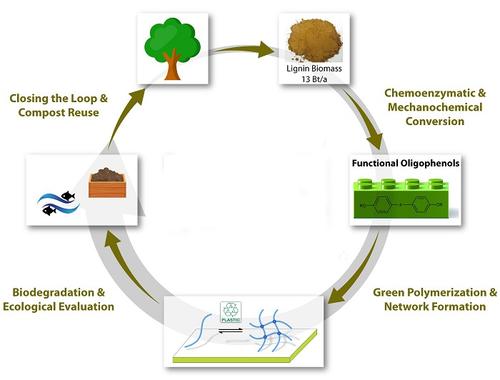
Rainer Haag is a Professor at the Department of Chemistry, Freie Universität Berlin, leading the Haag Group in the Institute of Chemistry and Biochemistry. His research focuses on biodegradable and sustainable materials, dynamic hydrogels, and polymeric nanosystems for biomedical applications. Department of Chemistry, Freie Universität Berlin Member of SFB 1449: Dynamic Hydrogels at Biointerfaces Collaborator in the StemGel startup project Co-founder of CSR|Berlin interdisciplinary research institute Research Interests: Development of stimuli-responsive polymers, multivalent virus inhibitors, and functional biointerfaces. Key projects include: Antiviral coatings using heteromultivalent polymers Thermoresponsive hydrogels for stem cell expansion Graphene derivatives for bacterial capture and disinfection Lignin upcycling for sustainable resin materials Supramolecular nanosystems for drug delivery Publication Trends highlight interdisciplinary work in polymer chemistry, nanotechnology, and biomedical applications. Recent articles focus on: 2D polyglycerols for virus interactions Redox-responsive nanogels Mucus-inspired adhesive hydrogels Tumor-targeting micelles Bacterial disinfection using graphene composites Labs & Collaborations include the Polymeric and Supramolecular Nanosystems subgroup, the Dynamic Hydrogels and Biointerfaces team, and partnerships with MIT in developing bioinspired adhesives. His group contributes to DFG-funded SFB 1449 and CSR|Berlin initiatives.
Nicole Koschate-Fischer is Professor and holds the GfK Chair for Marketing Intelligence at Friedrich-Alexander University Erlangen-Nuremberg (FAU), where she currently serves as Dean of Research at the Faculty of Business, Economics and Social Sciences. She is spokesperson for the interdisciplinary research focus "Customer Insights" and founding director of the Experimental Lab for Business Insights Nuremberg (ELAN). Previously, until September 30, 2024, she served as spokesperson for the Institute of Marketing and head of the Master's in Marketing program. Professor Koschate-Fischer earned her doctorate and habilitation from the University of Mannheim after completing a degree in business administration and psychology. Her academic journey includes membership in the interdisciplinary Collaborative Research Center "Concepts of Rationality, Decision Behavior, and Economic Modeling" at Mannheim, along with research stays as visiting scholar at University of Florida and University of Texas at Austin. She has held professorships at Technical University of Kaiserslautern and HEC Paris, and served as visiting professor at University of Vienna and Central University of Finance and Economics in Beijing. Research Interests Professor Koschate-Fischer's research spans customer insights , digital marketing , pricing and product management , and marketing analytics . Her work investigates consumer behavior in digital contexts, brand partnerships, life event impacts on purchasing decisions, and the psychological aspects of pricing. She employs experimental research methods and mediation analysis to understand causal relationships in consumer decision-making processes. Her publication record demonstrates consistent high-impact research in leading journals including Journal of Marketing, Journal of Marketing Research, and Journal of the Academy of Marketing Science. Recent work focuses on digital communication phenomena like emoji usage in electronic word-of-mouth, conversational agent interactions, and the application of behavioral pricing principles in charitable contexts. Professional Recognition Full member of the Bavarian Academy of Sciences and Humanities Member of the Board of Academic Trustees of the Center for Advanced International Marketing Knowledge (AiMark) Editorial board member of Journal of International Marketing Professor Koschate-Fischer regularly serves as reviewer for leading international academic journals and presents her research at both academic and practitioner-oriented conferences. Her work receives funding from organizations including the German Research Foundation (DFG), and she maintains active collaborations with renowned companies across various industries. She has directed the Experimental Lab for Business Insights Nuremberg (ELAN) since its founding, creating a hub for interdisciplinary customer insights research that bridges academic rigor with practical business applications.