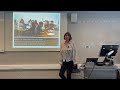
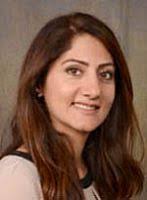
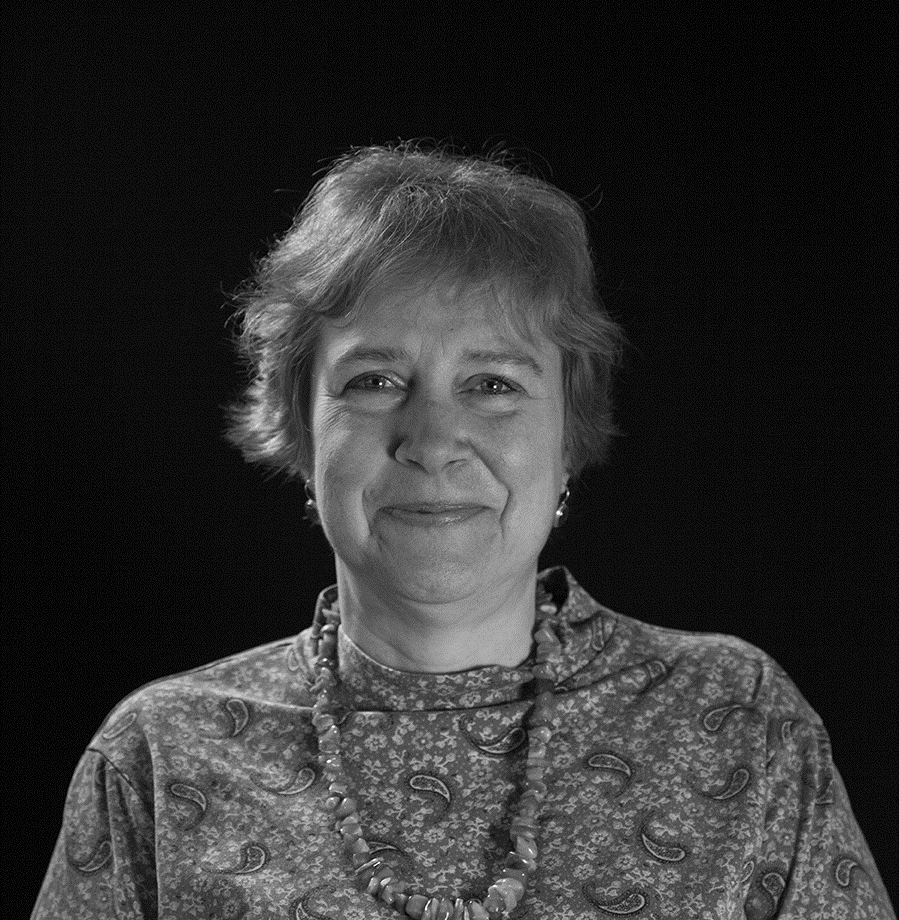
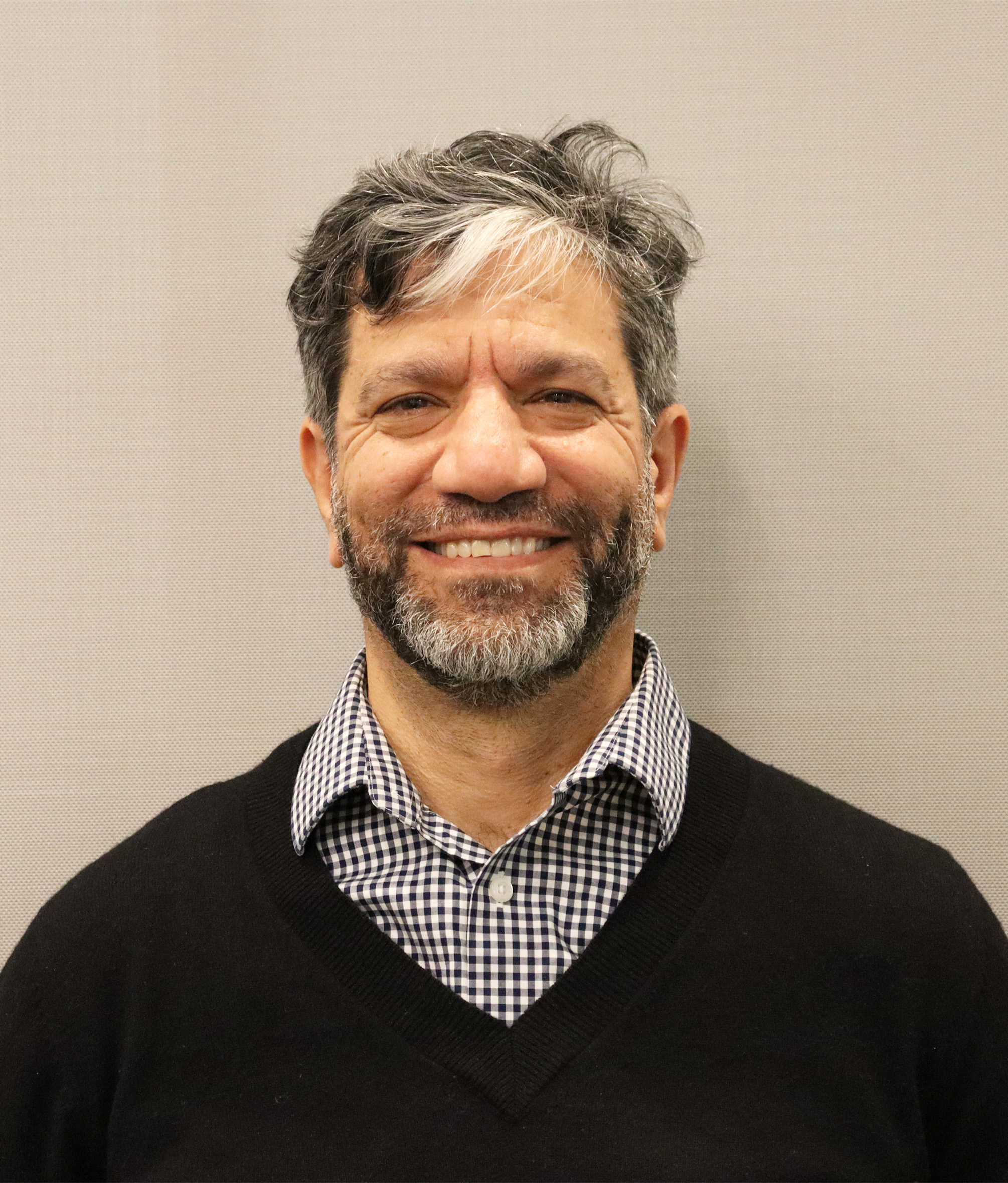
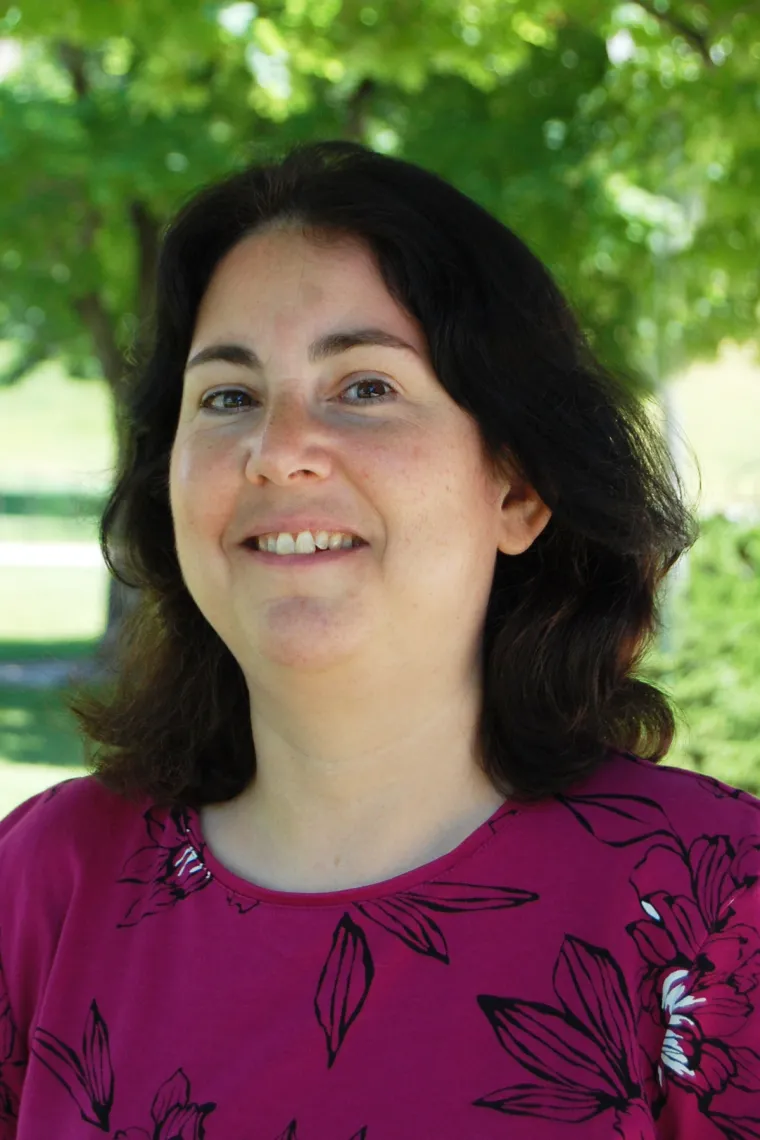
Cyrill Stachniss is a Full Professor at the University of Bonn , where he heads the Lab for Photogrammetry and Robotics and is affiliated with the Lamarr Institute for Machine Learning and Artificial Intelligence . He was previously a Visiting Professor in Engineering at the University of Oxford until 2025. His academic journey includes positions at the University of Freiburg, University of Zaragoza, and the Swiss Federal Institute of Technology. University: University of Bonn School: Faculty of Engineering Department: Department of Photogrammetry Academic Rank: Professor His research spans robotics, photogrammetry, SLAM, autonomous navigation, perception systems, agricultural robotics, and unmanned aerial vehicles . He emphasizes probabilistic techniques for mobile robots and has made significant contributions to visual and LiDAR-based localization, scene understanding, and 3D reconstruction. The recent publications highlight a strong trend toward neural implicit representations, agricultural phenotyping, radar-based perception, and active learning . His team develops robust systems for real-world deployment in dynamic and unstructured environments, particularly in precision farming and autonomous vehicles. Scientific Awards: IEEE RAS Early Career Award (2013) Microsoft Research Faculty Fellow (2010) 7th EURON Georges Giralt Award (2008) Multiple Best Paper Awards at ICRA, IROS, RSS, and RAL Faculty Teaching Award, University of Freiburg He has advised numerous students and leads the DFG Cluster of Excellence PhenoRob and Research Unit FOR 1505 Mapping on Demand . His lab has co-founded three startups, reflecting strong industry and societal impact. He also runs the educational video series 5 Minutes with Cyrill , explaining key robotics concepts.
Elisabeth Jean Wood is a Professor of Political Science at Yale University and holds a concurrent professorship at the Santa Fe Institute. Her research focuses on political violence, particularly sexual violence during war, civil war dynamics, and social movements. She is renowned for her work on insurgent transitions in South Africa and El Salvador, as well as her analysis of variation in wartime sexual violence. Wood has authored influential books including Forging Democracy from Below (2000) and Insurgent Collective Action and Civil War in El Salvador (2003). Her recent work examines the Myanmar military's sexual violence against the Rohingya, emphasizing ideological motivations and institutional frameworks. Wood teaches courses on comparative politics, political violence, and qualitative research methods at Yale. She serves on editorial boards for Politics and Society , American Political Science Review , and the Contentious Politics series. Her research emphasizes ethical fieldwork practices and transparency in qualitative studies, addressing challenges in conflict zones. Her work bridges theoretical contributions with policy implications for understanding and preventing conflict-related atrocities.
Sascha van Schendel is an Assistant Professor in Data Protection & Cybersecurity at the Department of Law & Markets, Erasmus School of Law, Erasmus University Rotterdam. She is affiliated with the Erasmus Centre of Law and Digitalization and contributes to the Sectorplan SSH-Breed research initiative on the influence of digitalization on work, prosperity, and entrepreneurship. Her research lies at the intersection of law, technology, and fundamental rights, with a focus on data protection, privacy, algorithmic governance, and the regulation of emerging technologies in public and environmental domains. She has published widely on topics including GDPR compliance, privacy by design, smart energy systems, AI in criminal justice, and the legal implications of predictive policing. The recent publications reflect a strong trend toward the regulation of data in public infrastructure (e.g., energy grids), algorithmic accountability in law enforcement, and the integration of legal and technical perspectives in privacy-preserving systems. Her work spans environmental law, criminal procedure, and digital constitutionalism, demonstrating interdisciplinary reach. Scientific Awards: No awards explicitly mentioned in the provided text. Advising and Grants: While no formal PhD or Master’s students are listed, Dr. van Schendel has been involved in significant research projects such as the NWO-funded Megamind project on smart energy grids, indicating experience with competitive grant funding. She actively collaborates with legal scholars and contributes to public policy debates, including responses to national legislation like the Dutch Cybersecurity Bill. Labs and Teams: She is a core member of the Erasmus Centre of Law and Digitalization, a research hub focusing on the legal challenges of digital transformation. Her work is embedded in interdisciplinary collaborations involving law, technology, and public policy experts.
Yvonne Rogers is a Professor of Interaction Design and Director of the UCL Interaction Centre (UCLIC), with a joint appointment as Deputy Head of the Department of Computer Science at University College London. She joined UCL in 2011 after holding professorships at the Open University (2006-2011) and Indiana University (2003-2006). Her pioneering work spans ubiquitous computing, interaction design, and human-computer interaction, with a current focus on human-centered AI. She co-authored the definitive 'Interaction Design' textbook (6 editions, 300,000+ copies) and serves as CTO of LetThink.com. Research interests center on designing technologies that enhance human cognition and daily activities: Ubiquitous Computing: Augmenting learning/work activities through pervasive technologies Human-AI Interaction: Developing AI systems that enhance human decision-making Health Technologies: Creating VR therapies and ADHD support systems Community Resilience: Designing tools for environmental monitoring and sustainable practices Publication analysis reveals three dominant trends: (1) VR applications for mental health (emotion regulation, ADHD support), (2) AI systems for cognitive augmentation, and (3) community-centered tools for healthcare/environmental challenges. Recent work demonstrates strong emphasis on vulnerable populations including children with ADHD, older adults, and postoperative patients. Major scientific recognition includes: International Member, National Academy of Engineering (2024) ACM SIGCHI Lifetime Research Award (2022) Royal Society Robin Milner Medal (2022) Royal Society Fellowship (2022) Microsoft Outstanding Collaborator Award MRC Suffrage and Science Award (2020) Triple Fellow status (ACM, BCS, CHI Academy) Advises PhD students including Leon Reicherts, Sheena Visram, and Tu Duong. Secured major grants including EPSRC Dream Fellowship on ageing/computing and led the Intel Collaborative Research Institute on Sustainable Connected Cities (2012-2018). Directs UCLIC research center and previously established the Pervasive Interaction Lab at Open University.
Dr. Shahrzad Fouladvand is an Associate Professor in International Criminal Law at the University of Sussex's School of Law, Politics and Sociology. Her research focuses on transnational criminal law, human trafficking, and corruption, particularly their interplay in contexts like Albania. She previously worked at the International Criminal Court (ICC) and the International Labour Organisation (ILO), contributing to human rights conventions. A member of RUSI's Strategic Hub for Organised Crime (SHOC), she advocates holistic approaches to combating human trafficking beyond prosecution-centric methods. Dr. Fouladvand holds a PhD from the University of Sussex and is a Fellow of the UK Higher Education Academy. Education: PhD in Law, University of Sussex (2008–2012) Common Professional Examination (CPE)/Graduate Diploma in Law (GDL), University of Huddersfield (2012–2014) Certifications in Machine Learning for Social Scientists (2023) and Social Network Analysis (2020) Research Interests: Dr. Fouladvand explores the nexus between human trafficking and corruption, emphasizing evidentiary challenges and institutional complicity. Her work integrates network analysis and responsibilisation frameworks, critiquing prosecution-centric approaches. Recent projects include a monograph on 'Human Trafficking, Corruption and Corporate Complicity' for Routledge, examining public-sector complicity in trafficking. Key Contributions: Authored over 30 publications, including journal articles and book chapters on ICC jurisprudence, anti-corruption law, and trafficking dynamics. Advised UK parliamentary committees on human trafficking and migration policies. Edited volumes on transnational organized crime and economic criminology. Awards and Fellowships: Fellow of the UK Higher Education Academy (2016) Visiting Scholarship at Max-Planck Institute (2021–2022) Elected Special Rapporteur on Contemporary Slavery for BACL Labs/Teams: Active member of RUSI's SHOC, focusing on policy-relevant research to combat organized crime.
Roger Luckhurst is Professor of Modern Literature and currently holds the prestigious Geoffrey Tillotson Chair of Nineteenth Century Studies at Birkbeck College, University of London. A leading scholar in Gothic literature, science fiction, and trauma studies, he has been affiliated with Birkbeck for over 25 years, contributing significantly to interdisciplinary literary and cultural studies. Education and Career Trajectory: 2020-present: Geoffrey Tillotson Chair of Nineteenth Century Studies, Birkbeck College 2008-2020: Professor of Modern and Contemporary Literature, Birkbeck College 2004-2008: Senior Lecturer, Birkbeck College 1994-2004: Lecturer, Birkbeck College 1992-1994: Lecturer, University of Hull Research Interests and Scholarly Contributions: Luckhurst's research spans multiple interconnected fields, establishing him as a preeminent voice in literary and cultural studies. His work on late 19th century English literature examines the intersections of Victorian culture with emerging scientific discourses. His expertise in science fiction studies encompasses both literary analysis and cultural theory, exploring how speculative fiction reflects and shapes contemporary anxieties. In Gothic studies , he investigates the persistence of Gothic aesthetics and themes across different media and historical periods. His groundbreaking work in trauma studies has contributed significantly to understanding how literature and culture process collective trauma. Publications and Scholarly Impact: His extensive publication record demonstrates a remarkable breadth of scholarly inquiry. From his early work on J.G. Ballard to his recent comprehensive study of Gothic culture, Luckhurst has consistently produced influential scholarship. His books have been translated into multiple languages including French, Japanese, Turkish, and German, indicating significant international impact. His forthcoming The Gothic: An Illustrated History (2021) promises to be a definitive work in the field. Honors and Awards: 2009: Visiting Research Fellow, University of Birmingham 2009: Visiting Research Fellow, Flemish Academic Centre for Science and the Arts (VLAC), Brussels January-June 2011: AHRC Fellowship, Birkbeck College Spring 2016: Mellon Distinguished Visiting Professor, Department of English, Columbia University, New York Public Engagement and Media Presence: Beyond academia, Luckhurst has demonstrated exceptional commitment to public scholarship. He has served as a broadcaster for BBC radio, bringing literary criticism to wider audiences. His journalism has appeared in leading British newspapers, bridging the gap between academic research and public discourse. This dual role as academic and public intellectual exemplifies Birkbeck's tradition of making scholarship accessible to broader communities. Interdisciplinary Approach and Institutional Contributions: At Birkbeck College, Luckhurst has been instrumental in fostering the institution's renowned culture of interdisciplinary studies. His work seamlessly integrates literary analysis with cultural theory, film studies, architectural history, and scientific discourse. This approach has influenced generations of students and scholars, establishing Birkbeck as a leading center for innovative literary and cultural research.
Professor Beatrice Heuser is a distinguished academic in the Department of Politics within the School of Social & Political Sciences at the University of Glasgow. Her career spans multiple prestigious institutions across Europe, including King's College London, University of Reading, and visiting professorships at Sciences Po Paris, Bundeswehr University Munich, and MGIMO. She maintains significant affiliations with major strategic research institutes including Chatham House, RUSI, IFRI, and IRSEM. Education: BA from Bedford College London, MA from LSE, DPhil from Oxford (St Antony's/St John's), Habilitation from University of Marburg Professional Experience: Former Director of Studies at German Bundeswehr's military history research office, NATO Headquarters consultant, and extensive teaching across European institutions Her research centers on strategic studies with particular focus on the cultural dimensions of warfare, nuclear strategy, and the historical evolution of strategic thought. Key research areas include strategic culture, military exercises as political instruments, laws of war development, and European defense policy. Her work bridges historical analysis with contemporary security challenges, examining how cultural narratives shape strategic decision-making from antiquity to the nuclear age. Professor Heuser's recent publications demonstrate consistent scholarly output across strategic theory, military history, and contemporary security issues. Her work shows particular emphasis on the conceptual foundations of strategic culture, historical analysis of warfare evolution, and practical applications to modern security challenges including nuclear deterrence and asymmetric warfare. The interdisciplinary nature of her research connects political theory, historical analysis, and security studies. She actively supervises graduate students in strategic theory, nuclear strategy, insurgency studies, and defense policy-making within NATO/EU contexts. Her teaching portfolio includes War and International Relations, Defense Policy, and Strategic Theory courses.
Elaine J. Francis is a Professor of English and Linguistics at Purdue University, where she also serves as the Associate Head of the Department of English. She holds affiliate appointments in the Department of Linguistics and the Department of Speech, Language, and Hearing Sciences. At Purdue, she directs the Experimental Linguistics Lab and teaches linguistics courses at both graduate and undergraduate levels. Francis completed her B.A. in Linguistics at the College of William and Mary in 1993, followed by her M.A. (1995) and Ph.D. (1999) in Linguistics at the University of Chicago under the direction of Salikoko Mufwene. Her dissertation examined variation among members of the same lexical category in English using Sadock's Autolexical Grammar framework. Prior to joining Purdue in 2003, she served as an Assistant Professor at the University of Hong Kong from 1999 to 2002, where she collaborated with Stephen Matthews on research concerning syntactic categories and relative clauses in Cantonese. Her research focuses on syntax and its interfaces with semantics, discourse information structure, and language processing in production and comprehension. Francis employs experimental methods to investigate syntactic, semantic, discourse-pragmatic, and cognitive factors underlying the grammar and usage of complex sentence structures. Her specific interests include word order alternations, filler-gap dependencies, resumptive pronouns, relative clauses, grammatical categories, and syntactic alternations. She has published extensively in top linguistics journals including Language and Cognition, Glossa Psycholinguistics, Linguistics, Lingua, Cognitive Linguistics, and the Journal of Psycholinguistic Research. Analyzing her recent publications reveals a consistent focus on experimental approaches to syntactic phenomena. Her work demonstrates a strong interest in gradient acceptability, syntactic priming, cross-linguistic comparison (particularly involving English and Cantonese), and the relationship between grammatical theory and language processing. Her 2022 book Gradient Acceptability and Linguistic Theory represents a major contribution that synthesizes experimental findings with theoretical linguistics frameworks. Francis plays an active role in the broader linguistics community. She regularly teaches short courses at the Linguistic Society of America Linguistic Institutes, serves on the LSA Ethics Committee, and is on the editorial board of Glossa Psycholinguistics. She has also edited several books and special journal issues, including Mismatch: Form-Function Incongruity and the Architecture of Grammar (2003) and Polymorphous Linguistics: Jim McCawley's Legacy (2005). As an educator and administrator, Francis has supervised numerous graduate students and currently serves as Associate Head of the Department of English at Purdue. Her Experimental Linguistics Lab provides research opportunities for students interested in the intersection of theoretical syntax and experimental methodology. While she recently announced she will not be accepting new graduate students for the 2025-2026 cycle, her established mentorship record demonstrates her commitment to training the next generation of linguists. The Experimental Linguistics Lab, which she directs, serves as a hub for research combining theoretical linguistics with experimental methods. Her collaborative work extends across disciplines, including collaborations with researchers in speech-language pathology, cognitive science, and computational linguistics, reflecting the interdisciplinary nature of modern linguistic research.
Ciprian Manolescu is a Professor of Mathematics at Stanford University, where he joined after serving as a professor at UCLA since 2008. He holds both his undergraduate degree and doctorate from Harvard University, advised by Peter Kronheimer. His research focuses on gauge theory, low-dimensional topology, and symplectic geometry, with notable contributions to Heegaard Floer theory, Khovanov homology, and the resolution of the Triangulation Conjecture. Manolescu’s academic accolades include the 2019 E.H. Moore Research Article Prize, the 2012 European Mathematical Society Prize, and a 2004 Clay Research Fellowship. He delivered an invited lecture at the 2018 International Congress of Mathematicians and became a Fellow of the American Mathematical Society in 2017. His work bridges advanced algebraic structures with geometric problems, particularly in understanding manifold invariants and topological constraints. His teaching includes the Polya Problem Solving Seminar (Math 193) at Stanford, and he advises students competing in the Putnam Mathematics Competition. Research trends in his publications emphasize applications of Floer homology to knot theory, 4-manifold topology, and the interplay between algebraic topology and quantum field theories. Education: PhD and BA in Mathematics, Harvard University Key Research Themes: Floer homology frameworks, geometric topology, knot invariants, and manifold classification Grants & Collaborations: Involved in NSF-funded projects like the FRG: Collaborative Research: Floer Homotopy Theory (2016)
Kyle Johnson is a Professor and Curriculum Committee Chair in the Department of Linguistics at the University of Massachusetts at Amherst, located in Integrative Learning Center N440. He holds a BA in Psychology from the University of California-Irvine (1981) and a PhD in Linguistics from MIT (1985). His research focuses on formal syntactic theory, particularly the interaction between syntax and prosody/semantics, with attention to real-time sentence processing evidence. He has taught at multiple institutions including UC-Irvine, UCLA, University of Wisconsin-Madison, and McGill University before joining UMass. Current courses include LING 301 (Introduction to Syntax) and LING 601 (Transformational Grammar). His work emphasizes syntactic derivations, linearization, ellipsis phenomena (gapping, stripping), and the empirical adequacy of formal syntactic theories. Selected recent contributions include analyses of Principle B derivation, prosodic spell-out mechanisms, and theta-role theory. He maintains an active publication schedule with over three decades of work in top journals like Linguistic Inquiry and Nordlyd , addressing topics ranging from adjunct islands to multidominant movement theories. His research combines theoretical innovation with experimental plausibility, often challenging traditional assumptions in generative syntax. Teaching responsibilities include both undergraduate and graduate syntax courses, with supplementary materials like Transformational Grammar lecture notes and a comprehensive bib file for researchers. Office hours are scheduled via his online calendar with a preference for in-person meetings.
Walid A. Saleh is a Professor of Islamic Studies at the University of Toronto , holding appointments in both the Near and Middle Eastern Civilizations department and the Department for the Study of Religion . His scholarship focuses on the Qur’an , Quranic exegesis (Tafsir), Islamic apocalyptic literature , and Biblical reception in Islam . PhD from Yale University (2001) Recipient of Mellon New Directions Fellowship (2014) and Konrad Adenauer Fellow (2017) Editor of the Routledge Qur’an Series His research analyzes Quranic chronology , manuscript traditions , and Islamic intellectual history . Recent publications examine periodization in Sunni tafsir, late Ottoman book culture, and the reception of al-Bayḍāwī's Anwar al-tanzīl . Articles explore topics from Quranic death narratives to medieval Islamic cosmology . Key article themes: Quranic identity formation , Islamic manuscript studies , exegetical methodology He has edited critical texts like al-Biqa`i's Bible treatise and serves on editorial boards for the Journal of the American Academy of Religion and Journal of Qur'anic Studies . His teaching includes advanced courses in Arabic paleography and Quranic hermeneutics .
Vincent Kaufmann is an Associate Professor at the Swiss Federal Institute of Technology in Lausanne (EPFL) , leading the Urban Sociology Laboratory (LaSUR) . Since 2010, he serves as Scientific Director of the Mobile Lives Forum in Paris. His career spans teaching at institutions like Lancaster University , Ecole des Ponts ParisTech , and Tongji University , with research focusing on mobility sociology , urban dynamics , and public policy evaluation . Master's in Sociology from University of Geneva PhD at EPFL on transport modal practices His work explores mobility-capital interactions , motility , and rhythmanalysis in contemporary societies. Key themes include urban lifestyle transformations , cross-border regions , and mobility-sustainability nexus , with recent emphasis on new proximities and slow cities . Teaching roles span EPFL departments like Teaching (EDAR) , Architecture and Urban Sciences (SGC) , and Human and Social Sciences (CDH) . He has directed numerous PhD and master's theses on urban mobility topics.
Ellen Riloff serves as Department Head and Professor in the Department of Computer Science at the University of Arizona, where she leads research at the intersection of natural language processing (NLP) and artificial intelligence. Her work bridges theoretical advancements with real-world applications in social computing, planetary science, and crisis response systems. Education: Ph.D. in Computer Science, University of Massachusetts at Amherst (1994) Research Focus: Dr. Riloff specializes in affective computing and information extraction , developing techniques to recognize emotion, social cues, and embodied expressions in text. Her methodologies frequently employ bootstrapping, stacked learning, and semantic lexicon induction. Recent projects address crisis informatics (e.g., social cue recognition in emergencies) and interdisciplinary applications like the Mars Target Encyclopedia for planetary science data extraction. Publication Trends: Analysis of her 15 most recent publications (2021–2025) reveals three dominant trajectories: (1) affective event modeling in social contexts with applications to crisis response; (2) domain-specific NLP for planetary science and food systems; and (3) advanced language model techniques including retrieval-augmented generation and multi-view prompting. Her work increasingly integrates deep learning with traditional linguistic features. Grants and Leadership: Dr. Riloff has directed multiple NSF-funded projects, including RI: Small: Recognizing Implicit Personal States in Natural Language (2016) and RI: Small: Acquiring Domain Knowledge from Text through Cooperative Bootstrapping (2010). These initiatives pioneered bootstrapping frameworks for affective event recognition and information extraction. She also co-organized the Workshop on Pattern-based Approaches to NLP (2023), highlighting her leadership in advancing hybrid NLP methodologies. Collaborative Infrastructure: She co-developed the Mars Target Encyclopedia—a large-scale information extraction system that processes planetary science literature to create structured databases of Mars surface targets. This project demonstrates her commitment to building reusable scientific infrastructure through NLP.
Aylwyn Scally is a researcher at the Department of Genetics, University of Cambridge, specializing in human evolutionary genetics and ancestry. His work focuses on computational and mathematical models of genome evolution, leveraging population-scale datasets and archeogenetic evidence to explore ancient human populations and their spatial dynamics. University: University of Cambridge Department: Department of Genetics Fields of Interest: Human Evolutionary Genetics, Population Genetics, Ancestry Analysis, Paleobiology, Environmental Genomics, Genome Evolution Scally's research integrates spatial dynamics into genetic models, offering insights into demographic, social, and cultural factors in ancient populations. His methodologies have broader applications for studying other species as genomic data becomes available. Recent publications highlight his work on mutation rate analysis, historical migration patterns, and ancestral population structures. These studies often employ computational simulations and large-scale genomic datasets to address evolutionary questions. He is associated with the Cambridge NERC Doctoral Landscape Awards (CREATES) and C-CLEAR DTP, contributing to training and collaborative research in genetics and environmental genomics.
Professor Simon Fraser is a public health physician and academic at the University of Southampton , specializing in kidney disease and multimorbidity. His work integrates epidemiology, health literacy, and inequality analysis to address chronic disease burdens. Educational Background: BM (University of Southampton, 1992) MSc in Public Health DM (Doctor of Medicine, 2014) Research Focus: Fraser's research spans kidney disease , multimorbidity , treatment burden , and health inequalities . Recent projects include the NURTuRE-CKD HRQoL Study and MELD-B , examining determinants of chronic disease progression and intervention design. Academic Contributions: His publications from 2024-2025 emphasize electronic health records for multimorbidity analysis, neonatal risk factors for adult comorbidity, and deprescribing strategies for older adults. Collaborations include NIHR Applied Research Collaboration Wessex and Kidney Research UK. Scientific Recognition: Fellow of the Faculty of Public Health (FFPH) Member of the Royal College of General Practitioners (MRCGP) Fellow of the Higher Education Academy (FHEA) Mentorship: Current PhD students include Emilia Mary Holland and Keegan Guan Ru Lee . He co-leads projects with leading researchers in public health and nephrology.