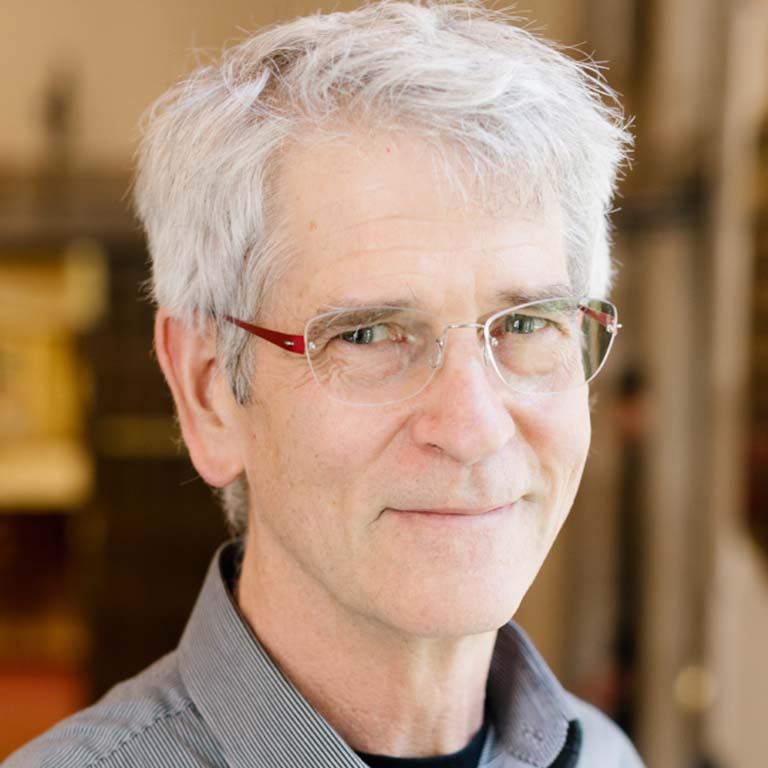
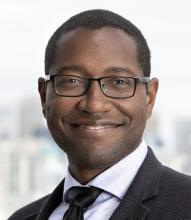
Professor Peter Nicolas is the William L. Dwyer Chair in Law and Director of the Intellectual Property Law & Policy Graduate Program at the University of Washington School of Law. He holds adjunct professorships in Gender, Women & Sexuality Studies and Music. His primary affiliations include the UW School of Law, where he has been a faculty member since 2000. He previously served as Associate Dean from 2008–2010. Education: B.A. Economics (1991), M.P.P. (1992), University of Michigan; J.D. (1999), Harvard University; A.A.A.S. (2021), Shoreline Community College (Music Performance); B.A. (2023), University of Washington (Music). Research focuses on the intersection of music law and copyright, constitutional law, LGBTQ+ rights, evidence law, and federal courts. His work bridges legal scholarship with music theory, with recent courses including Copyright Law, Music Law & Policy, and Intellectual Property Theory. Notable contributions include Evidence: A Problem-Based and Comparative Approach (5th ed., 2025) and Harmonizing Music Theory and Music Law (2023). His writings address topics like AI music fraud, streaming royalties, LGBTQ+ legal protections, and post-Obergefell jurisprudence. Frequently quoted by media outlets on music law and IP issues. Former roles include Research Economist at the University of Michigan and Ann Arbor City Council member. Labs/Teams: Leads the IP LL.M. program and collaborates with interdisciplinary music law initiatives. Consults on high-profile cases involving LGBTQ+ rights and evidentiary standards.
Umut Dur is the Truist Distinguished Professor of Economics and Director of Graduate Programs at the Department of Economics, North Carolina State University (NC State). He holds a Ph.D. from the University of Texas at Austin (2013) and previously served as a Teaching Assistant at the University of Texas at Austin (2010-2012) and Boğaziçi University (2007-2008). His research focuses on Market Design , School Choice , and Matching Theory , with emphasis on equitable policy implementation in education and labor markets. Dr. Dur has been recognized with Summer Research Awards (2019, 2017) and the Faculty Research Award (2017). His work addresses challenges such as fairness in affirmative action policies, optimization of school assignment mechanisms, and labor market policy design. Notable contributions include analyses of magnet school lotteries, sequential school choice systems, and the impact of reserve policies on educational equity. Dur leads NC State's Economics Graduate Program and contributes to initiatives like the Business Analytics and AI Initiative (BAI) and Supply Chain Resource Cooperative (SCRC) . Key Research Themes: School choice mechanisms, labor policy design, matching algorithms, and policy fairness Awards: Multiple research awards from Poole College of Management Affiliations: Department of Economics, NC State; Graduate Faculty member
Anthony Bass, Ph.D., is a Teaching Faculty & Clinical Consultant at New York University, affiliated with the Relational Track. He earned his B.A. from New College (1972), M.A. from Harvard University (1973), and M.S., M.Phil., Ph.D. from Teachers College, Columbia University (1979, 1980, 1983). He also holds a Psychoanalytic Certificate from NYU Postdoctoral Program in Psychotherapy & Psychoanalysis (1989). Education: B.A. 1972, New College M.A. 1973, Harvard University M.S. 1979, M.Phil. 1980, Ph.D. 1983, Teachers College, Columbia University Psychoanalytic Certificate 1989, NYU Postdoctoral Program Dr. Bass specializes in psychoanalysis, clinical psychology, and relational theory. His work explores containment mechanisms, enactments in therapy, analytical frames, and termination processes. His publications in Psychoanalytic Dialogues emphasize the dynamic interplay between therapist and patient, challenging traditional boundaries in psychoanalytic practice. His research focuses on therapeutic communication, countertransference management, and the adaptation of psychoanalytic frameworks to modern clinical contexts. Publications from 1992–2011 demonstrate sustained engagement with relational psychoanalysis, structural theory, and clinical innovation. Contact: tony.bass@gmail.com | Office: 330 West 58th Street, Suite 507, New York, NY 10019 | Phone: (212) 582-3682
Sara K. Yeo is a Professor and Associate Chair in the Department of Communication at the University of Utah, where she also serves as Director of the STEM Ambassador Program (STEMAP). With formal training as both a bench and field scientist, she brings unique interdisciplinary expertise to her work at the intersection of science, media, and politics. Her academic journey spans multiple disciplines, reflecting her commitment to bridging scientific and communication domains. Dr. Yeo's research focuses on strategic science and risk communication, public opinion of STEM issues, and information seeking and processing. She has pioneered work on humor in science communication, examining how different types of humor (satire, anthropomorphism) affect public engagement with scientific topics. Her research also explores inequities in science knowledge across racial and ethnic groups, the role of emotion in science communication, and public perceptions of emerging technologies. She approaches science communication as both a theoretical and practical endeavor, seeking to bridge the gap between research and practice. Analysis of Dr. Yeo's recent publications reveals a strong focus on innovative communication strategies for complex scientific topics, particularly examining how humor can facilitate engagement with controversial science issues like climate change, renewable energy, and geothermal systems. Her work consistently addresses questions of credibility, knowledge gaps across demographic groups, and the psychological mechanisms through which science messages influence public attitudes and behaviors. She has made significant contributions to understanding how different media formats and emotional appeals affect science communication outcomes. Outstanding Article Award (2019, Association for Education in Journalism and Mass Communication) Rising Star in the Humanities Award (2016, College of Humanities, University of Utah) Dr. Yeo has secured substantial research funding for projects examining science communication strategies, including the CREATE-AQI project on community resilience through air quality information, research on humor as a strategy for communicating about enhanced geothermal systems, and initiatives focused on engaging multicultural audiences with STEM content on YouTube. Her grant portfolio demonstrates a commitment to translating science communication research into practical applications that address societal challenges. As Director of the STEM Ambassador Program at the University of Utah, Dr. Yeo leads initiatives that connect STEM professionals with broader audiences. Her leadership extends to national organizations, where she serves on committees for the Society for Risk Analysis, National Academies of Sciences, Engineering, and Medicine, and the American Association for the Advancement of Science.
Kevin R. Johnson serves as Dean and Mabie-Apallas Professor of Public Interest Law at the UC Davis School of Law, concurrently holding a Professorship in Chicana/o Studies. He joined UC Davis Law in 1989, becoming Associate Dean in 1998 and Dean in 2008. His academic career is distinguished by teaching in immigration law, civil procedure, and Critical Race Theory, earning a Distinguished Teaching Award in 1993. Johnson’s research focuses on immigration law, civil rights, and border policy, with notable publications including How Did You Get to Be Mexican? (1999) and Immigration Law and the US-Mexico Border (2011). He blogs at ImmigrationProf and regularly contributes to national media discussions on immigration issues. Education: A.B. in Economics (UC Berkeley, Phi Beta Kappa), J.D. magna cum laude from Harvard Law School (Harvard Law Review editor). Professional service includes board roles with Legal Services of Northern California and MALDEF, leadership in the AALS, and American Law Institute membership. Johnson has received over 20 major awards, including the Hispanic National Bar Association Professor of the Year (2006) and National Association of Chicana and Chicano Studies Scholar of the Year (2008). His work bridges legal scholarship with social justice advocacy, emphasizing interdisciplinary approaches to systemic inequality.
Ignacio Rios Uribe is an Assistant Professor at the Naveen Jindal School of Management (University of Texas at Dallas) specializing in Operations Management . He holds a PhD in Operations, Information and Technology (2020) from Stanford University, with additional MA in Economics from Stanford and MS/BS in Operations Research and Industrial Engineering from Universidad de Chile. PhD in Operations, Information and Technology (2020) - Stanford University MA in Economics (2020) - Stanford University MS in Operations Management (2014) - Universidad de Chile BS in Industrial Engineering (2014) - Universidad de Chile His research focuses on Behavioral Operations Management , particularly in matching markets , college admissions systems, and online platform optimization . Current projects examine mechanism design for dating apps, strategic behavior in college applications, team-building incentives, and charity donation systems. He employs mathematical modeling, field experiments, and structural estimation techniques. Recent publications analyze platform design for curated dating markets (M&SOM, 2023), stable matching with contingent priorities (Management Science, 2023), and capacity planning in school choice (Operations Research, 2022). His work combines theoretical analysis with empirical validation using real-world data from Chilean education systems and industry partners. Awards include First Place in Doing Good with Good OR (2018) and BOM Best Working Paper Competition (2023) Published in top journals like Management Science, M&SOM, Operations Research Professional affiliations with INFORMS and Manufacturing & Service Operations Management Society
Jaclyn Lopez is an Assistant Professor of Law and Director of the Jacobs Public Interest Law Clinic for Democracy and the Environment at Stetson University College of Law. She holds a B.A. from the University of South Florida, an M.S. from the University of Arizona, a JD from the University of Denver Sturm College of Law, and an LLM from the University of Florida. Prior to joining Stetson, she served as Florida Director and Senior Attorney at the Center for Biological Diversity for over a decade. In her roles, she teaches courses on professional responsibility, environmental practice, and biodiversity. Her research focuses on climate change, environmental justice, administrative law, and endangered species protection. Key themes include judicial access barriers, federal agency delegation impacts, and resilience strategies for vulnerable communities and ecosystems. She has advised no formal students listed but leads clinics addressing environmental legal challenges. Lopez’s publications analyze topics like NEPA compliance, EPA delegation consequences, and Florida’s water crises. They emphasize legal frameworks for climate adaptation, regulatory accountability, and equitable environmental policies. Her work bridges academic scholarship with practical advocacy, advocating for stronger protections for biodiversity and marginalized communities.
Elizabeth Baldwin is an Associate Professor and Director of the MPA & MPP Programs at the School of Government & Public Policy, University of Arizona. Her research focuses on environmental, energy, and water policy, particularly examining non-state actors' roles in policy implementation and stakeholder influence on outcomes. She investigates U.S. state energy policies and decentralized energy systems in sub-Saharan Africa. Baldwin holds a Ph.D. from Indiana University’s School of Public and Environmental Affairs, a J.D. from Indiana University Maurer School of Law, and a B.S. in Environmental Policy from Unity College. Her work has been published in journals such as Policy Studies Journal and Annual Review of Environment and Resources . Her research spans institutional analysis, polycentric governance, and policy diffusion. Notable projects include evaluating stakeholder involvement in renewable energy policies and analyzing the governance of irrigation systems in Kenya. Baldwin’s recent studies address wildfire policy responses, groundwater governance experiments, and invasive species management. Baldwin’s contributions include frameworks for assessing environmental impact assessments (EIAs) and synthesizing biodiversity data. She actively explores how legal and institutional structures shape policy outcomes, with a focus on equity and sustainability. Her interdisciplinary approach bridges law, public policy, and environmental science, addressing challenges in both developed and developing regions.
Angela S. García is an Associate Professor at the Crown Family School of Social Work, Policy, and Practice at the University of Chicago. Her research focuses on international migration, law and society, race and ethnicity, urban sociology, and social policy. She holds a PhD and MA in Sociology and Latin American Studies from UC San Diego. Her academic affiliations include courtesy appointments in the University of Chicago’s Department of Sociology, as well as roles at the Population Research Center, Center for Health Administration Studies, and multiple interdisciplinary centers focusing on race, Mexican studies, and Latin American research. Externally, she collaborates with the University of California San Diego’s Center for Comparative Immigration Studies and the Scholars Strategy Network. García’s recent work examines the sociopolitical implications of immigration policies, including deferred action programs, census participation by undocumented populations, and the intersection of violence and migration. Her analysis emphasizes how legal frameworks and local policies shape immigrant integration, political engagement, and everyday survival strategies. Her research has been published in leading journals, with thematic trends in migration governance, policy impacts on marginalized communities, and comparative studies of legal systems across regions.
Els de Graauw is Professor of Political Science, Public Policy, and International Migration Studies at Baruch College and the Graduate Center, City University of New York (CUNY). She serves as Faculty Director of the International Migration Studies MA Program at the CUNY Graduate Center and is an affiliate faculty member in Black and Latino Studies at Baruch College. Her academic career spans multiple institutions and research centers across the United States and Europe. Dr. de Graauw earned her PhD in Political Science from the University of California, Berkeley. She has held research appointments at prestigious institutions including Harvard University, Cornell University, the University of Amsterdam, the Netherlands Institute for Advanced Study, and the European University Institute. Her research expertise centers on immigration studies, with particular focus on how governmental and nongovernmental organizations build institutional capacity for immigrant integration and representation. She examines civil society organizations, urban politics, government bureaucracies, and public policy through qualitative research methods. Her work investigates critical areas such as language access, labor rights, municipal ID cards, and the development of city and state immigrant affairs offices across the United States. She frequently collaborates with scholars and practitioners across institutions, including her current NSF-funded research with Shannon Gleeson of Cornell University on DACA implementation. Dr. de Graauw has received recognition for her scholarship, most notably for her award-winning book Making Immigrant Rights Real: Nonprofits and the Politics of Integration in San Francisco (Cornell University Press, 2016). She is also co-author of Advancing Immigrant Rights in Houston (Temple University Press, 2024) and co-editor of Migrants, Minorities, and the Media: Information, Representations, and Participation in the Public Sphere (Routledge, 2017). She is currently working on her fourth book, Grassroots Bureaucracy: How Cities and States Integrate Immigrants , and co-editing the Handbook on Migration and Cities . Her research has been supported by numerous prestigious organizations including the National Science Foundation, the Netherlands Institute for Advanced Study, the Social Sciences and Humanities Research Council of Canada, and the Netherlands Organization for Scientific Research. With Shannon Gleeson of Cornell University, she is conducting an NSF-funded study on the implementation of the Deferred Action for Childhood Arrivals (DACA) program across multiple metropolitan areas. Dr. de Graauw has made significant contributions to her field through professional leadership. In 2012, she co-founded the Section on Migration and Citizenship of the American Political Science Association, serving as its elected co-president and secretary from 2012 to 2016. She has served on the editorial boards of the Journal of Ethnic and Migration Studies (2014-2024) and Urban Affairs Review (2016-2023), and currently sits on the International Advisory Council of Metropolis International. She regularly teaches courses on immigration and social movements at Baruch College, mentoring students through MA capstone projects and PhD dissertations. Beyond academia, she frequently collaborates with community organizations and local governments in the United States and Europe to advance immigrant integration through local action.
Eric C. Chaffee is the John C. Hutchins Professor of Law at Case Western Reserve University School of Law, where he also serves as Associate Dean of Graduate Studies and Strategic Programs, Director of the Compliance Risk Management and Financial Integrity Institute, and Co-Director of the Center for Business Law. An elected member of the American Law Institute and Fellow of the American Bar Foundation, he is a leading scholar in business law, securities regulation, taxation, and the law of emerging technologies. Education Juris Doctor, University of Pennsylvania Law School Bachelor of Arts, The Ohio State University Research Interests Professor Chaffee’s scholarship is organized around three core pillars: The evolving governance of business organizations, with emphasis on choice-of-entity implications for purpose, fiduciary duties, and stakeholder accountability. The regulation of securities markets and investment vehicles, including the intersection of federal securities law with FinTech, cryptocurrencies, and virtual worlds. The integration of emerging technologies—artificial intelligence, blockchain, and data analytics—into legal compliance and transactional practice. Across these domains he employs interdisciplinary perspectives drawn from behavioral economics, corporate theory, and comparative regulation to advance both doctrinal understanding and practical reform. Publication Landscape Spanning more than two decades, his work has appeared in flagship journals such as the Boston College Law Review, Ohio State Law Journal, UC Davis Law Review, and Washington & Lee Law Review, as well as specialty publications at Stanford, NYU, Penn, and Michigan. The fifteen most recent articles (2017-2025) reveal intensifying focus on the Roberts Court’s securities jurisprudence, the regulatory challenges posed by cryptocurrencies and decentralized finance, and the theoretical underpinnings of the business trust. Professional Honors & Leadership Elected Member, American Law Institute Fellow, American Bar Foundation Chair, AALS Sections on Business Associations; Nonprofit & Philanthropy Law; Internet & Computer Law (past); Securities Regulation (past) Co-Founder & Executive Committee Member, National Business Law Scholars Conference Repeated service as Chair or Member on ABA accreditation site-visit teams Advising, Grants & Outreach As Associate Dean of Graduate Studies and Strategic Programs, Professor Chaffee oversees all non-J.D. offerings, including the Compliance & Risk Management Program that reports 100 % job placement. He has previously served as Associate Dean for Research and Faculty Development at two other institutions, curating workshop series, symposia, and extramural grant initiatives. He is regularly retained as an expert witness in high-stakes corporate litigation and provides board-level counsel to tax-exempt organizations. Laboratories & Teams He directs the Compliance Risk Management and Financial Integrity Institute , an interdisciplinary hub that partners with regulators, industry, and technologists to design compliance frameworks for financial institutions, FinTech start-ups, and multinational corporations.
Alan B. Morrison serves as the Lerner Family Associate Dean for Public Interest and Public Service Law and Professorial Lecturer in Law at George Washington University Law School. In his administrative role, he creates pro bono opportunities for students, brings public interest programs to the law school, encourages students to pursue careers in non-profit and government sectors, and assists with funding legal education for public service careers. Morrison's research spans Constitutional Law, Civil Procedure, and Administrative Law, with particular expertise in Supreme Court litigation and separation of powers issues. His career has focused on law reform litigation in areas including open government, legal profession regulation, agency compliance, consumer protection, and class action settlements. His scholarly work demonstrates consistent engagement with fundamental constitutional questions and procedural justice issues. His recent publications show a clear trend toward analyzing judicial philosophy in the Roberts Court, administrative agency authority, and the structural foundations of civil procedure. These works reflect his deep practical experience arguing 20 cases before the Supreme Court, including landmark victories in Goldfarb v. Virginia State Bar, Virginia State Board of Pharmacy v. Virginia Citizens Consumer Council, and INS v. Chadha. President of American Academy of Appellate Lawyers (1999-2000) Morrison has taught civil procedure and constitutional law at GW Law and previously at Harvard, NYU, Stanford, Hawaii, and American University law schools. He maintains active engagement with the legal community through positions including elected member of the Board of Governors of the District of Columbia Bar, senior fellow of the Administrative Conference of the United States, member of the American Law Institute, and member of the Committee on Science, Technology & Law of the National Academy of Sciences. His current media commentary addresses contemporary issues like Trump's legal challenges and tariff policies.
Kirk Ludwig is the Ruth N. Halls Professor of Philosophy and Director of Graduate Studies at Indiana University Bloomington in the College of Arts & Sciences. He has held this position since joining IU in 2010 after teaching at the University of Florida from 1990 to 2010, where he was the Colonel Alan R. and Margaret G. Crow CLAS Term Professor from 2008-2010. Education: Ph.D., Philosophy, University of California, Berkeley, 1990 B.S., Physics, summa cum laude, University of California, Santa Barbara, 1981 Ludwig's research spans foundational issues in the philosophy of language (particularly logical form and semantics), philosophy of mind and action, epistemology, and metaphysics, with a significant focus on collective intentionality and agency. His work demonstrates how these philosophical domains intersect, particularly in understanding the nature of joint action, social institutions, and linguistic communication. He approaches these topics with analytical rigor while maintaining connections to broader philosophical traditions. His recent publications reveal a consistent trajectory toward understanding collective phenomena, moving from individual to plural agency and then to institutional agency. The articles show increasing sophistication in analyzing how collective intentionality structures social reality, legal norms, speech acts, and corporate entities. His work bridges traditional philosophical concerns with contemporary issues in social ontology, demonstrating how philosophical analysis can illuminate complex social phenomena. Ludwig has made significant contributions as an editor, most notably editing the volume on Donald Davidson in the Cambridge Contemporary Philosophy in Focus series and co-editing the Routledge Handbook of Collective Intentionality with Marija Jankovic. He also co-authored major works on Donald Davidson with Ernie Lepore and has authored two influential books on collective agency: From Individual to Plural Agency: Collective Action 1 (2016) and From Plural to Institutional Agency: Collective Action 2 (2017). As Director of Graduate Studies, Ludwig oversees the philosophy department's graduate program, advising students and shaping the curriculum. His editorial work includes editing the Collective Intentionality category at PhilPapers, demonstrating his leadership in this growing field of philosophical inquiry. His research continues to explore the foundations of collective action and intentionality, with implications for understanding social institutions, legal systems, and corporate entities.
Associate Professor Daniel Aaron serves at the University of Utah College of Law, specializing in health law and regulatory policy. He actively bridges legal scholarship with public health practice through his role in developing the university's first public health law course—a CDC-funded collaboration between the College of Law and the School of Medicine's Division of Public Health for the 2025-2026 academic year. This initiative positions him within Columbia Mailman School's national cohort for public health law education development. Professor Aaron's research critically examines the legal frameworks shaping healthcare systems, with particular focus on cancer care regulation, FDA oversight, opioid crisis accountability, and gender-affirming care policies. His scholarship consistently analyzes how deregulatory trends, judicial decisions, and corporate practices impact health equity and population outcomes. Recent work investigates Supreme Court challenges to health agencies, medical malpractice standards, and the legal dimensions of health disparities across racial and ethnic groups. His publication portfolio reveals a strategic focus on high-impact health law intersections: analyzing how bankruptcy proceedings affect public health (notably the Sackler family litigation), examining regulatory gaps in direct-to-consumer genetic testing, and evaluating climate change litigation for health protection. Aaron's work demonstrates particular attention to vulnerable populations, with recurring themes of systemic barriers to care access and the tension between market forces and public health imperatives. Through the CDC-funded 'Teaching Public Health Law' initiative, Aaron contributes to building national capacity for training public health professionals in legal navigation. This project connects him with institutions including Morehouse School of Medicine and Kent State University, fostering cross-institutional knowledge sharing about law's role in shaping health outcomes. His collaborative approach exemplifies the growing recognition that effective public health requires interdisciplinary legal understanding.
University of California, San FranciscoUnited States
Samuel Washington, MD, is an Assistant Professor of Urology at the University of California, San Francisco (UCSF), specializing in genitourinary oncology and outcomes research. He holds a BS in Genetics from UC Davis (2007), an MD from UCSF (2012), a Master of Advanced Study in Clinical Research (2019), and completed urology residency (2018) and urologic-oncology fellowship (2020) at UCSF. He also graduated from the UCSF Health Executive Leadership Academy (2023-2024) and the Foundations for Excellence in Leadership Program (2024-present). Education: University of California, Davis — BS, Genetics, 2007 University of California, San Francisco — MD, 2012 University of California, San Francisco — Resident, Urology, 2018 University of California, San Francisco — MAS, Clinical Research, 2019 University of California, San Francisco — Postdoctoral Fellow, Urologic Oncology, 2020 University of California, San Francisco — Health Executive Leadership Academy, 2023-2024 University of California, San Francisco — Foundations for Excellence in Leadership Program, 2024-present Dr. Washington’s research focuses on prostate and bladder cancer disparities , health-services interventions , and community-engaged strategies to improve access and outcomes for under-represented populations. His work integrates population-level data , single-cell atlases , and qualitative community insights to design multilevel interventions that reduce racial and socioeconomic gaps in genitourinary oncology care. His recent publications (2023-2025) reveal a consistent emphasis on active surveillance optimization , rural-urban and racial disparities , and real-world cost and quality outcomes after prostate and bladder cancer treatment. Studies explore everything from MRI-targeted biopsy protocols to county-level mortality trends, underscoring a methodological breadth spanning epidemiology , health economics , and implementation science . Scientific Awards & Honors: Western Section AUA Second Place, Joseph F. McCarthy Physician Essay Contest (2024) Western Section AUA First-place Poster Session (2023) ERACE Research Award, ConcertAI (2021) Goldberg-Benioff Endowed Professorship in Cancer Biology, UCSF (2021) Grunfeld Scholar, SFVAMC Research Development Initiative (2021) John A. Watson Faculty Scholar, Dean’s Diversity Fund, UCSF (2019-2020) OptumLabs Health Data for Action Award (2018-2019) UCSF CADC Scholar (2010-2011) Pathways to Careers in Clinical & Translational Research Fellow (2009) Dean’s Summer Research Fellowship, UCSF (2009) Grant Funding & Leadership: Dr. Washington currently leads multi-year projects as Principal Investigator funded by the Prostate Cancer Foundation and Movember Foundation , examining community-partnered interventions to address social barriers in prostate cancer care. He co-leads a Chan Zuckerberg Initiative -funded single-cell prostate atlas across ancestries and has served as Co-Investigator on VA and DoD grants focused on germline testing adoption and osteoporosis prediction in high-risk prostate cancer. Labs & Teams: While specific laboratory names are not listed, he collaborates extensively with the UCSF Helen Diller Family Comprehensive Cancer Center , the San Francisco VA Health Care System , and community stakeholder groups through PCF and CZI initiatives, indicating active participation in trans-disciplinary oncology and disparities research teams.