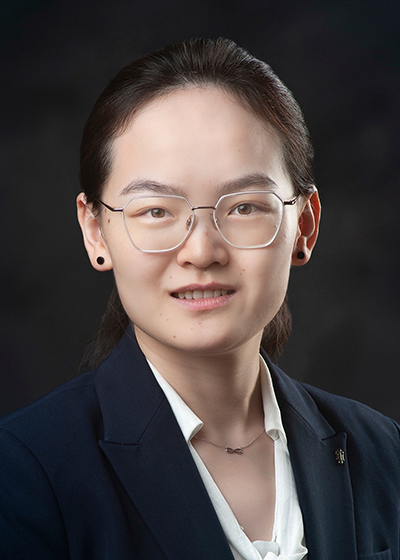
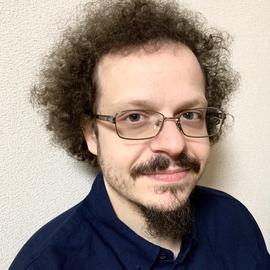
Daolang Huang is a Doctoral Researcher and Student in the Department of Computer Science at the School of Science, affiliated with Professor Samuel Kaski's group. He holds a Bachelor's degree in Engineering and Technology from Jinan University (2020). His research focuses on advanced machine learning techniques, including Bayesian inference, robust statistical modeling, and simulation-based methods. Key areas include experimental design optimization, neural processes, and equivariance in deep learning. Recent work emphasizes decision-aware algorithms and cost-effective simulation frameworks. Huang has collaborated internationally, with publications in top venues like NeurIPS. Despite no listed awards, his work demonstrates significant contributions to probabilistic modeling and optimization. Education : Bachelor's degree in Engineering and Technology, Jinan University (2020) Research Interests : Bayesian methods and amortized inference Robust statistics under model misspecification Continuous control and neural process architectures Optimization algorithms with decision-theoretic foundations Recent Research Trends : His articles (2020–2025) emphasize Bayesian experimental design, preference-based optimization, and equivariant neural networks. Themes include balancing statistical rigor with computational efficiency, particularly in high-dimensional decision-making contexts. Labs/Teams : Active member of Samuel Kaski’s research group, focusing on interdisciplinary applications of machine learning.
Philippe Ciblat is a Professor at TELECOM Paris Tech, affiliated with the Department of Signal Processing and Communications. His research spans signal processing, wireless communications, and machine learning applications in networking. He has collaborated extensively with institutions like the University of Paris-Saclay and international researchers in areas such as cooperative communication protocols, resource allocation, and coding theory. Research Interests: Machine learning for signal processing, wireless channel modeling (Rician fading), lattice decoding, caching strategies, and distributed optimization. Notable Work: Pioneered transformer-based packet scheduling, neural network approaches to lattice decoding, and effective capacity analysis in fading channels. His contributions include over 170 publications in top venues (IEEE Trans. Signal Process., IEEE Trans. Wireless Commun.) and collaborations with industry partners on practical implementations like cache-aided polar coding. He has advised multiple researchers in distributed systems and wireless resource management.
Dr. Xin Zhang is an Assistant Professor in the Department of Agricultural and Biological Engineering at Mississippi State University. His research focuses on smart agriculture, AI applications, agricultural robotics, and unmanned aerial systems. He leads the Sensing & Automation in Agrisystems (SAAS) Lab, which develops technologies for crop monitoring, robotic harvesting, and machine vision systems. Dr. Zhang holds a Ph.D. from Washington State University and has held postdoctoral positions at UC Davis. He is a FAA-certified UAS pilot and actively collaborates on projects involving machine learning, computer vision, and precision agriculture. Research interests include digital agriculture frameworks, crop prediction models, and the integration of AI into farming systems. Key achievements include pioneering work in robotic cotton-picking simulations and UAV-based yield estimation. His lab emphasizes interdisciplinary approaches combining robotics, data science, and environmental engineering. Awards include the 2020 Giuseppe Pellizzi Prize for agricultural engineering research and multiple ASABE accolades. Current projects involve scalable field extraction frameworks using satellite imagery and deep learning models for plant phenotyping. He has published over 50 peer-reviewed articles, with a focus on advancing automation in crop handling and environmental sensing technologies. Education: Ph.D., Biological & Agricultural Engineering (WSU), M.S., Agriculture (Northwest A&F University), B.S., Agronomy (Gansu Agriculture University).
Mark Plumbley is a Professor of Signal Processing at the Centre for Vision, Speech and Signal Processing (CVSSP) within the School of Computer Science and Electronic Engineering at the University of Surrey. He holds an EPSRC Fellowship in 'AI for Sound' and has led major research initiatives, including the DCASE challenges. His work focuses on AI-driven analysis of acoustic scenes and events, with contributions to machine learning, audio source separation, and sparse representations. Previously, he was Director of the Centre for Digital Music at Queen Mary University of London and Head of the School of Computer Science at Surrey. Education: PhD in Neural Networks (1991). Academic roles include Professorships at King’s College London (1991–2002) and Queen Mary University of London (2002–2014). Research spans audio event detection, sound scene classification, and generative AI for audio synthesis. He leads projects like the EPSRC-funded 'Making Sense of Sounds' and 'Musical Audio Repurposing using Source Separation', and co-edited the Springer book on Computational Analysis of Sound Scenes and Events. Research Interests: AI for Sound: Machine learning applied to real-world audio analysis. Acoustic Scene and Event Recognition: Developing models for sound classification and localization. Generative Audio Models: Text-to-audio systems and diffusion models for sound synthesis. Healthcare Applications: Audio-based diagnostics and bioacoustic signal processing. Grants and Awards: EPSRC Fellowships, EU-funded networks (SpaRTaN, MacSeNet), and Fellowships from IET and IEEE. Notable awards include the IEEE Young Author Best Paper Award (co-authored with students) and leadership in the DCASE community. Labs and Collaborations: CVSSP at Surrey, collaborations with BBC R&D, and interdisciplinary projects on urban soundscapes and noise pollution (UK Acoustics Network Plus).
Professor Ling Li is a faculty member at Curtin University's School of Electrical Engineering, Computing and Mathematical Sciences (EECMS), within the Faculty of Science and Engineering. Their research focuses on interdisciplinary applications of machine learning, computer vision, and deep learning in structural engineering and materials science. Notable contributions include advancements in structural health monitoring, blast loading prediction, and 3D displacement measurement using monocular vision. Professor Li has authored numerous peer-reviewed articles and collaborates on projects involving civil infrastructure resilience, smart materials, and AI-driven solutions for engineering challenges. They hold an office in the New Technologies Building at Curtin Perth and can be reached at L.Li@curtin.edu.au.
David Seckel is a Professor of Physics & Astronomy at the University of Delaware, affiliated with the College of Arts & Sciences. His research focuses on cosmic rays, neutrino astrophysics, and the development of large-scale observatories like the IceCube Neutrino Observatory and the ANITA detector. He has contributed to studies of ultra-high-energy cosmic rays, neutrino detection techniques, and cosmological implications of particle interactions. Key research areas include analyzing atmospheric and astrophysical neutrino fluxes, probing cosmic ray composition via air shower measurements, and investigating neutrino emission from active galactic nuclei. His work leverages advanced detector technologies and machine learning methods for data analysis. Collaborations include the IceCube Collaboration, RNO-G radio array, and the PUEO payload for airborne neutrino detection.
Prof. Dr. Julia Schnabel is the TUM Liesel Beckmann Distinguished Professor and Helmholtz Distinguished Professor at TUM's TUM School of Computation, Information and Technology. Her research focuses on computational imaging and AI in medicine, including medical image processing, machine learning, motion modeling, and quantitative imaging. She holds IEEE, Ellis, and MICCAI Society fellowships, and has pioneered work in image reconstruction, artifact correction, and AI-based diagnostics. Educations: Bachelor/Master from TU Berlin (1993) PhD from University College London (1998) Postdocs at UMC Utrecht, King's College London, and UCL Her research interests span medical AI, deep learning for medical imaging, and clinical evaluation methodologies. Key contributions include frameworks for motion artifact correction in MRI, physics-informed neural networks, and benchmark datasets like NOVA for anomaly detection in brain MRI. She has authored over 100 publications, with recent work advancing unsupervised anomaly detection and federated learning in healthcare. Prof. Schnabel leads interdisciplinary projects at TUM and Helmholtz Zentrum München, focusing on AI-driven solutions for diagnostic and therapeutic challenges. Her labs develop tools for real-time cardiac imaging, histopathology segmentation, and trustworthy AI guidelines (FUTURE-AI initiative).
Benoit Champagne is a Full Professor in the Department of Electrical and Computer Engineering at McGill University, Montreal. His research focuses on statistical signal processing, with applications in wireless communications, multi-antenna systems, and adaptive filtering. He has held academic positions since 1990, including roles at INRS-Telecom before joining McGill in 1999. He teaches graduate and undergraduate courses such as ECSE 305 (Probability and Random Signals), ECSE 512 (Digital Signal Processing), and ECSE 617 (Array Signal Processing). Education: B.Eng. (Electrical Engineering) and M.Sc. (Physics) from Université de Montréal (1983, 1985), Ph.D. in Electrical Engineering from University of Toronto (1990). His research spans signal detection/estimation, speech enhancement, MIMO systems, and physical layer security, with over 150+ publications in top journals and conferences. He has supervised numerous graduate students and holds grants from NSERC, CFI, and industry partners like Nortel and Bell Canada. His work emphasizes practical implementations, including hybrid analog/digital beamforming for mmWave systems and energy-efficient resource allocation in D2D communications. He has contributed to IEEE standards through editorial roles (e.g., IEEE Transactions on Signal Processing) and conference organization (e.g., IEEE VTC 2016). Current research explores machine learning integration with signal processing for next-generation wireless systems. Notable contributions include advancements in subspace tracking, cognitive radar systems, and distributed adaptive filtering. His lab collaborates internationally, addressing challenges in 5G/6G networks, massive MIMO, and secure communications.
Sebastiano Vascon is an Associate Professor at Ca' Foscari University of Venice's Department of Environmental Sciences, Computer Science and Statistics (DAIS), and affiliated with the European Center for Living Technology. He earned his PhD in 2016 from the Italian Institute of Technology and University of Genoa, focusing on evolutionary game theory in pattern analysis and computer vision. His postdoctoral work spanned institutions like the Technical University of Munich and ETH Zurich, where he specialized in Active Learning and multi-object tracking. His research merges AI with interdisciplinary challenges, including climate change, environmental science, and cultural heritage preservation. Key areas include graph neural networks, computer vision, and game-theoretic models. He leads projects like RePAIR (AI for cultural heritage reassembly) and EasyWalk (AI-driven mobility solutions), and contributes to initiatives like MEMEX (digital storytelling). Teaching spans courses in Deep Learning, Machine Learning for Environmental Applications, and AI in Cultural Management. Research projects include: RePAIR: AI-driven 3D puzzle solving for artifact reconstruction EasyWalk: Socially-aware navigation systems MEMEX: AI for inclusive digital storytelling Climate modeling with IceBoost framework Publications highlight innovations in trajectory forecasting, environmental risk assessment, and graph-based methods. He actively reviews for top conferences (CVPR, ECCV) and journals.
Mathieu Fontaine is an Associate Professor in Machine Listening at Télécom Paris , affiliated with the LTCI Lab within the IDS Department (Information, Data, Signal). His research focuses on machine listening for speech and audio signal processing. PhD in Informatics (2019), Lorraine University Master in Applied and Fundamental Mathematics (2015), Poitiers University BSc in Fundamental Mathematics (2013), Rennes University Fontaine's research spans speech enhancement , speaker separation , source localization , and music source separation using heavy-tailed probabilistic models and deep Bayesian networks , with applications in augmented reality . He has expertise in Python , signal processing , and machine learning (80% proficiency). His recent publications (2024) include work on diffusion models for speech synthesis , room acoustics estimation from 3D meshes , robust audio scene analysis , and direction-aware speech processing . Earlier publications (2022-2023) explore flow-based NMF , alpha-stable representations , and adaptive beamforming in multiparty environments. Fontaine collaborates with the S2A team and ADASP group at LTCI Lab. His work integrates probabilistic modeling with deep learning to address challenges in real-world audio processing, including reverberation, noise, and complex acoustic environments.
Bert de Vries is a Professor at the Signal Processing Systems Group at Eindhoven University of Technology (TU/e), where he has been employed since January 2012. He maintains a dual career, also working at GN Hearing in the hearing aids industry since April 1999, where he holds both research and managerial roles. His academic journey began at TU/e, where he earned his MSc in Electrical Engineering in 1986, followed by a PhD from the University of Florida in 1991. Between 1992 and 1999, he worked at Sarnoff Research Center in Princeton, NJ, contributing to diverse signal and image processing projects. Professor de Vries's research centers on Bayesian Machine Learning, with particular focus on the Free Energy Principle and its applications to engineering problems. His work bridges theoretical neuroscience with practical signal processing systems, especially in biomedical applications. He directs the BIASlab research team at TU/e, which develops probabilistic programming tools including RxInfer.jl, ForneyLab.jl, GraphPPL.jl, ReactiveMP.jl, and Rocket.jl. His research spans active inference, variational message passing, probabilistic programming, and Bayesian neural networks, with applications ranging from hearing aids to multi-agent systems. Analysis of his recent publications reveals a strong trend toward practical implementations of Bayesian inference frameworks, particularly through Julia-based probabilistic programming tools. His work shows increasing focus on active inference applications, message passing algorithms, and the intersection of Riemannian geometry with probabilistic modeling. The research demonstrates consistent progression from theoretical foundations toward real-world engineering applications, particularly in biomedical signal processing and autonomous systems. Professor de Vries teaches a graduate-level course on Bayesian Machine Learning at TU/e and actively contributes to open-source software development through his GitHub profile (bertdv), with recent activity as recent as August 2025. His research team has developed several influential probabilistic programming libraries that have gained significant attention in the machine learning community. The BIASlab research group continues to advance the state of the art in Bayesian inference methods with applications in hearing technology, robotics, and signal processing.
Dr. Sharib Ali is a Lecturer (Assistant Professor) in the School of Computer Science at the University of Leeds, Faculty of Engineering and Physical Sciences. He is affiliated with the Leeds Cancer Research Centre and actively contributes to research in biomedical image analysis and computer vision. His work bridges cutting-edge AI with clinical applications, particularly in endoscopy and surgical technologies. PhD in Medical Image Analysis, University of Lorraine, France MSc in Computer Vision (by research), University of Burgundy, France Dr. Ali's research focuses on biomedical image analysis , computer vision , and machine learning , with applications in early cancer detection , computational endoscopy , and 3D reconstruction . He develops robust algorithms for segmentation, registration, depth estimation, and mosaicking, using both classical mathematical models and deep learning. His work emphasizes translational research and generalisability in real-world clinical settings. The recent publications highlight a strong trend in generalisability assessment , multi-modal data fusion , and AI benchmarking in endoscopy. His work spans from foundational algorithm development to clinical deployment, including federated learning , mixed reality in surgery , and multi-centre datasets , addressing key challenges like bias, data imbalance, and privacy. Dr. Ali has co-supervised multiple DPhil/PhD students and currently supervises several PhD candidates at the University of Leeds, University of Oxford, and Tec de Monterrey. He is actively involved in securing research funding and leading projects such as Leveraging multi-modality data for targeted biopsy and Federated learning in healthcare . He is a founding member of NAAMII, Nepal, where he volunteers to train students from LMICs. He also organizes international research initiatives including the EndoCV and P2ILF challenges at MICCAI, and serves on program committees and as a reviewer for journals like Nature Communications and Medical Image Analysis . His research is conducted within interdisciplinary teams, collaborating with clinicians from Oxford NHS University Hospitals, neuroscientists at Forschungszentrum Jülich, and engineers across Europe. He leads the development of open tools and datasets to advance the field of endoscopic computer vision.
Stuart Shieber is the James O. Welch, Jr. and Virginia B. Welch Professor of Computer Science in the School of Engineering and Applied Sciences at Harvard University. He is a prominent researcher in computational linguistics and natural language processing, with significant contributions across multiple related fields including theoretical linguistics, computer-human interaction, automated graphic design, and the philosophy of artificial intelligence. Professor Shieber's research interests focus primarily on computational linguistics, examining natural language from the perspective of computer science. His work spans scientific and engineering goals, utilizing foundational formal and mathematical tools. He has made significant contributions to grammar formalisms, psycholinguistics, semantics, and synchronous grammars with applications in machine translation and sentence compression. Beyond computational linguistics, his research extends to automatic layout of charts and maps, novel interaction techniques for document reading and diagram layout, online auction mechanisms, library book access prediction, biological evolution tree reconstruction, and the philosophical basis for Turing's test for machine intelligence. His recent publications demonstrate a continued focus on neural language models, syntactic agreement mechanisms, readability assessment, conversational understanding, and bias detection in language models. His research has evolved from traditional grammar formalisms to incorporate modern neural network approaches while maintaining a strong theoretical foundation. The trend shows increasing attention to ethical considerations in NLP, particularly around bias detection and mitigation, alongside continued theoretical work on language structure. Presidential Young Investigator award (1991) Presidential Faculty Fellow (1993) John L. Loeb Associate Professorship in Natural Sciences (1993) Harvard College Professorship (2001) Fellow of the American Association for Artificial Intelligence (2004) Fellow of the Association for Computing Machinery (2014) Fellow of the Association for Computational Linguistics (2017) Professor Shieber has advised numerous PhD students who have gone on to successful careers at institutions including UCSD, Cornell University, Microsoft Research, Google, and various academic institutions. His work on open access and scholarly communication policy, particularly his development of Harvard's open-access policies, led to his appointment as the first director of the university's Office for Scholarly Communication. He is also the founding director of the Center for Research on Computation and Society and a faculty co-director of the Berkman Center for Internet and Society. His laboratory work has focused on advancing computational linguistics through both theoretical and applied research, with numerous patents and co-founding of Cartesian Products, Inc., a high-technology research and development company. His future work appears to be focusing on the intersection of neural network approaches with traditional linguistic theory, particularly in understanding and mitigating bias in language models, while continuing his long-standing interest in the theoretical foundations of language processing.
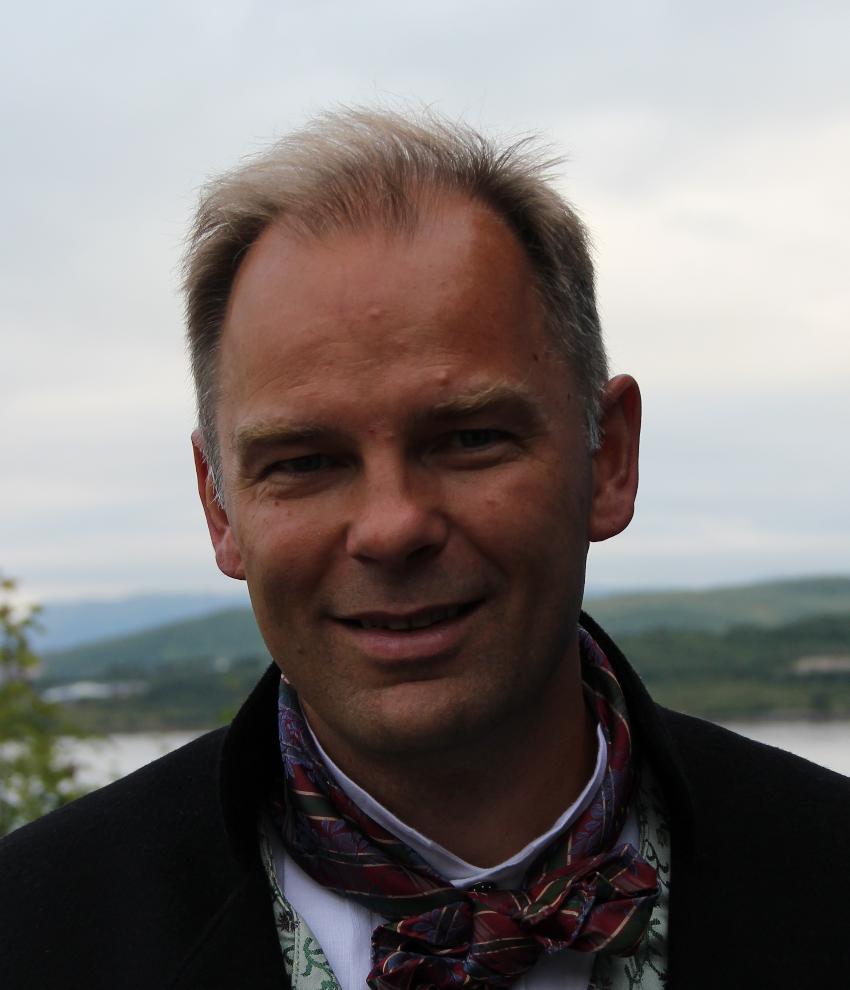
Rune Sundset is an Associate Professor at UiT The Arctic University of Norway, affiliated with the Nuclear Medicine and Radiation Biology research group. His work focuses on radiopharmaceutical development, molecular imaging, and liposomal drug delivery systems. Research themes: Radioligand design, PET/SPECT imaging optimization, and nanoparticle-biology interactions Key collaborations: European Journal of Nuclear Medicine and Molecular Imaging, BMC Research Notes, and Acta Physiologica Recent publications highlight his contributions to: Development of Cu-67 and Ga-68 radiotracers for tumor imaging Liposomal formulations for arginase inhibition in cancer therapy Machine learning applications in dynamic PET imaging Sphingolipid effects on liposome uptake by human phagocytes In the SECURE project, he investigates radioligand therapy and imaging biomarkers. His research group (NMRB) spans nuclear medicine, radiation biology, and biomedical engineering, with applications in glioblastoma, prostate cancer, and neurodegenerative diseases.
Professor Jody Webster is a leading marine geoscientist and Co-Coordinator of the Geocoastal Research Group at the University of Sydney's School of Geosciences. His multidisciplinary research integrates sedimentology, stratigraphy, marine geology, geophysics, paleoecology, and numerical modeling to study coral reef systems and carbonate platforms as critical archives of climate and sea-level change. Research Interests: Jody focuses on Carbonate sedimentology Climate change impacts on reef systems Tectonic influences on sedimentary evolution International Ocean Discovery Program (IODP) core analysis Great Barrier Reef and Hawaii as model systems Sea-level and environmental change during glacial-interglacial transitions . Publications: His recent work examines reef responses to meltwater pulses (MWP-1A/B), Holocene nutrient dynamics in the Great Barrier Reef, and carbonate platform drowning mechanisms. He contributes to databases like RADReef (global reef accretion rates) and numerical tools for reef growth modeling. Awards: Recognized with the 2021 Vice-Chancellor’s Award for Excellence in Research Multiple ARC Discovery grants International research ship time awards . Teaching: Coordinates courses in marine geoscience (GEOS2115, GEOS3009, MARS5007) and mentors students in reef sedimentology, stratigraphy, and climate modeling. Collaborations: Partnerships with institutions like Monterey Bay Aquarium Research Institute (MBARI) Universities of Tokyo, Granada, and Wisconsin-Madison International societies (ISRS, AGU, IAS) .